




Photos provided by ASPCA
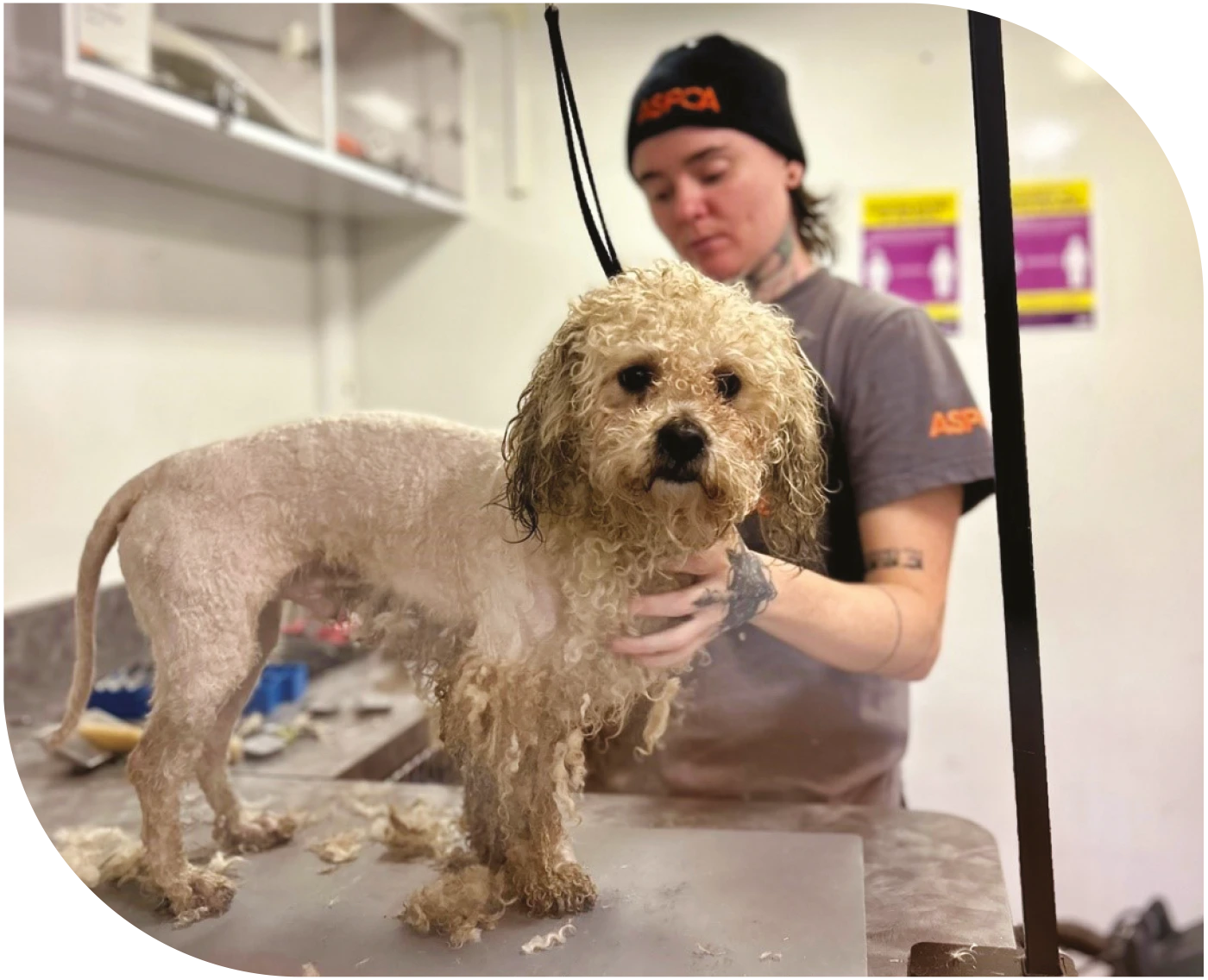
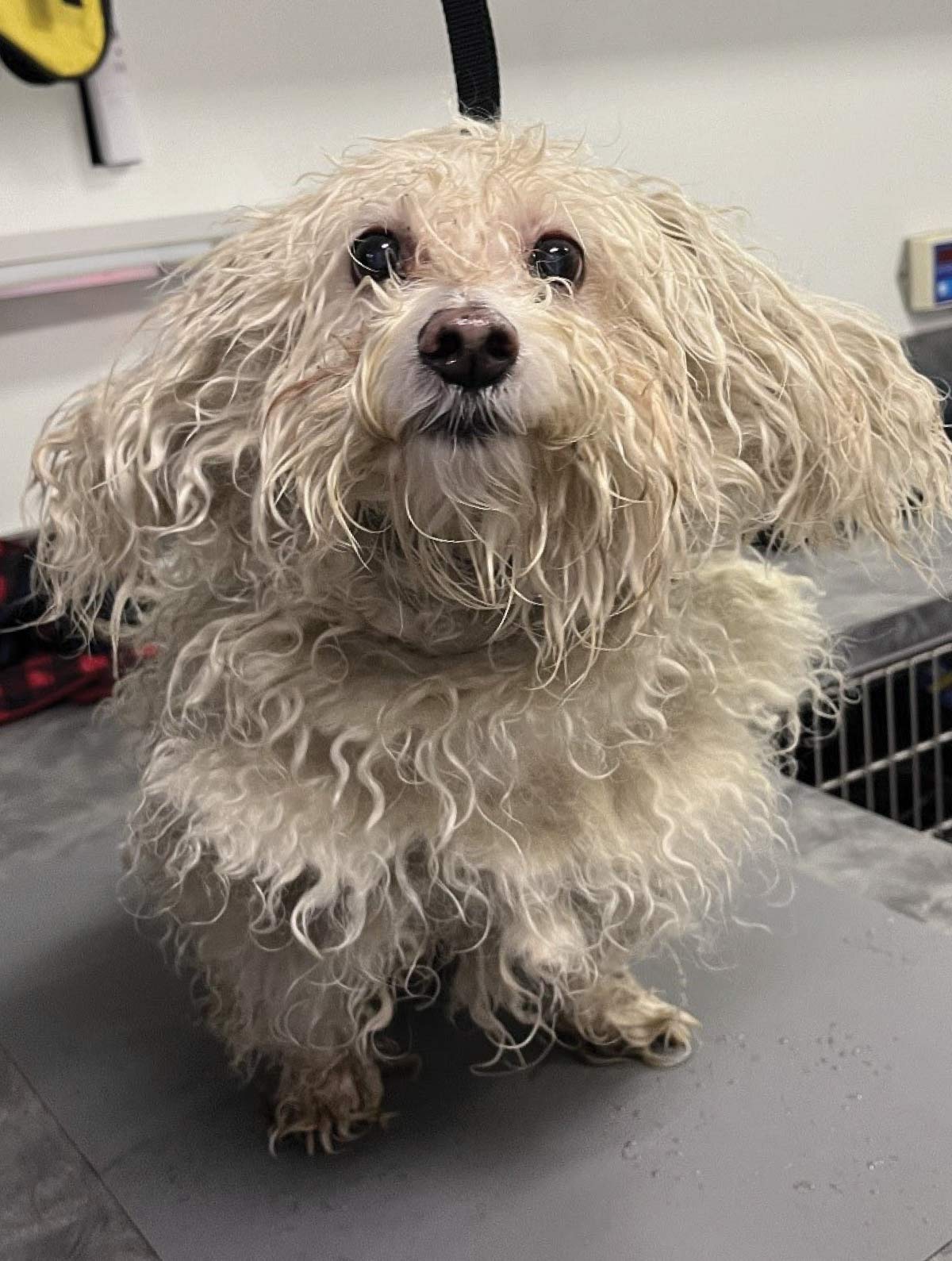
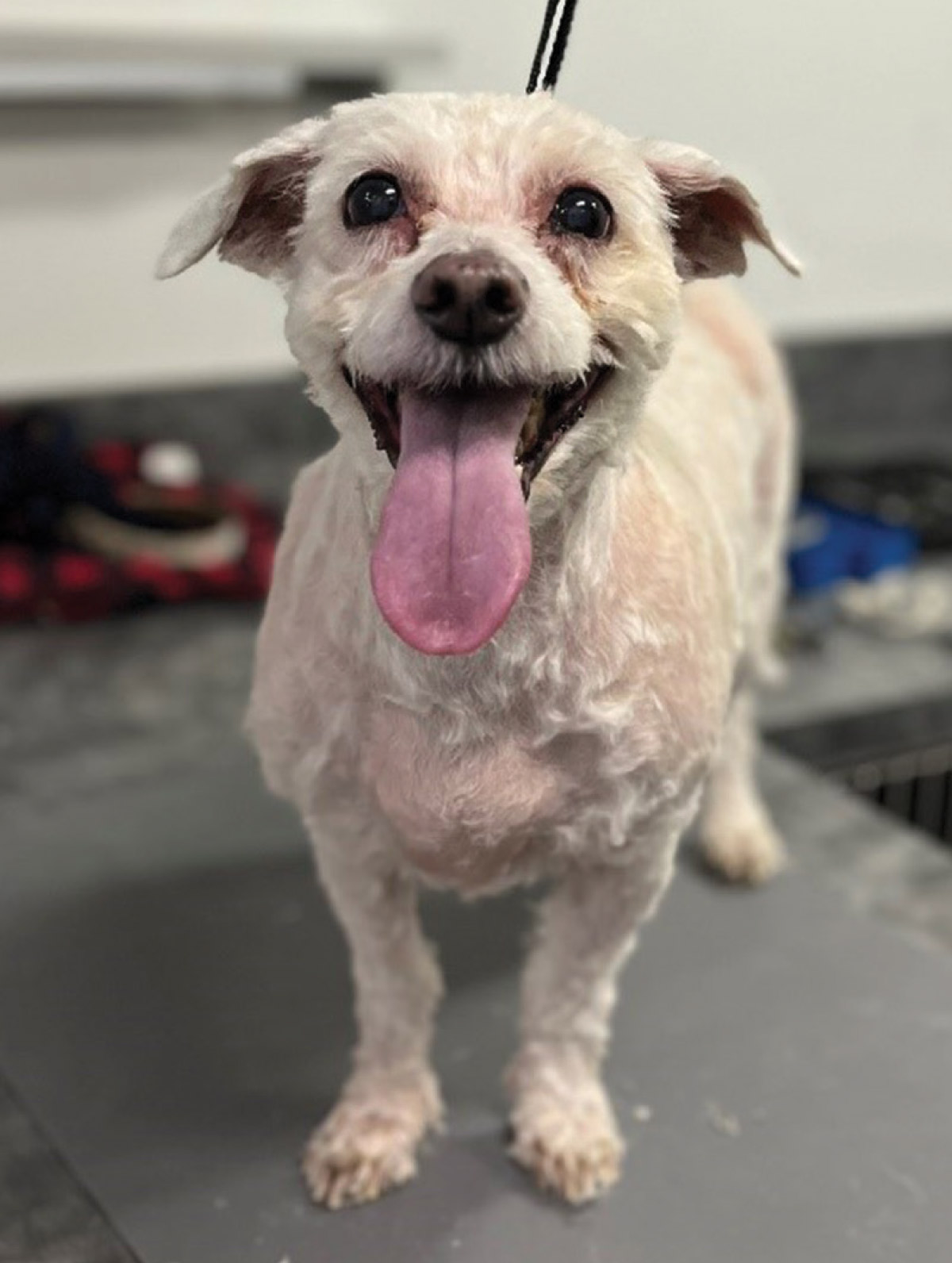
 roomers are invaluable to animal advocacy, care and education, as grooming neglect can have serious consequences, such as strangulating mats that can lead to amputation or even death. Prevention, at the earliest stage possible, greatly helps animals and people alike.
Each of us is familiar with seeing a dog come into our care who is experiencing discomfort, or even pain, from the condition of their coat. We may be tempted to suggest that the owner shouldn’t have a dog, or judge them for letting their doodle get so matted or for complaining about how much their double-coated dog sheds. However, it’s not that simple, as there are barriers in place preventing many people from providing their pets with proper care. Whether it’s lack of education, resources or finances, these barriers do not negate the love they have for their companion.
But what happens when an owner is not able to meet the needs of their animal and must surrender them? The pet ends up at an animal shelter, where they are still faced with the issue of access to grooming. In a 2022 ASPCA survey, 92% of animal shelter professionals reported a need for low-cost grooming in their community, and 62% of shelters reported this is not available.
As groomers, we recognize we do not have the bandwidth to help every animal, though we may want to. Accessible grooming practices help prevent animal neglect but must match community needs and groomer availability to avoid contributing to stress or burnout that comes with working beyond capacity. This means recognizing that community needs often greatly exceed the availability of grooming resources.



As hard as it is sometimes, we must strive to believe people are trying their best—and we must try our best in return.
- McDonald SE, Sweeney J, Niestat L and Doherty C (2022) Grooming-Related Concerns Among Companion Animals: Preliminary Data on an Overlooked Topic and Considerations for Animals’ Access to Health-Related Services. Front. Vet. Sci. 9:827348. Doi: 10.3389/fvets.2022.827348
- McDonald SE, Doherty C, Sweeney J, et al. (2022) Barriers to and facilitators of pet grooming among clients served by a subsidized grooming service program. Front. Vet. Sci. 9:1021707. Doi: 10.3389/fvets.2022.1021707
- Watson E, Niestat L. (2020) Osseous lesions in the distal extremities of dogs with strangulating hair mats. Vet Radiol Ultrasound. 2021; 62: 37–43. https://doi.org/10.1111/vru.12924
Riley Riley is a graduate from Stephen F. Austin State University and a current MFA candidate at The New School. Their best friend is their rescue bully named Chef Good Boyardee. Riley has been grooming for over a decade. They are the Grooming Specialist for the American Society for Prevention of Cruelty to Animals as a member of the Community Engagement team. This team focuses on community outreach, animal welfare, and cruelty prevention. Riley grooms animals in the shelter, at ASPCA Community Veterinary Clinics, and in client homes across New York City.