





Groom Expo 2025 Creative People’s Choice Winner, Miranda Seim
Photo by Animal Photography
www.animalphotography.com


Contents | March 2026
6
by Kathy Hosler
40
ALSO INSIDE
todd@barkleigh.com
adam@barkleigh.com
gwen@barkleigh.com
rebecca@barkleigh.com
luke@barkleigh.com
laura@barkleigh.com
brandi@barkleigh.com
carlee@barkleigh.com
evan@barkleigh.com
allison@barkleigh.com
james@barkleigh.com
karin@barkleigh.com
christina@barkleigh.com
Daryl Conner
Lynn Paolillo
Amanda McGrath
Jennifer Bishop Jenkins
Blake Hernandez
ALSO INSIDE
ON THE COVER
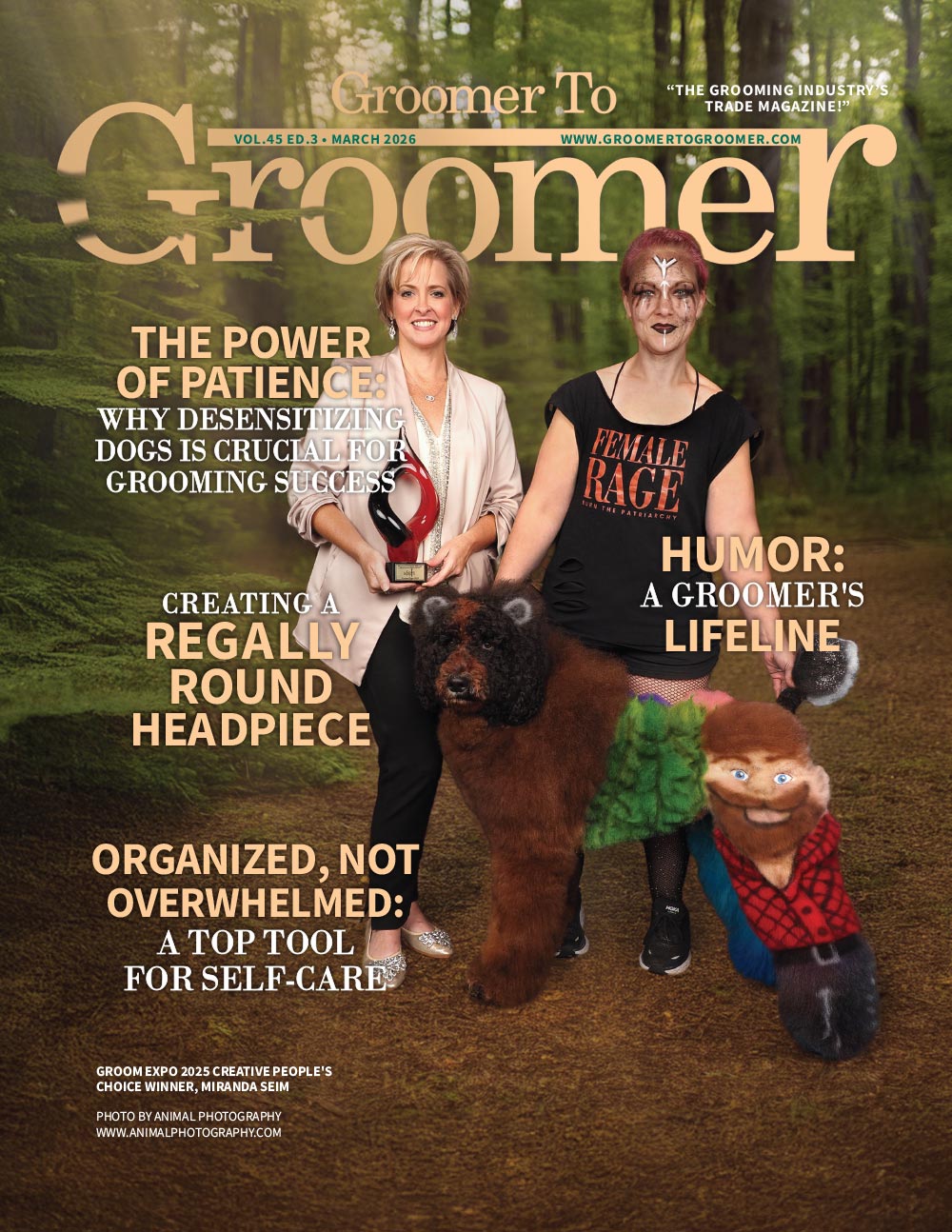
Photo by Animal Photography
www.animalphotography.com
- Andis2
- Animal Photography7
- AnimalsINK10
- Bandanas Unlimited42
- Barkleigh Pet Pro Cruise51
- Barkleigh Store – Release Forms38
- Best Shot Pet – 3 Step System31
- Best Shot Pet9
- Best Shot Pet – UltraMAX29
- Cosmos Bathing Systems35
- Direct Animal Products13
- Double K Industries3
- Electric Cleaner Company45
- Envirogroom | Special FX Premium Products27
- Evolution Shears15
- Friedman Tax33
- Governor Insurance Agency18
- Groomer’s Choice4
- GroomTeam USA21
- IV San Bernard | Pet Skin Academy11
- John Stazko14
- Laube55
- Odorcide49
- Paragon School of Pet Grooming39
- Paw Brothers | Ryan’s Pet Supply56
- Pet Boarding and Daycare Expo West23
- Pet Boarding and Daycare Expo West46
- Pet Palette Distribution32
- PetBizInsurance.com26
- PetLift25
- Puppy Playground24
- Quadruped Pet Care47
- Ryan’s Pet Supplies | Leading Edge Grooming AcademyDigital Only
- Tidy Paws41
- Wag’n Tails52
Featured Spotlight Profile
Midmark
























 rooming is serious work; important work, and it can really take a toll on you. It is a full-body, full-heart experience that demands physical strength, technical skill, emotional intelligence, problem-solving and a boat load of patience.
We are animal handlers, stylists, counselors, educators, negotiators, and sometimes emotional support humans for both pets and their owners. All of that places your body and nervous system under constant strain—and it can become overwhelming.
Fortunately, self-care doesn’t always mean spa days or expensive gadgets. One of the most effective forms is simple, practical and completely free—humor.
Laughter is a self-care tool that allows us to release an enormous amount of built-up tension and stress. When we laugh, our bodies physically relax. Stress hormones decrease, breathing deepens, muscles tension eases and, for the time being, the pressure diminishes.
There’s a special kind of humor that only groomers understand. We laugh about dogs who scream bloody murder when no one is even touching them. We joke about how a 20-pound Cocker Spaniel can somehow produce 30 pounds of poop while in our care. And just say the words “anal glands” in a room full of groomers and nearly everyone has a story to tell.
While it may sound ridiculous to outsiders, sharing those moments of humor with fellow groomers builds a connection, camaraderie and a sense of belonging. In an industry where many groomers feel isolated—especially solo and mobile groomers—that connection matters deeply and can actually become a lifeline between yourself and others.
Humor can fit into even the busiest of schedules. You can listen your favorite funny podcast, comedian or entertaining video during your lunch break. Between appointments you can share a ridiculous grooming story with a coworker or text it to a fellow groomer and brighten their day.
Think of humor as your pressure-release valve. Without it, everything builds—stress, frustration, resentment, exhaustion. The barking gets louder, the no-shows feel more personal, the difficult dogs seem even worse and the days seem longer. Eventually, something has to give.
Laughter relieves some of that pressure. It doesn’t fix the broken dryer or magically shorten a matted shave-down, but it changes how your nervous system handles the moment. It reminds your body that you’re just having one of “those days.”
In fact, laughter is often a survival tool. Some days in grooming are genuinely heavy—we lose beloved clients, groom elderly pets for the last time, or see cases of people and pets in difficult circumstances. But no matter what, we have to continue with our appointments for the day.
Finding moments of humor on those days doesn’t mean we don’t care or that we are insensitive; it means we’re balancing the emotional weight so that it doesn’t overwhelm us. You can hold compassion and humor at the same time. Many seasoned groomers will even tell you that learning to do both is what keeps them in this career long term.
Laughter doesn’t eliminate the hard parts of grooming, but it makes them survivable. It reminds us why we connect with each other, why we keep showing up and why we still find joy in our careers.
At the end of the day, if anyone understands why laughter matters, it’s the people who have been in the trenches and know how important it is to have a lifeline for the hard times. Laughter really is the best medicine.

 n the world of professional dog grooming, skill with scissors and clippers is only part of the equation. True mastery lies in understanding canine psychology and how to work with—not against—a dog’s instincts.
One of the most overlooked yet powerful tools in building a successful grooming business is desensitization training, particularly with wide tabletop exposure. Offering tabletop training to your clients not only sets you apart but also helps build safer, less stressful grooming sessions and lasting trust with both dog and owner.
Why Desensitization Matters
For many dogs, the grooming salon is a world of overwhelming stimuli: loud dryers, high tables, clippers and strange hands touching sensitive areas. If a dog is thrust into that environment without preparation, it can lead to anxiety, fear-based behaviors and long-term grooming issues.
Worse yet, forcing a dog through grooming when they’re scared doesn’t solve the problem; it simply teaches them to submit out of fear, not comfort. While they may appear compliant, these dogs often hold onto deep stress, which can manifest as aggression, shutdown behavior or reactivity in future appointments.
Dogs are incredibly intuitive and learn through association. If every grooming experience is one of restraint, discomfort or fear, they begin to associate grooming and groomers with stress. This isn’t a behavioral problem; it’s a survival response. Fight, flight or freeze are all normal reactions in a dog’s brain when they feel unsafe.
This is why repetition with low stress and positive associations is key. When we focus on desensitizing rather than dominating, we aren’t just grooming a dog, we’re training a partner.
The Role of Tabletop Training
Benefits of tabletop training include:
- Familiarity with the grooming surface (no surprises)
- Building balance and confidence while standing
- Trusting the groomer’s handling and positioning
- Desensitization to brushes, combs and clippers in a non-threatening way
- Creating a calm, positive association with grooming time
These sessions are especially useful for:
- Puppies in their first six months
- Rescue or trauma-sensitive dogs
- Older dogs with new anxieties
- Dogs that have had a negative grooming experience
- Breeds known for sensitivity (e.g., poodles, doodles, terriers)
Not only does this service enhance trust and loyalty, but it also protects your groomers from injury and burnout. Grooming a relaxed dog is faster, safer and more enjoyable for everyone involved.
Desensitization takes time, but following a consistent process ensures the dog builds comfort rather than resistance:
- Start with Short, Calm Introductions: Invite the dog onto the grooming table without any tools present. Reward with treats and gentle praise and let them sniff the surface.
- Incorporate Gentle Handling: Touch the dog’s feet, ears, tail and underbelly with just your hands. Keep it calm, brief and reward for tolerance.
- Introduce Tools One at a Time: Let the dog see, smell and hear the clippers or dryer before they’re used on the body. Turn tools on and off without touching the dog at first.
- Use Posistive Reinforcement at Every Step: Reward calm behavior and curiosity with treats, toys or affection (whatever motivates the dog). Positive reinforcement is essential to build confidence and reshape their emotional response to grooming.
- Increase Duration Gradually: Keep early sessions short and positive. Build up the time spent on the table slowly, always ending on a good note.
- Use Comforting Language and Body Language: Remember to stay relaxed; dogs read your energy. Speak softly, move slowly and keep the environment as peaceful as possible.
- Involve the Owner for At-Home Support: Teach clients how to gently handle their dog’s paws, ears and tail at home, and how to brush properly. Consistency between salon and home speeds progress.
Why Forcing Isn’t the Answer
Instead of wrestling with resistance, work with the dog’s pace. Consent-based grooming, supported by positive reinforcement, is rising in popularity for good reason: It keeps dogs emotionally healthier and makes the groomer’s job safer and more rewarding.
By offering tabletop desensitization sessions and incorporating positive reinforcement throughout the grooming process, you’re not just helping the dog, you’re:
- Setting your grooming business apart in a competitive market
- Reducing injury risk and burnout among your team
- Establishing long-term client loyalty
- Creating happier dogs who are easier to groom over time
Clients are willing to pay for it and will thank you for it because they want their dogs to be happy, too.
In grooming, we often focus on the cut, the finish and the aesthetic. But emotional safety is the foundation everything else rests on. Desensitizing a dog—especially through tabletop training paired with positive reinforcement—isn’t just kind, it’s smart business. So take the time, build the trust, reward the calm and watch your grooming practice thrive.
Angela Bucci-Henschel has been grooming since 2004, starting out as a weekend bather while studying to become an Applied Behavior Analysis (ABA) therapist. What began as a side job quickly became a passion when she realized her behavioral training gave her a unique edge with anxious and reactive pets. ABA has helped Angela understand and manage behavior compassionately, an approach that translates beautifully to dogs and to her specialization in calm, behavior-focused grooming. Today, she works with Groomit, an on-demand mobile grooming service that provides groomers with a van, flexible scheduling, and the ability to build their own business.

 ne of the growing concerns in the veterinary field is what they call “compassion fatigue.” Can we really care too much or get tired of caring? The issue is real; in fact, the suicide rate has escalated among veterinarians in recent years with compassion fatigue identified as a contributing factor. Could this also be the case with groomers now or in the future?
I always say, if you want to solve a problem, you must first look at the “why.” So why does this occur? For veterinarians, it is the day-to-day struggle of life-and-death decisions. In the past, most people who worked in the animal industry grew up in a farming-type environment, where births and deaths were sometimes daily events. In more recent times, however, a large majority of veterinarians and groomers did not grow up with that experience.
We have also shifted to placing greater value on our individual pets’ lives. Now, many people never even leave their pets alone at home. We either get pet sitters, dog walkers, send them to daycare or take them with us everywhere we go. And if we treat our pets that way, we also expect our clients to do the same with theirs. Unfortunately, that is often not the case. And when they don’t, it breaks our hearts. We tend to get mad and chastise or fire clients. But does any of that help the pet?

if you want to solve a problem, you must first look at the “why.”
I hear the frustration of so many groomers who complain that clients never even brush their dogs; something so simple in our world that anyone should be able to do. The reality is, most clients don’t know how to brush a dog correctly. They don’t understand that you should never dry-brush a dog, that you don’t just rip or cut mats out, that you need to pay attention to the friction areas, or even what brushes or combs are appropriate for the dog they have. So where are they going to learn this info?
Many rely on YouTube videos and the internet. And while some of that information is great, many can’t differentiate the good info from the bad—and there is a lot of poor information out there.
If they are going to be your client and you want them to do the best for their pet, you need to teach them. But don’t expect this to be a quick five-minute session and call it a day. Think of how much time and how many corrections it took when your mentor taught you. And while the education doesn’t have to be as in-depth, even learning the basics requires focus.
They say that in any exchange like this, the student will only retain 10-30% of the information. If you understand that, you will realize that you need to offer more to solve the issue. You may want to give out explanatory-type handouts or have them come back and show you what they are doing at home. Repetition is the best way to learn.
One thing we must remember is that, just like the client who has not brushed their dog and needs to be trained as a pet professional, we also need training. Many of us rely on our own experiences to dictate what we do and teach; however, the problem is that it is very limited in scope.
you cannot want to fix issues more than the client. Some clients will not follow through, no matter how much you educate them.
An area I see many groomers struggling with is health, nutrition and skin issues. They want to help but are often frustrated not only by clients who don’t comply, but also by not getting the results they had hoped for. If you want to be proficient in these areas, I encourage you to seek out good educational resources. Who has credentials? Who has good results? One or two easy cases don’t make for an authority in the field.
The bottom line is, there is no single way to combat compassion fatigue. First, you need to educate yourself on how to achieve good results. If you are working with myths and hearsay, it is hard to be successful, which leads to frustration. Secondly, education of the client is key to solving many issues that are faced in the grooming salon. And finally, you cannot want to fix issues more than the client. Some clients will not follow through, no matter how much you educate them. If they frustrate you with their neglect, is that the kind of client you want? Peace of mind can be worth more than money.
Dr. Cliff Faver graduated with a BS in Biology/BA in Chemistry before getting a Veterinary degree in 1987. He is the past owner of Animal Health Services in Cave Creek, Arizona and now the US distributor for Iv San Bernard products, teaches the ISB Pet Aesthetician Certification program, and speaks internationally on hair and skin. His passion is to merge groomers and veterinarians to aid in helping and healing pets. He is also a member of AVMA, AAHA, AZVMA, Board member with Burbank Kennel Club, and has served on Novartis Lead Committee, Hill’s International Global Veterinary Board, and a Veterinary Management Group.
Photos provided by Barkin’ Creek Dog Kitchen & Bath
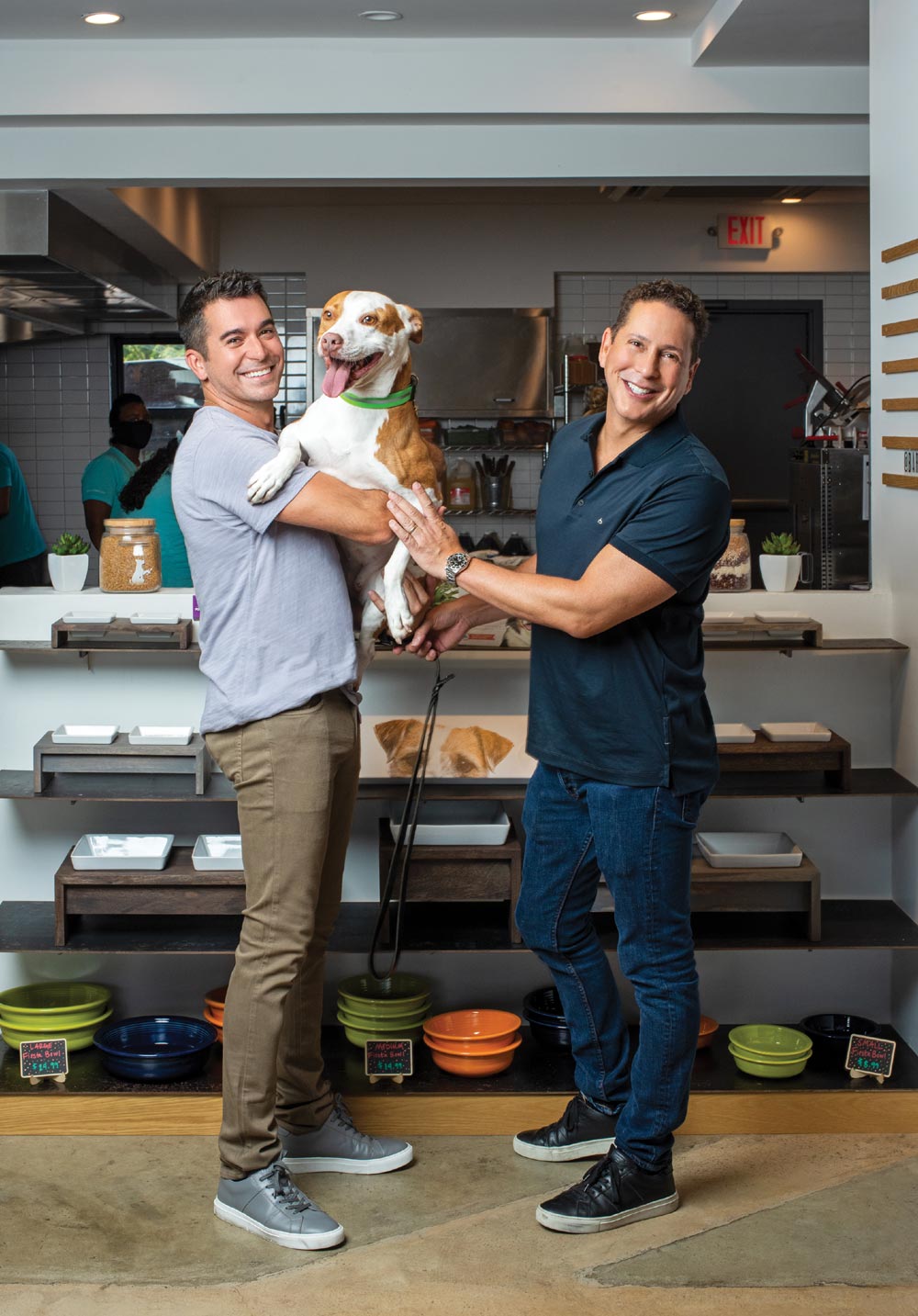
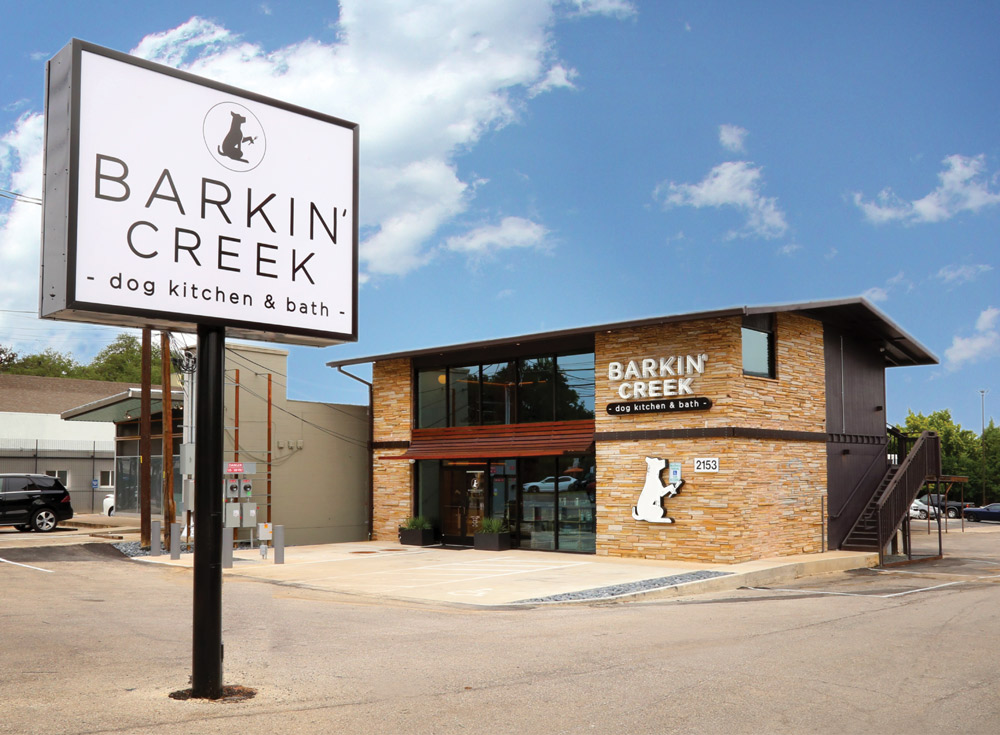
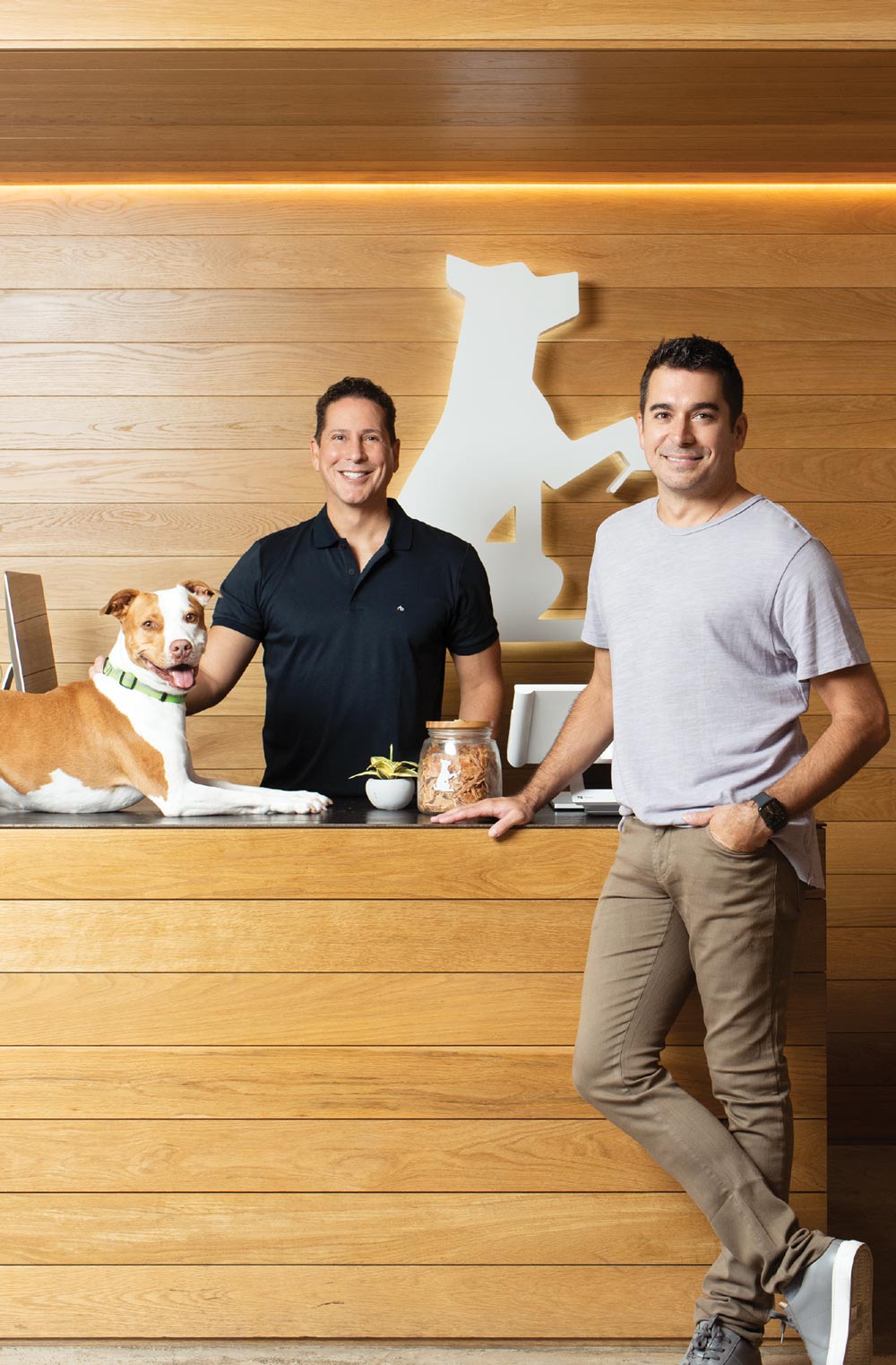
 hen Flint Beamon and Jeff Springer came up with the idea of Barkin’ Creek Dog Kitchen & Bath back in 2015, the duo wasn’t just trying to open another dog business, they were trying to rethink what “care” meant for dogs and the people who dedicate their lives to caring for them.
“Grooming was a natural extension of that vision,” shares Flint. “Early on, I spent a lot of time watching groomers work and I realized these folks are true artists and athletes rolled into one.
“It’s physical, it’s emotional, and it requires an incredible amount of technical skill,” he continues. “But all too often, the industry doesn’t give groomers the respect, environment, or compensation they deserve.”
The grooming side of Barkin’ Creek wasn’t an afterthought; it is a platform to honor the people who make dogs look and feel their best. That’s why, from day one, the pair set out to build a space where groomers could thrive.
“The ‘secret ingredient’ isn’t the shampoo; it’s the culture of respect between groomer, dog, and owner,” he adds.
While the idea for the business originated in 2015, Flint and Jeff didn’t open a physical location until 2018, allowing them a few years of preparation and learning before they felt confident that they had created something special. And in the early days, customers were found through grassroots efforts such as local word-of-mouth, dog parks and adoption events.
“We told our story one handshake at a time,” shares Flint. “Today, our best marketing is still our team. When groomers love where they work, that energy radiates out.
“The ‘secret ingredient’ isn’t the shampoo; it’s the culture of respect between groomer, dog, and owner.”
Over the last seven years, Barkin’ Creek, which now includes four locations in Austin, Texas, has evolved in every possible way, with the biggest growth being cultural.
“In the beginning, we focused on refining our techniques and our client experience,” Flint recounts. “As we matured, we realized that the real foundation of quality is the people behind the scissors and dryers. So, we’ve invested heavily in ergonomics, safety equipment, and scheduling systems that prevent burnout.
“Our approach now is about sustainable, long-term craftsmanship—giving professionals the space, tools, and respect to do their best work,” he adds.
The business’s appointment-only system allows the team, which Flint refers to as “the heart of Barkin’ Creek,” to work in rhythm, not chaos, therefore creating consistency and reducing physical and mental fatigue.
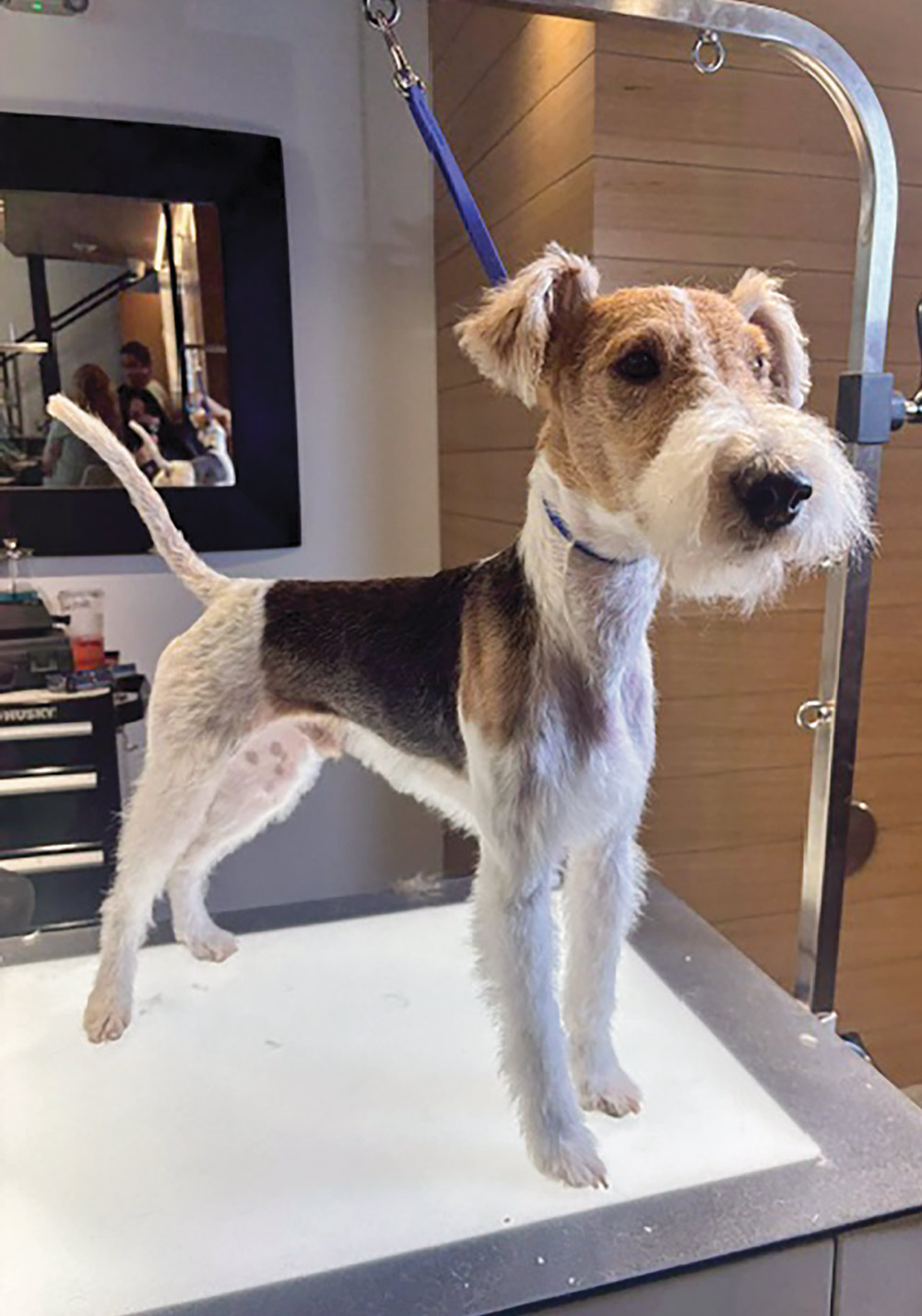
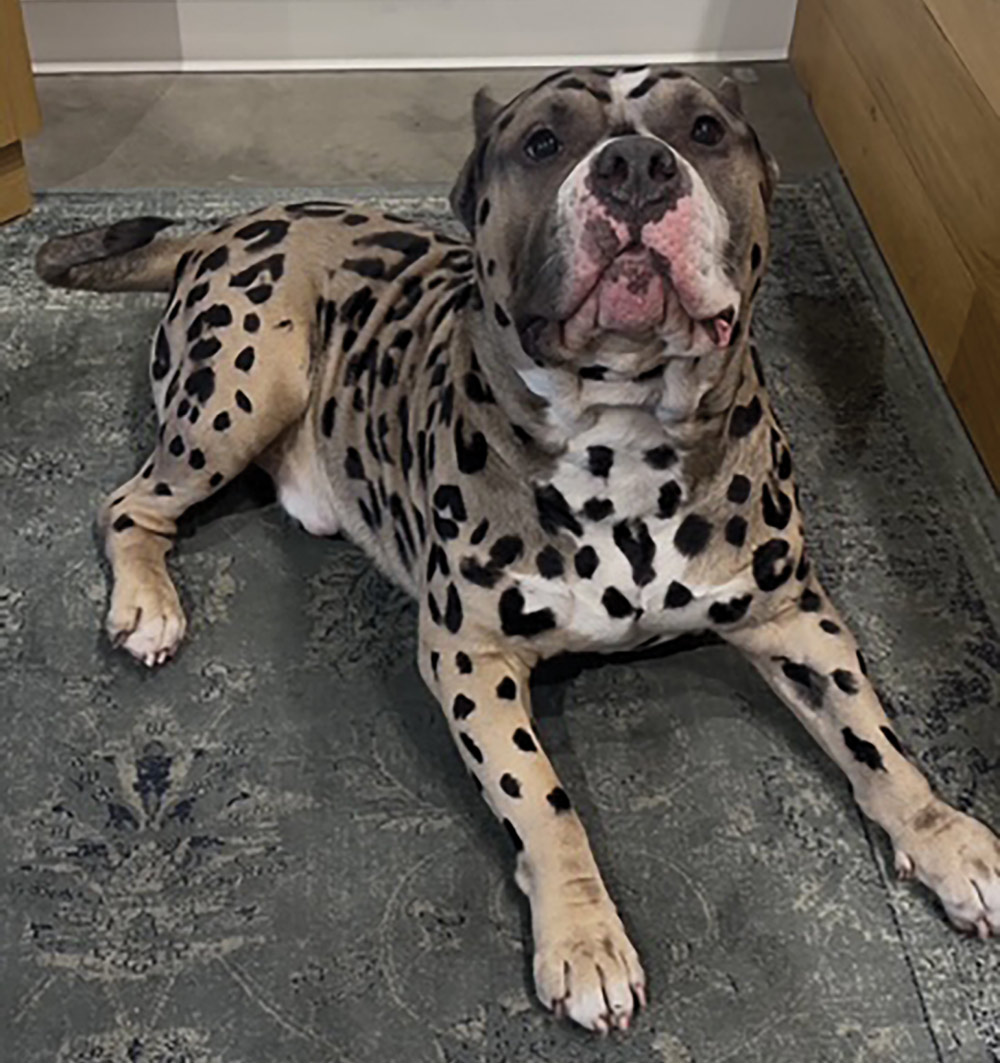
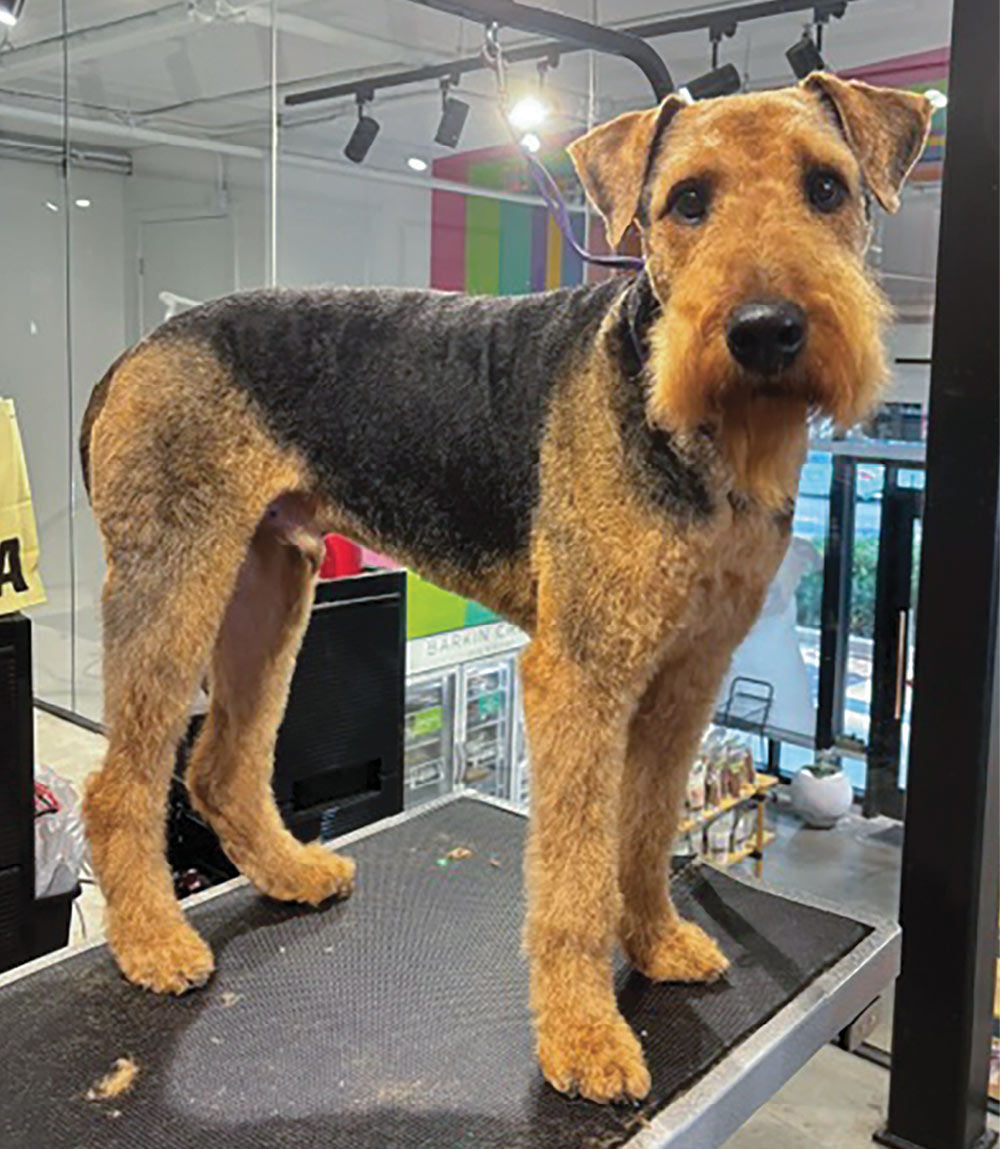
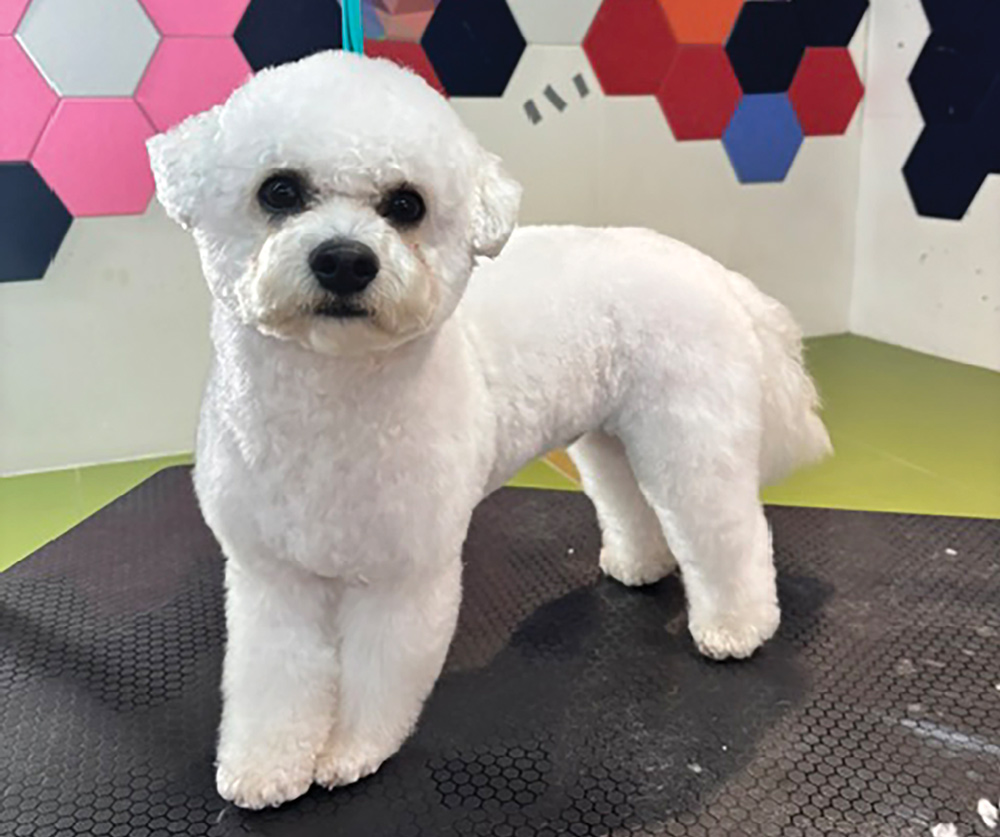
Many of Barkin’ Creek’s groomers have been with the business for years because they feel safe, respected and valued.
“I tell every new hire the same thing: ‘If you take care of our clients’ dogs, we’ll take care of you,’ and we mean it,” Flint states. “Continuous education is a non-negotiable for us. We sponsor certifications, help send groomers to national competitions, and bring in industry educators for workshops.”
In addition to collaborating with other grooming professionals and schools, Barkin’ Creek hosts internal training days focused on product knowledge and client communication.
“We pay groomers for training time because learning is work, and valuable work at that,” explains Flint. “We also have cross-location mentoring programs, where senior groomers coach newer ones. The goal is to create a learning culture that fuels pride, not competition.”
“A stressed groomer can’t calm a stressed dog, so we build systems that protect both sides of the table,” Flint says. “We use Fear Free handling techniques, quiet tools, and ergonomic workstations. We train groomers to read canine body language—but we also train managers to read human body language; if a groomer is overwhelmed, we intervene with support or time off.”
Additionally, Barkin’ Creek uses high-quality, skin-safe products and safe dryers to protect both pet and professional.
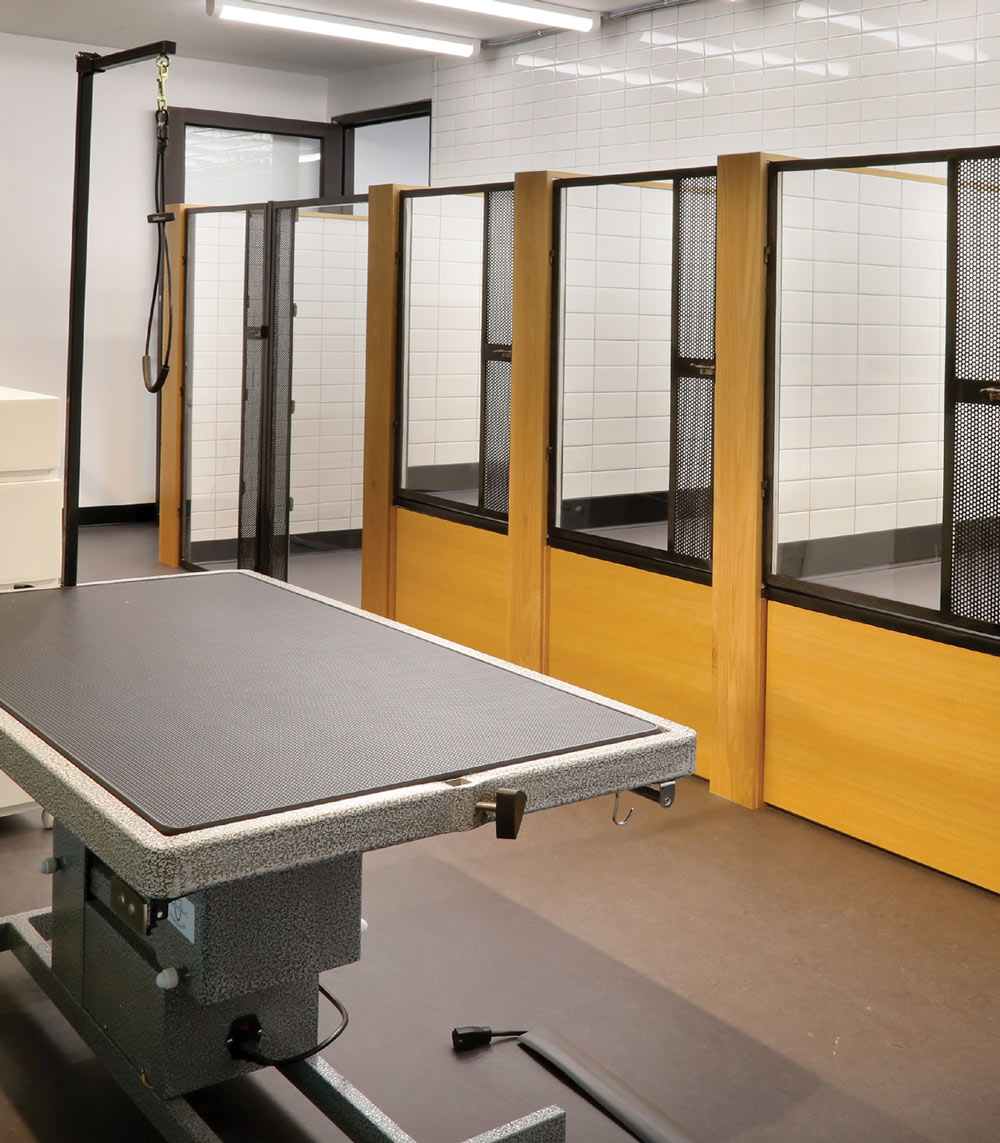
“Every decision we make—from our flooring to our lighting—is designed to create comfort, calm, and confidence for everyone in the room,” Flint notes. “Every dog deserves empathy and proper care.
“It is critical that our groomers have a complete picture of each dog’s behavior and health before handling them,” he continues. “Our intake process gathers detailed information about medical, emotional, or behavioral concerns prior to the start of each groom.”
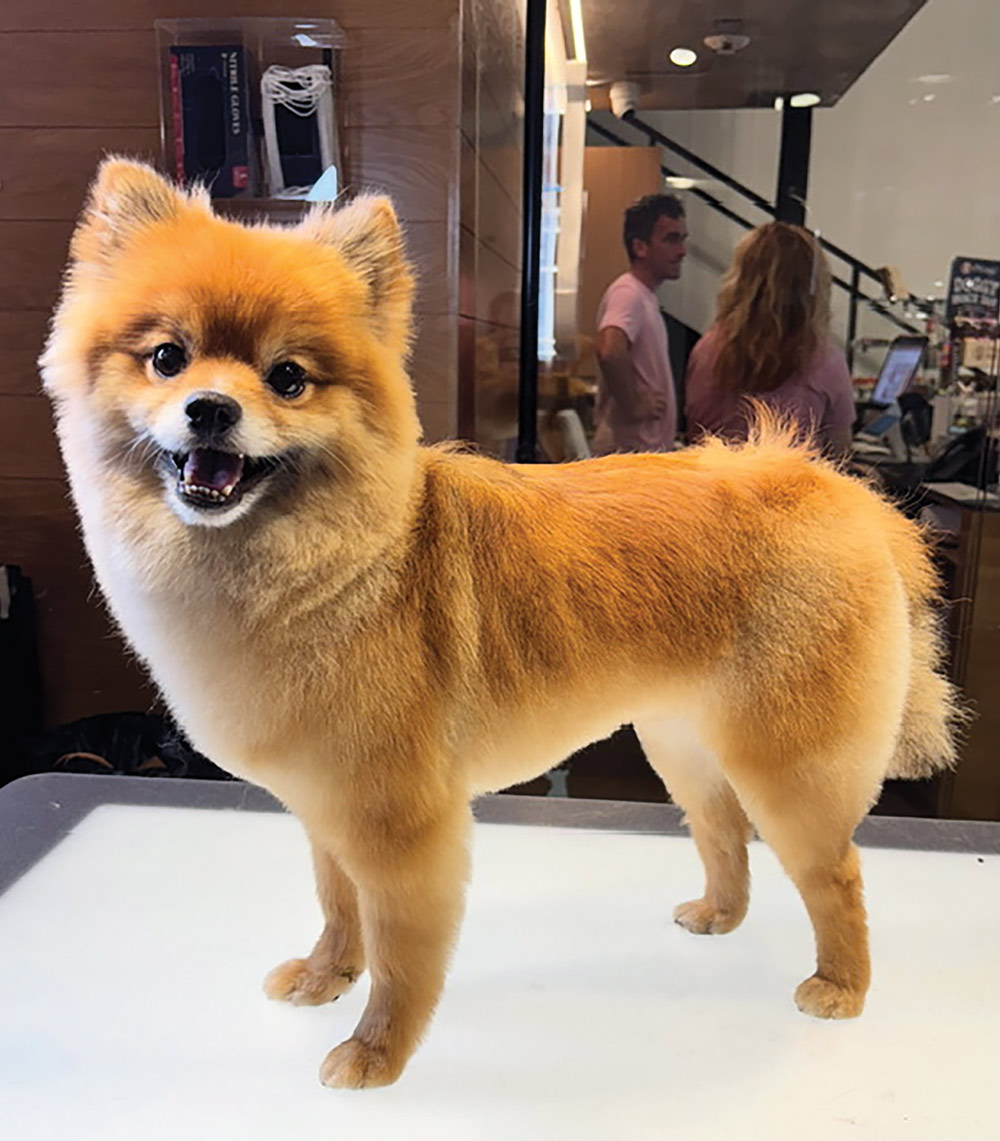
For anxious dogs, the groomers slow down, use positive reinforcement and never force. For dogs with allergies or sensitivities, they customize products and coordinate with veterinarians.


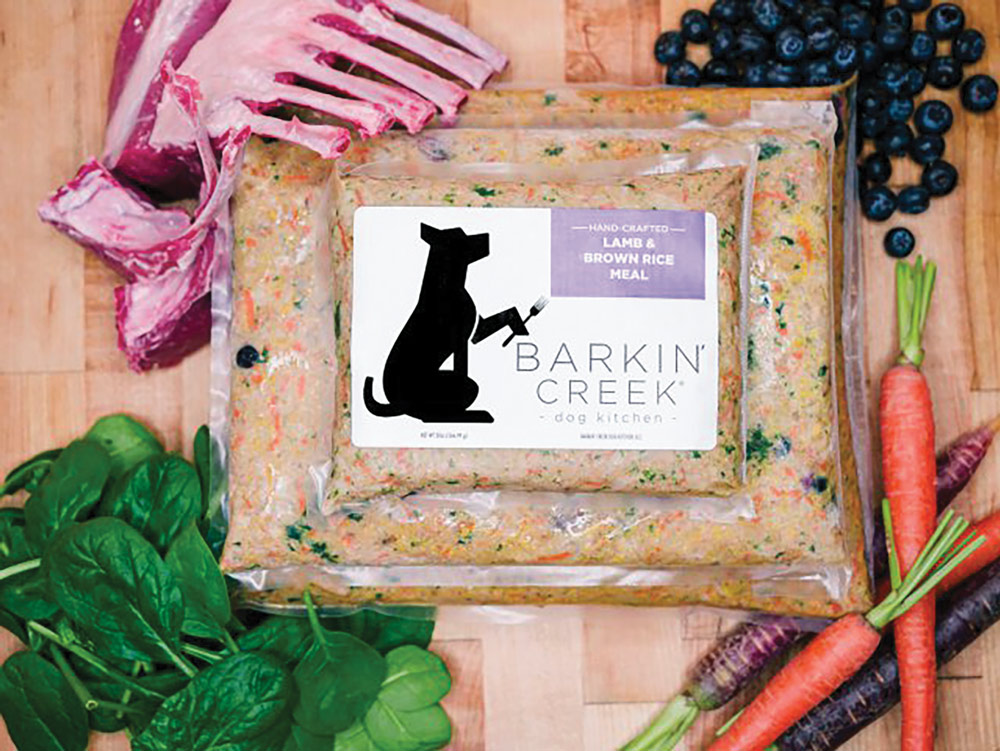
Inspired by Flint and Jeff’s two rescue dogs, who each suffered from dietary and health issues that created the need for specialized foods, Barkin’ Creek also created their own dog food rather than relying on commercial options.
“Our journey with our dogs, Bea and Jax, taught us that health starts from the inside,” Flint explains. “But it also showed us that groomers often see the first signs of nutritional issues—dull coats, flaky skin, shedding, allergies.”
Barkin’ Creek Dog Kitchen is not just for pet owners, but for groomers, as it gives them a healthier canvas to work on with dogs with better skin, softer coats and fewer irritations.
“They’re made the way we cook for ourselves—small batch, human-grade ingredients, no preservatives and no shortcuts; it’s farm-to-table but for your pet,” shares Flint. “The same trucks that deliver to your grocery stores or favorite restaurants deliver to our in-store kitchen in Austin. We don’t cut corners on our fish, meats, fruits, or vegetables. Period.”

“When a client hears a nutrition tip from the person who bathes and brushes their dog every month, it carries real weight,” Flint explains. “We want our clients to see groomers as part of their dog’s wellness team—not just stylists, but trusted professionals.
“Cleaner eating means a healthier, longer life,” he continues. “And we want—and need—every minute to last with our dogs, so why not feed them the best?”
If there’s one message Flint wants to get across to the grooming community, it’s that they shouldn’t think of themselves as service workers, but as animal care professionals.
“At Barkin’ Creek, we build everything—from our pay structure to our equipment choices—around that truth,” he says. “Groomers deserve safety, respect, education, and joy in their craft.
“We’ve built Barkin’ Creek to prove that a business can be profitable, compassionate, and professional all at once. And if our example inspires even one other shop to invest more in their team, that’s a win for the entire industry,” concludes Flint.
 n grooming, appearing “fine” is often treated as part of the job. We learn early how to keep our voices steady, our hands confident and our expressions calm no matter what’s happening internally. Clients see professionalism. Dogs feel steadiness. Coworkers see reliability. What they don’t see is the effort it takes to maintain that appearance day after day.
For many groomers, “I’m fine” doesn’t mean things are easy; it means the work still has to get done. That quiet expectation to always look capable, calm and composed can turn into a kind of mask—one that helps us function but also hides when we are overwhelmed, overstimulated, injured or running on empty. Over time, that mask can become so familiar that we forget to check what is happening underneath it.
For the first time in my career, something different happened this year at a grooming show. A coworker looked at me and said, simply, “You look tired. You should sit down.” There was no accusation in it, no implication that I was failing or falling behind, just an observation and permission.
What stayed with me was not just the offer to sit but the fact that someone noticed. Someone paid attention before I reached a breaking point. And in that small moment, support was not reactive, it was preventative.
Self-care in grooming is often framed as something personal; something we manage after hours on our own. But in a profession built on teamwork, timing and shared responsibility, real self-care does not happen in isolation. It happens in how we support each other long before someone reaches a crisis point.
Many groomers take pride in being the dependable one—the person who can handle anything, who does not complain, who always figures it out. That reliability is often rewarded, which quietly reinforces the idea that struggling privately is part of being professional. But when masking becomes the default, it makes it harder for others to recognize when support is needed. A groomer who has always “handled it” may not realize how far past their limits they have gone until something finally gives.
When everyone is focused on getting through the day, these signs are easy to miss, especially when the person experiencing them is still meeting expectations on the surface. By the time someone says, “I can’t do this anymore,” the team is already in crisis mode, stressed and reactive, and struggling to think clearly.
That is why self-care cannot only be about recovery after the fact. In grooming environments, it has to be about prevention, awareness and shared responsibility.
A New Definition of Teamwork
Some groomers thrive in fast-paced, high-volume environments; others shine when working with nervous, senior or behaviorally complex dogs; some excel at detail and precision; and others are exceptional at flow, communication or emotional regulation under pressure. A strong team is not made of interchangeable parts—it is built on balance.
Supporting each other does not mean lowering standards or ignoring accountability but rather recognizing that capacity changes. A groomer who usually handles high-stress dogs may need lighter assignments during an injury or flare-up. Someone who is typically social may need quiet rather than conversation when overwhelmed. When support is normalized, asking for help does not feel like failure.
How we check in matters. Supportive communication does not require deep emotional conversations or forced vulnerability. In fact, those approaches can feel overwhelming when someone is already under strain. Simple, neutral language often works best. Statements like, “I’ve noticed you seem more exhausted lately. Is there anything we can adjust?” or “Do you want support right now, or space?”
Give someone room to respond honestly without feeling cornered. Offering options instead of solutions keeps autonomy intact. Respecting a “not right now” response builds trust and makes future check-ins more likely to succeed.

Self-care in grooming is often framed as something handled outside of work hours but much of what protects groomers happens on the floor, during the day, with other people.
Preparation is a form of care. When someone is overwhelmed, injured or emotionally flooded, clear thinking is often the first thing to go. Teams that establish shared language and expectations ahead of time are better equipped to respond calmly and effectively when stress is high.
Self-care in grooming is often framed as something handled outside of work hours, but much of what protects groomers happens on the floor, during the day, with other people. When teams normalize asking for help, adjusting workload and supporting each other’s limits, self-care becomes a shared practice. Accountability and compassion can coexist. Productivity does not disappear. It becomes sustainable.
Strong teams do not expect everyone to be everything, every day. They notice. They check in. They make room when someone needs to sit down.
The mask is not the enemy. It is a tool many groomers use to get through demanding days. The real risk is being the only one who knows it is there. And in an industry built on care, we owe that same care to each other.


by Chris Anthony
 ’ve always been that “why” kid. I wanted to know how everything worked, why it worked or why something was so. And it’s led me to be glad I live in an age where Google is at my fingertips, and I use it daily. It can be annoying not to be satisfied with “because I said so,” but it has served me well in my grooming career.
This is why we study dog and cat anatomy and behavior—to understand why dogs do things. But you don’t have to. I’ve watched plenty of nail trims where the dog struggles because its leg is being pulled in a direction that it doesn’t naturally move. It takes time and effort to study, and sometimes learning new things is hard. But you don’t have to.
So why do we do it? Why do we continue our education with classes, trade shows, watching competitions and even reading this magazine? After all, we don’t have to.
You don’t have to do the hard things that make you a better groomer. You don’t have to do the things that take extra effort to be a better person than you were yesterday. We’ve all known people—not just groomers—who have never taken classes or continuing education in their profession after initial training was completed. We learn little tidbits from our coworkers, and that counts, right? Besides, we don’t have to.
In response to what I thought was a polite “Oh, you don’t have to do that,” a client once told me, “I don’t have to do nothing but die,” and I was shook. But she was right. It made me completely re-examine my life. Then I flipped it. I realized that I don’t have to do things, I get to.
We’ve all heard the saying, “If you love what you do, you’ll never work a day in your life.” And while it’s not totally wrong, I’m calling shenanigans anyway. Because you can love grooming with all your soul, but cleaning up after a husky de-shed is work. Work you love, even work you get to do, can still be work.
On the days when our passion feels like work (and we wonder if our local fast-food joint is hiring) is when we look for our favorite pups on the schedule and take those extra few minutes for a snuggle. Because while we really don’t “play with puppies all day,” there are those good days where we do. (OK, not all day, but sometimes just enough to get us through the day.)
These are the days when we need to flip that script, take a breath and realize that we get to work with pets, even the spicy ones. We get to put those handling skills to work and realize that the dog doing its pancake impression and snapping is having a pretty cruddy day, too. We get to view every challenge as an opportunity.
In my life before grooming, I had a manager who would present every customer escalation to us in a slightly different manner. She’d get off the phone and wave her notes in the air, saying, “Who wants an opportunity?” We knew that there was a challenge involved, but also that we’d learn and grow from every one of them. When we change our perspective on grooming and see those challenging days and pets as opportunities to develop our skills, they become a little better.
So why do we do the hard things if we don’t have to? Because it will improve our lives, both on and off the grooming table. Because when we learn that new information or practice that new skill, we slowly become better versions of ourselves than we were yesterday. Because behind all the stress, self-doubt and excuses, we tell ourselves, “I knew you could do it.”
So, go forth and do the hard things that will make your life better—because you get to!
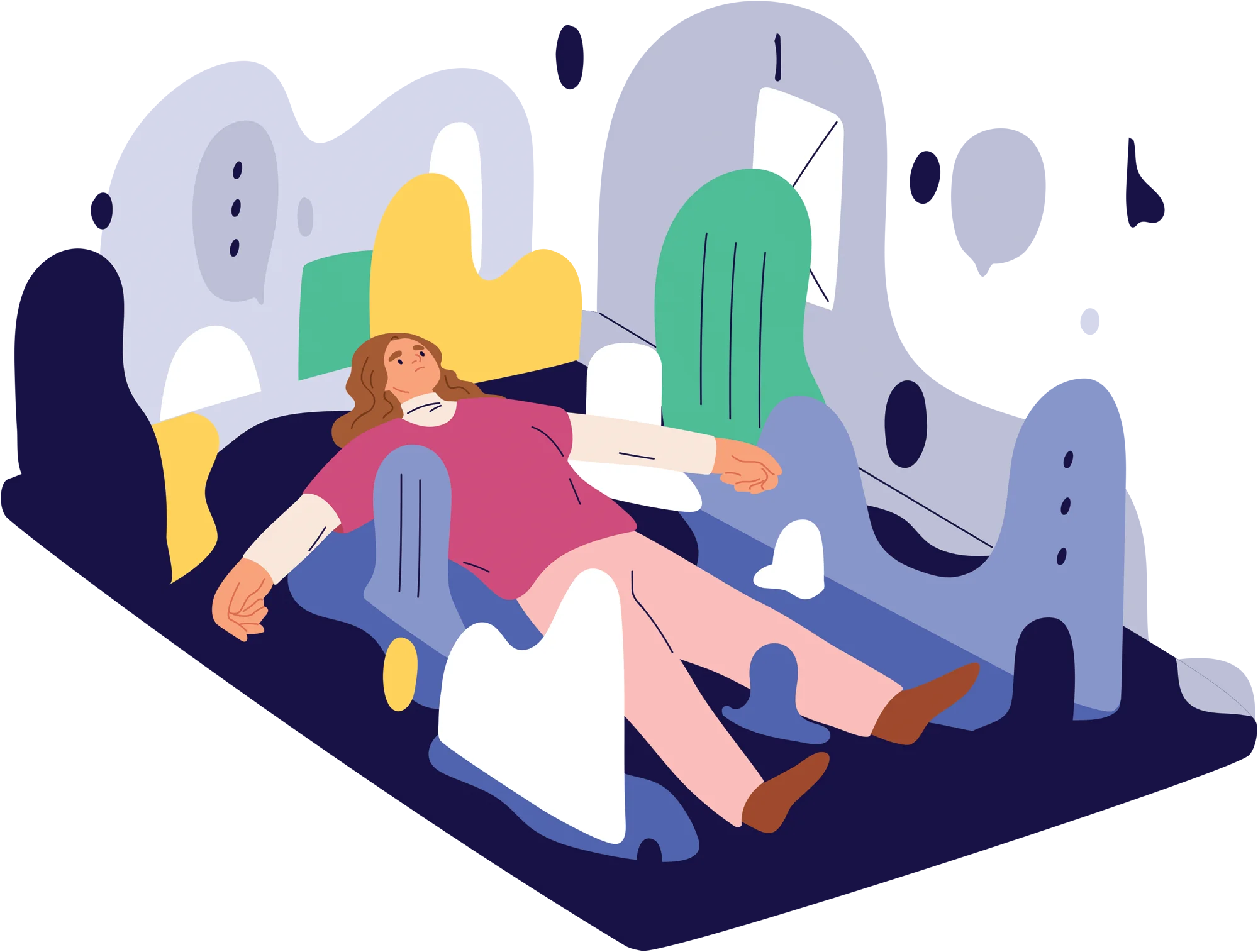
 elf-care is something every groomer needs to think about. We often hear about it in terms of getting massages or taking vacations, and while those things absolutely matter, they are not the whole picture.
True self-care isn’t only about what you do on your days off, it’s also about how you structure your workdays. By incorporating planning and organization into your daily work life, you can create a more consistent and sustainable level of self-care—one that doesn’t disappear the moment the workweek starts.
Have you ever noticed that your mind can’t quiet down when you feel like there are 50 things you need to do but don’t know where to start? Or maybe you walk into your salon and it’s so cluttered that your shoulders tense up immediately and you already feel behind before the first dog even arrives. That feeling isn’t a personal failure—it’s your nervous system responding to overwhelm.
Organization and self-care go hand in hand. When our days feel chaotic, our stress stays elevated. When we don’t intentionally take care of ourselves, burnout will follow. The good news is that burnout doesn’t usually appear overnight. And with the right systems in place, it can often be slowed, stopped or even reversed.
- Feelings of energy depletion or exhaustion
- Increased mental distance from one’s job, including feelings of negativism or cynicism
- Reduced professional efficacy or feeling like you’re no longer good at what you do
Within these three dimensions, there are often warning signs long before someone fully burns out.
Physical
Physical burnout is often the first sign to appear in a profession as physically demanding as grooming. Constant fatigue is common; even after a full night’s sleep you may wake up feeling exhausted. Muscles can feel perpetually sore and you may notice that you get sick more often or struggle with frequent headaches. Changes in appetite are also common, whether that means skipping meals during busy days or overeating without realizing it.

Emotionally, burnout can look like irritability or frustration with clients, coworkers or even the pets themselves. You may notice that grooming no longer brings you the satisfaction it once did or that you feel emotionally flat or disconnected from your work. Small problems feel much bigger than they should and stress becomes a constant thought pattern rather than something that comes and goes.
Cognitive
Cognitive burnout is often overlooked but incredibly impactful. You might struggle to remember appointments, instructions or routine tasks. Simple decisions feel overwhelming. You may start expecting the worst to happen, assuming every problem will turn into a disaster. Your brain feels like it can’t handle one more thing even when your to-do list isn’t that long.
Recognizing these signs early is key. Burnout doesn’t mean you’re weak, lazy or bad at your job, it means your system is overloaded. By addressing it head on, you can get back to feeling like yourself faster.
Our minds are not designed to “hold” large amounts of information; they are made to come up with new, brilliant ideas. When we use our minds as a parking space for things like “order more shampoo” we diminish the amount of space we have for both creativity and rest. Many groomers underestimate how much mental energy it takes to constantly keep everything in your head.
Using a planner and having a system for capturing notes and to-do’s gives all those thoughts a home. It’s not about creating a rigid schedule that leaves no room for flexibility, it’s about creating clarity. When you know what needs to be done and when, you reduce decision fatigue and anxiety.
Time blocking, buffer times between appointments and realistic daily limits are tools for sustainability. Overbooking might increase income short term, but it often accelerates burnout long term.
Morning
Starting your day the same way creates a sense of control and calm. This might include reviewing your schedule, prepping your grooming area or taking five quiet minutes before the first client arrives. On a personal level, consistent morning habits—even simple ones—can help ground you before the demands begin.
Evening
The transition from work to home is critical. Without a routine, unfinished tasks tend to follow us mentally into the evening. An end-of-day recap, which might include cleaning your workspace and a quick review of tomorrow’s schedule, signals to your brain that work is done for the day. Once you make this a consistent part of your day, you will notice how your thoughts are not constantly going back to work after you’re done for the day.
Weekly
Pick one day of the week to get yourself together before your work week starts. This doesn’t need to take all day; just a few focused hours can make a huge difference. Review your work schedule, your kids’ or spouse’s schedules, and any personal commitments. Plan meals, do laundry, schedule downtime and identify any potential stress points ahead of time. This proactive approach reduces last-minute scrambling and decision fatigue during the week.
Monthly
Breaking business tasks into manageable categories can prevent them from piling up. Consider four main areas:
- Finances
- Employees
- Marketing
- Maintenance
Addressing each area monthly ensures nothing gets ignored for too long and prevents the stress that comes from realizing something important has been neglected for months. Pick one week every month to focus on each of the four areas to create monthly routines in your salon.
There is a direct correlation between how cluttered your physical space is and how cluttered your mind feels.

Reduce Clutter
The simple act of cleaning out one drawer, one shelf or one closet can significantly improve how you feel for the rest of the day. When we decide to tackle everything at once and empty every cabinet, we often create a bigger mess that feels impossible to finish. That overwhelm can actually increase stress rather than relieve it.
Instead, focus on progress, not perfection. Set a timer for 15 minutes, choose one area to declutter and stop when the timer ends. Small, consistent efforts add up and create visible results that reinforce a sense of control and accomplishment. An organized space saves time, reduces frustration and supports your mental health, all without requiring a major overhaul.
One of the biggest myths about self-care is that it’s something extra—something you do only when you have time. In reality, the most effective self-care is built into your daily systems. Planning, routines and organization don’t just make you more productive, they protect your sanity, reduce decision fatigue, and give your brain and body a break from constant stress.
This doesn’t mean every day will be perfect or easy, but when you have systems supporting you, those hard days don’t have to push you toward burnout. By intentionally planning your time, creating simple routines and organizing your space, you’re not just taking care of your business, you’re taking care of yourself.
Start small. Pick one routine. Clear one space. Write one plan. Create a life that allows you to focus on what truly matters, because you can always make more money but you can never make more time.

 or many, the image of a dog groomer is a soothing one: gentle hands, puppy kisses and the rewarding transformation of a scruffy pet into a pristine companion. But the reality is far different…
Inside the high-velocity, high-demand salon, life is a constant battle against physical exhaustion and emotional strain. We often discuss burnout, the exhaustion from excessive work, and compassion fatigue, the toll of dealing with animal suffering. Yet, these concepts fail to capture the true, deeper psychological injury that is silently driving skilled professionals out of the industry.
This trauma is “moral injury”—a clinical concept originally applied to military personnel and healthcare workers. Moral injury is the profound distress resulting from actions that violate one’s deeply held moral or ethical beliefs.
For a pet groomer, this injury occurs when external pressures such as scheduling, aggressive clients, or financial necessity force them to compromise a pet’s comfort or safety. They are compelled to carry out actions they know are ethically wrong.
This article explores this insidious issue we call “Groomer’s Guilt.” The guilt is the psychological consequence of having a pet’s welfare in your hands while simultaneously adhering to an unforgiving economic and time-based model. By examining the systemic pressures that force groomers to violate their own moral code, we can finally address the fundamental changes required to save the careers and the mental health of those of us who care for pets.

When a dog is matted to the skin, a humane shave-down is the only solution, yet clients often demand painful dematting to preserve aesthetics—sometimes threatening the groomer’s livelihood or reputation. This constant conflict between the pet’s physical welfare and the owner’s demands creates a cumulative psychological toll that can span an entire career.
The weight of these ethical compromises does not get easier to carry with time because it only grows heavier. When a groomer is forced to choose between their own professional survival and the immediate physical suffering of a pet, the resulting internal fracture leaves a permanent mark.
Moral injury from the matting dilemma is addressed by removing the groomer’s fear of financial retaliation and replacing subjective terms with objective standards backed by thorough documentation. To do this, grooming professionals should implement a non-negotiable matting policy. This policy establishes the following strict, quantifiable rules:
- Severity Mandate & Time Limit: Any coat condition considered “pelted” must be shaved down (“naked”). The professional will spend a maximum of X minutes on the entire dog for the dematting process. Any effort exceeding this whole-dog time limit is deemed inhumane and is prohibited.
- Financial Deterrent: The required dematting or shave-down fee must be a significant surcharge, potentially double the price of a standard full-service groom. This reflects the increased difficulty, time, emotional toll and risk caused by the client’s neglect. This fee compensates the groomer fairly and serves as a financial deterrent against future lapses in care.
- Documentation: For any matted pet, before, during, and after photographs and video documentation are mandatory. The documentation must show the condition of the skin pre-groom and the absence of marks post-groom.
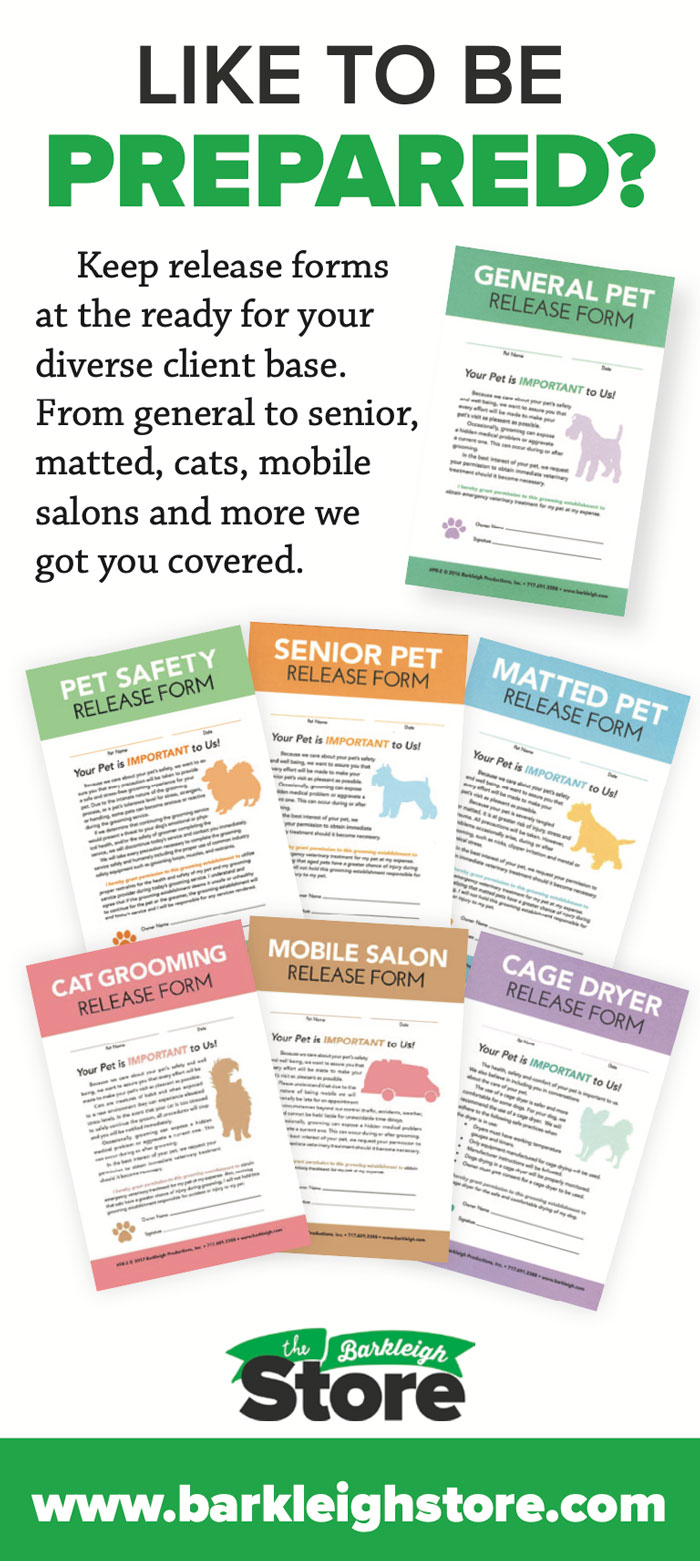
- Legal Protection: A signed Matted Pet release form will create a legal paper trail.
- Refusal: Any client refusing the required shave-down or the associated fee must be politely turned away, protecting both the animal’s welfare and the groomer’s integrity.
The groomer knows the kindest, safest groom is a short, stress-minimizing “comfort clip,” performed quickly, allowing the dog to lie down frequently. The owner, however, may be unwilling to accept their dog is a senior and insist on the full, time-consuming “fluffy cut” which requires significant standing, brushing and scissoring.
The moral injury occurs when the groomer must subject the fragile, uncomfortable dog to an extra 30–60 minutes of stress to appease the client, often with the knowledge that this stressful session is the pet’s last memory. This conflict leaves the groomer with a profound sense of guilt from jeopardizing the animal’s limited remaining comfort.
Whether it is the battle over a matted coat or the heartbreaking dilemma where a pet’s final moments are spent on a grooming table, we are constantly forced to choose between the owner’s vanity and the animal’s dignity. To bridge the gap between the heartbreak we have witnessed and the professional integrity groomers deserve, we must move from passive emotional endurance to active, formal advocacy.
- The Physical Toll: Grooming a senior pet requires extensive handling. This process puts a significant toll on fragile joints, and the dog may struggle to stand or walk for a period of time post-session.
- The Comfort Mandate: The contract establishes a “safety first” protocol. The groomer’s priority is the shortest, kindest session possible, meaning the style must minimize the time spent standing, washing, drying and scissoring.
- CPR: Does the owner want you to save the dog if they collapse in your care? There are repercussions to performing this on such a frail pet.
- The Final Say: This protocol gives the groomer the explicit power to refuse service if the client rejects the comfort mandate.
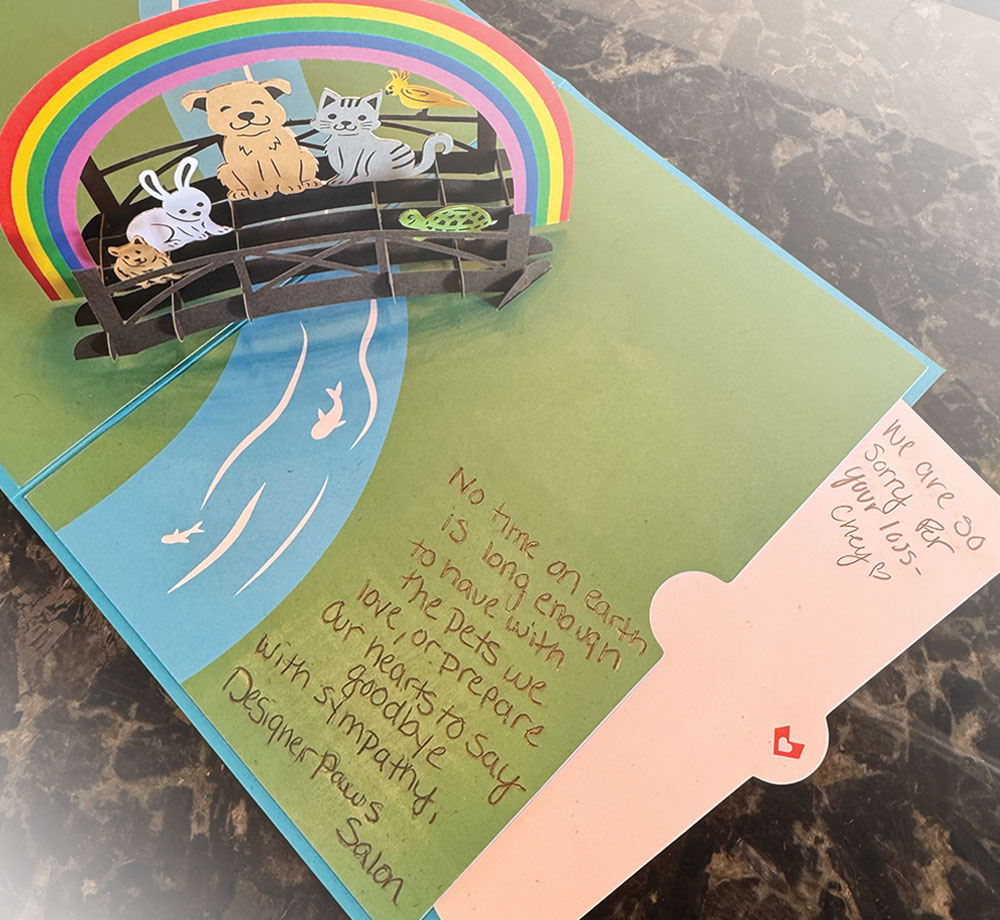
- Timing of Notification: If a client notifies the salon that a senior or ill pet has passed, management should ensure the news is delivered to the groomer at the end of the day, rather than at the beginning or middle. This prevents the groomer from being forced to perform delicate work while emotionally compromised.
- Communal Grief Rituals: Salons should facilitate compassionate, tangible ways for staff to process loss. One effective method is creating “Over the Rainbow” cards. All staff who worked with the pet should contribute a positive memory or sentiment, allowing for communal healing.
- Compassionate Time Off: Following a particularly traumatic loss or difficult last groom, management should actively offer the groomer a brief period of time off or light duty to process the emotional toll, reinforcing that their wellbeing is valued over immediate scheduling needs.
The trauma stems from a deep sense of powerlessness. The groomer carries the heavy burden of knowing a life is at risk, yet they must return the animal to an owner who may deny, dismiss or delay the urgency of the situation, leaving the professional to navigate the overwhelming psychological toll of a crisis they have no authority to resolve.
When you are in that emotional state, your reflexes are compromised and you are not thinking straight, so the likelihood of an injury to another dog or to yourself is very high.

- Release Form Coverage: The intake paperwork should include a specific release form outlining potential risks during grooming, including the possibility of nicking unseen skin irregularities such as moles, warts or embedded objects.
- Discovery Protocol: If serious conditions like hot spots, maggots or deep sores are discovered, the groomer must immediately stop and take clear, dated photographs and forward the documentation to the client.
- Immediate Staff Support & Trauma Debriefing: In the event the groomer discovers a severe, acute or traumatic medical issue (including a collapse, seizure or death), they should be immediately removed from the grooming floor.
- Training & Communication: Groomers should receive formal pet first aid and CPR training and also be equipped with standardized, calm communication scripts for relaying distressing findings.
Through the high-speed, volume-based model often enforced by management, groomers frequently receive dogs in poor, matted condition that ethically demand a shave-down. This triggers an immediate conflict: The groomer shaves the matted dog to prevent unnecessary pain (upholding their ethical code); the client, unhappy with the resulting short coat, blames the groomer and posts a bad review; and finally, the salon owner, prioritizing reputation or short-term revenue, retaliates against the groomer.
These professionals are intentionally put in a position where they must either violate their moral code by attempting a painful dematting—risking injury and guilt—or advocate for the dog and face institutional punishment. After repeated exposure to this profound moral betrayal, the mental and moral fatigue becomes overwhelming, serving as a primary driver of burnout and the reason skilled professionals leave the industry.
The institutional failure to provide basic human compassion and time for processing trauma is particularly toxic. This crisis is compounded by the fact that the grooming industry often attracts highly compassionate, empathetic individuals, including many who are neurodivergent.
These professionals are driven by a powerful moral imperative to help and protect animals, often extending themselves beyond reasonable professional limits. However, this very compassion becomes a liability in a broken system. The intense desire to “fix” a neglectful situation sets them up for burnout and depression when their efforts to act ethically are consistently met with institutional betrayal.
- Owner Accountability: Salon owners must commit to having the groomer’s back, regardless of a bad review. This means shielding the groomer from client anger when necessary ethical actions (like a shave-down) are taken.
- Client Education & Refusal Policy: Owners must empower their staff with the ability to safely refuse service. If a client is unable or unwilling to understand the dog’s welfare needs, refusal is a necessary tool to protect both the animal and the groomer’s mental health.
- Ethical Quotas: Owners and managers must establish ethical quotas, which are policies that limit the maximum number of large, elderly, or difficult dogs a groomer can safely handle in a single day or week. Most critically, the baseline pay for a groomer must be high enough to allow them to comfortably say no to any service that violates their ethical code.
Management must recognize that their employees are not just numbers; they are human beings whose mental health directly impacts performance and retention. This requires shifting focus from prioritizing sheer volume to cultivating a balanced environment where a groomer is mentally capable of doing the workload.
Productivity increases when employees feel valued, have a support system and know they can have a “bad day” without fear of retaliation. When staff are happy and feel understood by management, they are less likely to leave or carry resentment.
While toxic work environments often start with management, employees must also be mindful of the baggage they carry from previous toxic jobs and be willing to participate in fostering a positive culture. True change is a concerted effort required from the employee, the employer and all levels of management; everyone must actively want a healthy environment.
In addition to professional help, there are practical, actionable steps that can be taken in the salon immediately to support mental load. One idea is to establish dedicated “Mental Health Days,” which are separate from sick days, allowing staff to take a day off to reset when they are feeling overstimulated or overwhelmed, with no questions asked. Management can also normalize the use of “Headphone Days” as a boundary tool, which will allow groomers to signal they need to focus on work and minimize distractions, indicating that communication should only occur when absolutely necessary.
By implementing these systemic changes, equipping groomers with the ethical authority to act as true advocates for the animals and providing foundational support for their wellbeing, the industry can heal the moral wounds of its professionals, safeguard the pets in their care and create a truly sustainable and rewarding career path.
Photos provided by Lynn Paolillo
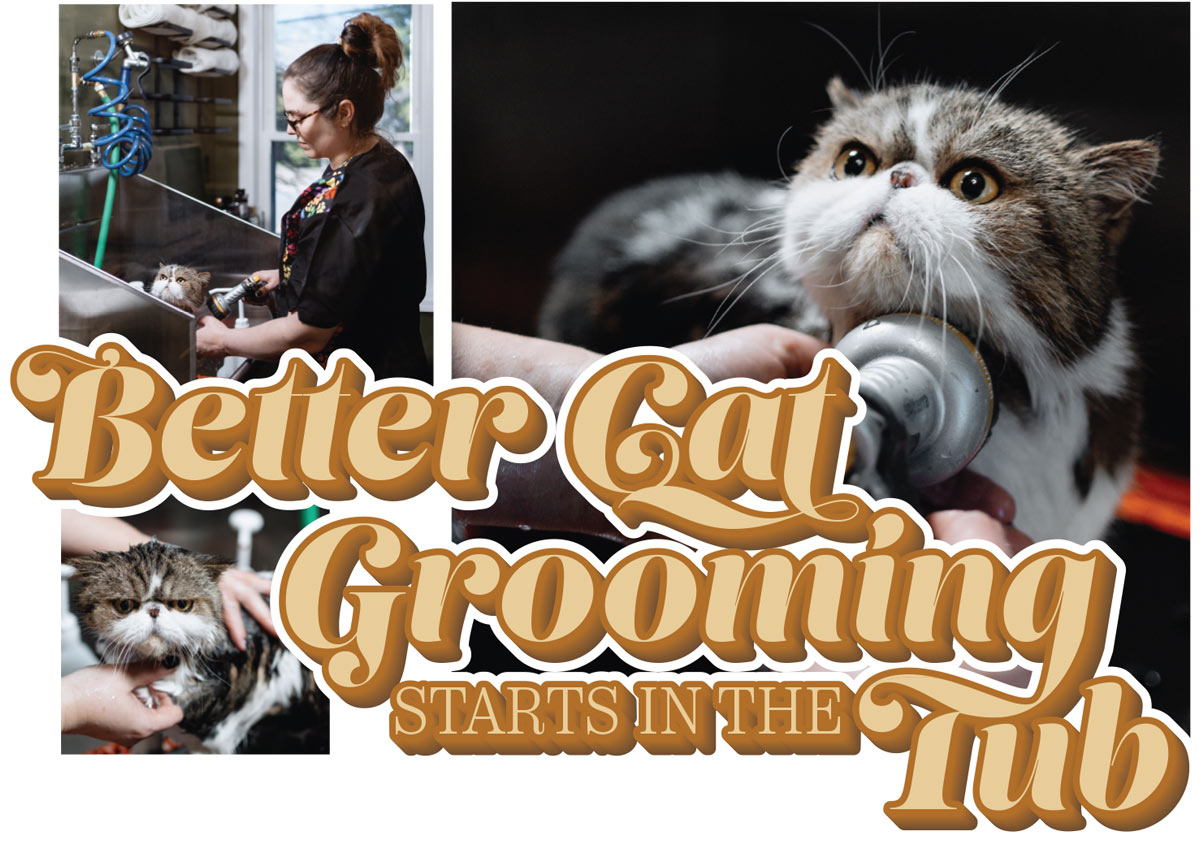
 or all the time we spend learning shaving patterns, shopping for new tools and chasing the perfect fluffy finish, the real foundation of a great cat groom begins long before a comb ever hits the coat. It starts in the tub.
Ask any experienced cat groomer where things go wrong and they’ll often point to the bath. While some groomers avoid bathing cats, others realize the importance a clean coat plays on not just the finished groom, but also on the cat’s overall coat condition long after they’ve left the salon. That’s why elevating your bathing skills is one of the simplest, most effective ways to improve your grooming results without spending another dime on new tools or fancy products.
A good cat bath means getting deep in the coat, getting through the thick of it and actively scrubbing with your fingertips to work product all the way down to the skin.
A good cat bath means getting deep in the coat, getting through the thick of it and actively scrubbing with your fingertips to work product all the way down to the skin.
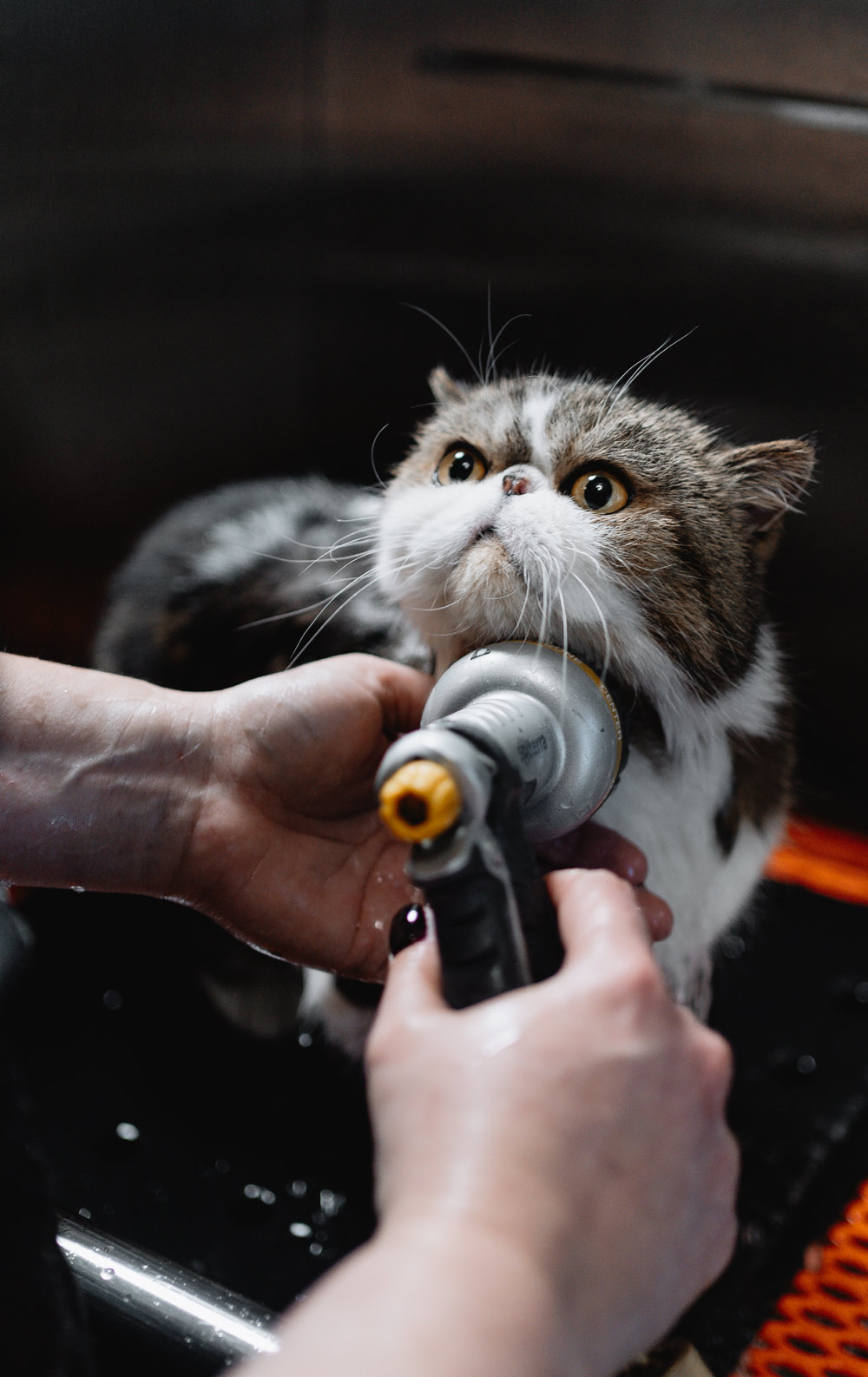
To do this, hold the nozzle right up against the skin. Not only does this get the water where you need it to go (the skin), but it also muffles the sound of the water which helps decrease the chance of the cat getting upset by it.
Once the coat is completely wet (meaning there are no dry spots), add and work in your shampoo. Places to check that they are thoroughly wet include:
- The lower belly and tuck-up area
- Inner front and rear legs where the bend is
- The chest leading into the armpits
- Under the tail and back of the rear legs
Spending a bit of extra time (and water—yes, I’m talking to you, mobile groomers) will not only lead to a cleaner cat but also cut down on the overall groom time and water consumption by having the shampoo lather and rinse more easily.
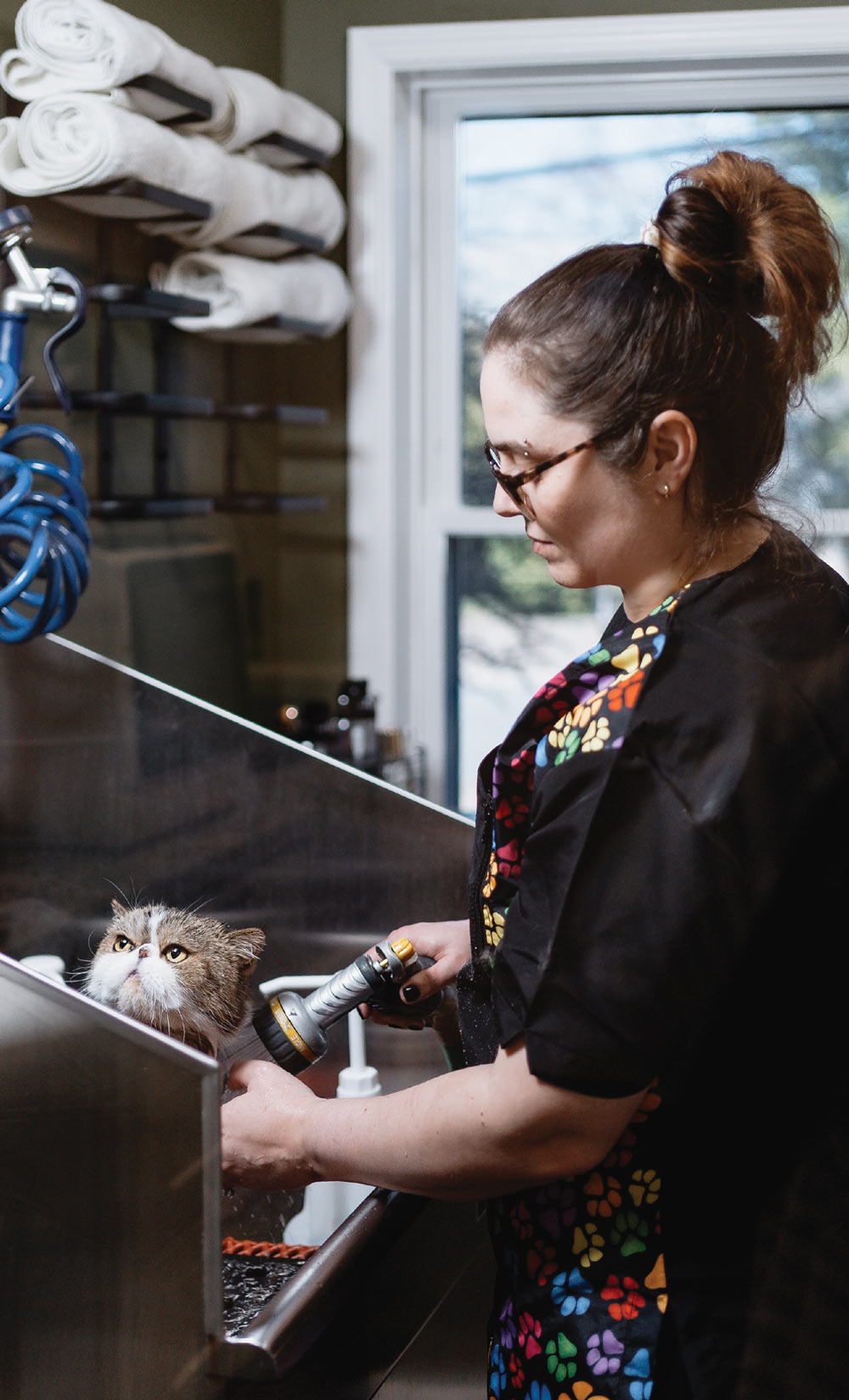
Letting the water run in the bottom of the tub to warm up will give the cat a chance to hear and acclimate to this new sound. If you have a stainless steel tub, you can also put a towel in the bottom to help dampen the echo of the water hitting the metal. With first-time grooms, I will run the water a bit while the cat is nearby in their carrier so that the first time they hear the water running isn’t when they’re up close to it.
Spending some extra time rinsing gives cats the opportunity to pass the realizing-their-wet threshold. And if they do start to inch towards a meltdown, you still have both hands to help calm and control a wet but not soapy, slippery cat. In a worst-case scenario, like if the cat starts panting heavily, you can stop the groom right there, towel-dry and reassess, whereas sending home a soapy cat is less than ideal.
I would also recommend a nozzle that you can control the water flow by squeezing it with your hand. That way if you have to let go of the nozzle to hold the cat, the water doesn’t continue to run and spray uncontrollably.
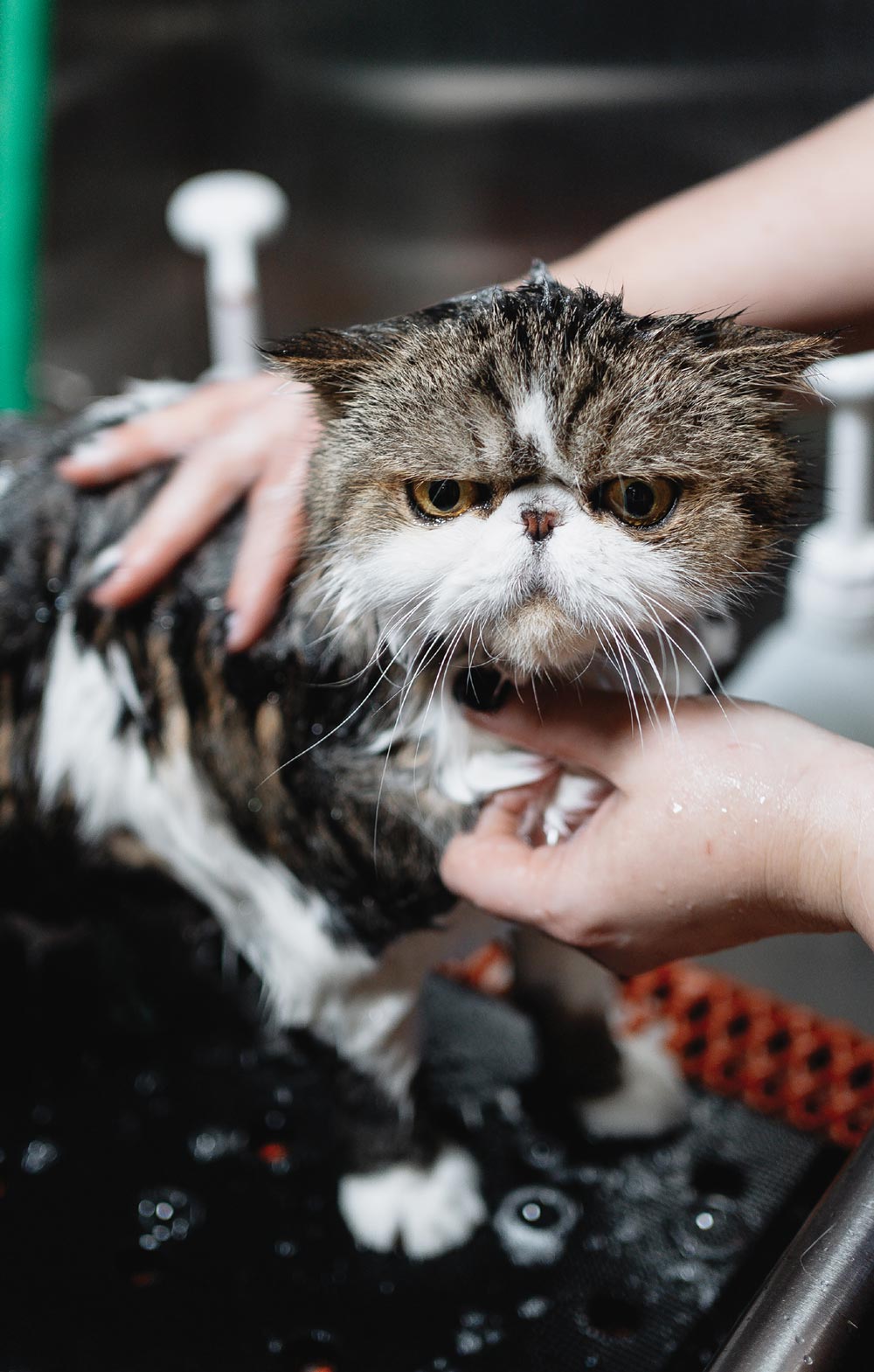
Because one of my goals during bathing is to get the coat thoroughly saturated with water, I will sometimes start with the cat in a small tub of warm water with a pump or two of shampoo. I find this particularly useful with thick, full-coated cats like Persians and Siberians, and for elderly cats that are very clumpy and greasy that do not like the agitation of scrubbing. This gets the water and some shampoo where it needs to go so that the rest of the bath goes smoothly.
After a couple minutes in the soak, I’ll drain the small tub (I like a collapsible dish tub with bottom drain), shampoo and continue the bath like normal. Rinsing is always done with a nozzle to make sure no shampoo residue is left behind.
Using a rubber or silicone brush during the second shampoo can help lift even more, but be cautious around cats with thin or sensitive skin. And be sure to go with the direction of the coat, as this helps dead coat to release better than going against the growth with brushing or combing.
Don’t skimp on scrubbing areas that get tucked up while the cat is laying down. Places like the legs, paws, under the tail, and lower chest hold onto grease and clumped hair. Scrubbing should get through the thick coat so that the skin is thoroughly clean.
Blow-Drying Benefits
My usual drying routine for cats starts with wrapping them in a thick towel “burrito” to pat the face dry with a washcloth, clean the eyes, check around the mouth and chin area, and clean the ears. I then gently squeeze (not rub) the coat with the towel, unwrap the wet towel and rewrap with a dry one. At this time you can put a Happy Hoodie, e-collar, Air Muzzle, etc. on them to limit noise around the head for blow-drying.
Next I start the HV dryer on a low speed with no nozzle and give the cat a minute or two to acclimate to the sound. I start drying at the rib cage/side area with slow circles or back-and-forth movements. If the cat tolerates it well, I’ll use a flat, water-peeler-style nozzle and turn the dryer up to a medium to med-high speed to get the bulk of the water out of the coat, especially down the legs and paws.
Once the coat is 90-95% dry, I remove the nozzle to let the warm air help to finish drying. I’ll then turn the dryer back down to low, remove any Happy Hoodie or e-collar and dry around the head.
Better cat grooming starts in the tub. A good bath sets the tone for every other step: drying, combing, trimming and coat condition between appointments. If you want better results without adding stress or time to your day, the bath is where to begin.
Your clients may never know exactly what you did in the tub, but they’ll feel the difference when their cat comes home cleaner, softer and more comfortable than ever before.


 or many of us, the word “stress” has become a common term tossed around with a flippant remark or a threatening stare. You most likely have used the word in some form when explaining why you failed to complete a task: “Things are really stressful today; I’ve barely had time to breathe.” Or perhaps you referred to it after you snapped at a co-worker: “Don’t mind me, I’m just stressed out.”
Stress’s “line in the sand” is the difference between being bored and being overwhelmed; between being challenged and being distressed. Good stress is a healthy challenge—one that stimulates a person to perform better. Bad stress is being in a situation where you have no control—one that kicks in your fight-flight-freeze behavior.
At this point, you may be thinking that since stress is a personal state of mind, the business has no “business” in the employee’s mind, but this is where the stance to “leave your problems at the door when you come to work” comes into play. The truth is, the business should pay attention to team members’ stress.
Team members experiencing stress may have depression, anxiety, compulsive behaviors, substance abuse, headaches, fatigue, insomnia, stomach disorders or high blood pressure. Additionally, there may be other signs of mental illnesses such as missing deadlines, increased absenteeism, irritability or difficulty concentrating. These signs or situations make it hard to talk to a person about what they are experiencing. In addition, stress can have a ripple effect, affecting others on the team.
You want to have a culture that emphasizes productivity and connectedness. A connected culture has a shared identity and an understanding of the vision. A connected culture also values everyone on the team and provides the opportunity to voice ideas and opinions.
Dr. David Posen, author of Is Work Killing You: A Doctor’s Prescription for Treating Workplace Stress, placed workplace stress into three categories: Velocity, Volume, and Abuse. And these three categories are readily apparent in the workplace of pet professionals:
- Velocity: Everything seems to happen at the speed of light. Clients want access to you ASAP—be it by phone call, text message or appointment. Team members want tasks done as of yesterday.
- Volume: Appointment requests outnumber openings available. Pet professionals are busy and the sheer volume of work can result in long hours and skipped meals.
- Abuse: The third category is one we often tend to be silent about. It is about abuse, harassment, intimidation, bullying, belittling and threats. It can be snide remarks from a co-worker about your incompetence, intimidation from a client accusing of you not caring about the pet, threats about being fired if you don’t move faster or harassment from those difficult personalities.
- Implementing organizational changes to reduce employee stress
- Clearly defining roles (job descriptions) and responsibilities (SOPs)
- Creating a quiet area for meals and scheduling meal breaks so they aren’t missed
- Ensuring that mental health services are part of the organization’s health benefits and encouraging the team to utilize the services
- Providing education and training and using resource materials from the insurance provider at monthly meetings to discuss dealing with stress
- Always focusing on what is wrong
- Criticizing or punishing people for taking time off
- Giving negative feedback and ignoring praising or positive feedback
- High turnover of team members
- High absenteeism
- Low productivity
- Abusive management or leaders
- Lack of leadership or an overly dominating leader
A business can no longer demand that employees leave their problems at the door when they come to work. Businesses need to have a strategic plan to address its team members’ mental and emotional wellbeing to allow individuals to reach their full potential, cope with stressors, be productive, and deliver high-quality client service and pet care.
Louise Dunn is a renowned award-winning speaker, writer and consultant. She brings over 40 years of in-the-trenches experience and her business education to veterinary management. Louise is founder and CEO of Snowgoose Veterinary Management Consulting. SVMC works with veterinarians who want to develop a strategic plan that consistently produces results. Most recently Louise received many awards including the WVC Educator of the Year numerous times and VetPartner’s The Life Time achievement Award in January 2016.


Groomed by Sydney Porras
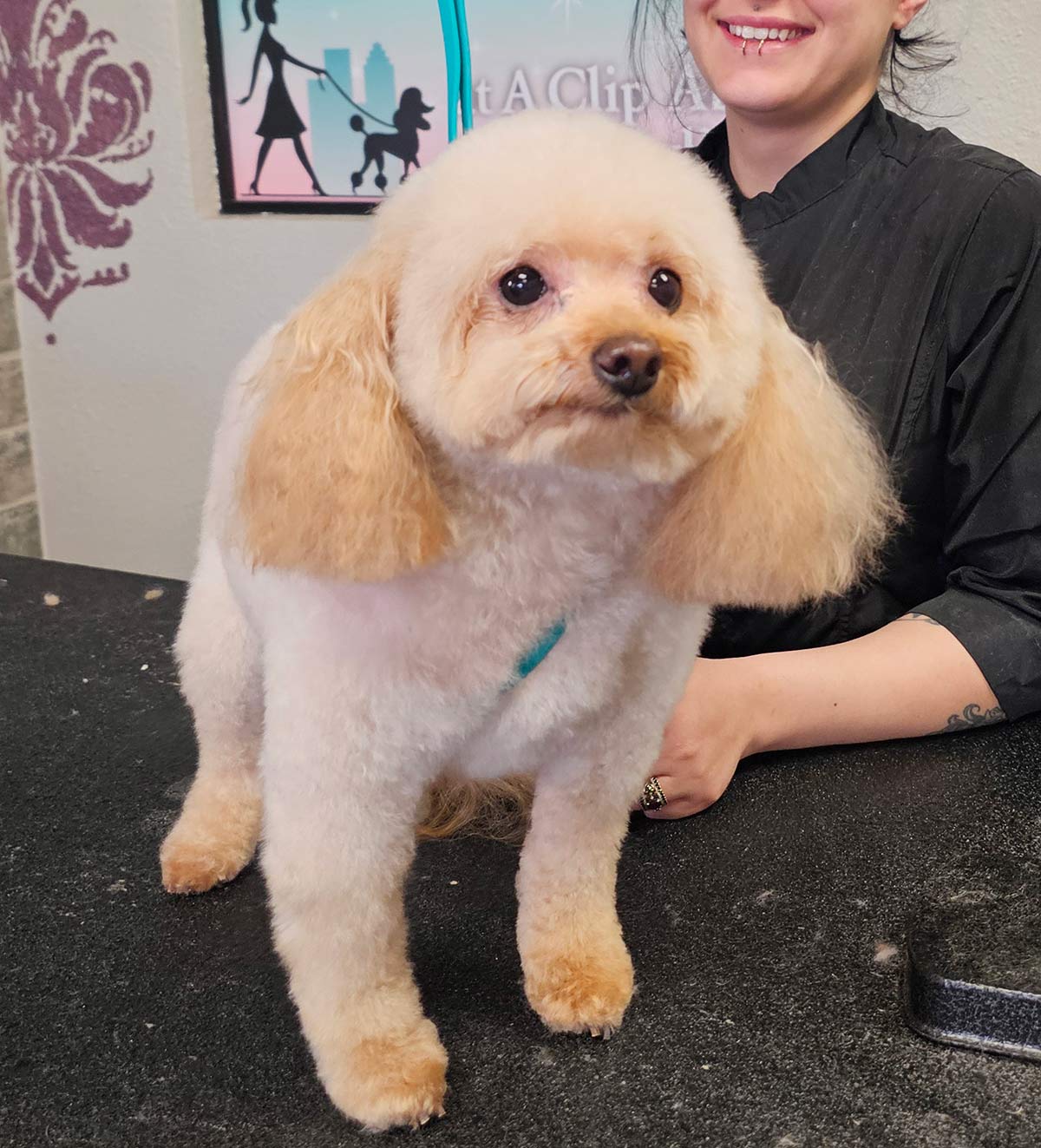
 his headpiece style has to be the number-one most-requested head trim amongst pet salon clients. The following guide is for any level groomer, as clippers will be used to set everything. Only slight adjustments will be needed for each coat type and size of dog you’re working on.
Fig. 1) Comb the head out thoroughly, being mindful of which way the clippers will be going over the coat. On the top of the head, comb it back towards the neck.
Fig. 2) Comb the cheeks down and get the hairs free from inside the upper lip.
Fig. 3) Choose whichever length the client wants, remembering that the larger a dog is overall, the longer the coat will need to be to achieve the round shape. Clip the top skull from the stop to the occiput.
Groomed by Sydney Porras
his headpiece style has to be the number-one most-requested head trim amongst pet salon clients. The following guide is for any level groomer, as clippers will be used to set everything. Only slight adjustments will be needed for each coat type and size of dog you’re working on.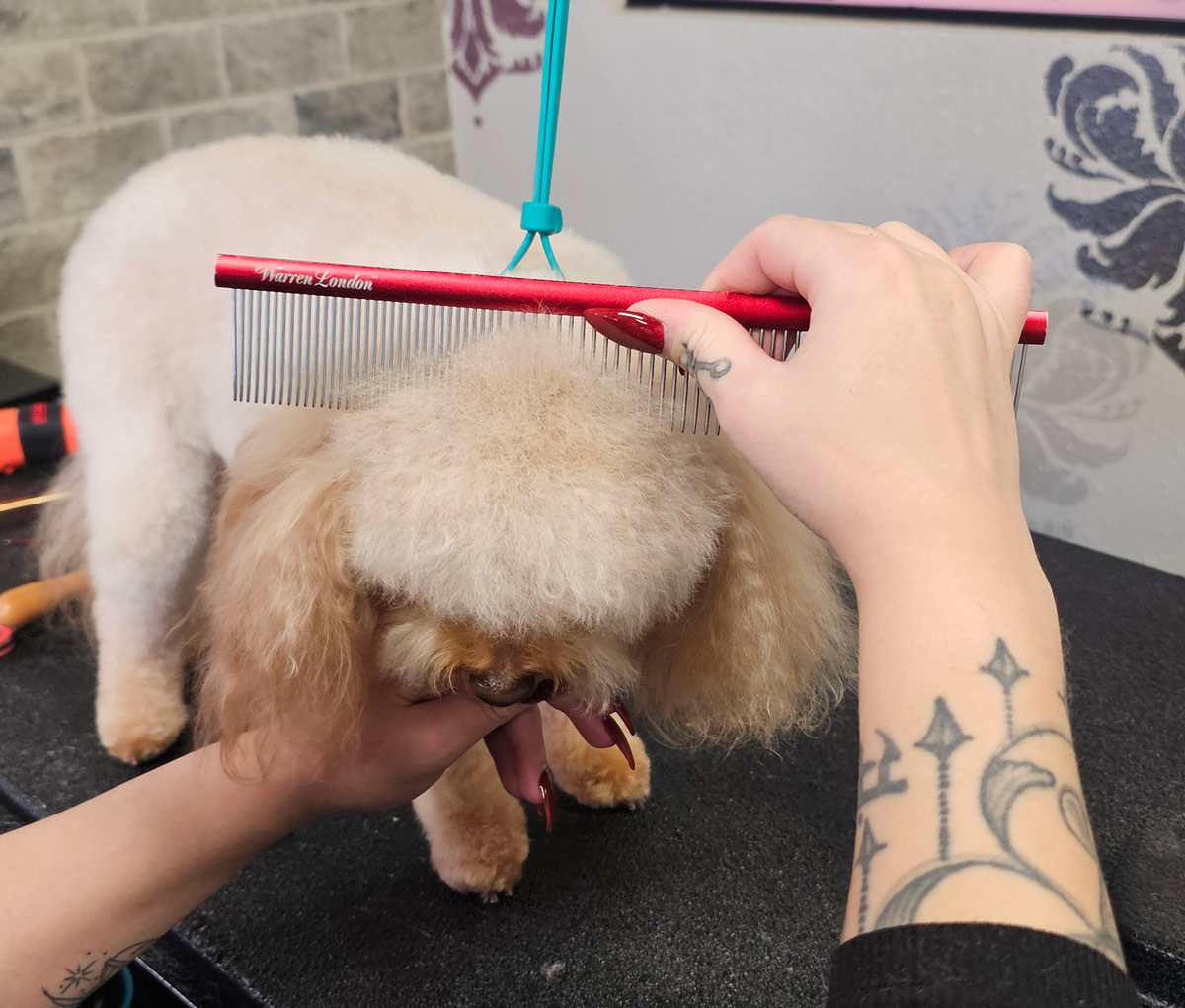
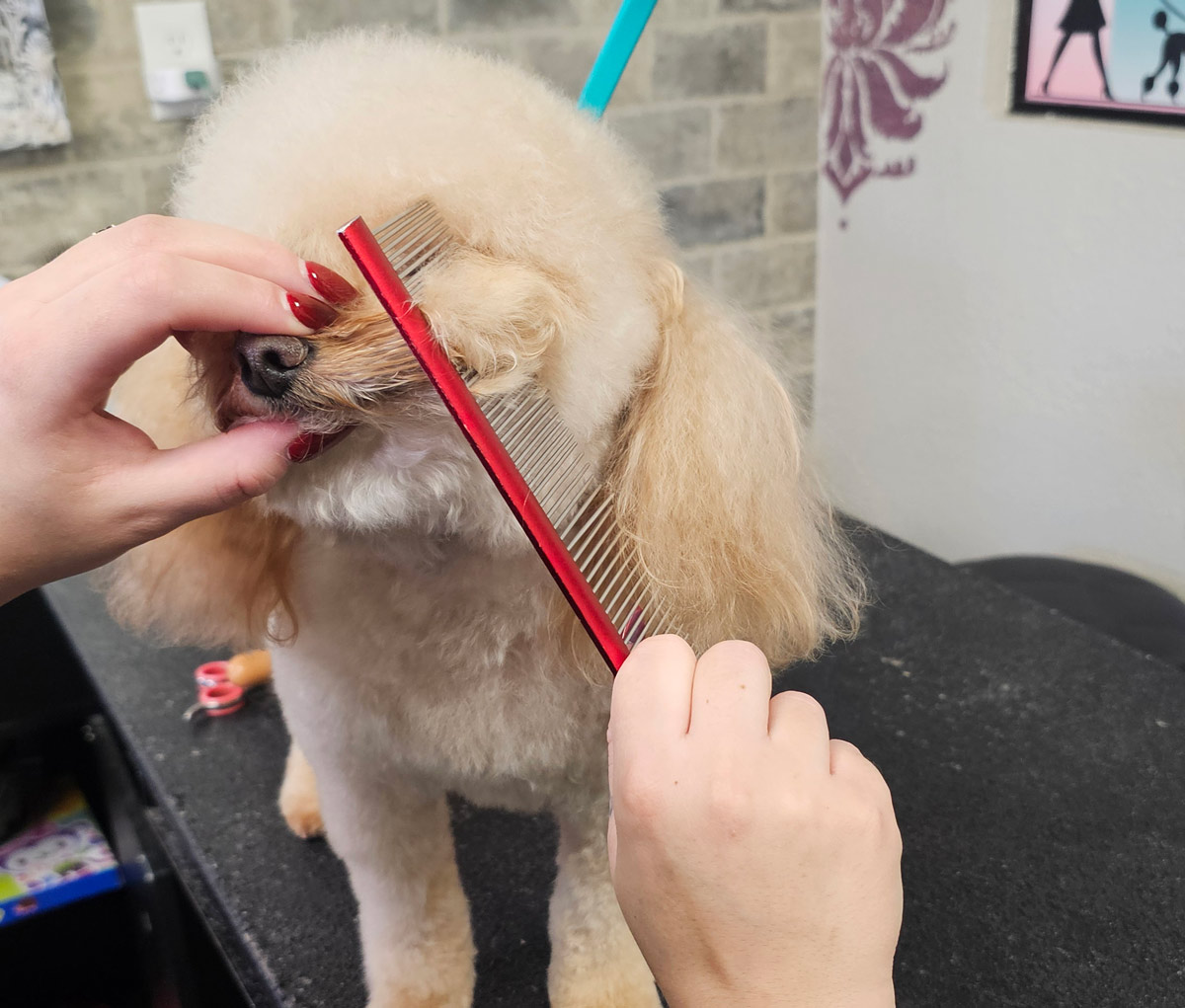
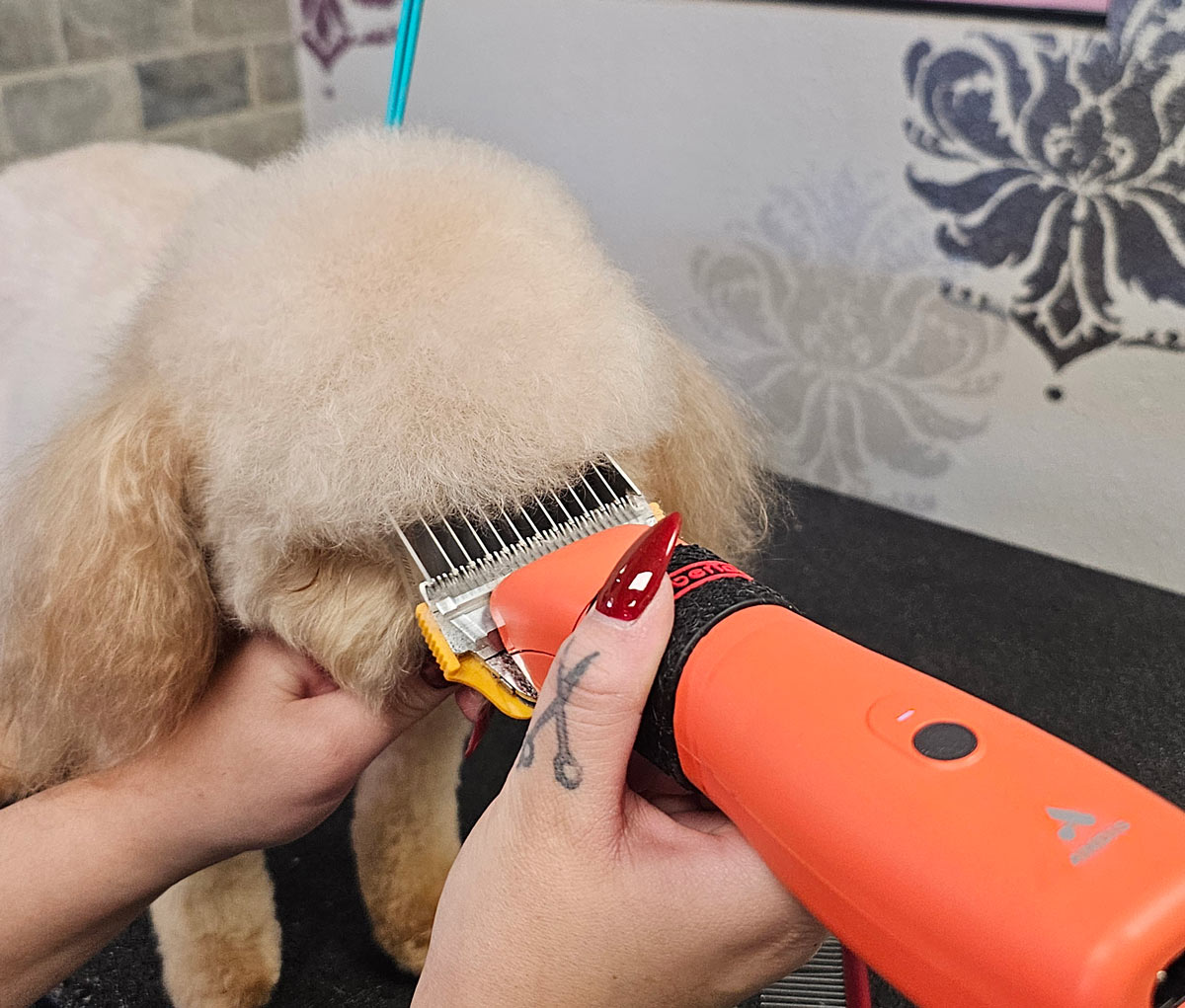
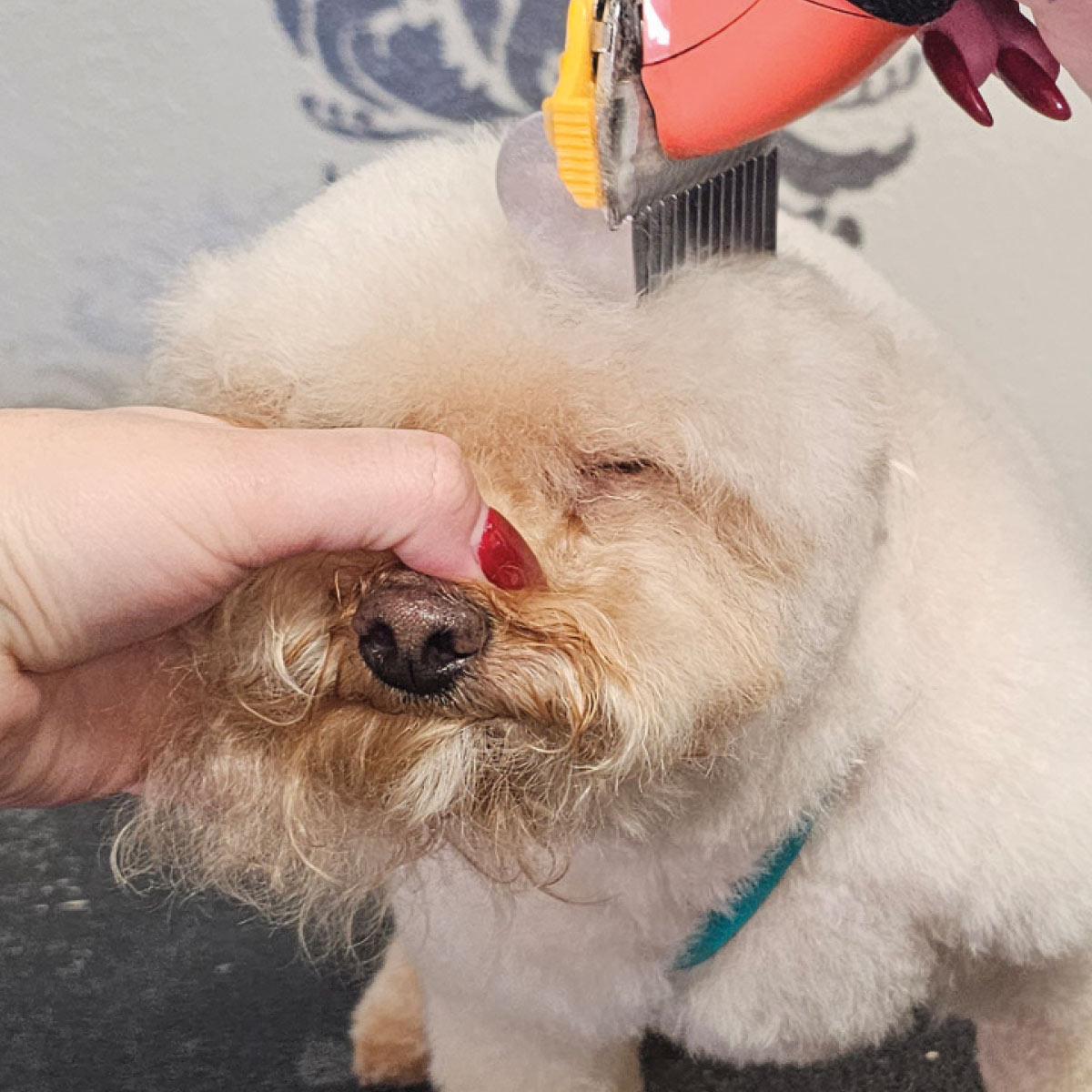
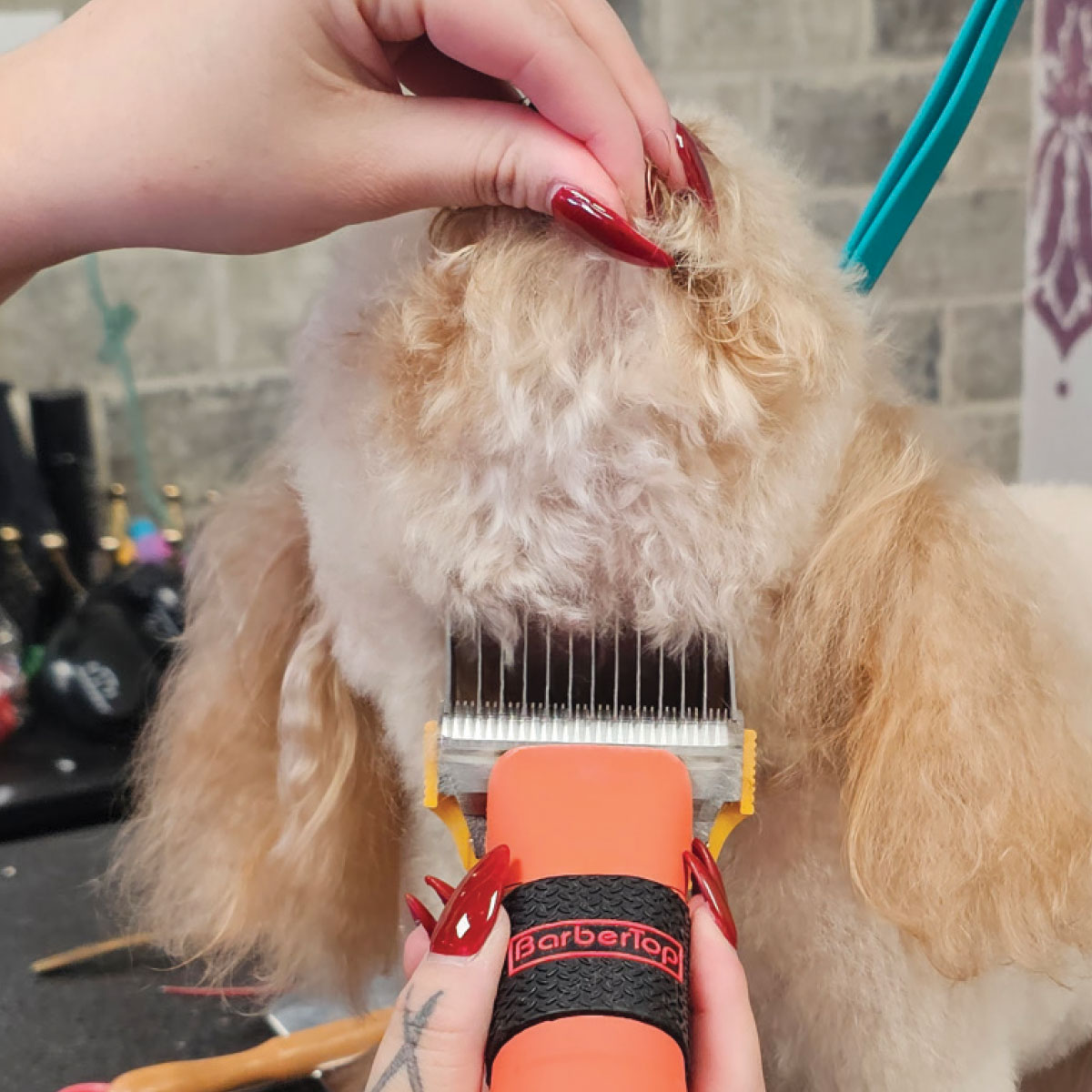
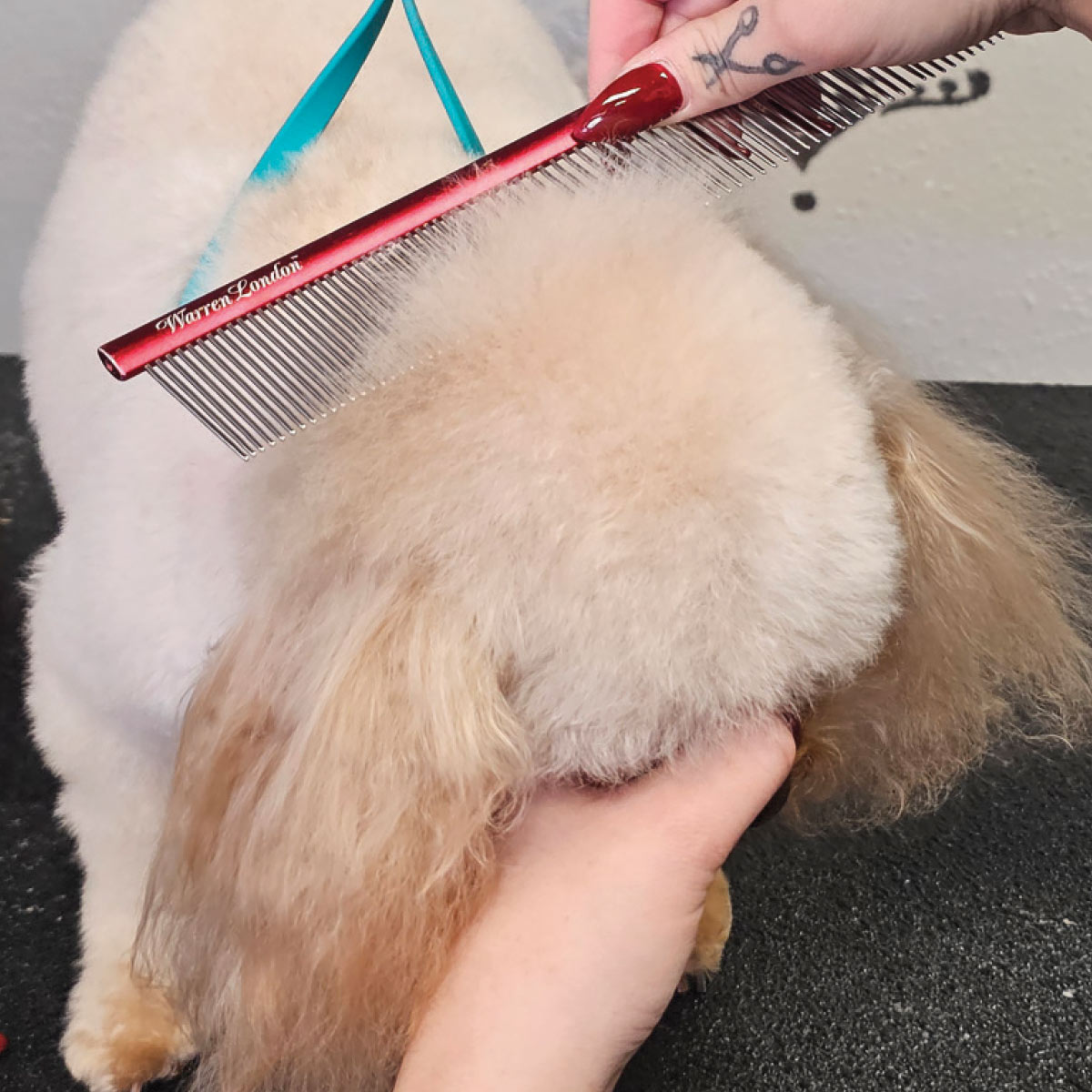
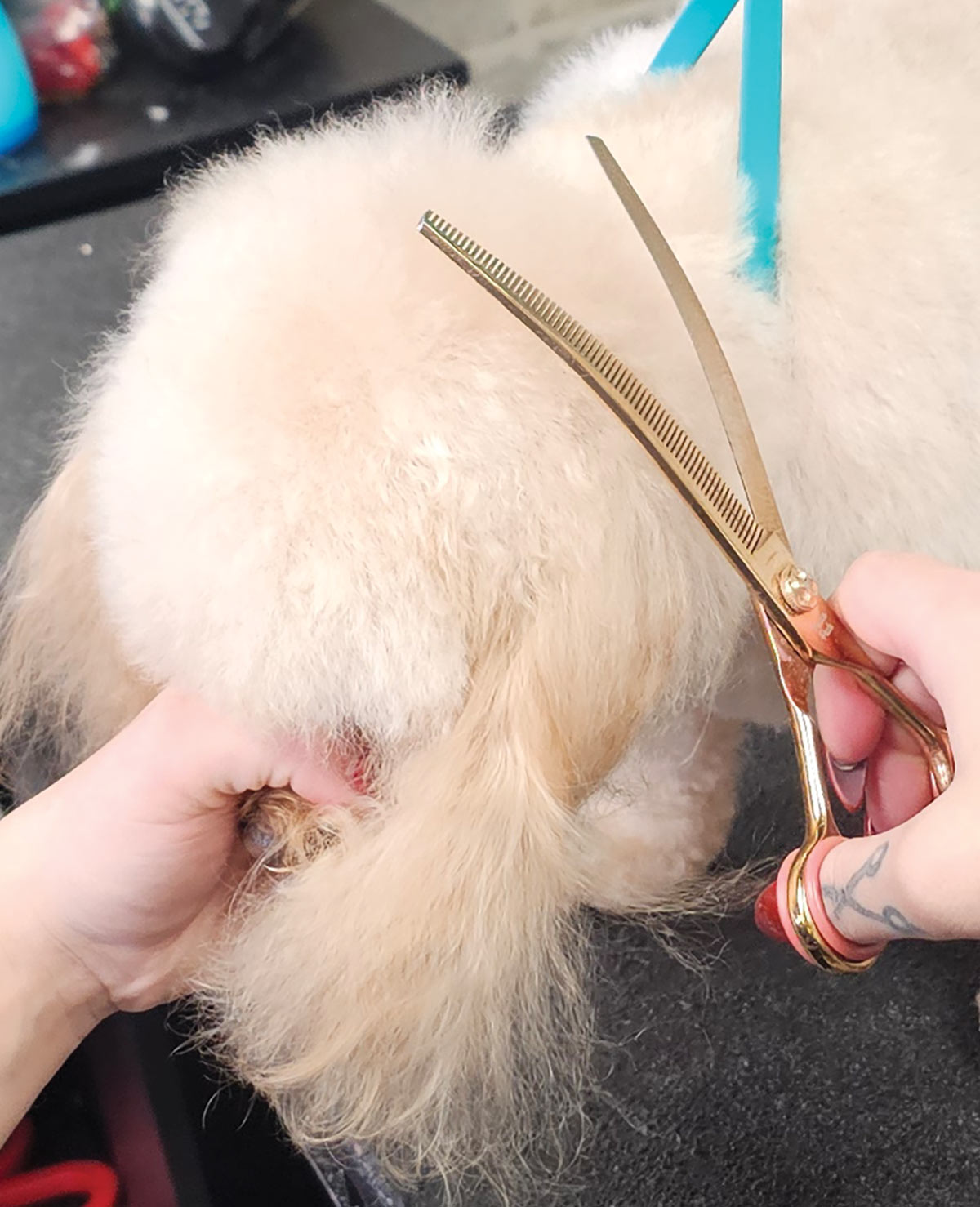
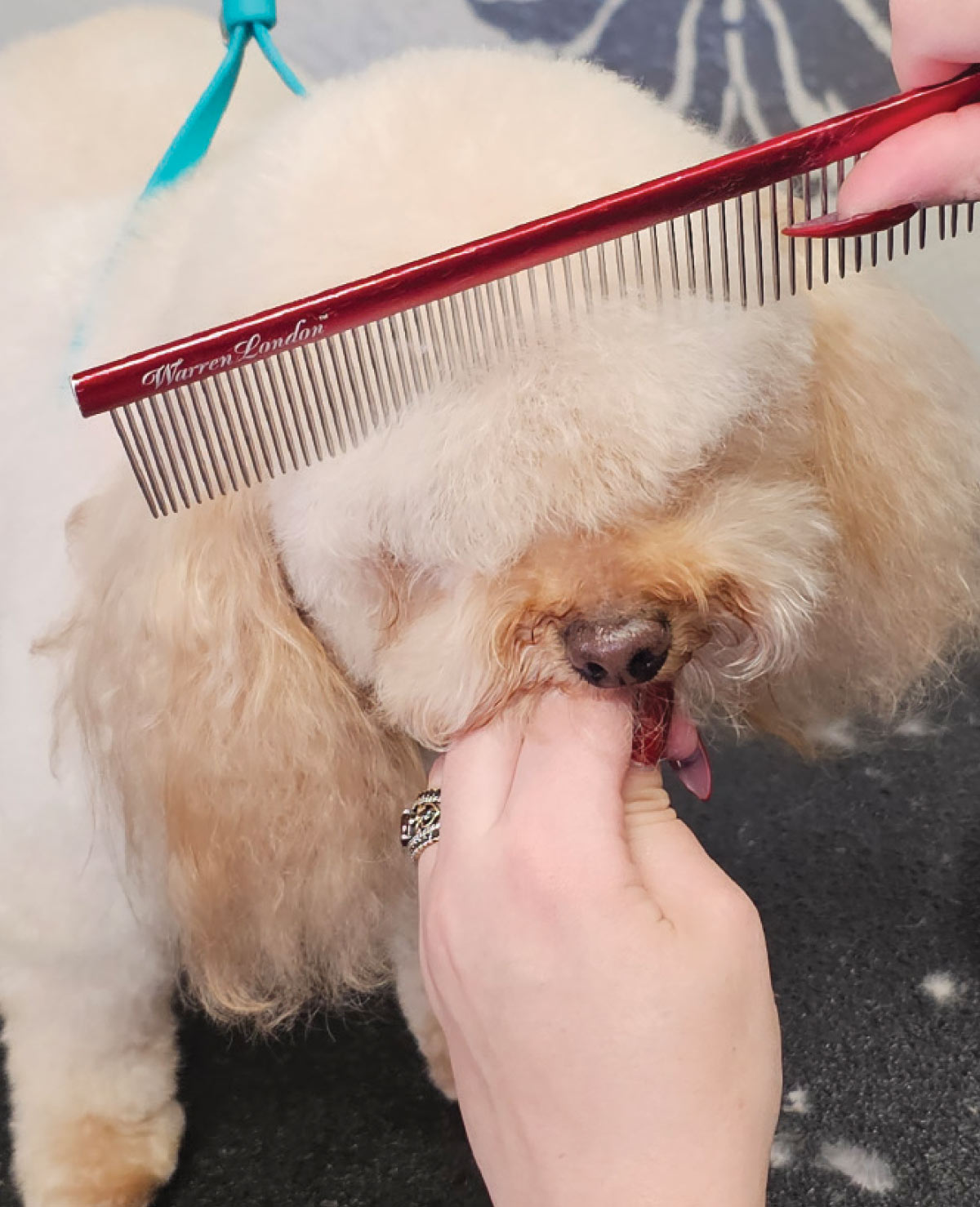
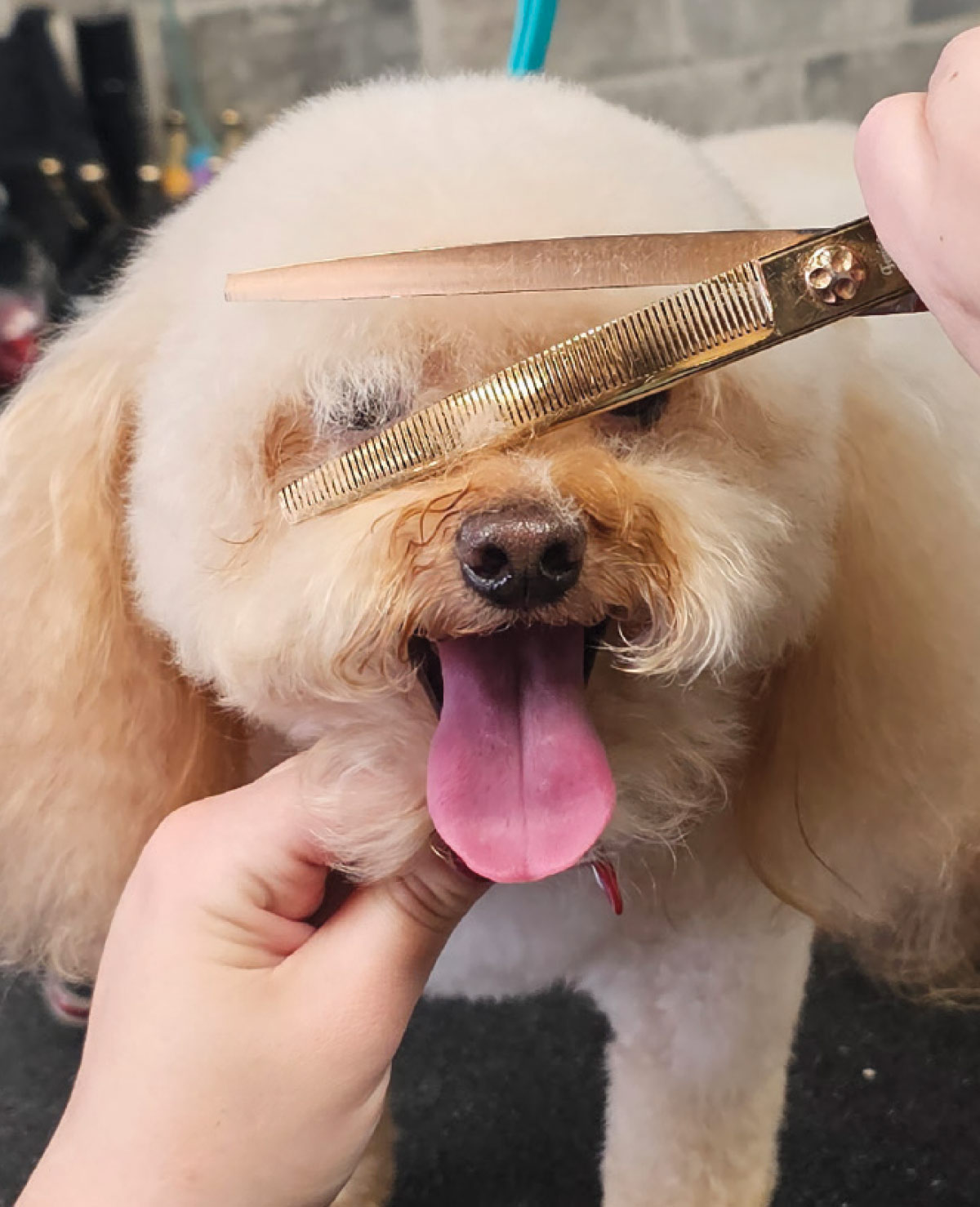
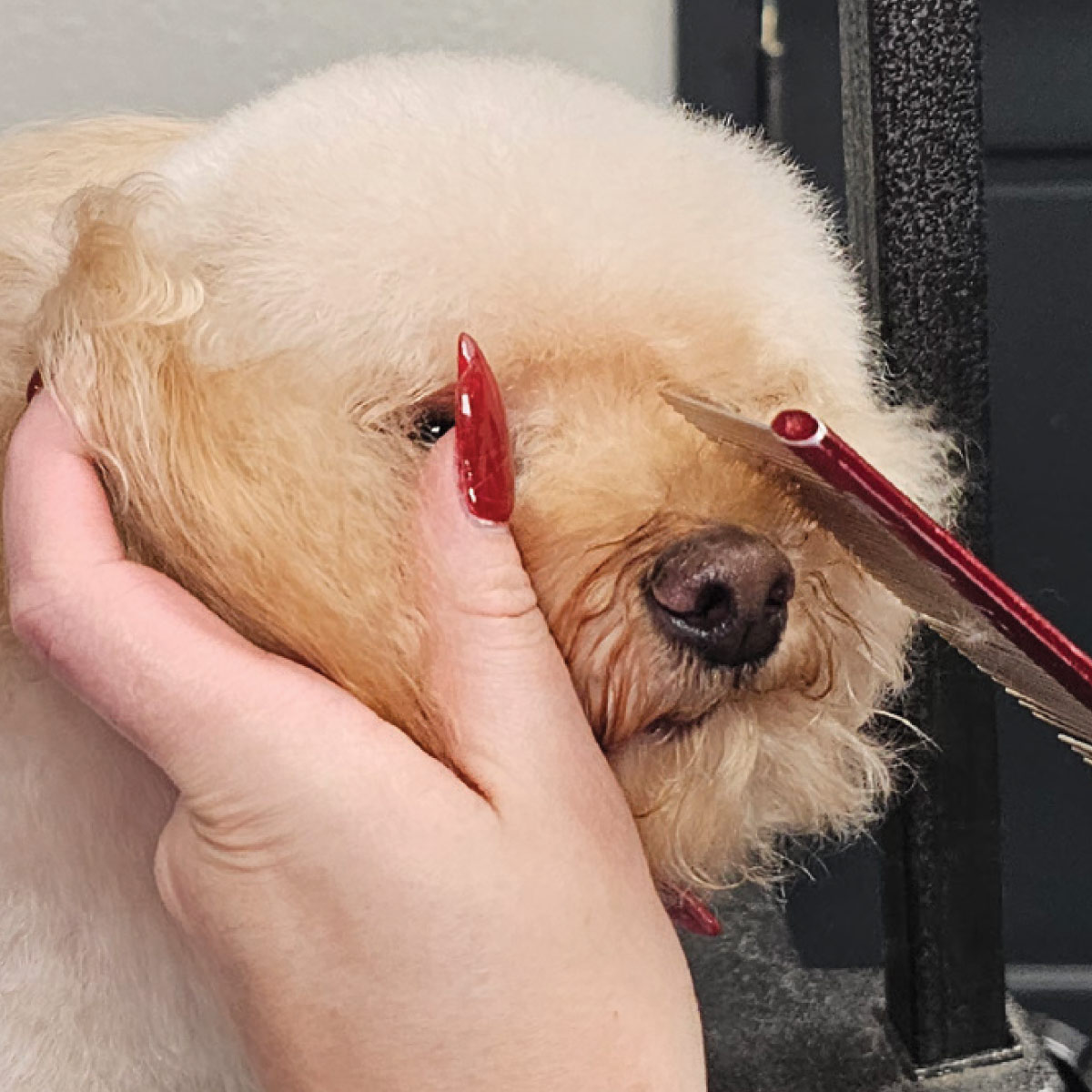
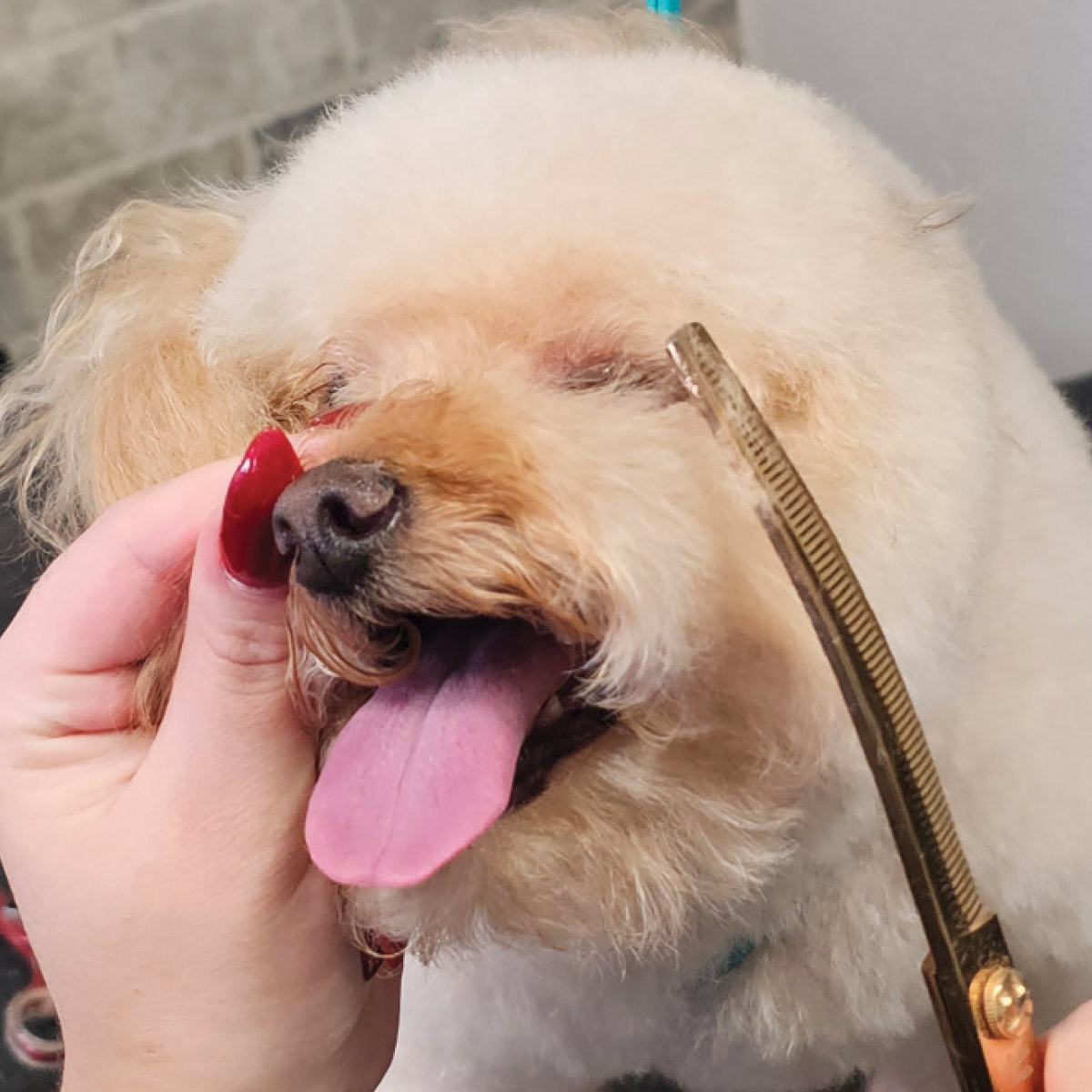
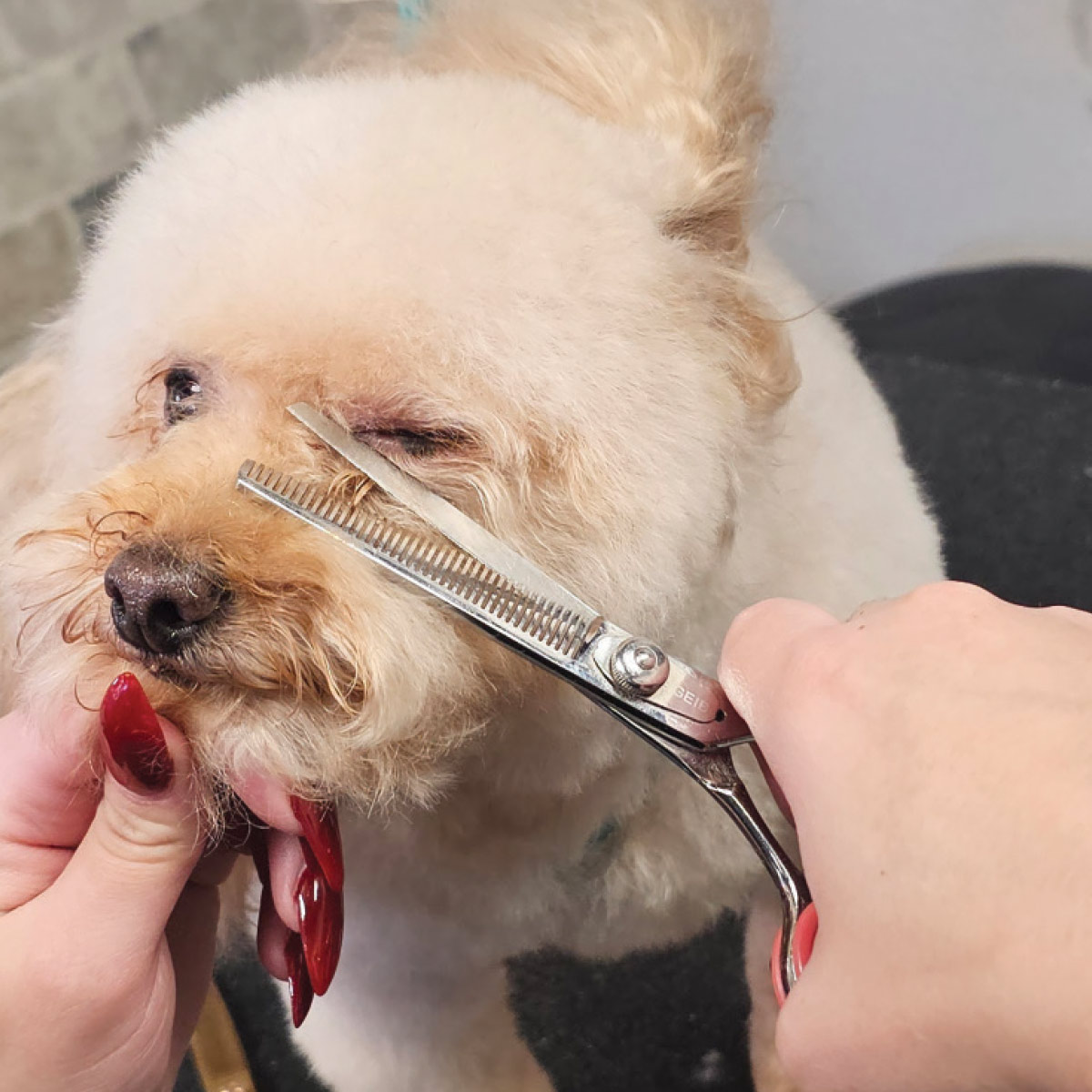
Fig. 11) Tighten the hair up from the chin up to create a smile shape using a curved thinner.
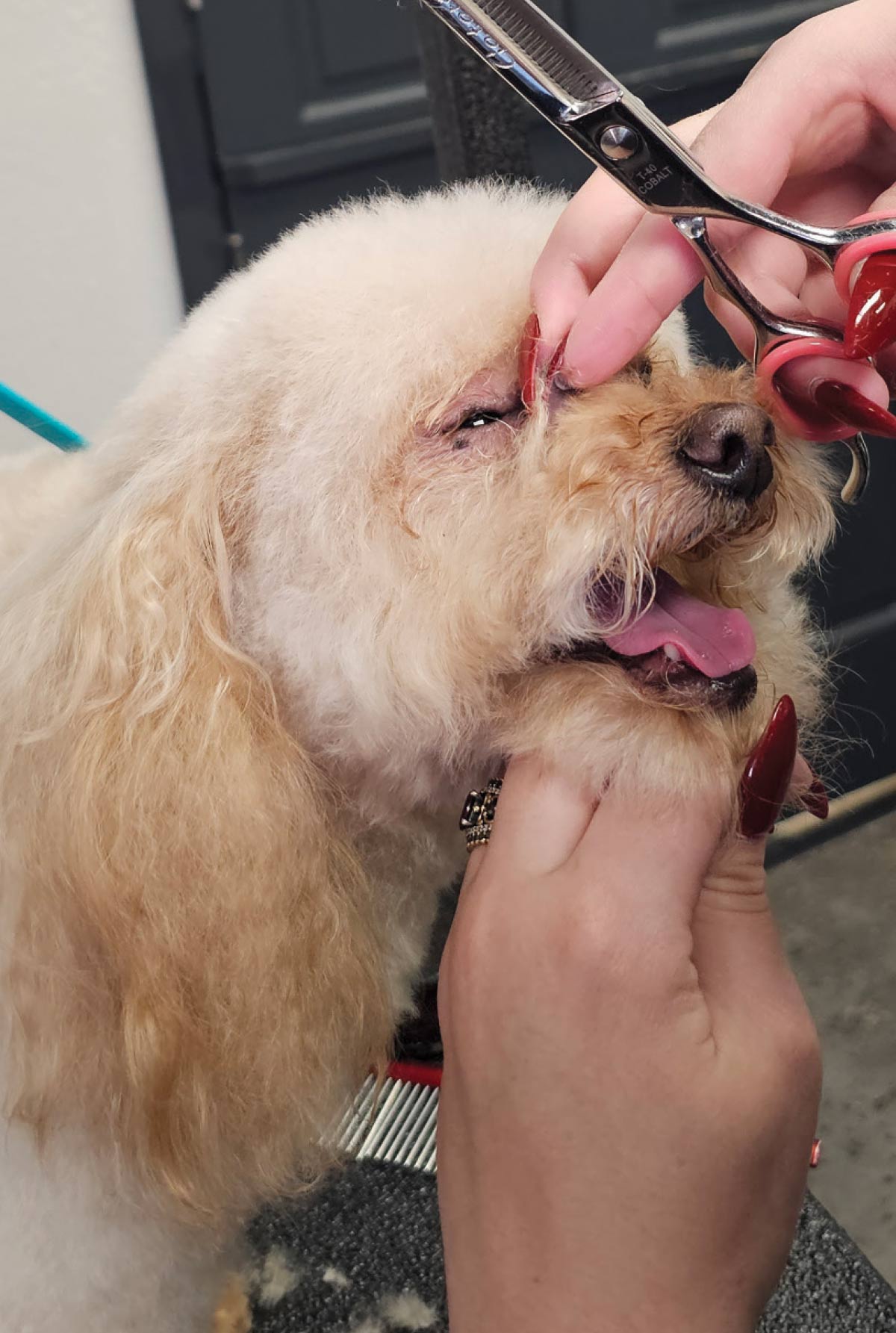
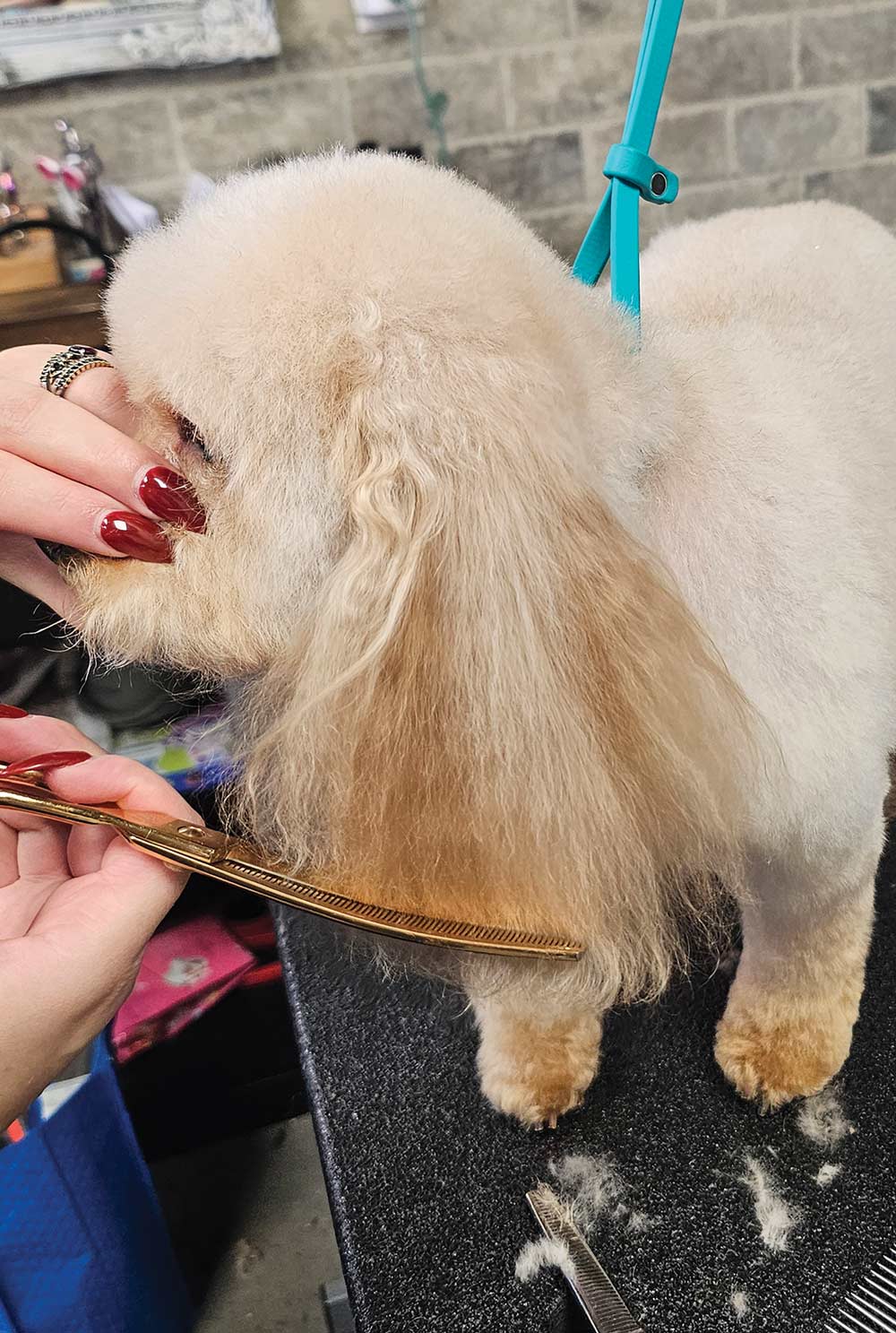
You’ve likely been asked to do this head style many times, but now you can whip it up with confidence and speed no matter the coat type or size!
You’ve likely been asked to do this head style many times, but now you can whip it up with confidence and speed no matter the coat type or size!

Classified
Groomer Needed
Precious Goldendoodles in NJ looking for someone to love us while keeping us beautiful. Our mom has an in-home grooming spa—you just need to bring your own tools! Someone looking for intern hours is also welcome. Needed for 5-10 Goldendoodles every 6-8 weeks. Text 973-229-0142.
Call (717) 691-3388 ext 224 to place a Classified.



Thanks for reading our March 2026 issue!