


Elevate Your Grooming
Stylized text reading "CREATING A Regally Round HEADPIECE" featuring a gold crown icon over the word "Round."
A blank cream-colored horizontal banner with decorative gold filigree borders on the top and bottom.
by Blake Hernandez
Groomed by Sydney Porras

This headpiece style has to be the number-one most-requested head trim amongst pet salon clients. The following guide is for any level groomer, as clippers will be used to set everything. Only slight adjustments will be needed for each coat type and size of dog you’re working on. 

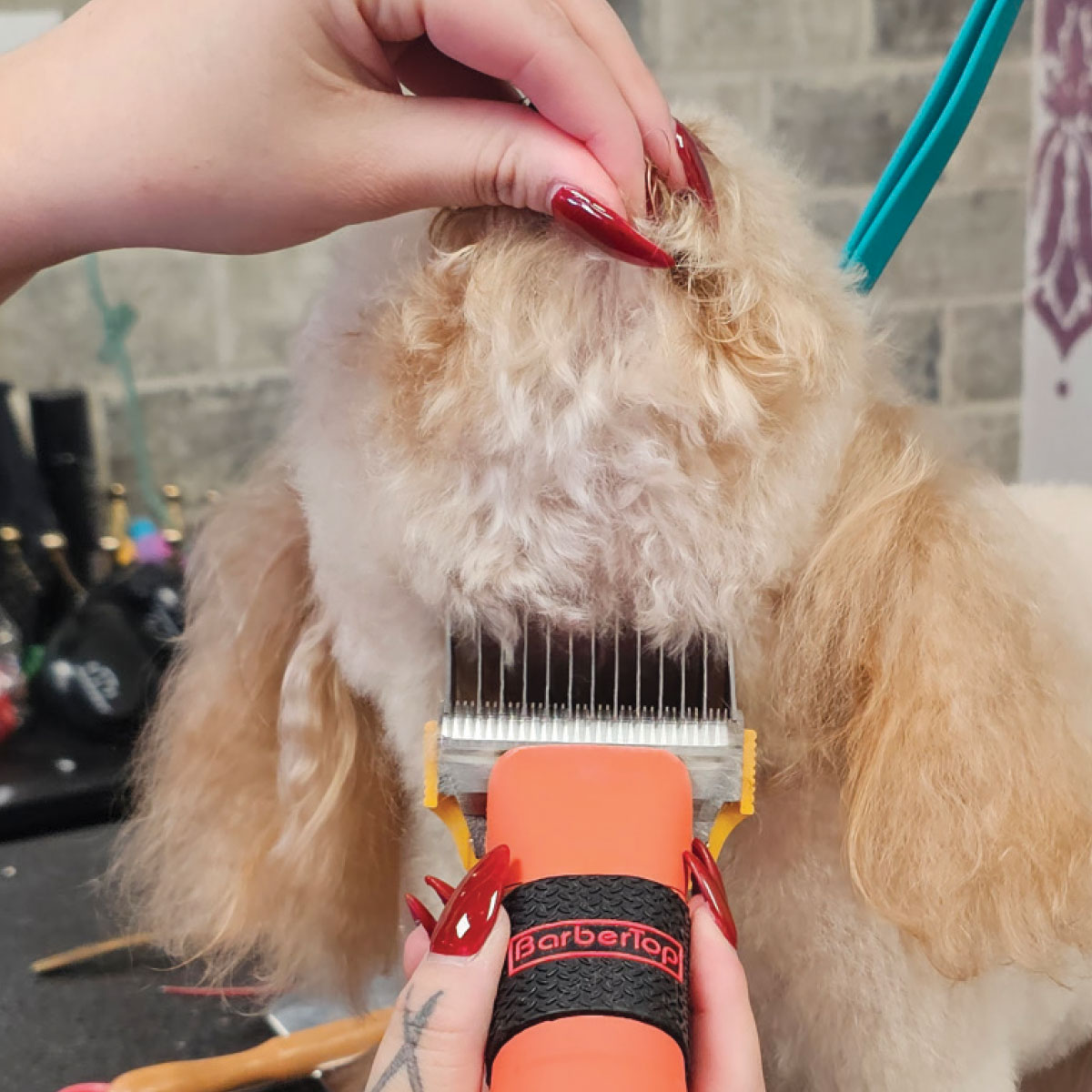
Fig. 1) Comb the head out thoroughly, being mindful of which way the clippers will be going over the coat. On the top of the head, comb it back towards the neck.

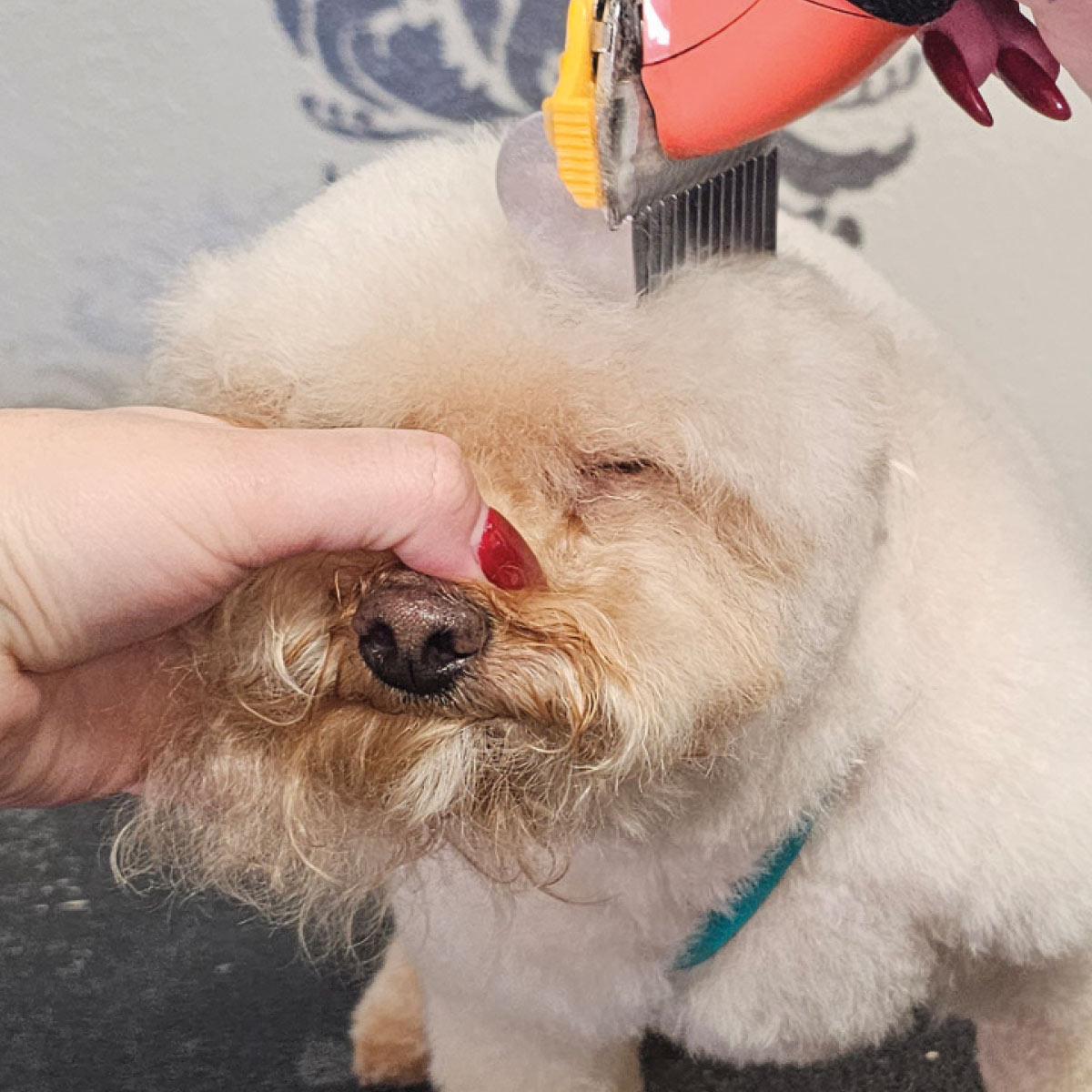
Fig. 2) Comb the cheeks down and get the hairs free from inside the upper lip. 

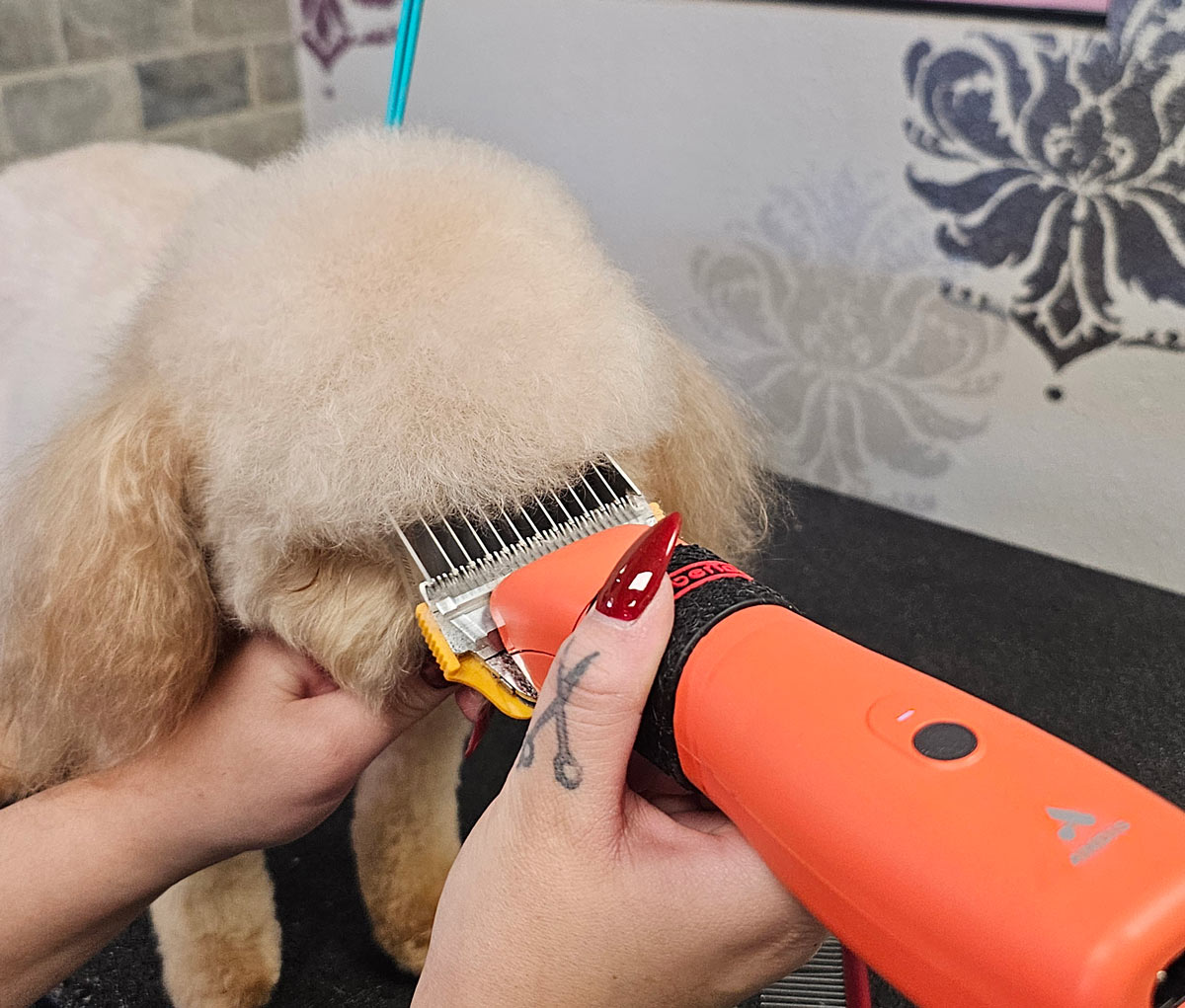
Fig. 3) Choose whichever length the client wants, remembering that the larger a dog is overall, the longer the coat will need to be to achieve the round shape. Clip the top skull from the stop to the occiput.
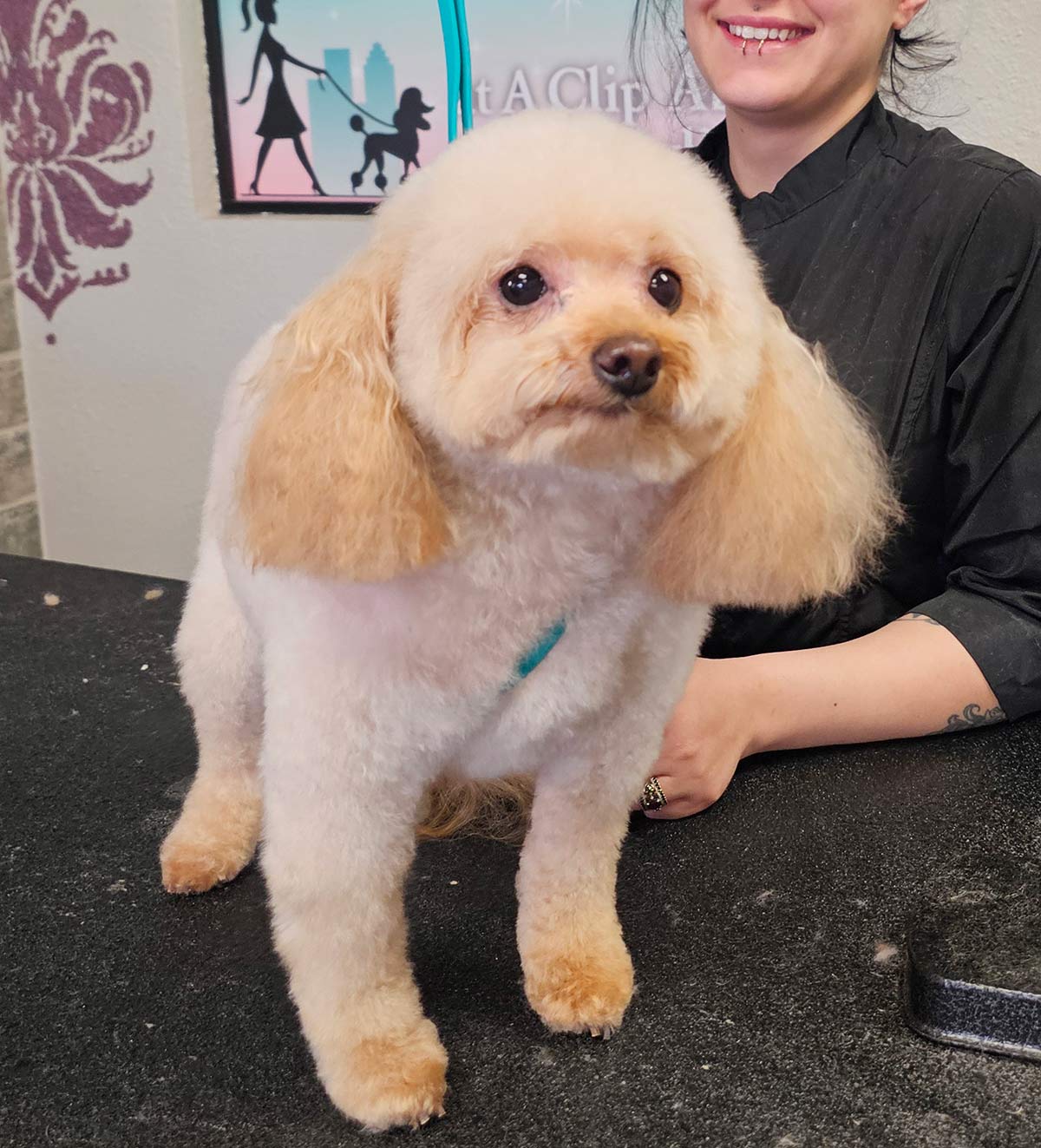
The finished groom showing the small dog with a perfectly rounded topknot and muzzle, sitting next to the smiling groomer.
Stylized text reading "CREATING A Regally Round HEADPIECE" featuring a gold crown icon over the word "Round."
A blank cream-colored horizontal banner with decorative gold filigree borders on the top and bottom.
The finished groom showing the small dog with a perfectly rounded topknot and muzzle, sitting next to the smiling groomer.
by Blake Hernandez
Groomed by Sydney Porras
This headpiece style has to be the number-one most-requested head trim amongst pet salon clients. The following guide is for any level groomer, as clippers will be used to set everything. Only slight adjustments will be needed for each coat type and size of dog you’re working on.
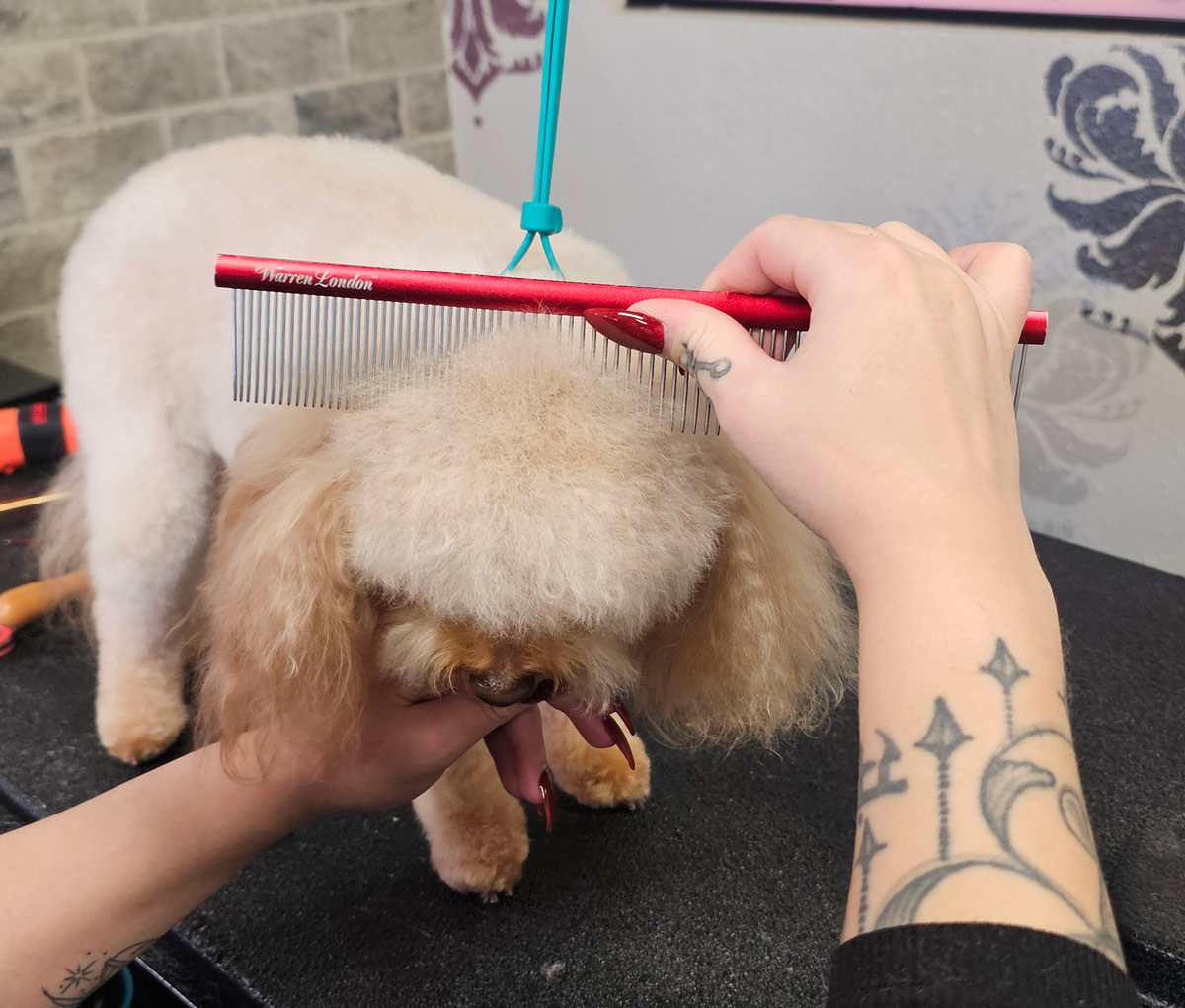
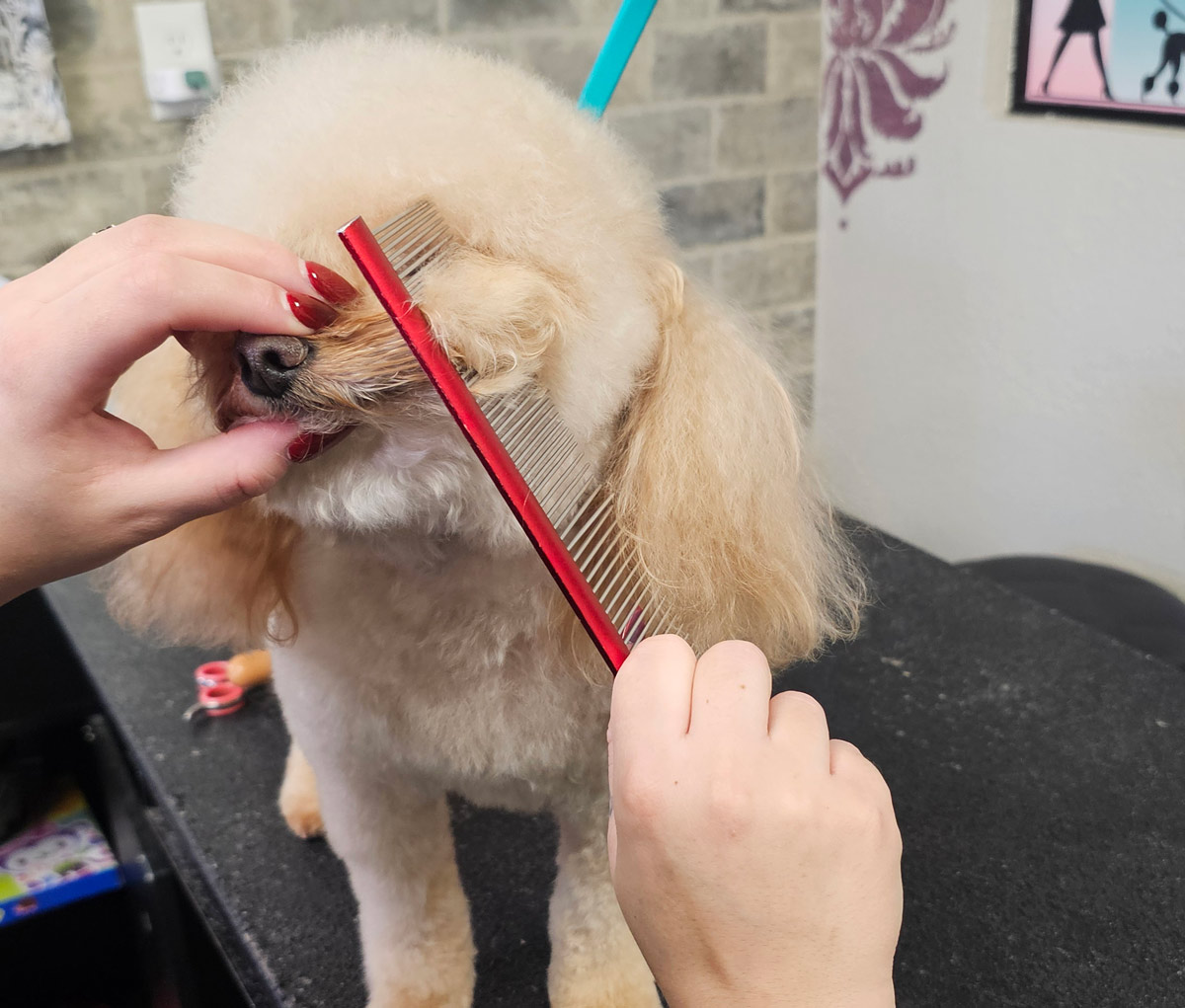
A groomer with red nails uses a red Warren London metal comb to lift and fluff the hair on top of a small dog's head.
Fig. 1) Comb the head out thoroughly, being mindful of which way the clippers will be going over the coat. On the top of the head, comb it back towards the neck.
A groomer uses a red comb to pull the dog's topknot hair forward over its eyes in preparation for shaping.
Fig. 2) Comb the cheeks down and get the hairs free from inside the upper lip.
A groomer uses orange electric clippers with a metal guard to trim the front of the dog's topknot into a rounded shape.
Fig. 3) Choose whichever length the client wants, remembering that the larger a dog is overall, the longer the coat will need to be to achieve the round shape. Clip the top skull from the stop to the occiput.
Side view of the groomer using clippers to shape the transition from the topknot to the side of the dog's head.
Fig. 4) Using the same length as the top, bring the clipper down the cheek. On this small breed we are using a 5/8”.
A groomer uses orange clippers to trim and smooth the hair under a small dog's chin and neck.
Fig. 5) Tilt the head upward and clip in reverse to create a tighter area around the dog’s throat.
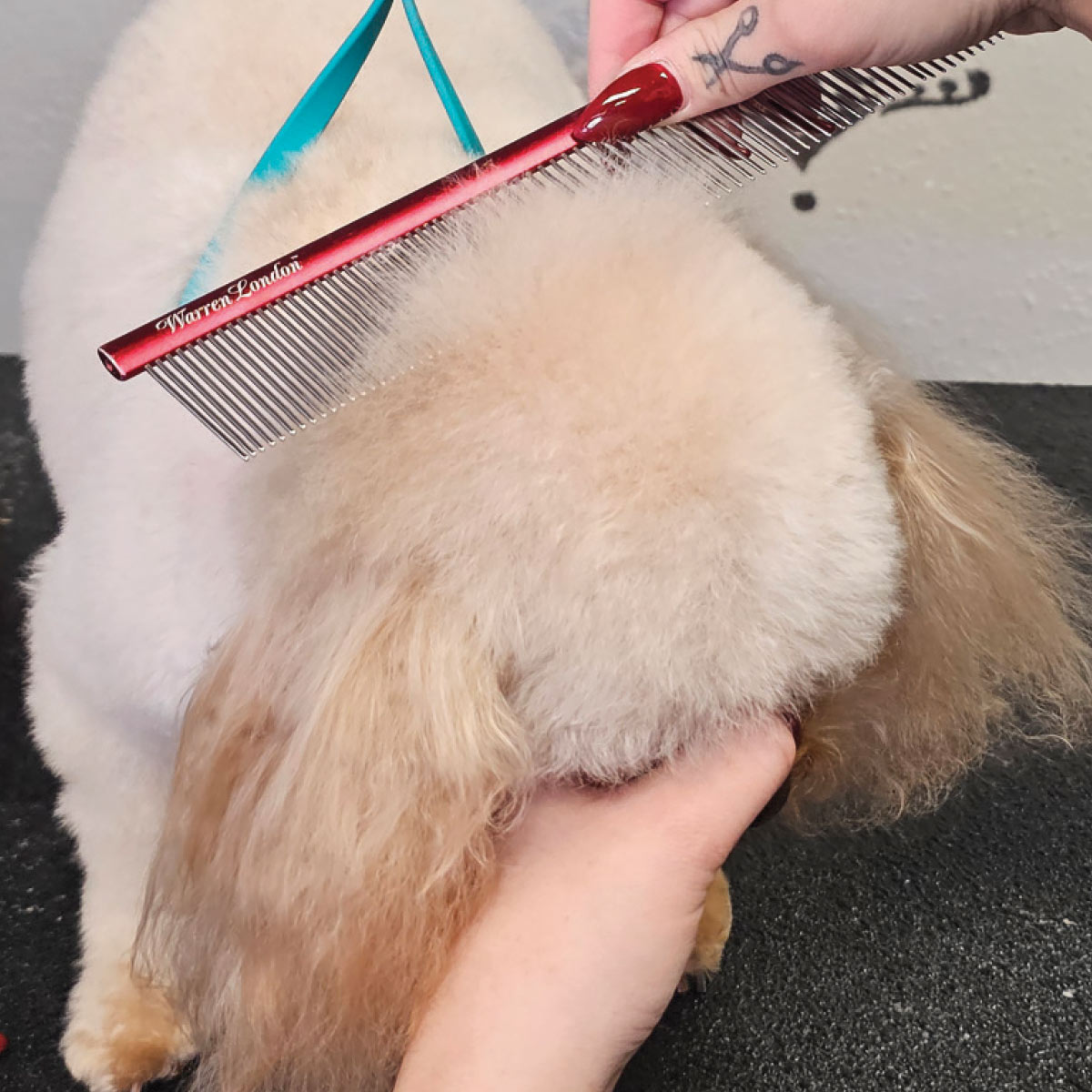
A red comb is used to lift the hair on the side of the dog's face to check the symmetry of the rounded groom.
Fig. 6) Use a comb to pull the hair upward from the back of the head that connects to the length you trimmed on the body.
Fig. 4) Using the same length as the top, bring the clipper down the cheek. On this small breed we are using a 5/8”.
Fig. 5) Tilt the head upward and clip in reverse to create a tighter area around the dog’s throat.
Fig. 6) Use a comb to pull the hair upward from the back of the head that connects to the length you trimmed on the body.
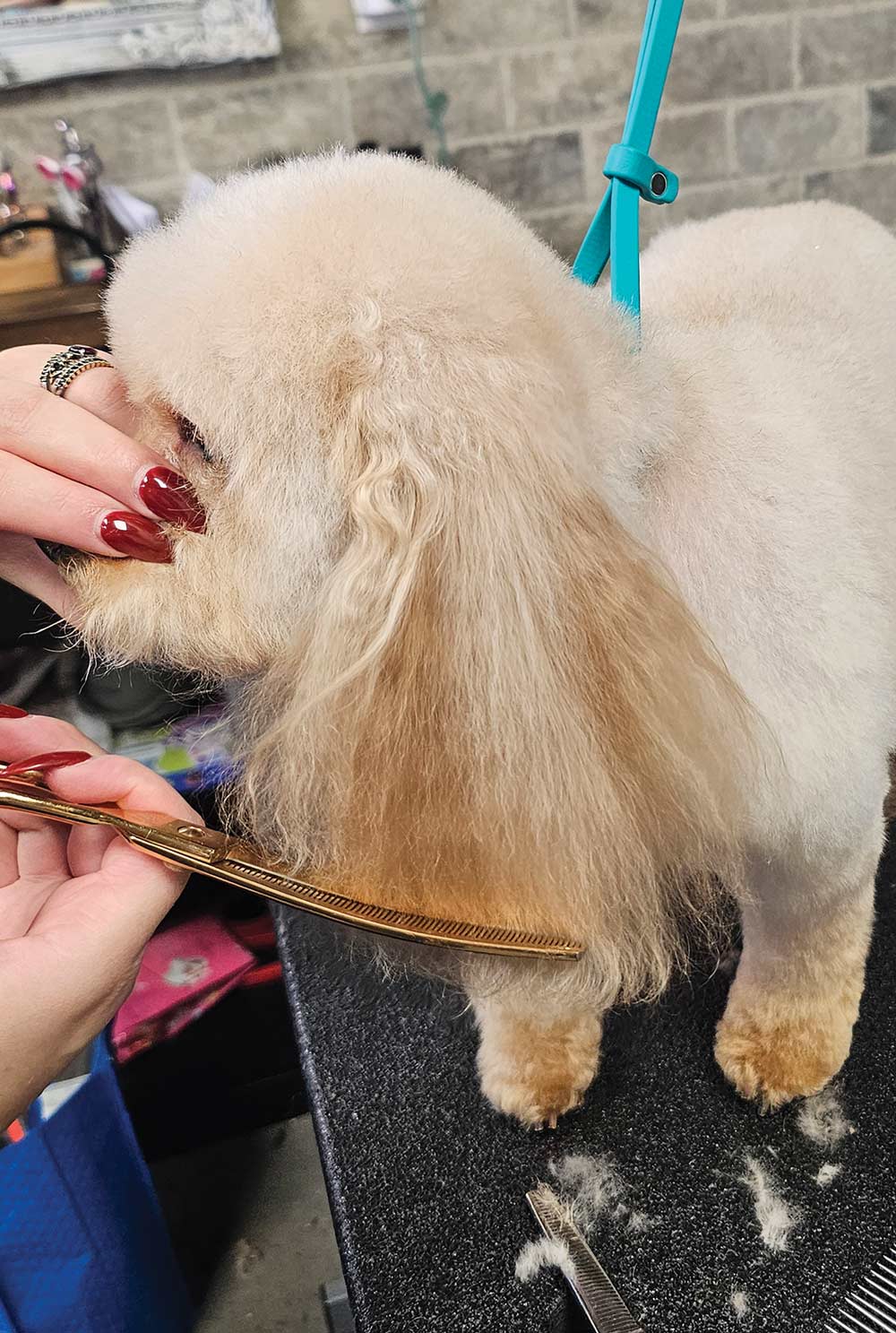
A groomer uses gold-colored thinning shears to refine and soften the rounded edges of the dog's topknot.
Fig. 7) Use a curved thinner to trim a soft connection from the top of the ear over to the other ear, always keeping “round” in mind.
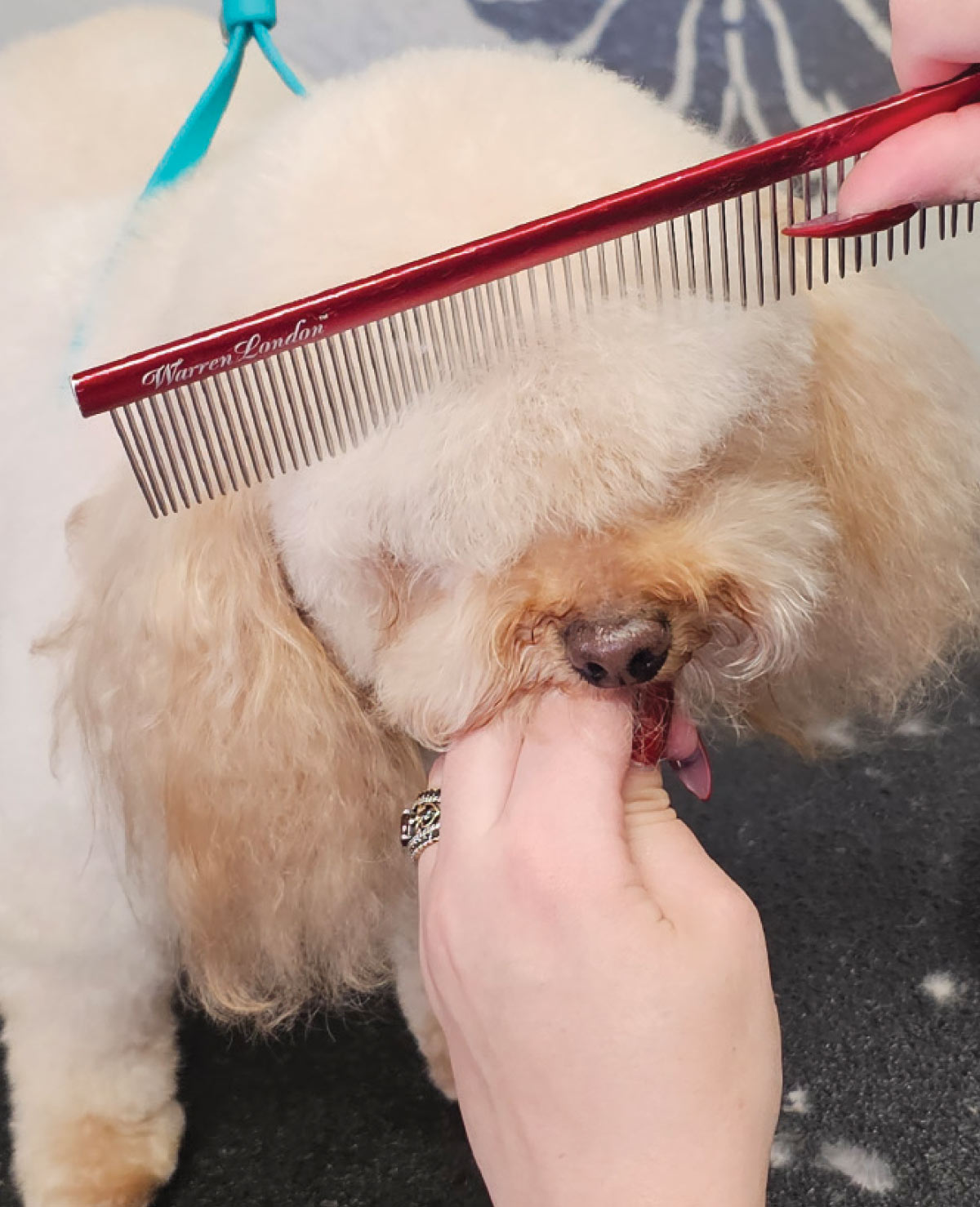
The groomer holds the dog's muzzle while using a red comb to fluff the hair straight up for final trimming.
Fig. 8) Use a comb to bring the hair through the visor forward.
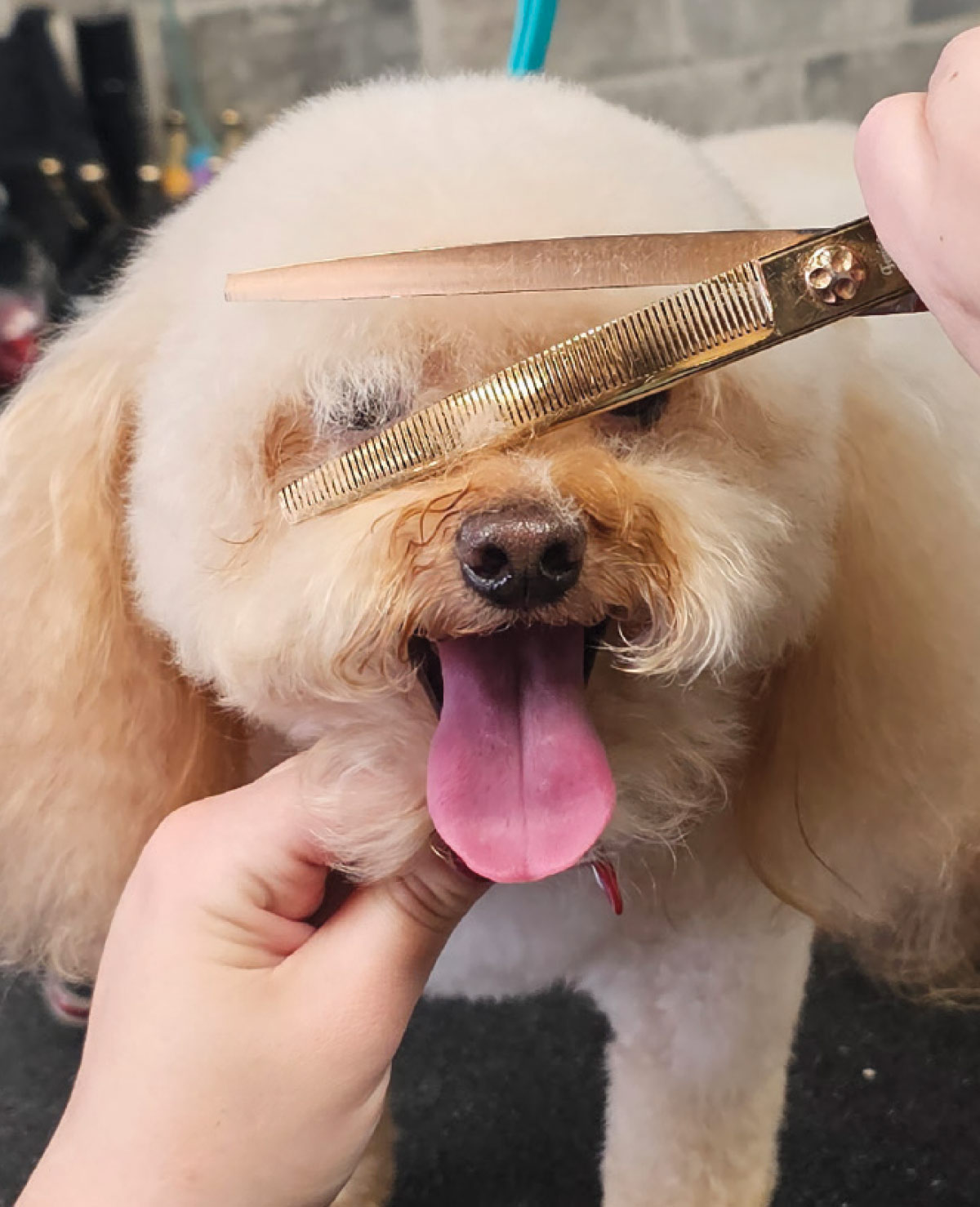
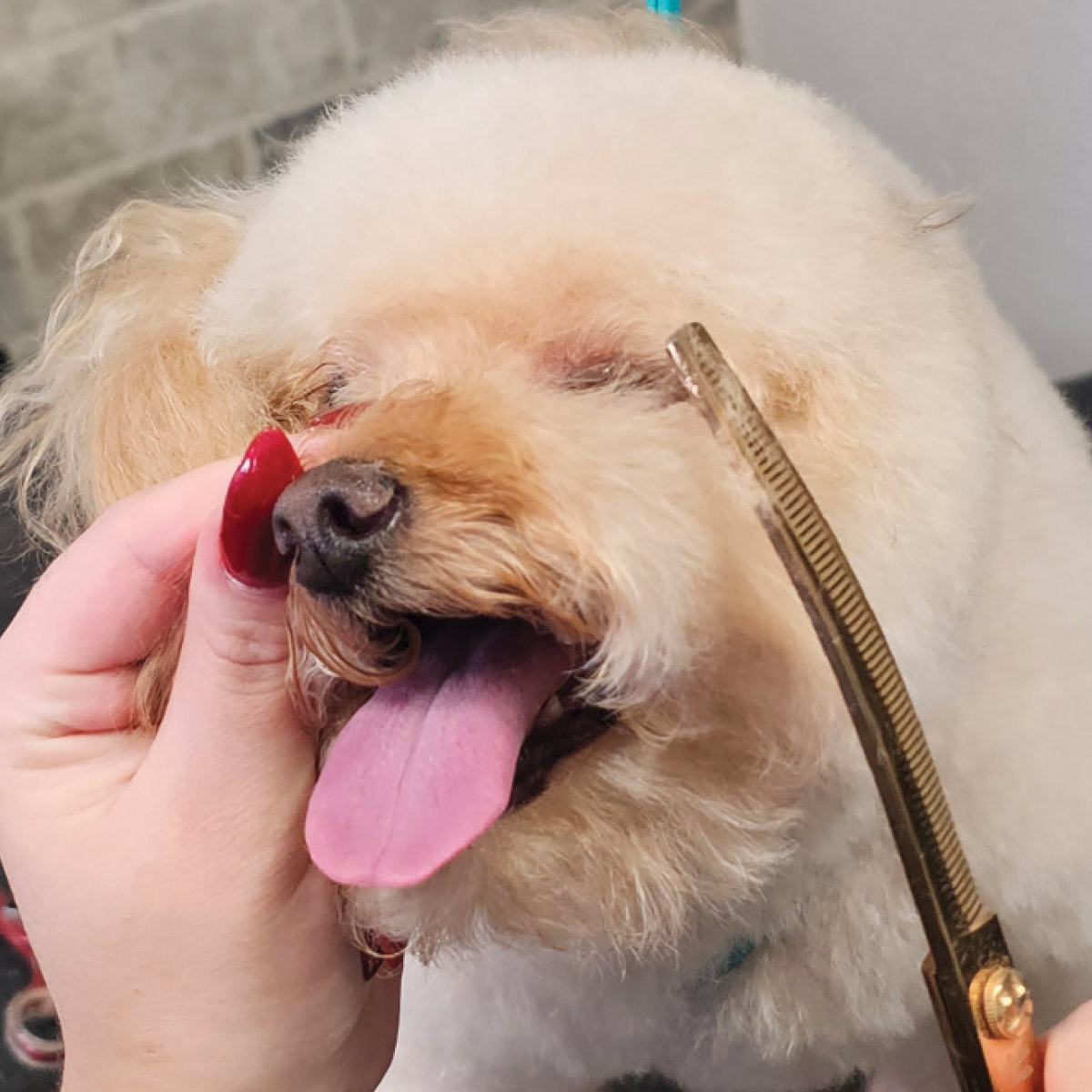
Gold thinning shears are used to carefully trim the visor area above the eyes while the dog has its tongue out.
Fig. 9) Use a curved thinner again to trim the visor to open up the eyes.
Fig. 7) Use a curved thinner to trim a soft connection from the top of the ear over to the other ear, always keeping “round” in mind.
Fig. 8) Use a comb to bring the hair through the visor forward.
Fig. 9) Use a curved thinner again to trim the visor to open up the eyes.
A close-up shows the groomer using shears to precisely trim stray hairs around the corner of the dog's eye.
Fig. 10) Comb the hairs out from under the lip and out from the muzzle.
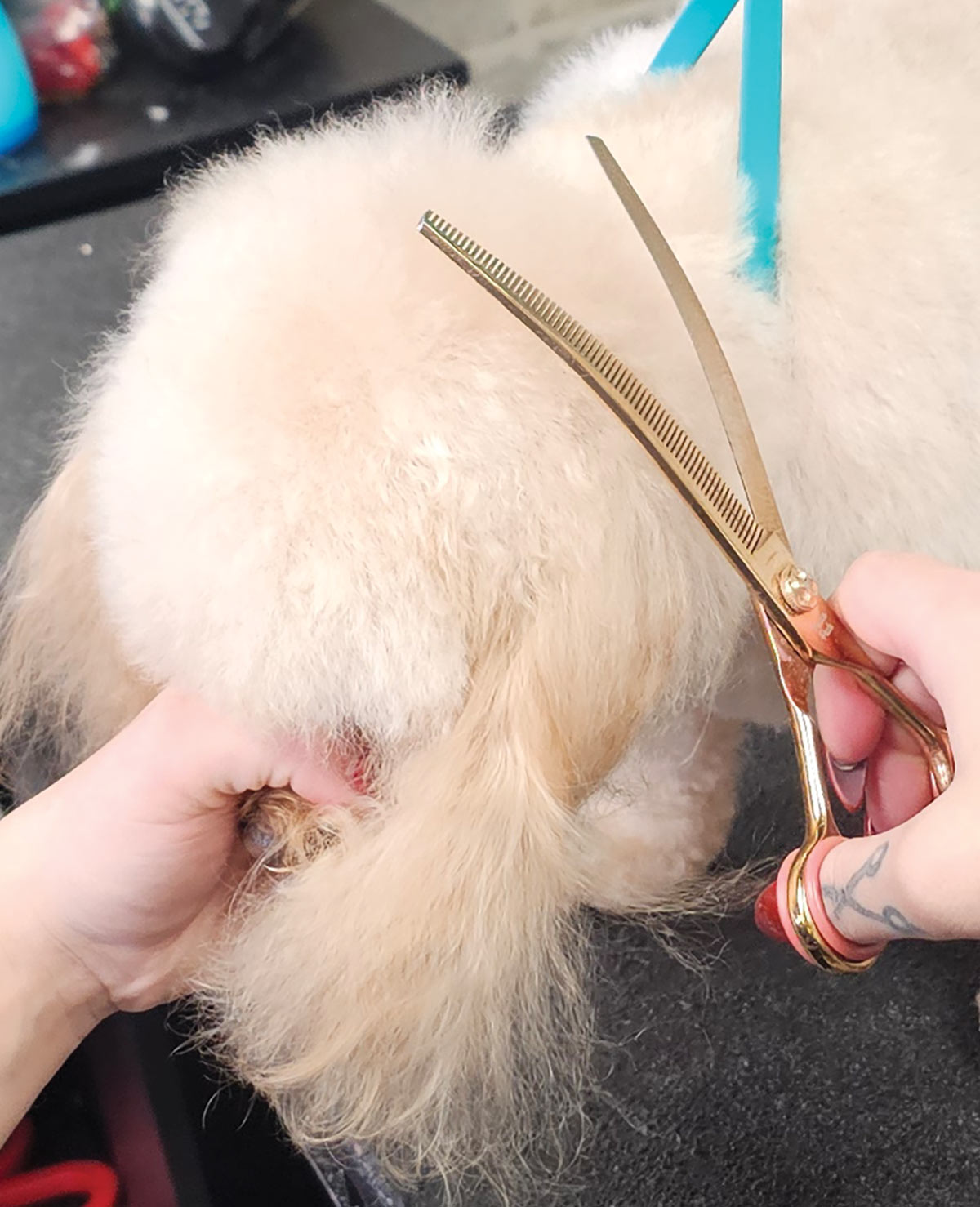
The groomer uses curved gold shears to shape the rounded hair around the dog's ear and cheek area.

Fig. 11) Tighten the hair up from the chin up to create a smile shape using a curved thinner.
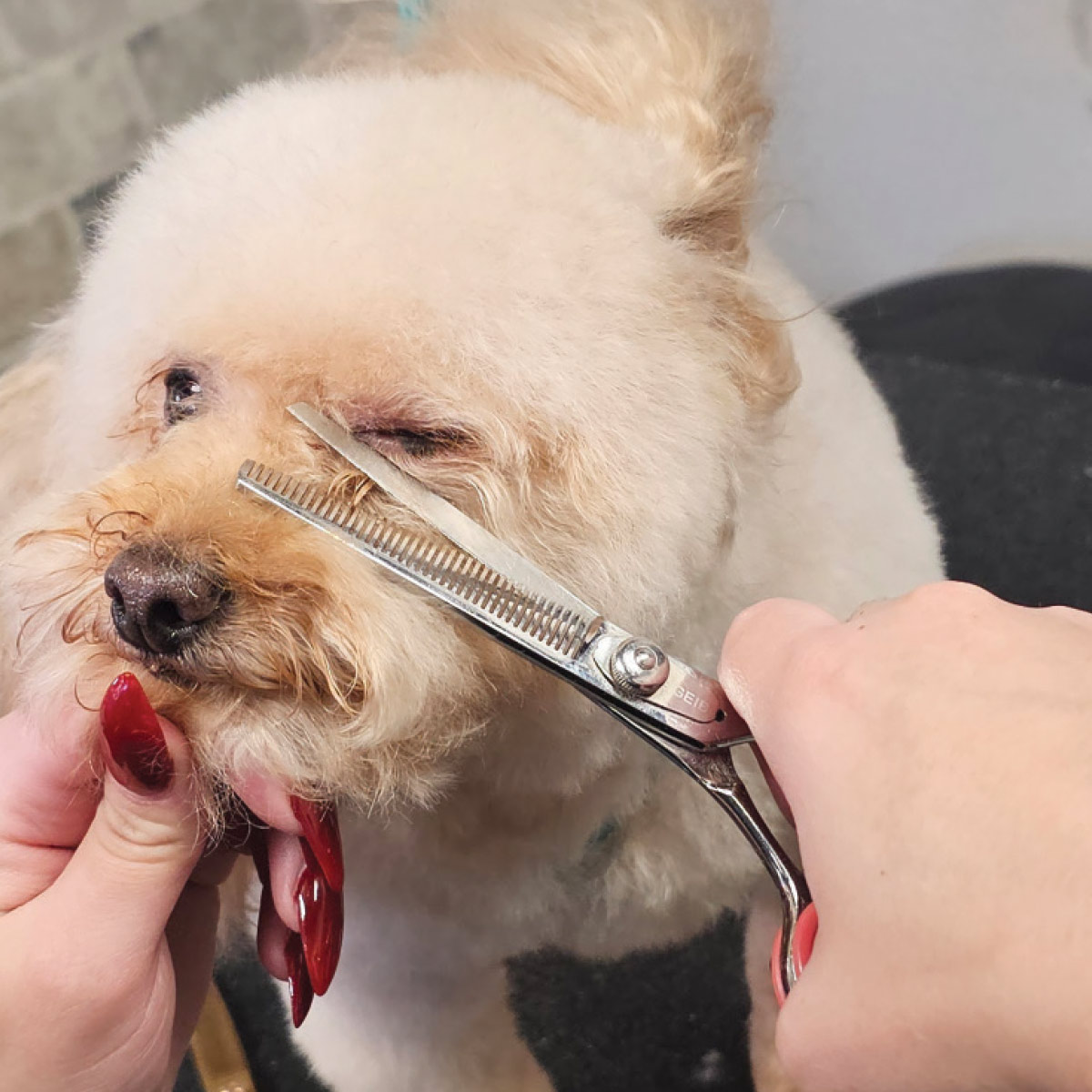
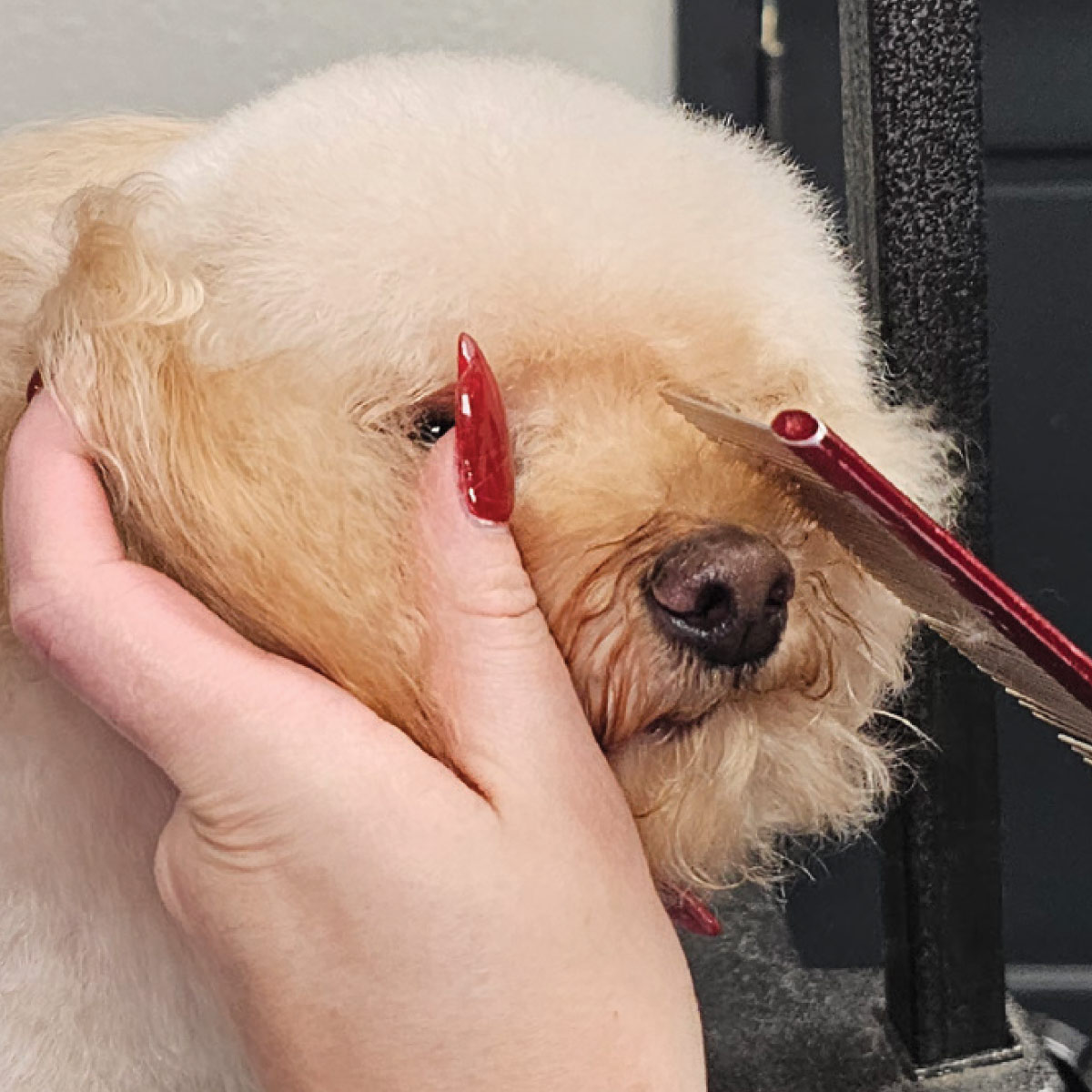
A groomer uses silver thinning shears to blend the hair near the dog's eye for a smooth, natural look.
Fig. 12) A small straight thinner is best to clean out around the eyes.
Fig. 10) Comb the hairs out from under the lip and out from the muzzle.
Fig. 11) Tighten the hair up from the chin up to create a smile shape using a curved thinner.
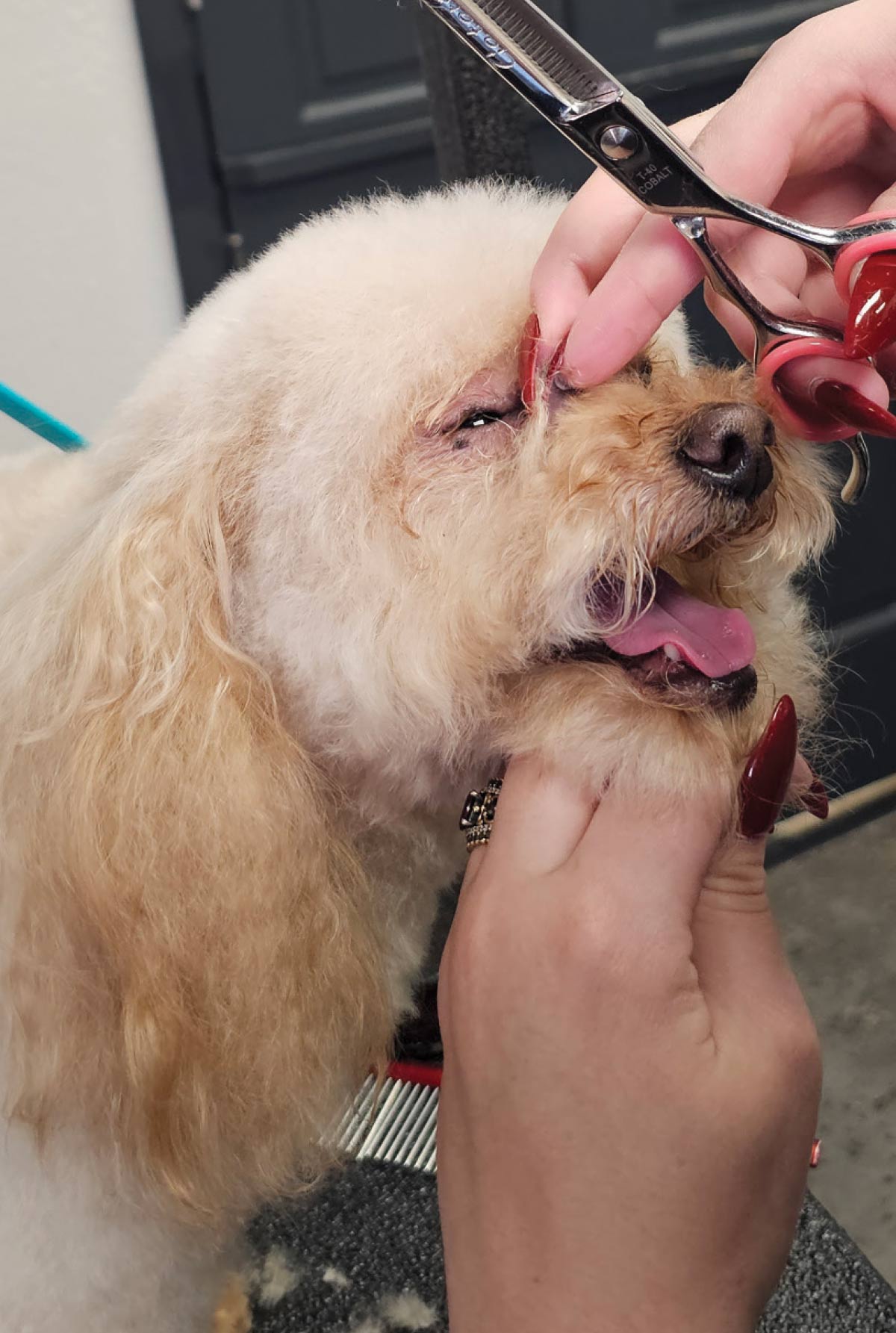
Fig. 12) A small straight thinner is best to clean out around the eyes.
The groomer carefully trims the hair at the inner corner of the dog's eye using small silver safety shears.
Fig. 13) With the coat around the eyes getting wet from drainage, you sometimes have to physically pinch and pull the eye corners up to create a lasting finish.
The groomer uses curved gold shears to shape the rounded hair around the dog's ear and cheek area.
Fig. 14) Bring it all together by matching the curve under the chin to the curve you made above the head.
The groomer uses gold shears to trim and level the long hair on the dog's ears to match the rounded headpiece.
Fig. 15) If the ears are being kept long, they should only be trimmed to take off the rough dead ends. 

You’ve likely been asked to do this head style many times, but now you can whip it up with confidence and speed no matter the coat type or size!

Fig. 13) With the coat around the eyes getting wet from drainage, you sometimes have to physically pinch and pull the eye corners up to create a lasting finish.
Fig. 14) Bring it all together by matching the curve under the chin to the curve you made above the head.
Fig. 15) If the ears are being kept long, they should only be trimmed to take off the rough dead ends. 

You’ve likely been asked to do this head style many times, but now you can whip it up with confidence and speed no matter the coat type or size!