



Elevate Your Grooming
A graphic of a stoplight with paw prints on the lights. Next to the stoplight are three colored bars with the title "READY, SET, PERFECT PREP! A STEP-BY-STEP GUIDE."
four different colored lines
A graphic of a stoplight with paw prints on the lights. Next to the stoplight are three colored bars with the title "READY, SET, PERFECT PREP! A STEP-BY-STEP GUIDE."

by Blake Hernandez

A good bath and prep work are absolutely fundamental to any quality finished haircut, but the handling and safety of the pet are paramount. Here we will cover the bath and pre-grooming prep on a wire-coated terrier mix, step by step, to get you setup for the perfect finish.
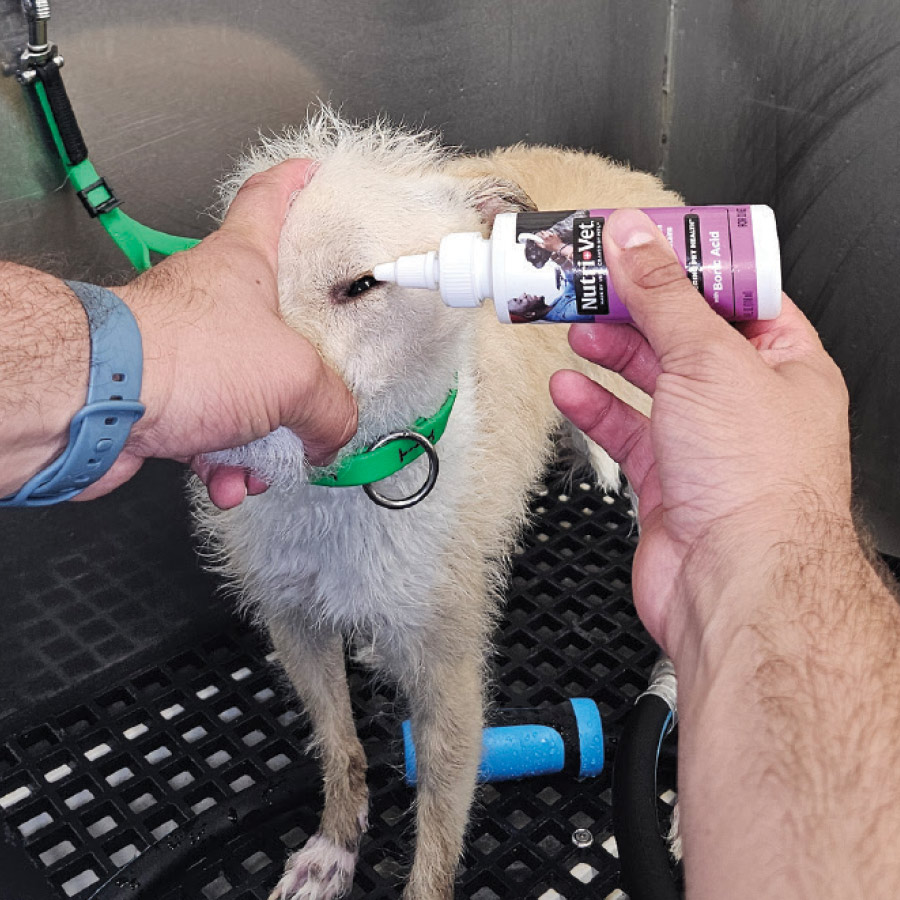
 A wet dog stands in a metal tub as a person gives it eye drops.
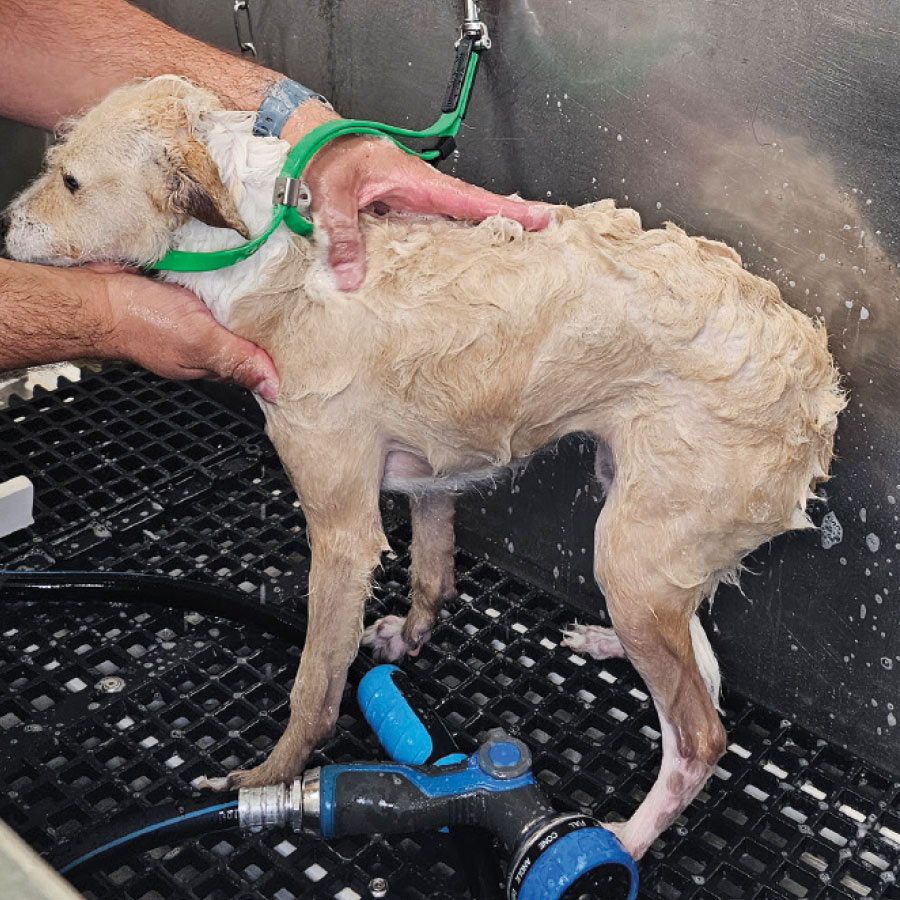
A wet, light-colored dog is being washed by a person in a metal tub.

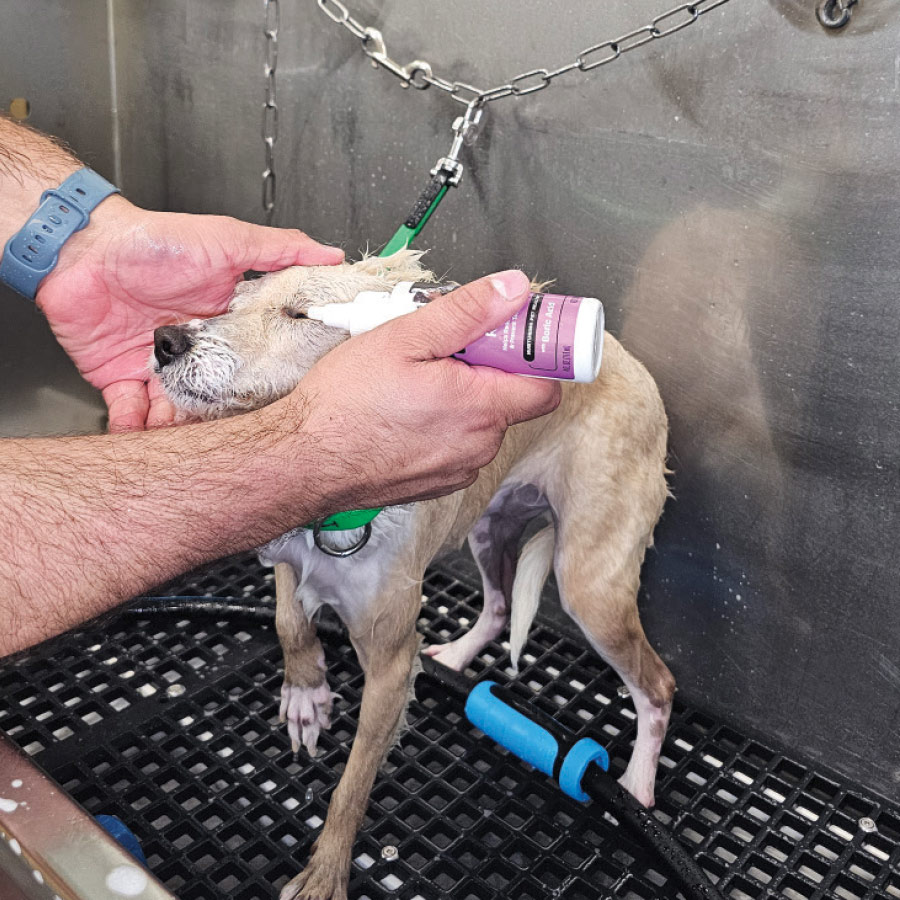
FIG. 1) I always start a bath by protecting the dog’s eyes. These saline drops contain boric acid which helps neutralize any shampoo that might accidentally manage its way into the eyes.

FIG. 2) While the dog is still dry, I apply a pre-diluted shampoo. I do this because wetting the dog first makes the product less effective and can leave some areas of the dog cleaner than others. Just a hand-scrub is sufficient on this coat type.
 A wet dog stands in a metal tub as a person gives it eye drops.
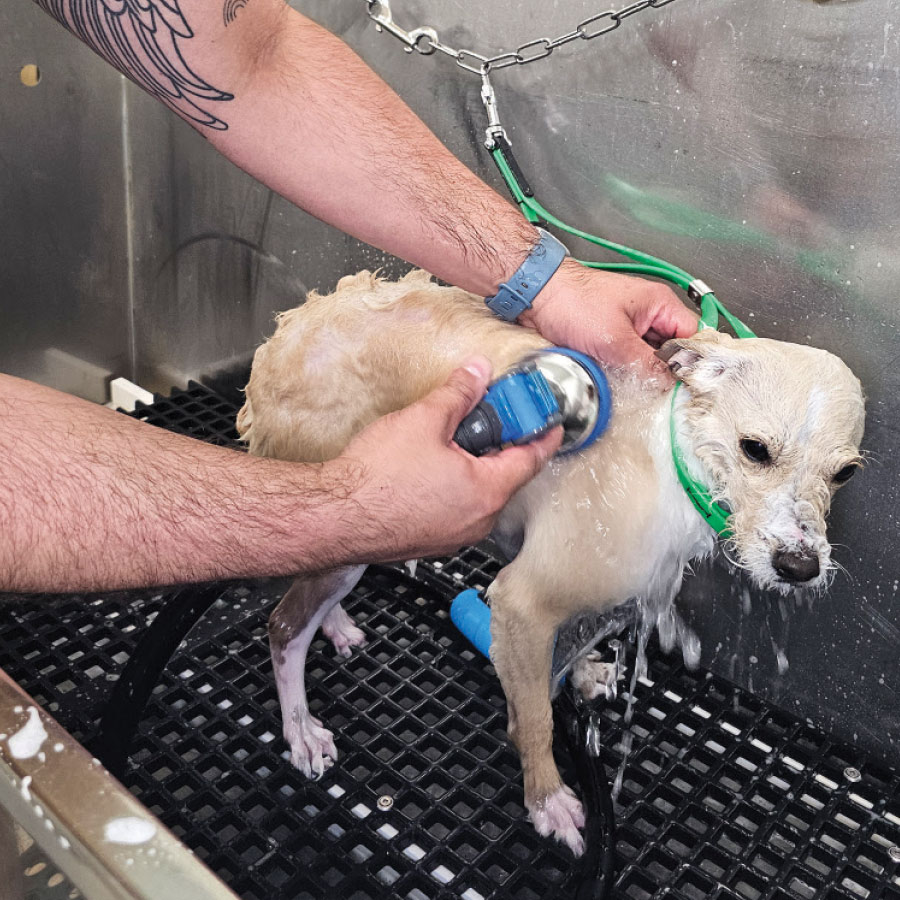
A wet, light-colored dog is being washed by a person in a metal tub.
FIG. 1) I always start a bath by protecting the dog’s eyes. These saline drops contain boric acid which helps neutralize any shampoo that might accidentally manage its way into the eyes.

FIG. 2) While the dog is still dry, I apply a pre-diluted shampoo. I do this because wetting the dog first makes the product less effective and can leave some areas of the dog cleaner than others. Just a hand-scrub is sufficient on this coat type.

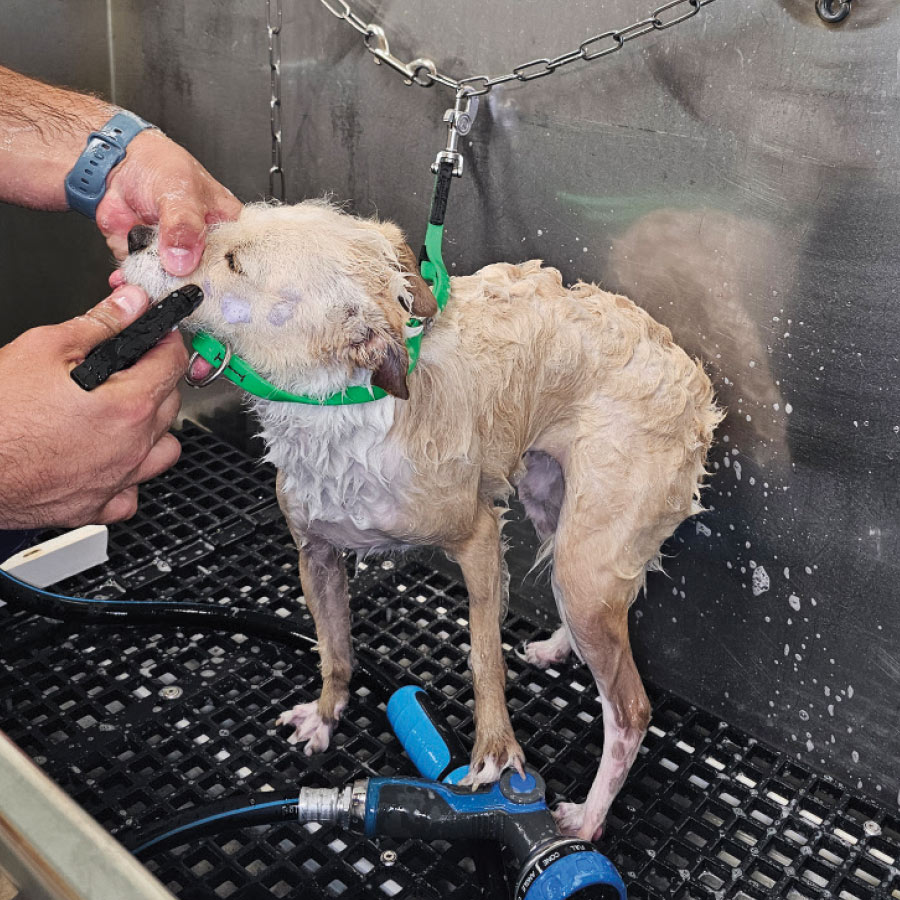
A pet groomer spraying tear-free shampoo near a small, light-colored dog's face.
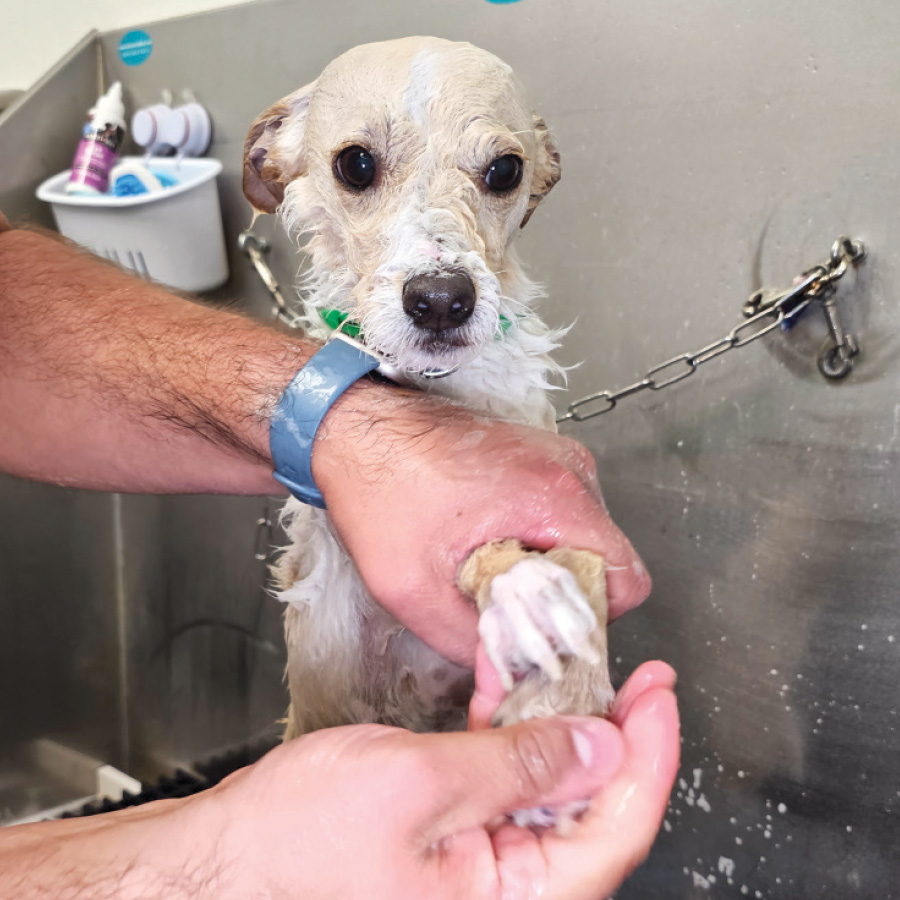
A groomer washing a small, light-colored dog's paws.
FIG. 3) Using care to avoid the eyes, a tear-free face shampoo diluted into a spray bottle works well for maximum safety and accurate application.

FIG. 4) The paws are the most common area to make it through the prepping process without getting fully cleaned, so take extra time to scrub the feet.
A groomer rinsing a small, light-colored dog's fur in a metal tub.
FIG. 5) Depending on the dog, you may need up to two cleansing shampoos and a moisturizing shampoo or a conditioner, so you will end up rinsing three times. When rinsing between baths, you don’t need worry about a complete rinse; just a quick flushing of the broken-down dirt and oils the shampoo has lifted, and then reapply. However, the dog needs to be fully rinsed of any product the final time.
A groomer applying eye rinse solution to a dog's eye.
Also keep in mind when rinsing that the nozzle should be against the surface of the skin, as this will get the dog cleaner faster and is more pleasant for the dog than being sprayed from a distance.

FIG. 6) I then finish the bath with more eye rinse solution.
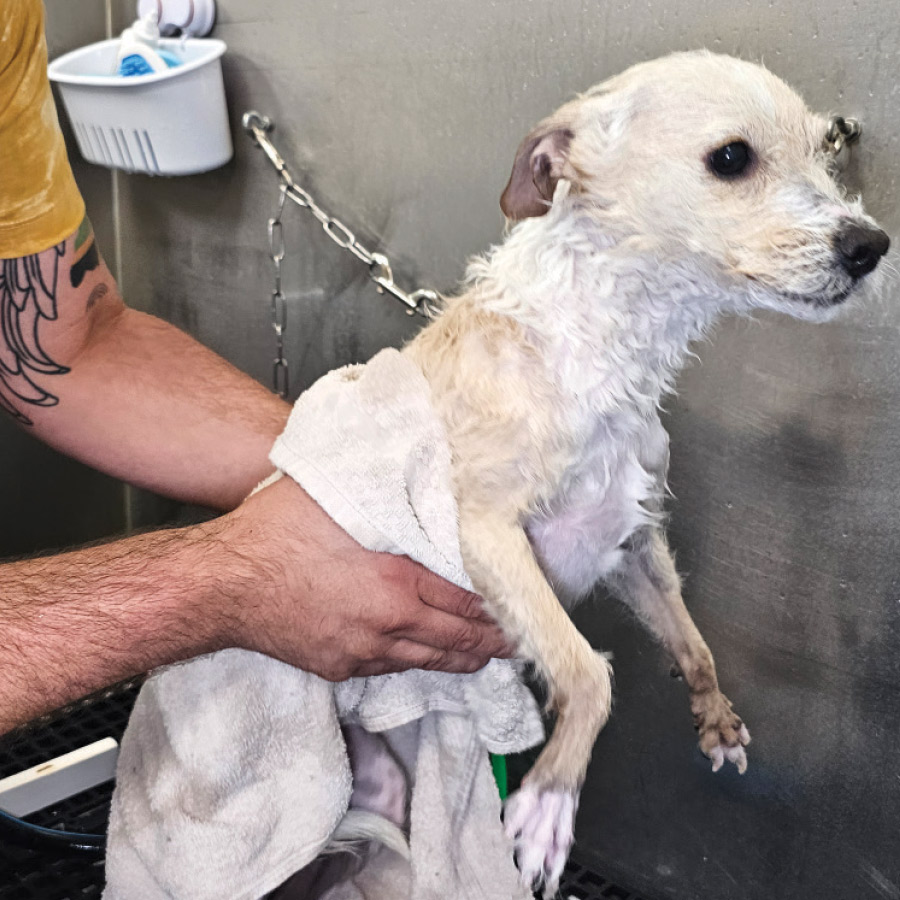
A groomer towel drying a small, light-colored dog.
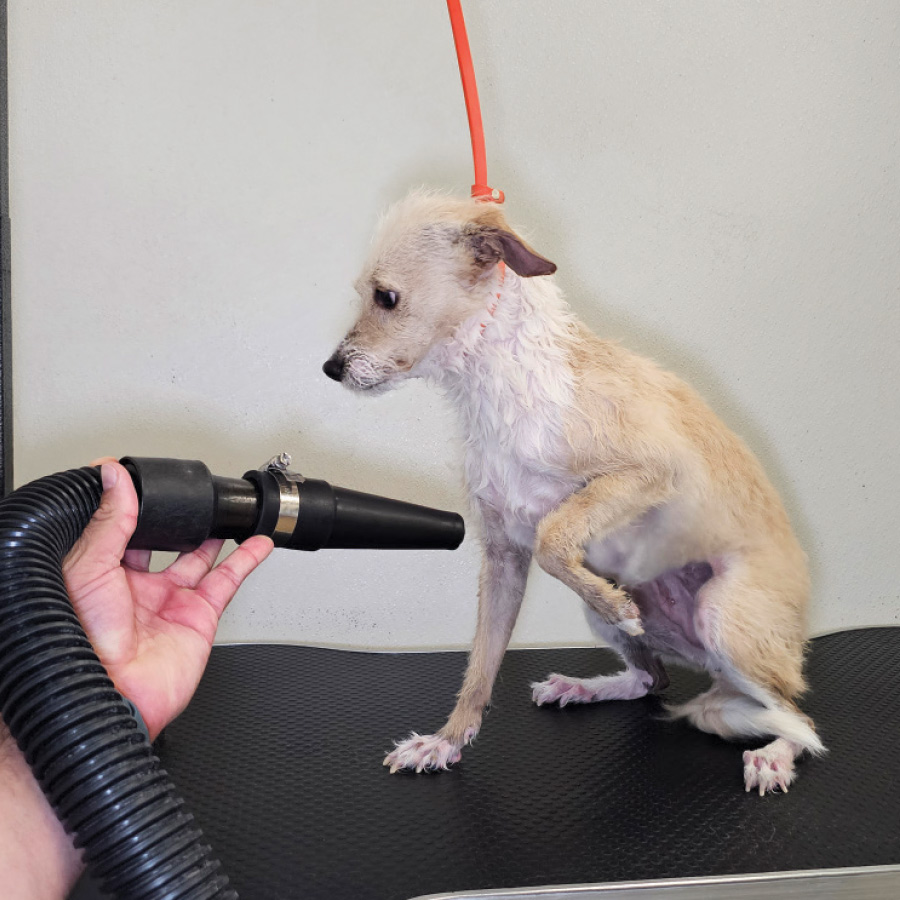
A dog being blowdried after a bath.
FIG. 7) It is best to towel-dry the dog for 5-10 minutes so they can spend less time under a force dryer.
 
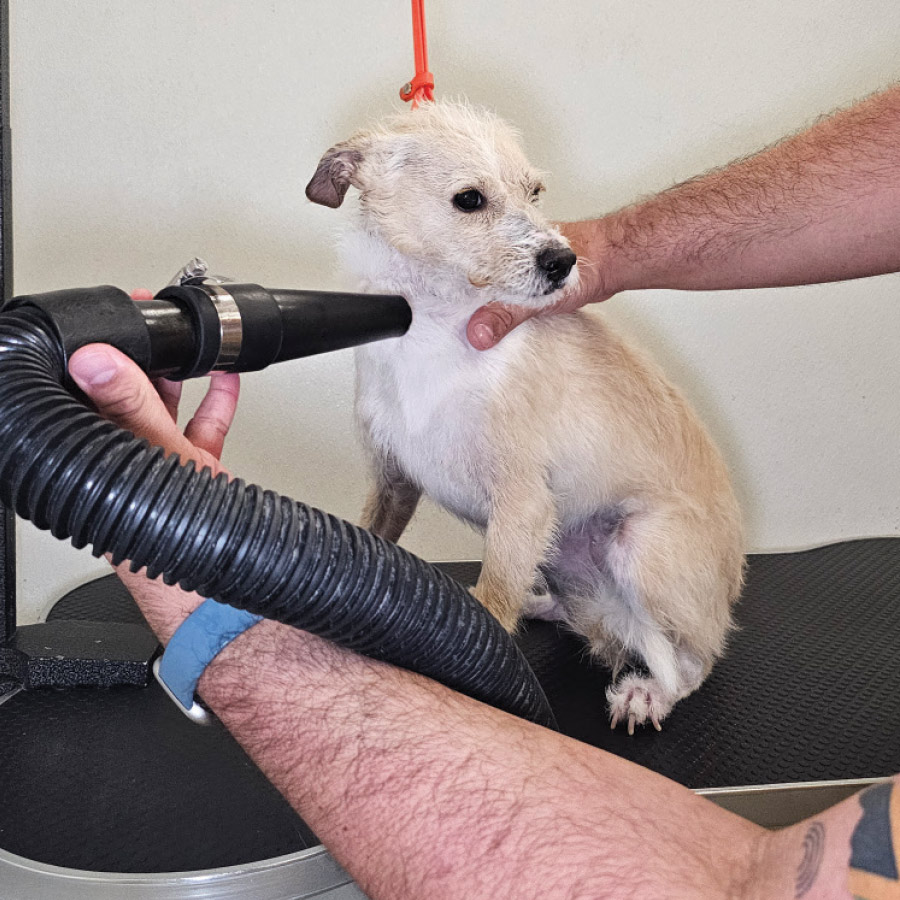
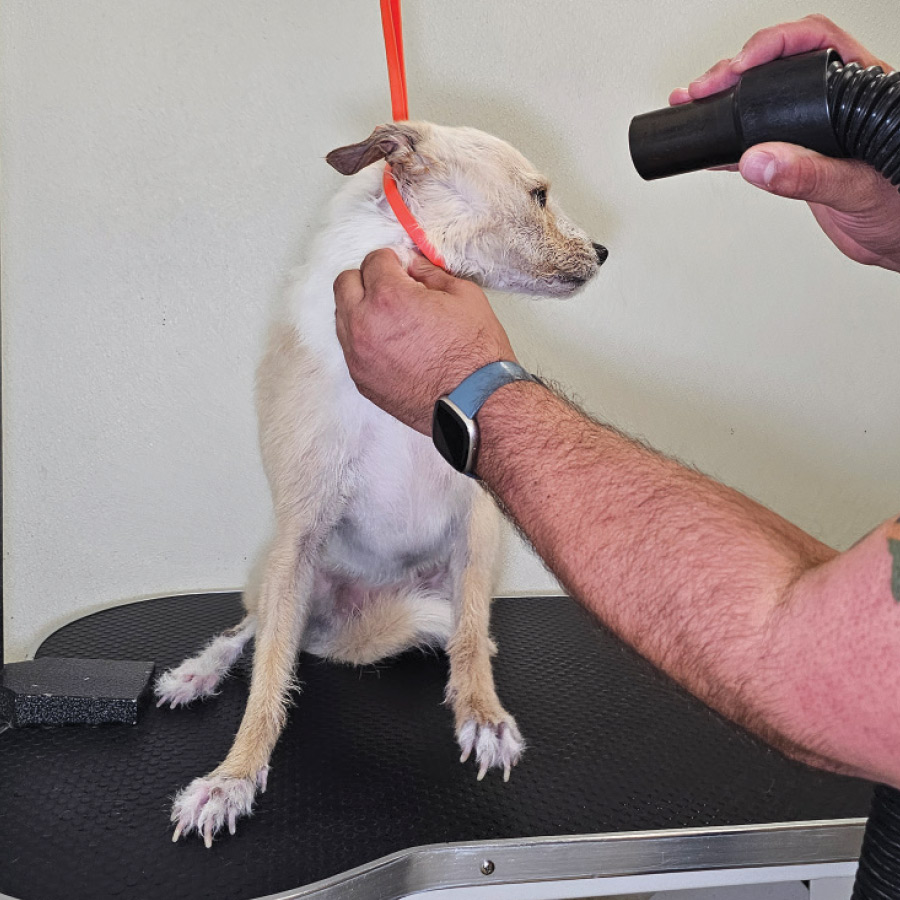
FIG. 8) Force-dry the coat in the direction that it grows for a smoother end result.
FIG. 9) If a dog is fully prepped and their feet are still damp, this can be an indicator that the feet did not get completely clean in the bath. Dirty hair doesn’t dry as fast as clean hair.
 
FIG. 10) While working on the chest, the closer the nozzle is to the skin, the less blowback they get in their face and they will likely let you accomplish more.
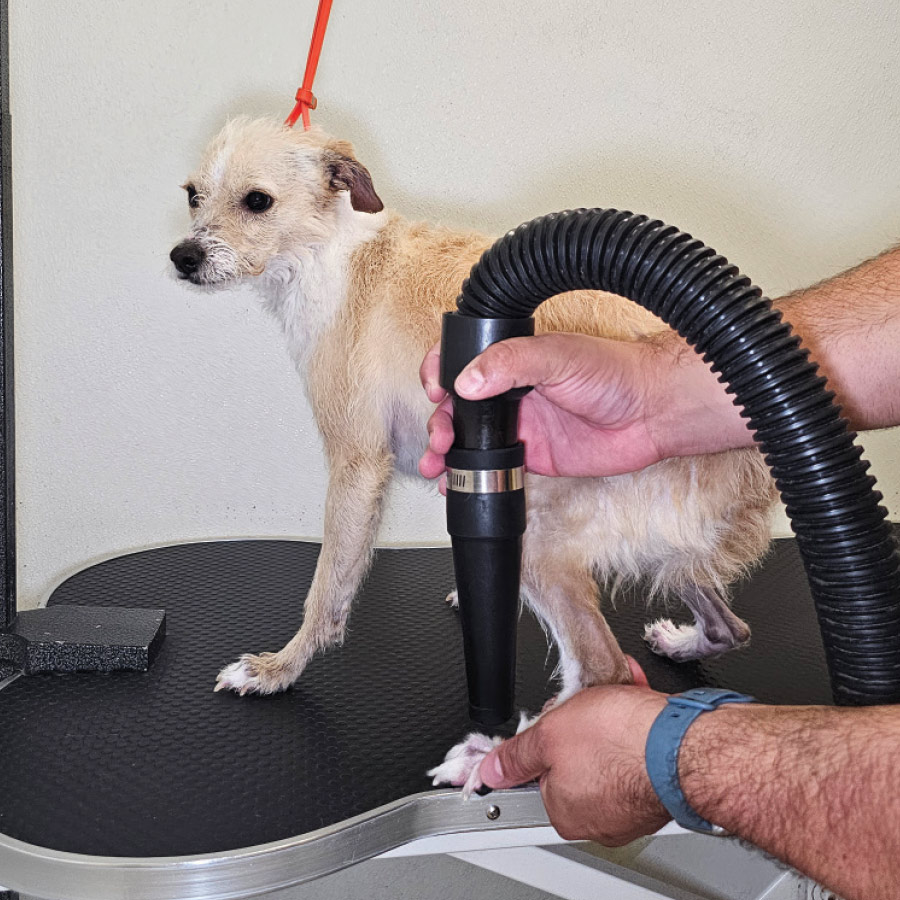
A groomer blowdrying a dog's paws.
A groomer blowdrying the fur around a dog's face and neck.
FIG. 11) Continue drying in the direction the coat grows all the way to the tip of the tail.
 
FIG. 12) To get the face dry safely, remove your condenser nozzle and avoid the eyes and ear canals. Cotton balls in the ears can help with the latter.
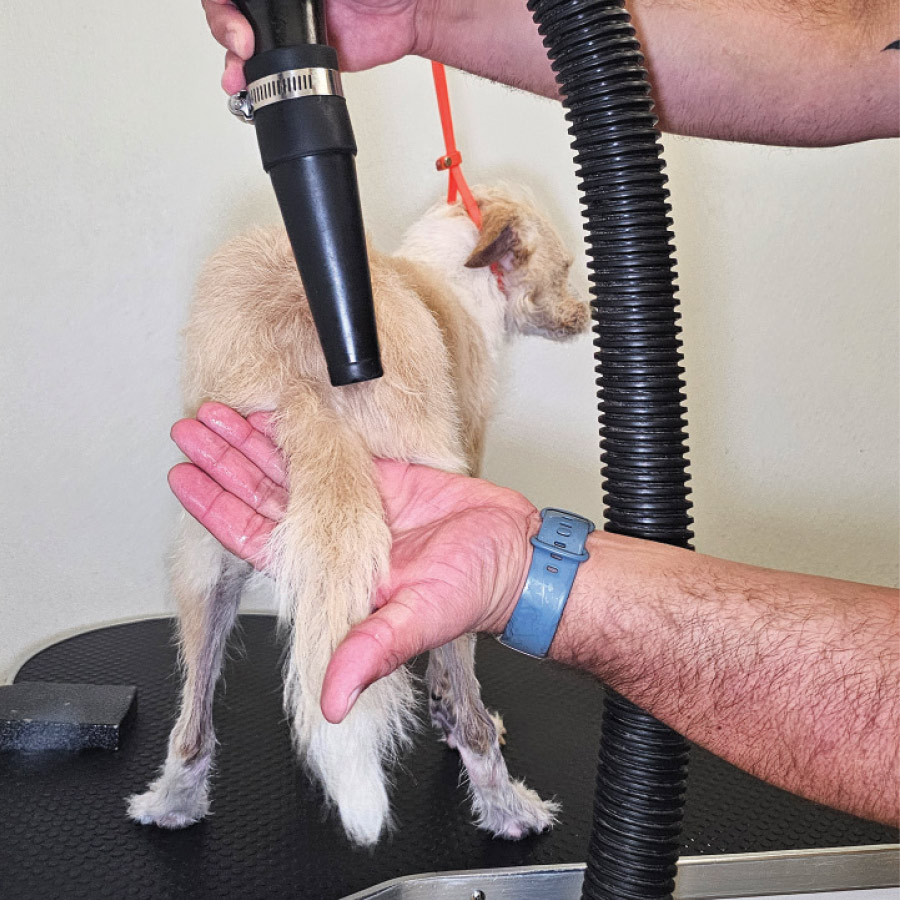
A groomer blowdrying a dog's tail.
A groomer using a blowdryer without a condenser nozzle to dry a dog's face.
FIG. 13) Trim the nails right after drying while the keratin is still a bit softened from the bath, as this makes them easier to cut and is more comfortable for the dog.
 
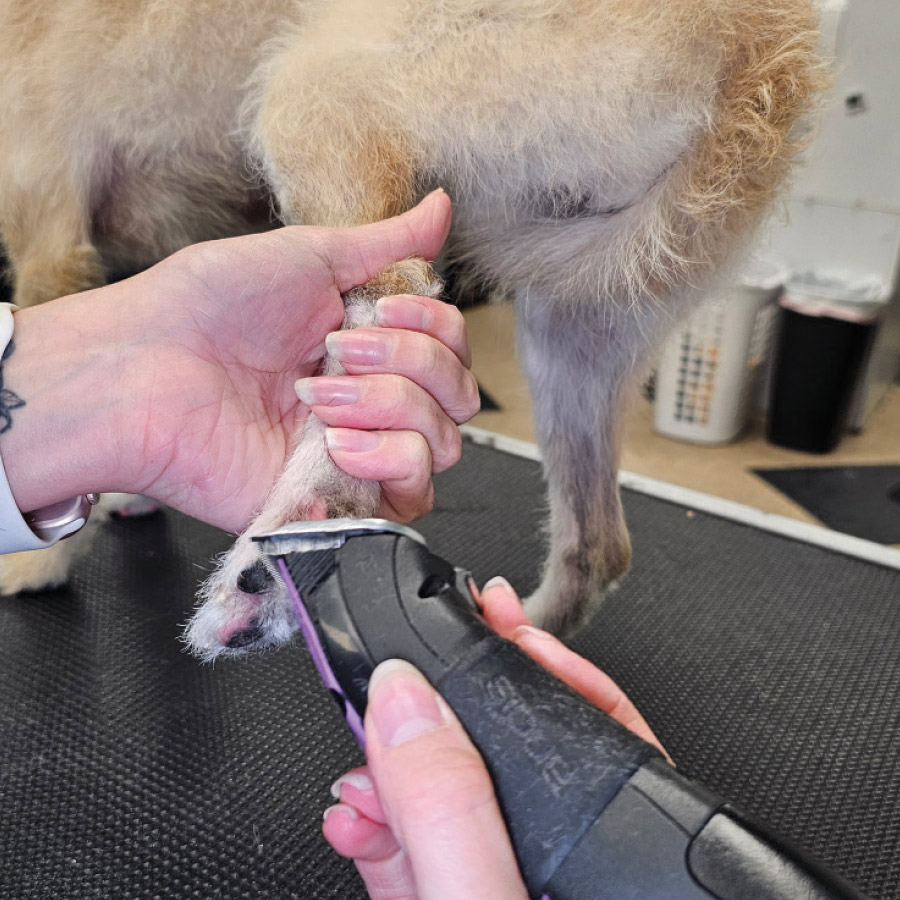
FIG. 14) The bottom of the paw pads can be shaved with a #10 all the way down to a #30, depending on the dog’s sensitivity.
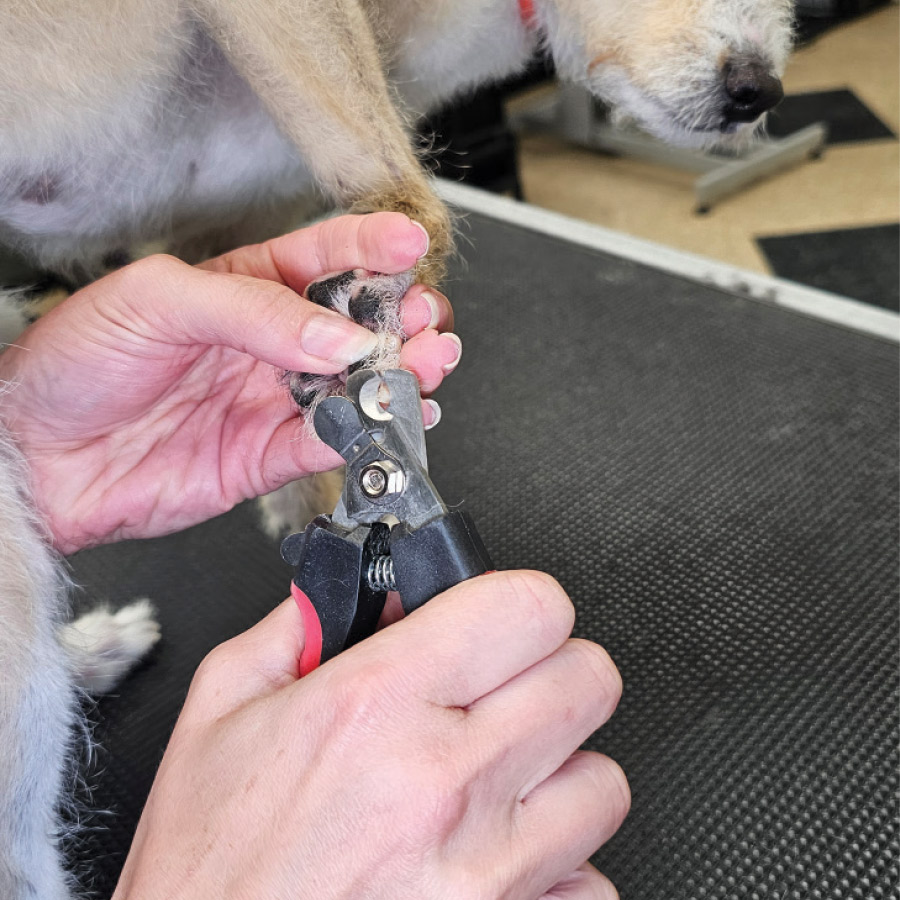
A closeup of a dog's nails being trimmed.
A closeup of a dog's nails on its hind leg being trimmed.
FIG. 15) When clipping the anal sanitary using a #10, the goal is to only get under the hairs and not actually make contact with the sphincter to avoid injury or irritation.

FIG. 16) The belly sanitary is easiest to execute by lifting the dog’s front legs while standing in front of them. Any hair on the belly that is growing in the direction towards where you are positioned is sanitary hair and can be clipped. The inner thighs should not be shaved down unless necessary or requested.

Depending on the dog you are working on, this may conclude the groom. If not, you can begin the remainder of the haircut based on owner preference. Either way, you are now equipped with the tools for a perfect and safe prep for any pup!
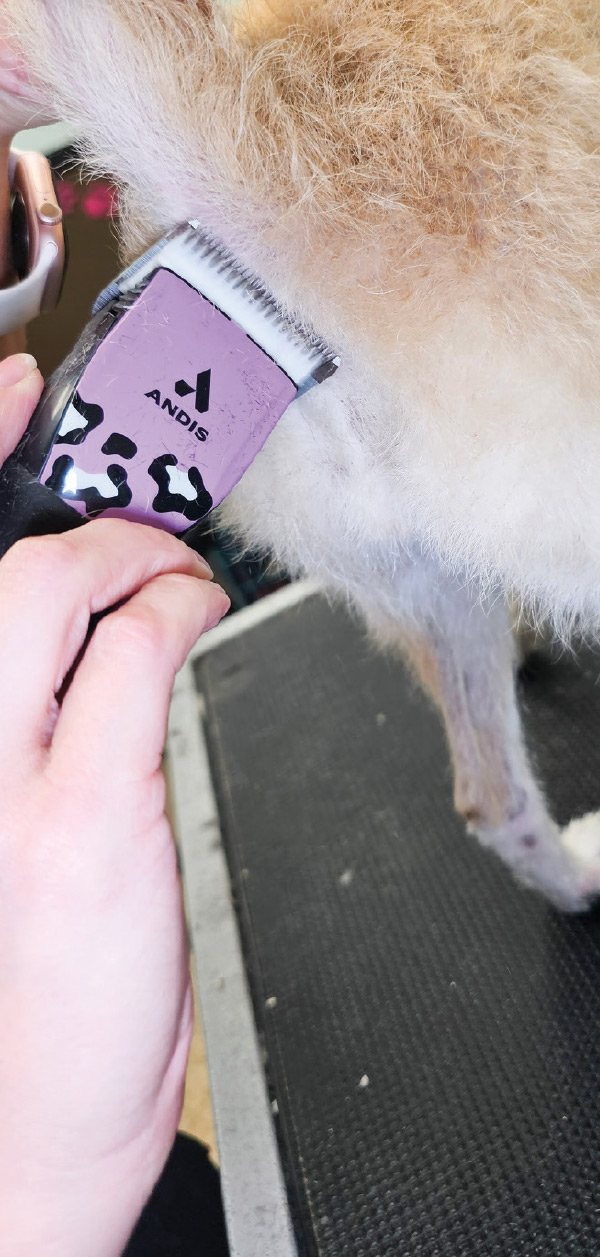
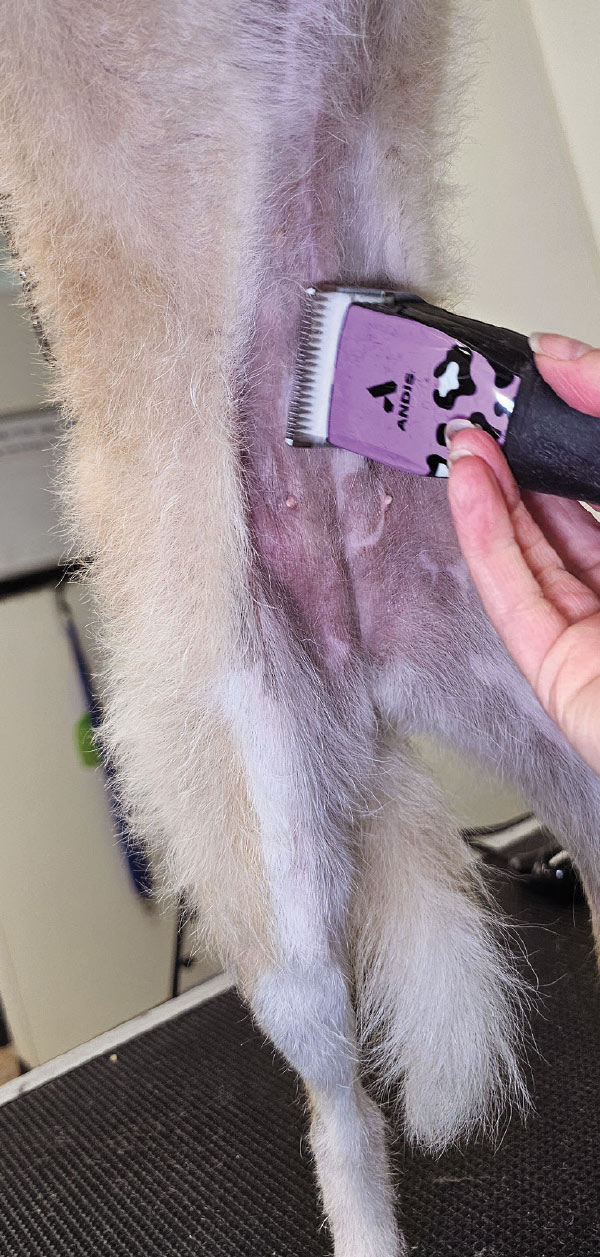
 A hand uses purple Andis clippers to trim a dog's fur.
 A hand uses purple and black Andis clippers to trim the light-colored fur on a dog's belly.