









Contents | August 2025
28

by Kim Kier
ALSO INSIDE
todd@barkleigh.com
adam@barkleigh.com
gwen@barkleigh.com
rebecca@barkleigh.com
luke@barkleigh.com
laura@barkleigh.com
brandi@barkleigh.com
carlee@barkleigh.com
evan@barkleigh.com
allison@barkleigh.com
james@barkleigh.com
karin@barkleigh.com
britany@barkleigh.com
Daryl Conner
Lynn Paolillo
Jennifer Bishop Jenkins
Melissa Viera
ALSO INSIDE
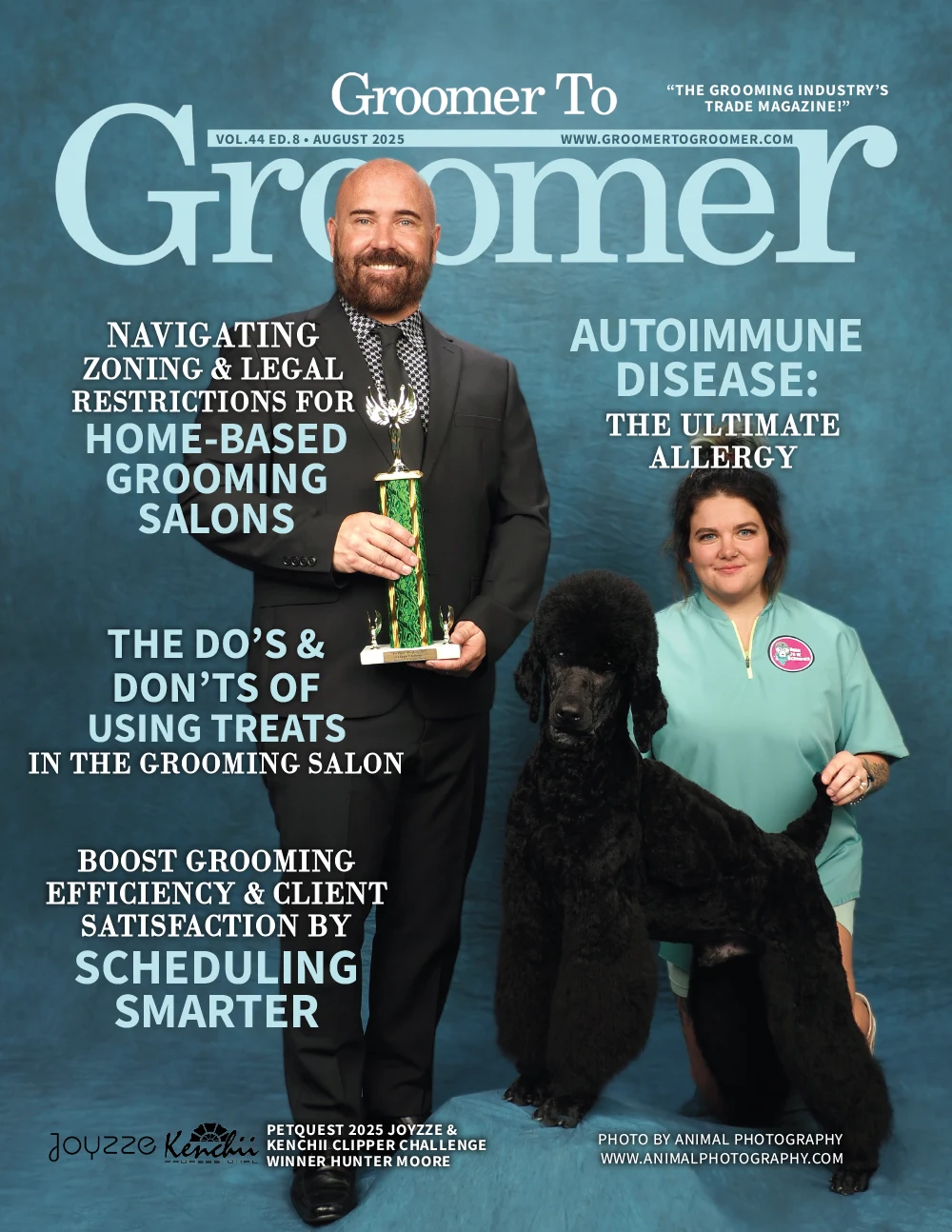
ON THE COVER
its advertisers for their continued support.
- Andis2
- Animal Photography12
- Artero9
- Bandanas Unlimited16
- Barkleigh Store – The Pet Stylist Playbook48
- Best Shot Pet – MED WellnessDigital
- Best Shot Pet – Scentament SpaDigital
- Best Shot Pet – UltraMAX ProDigital
- Cosmos Bathing Systems53
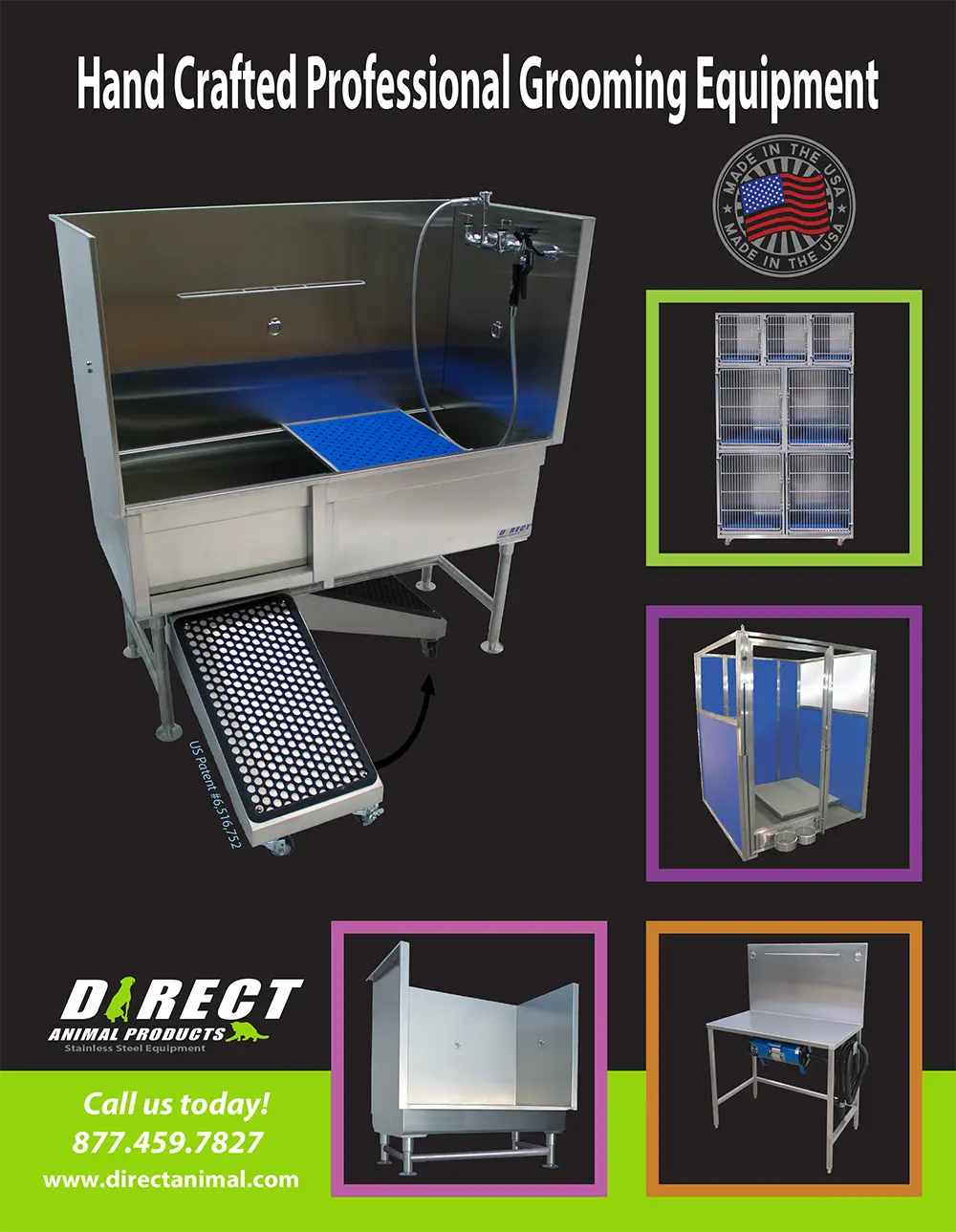
- Direct Animal Products41
- Double K Industries3
- Electric Cleaner Company52
- Envirogroom | Special FX Premium Products54
- Evolution Shears17
- EZ-Groom31
- Groom Expo60
- Groomer’s Best34
- Groomer’s Choice4
- Groomers Mart44
- Groomsoft37
- Hanvey Engineering & Design55
- Happy Hoodie64
- IV San Bernard | Pet Skin Academy11
- Laube65
- MetroVac15
- Midmark49
- Odorcide59
- One is All39
- Paragon Pet Grooming School20
- Paw Brothers | Ryan’s Pet Supply66
- PetBizInsurance.com46
- Pet Boarding and Daycare ExpoDigital
- Petco Grooming45
- PetLift47
- Precision Sharp Co35
- Puppy Playground30
- Quadruped Pet Care33
- Ryan’s Pet Supplies | Leading Edge Grooming AcademyDigital Only
- Stallergenes Greer51
- Stone Mountain Pet Products7
- SuperZooDigital
- Tauro Pro LineDigital
- The Absorber Dog Lover’s Towel29
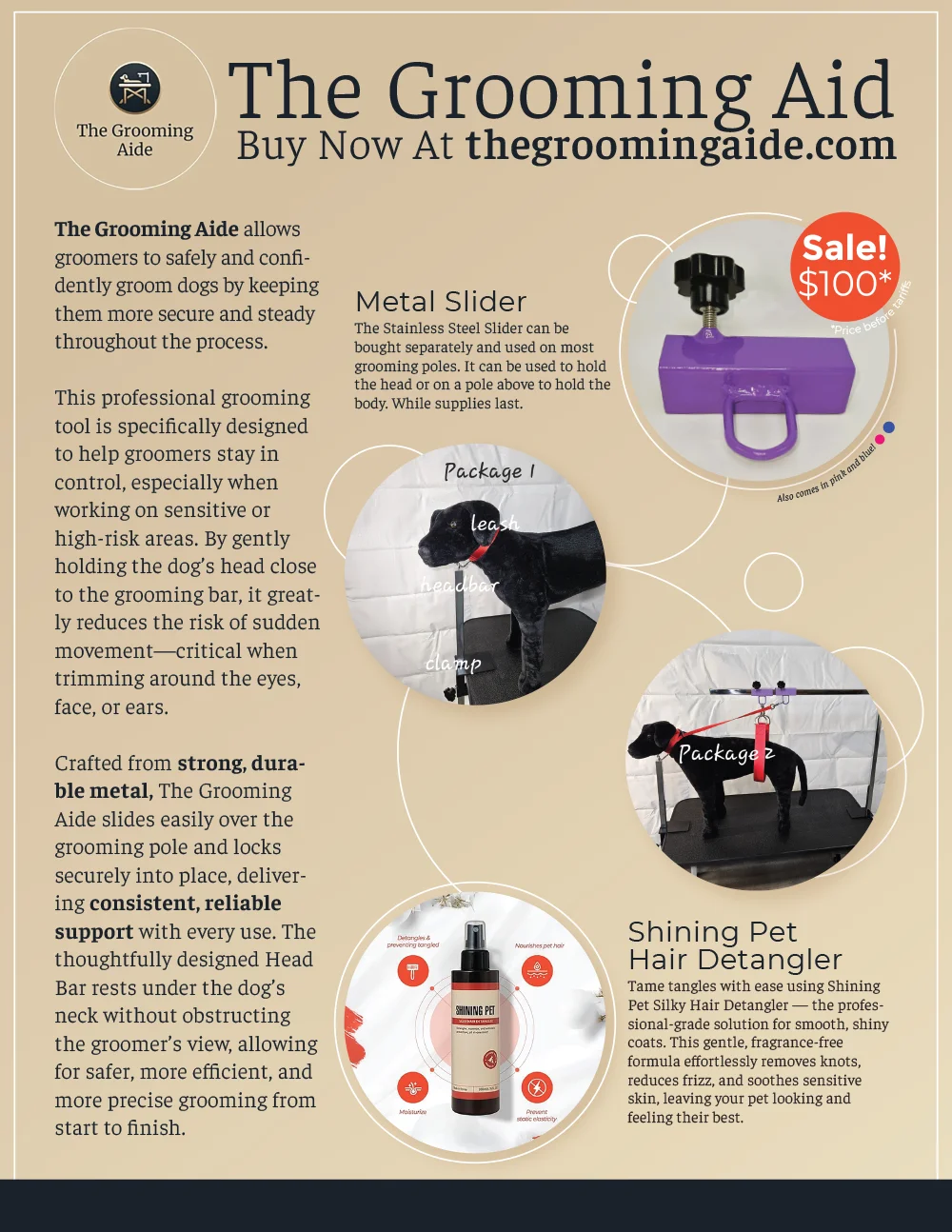
- The Grooming Aide26
- Wag’n Tails62




























 y family teases me about my spending habits. They say, “Some women collect handbags; some buy closets full of shoes. But you, you buy grooming tools.” And they are not wrong. If a new whiz-bang, gotta-have-it grooming tool becomes available, I will try it.
Sometimes, I find my purchase is something I have no idea how I ever worked without it (I’m looking at you, chunking shears!), and other times I find the tool languishes because I don’t find it helpful—but still, I have to try. Why? Because when a tool works the way it is supposed to, it will make the grooming process go more smoothly and quickly, which is good for both the pet and groomer.
Let me walk you through a typical groom using tools that I have invested in that save me time and provide excellent care for the pets I groom. Some of these tools were expensive initially, but they pay me back by allowing me to work more safely and efficiently, which means I can groom more dogs per day, therefore increasing my income.

Getting Them Clean
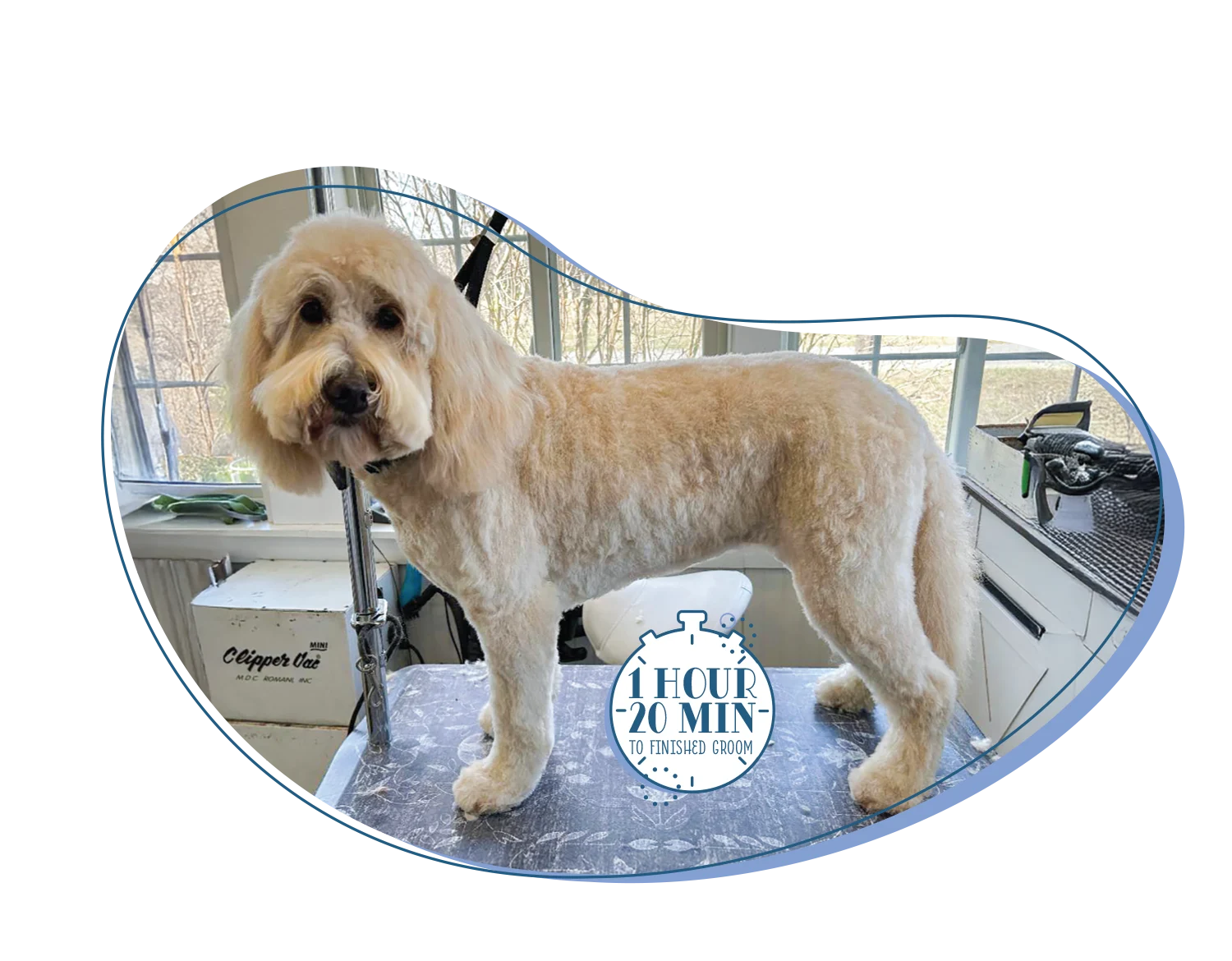
They also dramatically decrease the time it takes to get a dog from swamp- monster dirty to smelling like a daisy. Case in point, we gave Olive, a 53-pound poodle mix who had been swimming in a swamp right before she came in, three shampoos and a conditioning treatment. It took a mere 16 minutes of tub time to get her beautifully clean. If I had washed her by hand, the process would have taken far longer.

Getting Them Dry
We use super-absorbent towels designed for groomers to remove as much water from the coat as possible. We then squeeze the fur all over with a terry cloth towel. Absorber and terry cloth towels are not a significant investment, but they do need to be replaced frequently, as they wear out.
We also use high-velocity dryers on the pets we groom. I prefer models with a variable speed option, and I like to have at least one that has a heat option for working on chilly days, on elderly pets or puppies, and on cats. I’ve been grooming long enough to remember a time before high-velocity dryers, and I would never want to go back to those days. Olive, the thick-coated poodle mix, took me 18 minutes to dry.

Olive comes to be groomed every seven weeks, and her owner does some brushing at home. Using good hand tools (brushes and combs) and appropriate liquid tools, I had Olive brushed and combed in eight minutes.

Olive’s owner likes her to look fluffy, but she also lets her run in the woods and play in water daily, so we have come up with a trim that is aesthetically pleasing to the owner but practical as well. I use an “O” comb on her body and legs. It took just over eight minutes to trim her body.
I also invest in powerful clippers, and have recently experimented with wide blades and corresponding wide attachment combs. The added width means fewer passes over the pet’s body because more hair is clipped with each stroke using a wide blade.

It took me one hour and twenty minutes from the time Olive (and the mud she came coated in) arrived to complete her grooming service. I will give myself some credit for my skillset, but I am mostly grateful for the well-designed tools I have at my fingertips.
I firmly believe that investing in great tools is a key element in preventing burnout, reducing wear and tear on our bodies, increasing our profit, and keeping the pets we love safe and happy.
 s a viable option for groomers who want to be in control of their time and career but don’t want the expense and upkeep of a storefront salon or a mobile unit, house-call grooming is becoming increasingly popular with groomers and the pet-owning public. And, as one of the lowest-cost ways to start your own grooming business, it can be the ideal career for some.
House-call groomer Edina Viens shares why she chose this particular business model: “The house-call model was the easiest grooming business to start. I began right out of grooming school in 1998. I could start with minimal tools, and I didn’t need a table initially. I have my own schedule and can book as many dogs as I want.
“When I started, I groomed anywhere to build my clientele, but after 25 years, I am more selective,” Edina continues. “I do not groom outside unless the area is covered. I need a wind- and weather-protected place, otherwise it is more difficult for both the dogs and myself.”
Groomer Jan Davidock shares her advice for introducing and explaining what house-call is to potential clients: “Don’t sell the grooming, sell the benefits. Tell them that your full attention is given to their pup without interruption. There is no anxiety from other barking dogs. They don’t have to drive, their baby isn’t kept waiting for service, and they don’t need to guess at a pick-up time. There is no transfer of diseases such as kennel cough, and no chance of fleas or other parasites”
When clients fully understand the value of your services and what will be required of them—access to bathtub or sink, a place to set up, an electric outlet, etc.—they are often very receptive of the house-call model.

“Once I got used to how physically demanding house-call grooming can be, I really started to enjoy it,” she continues. “I work at my own pace, the dogs are usually more relaxed at home, and I love that I get to engage with the client on a different level.
“Being in their home just creates a more laid-back atmosphere,” Deanna adds. “It kind of feels like when you have a friend over, even though I’m there for work.”
Even with all of its benefits, the house-call model can be quite challenging. Before you take the plunge, it might be helpful to join groups on social media, where you can get lots of support, business-building ideas and invaluable information from other group members, such as the following.
“When I started, I carried EVERYTHING,” says Veronica Bolin. “After a year or so, I started bringing only what I needed for each groom and left the ‘spares’ in my car just in case something went wonky.”
“One of the other biggest things is making sure your routing is on point,” Brittany continues. “If you can get all of your clients in the same area on the same day, that’s ideal.”
“The tools that help me most are my Alpha suction cup and my portable camp shower,” Deanna Marie shares. “Some dogs try to jump out of the tub or sink, and the suction cup helps keep them steady and safe. The camp shower pulls water from a bucket, and I mainly use it for medium/larger dogs. I’ll fill the bucket with soapy water so it sprays out ready to go, which helps move the bath along quicker.”
When it comes to house-call, you often have to be creative and do what works for you.
Pat McCauley says, “I use queen-size sheets to cover counters. It makes cleanup a snap.”
“I use drain hair-catchers, and drying double coats in the tub helps to reduce mess and aids in easy cleanup,” states Jessica Siorek.
Veronica Bolin adds, “I Velcro a bag to the underside of my table so I can wipe hair from my table into the bag.”
Ashlee DeSimone, who is both a mobile groomer and a house-call groomer, offers services depending on what the client and dog can handle/afford: “If the customer is older or the dog is older, I try to do only house-call,” explains Ashlee. “I let the clients know that all I need is an outlet and water hookup.
“I use a fully enclosed, floor-to-roof netted pop-up tent,” Ashlee continues. “There’s no hair all over the people’s homes. I can clean it elsewhere and pack up quickly when done!”
House-call grooming is a physical job. In addition to the actual grooming, it takes time to travel, set up, tear down and clean up. But for some it’s an ideal career choice. Is it right for you?

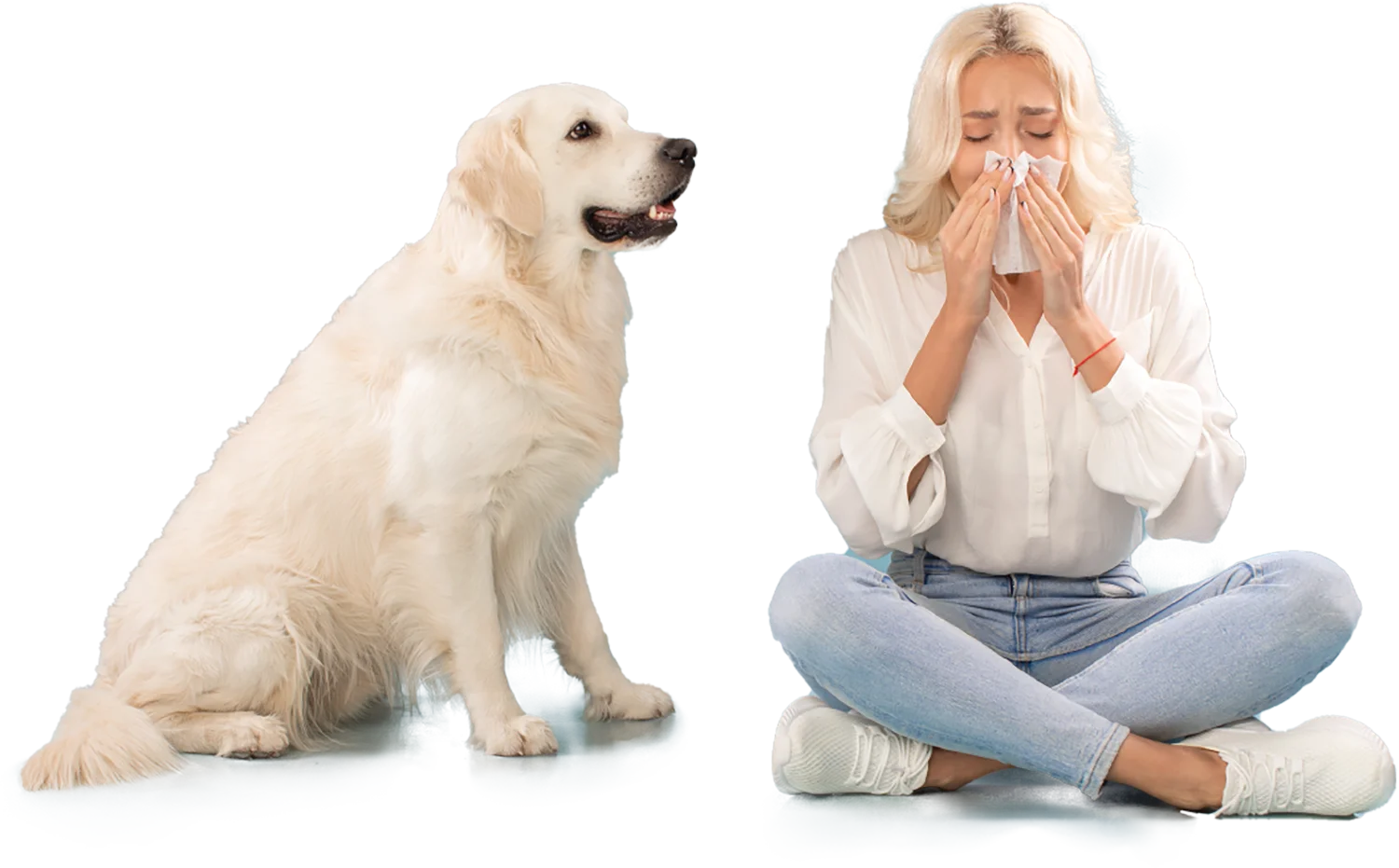
 llergies. Allergies. Allergies. That seems to be all we hear when it comes to skin diseases, and they are all treated similarly. The big question is, how did the veterinarian or dermatologist conclude that the pet has allergies when there is no test that definitively determines whether a skin condition or itching is due to allergies (food or inhalant)?
We can check for environmental allergens (things they are allergic to), but that doesn’t guarantee that to be the source of the problem. This leads to some misdiagnoses and treatments that only partially work—or don’t work at all.
One of the classes of diseases that fall under this category is autoimmune disease or, in simple terms, when the animal has an allergic reaction to itself. These diseases do not show up on allergy tests, and often, you may see some response to the typical medications used for allergies. However, the problem is that they never seem to return to normal.
Why? Because the pet can’t get away from the source of the allergic reaction—themselves! Due to the nature of these diseases, they require very different treatments.
From a clinical standpoint, they appear like any other allergic skin disease on the surface level. The pets are itchy, there is skin debris and most have secondary infections. If they are treated with Apoquel (standard dose levels), antibiotics and chlorhexidine shampoo, you may see mild improvement. The issue is much bigger than a standard allergy, though, and has to be treated much more aggressively.
High levels of anti-inflammatories, such as Apoquel, steroids or cyclosporines, are necessary to quell the type of reactions these diseases produce. In some cases, we even have to reach for chemotherapy drugs like azathioprine, chlorambucil, cytarabine or cyclophosphamide. Most of the medicines are ones that most people have never heard of. And that’s because autoimmune diseases are often overlooked, missed or never treated.
To diagnose autoimmune disease, a biopsy of the skin is necessary. This involves surgically removing a small piece of skin, and through a process to “fix” the tissue in a specific form (that can be sliced very thinly), it is then examined under a microscope. In most cases, this is never done because the veterinarian is relying on the assumption that this is just a typical allergy.
- Pemphigus Foliaceus: This is often seen around the head, face, ears, and footpads as crusty debris, pustules and sores. Common dog breeds affected: Chows, Akitas, Bearded Collies, Doberman Pinschers and Newfoundlands. In cats: Domestic Short Hair and Long Hair are most common, but also Siamese, Himalayan, Persians, Maine Coon, American Blue, Scottish Fold, Ragamuffin and Somali cats.
- Pemphigus Erythematosus: Often seen around the face, ears and the bridge of the nose, this tends to be a less aggressive form. Common breeds affected: Collies and German Shepherds.
- Pemphigus Vulgaris: Rare, but this is the most severe form of Pemphigus, which causes sores/blisters in the mouth, lips, genitals and anal area. Common breeds affected: German Shepherds, Collies and Shetland Sheepdogs.
- Pemphigus Vegetans: This is the least common form of Pemphigus, but very aggressive in causing sores and wart-type growths. No breed predilection.
- Discoid Lupus Erythematosus (DLE): This causes sores and lesions on the nose (changes in color/depigmentation), face, eyes, ears and footpads, with crusty debris and hair loss also commonly associated with this form. Common breeds affected: German Shepherds, Collies, Shetland Sheepdogs and Siberian Huskies.
- Systemic Lupus Erythematosus (SLE): A more serious form of lupus affecting skin, joints, muscles and other organs, it can also be associated with lethargy and a fever. Common dog breeds affected: German Shepherds, Collies, Shetland Sheepdogs, Afghan Hounds, Beagles, Irish Setters and Poodles. In cats: Siamese, Himalayan and Persians.
- Puppy Strangles/Juvenile Cellulitis: A disease primarily affecting puppies, this is usually a sudden-onset disease that affects the ears, nose, eyes, mouth and lips. In addition, it is often accompanied by swollen lymph nodes, fever and lethargy, and the puppy may stop eating due to the sores.
- Sebaceous Adenitis: Although not proven, many believe this condition falls into the category of autoimmune diseases. This is an inflammatory process of the sebaceous glands which leads to scarring and non-function of the affected glands. Common breeds affected: Poodles, doodles, Akitas, Samoyeds and Vislas.
These are all severe diseases that not uncommonly end in euthanasia, mainly because they are misdiagnosed and are not given appropriate treatment. As groomers and pet advocates, we must be vigilant in educating our clients about the possibility of these diseases so that the owners seek second opinions with dermatologists or more advanced diagnostics to prevent fatal outcomes.
If a pet is not responding appropriately to treatment and belong to one of the common breeds mentioned, it is advisable to discuss the possibility of a deeper issue. Not all of these cases can be medically managed, but the vast majority can. However, the best chance of successful management is to recognize it early in the process.
The management of these diseases does require veterinary diagnostics and care to get started. The groomer can also play a vital role in the process. Once the veterinarian initiates systemic care, the groomer can focus on managing the infection and restoring the skin barrier, which is crucial to the process. This is where a groomer needs to obtain the necessary education on proper techniques and products to achieve great results.
The following indicate when we should consider autoimmune disease in a pet being treated for “allergies:”
- Lack of response to treatment.
- When the treatment that was previously working stops working and skin issues return with a vengeance.
- Skin issues keep reoccurring even when not in allergy season.
- The dog or cat breed is prone to the disease.
Remember, this is not about diagnosing! This involves making observations and guiding the client to seek appropriate help. There is no way to tell just by looking at a pet whether it has an autoimmune condition or not. That can only be determined with further diagnostics performed by a veterinarian.
Dr. Cliff Faver graduated with a BS in Biology/BA in Chemistry before getting a Veterinary degree in 1987. He is the past owner of Animal Health Services in Cave Creek, Arizona and now the US distributor for Iv San Bernard products, teaches the ISB Pet Aesthetician Certification program, and speaks internationally on hair and skin. His passion is to merge groomers and veterinarians to aid in helping and healing pets. He is also a member of AVMA, AAHA, AZVMA, Board member with Burbank Kennel Club, and has served on Novartis Lead Committee, Hill’s International Global Veterinary Board, and a Veterinary Management Group.




Photos provided by PupLuxe Grooming
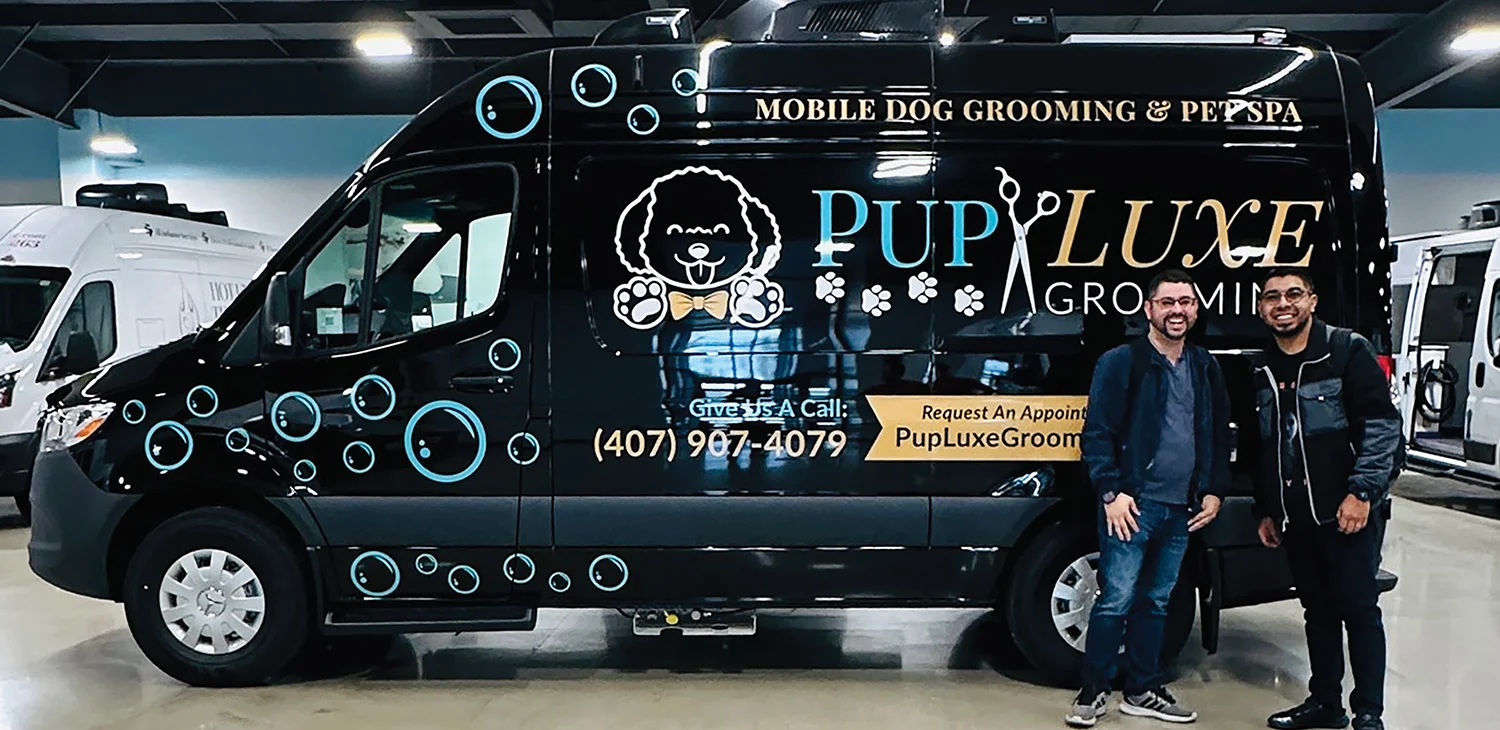
 hat sets us apart from a salon is just the convenience of having someone going to your front door and picking up your dog and not having to wait three to four hours for a dog to be done,” says Jessie Colon-Sanchez, co-owner of PupLuxe Grooming, the premier mobile pet grooming choice for the Orlando area. “This is a lot quicker and keeps the clients’ schedules on track.”
Jessie’s husband and co-owner, Johan Colon-Sanchez, likes to say they’re not just in the business of grooming, but in the business of convenience.
“People have very busy lives and don’t have an entire day to carve out for their dog’s appointment,” Johan adds.
In 2022, the couple went to the Atlanta Pet Fair together, and on their way home to Florida, they started talking about the idea of going mobile and writing down how they would want the business to grow.
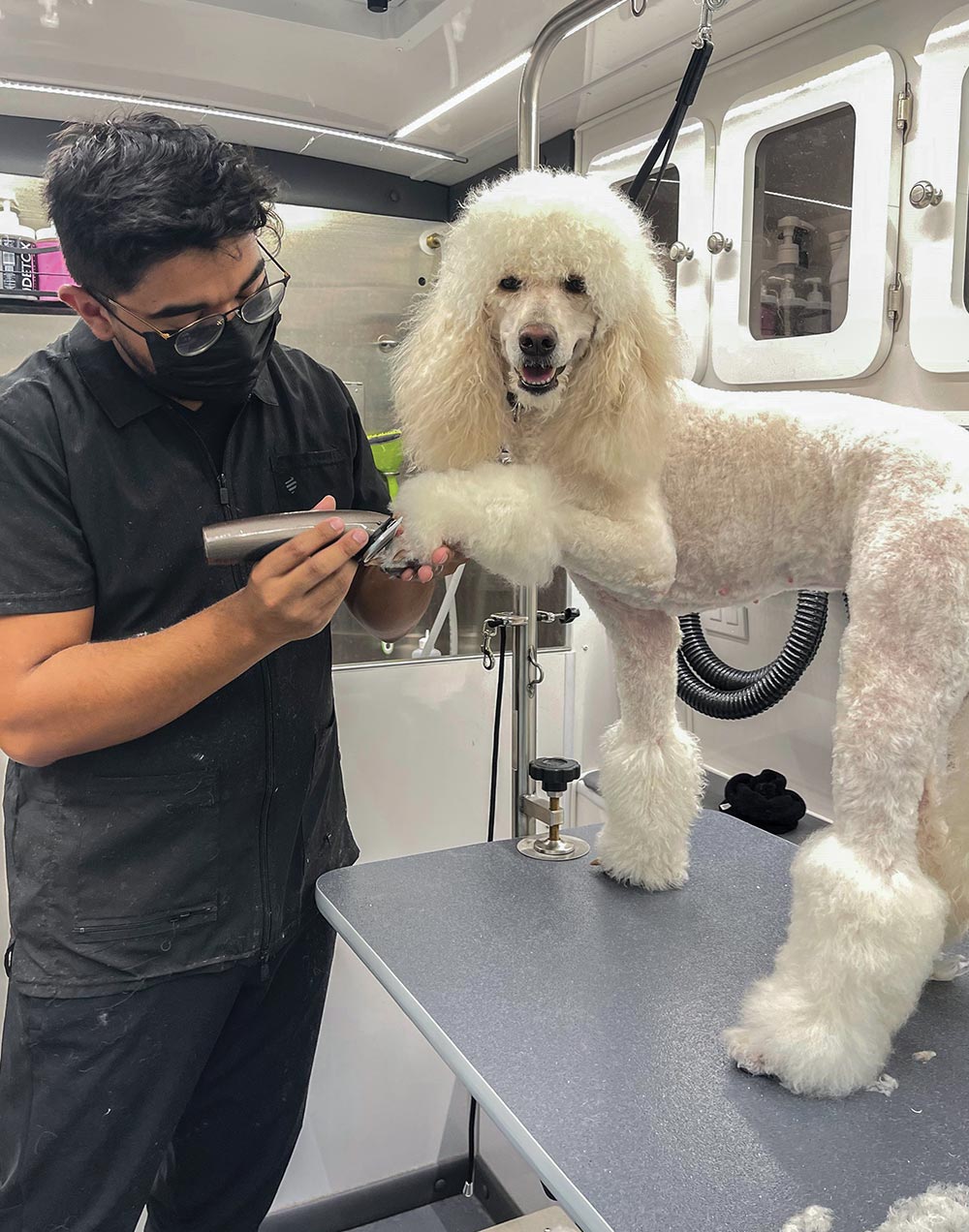
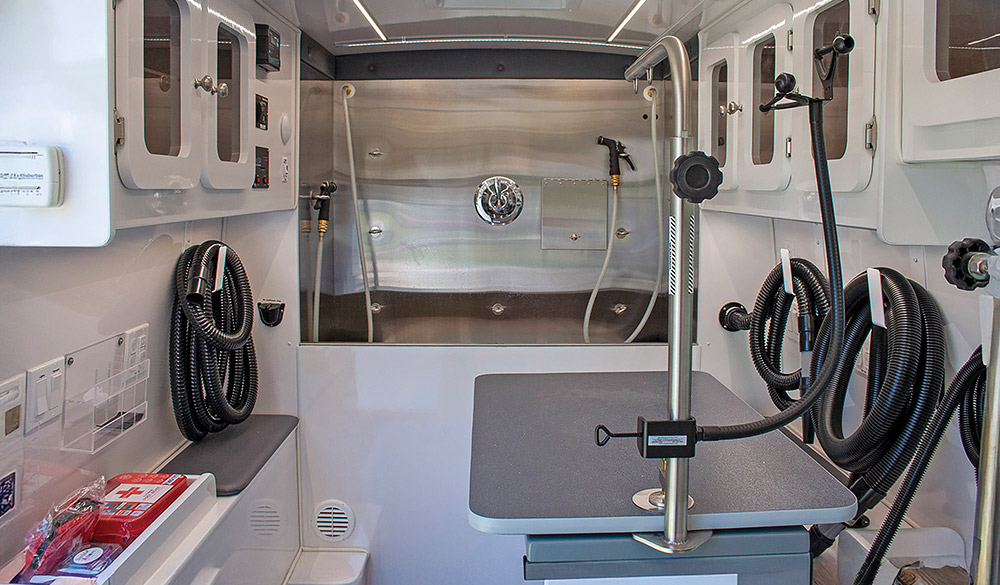
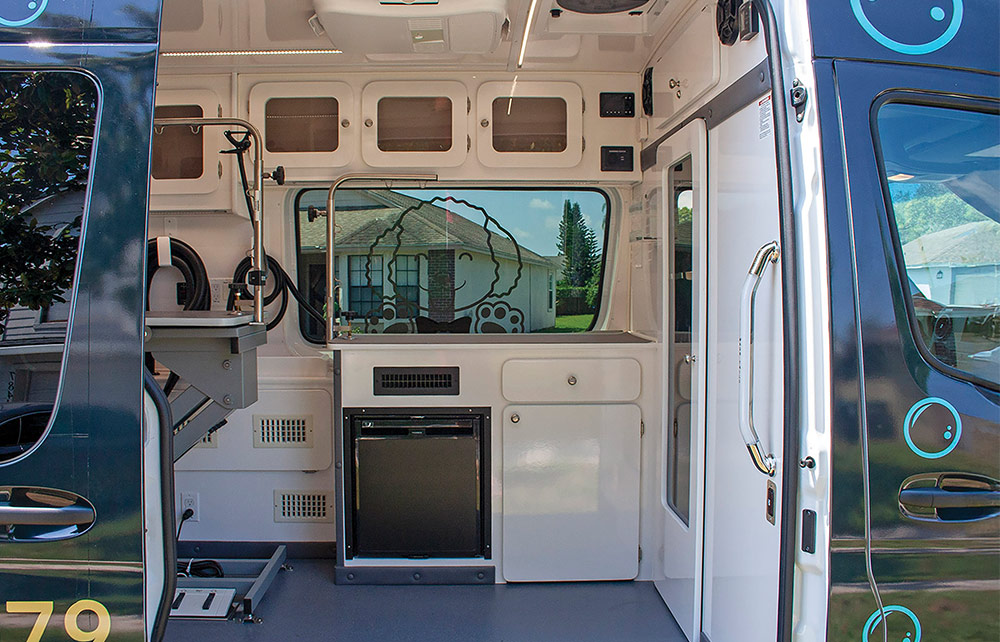
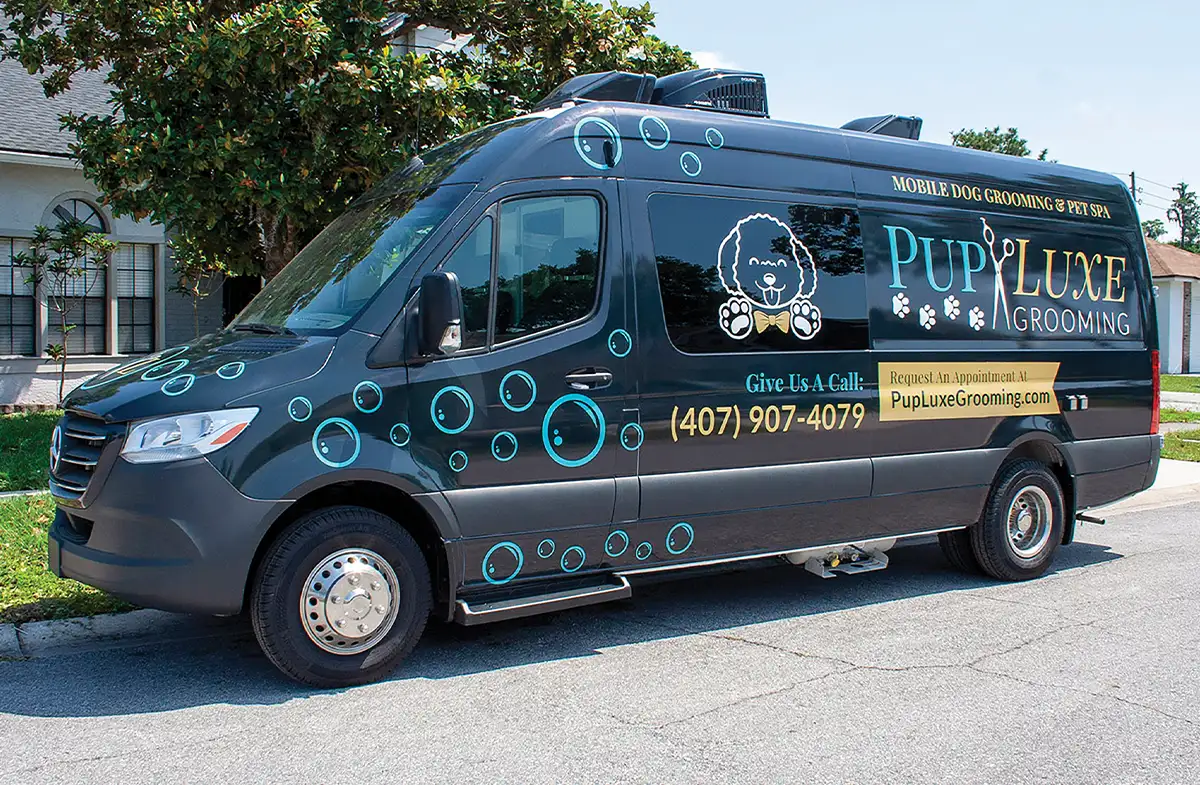
Together, they found the perfect van, customized it inside and out, crafted a digital presence, and put all the systems and processes in place to establish PupLuxe Grooming, a full-service mobile grooming salon serving Orlando and its surrounding communities.
PupLuxe Grooming offers three packages: the Luxe Bath Service, which is an all-inclusive bath service, complete with premium shampoo and conditioning, blow-drying, teeth-brushing, nail trim, gland expression and more; the Mini Groom, which covers everything in the Luxe Bath Service plus a face, paw pad and sanitary area trim; and the Full Groom, which includes all the Mini Groom services plus a full-body haircut and styling.
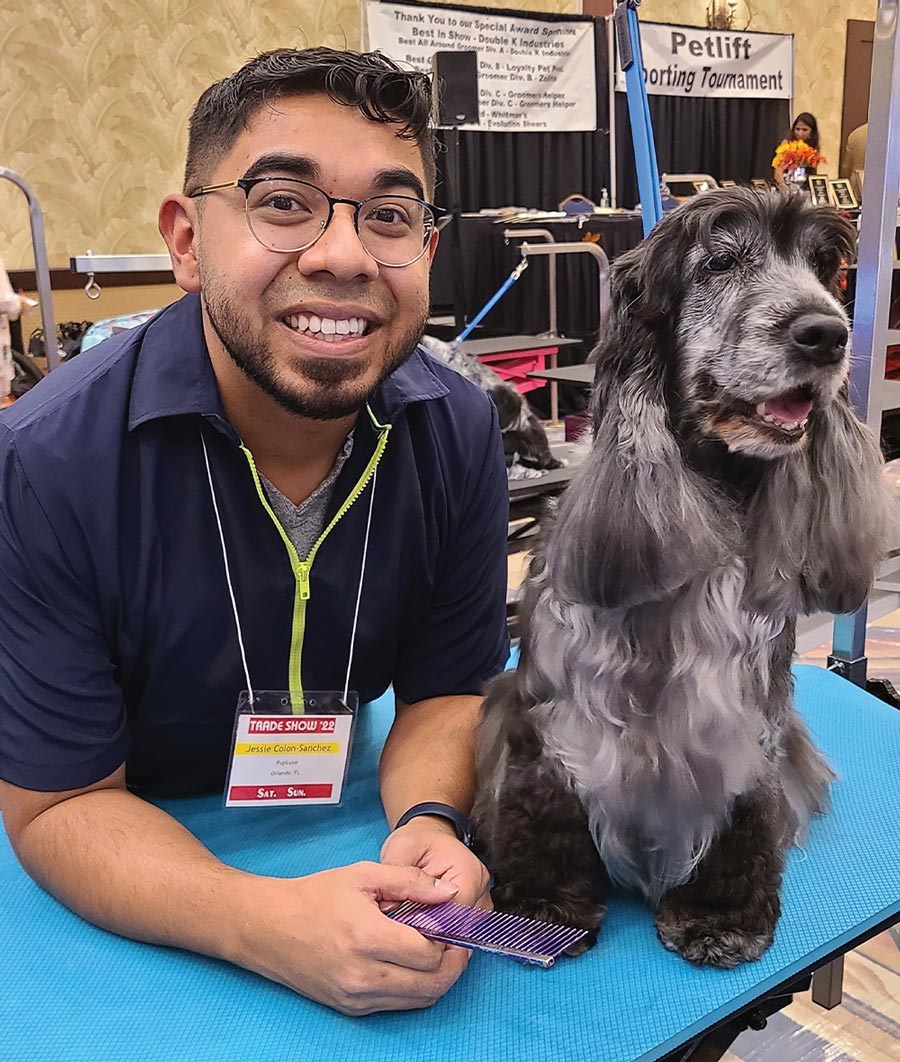
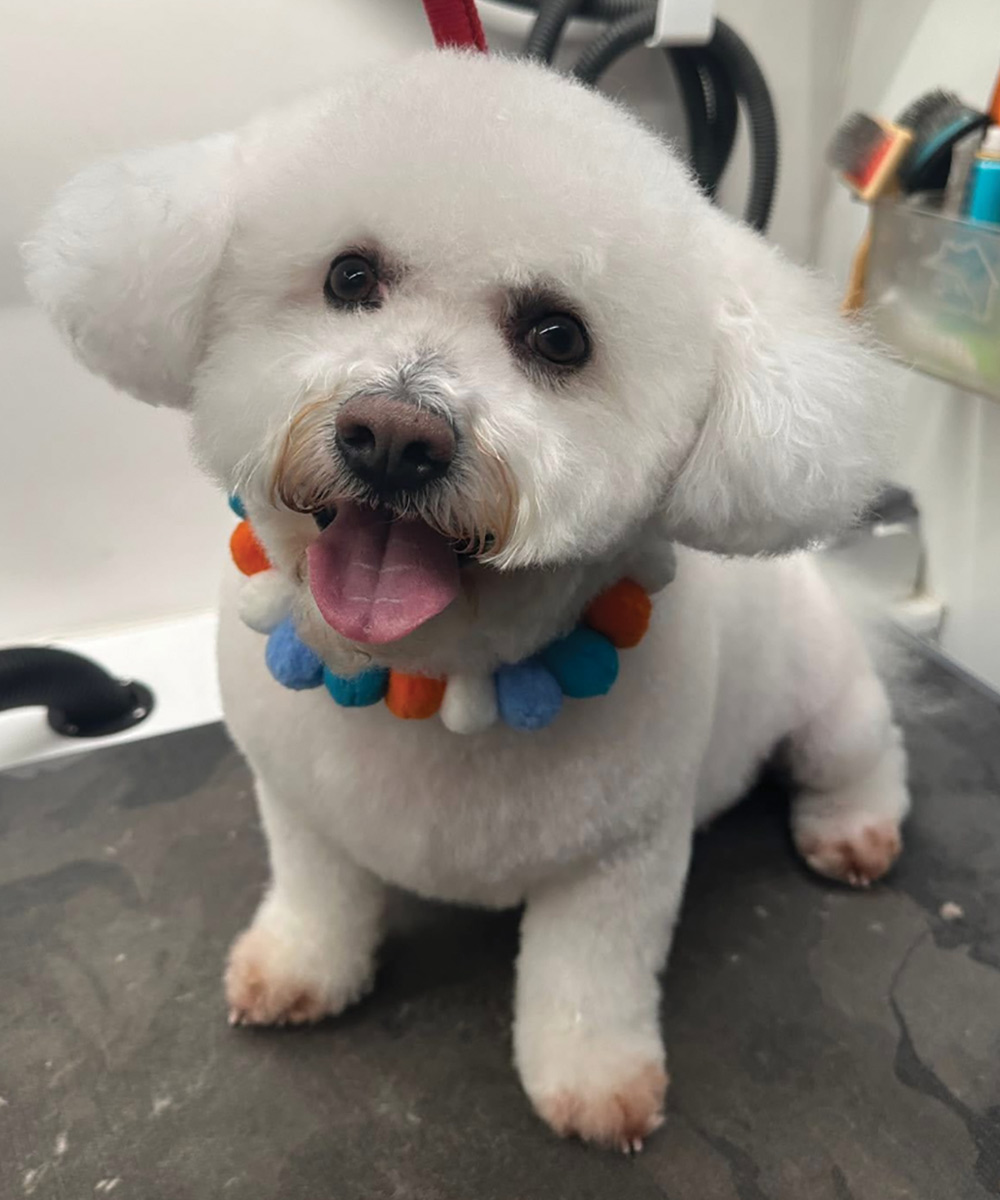
Although he had never owned a dog or worked with animals, Jessie started working with dogs at a veterinarian hospital in Roanoke, VA, helping in the kennel and learning the vet tech side of the business.
“That’s where it kind of lost me, because I wasn’t a fan with all of the emotions that come with that,” he shares. “I had a friend at a pet retail store, and she told me about an opportunity for a groomer, so I tried and ended up falling in love with it.”
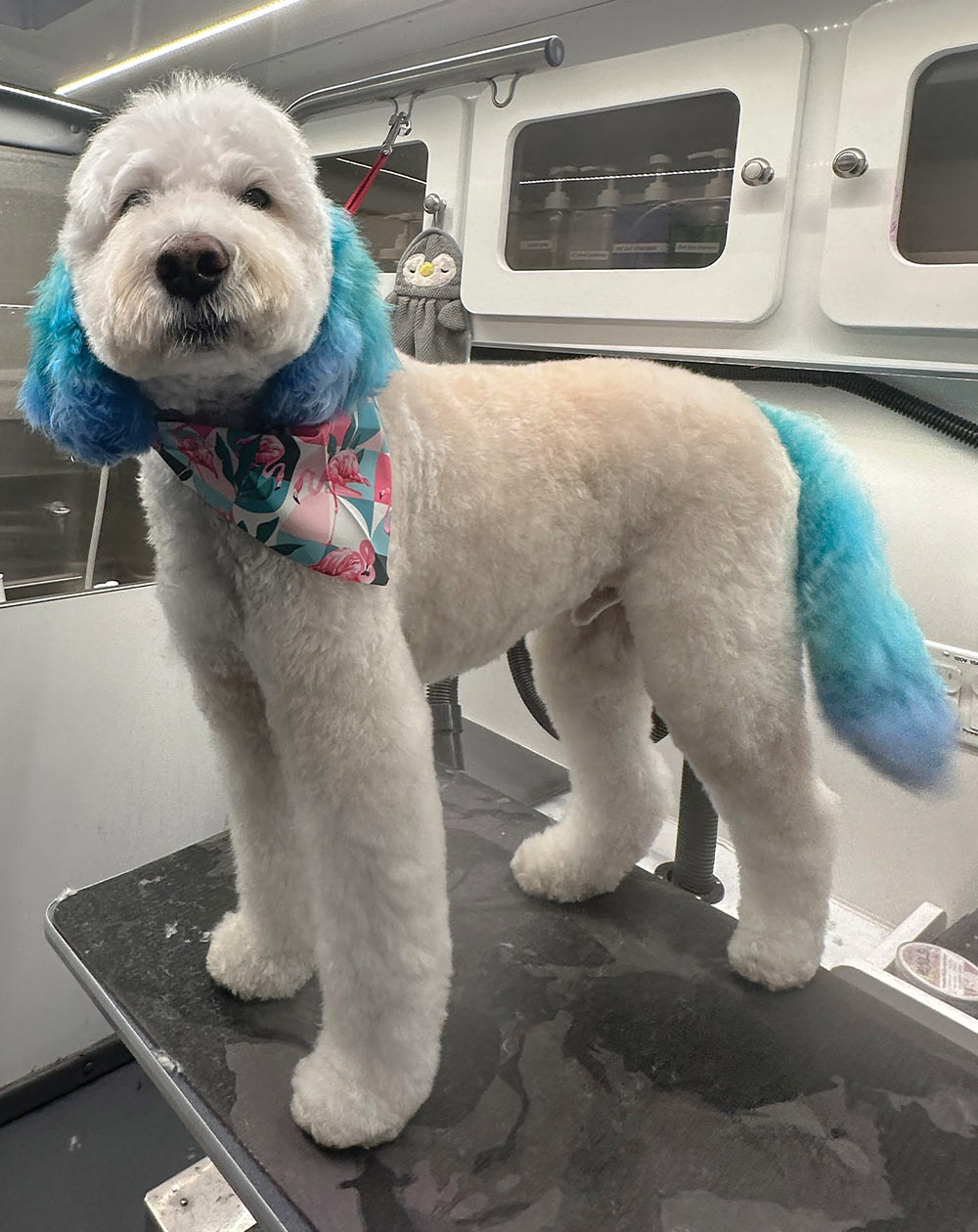
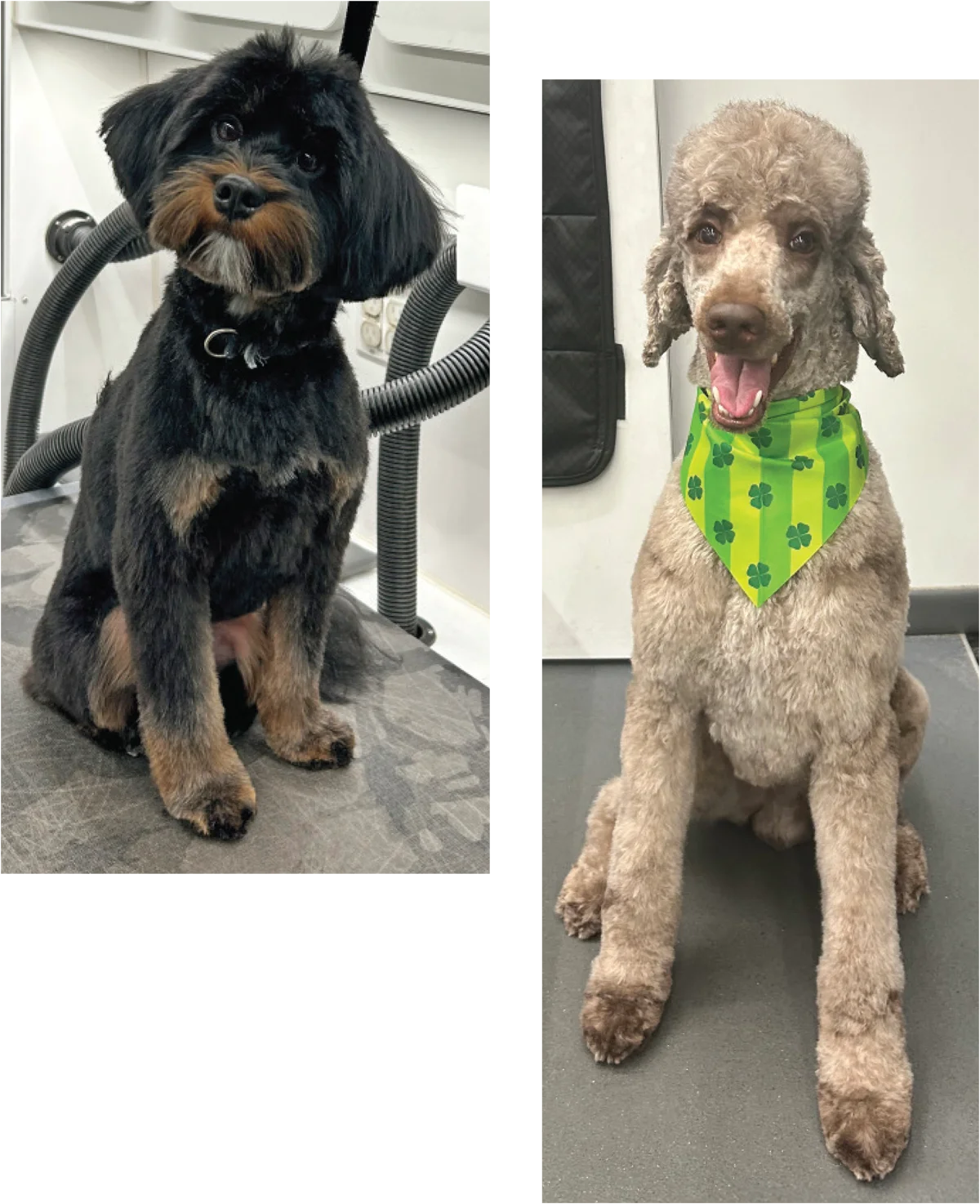
“I did dabble in mobile for a while, but then I went back to corporate because I wanted to learn all the management stuff and started taking things more serious,” Jessie explains. “I started listening to more influencers—all these incredible people who groom and take it really seriously—and I just wanted to be a part of that.”
Once he didn’t want to continue in the corporate retail space anymore, Jessie felt the time was right for his own mobile company, as he had success in his previous mobile experience. And since it wasn’t long after the pandemic, a lot of people were still wary about leaving the house and were uncomfortable about public places.
“COVID changed the landscape entirely; suddenly so many people were working from home and a lot of people moved here to Florida because it was one of the first states to open up, and there was a huge demand,” Johan says. “Within our first three months, we grew exponentially. The mobile model just made it easy to jump on the opportunity.”
With more than 10 years of marketing and design experience, Johan’s skills were the perfect yin to Jessie’s yang, who knew everything about grooming and managing a business as a salon leader.
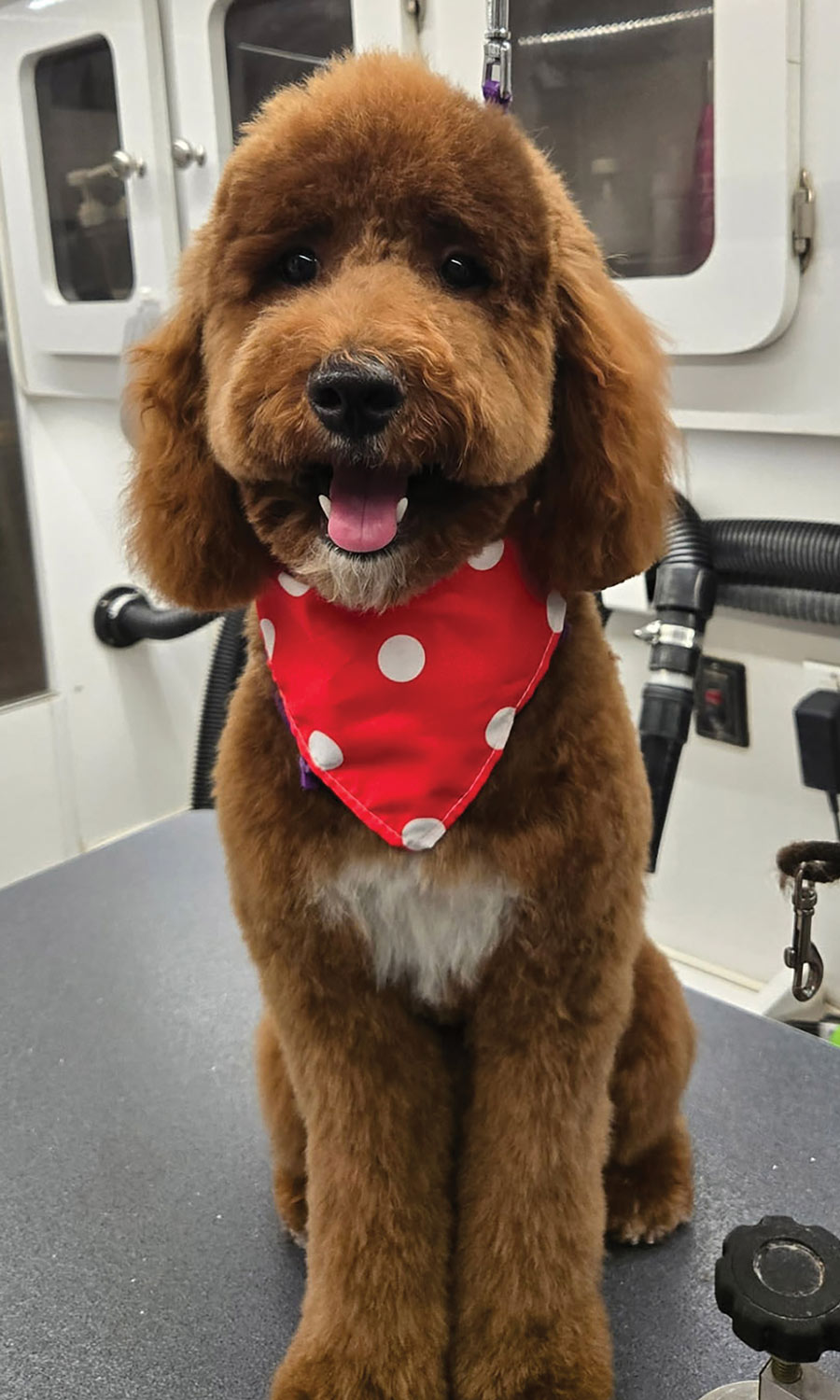
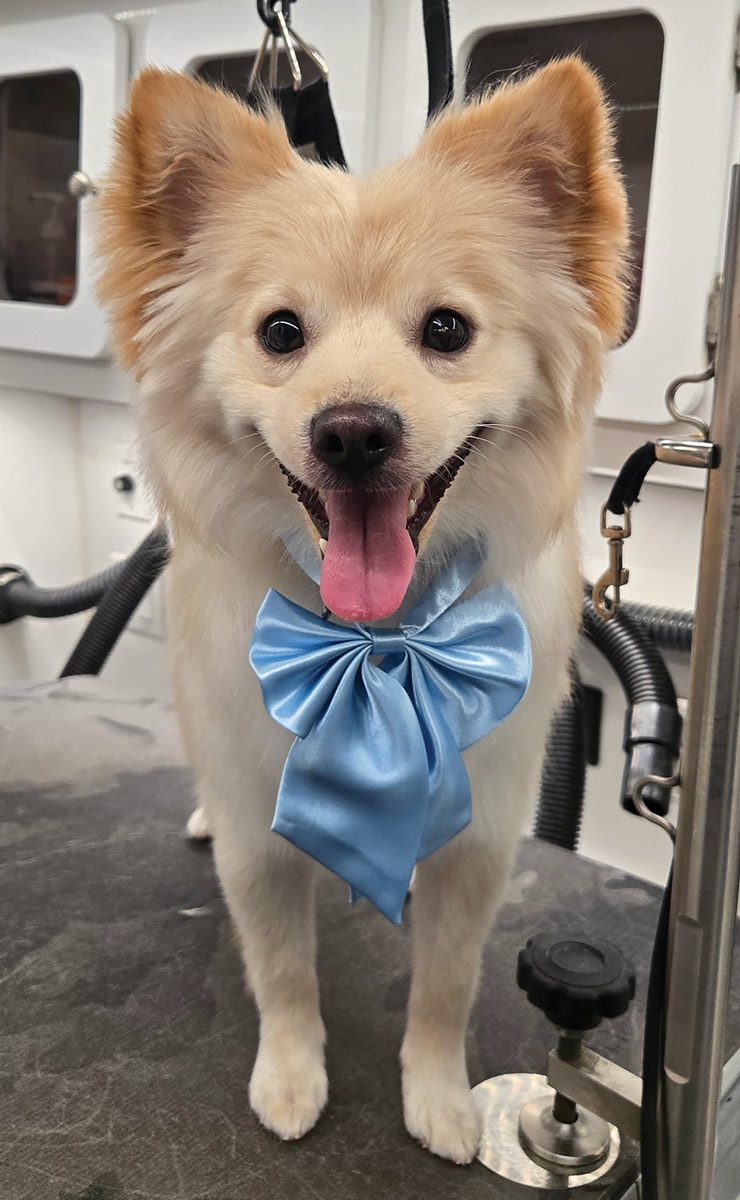

“I love what I do and seeing my clients and working with the dogs. Now, with our team, I have more of a work-life balance, which also brings me fulfillment.”
“I love what I do and seeing my clients and working with the dogs. Now, with our team, I have more of a work-life balance, which also brings me fulfillment.”
Early on, it was challenging for the couple because they didn’t really know what to expect, so they were just taking things day by day and making adjustments along the way. Still, the calls came in quickly, and Jessie was working six days a week. They learned very quickly that scheduling is the most important aspect of mobile grooming.
“It was a hectic start and very explosive at the beginning,” Jessie recounts. “I did a lot of driving around because a big part of our marketing was our van—it’s big, black, and has faces of dogs on it, so it looks really cool. Almost all vans are white, so we paid to have it wrapped to standout.”
Today, PupLuxe Grooming has three vans, four groomers, and a fleet manager who manages all the bookings, social media and maintenance for the vans.
“Two of the groomers were people I had trained and taught how to groom, and I also found groomers on Indeed,” Jessie explains. “I love what I do and seeing my clients and working with the dogs. Now, with our team, I have more of a work-life balance, which also brings me fulfillment.”
As the mobile business continues to attract customers, the couple has thought about one day opening a brick-and-mortar shop to complement its business and appeal to those clients who don’t want a mobile groom for their dogs.
“Originally, the brick-and-mortar did not interest me, but now people are going out more and there are a lot of great benefits of having a store front,” Johan notes. “Right now, we store our vans in separate storage facilities and it would be nice if we had one central location where they can be maintained. We also can then have a retail model, selling treats, toys, and accessories.
“With a salon there is more room for scalability, and we find that really attractive. We are hoping that will be the next step; I think a fleet of three is perfect for one city,” Johan concludes.


Photos by Animal Photography




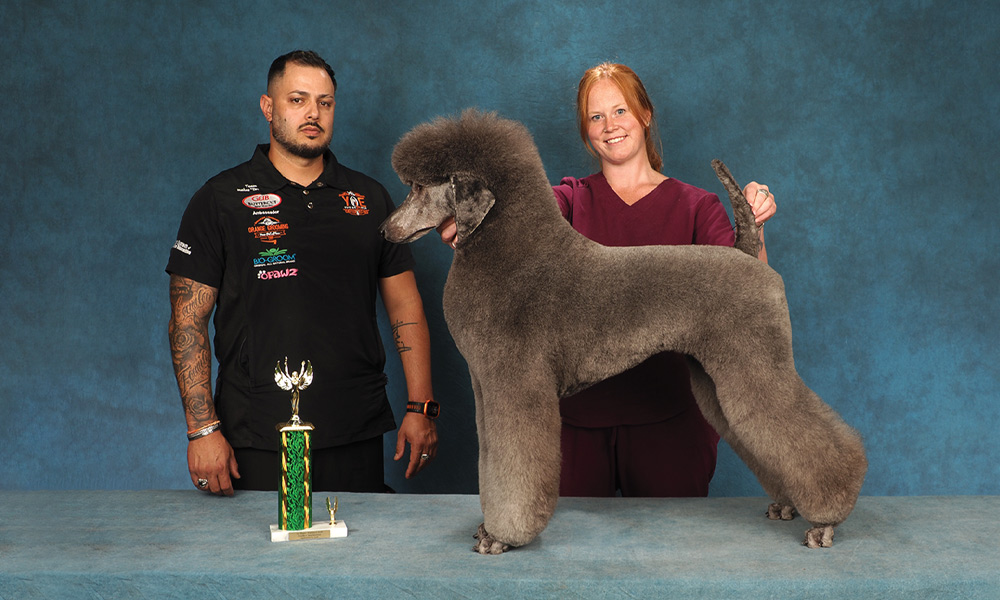


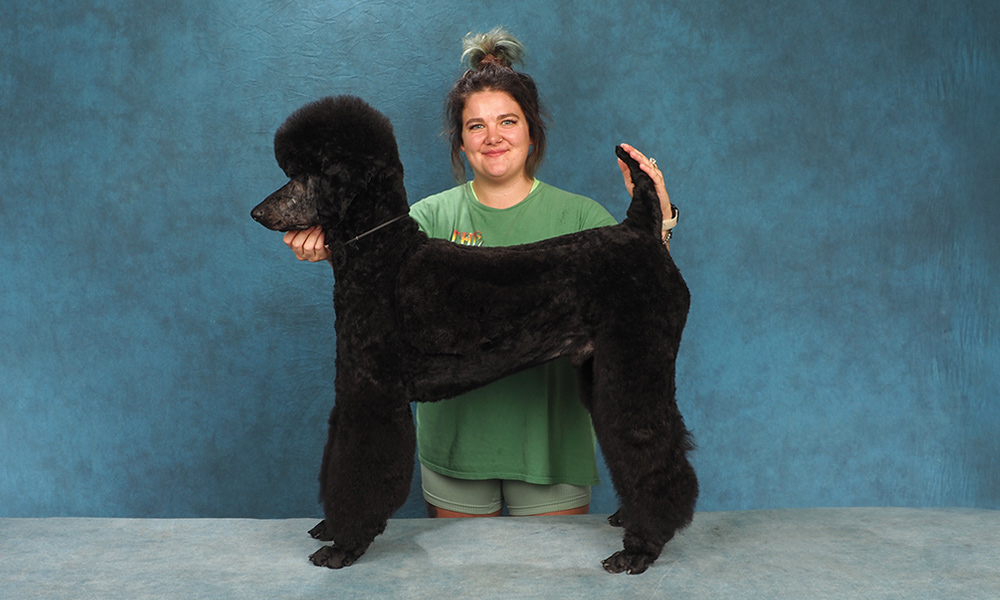


Creative Up & Coming


Creative Styling
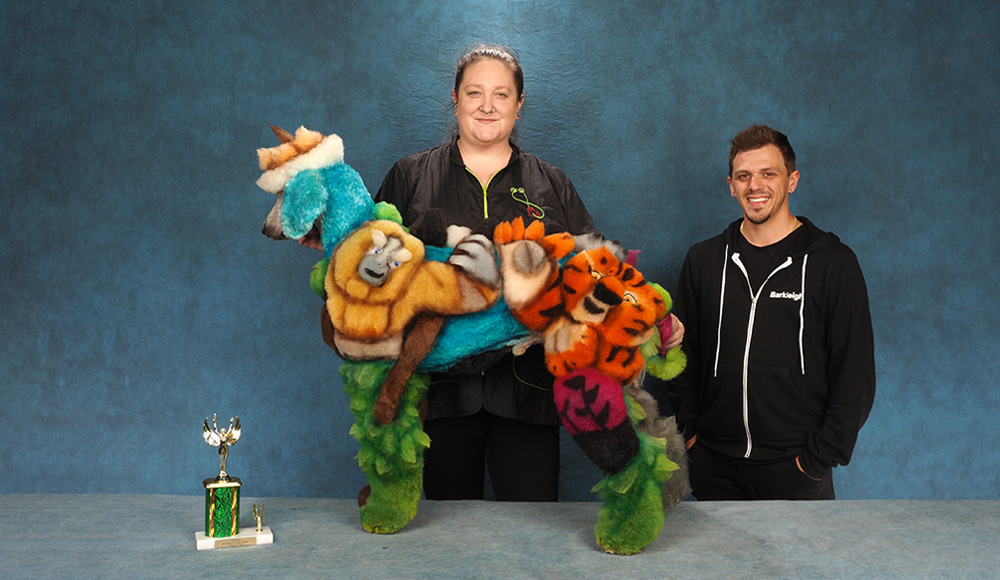


Photos by Animal Photography

by Melissa Viera

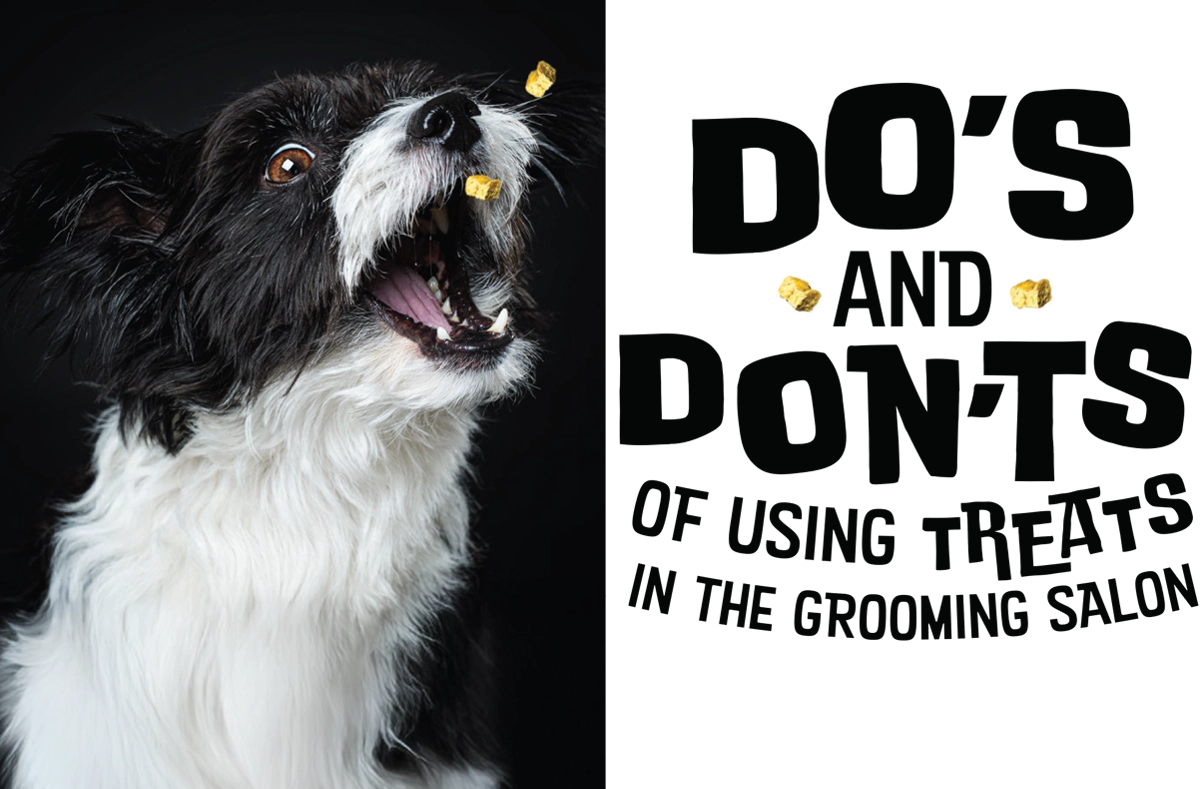
 ry offering a cookie for good behavior on the grooming or exam table, and the dog might look at you like you’re handing out medicine. How does a once-tasty treat become as unappealing as the routine appointment where it’s offered? When the context is wrong, even food-motivated dogs turn their noses away.
Food rewards are practical for everyday dog training. A small, kibble-sized treat can be delivered quickly and easily, allowing the dog to eat and immediately offer the next behavior. Treats play a key role in a structured training plan, as well as reinforcement strategies that can include play, praise, sniffing and other motivators. However, relying solely on food in dog training can create problems.
For example, if food is delivered at the wrong moment, such as when an unwanted behavior is occurring, the dog will learn to repeat that behavior. Incorrect use of food treats can also lead to a pushy and demanding dog. And treating the dog too frequently can create frustration problems later on.
When it comes to grooming and medical care, using food rewards isn’t always straightforward. Knowing when and how to use food during grooming starts with a clear understanding of the long-term goals for the dog you’re working with. With clear intentions, good timing and the ability to read canine body language, you’re well-equipped to use food rewards effectively and safely.

Knowing when and how to use food during grooming starts with a clear understanding of the long-term goals for the dog you’re working with.

Over-excitement around food is another consideration. While foundational training can address this issue, overly-food-motivated dogs that lack the basics are unlikely to benefit from treat use in the grooming salon. The extra energy can lead to excessive movement, making it harder for the groomer to manage both the dog’s behavior and the grooming process.
Food rewards can work especially well for puppies, dogs that already tolerate grooming reasonably well and those in the “needs improvement” category. It’s not a bad idea to reinforce good behavior occasionally, and using treats to help build a dog’s comfort and cooperation during grooming can be an effective strategy—when done thoughtfully.
Dogs form associations quickly, so timing is one of the keys to success. For example, if you try to distract a dog by having a helper feed them every time you trim nails, some dogs may start to associate the treat with nail trims…but not in the way intended. Soon, the sound of a treat bag or the sight of a cheese can in the salon could trigger stress.
Instead, consider using a marker word to communicate clearly with the dog. Once you get the desired response, say your chosen marker word—such as “good”—and then reach for the treat. The marker word buys you a couple of seconds to reach for and deliver the treat without losing the connection to the behavior you’re reinforcing. Treats should be kept just in front of the dog so they can maintain a square, balanced stance on the grooming table. This positioning helps prevent the dog from nudging your hands or tools during the session.
In order to get the desired response to reward the dog, I often implement strategic patterns into grooming sessions that balance time management with behavior-focused care. While this takes some practice, it can be highly effective for many dogs. The pattern allows the dog to communicate more clearly and gives the groomer opportunities to respond appropriately.
This technique can help some dogs get through a full nail trim in one session, but not all. Knowing when to refer a dog to a reputable trainer for a more structured approach is key.
Offering food from a bowl placed in front of the dog can add another layer of communication. The bowl shouldn’t be on the grooming table but just in front of it. For dogs with more serious behavioral concerns, I train this as a specific skill called the “focus target.” When the dog is looking ahead at the focus target, it signals engagement and readiness to earn reinforcement. If the dog starts looking away, the grooming task may be too difficult. Even without formal training, a dog’s body language can give you the same feedback.
Sometimes food is used not as a reward, but as a tool to help keep a dog busy. Cheese on a lick mat can work well in some cases, especially for puppies just learning about grooming. But keep in mind, if the lick mat is always presented during slightly unpleasant procedures, it can become part of the negative association instead of helping to change it.
While some salons may choose not to use treats at all, others may use them selectively depending on the dog and the situation. Whatever the approach, it’s always important to communicate with the dog’s owner. Ideally, the groomer and owner are working together to create low-stress grooming visits that are better for the dog, and easier for the groomer.

by Kim Kier
 s a professional dog groomer, the key to maintaining a smooth, efficient and stress-free salon environment often comes down to one simple yet powerful practice: scheduling. When done right, scheduling ensures that your day runs like clockwork, customers stay happy and loyal, and you and your staff can work at your best.
Here are five ways that scheduling like a pro benefits everyone involved—groomers, dogs and clients alike:
1. A Smooth-Running Salon
3. Clear Communication with Clients

5. Balanced Client and Groomer Schedules
Personally, I rely on both a digital booking app and a paper calendar. I find that the physical act of writing down appointments helps me commit to the schedule, take notes and look back at past appointments for trends.

By tracking this over time, you can adjust each appointment slot to better fit the dog’s grooming needs and reduce the chances of running late. Every dog is unique, and even on days that feel unpredictable, having an average time for each client helps you stay on track and prepared.
When done thoughtfully, scheduling can transform your grooming business. It creates an organized environment, helps keep your clients happy, and gives you and your staff the time and space to do your best work.
So, whether you’re using a booking app, a paper calendar or a combination of both, remember that scheduling is not just about fitting in appointments—it’s about setting yourself and your clients up for success. Keep track, stay organized and watch your salon thrive!
Kim Kier is the owner/groomer of Little Barks Grooming & Boutique, an award-winning luxury salon in Columbia, South Carolina. She is also a Master Pet Aesthetician, Professional Grooming Credential (World Pet Association), Master Groomer Behavior Specialist, Fear Free Professional, Low Stress Handling Level Silver Certified, and Certified Puppy Consultant.
Photo provided by Pawz on Point
 t was not too long ago that I had someone email me an inquiry for my services as a professional mobile groomer. She explained how her Border Collie, Boomer, was a senior now and though he still had puppy energy sometimes, he was slowing down and getting more anxious during his usual grooming appointments at the local salon.
This potential client requested pricing and I happily sent her over a price quote as well as an explanation of services. Her reply made her seem quite interested, but she wanted clarity on why the pricing was so different compared to what she had been paying for years at the brick-and-mortar salon.
While I have been grooming since 2012, I have only been mobile for a year and a half. Having just recently comprehended the immense differences of shop versus mobile myself, I was very excited to help this pet parent understand more about it.
I began my email back to her eagerly. The first benefit I pointed out was the most obvious: mobile grooming prices will always be higher than brick-and-mortar prices because the professional comes directly to the client’s driveway. The client does not need to worry about getting their dog ready and in the car by a certain time and driving to their preferred shop. Instead, their dog will be done right outside on their own property.
On top of that uncontested convenience, without the dog being crated, they are automatically done straight through. Most salons charge an additional $15+ “express” fee for a service that is naturally included in the groom. Not only does a one-on-one groom mean a shorter groom time overall, it also means that they do not do crate-drying. I made sure to remind this client that crate-drying can be stressful or dangerous for older dogs like Boomer.
In addition, the service time for each dog is significantly less because the groomer is not multi-tasking between several appointments, which usually helps keep their dog happier and calmer during the appointment.
Finally, the dog gets undivided attention from the stylist. The groomer is not leaving to go on lunch break or checking another dog out to go home. They are by the dog’s side for the duration of the groom, encouraging them to have the most positive experience possible.
It was not long after I sent this list of mobile grooming pros over that I had already received a reply back. Though I was expecting the typical “Okay, good to know. Thank you!” response, I was pleasantly surprised to read how amazed she was by the level of expertise that mobile pet groomers provide. Over half of the factors I had brought up were details she would have never contemplated.
It was a lovely reminder to me that while some people will only just look at the grand total price, there are those out there that will look at the grand total value!
After beginning her grooming journey in a large corporate salon, Rebecca Fromm moved over to working for a veterinarian where she learned how to handle more difficult dogs, and then went on to manage a corporate grooming salon. Like most groomers, Rebecca got burnt out, but after some time off, she ended up grooming at a couple private salons. Eleven years passed and Rebecca felt like she knew as many ins and outs of the industry as possible, so it was time to begin working for herself. And so, Pawz On Point Mobile Dog Grooming was born.

by Chris Anthony
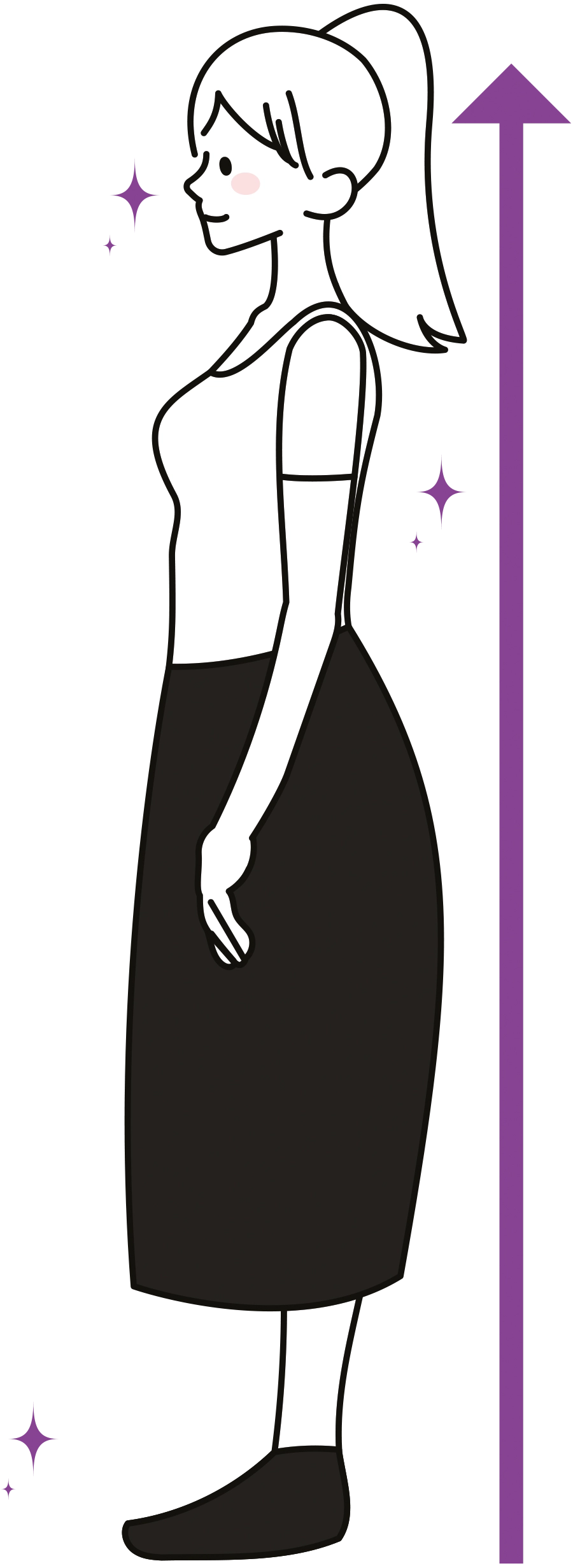
 e know how important ergonomics is to our grooming career, so let’s dive into the first principle of ergonomics: maintain a neutral posture. Specifically, in the principles of groomer ergonomics, this includes working at proper heights, keeping everything within easy reach and providing clearance.
We understand as groomers that a good haircut is facilitated by a well-put-together dog; the structure and understanding of that structure is vital. We also understand that no amount of corrective grooming will prevent arthritis and pain later in life in those east-west-footed Lhasas. Think of our posture as a dog’s structure; we can make anything work, but it sure is easier when it’s correct.
So, one of our goals when we talk about maintaining a neutral posture is to work with our bodies and keep ourselves in positions that reduce fatigue and simply don’t hurt. However, neutral posture doesn’t just refer to maintaining a straight spine when sitting or standing; other parts of your body have neutral postures as well.
Much of our understanding of neutral body posture has come from NASA studies of astronauts in weightlessness. NBP (neutral body posture) is the position the body naturally assumes in low gravity. It keeps everything aligned while minimizing stress on our joints and ligaments. While earthbound, this is comparable to floating in water.
Think of floating, fully supported yet relaxed, arms and legs ever so slightly bent. Sounds relaxing, right? The closest we often come is with those zero-gravity lounge chairs, which place us in a similar position. While we can’t exactly groom while reclining, keeping this picture in our heads will help us when we find ourselves leaning, bending, twisting, or with our shoulders slumped or hitched up.

e know how important ergonomics is to our grooming career, so let’s dive into the first principle of ergonomics: maintain a neutral posture. Specifically, in the principles of groomer ergonomics, this includes working at proper heights, keeping everything within easy reach and providing clearance.
We understand as groomers that a good haircut is facilitated by a well-put-together dog; the structure and understanding of that structure is vital. We also understand that no amount of corrective grooming will prevent arthritis and pain later in life in those east-west-footed Lhasas. Think of our posture as a dog’s structure; we can make anything work, but it sure is easier when it’s correct.
So, one of our goals when we talk about maintaining a neutral posture is to work with our bodies and keep ourselves in positions that reduce fatigue and simply don’t hurt. However, neutral posture doesn’t just refer to maintaining a straight spine when sitting or standing; other parts of your body have neutral postures as well.
Much of our understanding of neutral body posture has come from NASA studies of astronauts in weightlessness. NBP (neutral body posture) is the position the body naturally assumes in low gravity. It keeps everything aligned while minimizing stress on our joints and ligaments. While earthbound, this is comparable to floating in water.
Think of floating, fully supported yet relaxed, arms and legs ever so slightly bent. Sounds relaxing, right? The closest we often come is with those zero-gravity lounge chairs, which place us in a similar position. While we can’t exactly groom while reclining, keeping this picture in our heads will help us when we find ourselves leaning, bending, twisting, or with our shoulders slumped or hitched up.
Keeping everything in alignment, or in NBP, affects more than just your back. For example, when we twist ourselves sideways to scissor the inside of a leg, we’re not just affecting our wrists, but throwing the entire body out of alignment. Our elbow, shoulder, back, hip and knee can become out of alignment, and excess strain can be placed on all of these joints.
How we stand while grooming can be influenced by our table height and the part of the dog we’re working on. We have hydraulic and electric tables for a reason. But how many times have we found ourselves forgetting to adjust the table between dogs, or even between different parts of the same dog when we have a fully functioning electric table?
When we aren’t working at a proper height for us or the dog we’re working on, it will throw us out of alignment. Once or twice—or even once or twice a day—is unlikely to cause lasting damage. But groomers rarely do things by halves, so when we multiply that many times daily over the course of years, it can build up to pain and injury.
Even little movements that are out of alignment can build up over time. Think of how often we are looking down to work—not even including looking at our phones. Moving your head out of neutral position just an inch can add 10 pounds of pressure to your neck and spine.
Our hands also have their own neutral posture, and with everyone’s hands being different that can be thrown off by our shears not fitting our hands correctly. Going to trade shows and trying on shears is the best way to find shears that fit your hand, and some companies will even set up a virtual session with you and help you fit your shears.
No one wants to be constantly digging for a piece of often-used equipment or risking a fall by leaning too far to grab something. We often forget about the one thing that’s most important to keep within easy reach: the pet in our care! We usually have the ability to organize our workstations with what tools and products we reach for most often. But we usually don’t have the space for different table sizes to accommodate very different-sized pets.
Unless we specialize in small dogs or cats, the best solution here is to have a table large enough for the largest pet we groom and then use a table divider for our smaller dogs and cats. However you achieve keeping the pet within easy reach, it needs to be comfortable for both you and the pet in your care. After all, they want to be ergonomic too.
Providing clearance is a part of this particular principle of groomer ergonomics as well. It usually comes into play when designing your salon space, and can be as simple as making sure that no one can bang their head on low shelves or storage solutions. If you’re in a shop that is already set up, this can sometimes be simply ensuring all upper crate doors are kept closed.
It also means that if you’re 6’ 6”, you might want to think carefully about getting into mobile grooming. But even if you’re not particularly tall, take the time to go inside any mobile grooming van or trailer you’re considering purchasing. Most manufacturers have put considerable thought into making effective use of space and keeping everything within reach, but make sure it will work for you before investing that significant amount of money.
While no runway walk while balancing a book on your head is required, I hope you are standing up a little straighter—and not only for your posture, but because you’re proud of your profession.



 tarting a home-based grooming salon can be a rewarding and flexible way to build a business in the professional pet grooming industry. However, this entrepreneurial endeavor comes with its own set of challenges—particularly when it comes to zoning and legal restrictions. Understanding and navigating these regulations is crucial for the success and sustainability of your home-based grooming business.
There are several types of zoning classifications, but the primary ones include:
- Residential Zoning: Areas with single-family homes and small businesses. Home-based businesses are often subject to stricter regulations in these areas. Residential zoning covers matters such as allowing mobile homes on the property and how many structures can be built.
- Commercial Zoning: Areas designated for businesses and commerce. Running a grooming salon in a commercially zoned area typically involves fewer restrictions. Commercially zoned areas are made for larger businesses such as malls or factories.
- Mixed-Use Zoning: Areas that allow for a combination of residential and commercial uses. These zones can be more accommodating for home-based businesses.
Before starting your home-based grooming salon, it is essential to check the zoning requirements for your property.
Checking Zoning Restrictions
- Contacting your local zoning: They can provide information on the zoning classification of your property and any specific regulations that apply. Start by simply Googling “[your city or township] zoning laws.” Many cities have the zoning laws listed directly on their website, but if they don’t, you will find the contact information for how to obtain them.
- Reviewing the local zoning ordinance: If your municipality has their zoning ordinances available online, review them carefully. These documents outline the rules and restrictions for each zoning classification. If you have any questions or if any part of the ordinance is unclear to you, contact your local zoning authority.
- Consulting with a zoning lawyer: For more complex situations, it may be beneficial to consult with a lawyer who specializes in zoning laws. Someone who is local to your area and has experience in dealing with zoning is useful.
- Business Use Limitations: May prohibit any type of business activity, or only allow certain low-impact home businesses.
- Size and Scale Restrictions: Limits on the percentage of the home that can be used for business purposes, or the number of clients you can serve at one time.
- Parking Requirements: Regulations on the amount of available parking for clients to ensure it does not impact the neighborhood. Some areas also restrict how many cars you can have entering/exiting your driveway each day.
- Signage Restrictions: Limits on the size and placement of business signs to maintain the residential character of the neighborhood.
- Noise and Nuisance Regulations: Restrictions to prevent business activities from creating excessive noise or other disturbances.
- Employee Limitations: Some residential zones may have rules about how many, if any, employees you will be allowed to hire. There may be clauses stating that other people already living inside the home would be allowed to be employed.
Each area is different and will have specific regulations you will need to adhere to. This is only a partial list of what you may be required to follow. It is imperative that you contact your specific municipality to learn their rules; what may be allowable just down the street may not be applicable to you.
In addition to zoning laws, operating a home-based grooming salon may require obtaining the necessary licenses and permits. These may include:
- Business License: Many municipalities require a general business license to legally operate any business.
- Home Occupation Permit: This is a specific permit that allows you to run a business from your home.
- Dept. of Agriculture Permits: Some areas consider pet grooming to be part of the Agriculture department and may require specific permits or inspections as such.
- Sales Tax Permit: Some states charge tax on grooming services, and some do not. If you sell retail products as part of your grooming services, you will need a sales tax permit.
- General Liability Insurance: Protects against claims of bodily injury or property damage caused by your business operations.
- Property Insurance: Protects your business property, equipment, tools and supplies against damage or loss.
- Animal Bailee Coverage: Covers injuries and loss of pets in your care due to things like fire, theft or accidental escape.
- Pet Grooming Professional Liability: Covers injuries you may cause to pets while grooming.
- Workers’ Compensation Insurance: Covers medical expenses and lost wages in case of work-related injuries (if you hire employees).
It is important to disclose to your homeowner’s insurance that you plan on operating a home-based grooming salon. Some insurance companies will not cover your home if you operate a business within it, or may require specific insurance be obtained. All of this should be sorted out prior to starting your business. I would recommend this as your second step in opening a home-based grooming salon, after you navigate any zoning laws and business permits.
Starting a home-based grooming salon offers numerous advantages, including lower overhead costs, flexible scheduling and the ability to create a personalized client experience—but it also comes with challenges related to zoning and legal restrictions. By thoroughly understanding and addressing these regulations, you can establish a successful and compliant home-based grooming business.
- Ohio Dept of Health, Zoning Factsheet: https://odh.ohio.gov/wps/wcm/connect/gov/791e1124-7fd6-4782-8392-367a68257391/FAQ_Factsheet_Land+Use+Zoning.pdf?MOD=AJPERES&CACHEID=ROOTWORKSPACE.Z18_M1HGGIK0N0JO00QO9DDDDM3000-791e1124-7fd6-4782-8392-367a68257391-mJMzfuy
- US Small Business Administration: Pick your business location: https://www.sba.gov/business-guide/launch-your-business/pick-your-business-location
- World Insurance Associates LLC: www.worldinsurance.com
Amanda McGrath is a Certified Feline Master Groomer and the owner of a successful home-based grooming salon. Amanda has a unique talent for time management and organization, and hosts “The Groomer’s Game Plan,” a strategic planning event specifically for grooming businesses. She is the co-owner of Hause of Bones, a small business that creates humorous stickers for the witty side of grooming, and she serves on the board of the Pet Stylist Relief Fund. Amanda also hosts the “Home-based Grooming Solutions” podcast, which focuses on the unique aspects and advantages of home-based grooming salons.

 here’s nothing quite as frustrating as spending an hour bathing, blow-drying and brushing a cat only to find the coat still speckled with flakes. Dandruff in cats is a common challenge in the grooming salon, but contrary to what pet owners—or even some grooming resources—suggest, this isn’t a case of “dry skin.”
The dandruff we see on cats is made up of oily, dead skin cells. It’s not flakiness from a lack of moisture or winter air. It’s a direct result of a lack of regular bathing. And unless there’s a more serious health issue involved, most of the time the solution is simple: routine, professional grooming.
Cats who haven’t been bathed in months (or ever) are the most common culprits, especially if they’re overweight or long-haired. Their self-grooming isn’t enough to manage the sebum production from their skin, and the result is that telltale snowstorm of oily flakes when you start blow-drying the coat.
here’s nothing quite as frustrating as spending an hour bathing, blow-drying and brushing a cat only to find the coat still speckled with flakes. Dandruff in cats is a common challenge in the grooming salon, but contrary to what pet owners—or even some grooming resources—suggest, this isn’t a case of “dry skin.”Cats who haven’t been bathed in months (or ever) are the most common culprits, especially if they’re overweight or long-haired. Their self-grooming isn’t enough to manage the sebum production from their skin, and the result is that telltale snowstorm of oily flakes when you start blow-drying the coat.
Step-by-Step: Getting Rid of the Flakes
If a flaky feline shows up on your grooming table, here’s how to tackle it head-on with a grooming routine that addresses oil buildup, exfoliates the skin and finishes with a flake-free polish:
- Start with a Degreaser on a Dry Coat. Before the cat ever touches water, go in with a spot application of degreaser on a dry coat in those super-oily areas. This can include along the spine, flanks and at the base of the tail. Work it into the coat using your fingertips (not nails!) to make sure it gets to the skin, not just the outer coat. Let the product sit for a few minutes before rinsing. This gives it time to break down that waxy buildup and start loosening the clumped-up skin cells.
- Gently Exfoliate During the First Shampoo. After rinsing out the degreaser, follow up with a cleansing or clarifying cat shampoo that will help exfoliate without irritating the skin. I like using a scrubbing glove or a bar shampoo in a net bag that allows me to lather up and work product into the skin. Again, it’s all about gentle pressure—just enough to lift debris and dead skin, not enough to cause redness or discomfort. This round of shampoo should be your deep clean. Focus on scrubbing the areas that had visible flakes, and be sure to rinse extremely well to avoid residue.
- Follow with a Medicated Shampoo. Now that you’ve degreased and exfoliated, the skin can benefit from something soothing and therapeutic. A medicated shampoo formulated with chlorhexidine or antifungal agents can help rebalance the skin, particularly if you see irritation or excessive flakiness that looks beyond routine buildup. The medicated shampoo doesn’t have to go everywhere, just focus it on the areas with excess flakes or any irritation. Let the shampoo sit on the coat for a few minutes before rinsing. This is not only helpful for any mild skin imbalances, but also gives you a solid third round of cleansing to make sure those oils and flakes are truly gone. And be sure to rinse thoroughly until the water runs clear.
- Use the Right Drying Nozzle. Drying technique matters here. For dandruff-prone cats, I recommend using a water-peeler-style nozzle that gives a powerful blast of air without being overwhelming. These help you push water and loosened flakes out of the coat efficiently. They also give you more control when drying near sensitive areas like hips, thighs and underarms. I avoid using cone-style nozzles on cats, as the pressure and noise can be a bit much for them. Also remember to wear eye protection and a mask to cover your nose and mouth during blow-drying.
- Finish with a Boar Bristle Brush During Final Dry. Once the coat is completely dry, I go in with a soft boar bristle brush. These brushes aren’t good for detangling or styling, but they’re perfect for gently sweeping through dry fur and lifting stubborn flakes that may still be clinging on. Pair this brushing with continued low-speed airflow and you’ll be amazed at how much cleaner and smoother the coat looks—even on the flakiest cats.
Owners are often shocked to learn that cats need regular baths—not just brushing or nail trims. This is where you come in as the expert. Walk them through what’s going on, show them the dandruff on your tools or towels, and explain how a routine schedule will improve not just appearance but skin health and odor, too.


Quick Pro Tips For Flake-Free Felines:
- Always photograph before/after: It helps you show clients the difference and track long-term improvement.
- Keep notes: If a client returns every six months with the same greasy buildup, document it and recommend a better frequency.
- Watch for red flags: If you’re seeing persistent flaking, greasy buildup, thinning coat or lethargy, mention it to the client as a possible health issue.
There’s no miracle shampoo that fixes months (or years) of buildup in one appointment. But with the right prep, products and schedule, you can send home a cat that’s smoother, shinier and flake-free—and help their owner keep it that way long term.


by Blake Hernandez
Groomed by Andrew Zuzma
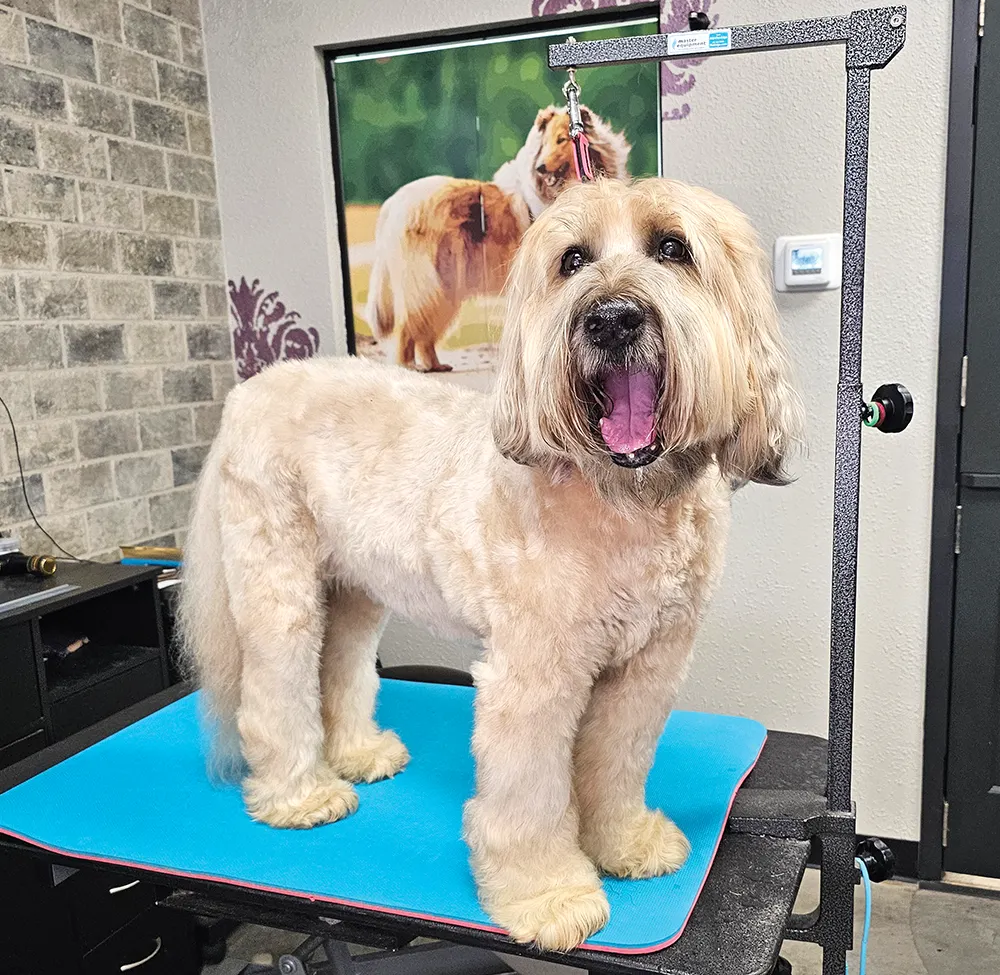
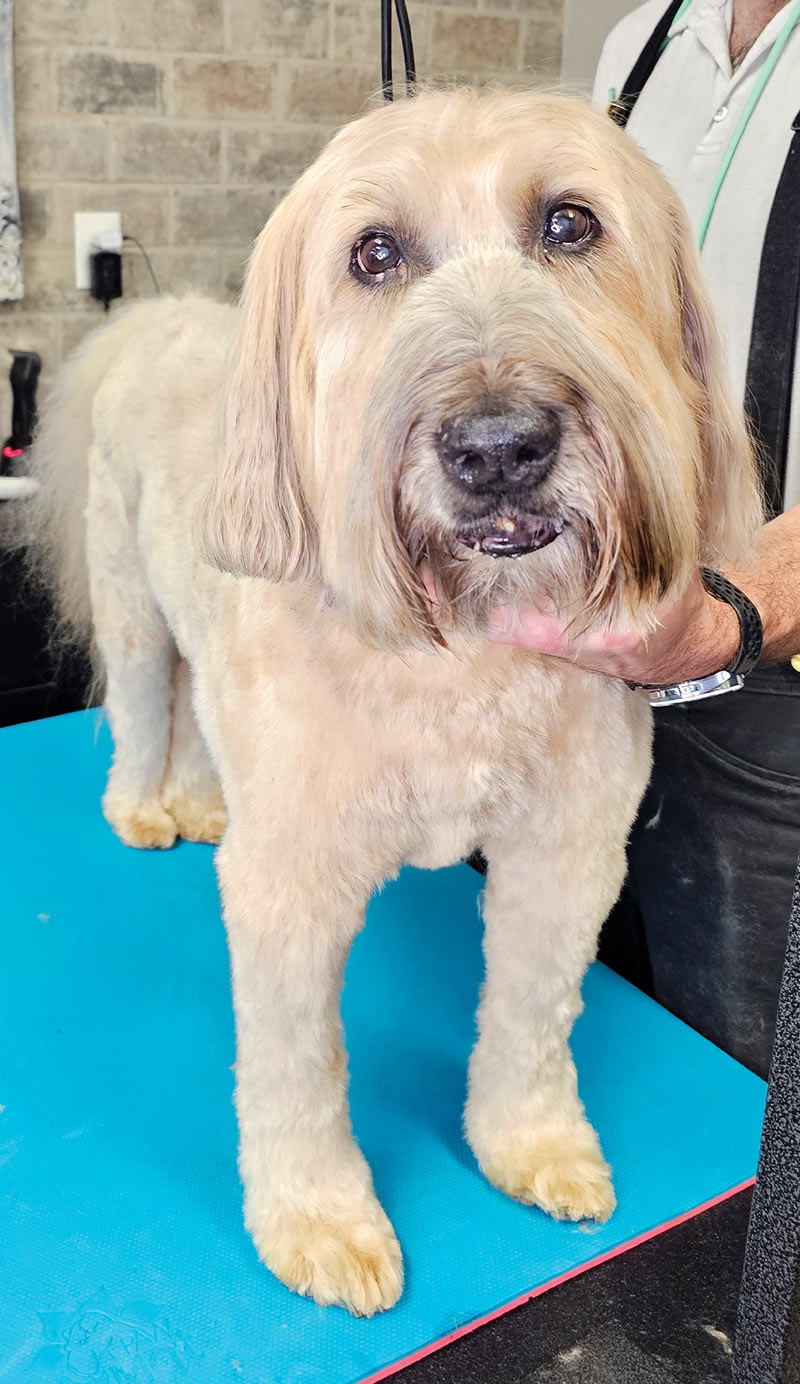
 his is your bread-and-butter dog. You’ve known him for as long as he’s gotten haircuts, and with age comes easy clips for comfort and stress-free grooming. The dog used here comes in for a nice all-over haircut with an old-school, squared-off teddy head. This trim can be done on all coat types.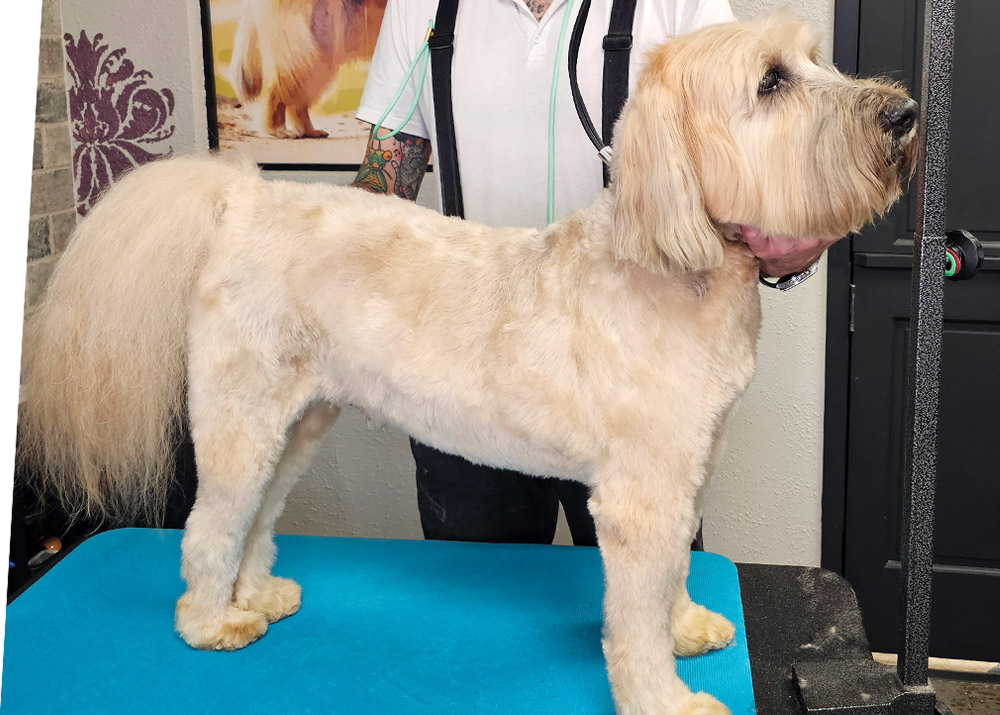
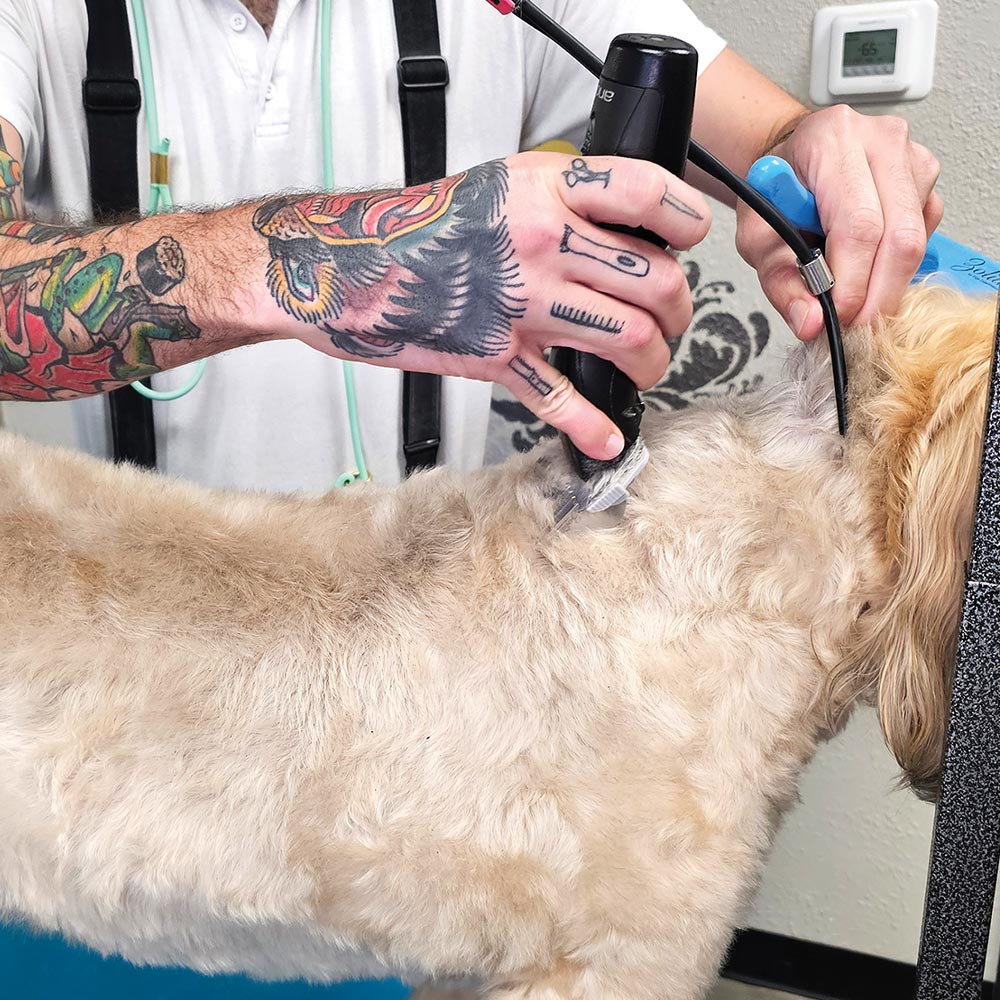
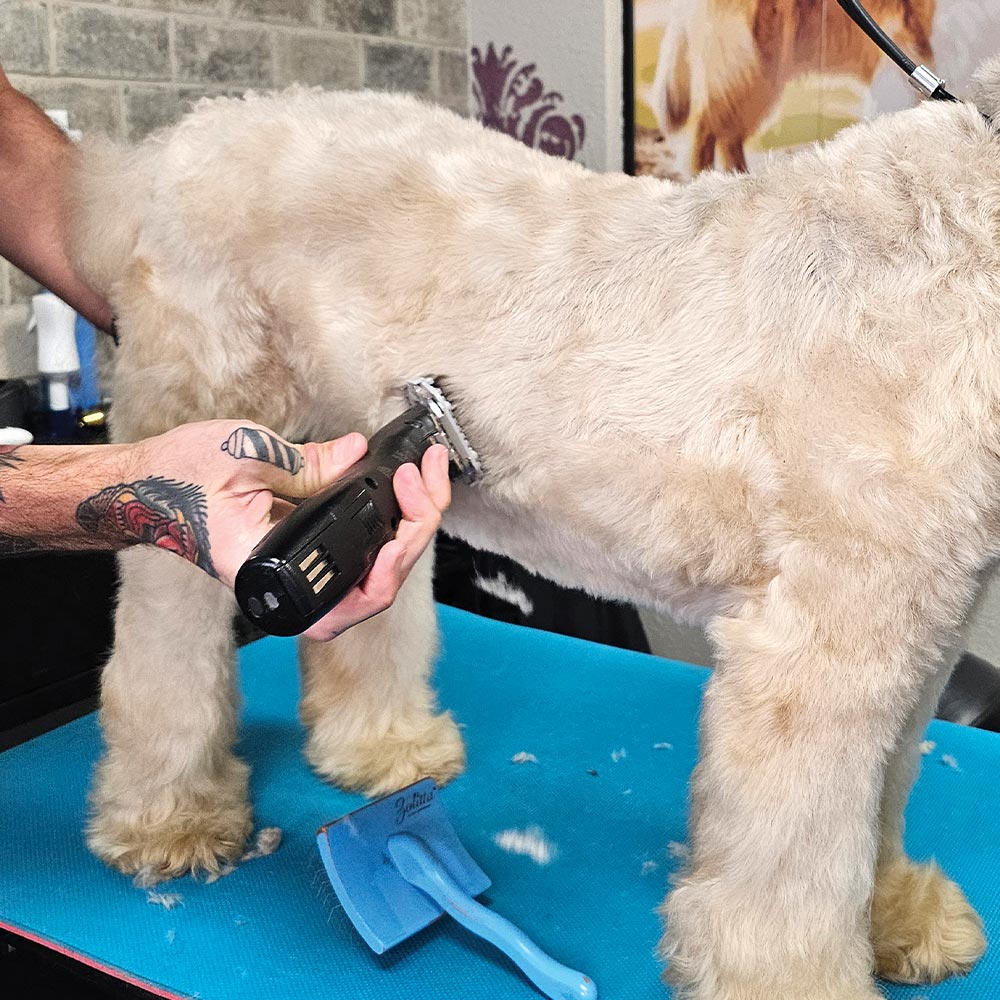
Fig. 1) Choose a length that suits the dog’s grooming schedule, remembering that hair generally grows around half an inch every month. For this dog, we chose a 5/8” guard comb.
Fig. 2) In the case of dogs where the coat has such a strong directional lay even after prepping straight and away from the skin, you will always need to guide your clipper in the direction that the coat is laying.
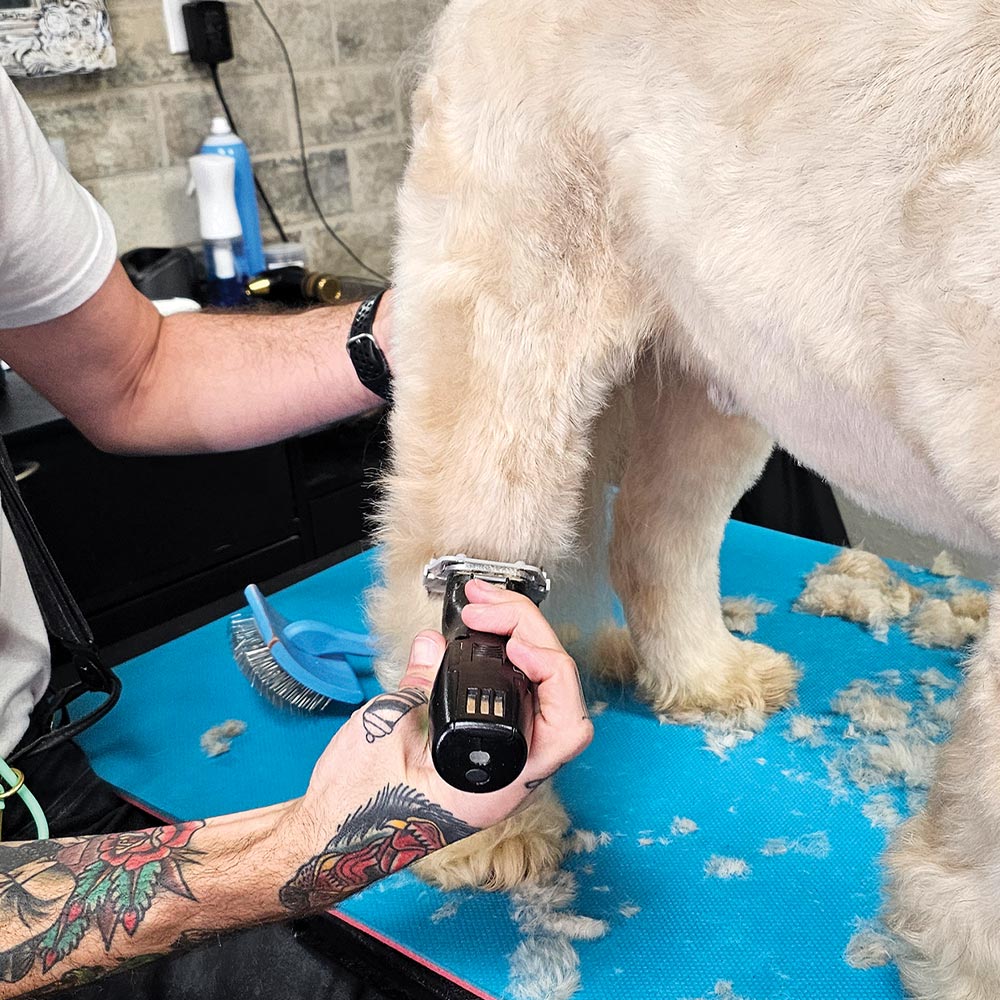
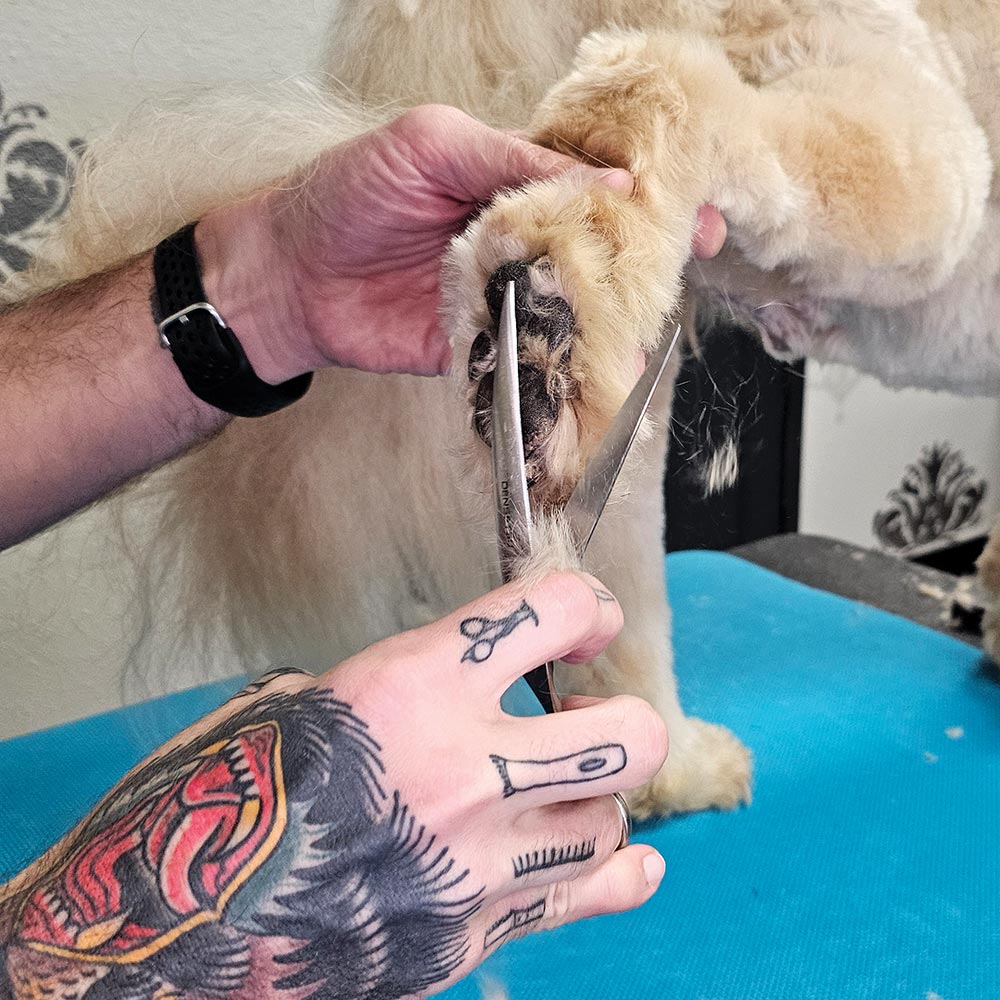
Fig. 4) For the feet, comb all of the hair down past the bottom of the paw pads and scissor off any hair that crosses the plane of the foot.
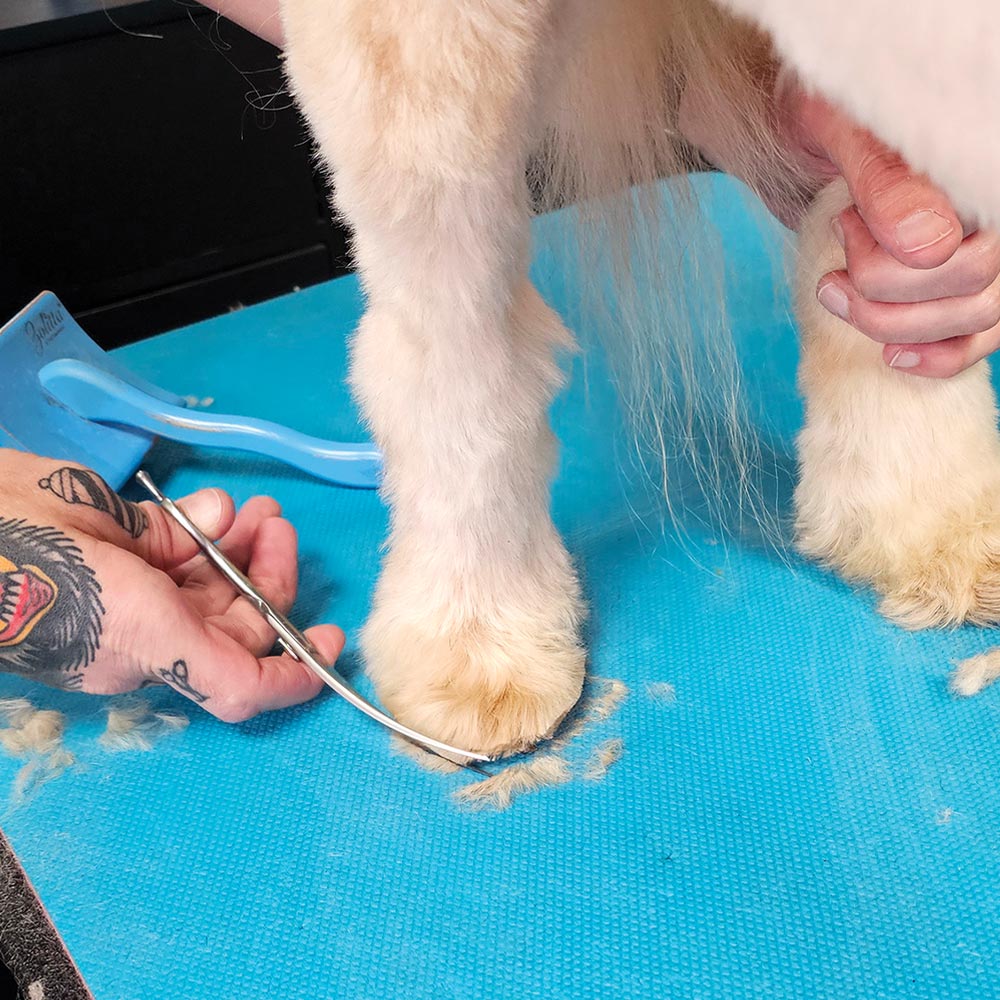
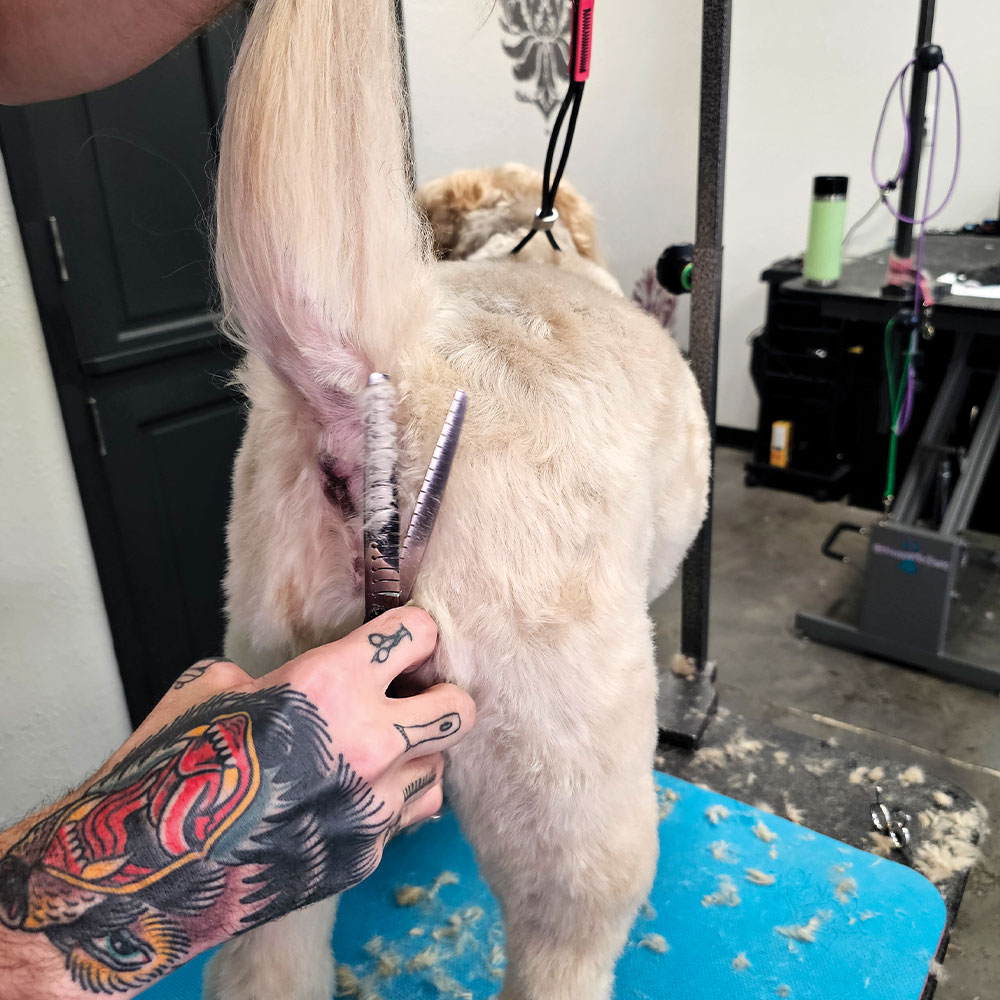
Fig. 6) Hold the tail up to blend away any stray or long hairs that the clipper missed while clipping the trunk of the body and legs.
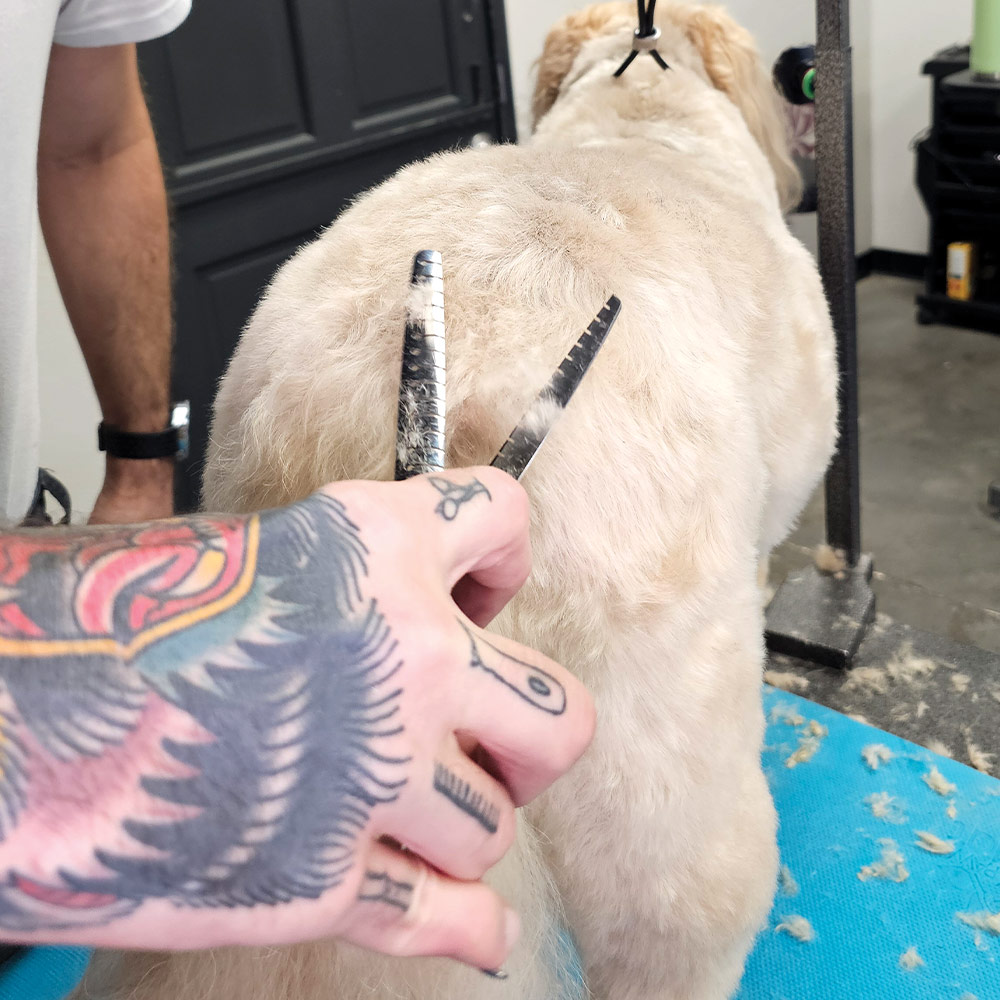
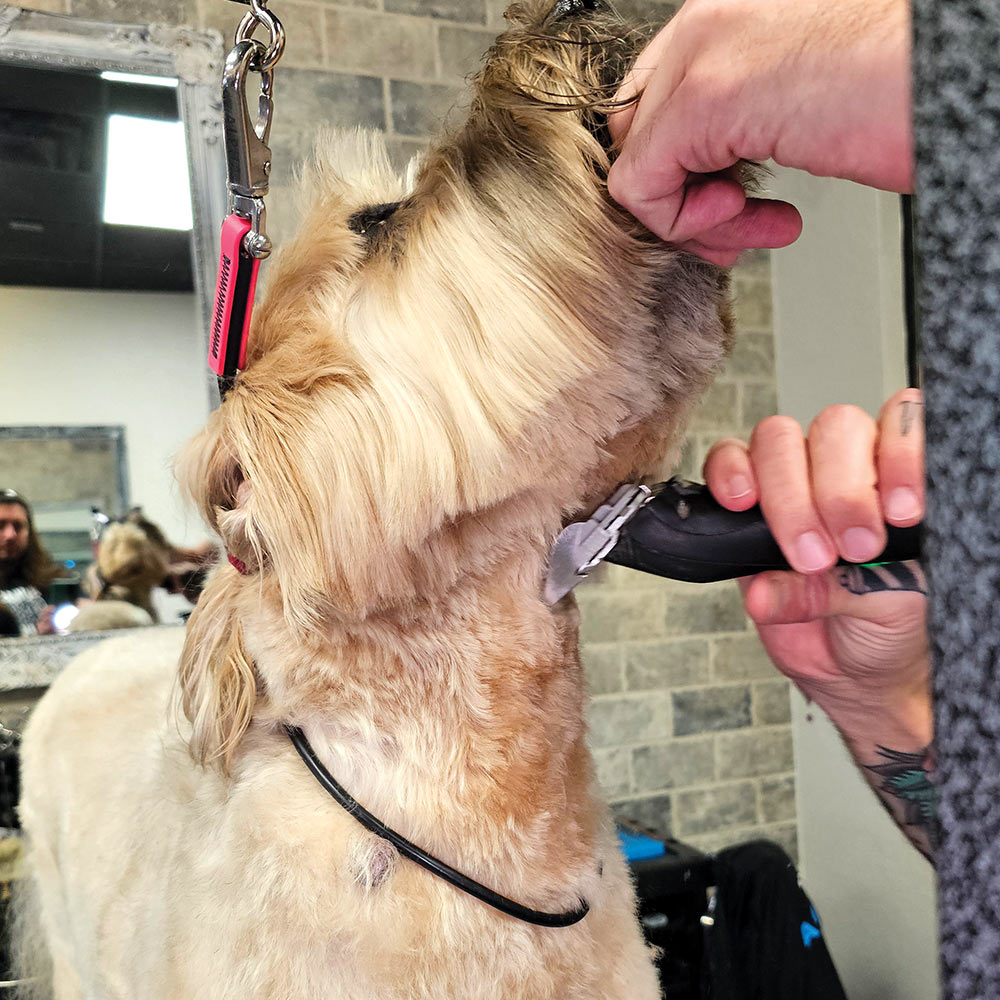
Fig. 8) The area on and around the dog’s Adam’s Apple should always be taken shorter than everywhere else on the body. In this case, we used a 1/2” guard comb.
Fig. 10) Use a fine thinning shear to blend the hair tight by the outside corner of the eye.
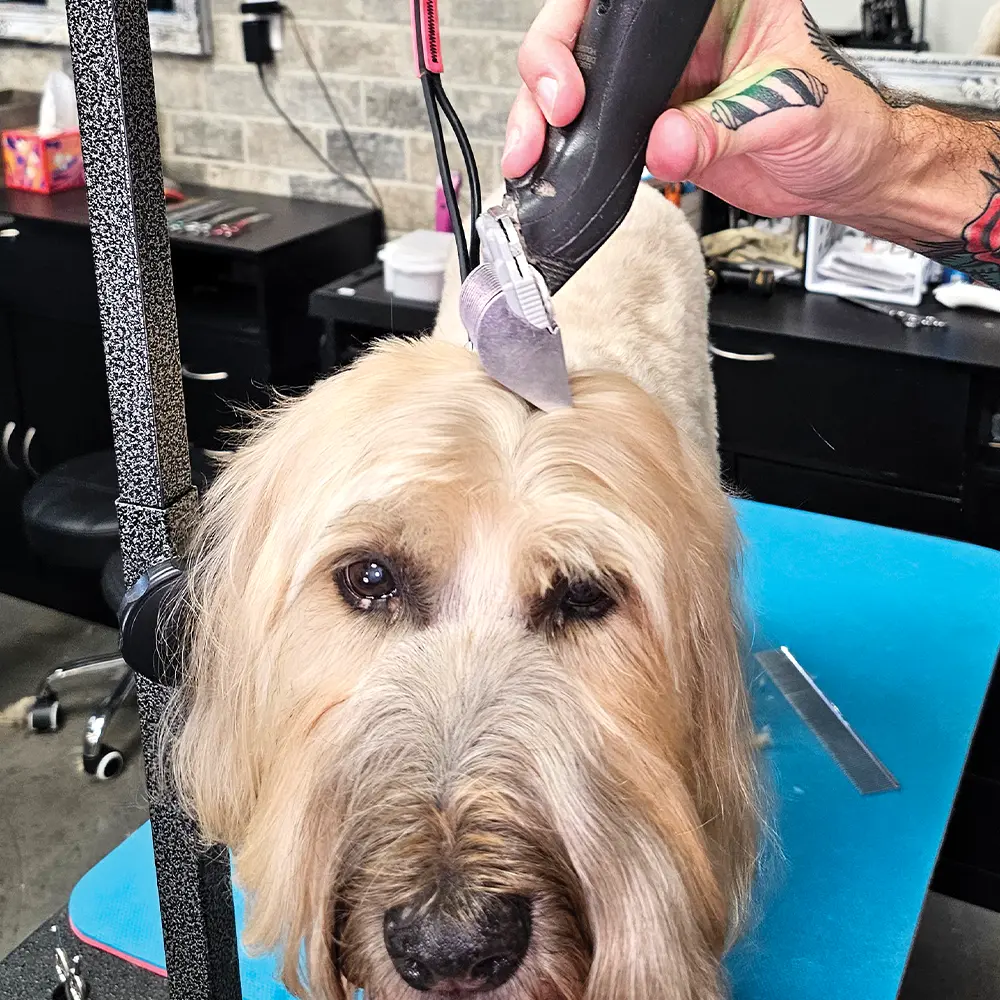
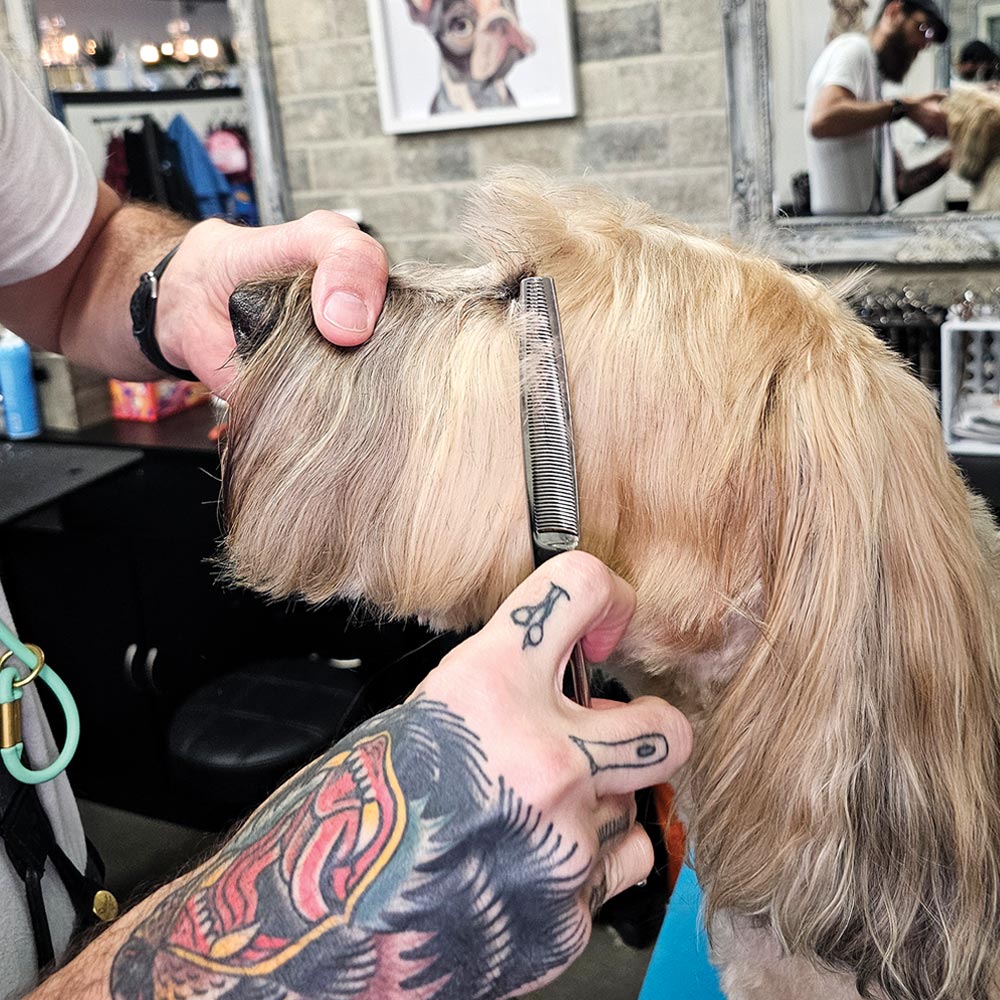
Fig. 12) Comb the coat forward past the end of the nose and use a thinning shear angled out and away to trim the hairs shorter around that area which so easily gets dirty and smelly.
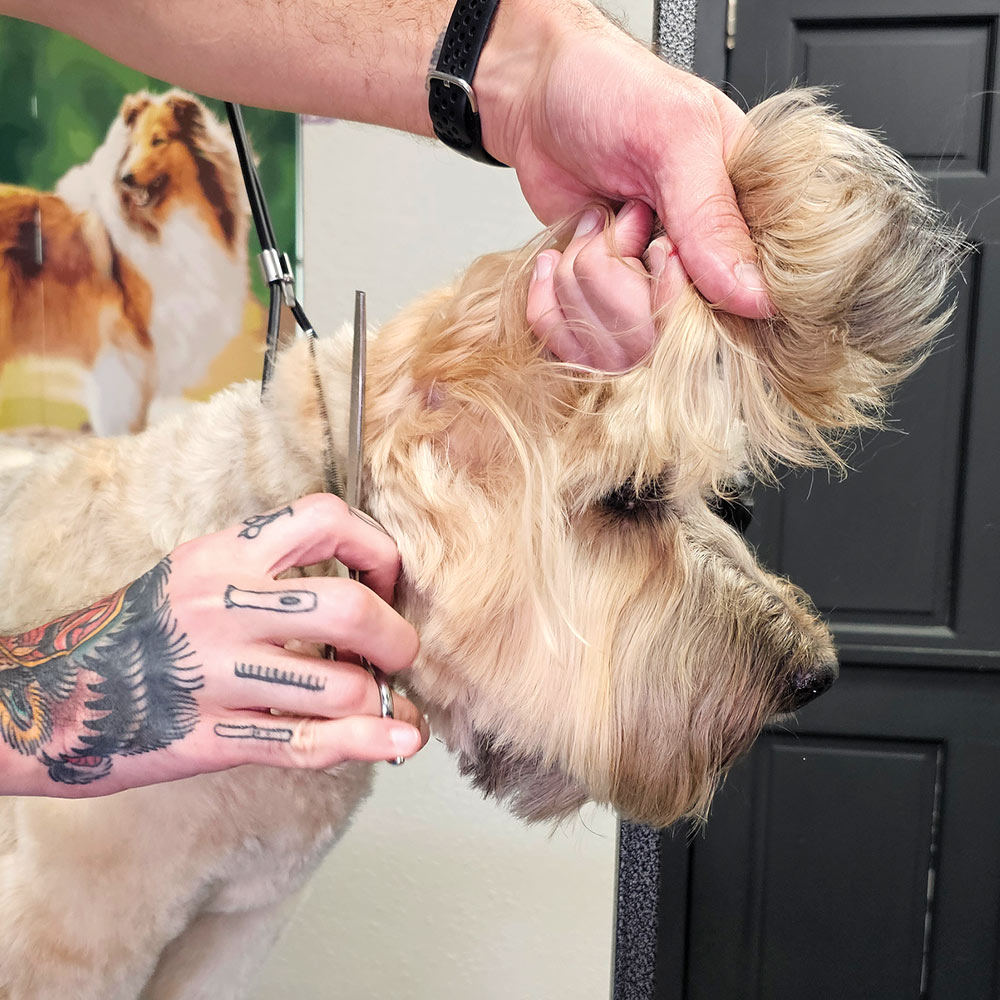
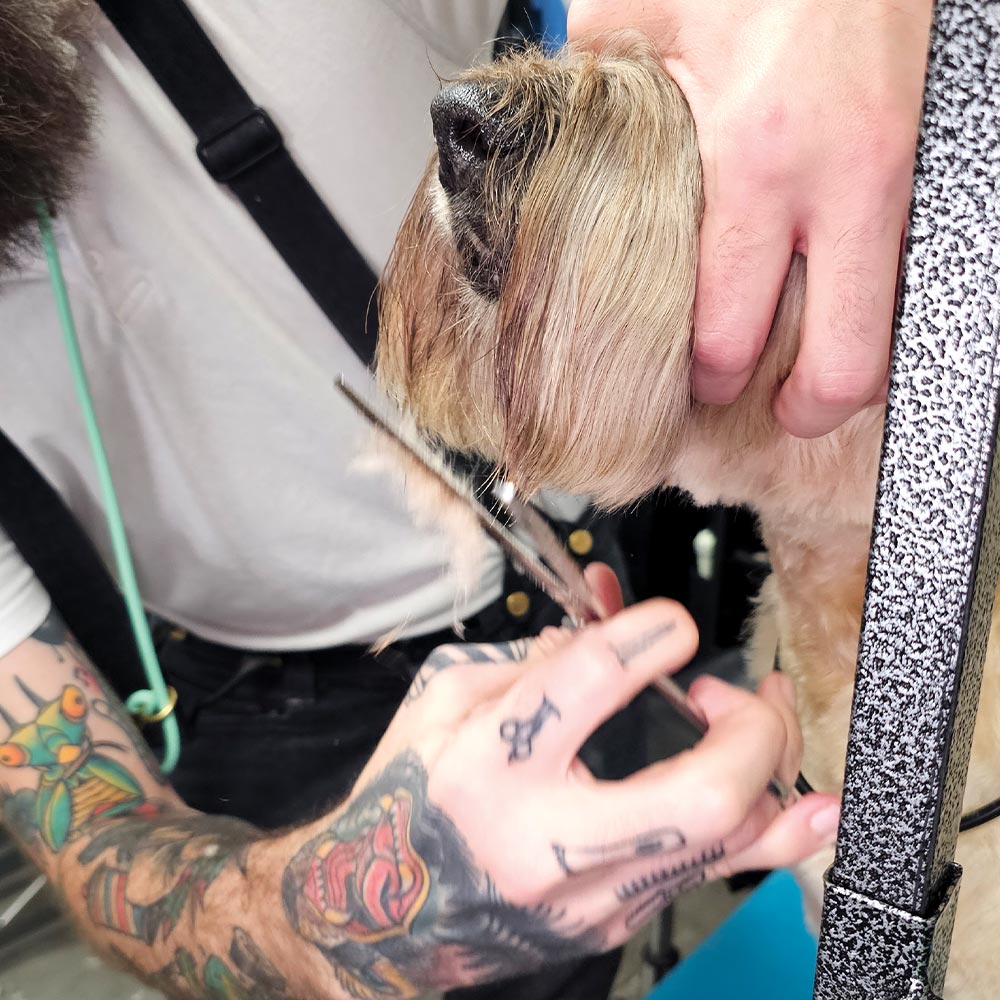
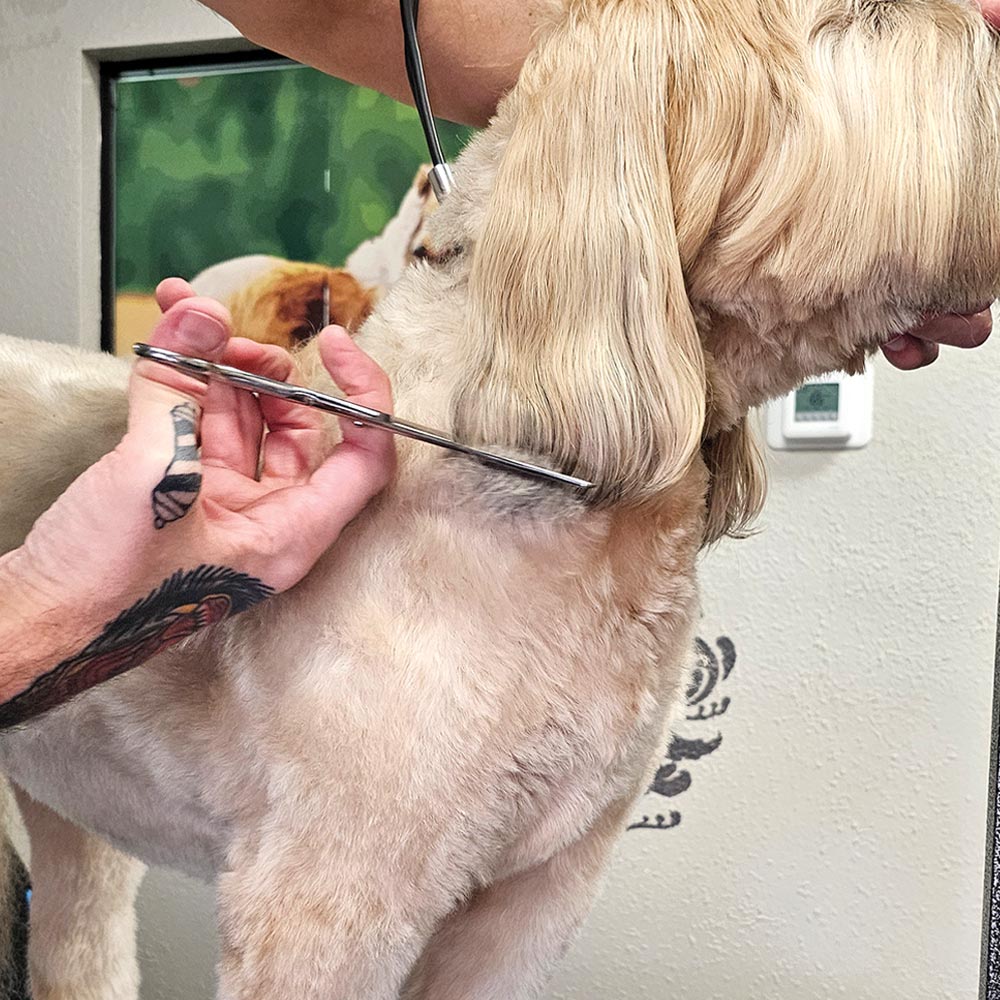
Fig. 14) Comb the cheeks and lip hair down so you can continue a more squared jaw while maintaining a cleaner finish.
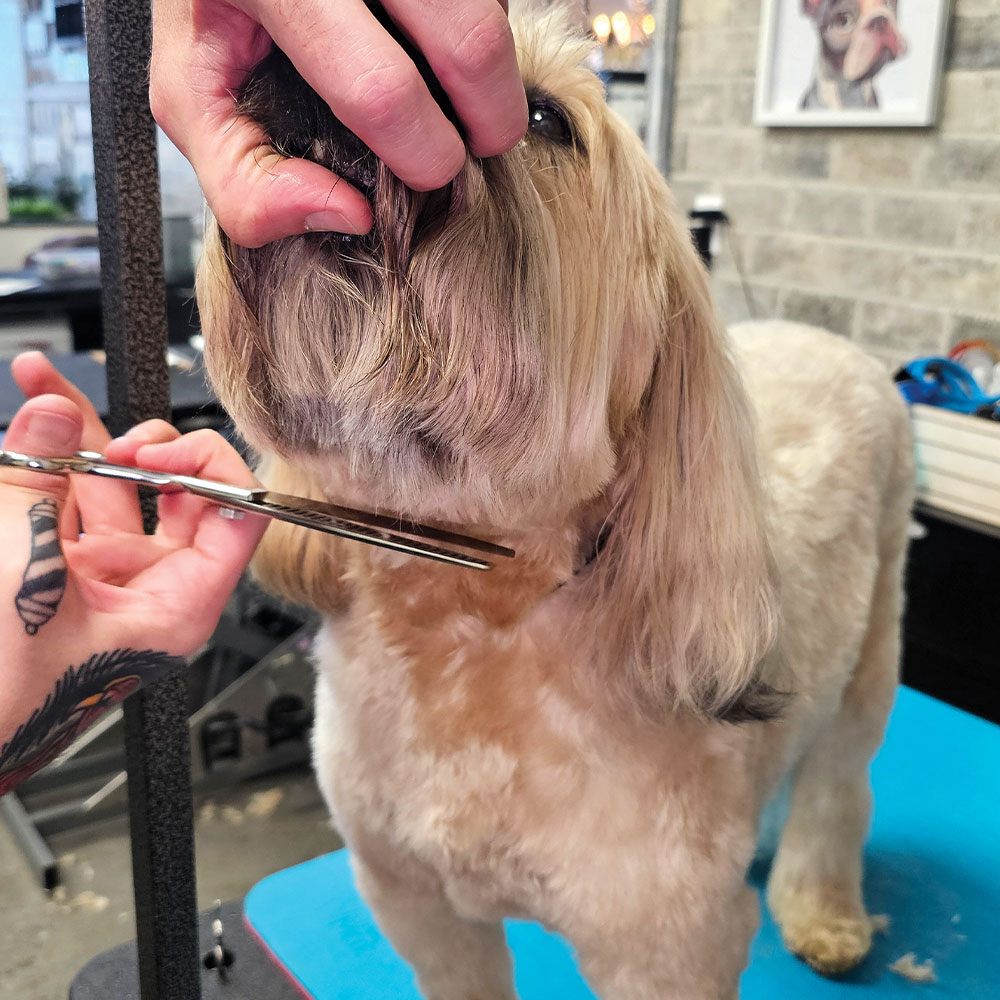
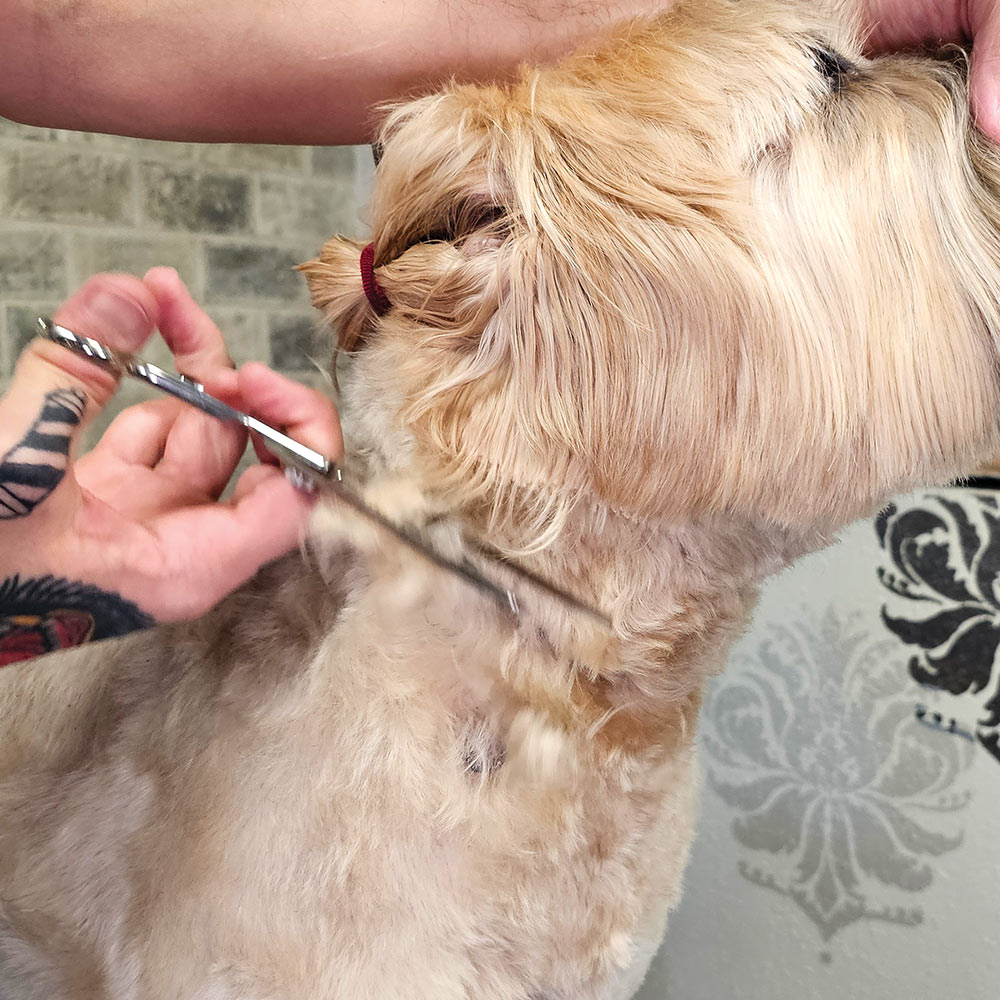
Fig. 16) Finish by trimming the ears. To keep them fresh and natural, you will use a fine thinning shear. For a bolder finish, use a curved scissor.
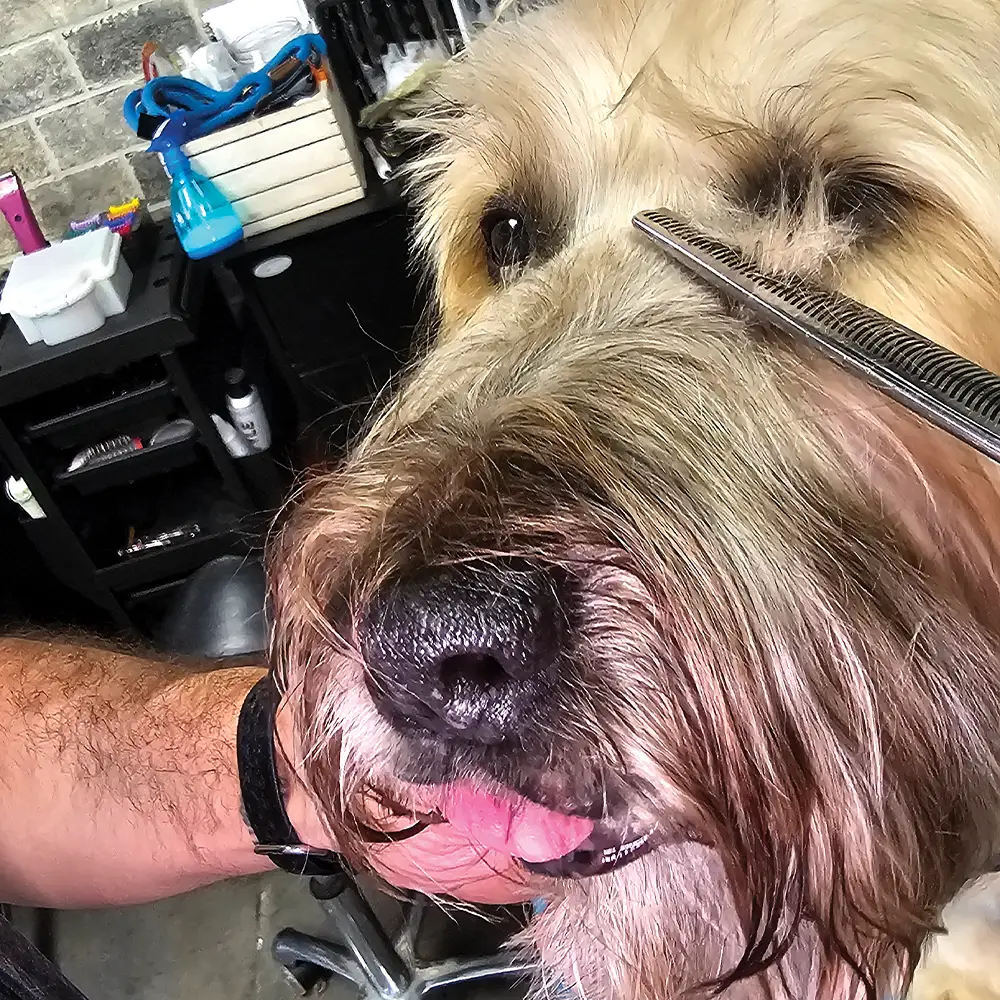


Call (717) 691-3388 ext 224 to place a Classified.
Rates: 25 words or less, $50.00.
Each additional word, $2.00 each.
Classified ads must be prepaid.
Call for issue deadlines.
Agency discounts do not apply.
CLASSIFIEDS
- Loyal customer base
- New clientele every week
- Fully equipped grooming stations
- Prime location in Chicagoland area
- Desirable location in upper-middle-class neighborhood
- Has capacity to accomodate additional groomers; spacious, bright, clean, and open shop
- Designated, private cat grooming area
- Laundry, office, and hassle-free parking
Call broker Larry at 630.796.0070, EXT: 1, for more details. Email: lswanson@tworld.com



Thanks for reading our August 2025 issue!