





 ello groomers! It’s time to talk about something that can seem seriously unsexy: Personal Protective Equipment, or PPE. I said seem because as glamorous as goggles, ear protection and a mask might look, I guarantee that it’s a better look than an eye patch, a limp, a chronic cough or yelling “What?” during every conversation.
Back in the dark ages, when I started grooming, PPE wasn’t really a thing. Sure, it existed; there were usually a pair of scratched-up goggles or hairy earplugs in the back of a drawer somewhere, but no one wanted to wear the uncomfortable equipment. It was even a running joke at one salon I worked at that all groomers eventually go deaf. Not only was it not funny, but I think we all deserve better. So let’s talk about some basic PPE that we use—or should be using every day—and how it relates to groomer ergonomics.
PPE and ergonomics are like science cousins; different but connected. If a piece of PPE does not fit the user properly or is uncomfortable to wear, then it either won’t be used or won’t actually work—sometimes creating more harm than good. Ill-fitting hearing protection or masks are a prime example of this.
For longer than I care to admit, I didn’t wear a mask while drying dogs. I knew that I should, but was convinced that my glasses would make it impossible, or at least impractical and uncomfortable. That was until the world changed and we had to learn real quick how to make masks work. Because when properly fitted, they will work.
We have all heard examples within the grooming community of “groomers lung”—better known to your doctor as hypersensitivity pneumonitis. This is a type of inflammatory response in the lungs caused by prolonged exposure to inhaled allergens, such as pet dander, and can lead to permanent, irreversible lung damage. Luckily, something as simple as a well-fitting KN95 or N95 mask can prevent this. That includes glasses wearers; as long as the seal is tight around the bridge of your nose, you won’t have the fogging-up problem.
OSHA has regulations in place to protect our hearing, limiting decibel exposure. For example, 90 dB maximum exposure over the course of an eight-hour day, but with anything exceeding 85 dB, employers need to provide hearing protection and monitor noise levels.1 That may not seem like a big deal, until you realize that your beloved dryers produce an average of 107 dB.2
Since the time decreases as the noise gets louder, without doing intense math, it’s safe to estimate that drying one doodle could put you well into hearing damage territory. Properly fitted earplugs will reduce the dB levels by 15-30; taking you back into safe levels. While actual scientific sound level meters are more precise, even our smartwatches can tell us that our dryers are indeed too loud for auditory safety.
It’s important to note that noise canceling and noise blocking are different; what you are looking for to protect your hearing is noise blocking or protecting. Noise-canceling headphones use active protection to create soundwaves that dampen ambient noise and noise-blocking headphones use a physical barrier, like foam earplugs or over-the-head earmuffs, to create a tight seal around the ears and stop loud noises from playing your eardrums like, well, a drum.
Remember, employers: Some form of hearing protection for your employees is far cheaper than an OSHA complaint. And for our audiobook and podcast enthusiasts, a set of over-the-ear earmuffs lets you enjoy your true crime in your earbuds while protecting your hearing for years to come.
The key takeaway is that PPE only works if you use it, and you’ll be more likely to use it if it’s comfortable. Whether masks annoy you or earplugs are uncomfortable, they’re still less annoying than having chronic lung issues and hearing loss. There are a variety of types of both masks and hearing protection built for a wide variety of people, and you are worth finding the one that fits you the best. Your future self will thank you.
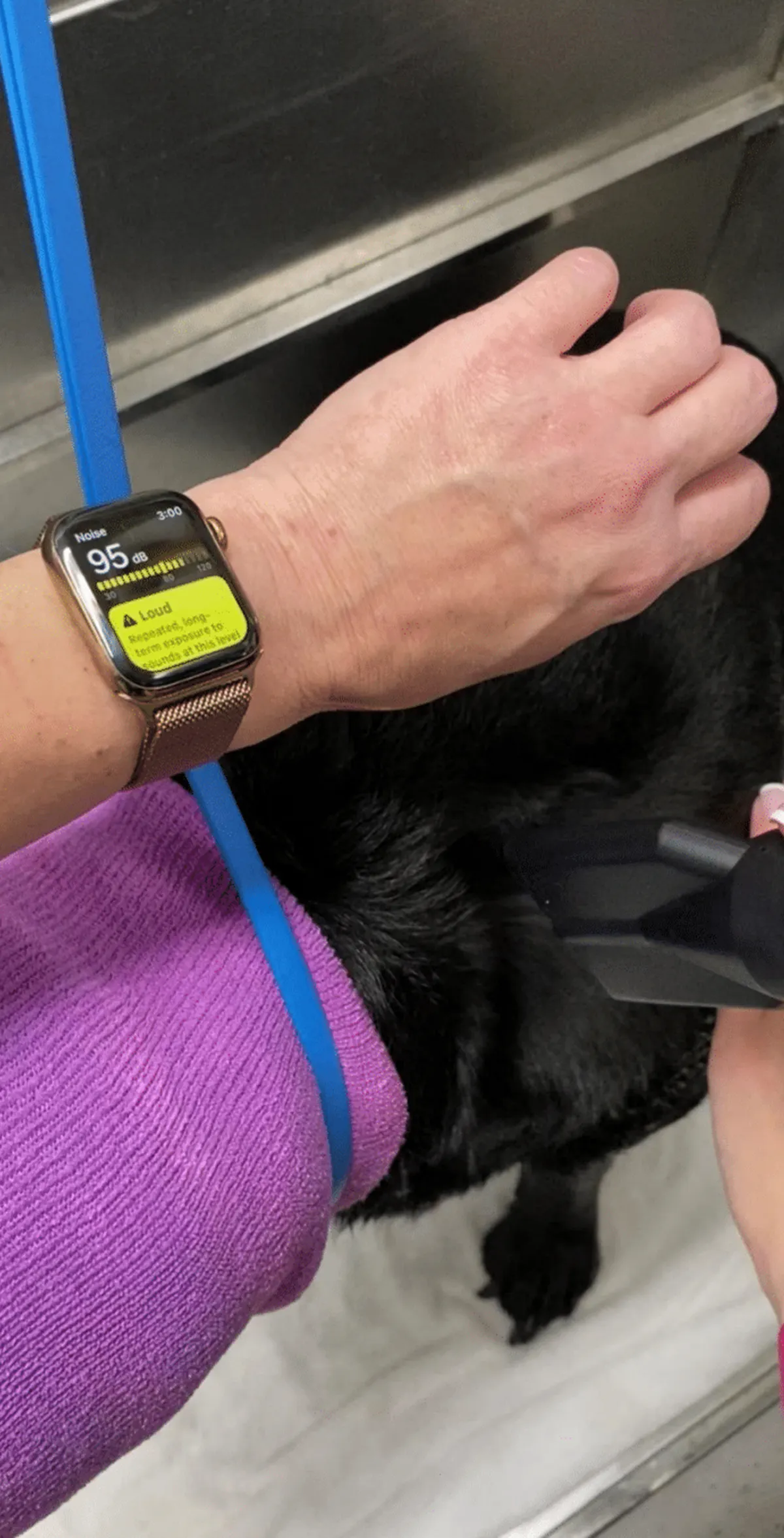
Photo courtesy of Anjie Coates.
- Occupational noise exposure. Occupational Safety and Health Standards. https://www.osha.gov/laws-regs/regulations/standardnumber/1910/1910.95
- Scheifele, P. M., Johnson, M. T., Byrne, D. C., et al. (2012). Noise impacts from professional dog grooming forced-air dryers. Noise & Health, 14(60), 224.