

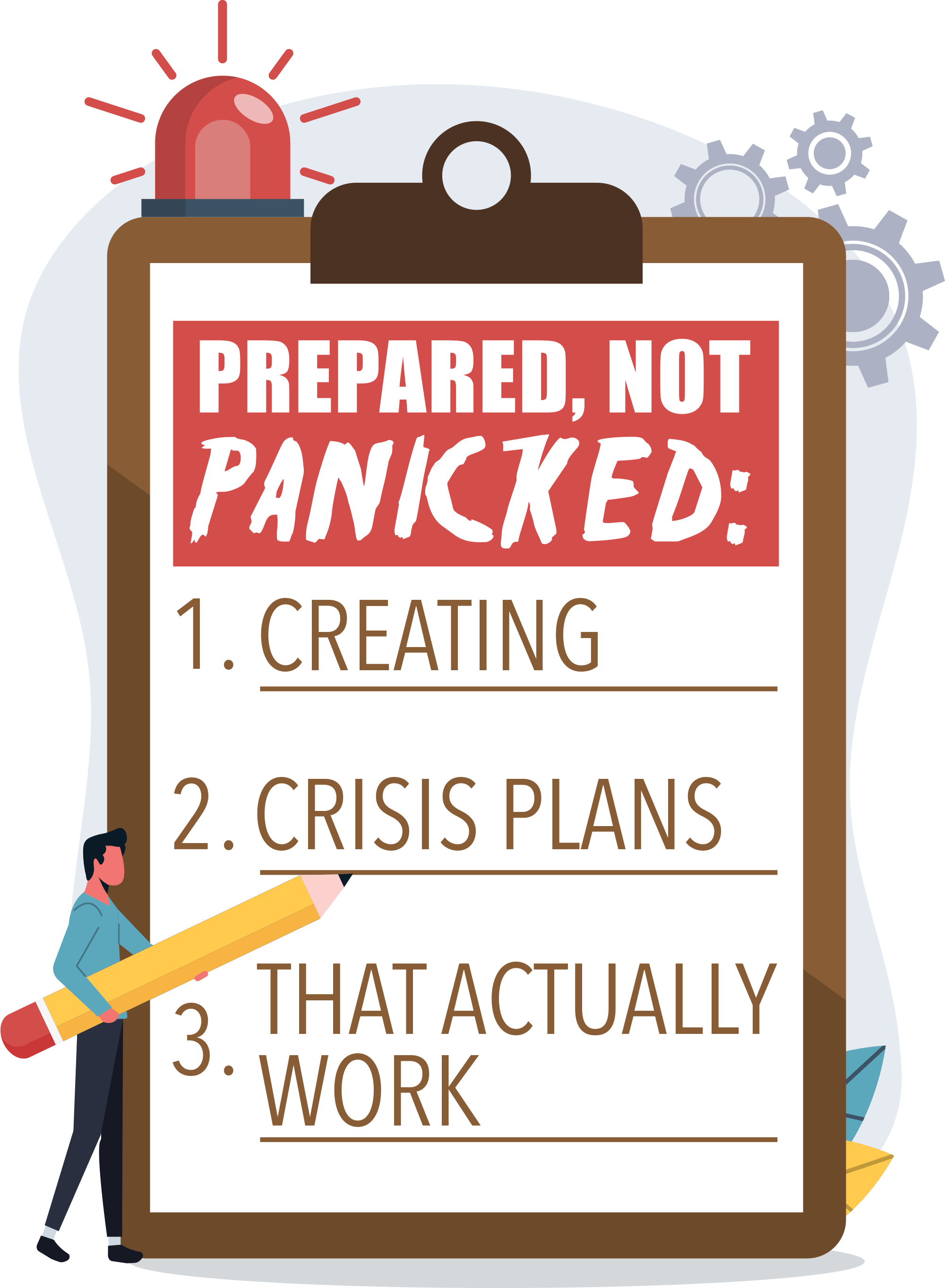
 very grooming salon—whether it’s a large facility or a one-person, home-based business—will face a crisis at some point. A dog may have a seizure on the table. A dryer may spark. A winter storm may cause a power outage. These aren’t hypothetical; all of this and much more could happen to you. Will you be ready when disaster strikes your salon?
A crisis doesn’t have to be chaotic when you already have systems in place. In fact, the more detailed your plan, the calmer and more confident you and your team will be when the unexpected happens. By taking some time to think through the worst-case scenarios you can:
- Protect the pets and clients that you serve
- Reduce liability
- Increase client trust
- Keep your team calm under pressure
- Create consistent responses from all staff
- Prevent small mistakes from escalating
- Build the professionalism our industry deserves
The following will cover some of the most common disasters that you should include in your crisis plan.

- What symptoms are considered an emergency
- Who makes the call to the vet or ER (include the phone numbers for the closest facilities)
- Who manages the pet
- Who communicates with clients
- Where emergency supplies are located
Training for yourself and your staff is paramount for medical disasters. The first step is knowing what constitutes an emergency and the signs and symptoms that occur. All staff should be fully trained to handle pet medical emergencies. Make this part of your staff meetings and review it regularly.
In the veterinary field, when there is an emergency, one technician or doctor is designated as the point of contact and essentially is “in charge” during the emergency. This is most often a senior or more experienced staff member. No one should wonder what to do; one team member should take charge and follow the flow sheet, assigning jobs to other team members as needed.
It is important that a laminated contact list is easily available. Time is precious during an emergency, and you don’t want your staff to be Googling phone numbers and wasting time. Your contact list should include:
- Local veterinarian
- Emergency/after-hours hospital
- Poison control
- Nearest human urgent care
Your intake paperwork for each pet should include multiple ways to reach owners as well as an emergency number if they are unreachable.
A well-stocked first aid kit should be kept in the salon, as not all animal emergencies require immediate veterinary care. However, training is essential. The last thing you want as a salon is for your team to think they can handle an emergency without veterinary care, leading to a much larger problem. Knowing what symptoms are considered an emergency and what aren’t is a skill all grooming staff should have.
Encourage or require pet CPR and first aid certification. Many groomers underestimate how much calmer they feel after hands-on training. Our industry has many pet-specific training options. Look for those near you, ideally as a hands-on course, to attend.
Emergency slip leads should be located at every station, on every table and near every exit. During emergencies, you won’t have time to search. If you are a salon that grooms cats, keep a stack of pillowcases near the kennel area. If a true emergency happens, you won’t have time to fight a cat into a carrier. Place the cat in the pillowcase, hold the top closed and get outside safely.
Role assignments should also be part of your plan. Decide ahead of time:
- Who grabs which pets
- Who checks the bathing room
- Who leads clients out
- Who calls emergency services
If you have a large team, assign roles by department: receptionists evacuate clients, groomers alert bathers, etc. Have a designated meeting point outside for all staff, and once everyone is safely out of the building, do a head count.

- Whether clients should be called for early pick-up
- How to handle partially groomed pets during extended outages
- Contact numbers for local power companies
If your facility does not have a generator or backup source of power, this plan is even more important. And remember, no power means no water if you rely on a well pump. Keep several gallons of water on hand for emergencies. This can save you from calling an owner to come get their soapy dog or from having to run to a store mid-crisis.
- Client or staff medical emergency
- Lost dog protocol
- Online slander or bad review
- Active shooter or theft
- Unclaimed pet
Once you’ve outlined all your crisis plans, put them into a binder and include the following for each:
- Step-by-step flow charts
- Emergency contact lists
- Scripts and templates
- Forms for documenting incidents
- Checklists for staff training
- Roles and responsibilities
- Maps and evacuation routes
Just like everything else in our industry, practice matters. Unexpected emergencies feel less overwhelming when your team has already rehearsed what to do. Include regular reviews of protocols in your staff meetings and do “pop-up” drills to help your staff stay sharp.
- Injury notifications
- Behavior issues
- Medical emergencies
- Equipment failures
- Unexpected service interruptions
Communication with owners during an emergency is not the time for speculation or excessive apologizing. It is often our nature to apologize profusely when something goes wrong, even if it’s not our fault. By doing this you may inadvertently start to convince the client that you were in the wrong.
Remember to document first, communicate second. This prevents inaccurate or rushed explanations and can help you prepare yourself for the conversation. Before calling the client, detailed notes should be taken as well as photos, if appropriate. Have a manager or second groomer review the facts.
When it comes to having the actual conversation, train staff in tone and language, emphasizing the following:
- Start with empathy
- State only the facts
- Explain next steps clearly
- Avoid defensiveness
- Always offer follow-up
Communication is often what determines whether a client becomes angry or appreciative. You want to state the facts, but by no means do you want to come across as cold or uncaring. Put yourself in the owner’s shoes and try to speak in a way that you would appreciate if it was your pet that something happened to.
Creating crisis management plans doesn’t mean you expect disasters to happen—it means you’re prepared if they do. Having these plans in place protects pets, reduces liability and builds trust with clients who want to know their pets are in responsible hands.
Start with one plan. Build one checklist. Create one script. Over time, you’ll develop a system that turns chaotic moments into manageable ones, and that’s the true mark of a professional grooming business.