



by Blake Hernandez
Photos provided by Blake Hernandez
 etro trims are some of the most practical poodle cuts that exist. They are highly stylized and yet offer those strategically placed shave patterns that allow for easier at-home maintenance as well as table time in the salon. Yes, they look great on poodles, but they can also be really fun base patterns for other breeds and mixes.
Fig. 1) The Chicago Dutch
This trim is a subtle yet unique way to elevate those basic Mandarin clips or all-over styles to make the dog stand out. Ideally the body portion is clipped to the maintenance length for that particular dog’s coat type and grooming schedule. Then, using a shaving-length blade, place the front edge of the blade behind the dog’s last rib. Continue by shaving a straight line the width of a blade down the dog’s side to create almost a belt. What separates the Chicago Dutch from other Dutch variations is the additional blade-width line that is shaved from the dog’s tail and up to the back of the jacket line. As with all retro patterns, these tight-shave places are often found in the areas where dogs mat easily so that it’s stylish and better for maintenance.


Fig. 2 & 3) The Swirl trim
This trim starts off in a “Y” trim which has a very short blade length shaved from the base of the tail to just behind the last rib. When you reach the last rib, that line breaks into two lines, creating a “Y” when viewed from above. Then, where you feel the dog’s ribs spring out, you transition that line into an extreme curve to create a swirl design on both sides. This is a very eye-pleasing trim for clients who like something special.
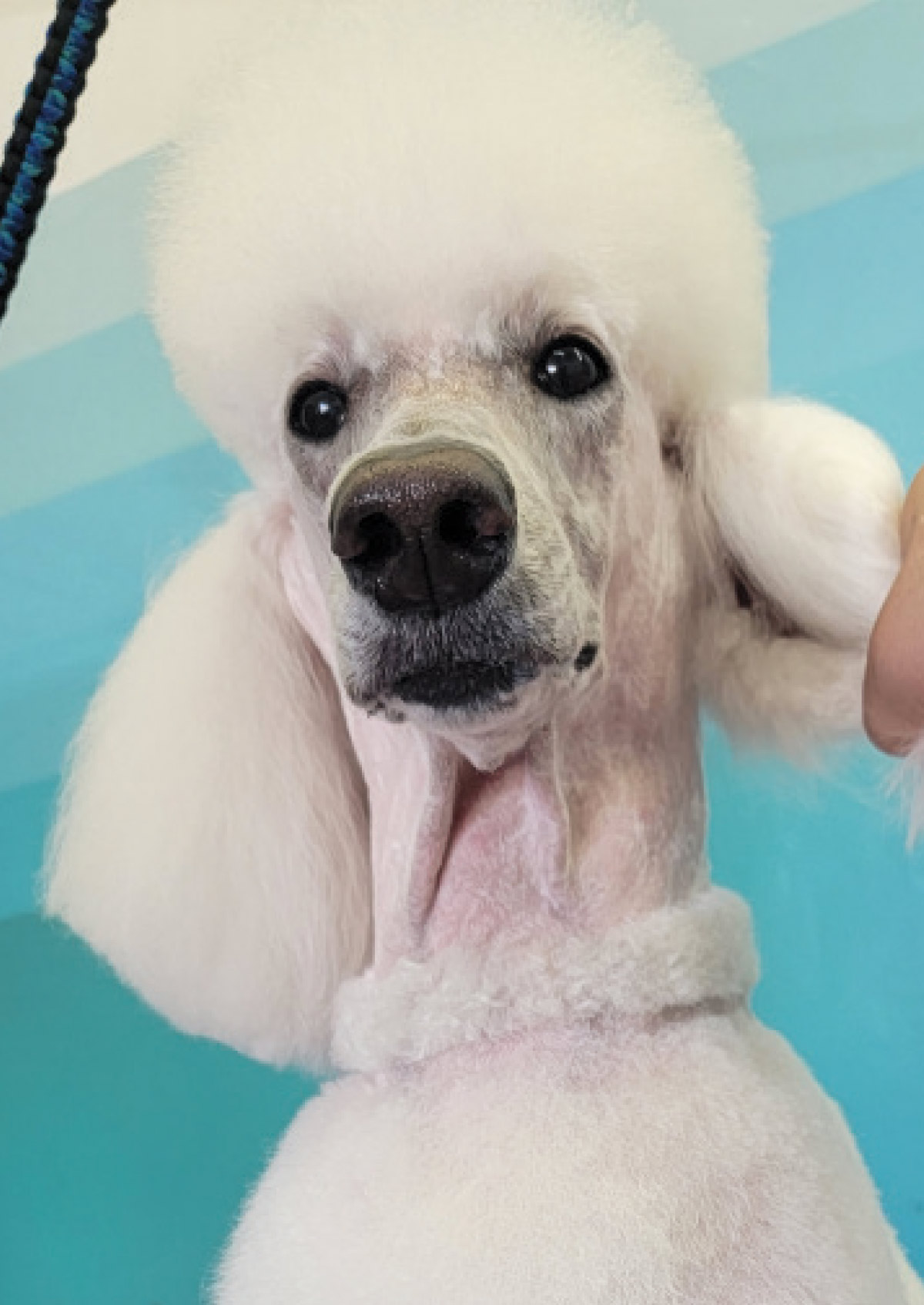
Fig. 4) The Mink Collar
This is actually just a single feature that can be added to any retro pattern. Even if the dog doesn’t have significantly short hair, a mink collar can be grown into exaggeration to really stand out.
Fig. 5 & 6) The Pittsburgh Dutch
The Pittsburgh is another staple variation of the classic Dutch trim. However, the line that goes along the back only extends from the neck shave to the waist shave. Many would consider this trim the opposite of the Chicago Dutch. All Dutch variations can easily look nice in full legs, one length all over, or even bracelets and saddles.

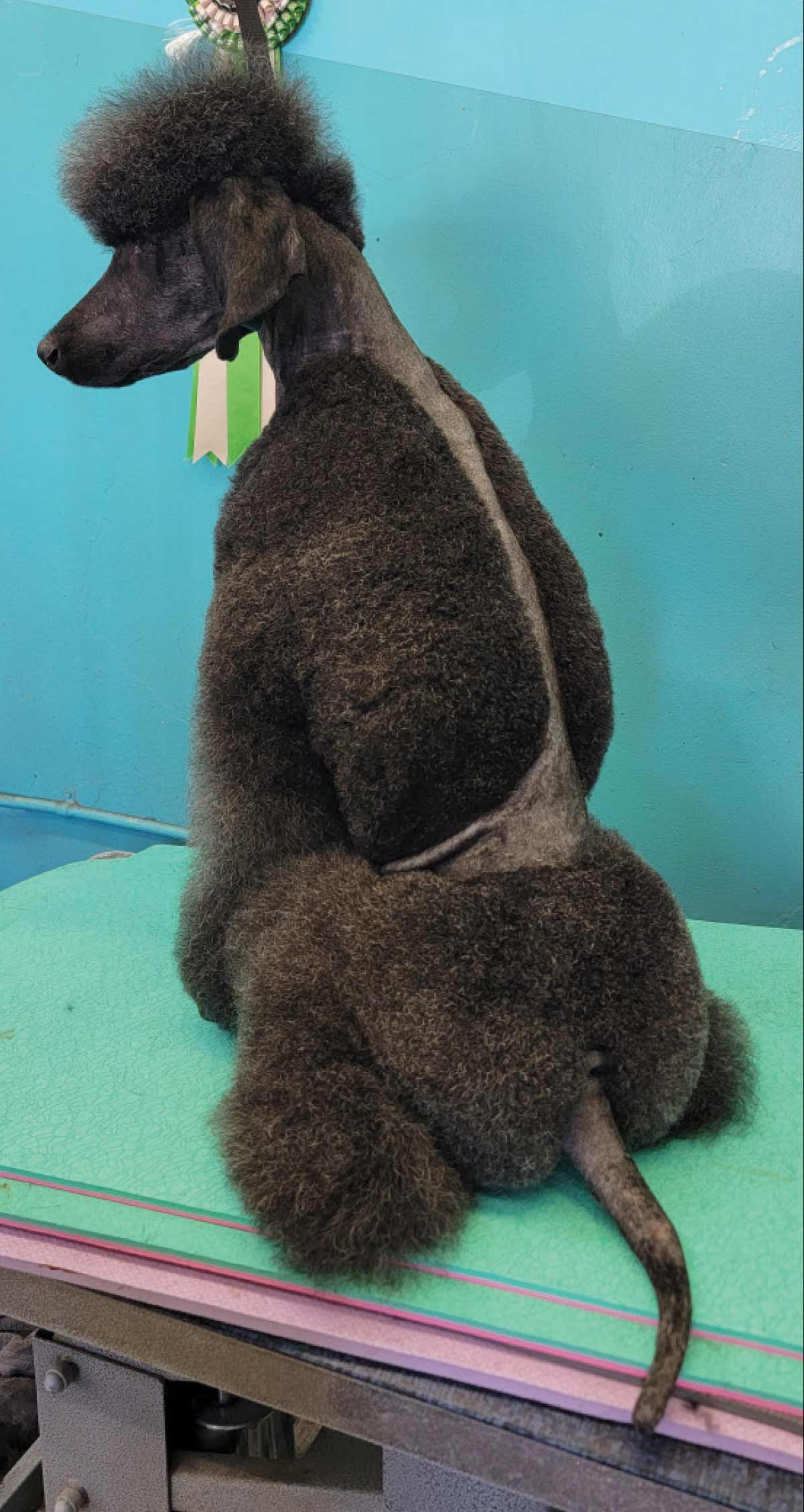
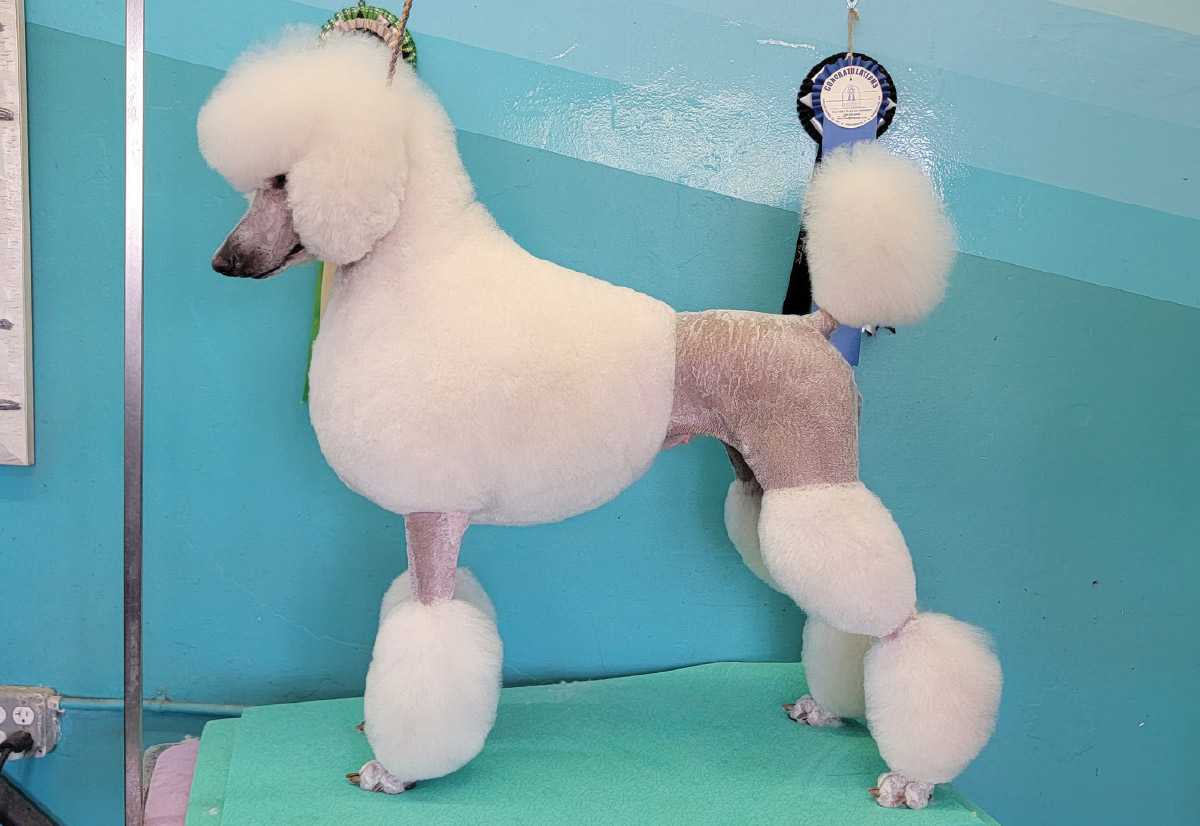
Fig. 7) The Spanish Continental
This is a trim that makes things complicated for groomers but more simple and gratifying for owners. This trim is much like the English Saddle, but rather than a scissored butt area, the upper thigh portion is instead shaved. This trim could also be done with a retro neck shave or a more modern traditional face shave. With the bracelets and a knee pom, there is lots of shaved-length clipper work to separate things. Sometimes clipper guard/blade work can be done if it is a short variation with some scissoring on the shapes.
Fig. 8) The Poodlington
This is a poodle in Bedlington drag, and is a trim that can make everyone happy. With the legs tight, the body tighter, and the ears and tail practically naked, any client can keep up on this style. The Bedlington is the inspiration with their lithe build and minimal coat furnishings, so this is the perfect trim for clients that would like to have something a little fancy but next to no at-home maintenance needed for a regularly scheduled dog.


Fig. 9 & 10) The Reverse Swirl
This trim seems super intimidating at first, but the Reverse Swirl starts in the same place as the Desi trim. It is a sharp point on the spine facing the dog with a shaved blade length, and then it elegantly curves around the dog’s ribs. Here is where things change: Using that same blade length and width, sweep that curved shape into a dramatic swirl that sits atop the dog’s furthest-most spring of rib. This trim is best suited on dogs with full leg coat or even one length all over. If the dog has bracelets or a jacket, it becomes too busy and out of balance.


Fig. 11) The Bolero Trim
This trim is yet another Dutch variation; however, the legs have coat until about the halfway mark of the forelegs, and this results in characteristically squatting bracelets. The pattern between the top and bottom of the forelegs is a very short shave, the same way you shave the waist. This particular dog also has a mustache which is a very common feature of poodle retro trims.
Retro trims are not just flashy and special; the intricate shave work means faster prep time. Clients will also notice the patterns growing out faster than they will recognize an all-over trim grown out. This results in more frequent appointments, which usually means better-behaved dogs and easier overhauls!

