






Elevate Your Grooming
A simple graphic illustration of three yellow stars in varying sizes.
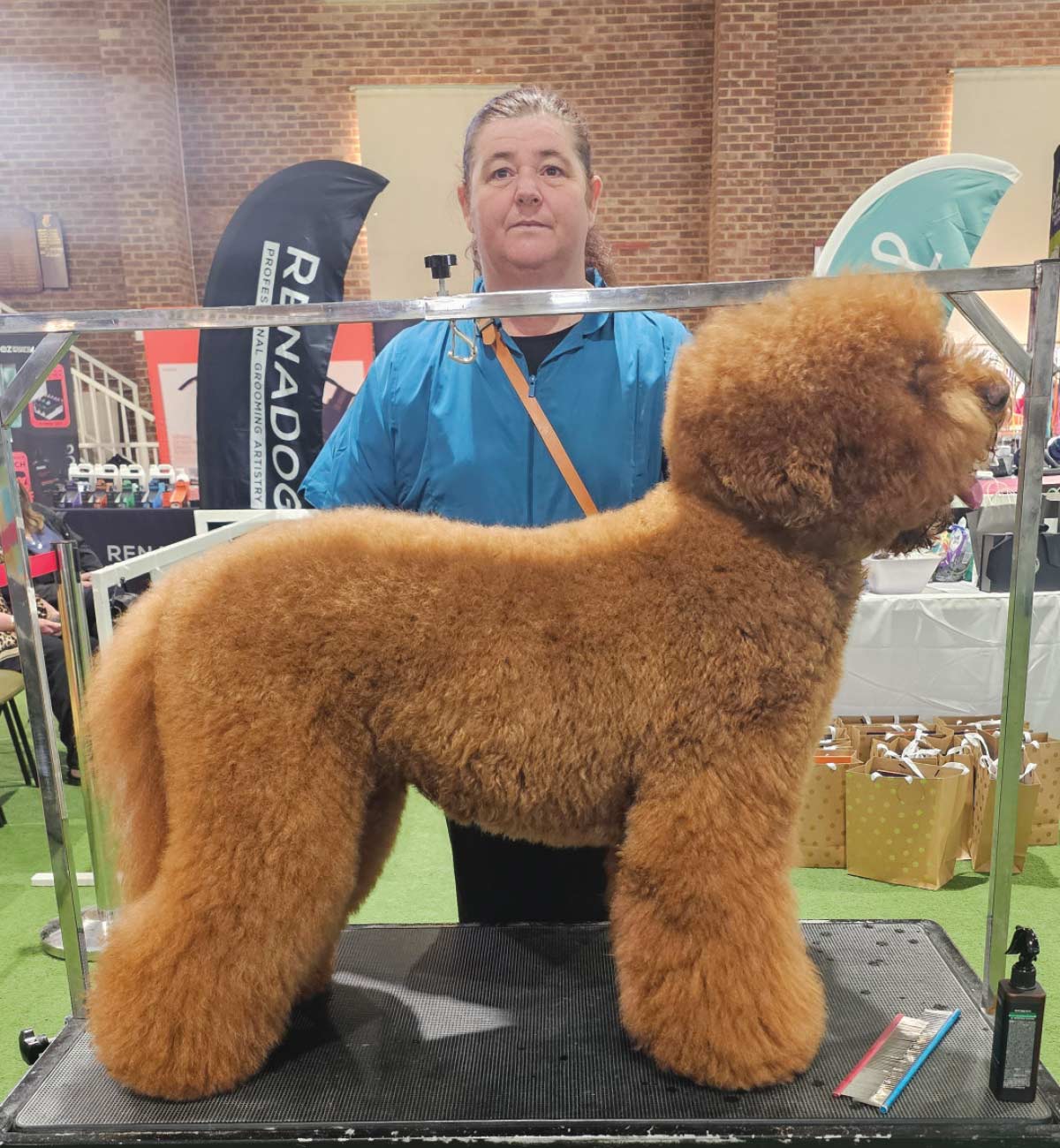
A brown poodle with long, unrefined curly fur stands on a professional grooming table before receiving a competition-style teddy trim.
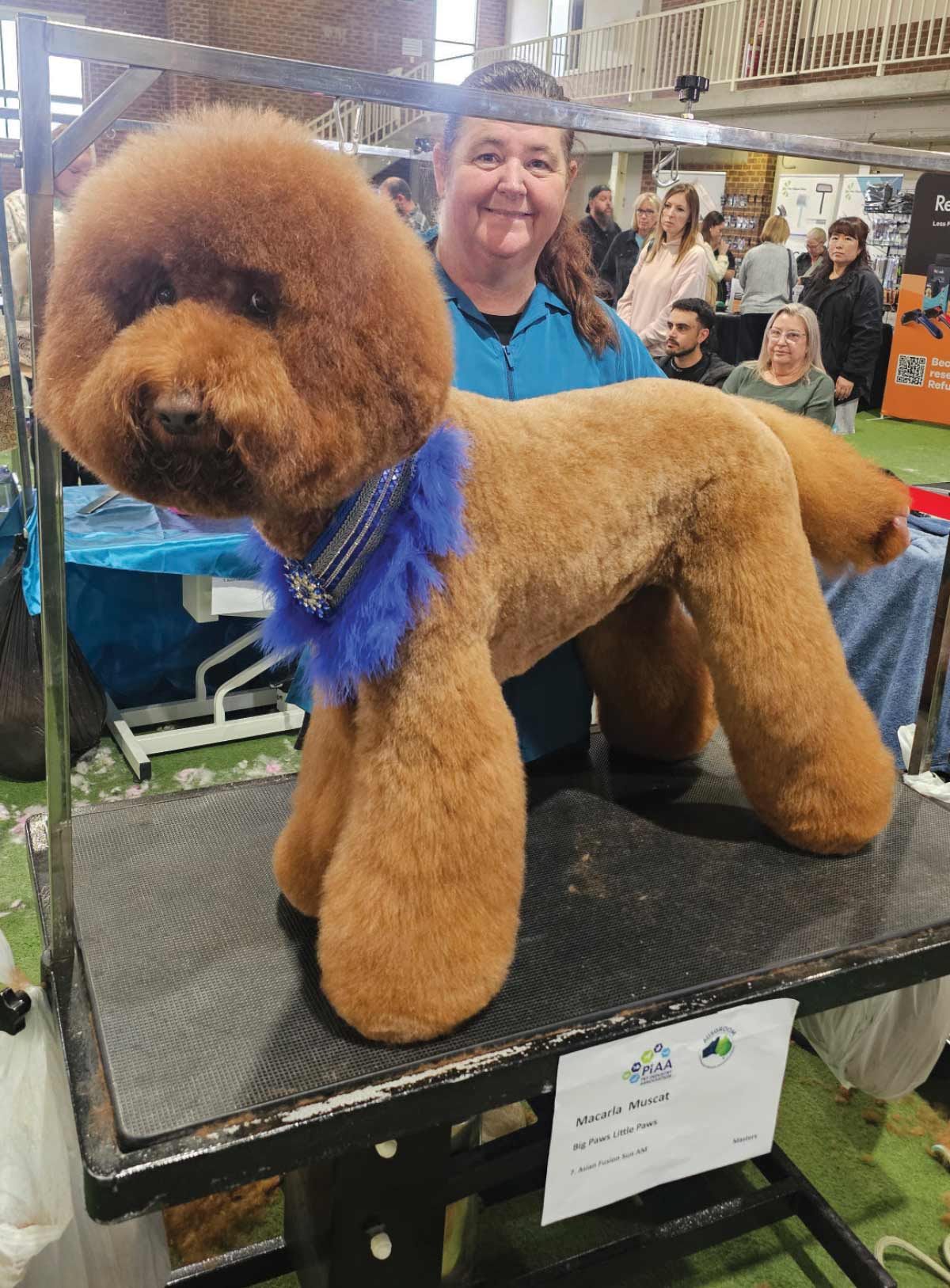
A brown poodle with a perfectly rounded "teddy bear" head trim and blue feathered collar stands on a grooming table after its transformation.
A flat graphic illustration of a gold trophy cup on a dark grey base with a white nameplate.
Stylized navy blue text in a cursive font that reads "Executing a."
A minimalist yellow graphic of a laurel wreath, symbolizing a competition award or victory.
Bold, sans-serif yellow text that reads "Trophy-Worthy."
Stylized navy blue text in a cursive font that reads "Teddy Trim," with a small heart dotting the letter "i."

by Blake Hernandez
Groomed by Macarla Muscat

The Teddy Bear trim is an all-time favorite with clients. But have you ever considered what it would be like competing against other groomers to test your most-requested style?

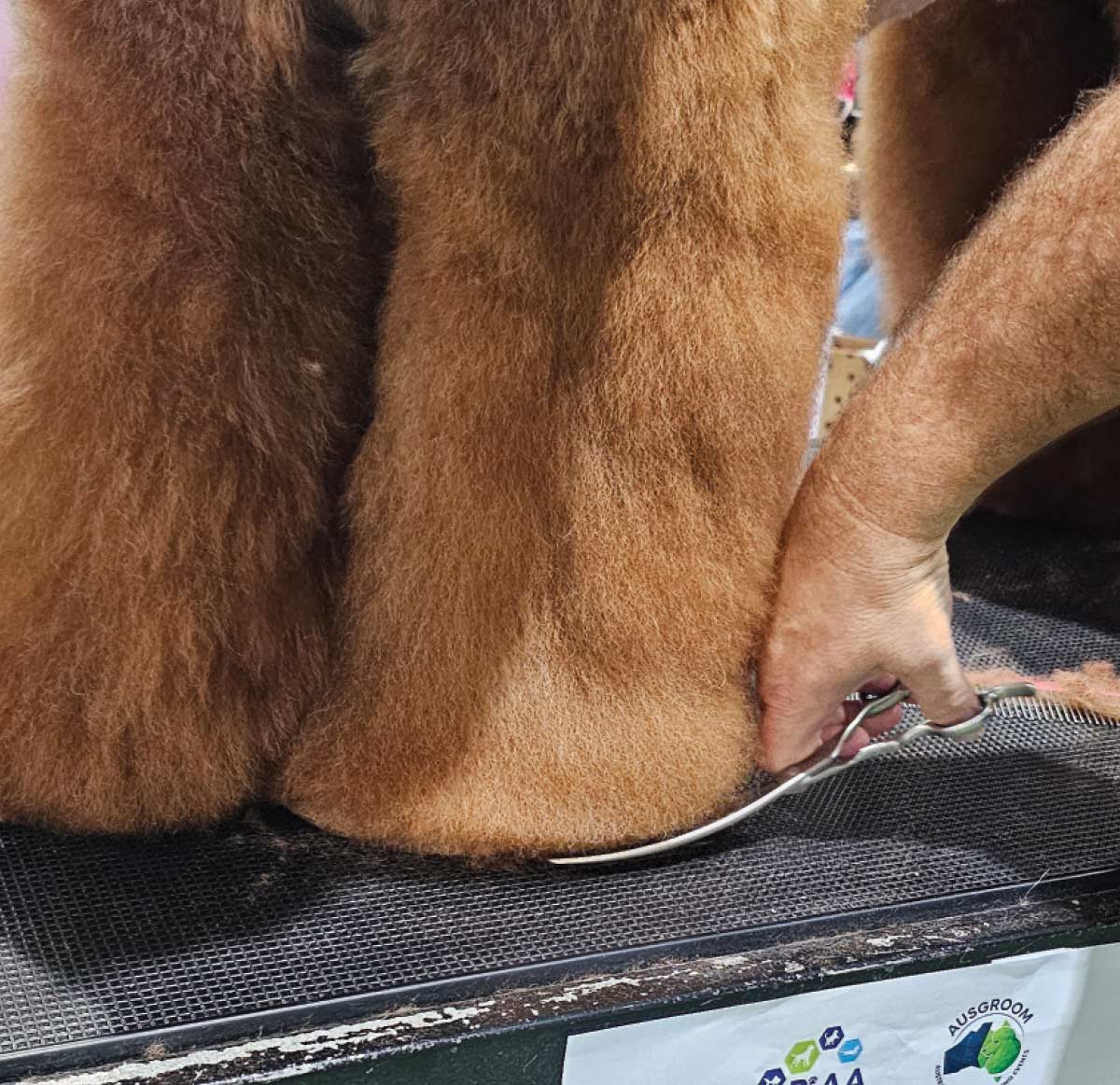
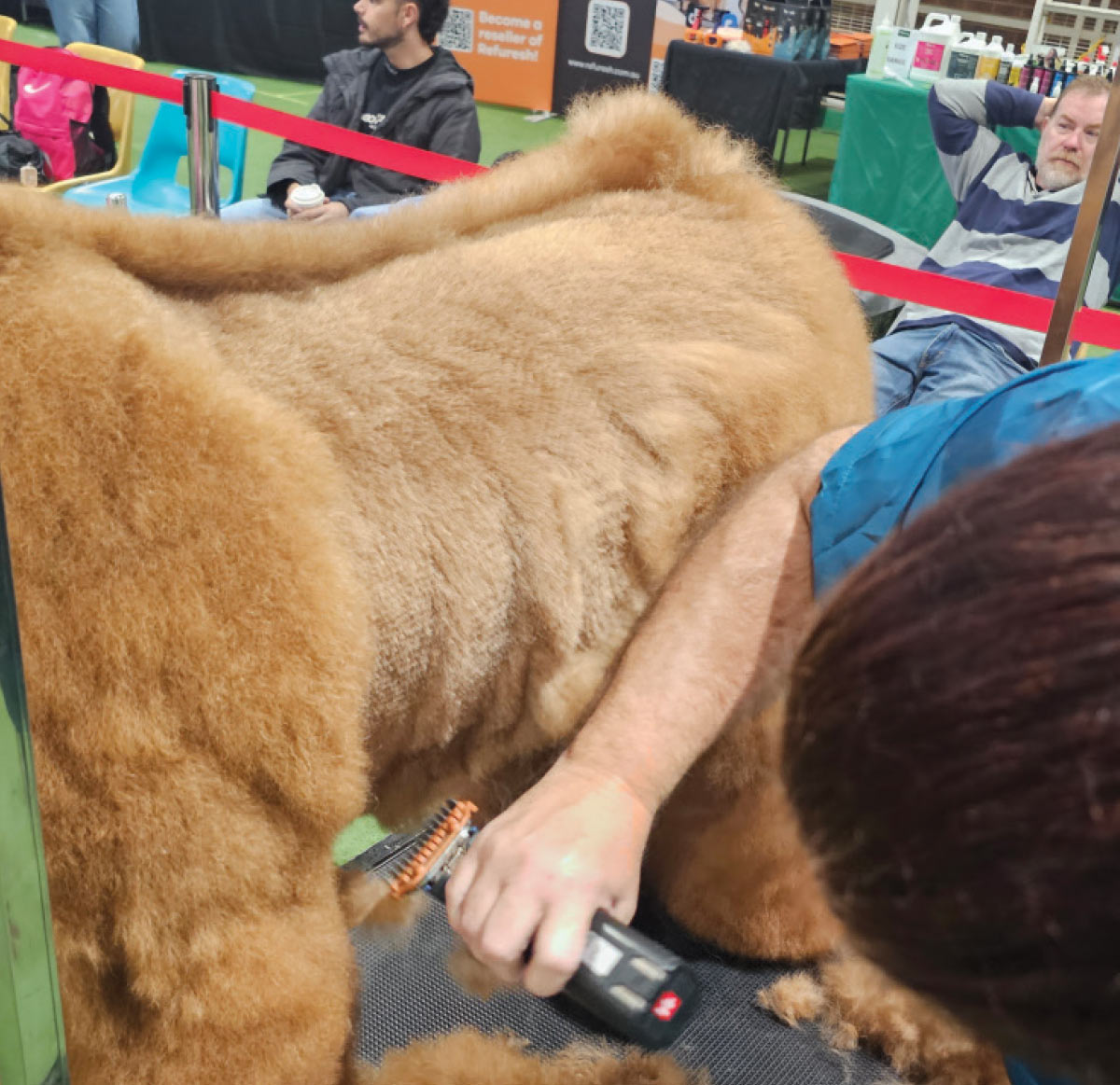
Fig. 1) When competing, two things to keep in mind are your degree of difficulty and your ability to put a competitive finish on a dog in the allotted time. This particular competitor brought a dog with loads of hair, and in order to achieve the finished look, she needed to set down the body length with a 5/8” guard comb, omitting areas like the legs and directly above.

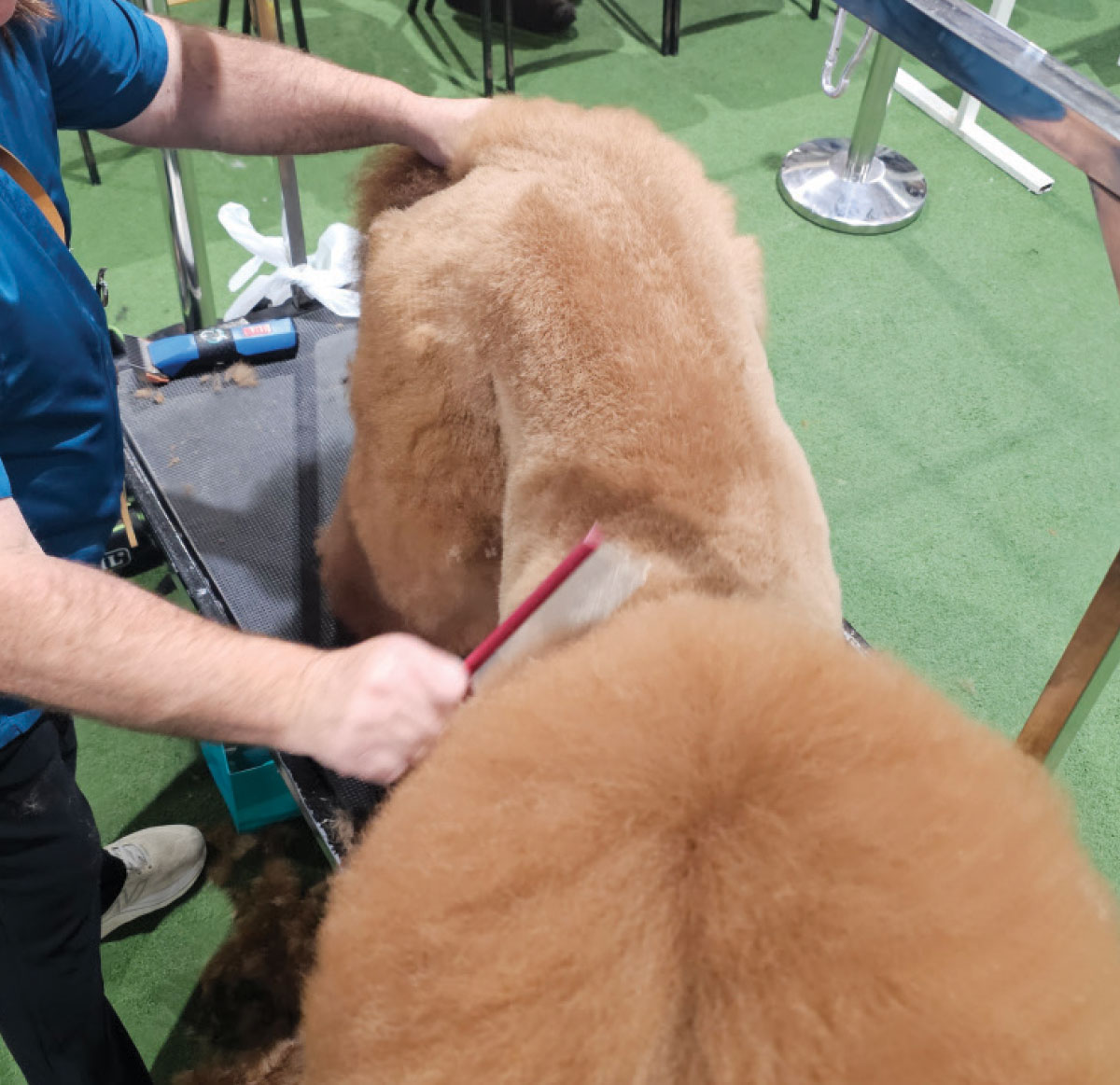
Fig. 2) Loose hairs and mowed-down hairs affect your finish and the amount of times necessary to clip for smooth a finish. Combing the hair out and up between passes will speed up this process.
A simple graphic illustration of three yellow stars in varying sizes.
Stylized navy blue text in a cursive font that reads "Executing a."
Bold, sans-serif yellow text that reads "Trophy-Worthy."
Stylized navy blue text in a cursive font that reads "Teddy Trim," with a small heart dotting the letter "i."
A simple graphic illustration of three yellow stars in varying sizes.
A brown poodle with long, unrefined curly fur stands on a professional grooming table before receiving a competition-style teddy trim.
A brown poodle with a perfectly rounded "teddy bear" head trim and blue feathered collar stands on a grooming table after its transformation.
A flat graphic illustration of a gold trophy cup on a dark grey base with a white nameplate.

by Blake Hernandez
Groomed by Macarla Muscat

The Teddy Bear trim is an all-time favorite with clients. But have you ever considered what it would be like competing against other groomers to test your most-requested style?

Fig. 1) When competing, two things to keep in mind are your degree of difficulty and your ability to put a competitive finish on a dog in the allotted time. This particular competitor brought a dog with loads of hair, and in order to achieve the finished look, she needed to set down the body length with a 5/8” guard comb, omitting areas like the legs and directly above.

Fig. 2) Loose hairs and mowed-down hairs affect your finish and the amount of times necessary to clip for smooth a finish. Combing the hair out and up between passes will speed up this process.
A groomer uses electric clippers with a spacer guard to trim and level the dense brown fur on the poodle's hindquarters.
Fig. 1) When competing, two things to keep in mind are your degree of difficulty and your ability to put a competitive finish on a dog in the allotted time. This particular competitor brought a dog with loads of hair, and in order to achieve the finished look, she needed to set down the body length with a 5/8” guard comb, omitting areas like the legs and directly above.
A groomer carefully brushes through the poodle's thick coat with a red slicker brush to prep the fur for an even finish.
Fig. 2) Loose hairs and mowed-down hairs affect your finish and the amount of times necessary to clip for smooth a finish. Combing the hair out and up between passes will speed up this process.
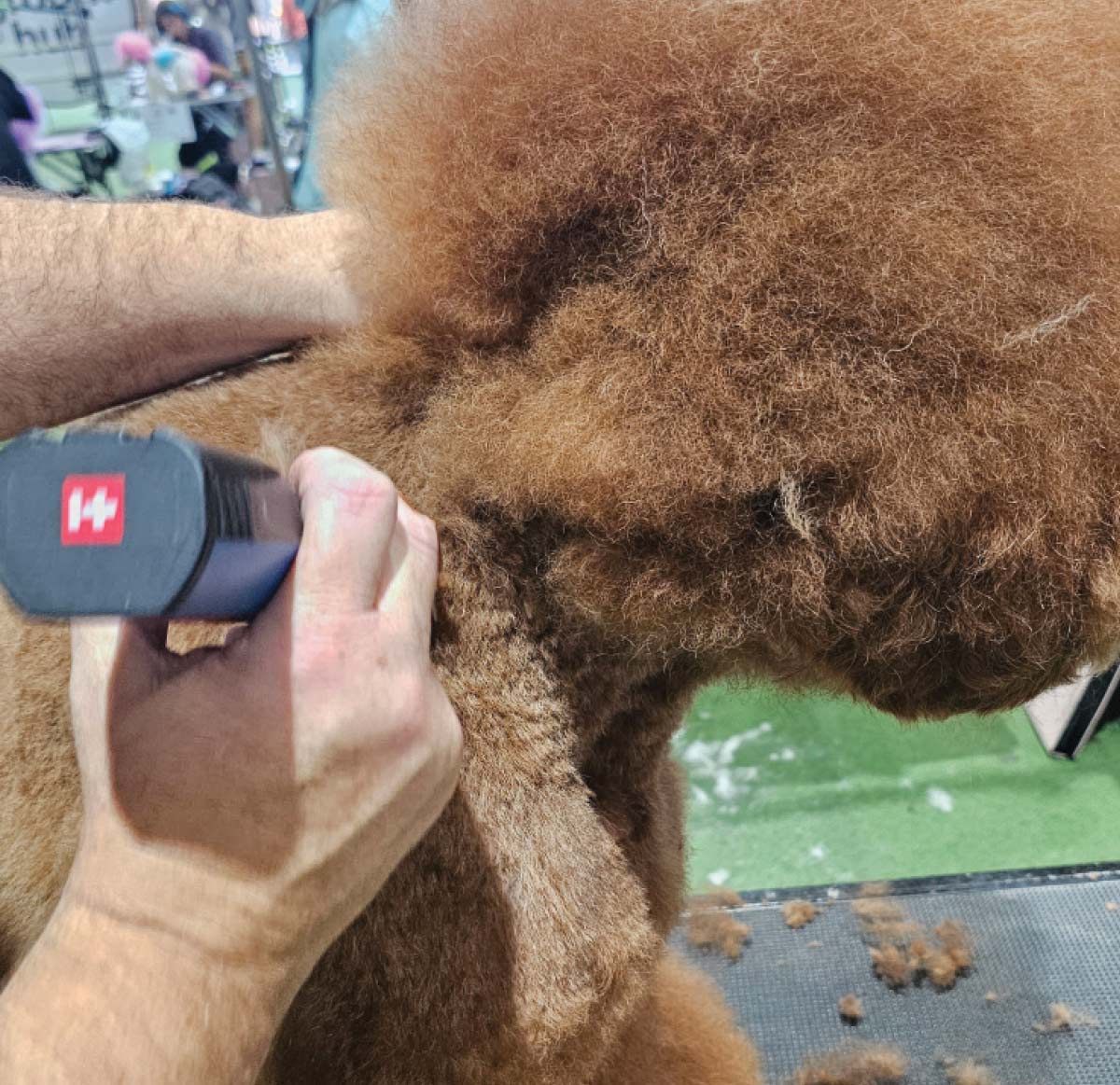
Close-up of a groomer using clippers to meticulously shape the fur around the poodle’s neck and chest area.
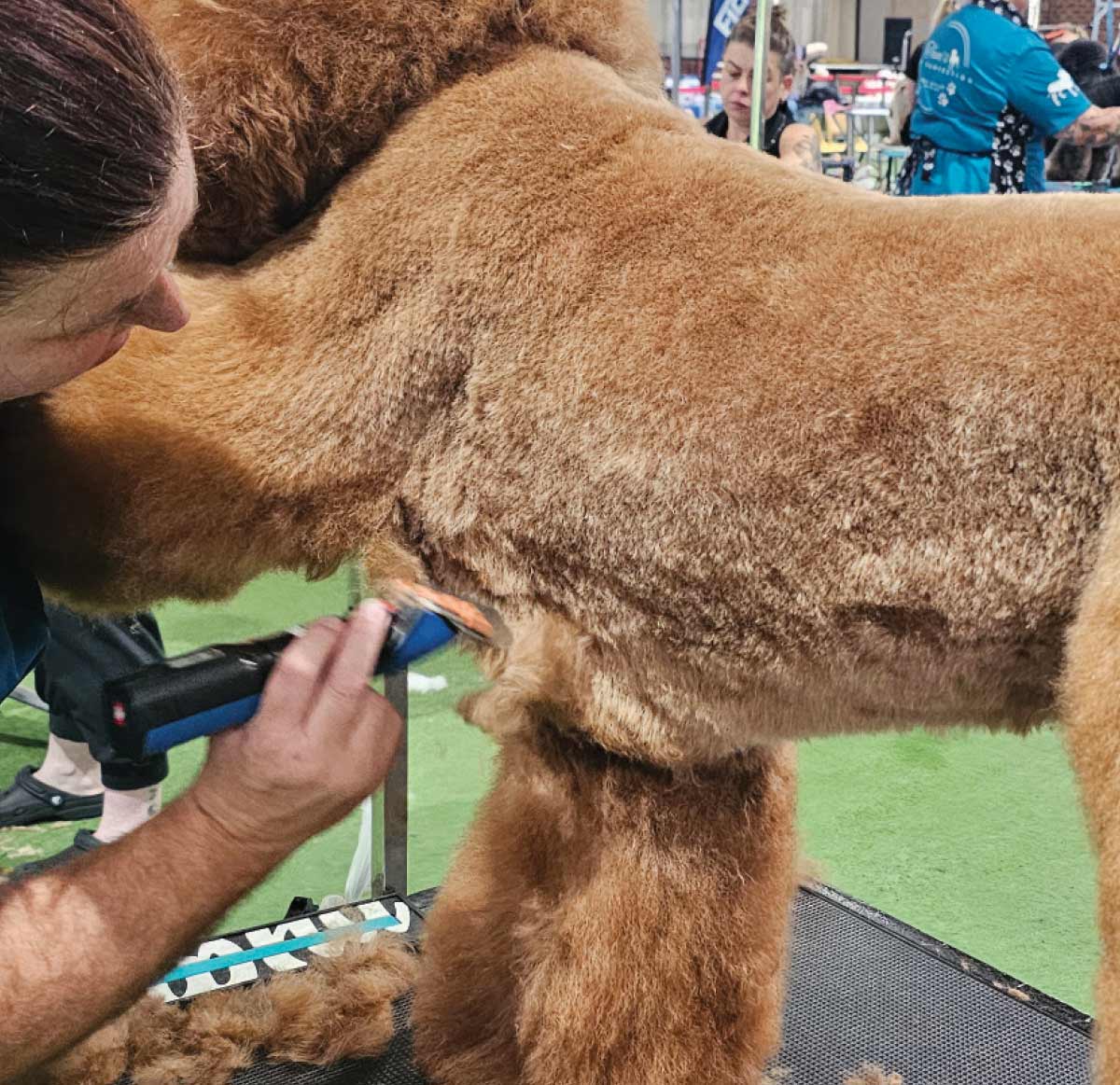
A groomer uses clippers to define the underline and leg transitions on the poodle’s torso during a grooming competition.
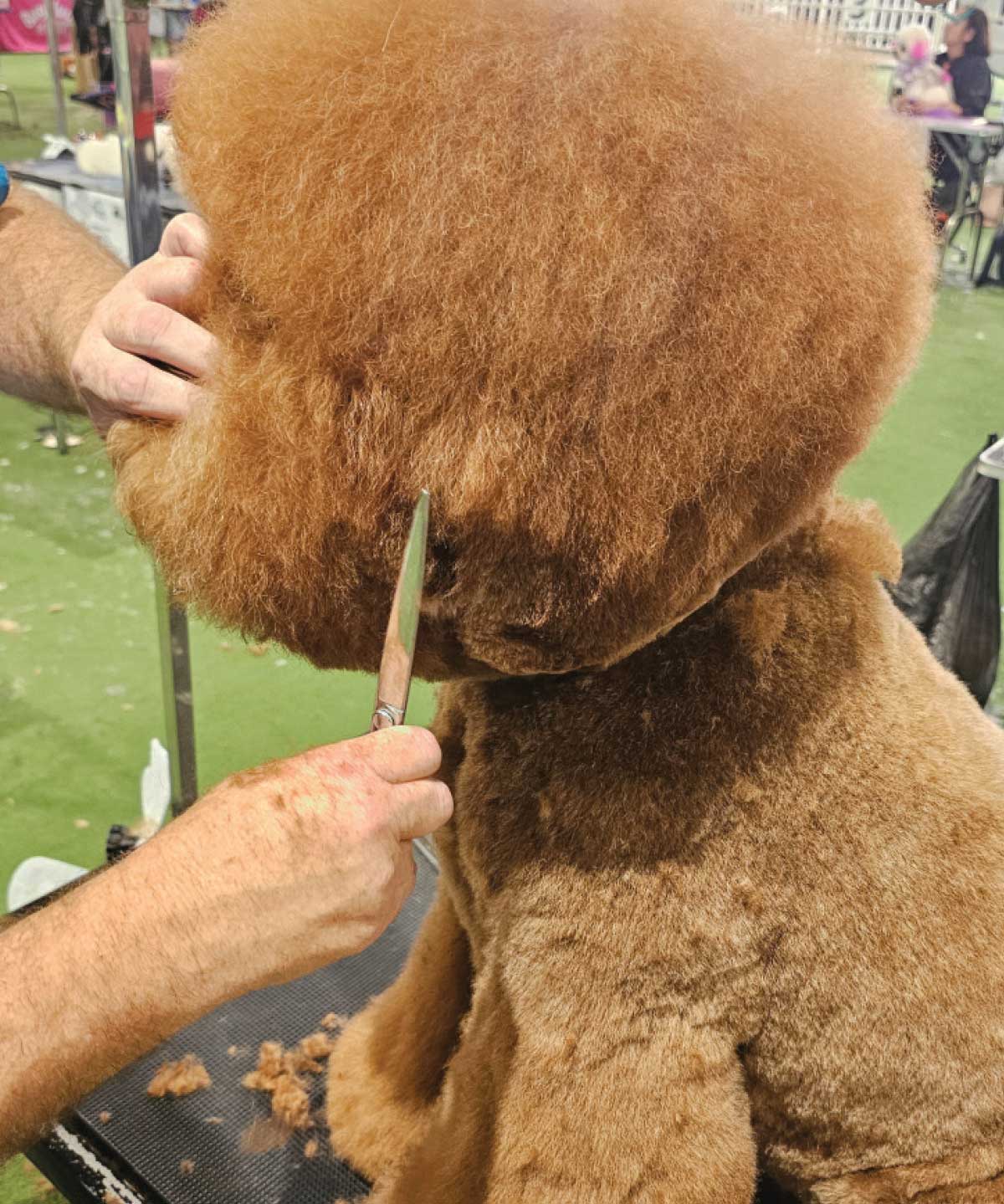
Fig. 3) In order to assure this trim did not reach full Bichon proportions, the competitor decided to bring down the neck piece all the way around to keep it more Asian Fusion and easier to maintain length around the collar area. So that same clipper length is going just below the ear. 

Fig. 4) Every competitor has a horror story about a matted armpit or a missed hair. Be sure to lift the legs in every direction and make sure that length and finish carries through.
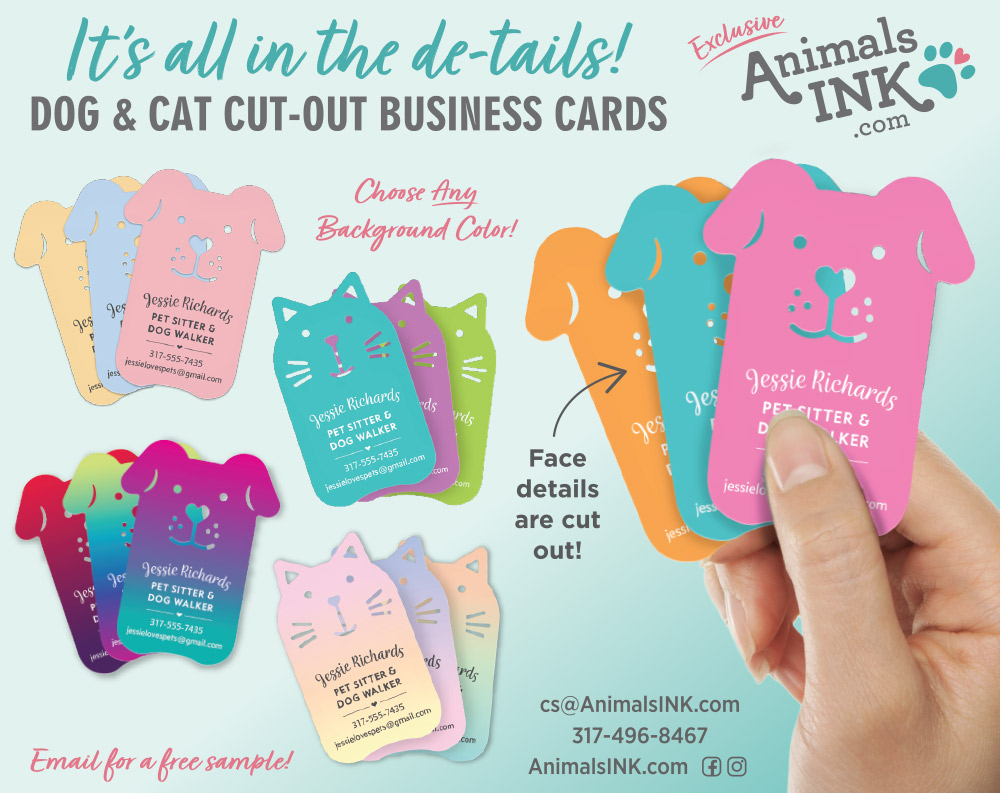
A groomer uses professional shears to carefully trim the stray hairs around the poodle's paw pads for a clean, rounded look.
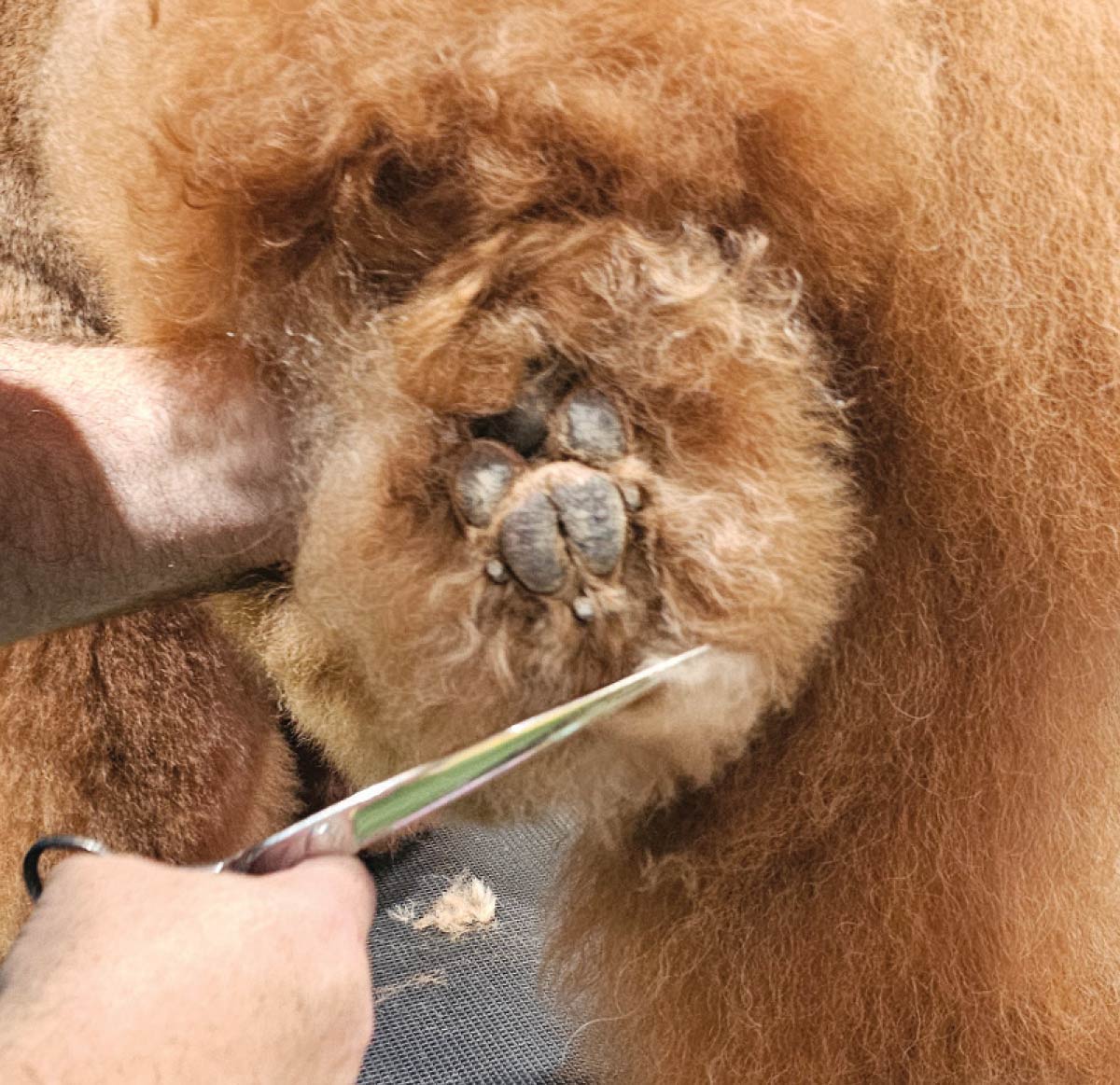
Curved grooming shears are used to shape the bottom of the poodle's leg fur into a plush, "bell-bottom" style rounded foot.
Fig. 5) Any good leg trim starts with a neat and structured foot bevel. With the foot off the table, make sure to trim the pad edges so your judge does not find a hair out of place, even between the toes. 

Fig. 6) Begin building your bevel up with a larger curved scissor at an angle that is very low, just barely deviating off of the same plane as the table.
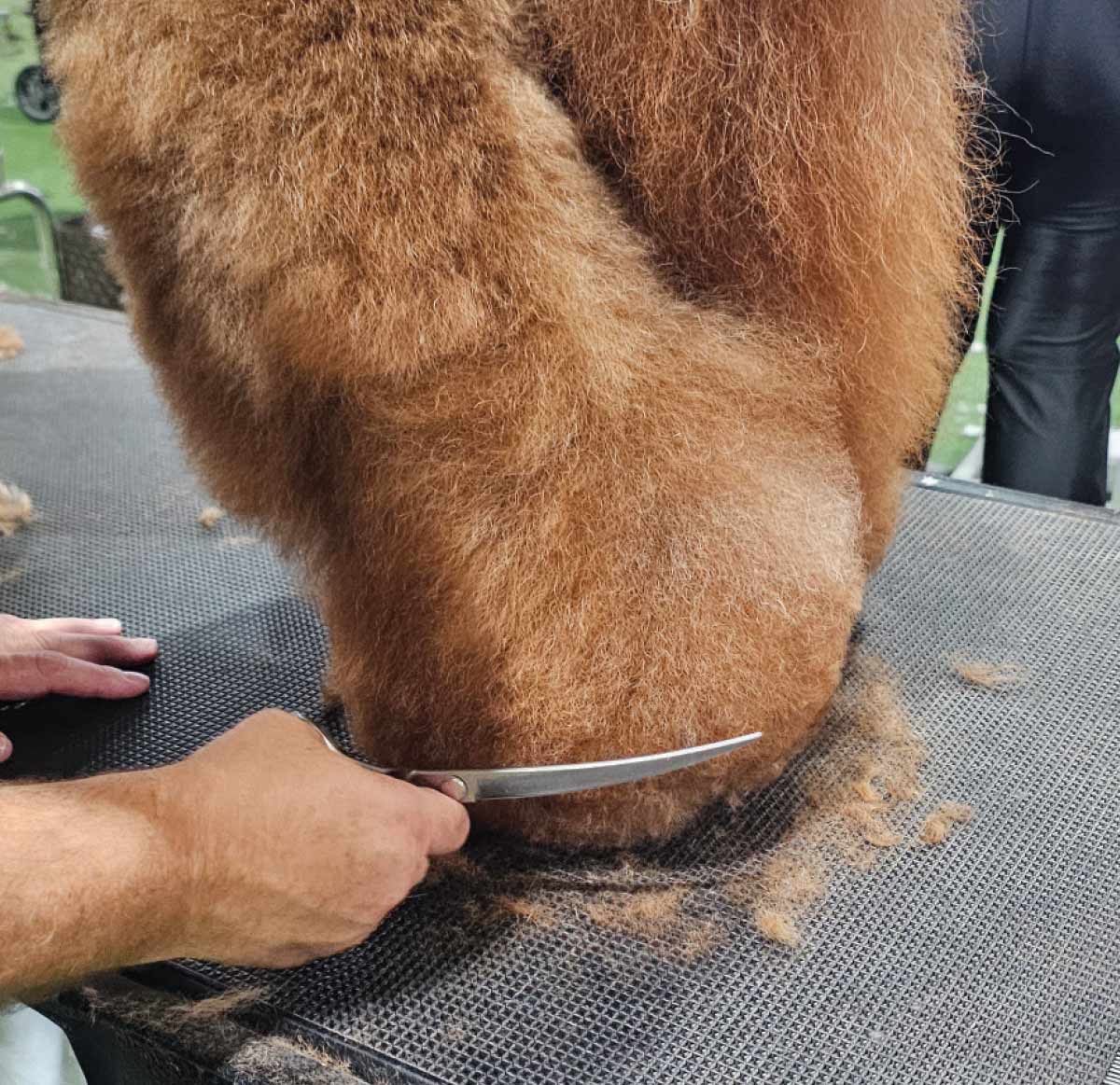
A groomer uses long straight shears to refine the circular shape of the poodle's hind leg fur against the grooming table.
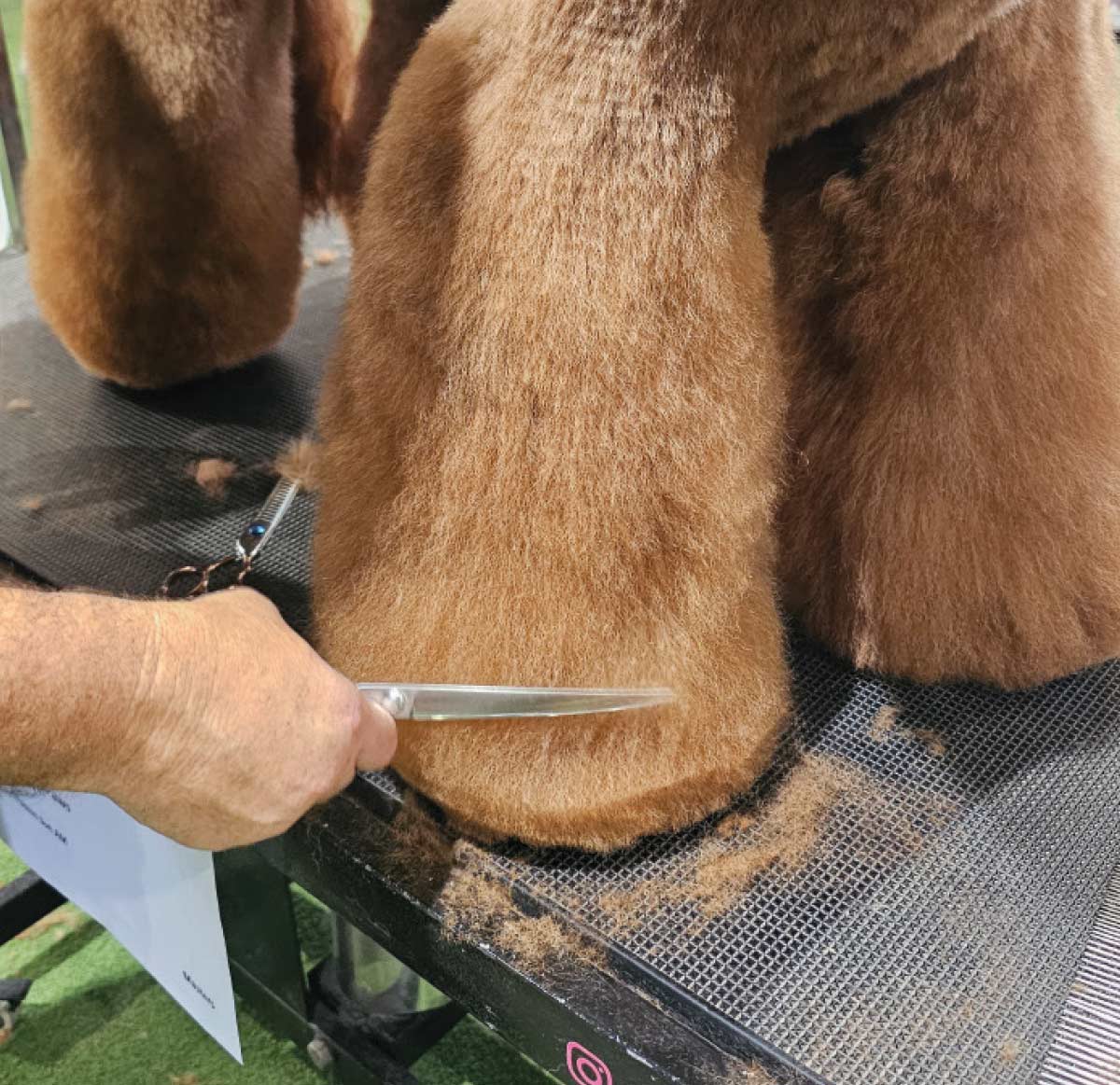
Close-up of a groomer's hand using straight shears to create a sharp, clean finish on the bottom edge of the poodle's front leg fur.
Fig. 7) While the premise is the same on the rear foot, be sure to really pick up and tighten that bevel from behind to help keep the dog from looking extra-long in body or bottom heavy in proportion. 

Fig. 8) As you work your way up the foot, you will also elevate the angle that your scissor is trimming to create a definitive lifted appearance off the ground.

Fig. 9) At this point you should still be paying extra-detailed attention to the armpit, turning the elbow out to help access and tidy such a tricky area. A thinner is a user-friendly approach to clearing this space. 

Fig. 10) Using chunkers or blenders helps set lines while taking off a good amount of weight, which is exactly what should be done to begin transitioning from the body clipper work down the thigh and into the foot bevel.
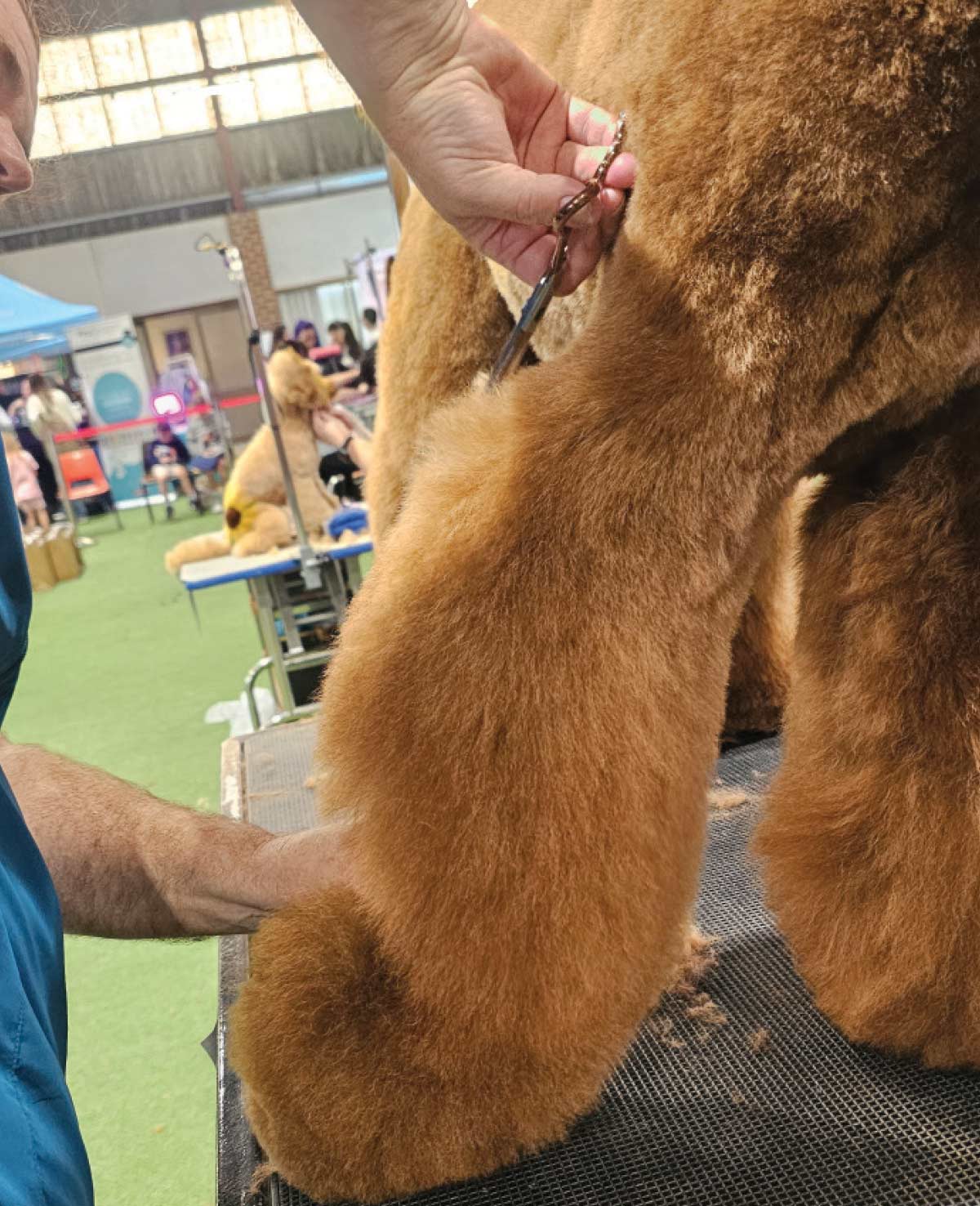
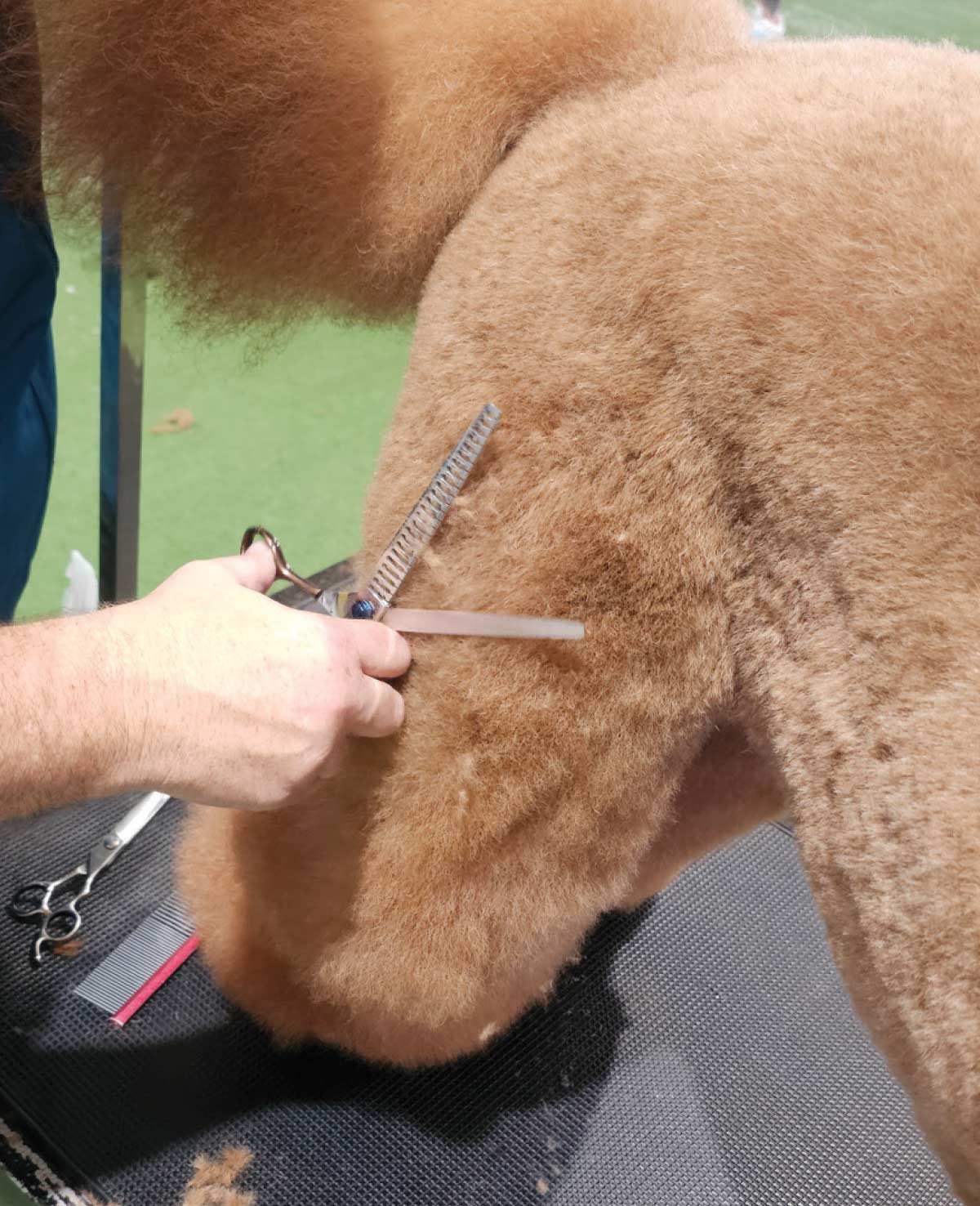
A groomer uses professional chunking shears to blend and smooth the dense brown fur on the poodle's back leg.
A close-up of a groomer using thinning shears to refine the poodle's hip area, removing bulk for a seamless "teddy" look.
Fig. 11) The longer the hair is, the more combing and re-trimming will be needed in order to attain the same finish as you did on shorter areas. Keep the finish plush and perky by using curves and straights as much as you can.

Fig. 12) Inspired by the Bichon, trim the head round while keeping the ears a part of the outline. On a dog this size, your large curved scissor will be your best friend.
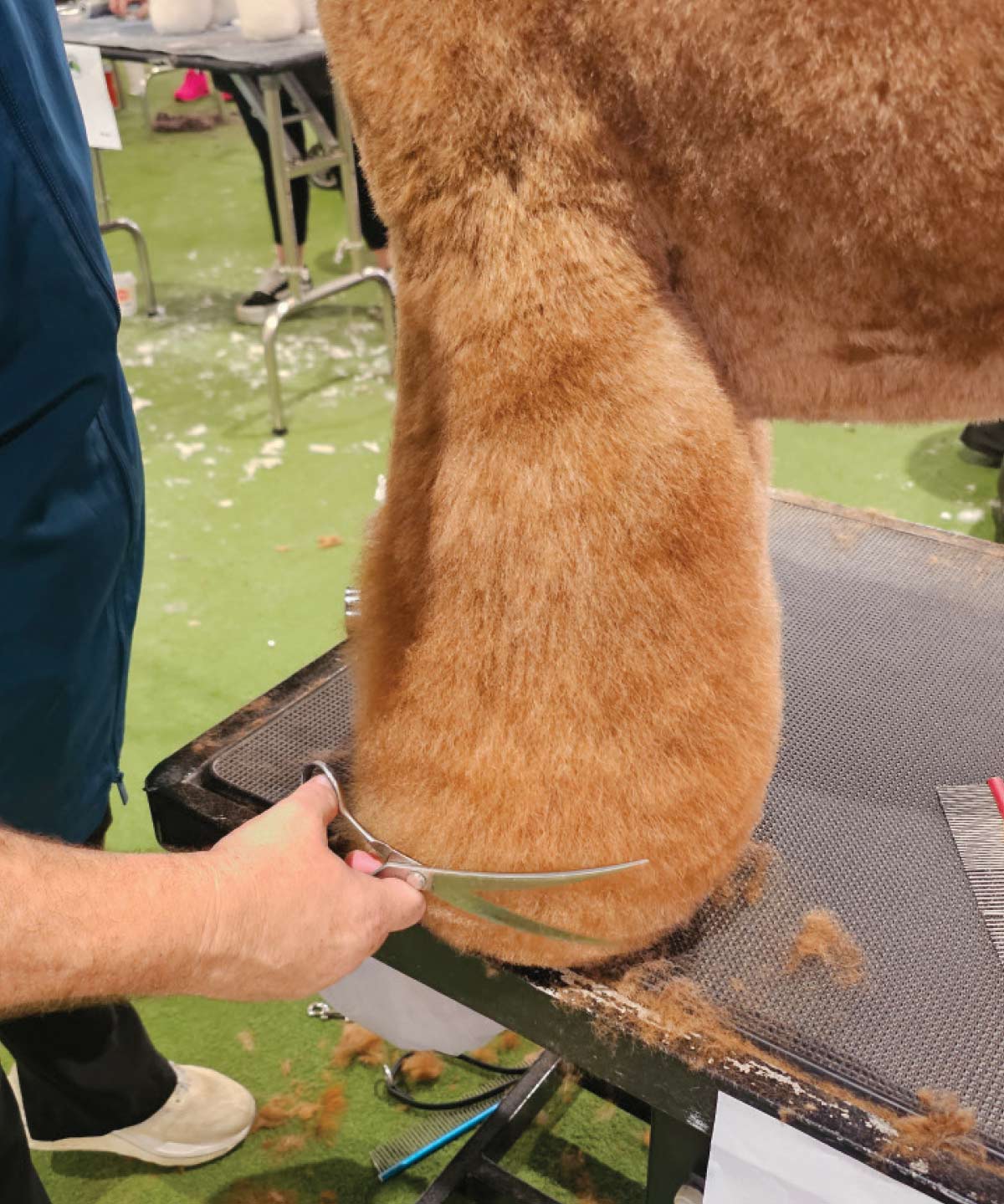
A groomer uses long curved shears to final-sculpt the plush, rounded shape of the poodle's rear leg during a competition.
A close-up of a groomer using straight shears to meticulously shape the poodle’s voluminous "teddy bear" face and muzzle.
Fig. 13) Now the time for “scissors down” has come and the judge will meticulously comb through your trim. All you can do now is smile, keep your dog confident and steady, and stay out of the judge’s way.

Contests can seem intimidating to most, and that’s why I would recommend a contest like this for new competitors. It allows you to do the trim you are most comfortable with and have fun making a cute dog cuter.
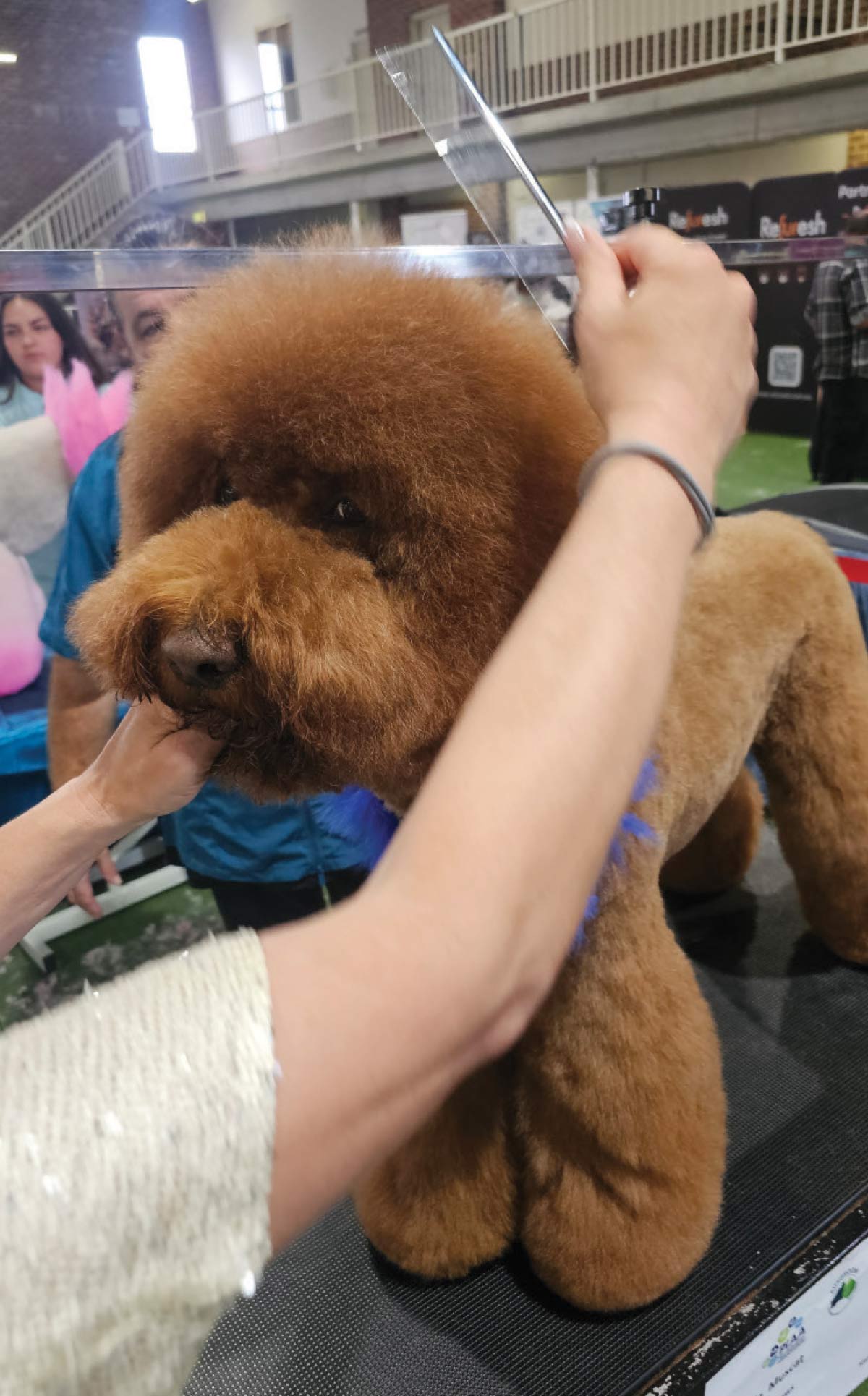
A groomer uses long straight shears to shape the top of the poodle’s head, creating a perfectly rounded and balanced topknot.