







Contents | May 2026
26

by Jennifer Bishop Jenkins

by Lynn Paolillo
ALSO INSIDE
todd@barkleigh.com
adam@barkleigh.com
gwen@barkleigh.com
rebecca@barkleigh.com
luke@barkleigh.com
laura@barkleigh.com
brandi@barkleigh.com
carlee@barkleigh.com
evan@barkleigh.com
allison@barkleigh.com
james@barkleigh.com
karin@barkleigh.com
christina@barkleigh.com
Daryl Conner
Amanda McGrath
Dr. Cliff Faver
Blake Hernandez
Melissa Viera
ALSO INSIDE
ON THE COVER
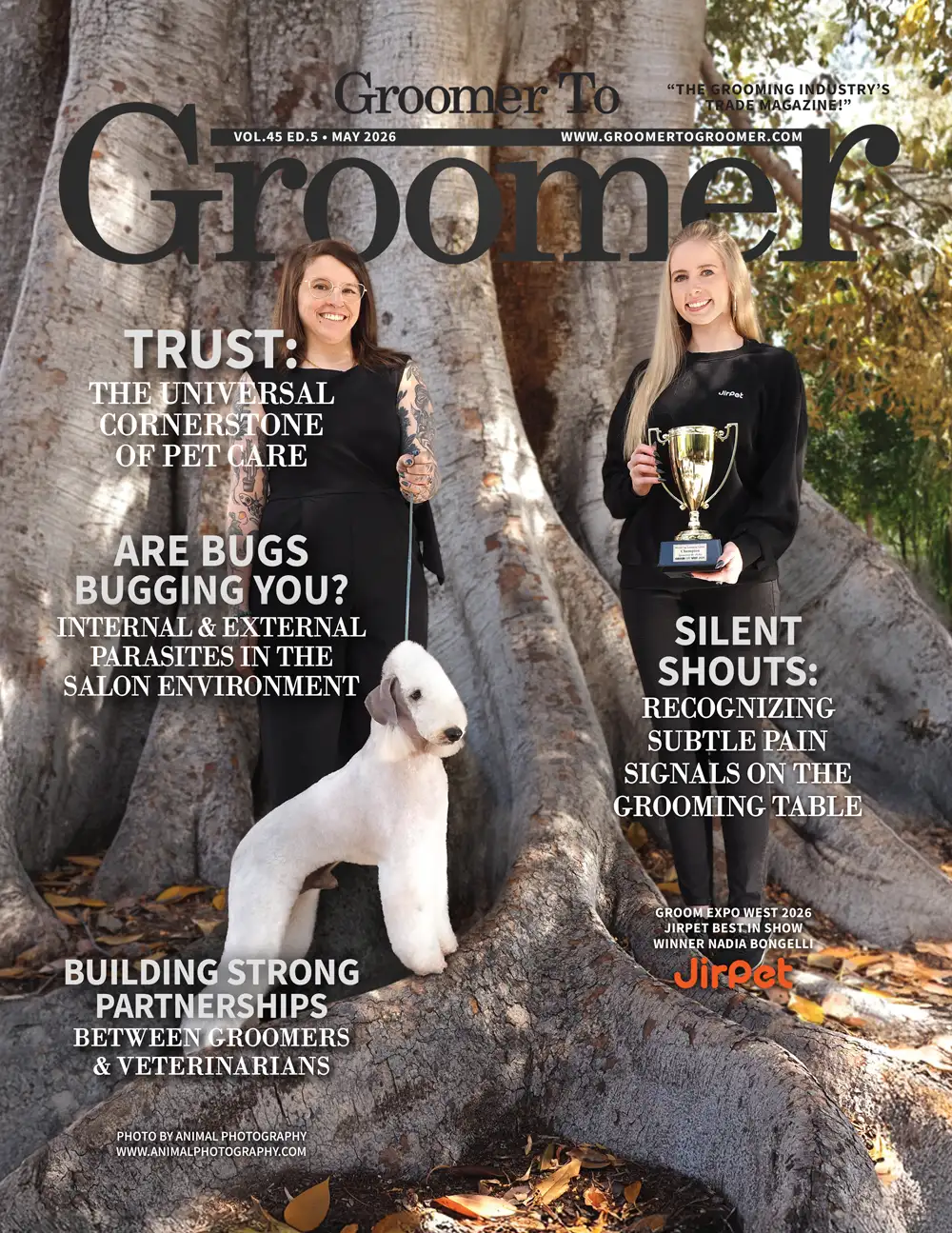
Photo by Animal Photography
www.animalphotography.com
May 2026 – Program Insert
- Andis2
- Animal Photography14
- AnimalsINK50
- Barkleigh Store – Release Forms25
- Barkleigh Store – The Pet Stylist Resource Guide19
- Barkleigh Store – The Ultimate Guide to Salon Creative9
- Barkleigh Updates32
- Best Shot Pet – UltraMAX7
- Best Shot Pet – UltraMAX18
- Best Shot Pet – UltraMAX38
- Cat Wash Center28
- Cosmos Bathing Systems33
- CU1000 Pet Shears45
- Direct Animal Products11
- Double K Industries3
- Electric Cleaner Company46
- Evolution Shears17
- Governor Insurance Agency35
- Groomer’s Choice4
- Happy Hoodie24
- IV San Bernard47
- John Stazko39
- Laube55
- Midmark37
- Mobile Grooming World56
- Odorcide51
- Paragon School of Pet Grooming23
- Pet Palette Distribution8
- PetBizInsurance.com10
- PetLift29
- Puppy Playground27
- Quadruped Pet Care15
- Stallergenes Greer43
- Stone Mountain Pet Products31
- Stylist Wear41
- Tidy Paws42
- Wag’n Tails53
- World Pet Association | SuperZooDigital Only
Featured Spotlight Profile
Midmark

























 ot long ago my dog, Lil Abner, started limping. Not a little hitch in his step; not a “he probably just stepped on something and it will be better in the morning”—this was one of those heart-dropping, stomach-sinking limps that makes you know that it’s more than just a minor sprain.
A trip to his veterinarian confirmed what I already suspected: Abner had a cruciate ligament injury to his back leg. Suddenly, I was faced with decisions—surgery, a brace, pain medication, conservative management. It wasn’t a decision I took lightly, but I also didn’t feel alone in it. I have complete trust in my veterinarian.
We talked through the options, discussed Abner’s age, activity level and overall health, and together we decided to try conservative treatment with a brace first. And I’m happy to say that Abner is healing well and is almost completely back to being his happy, bouncy, waggy self.
Somewhere in the middle of all the research, the appointments and the careful monitoring, I realized something very important: I never once questioned whether my veterinarian had my dog’s best interest at heart. I began thinking about the entire experience and about the total trust I had in her to guide me every step of the way in Abner’s treatment and recovery. That also made me think about the kind of trust our grooming clients place in us every single day.
They ask us questions such as, “How often should I brush my dog?” “What shampoo should I use at home?” “Do you know a good daycare?” and “Can you recommend a veterinarian?” because they believe that we know what we’re talking about. And the truth is, we should.
Whether we planned on it or not, professional groomers become educators by default. In many cases, we are the professional that pet owners see most frequently. We notice subtle changes over time, such as skin issues, ear problems, parasites, lumps and bumps. Sometimes we’re the first ones to say, “You might want to have your veterinarian take a look at this.” And that carries weight.
Just like I trusted my veterinarian to guide me toward the best decision for Lil Abner, our clients trust us to guide them toward what’s best for their pets. However, that doesn’t mean we diagnose, prescribe or step outside our scope, but it does mean we owe it to them to be informed and responsible with the advice we give.
Our industry is changing every day, and to keep up with it we need to continue learning. Attend educational seminars, trade shows, webinars and certification programs, subscribe to grooming publications and listen to podcasts.
Joining groomer organizations and building relationships with fellow groomers are also invaluable. And just as important is building relationships with veterinarians, trainers, daycare and boarding facility owners, and other pet professionals in your area. Those connections strengthen your knowledge base and your credibility.
Recommending a brush, shampoo or deshedding service might seem rather insignificant, but those recommendations directly affect a pet’s comfort and health and bolster the owner’s confidence in your expertise. Our credibility as groomers is built one interaction at a time. Clients remember when your advice helps their dog, and they also remember if it doesn’t.
Lil Abner’s limp reminded me just how vulnerable we feel when the well-being of someone we love is at stake. And that’s exactly how our clients feel when they hand us their pets.
Being a professional groomer isn’t just about skill with tools—it’s about being worthy of the trust that’s placed in us, respecting that trust enough to keep learning and to never stop caring.




by Stephenie Calhoun
 ou are picked up. Your feet leave the ground without warning. The air shifts. The smells change. You are placed on a surface that feels unfamiliar under your paws. A loop settles around your neck—not tight, not cruel, just there. You cannot step away. You cannot lower yourself. You cannot decide when this is over.
Before we ever pick up a brush, the dog is already navigating height, restraint, scent overload, noise and uncertainty. The grooming table is not neutral territory—it is a place where balance matters, where leverage matters and where small changes in pressure are amplified.
When a body feels unstable, it prioritizes safety over everything else—not obedience, not manners, but safety. Most dogs are not objecting to grooming, they are responding to discomfort.
ou are picked up. Your feet leave the ground without warning. The air shifts. The smells change. You are placed on a surface that feels unfamiliar under your paws. A loop settles around your neck—not tight, not cruel, just there. You cannot step away. You cannot lower yourself. You cannot decide when this is over.
Before we ever pick up a brush, the dog is already navigating height, restraint, scent overload, noise and uncertainty. The grooming table is not neutral territory—it is a place where balance matters, where leverage matters and where small changes in pressure are amplified.
Now imagine you have mild arthritis, a tight muscle or a pinched nerve you did not know was there. That quick flinch or tiny head jerk makes sense when you consider what the nervous system is protecting.
When the cervical spine is stretched or compressed, the body reacts quickly to guard the spinal cord and airway. That reaction is reflexive. It is not drama—it is protection.
When we lift a beard high to straighten a line, we change the angle of the neck and shift balance. We may not mean to create strain, but strain can still occur.
When we extend a rear leg straight back or out to the side, we rotate the pelvis and load the lower spine. The opposite limb absorbs more weight and stabilizing muscles engage hard to keep the body upright. If the dog has tight hips, early arthritis, a previous cruciate injury or simply weakness from age, the body feels that shift immediately and responds by shifting weight.
That shift is not stubbornness, it is redistribution. The body is unloading discomfort and trying to maintain balance. If we continue pushing past a comfortable range, pain increases. Sometimes the growl is not attitude but a boundary.
Hair follicles are rich with nerve endings, and sustained tension activates those receptors repeatedly. The discomfort builds gradually, which is why a dog may tolerate brushing for a minute or two before reacting. The reaction feels sudden to us, but the pain was cumulative.
When we are working through mats under tension, we are applying leverage close to the skin. Even when we are careful, the body feels that pull. If the dog cannot move away or communicate clearly, the nervous system will eventually do it for them.
Stillness can feel safer than fighting when fighting has not worked. A still dog is not always a comfortable dog. Compliance is not always consent.
We cannot remove every discomfort from grooming; some level of manipulation is necessary. Maintenance requires positioning, but we control height, angle, duration and pressure. And that is not a small responsibility.
We can lower the leg a few inches, support under the elbow instead of pulling from the wrist, let the neck return to neutral between passes or shorten the time a joint is extended. Work within range instead of at the edge of it.
Most dogs are trying very hard to cooperate with us. Our job is not just to finish the haircut but to notice when cooperation turns into coping. The body whispers before it shouts. The question is whether we are watching closely enough to hear it.

 oes your skin start crawling when someone talks about parasites? Do you hesitate when a dog comes in with ticks or a cat has fleas? Most of us would rather not deal with them; however, in the pet care industry, exposure is part of the job. Avoiding the subject doesn’t reduce the risk—education, awareness and consistent prevention do.
Parasites come from two primary sources: the environment and direct or indirect contact with an infected animal. In our field, we commonly divide them into internal and external parasites. Internal parasites include roundworms, hookworms, whipworms, tapeworms, Giardia and heartworms. External parasites include fleas, ticks, lice and mites such as demodectic, sarcoptic, cheyletiella and otodectes (ear mites). As groomers and pet professionals, we are routinely exposed to both types.
Most internal parasites, with the exception of heartworms, are transmitted through the fecal-oral route. That means parasite eggs are shed in feces and ingested by another host through contaminated surfaces, soil, water or grooming behavior.
Some people believe they are protected because they wear gloves when cleaning feces. However, exposure doesn’t stop there. Bathing a pet’s rear, trimming sanitary areas, expressing anal glands or simply handling a coat that has been licked can all present risks. Cross-contamination can occur through towels, grooming tools, tables, kennels, clothing and even our phones.
Roundworms are one of the most concerning internal parasites. In dogs, they migrate through the body before settling in the intestines. In humans, however, we are abnormal hosts. If eggs are accidentally ingested—often by young children—the larvae can migrate through tissues rather than remain in the digestive tract. In rare but serious cases, they may affect the eyes or brain, potentially leading to blindness or neurological complications. While these cases are not common, they highlight the importance of strict hygiene. Thorough handwashing, avoiding face-touching and changing clothes before going home are simple but powerful precautions.
With fleas, what you see on the pet represents only about 5% of the infestation. The other 95%—eggs, larvae and pupae—are in the environment.
Modern monthly flea preventatives are effective, but most work by killing fleas after they bite. That means fleas can still jump onto a treated pet—and sometimes onto us. Many pets have an allergic reaction to the bite/saliva and can still react even though they are on a preventative. Regular vacuuming, laundering bedding, disinfecting grooming areas and educating clients about complete flea control are critical.
Ticks are commonly found in wooded areas, tall grass and even suburban yards. They latch onto animals as they brush past vegetation. Many tick preventatives also kill ticks after attachment rather than prevent bites. Ticks can transmit serious diseases to pets and humans, making routine checks important. A single female tick can lay thousands of eggs, and some species can survive months without feeding. Therefore, vigilance matters.
Lice are less common but do appear in certain regions. They are similar in size to fleas but flatter and unable to jump. Fortunately, lice are host-specific—dog lice stay on dogs, and human head lice stay on humans. They may crawl onto us temporarily but cannot reproduce. Simple tools, like placing debris on white paper and using a phone camera to zoom in, can help distinguish parasites from dander or skin flakes.
Because we work in a high-exposure environment, prevention must be consistent. Wash hands between pets, disinfect tools and surfaces, launder towels in hot water, avoid bringing work shoes into your home, change clothes after heavily infested cases and keep personal items away from grooming areas. These habits protect not only us but also our families and our own pets.
Parasites are not a sign of neglect. Even well-cared-for pets can pick them up from parks, trails, beaches or other animals. Our responsibility is not to judge but to recognize, manage and prevent spread.
Parasites may always make us a little uncomfortable, and that reaction is natural, but knowledge turns fear into control. By understanding how parasites spread and committing to strong hygiene and environmental practices, we can dramatically reduce risk. In this industry, awareness is not optional; it is part of professionalism.
Dr. Cliff Faver graduated with a BS in Biology/BA in Chemistry before getting a Veterinary degree in 1987. He is the past owner of Animal Health Services in Cave Creek, Arizona and now the US distributor for Iv San Bernard products, teaches the ISB Pet Aesthetician Certification program, and speaks internationally on hair and skin. His passion is to merge groomers and veterinarians to aid in helping and healing pets. He is also a member of AVMA, AAHA, AZVMA, Board member with Burbank Kennel Club, and has served on Novartis Lead Committee, Hill’s International Global Veterinary Board, and a Veterinary Management Group.
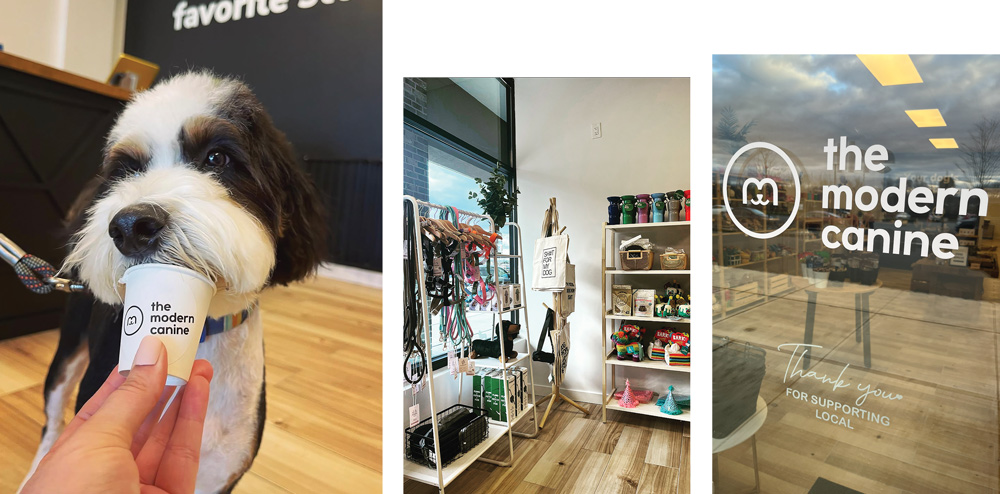
A Salon & Store Built with Intention
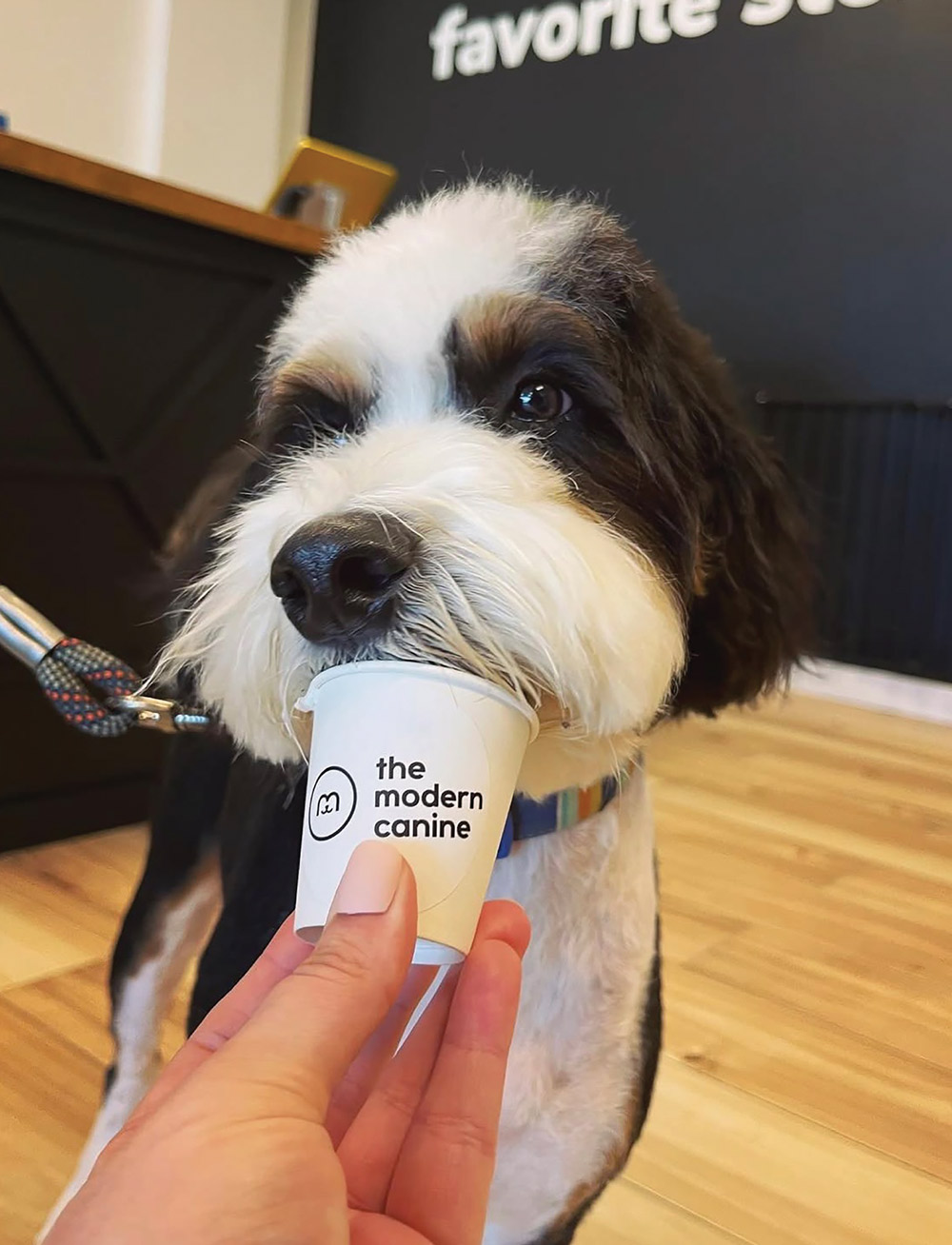
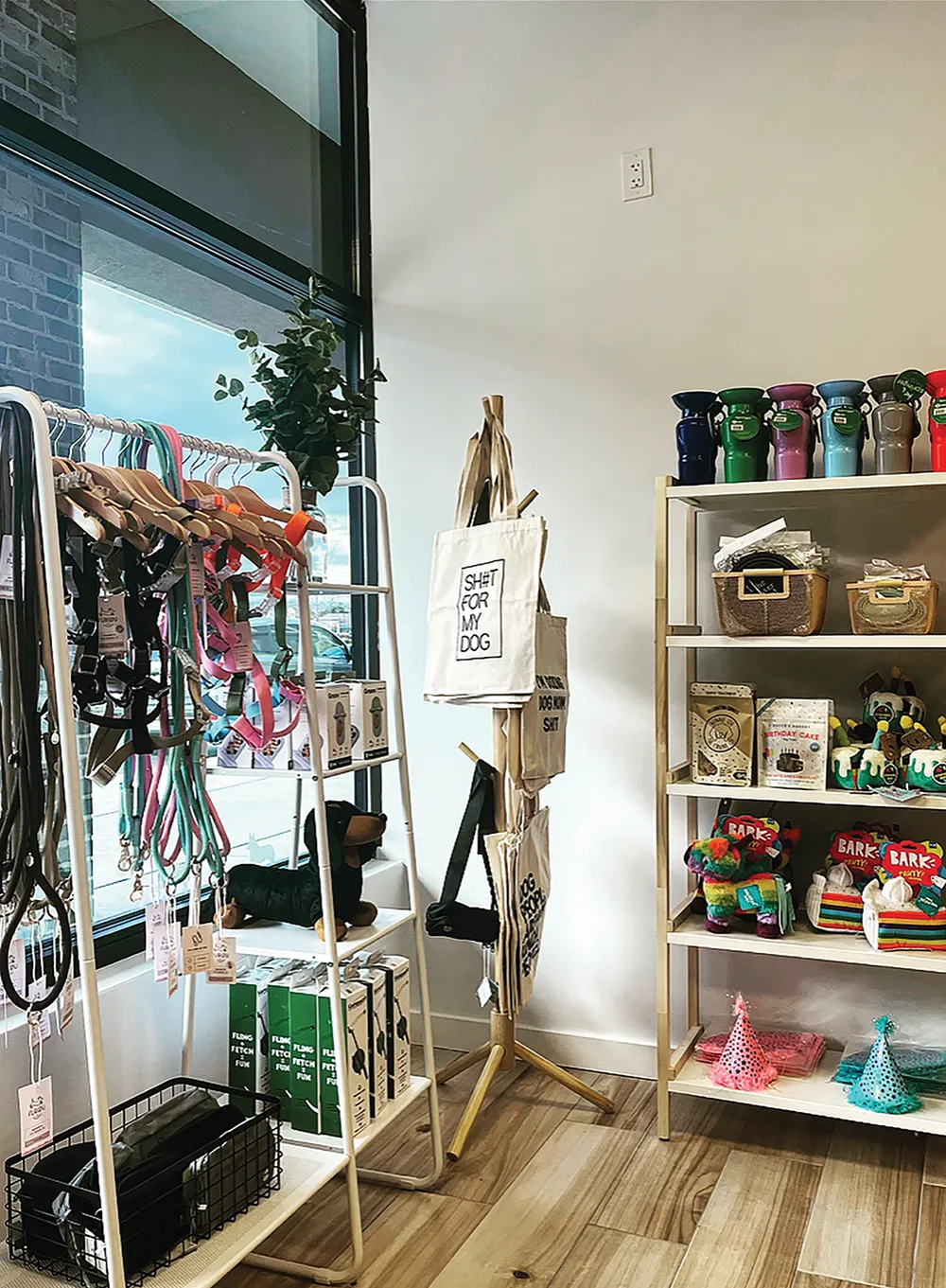
Photos provided by The Modern Canine
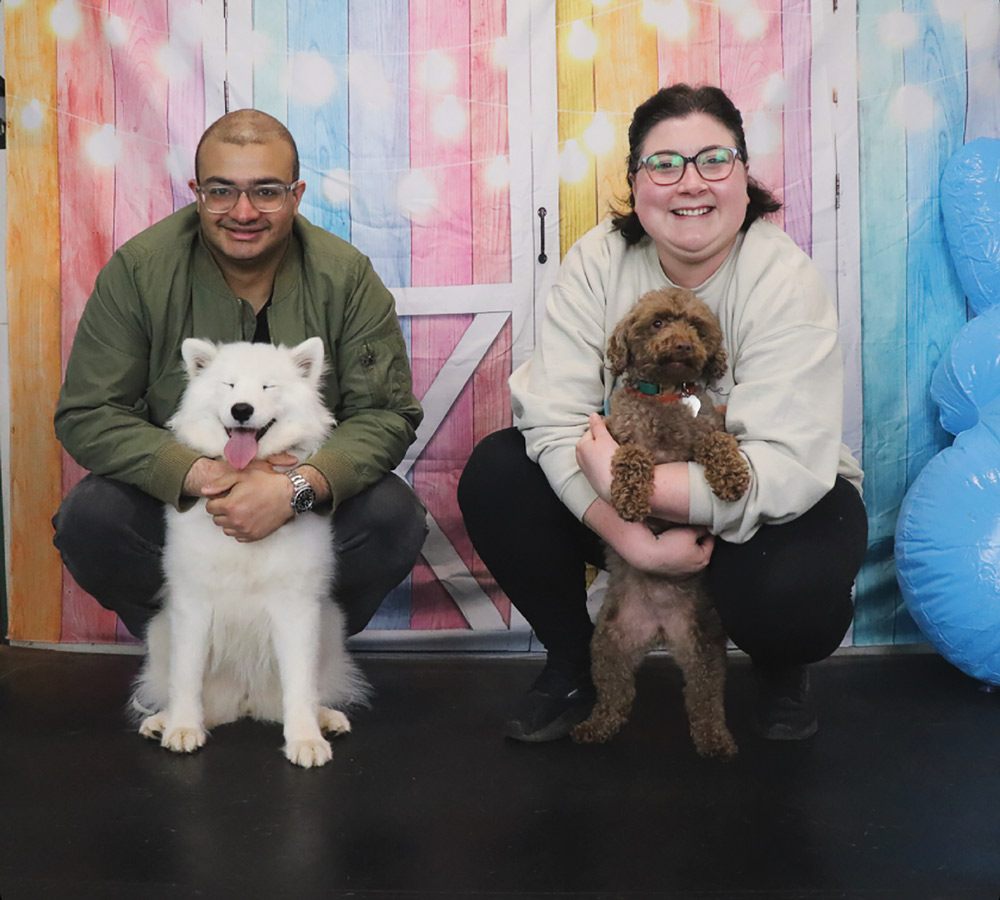
 hen Monika Rynkowski and Arjun Singh decided to open The Modern Canine in 2023 in Belle Mead, NJ, they weren’t seasoned groomers chasing a lifelong career behind the table; they were dog owners who believed pet care could feel calmer, more intentional, and more respectful for both dogs and groomers. But for Monika, the journey into the pet industry began long before the salon doors opened.
“Dogs have always been something I’ve been passionate about since I was a kid,” she shares. “I went to school for something that has nothing to do with animals. I worked in a corporate job. I hated it.”
Encouraged by Arjun, Monika pivoted just before COVID and launched a dog walking and pet sitting business. Over the next few years, she built a loyal client base and developed a deeper understanding of what pet owners truly value—trust, communication and individualized care. That experience didn’t just give her industry insight, though, it built relationships that would later help support the couple’s grooming venture.
The idea for The Modern Canine came after a routine grooming appointment for their own dogs. Walking out of a franchise salon, Arjun couldn’t shake the feeling that something was missing.
“We just saw a lot of places that were doing grooming and felt like we could do it better,” he explains. “Dogs shouldn’t be there for seven or eight hours for a 20-pound dog. In and out. Less stress.”
Photos provided by The Modern Canine
hen Monika Rynkowski and Arjun Singh decided to open The Modern Canine in 2023 in Belle Mead, NJ, they weren’t seasoned groomers chasing a lifelong career behind the table; they were dog owners who believed pet care could feel calmer, more intentional, and more respectful for both dogs and groomers. But for Monika, the journey into the pet industry began long before the salon doors opened.
“Dogs have always been something I’ve been passionate about since I was a kid,” she shares. “I went to school for something that has nothing to do with animals. I worked in a corporate job. I hated it.”
The idea for The Modern Canine came after a routine grooming appointment for their own dogs. Walking out of a franchise salon, Arjun couldn’t shake the feeling that something was missing.
“We just saw a lot of places that were doing grooming and felt like we could do it better,” he explains. “Dogs shouldn’t be there for seven or eight hours for a 20-pound dog. In and out. Less stress.”
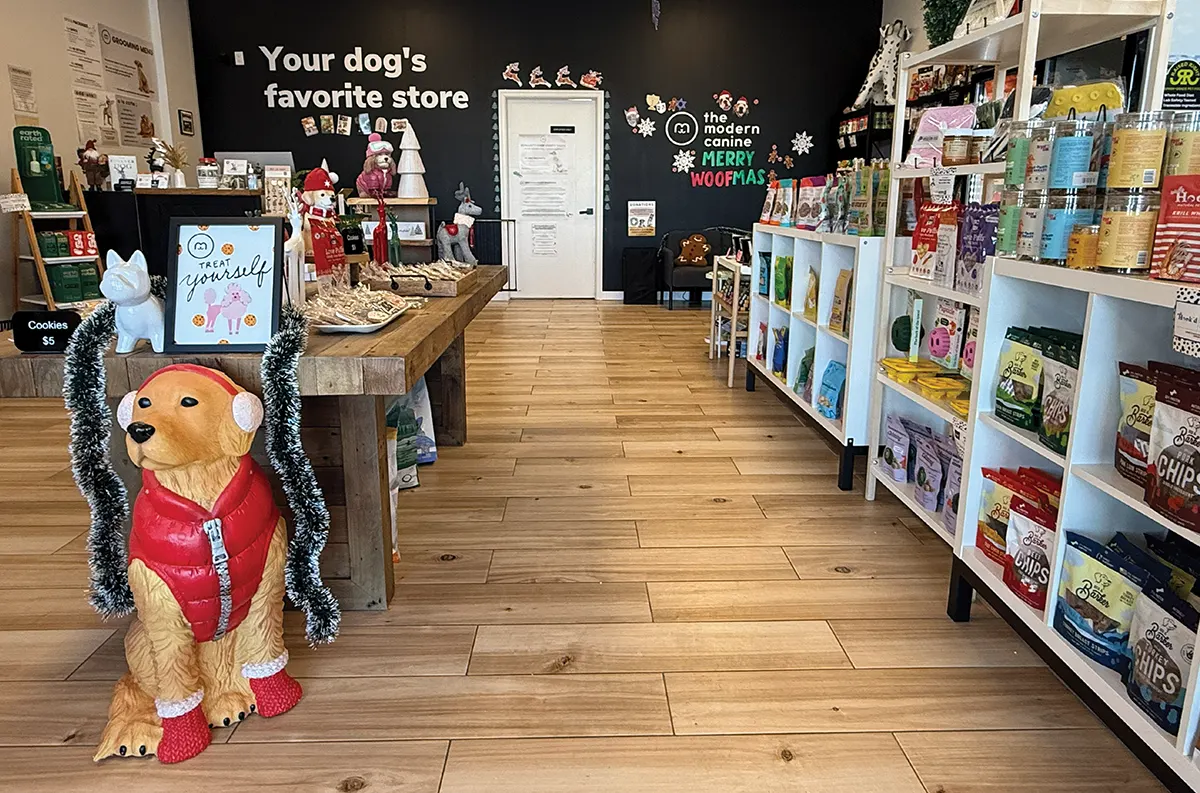
Interestingly, the location came before the fully formed business plan. The couple found a 1,750-square-foot space that felt right and began negotiating the lease while continuing to refine their concept. Even before officially signing, Arjun was teaching himself about plumbing requirements, electrical needs and water systems so they could manage buildout costs. Together, they assembled equipment, built out tubs and worked late nights preparing the space themselves.
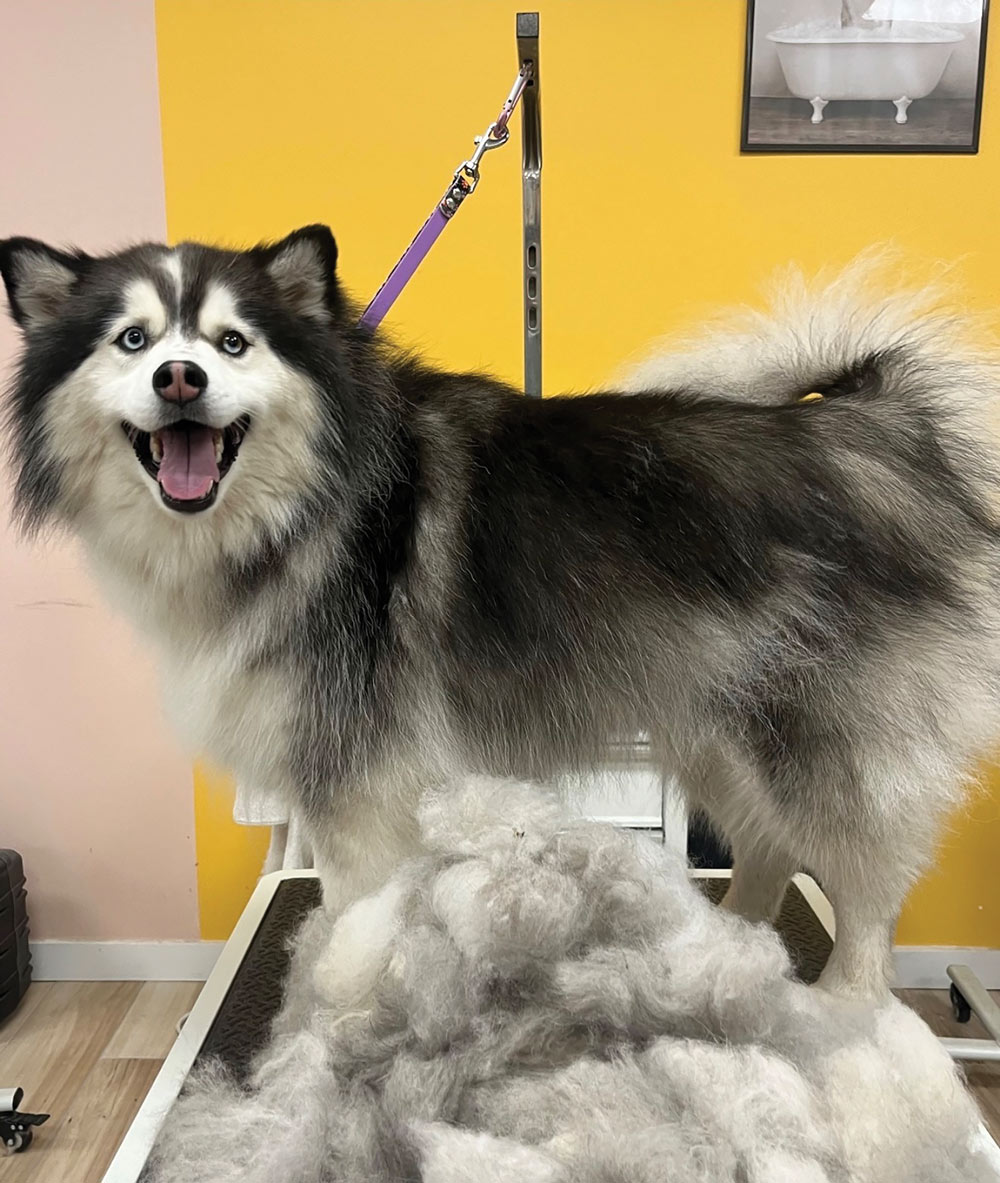
With more than 20 years of experience, Lisa became instrumental in shaping the salon’s grooming operations. While the couple focused on overall business structure and customer experience, Lisa helped establish workflow, equipment decisions and day-to-day grooming standards.
“She played a big role in helping us understand how things should be done,” Monika shares. “It really felt like a partnership.”
Today, The Modern Canine employs six groomers, and scheduling is handled collaboratively rather than dictated by quotas. The couple is clear that they did not want a numbers-driven environment.
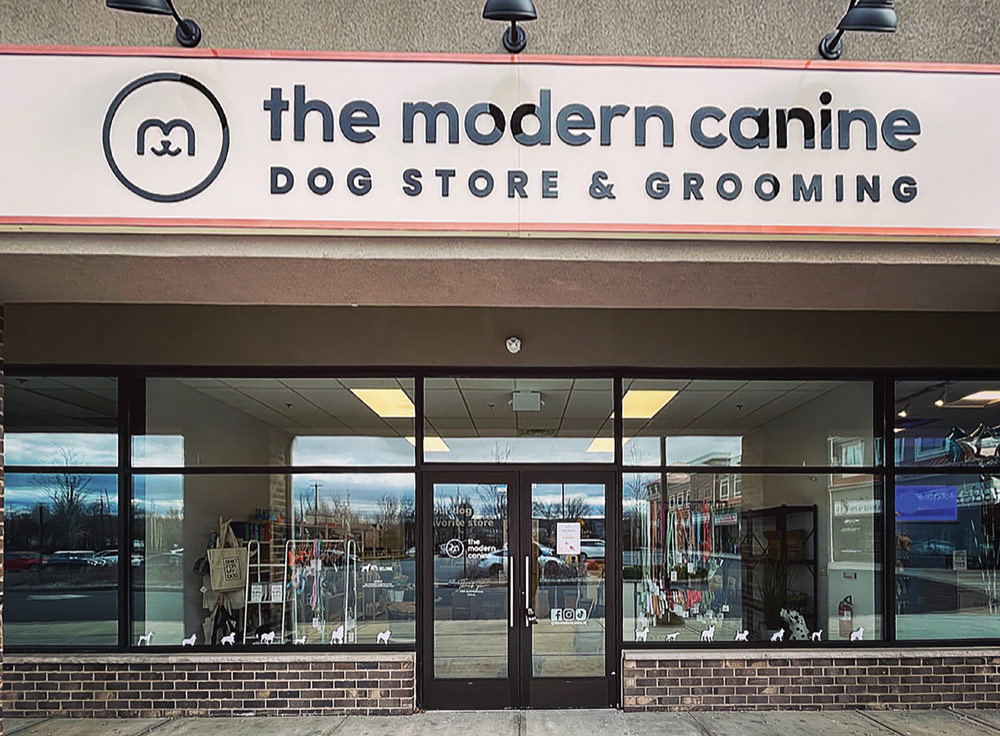
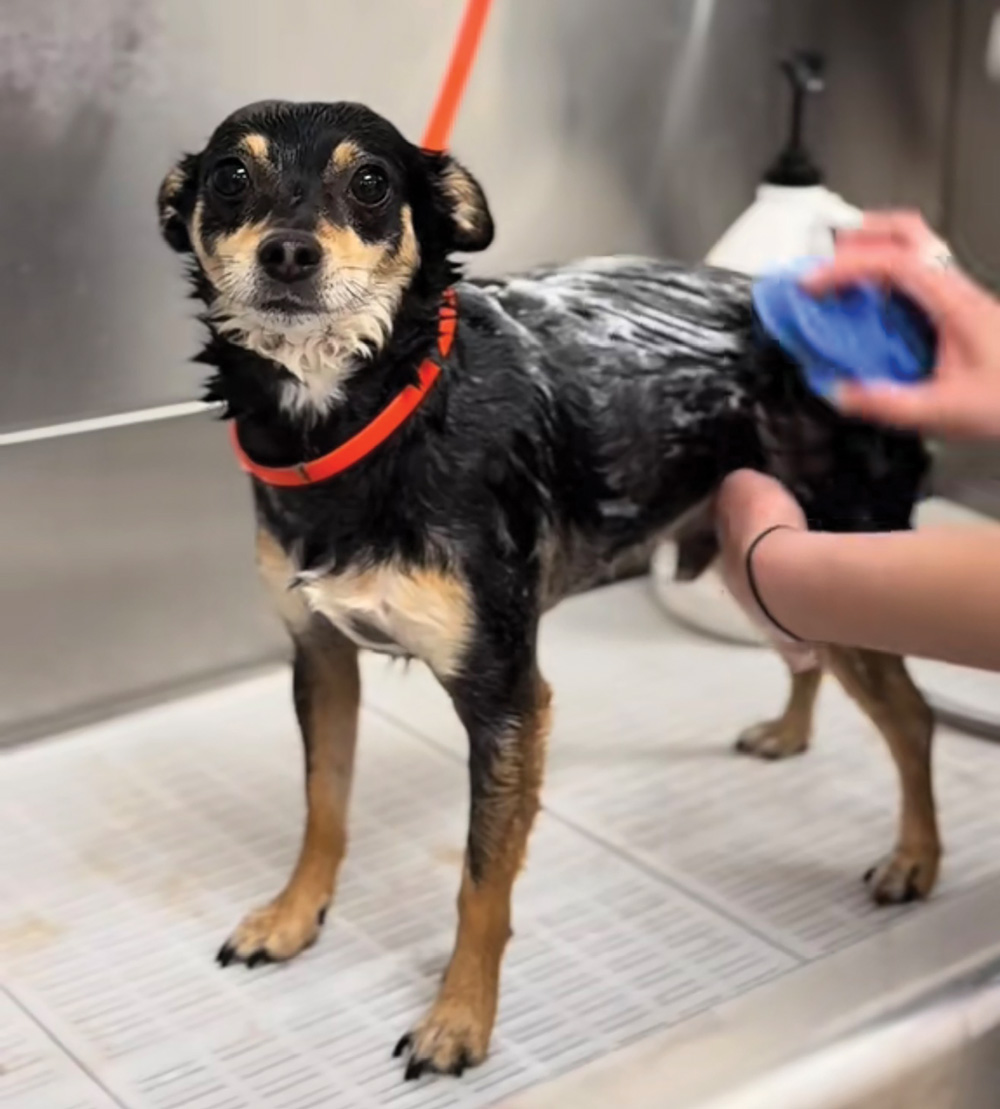
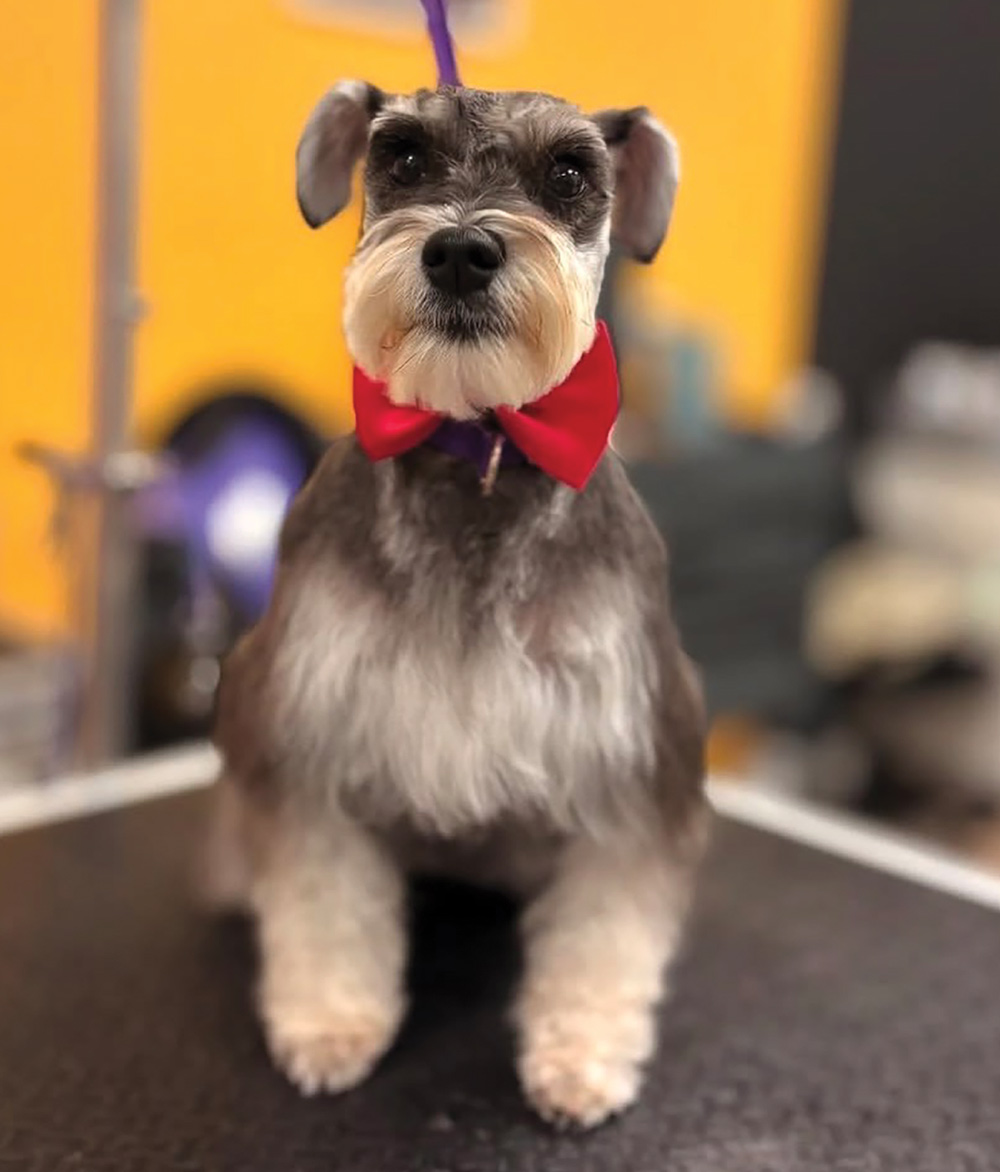
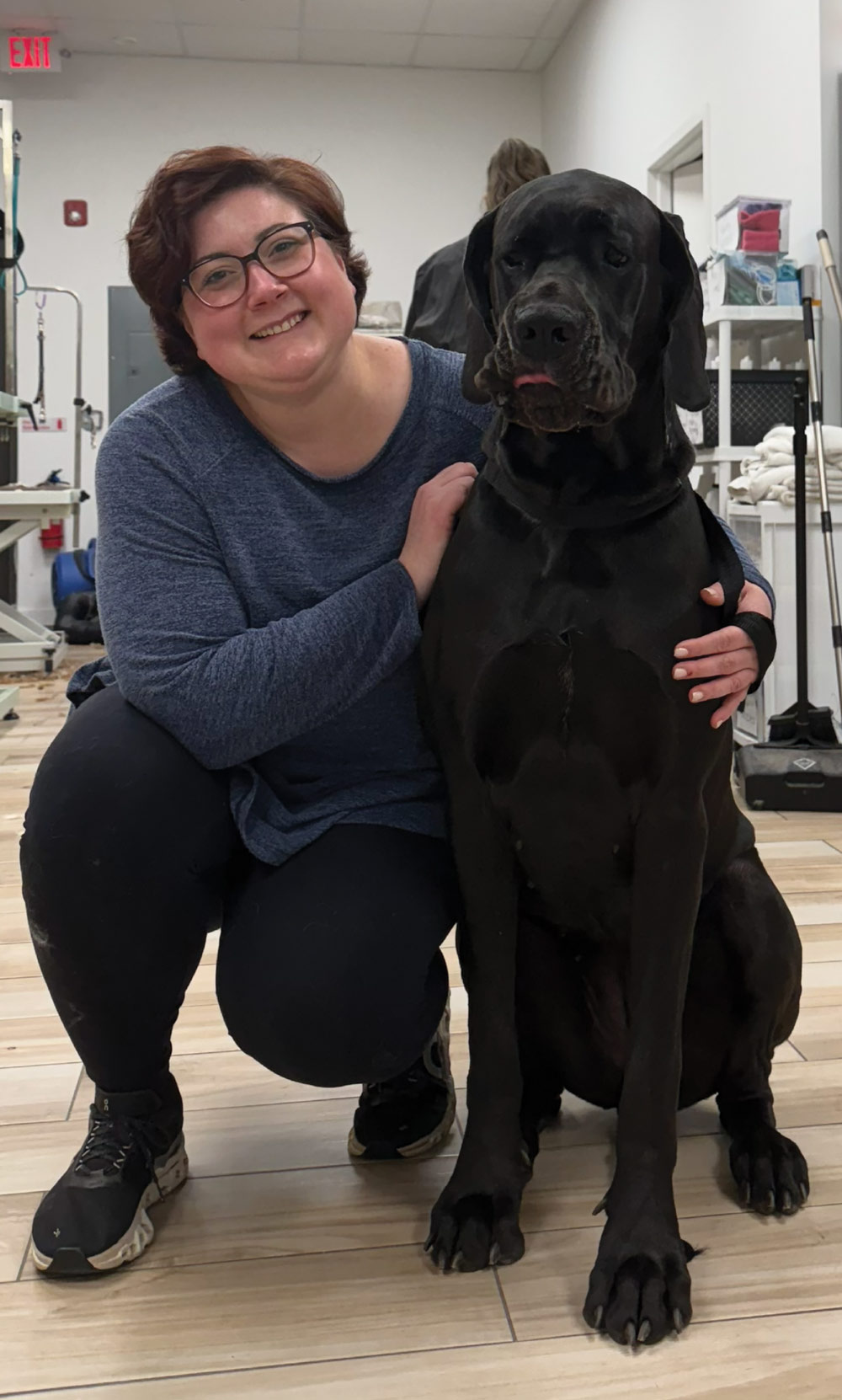
“The biggest thing for us was putting the groomers first rather than just seeing dollar figures,” Arjun adds.
That philosophy has helped them build a team culture with open communication and minimal drama, something Monika knows is often discussed within the grooming community. And because the owners are physically present every day, they are able to address concerns in real time rather than from a distance.
“Me and Arjun are there every single day,” Monika explains. “If something isn’t working, we can adjust it right then.”
While they don’t market a specific niche, they do consider their team’s individual strengths. Some groomers enjoy working on poodles while others prefer certain coat types or temperaments. Matching dogs with groomers who genuinely enjoy working with them has become part of the salon’s rhythm.
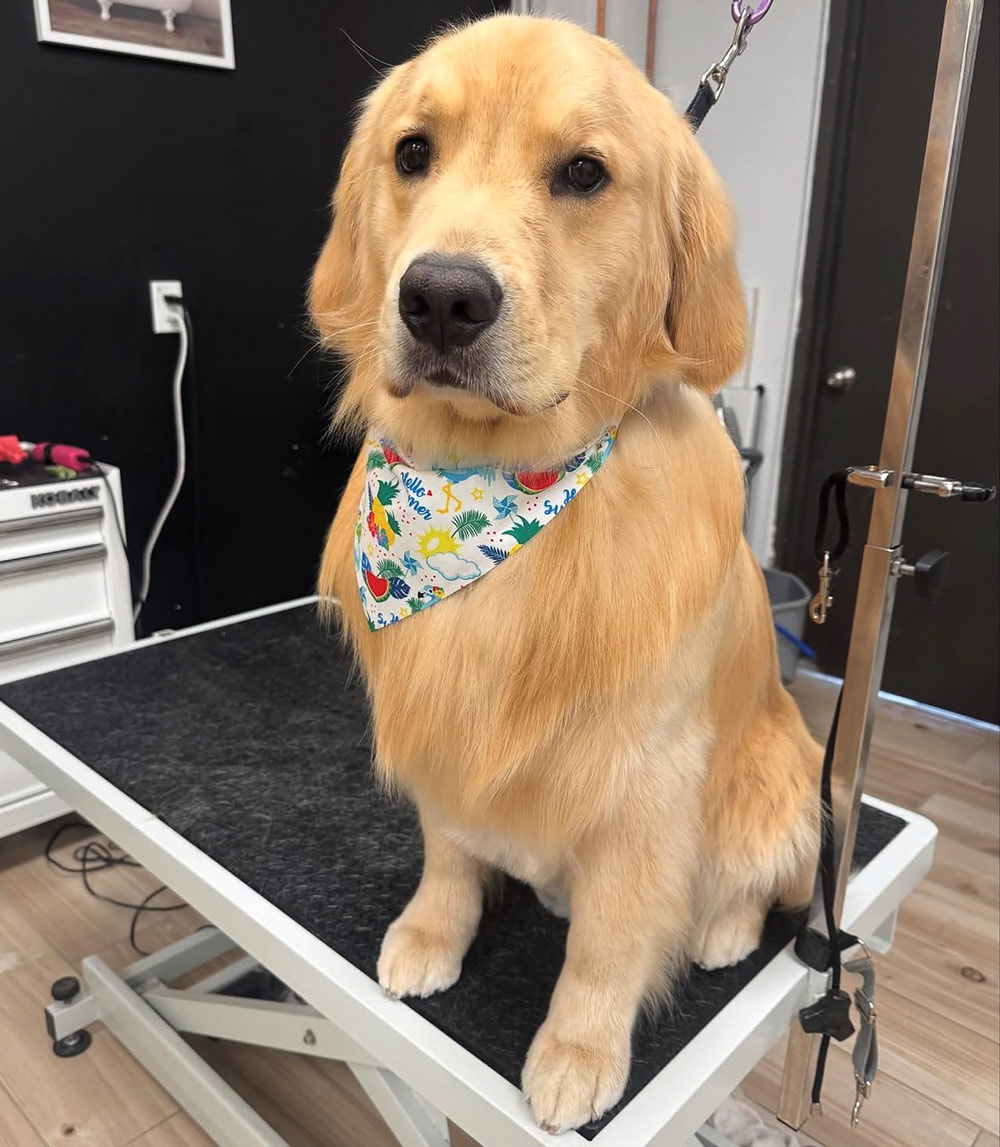
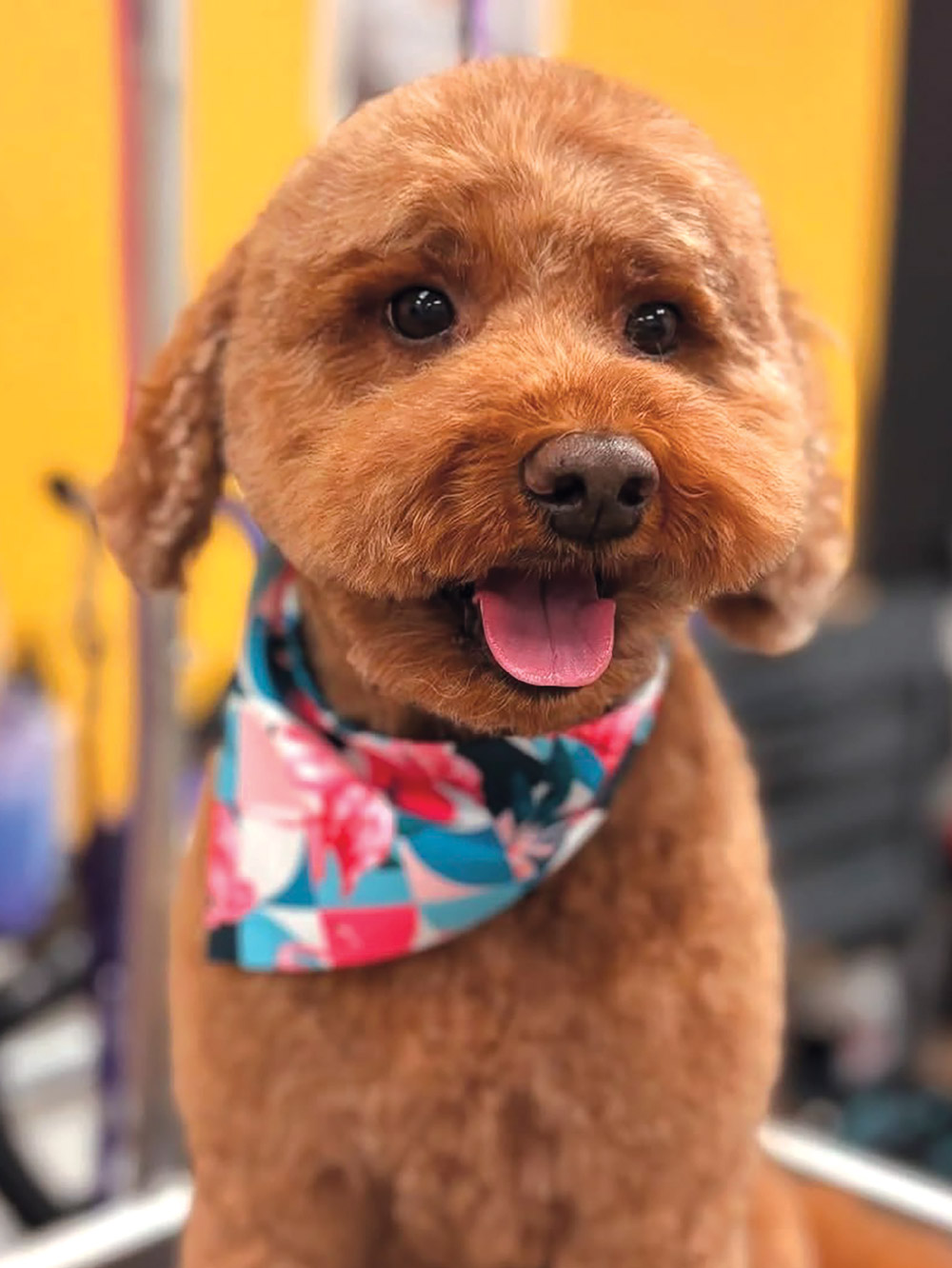
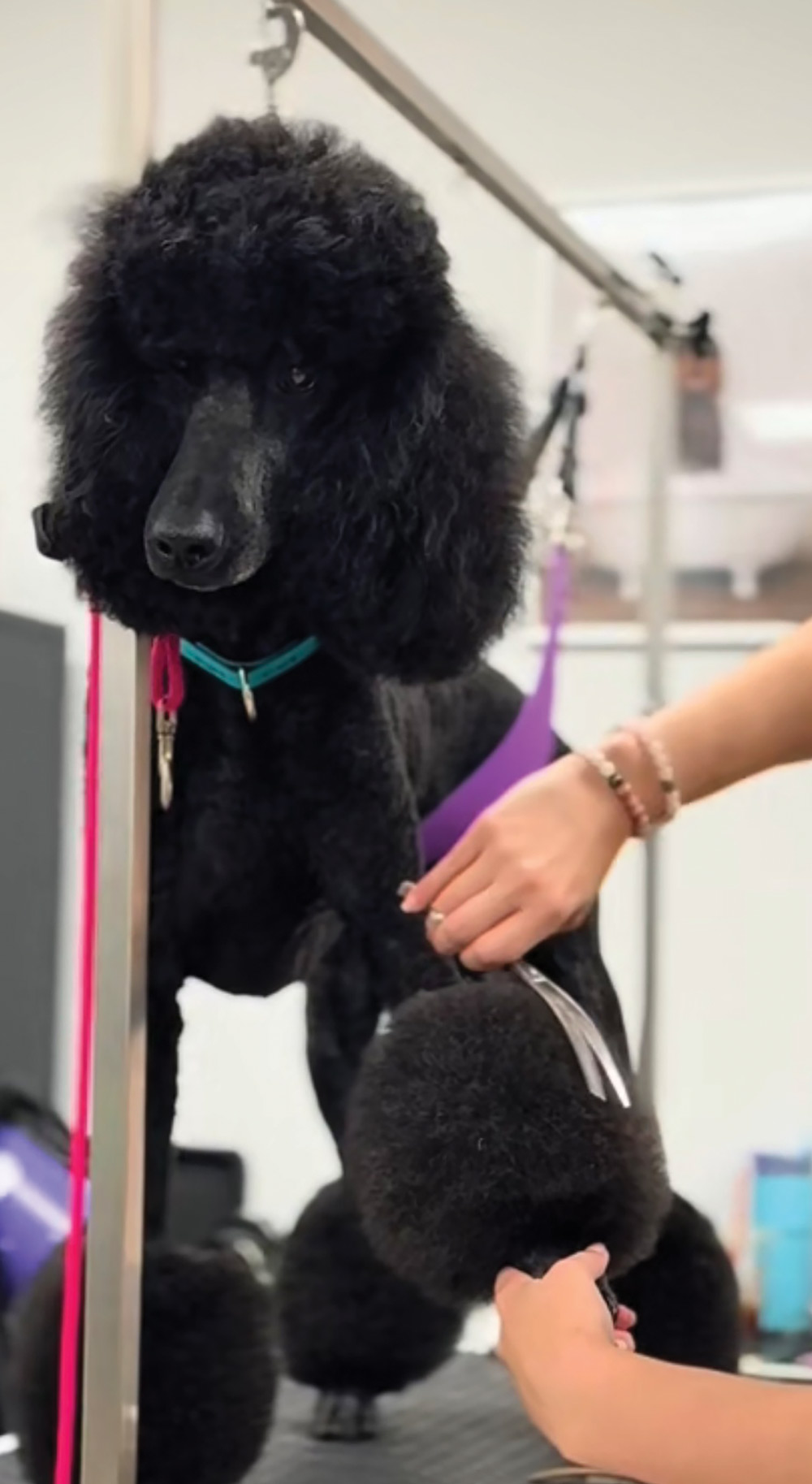
“I love seeing when dogs start with us and they’re really anxious, then you see them get more comfortable with each visit.” she shares.
Because The Modern Canine also includes retail, balancing both sides of the business requires thoughtful boundaries. Monika describes it as running two related but distinct operations. One decision they made early on was not to pressure groomers into selling retail products. Having seen that model elsewhere, they wanted to keep responsibilities clear.
“The groomers are there to groom,” Monika stresses. “I don’t need them worrying about selling food or supplements.”
“We don’t push,” Arjun adds. “If someone walks out without buying anything, that’s fine. If it’s right for them, they’ll come back.”
Their marketing has followed that same organic philosophy. Arjun’s background in branding allowed them to build visibility before they even opened. They established social media accounts months in advance, engaged in local online groups and prioritized strong Google presence. Many of Monika’s former dog walking clients naturally transitioned into grooming customers. Even now, much of their growth comes from word-of-mouth referrals and online reviews.
After two and a half years, the couple is thinking ahead. A second location is a long-term goal, ideally within a short drive of their current shop. If they expand, they hope to incorporate everything they’ve learned about layout efficiency, workflow and space planning. But growth will only happen if they can maintain the culture they’ve worked intentionally to build.
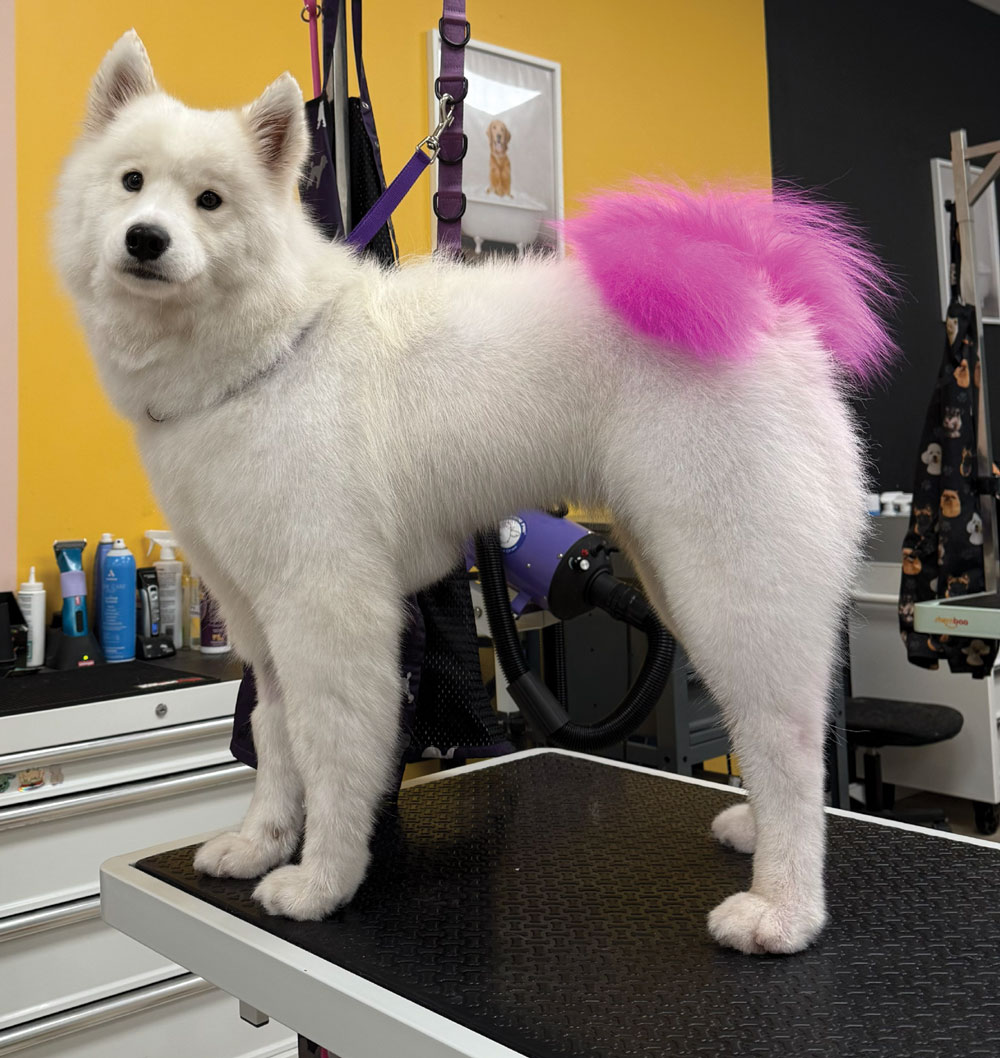
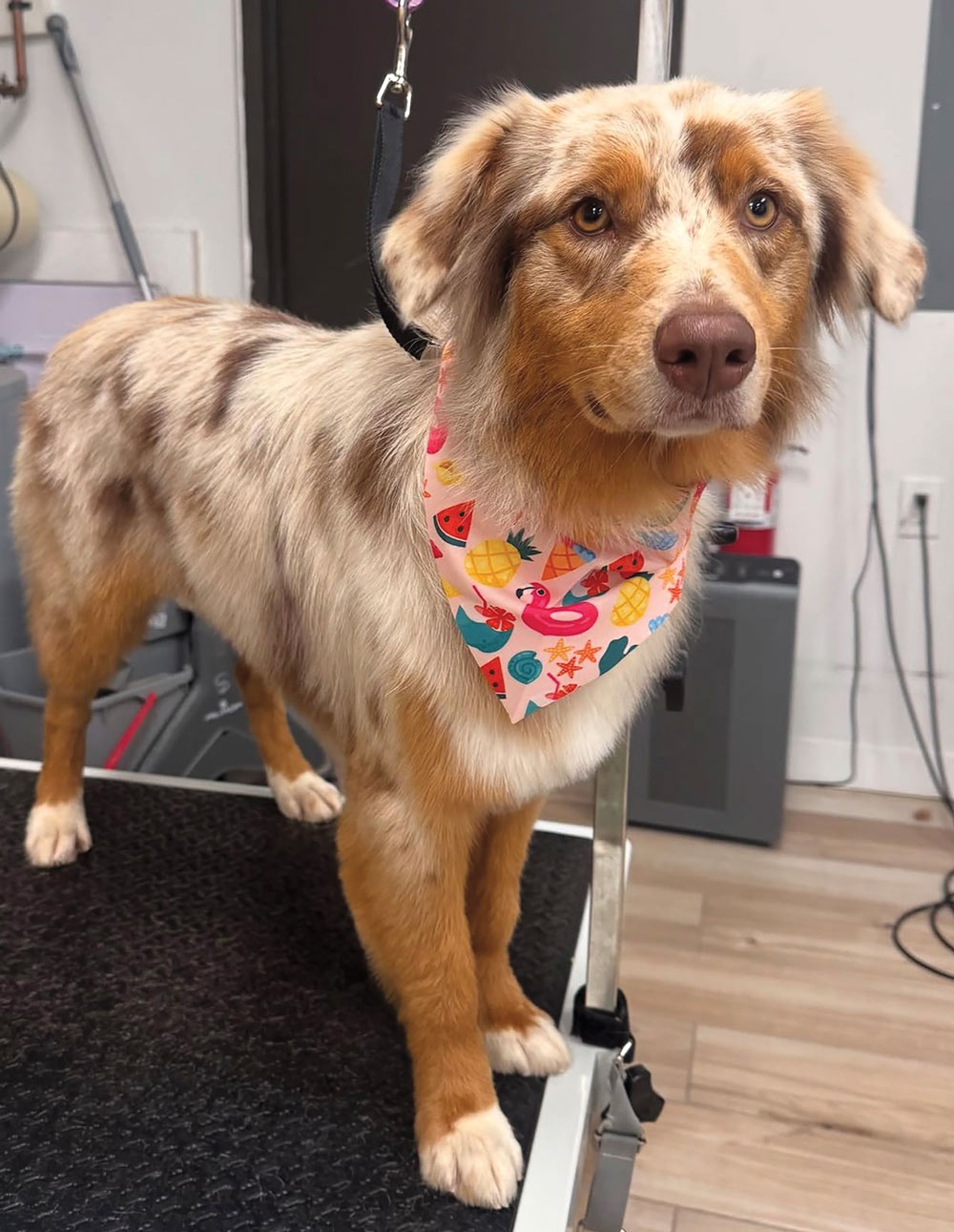
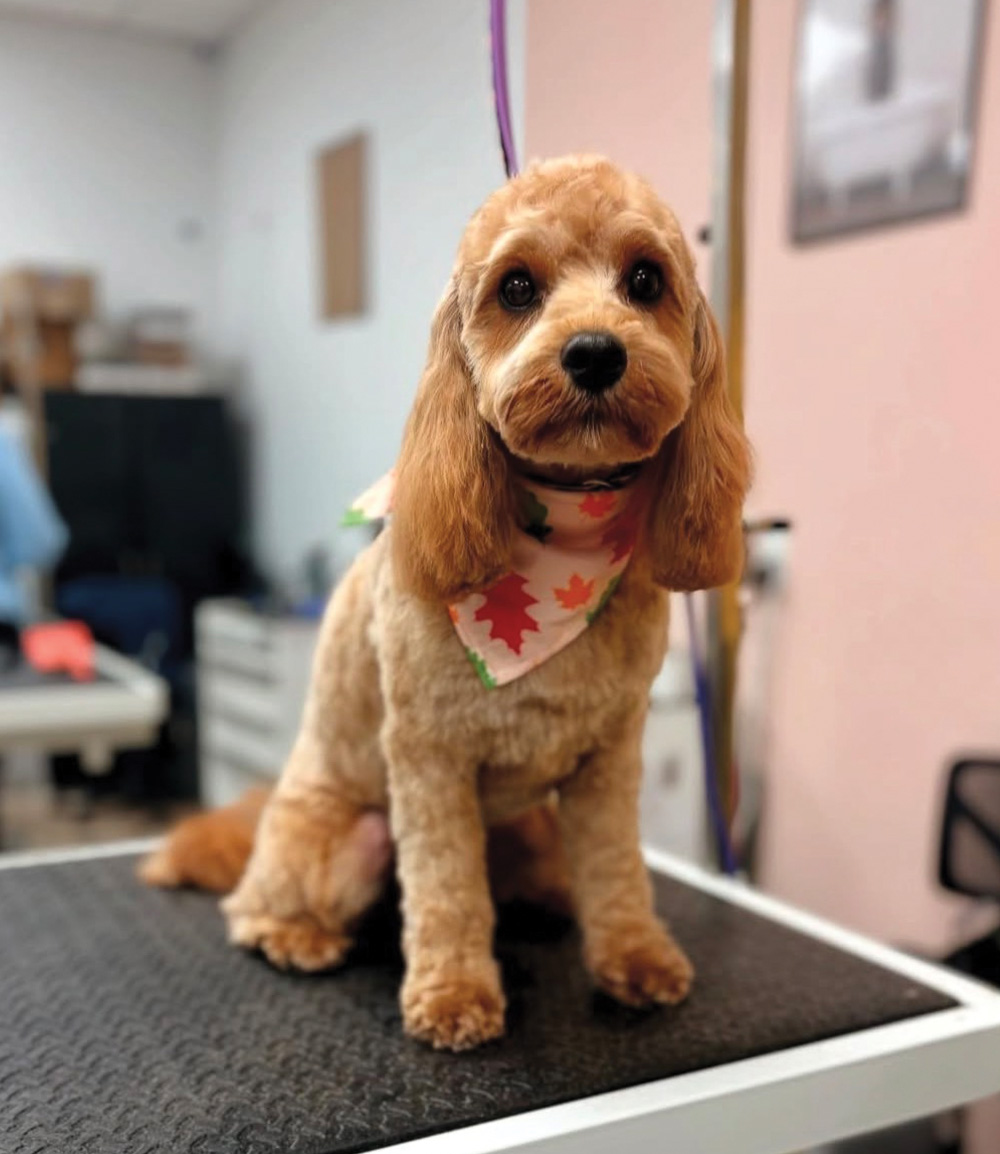
“There’s a misconception sometimes,” she explains. “Of course we’re not going to understand everything the way a groomer does. But we really try to go above and beyond to understand the day-to-day challenges.”
Both she and Arjun step in when needed, helping with prep work during busy periods or when someone calls out. They continue researching tools, shampoos and educational opportunities. For them, improvement is ongoing.
“I feel like you can never be at one hundred percent,” Arjun shares. “It’s always evolving.”
Ultimately, The Modern Canine exists because Monika and Arjun believed grooming could feel different—calmer for dogs, more collaborative for groomers and more personal for clients.
What began as a simple thought has evolved into a salon built on presence, partnership and a standard they hold themselves to every day: If they wouldn’t bring their own dogs there, they won’t expect anyone else to.

 et grooming is a skilled trade requiring both knowledge and extensive hands-on skills and training, comparable in many ways to electricians, plumbers, truckers, roofers and our closest cousins, cosmetologists in the human beauty or barber industries. However, one difference is that all of these other trades require months and even years of hands-on training under the supervision of masters, as well as licensing, credentialing, testing or certification of some form.
The beauty industry, for example, in all 50 states requires two years of mandatory schooling in a state-licensed school and a passing mark on state board exams. Only then are they licensed and can begin to work in the industry. Most states even require that they maintain their state licenses by taking required continuing education units (CEUs) that keep them current on the latest best practices and any changes in the science of their trade.
Licenses governing business activities are required by governmental agencies at various levels—city, county, state and federal—depending on the business in question. You must get a license to operate a business, to take in money and employ workers, etc., but a general business license does not specify or regulate how to do your job. There are a few universal regulations on groomers such as our collection and retention of records for each pet’s required rabies vaccination information.
As of this writing, the only jurisdiction that requires a recognized form of groomer certification that includes any kind of competency testing is the city of El Paso, Texas. After a rash of pet deaths, the city passed a law requiring groomers to maintain a recognized certification credential from amongst a list of approved courses. These do not mandate hands-on grooming skill testing, but instead they focus on safety education.

Other states have tried to license groomers, New Jersey and California being the most notorious. They failed because the bills were bad, to which groomers organized significant and well-informed opposition. Some legislators, not knowledgeable about our industry, even suggested that animal control officers be put in charge of licensing.
After these serious but ill-informed efforts at groomer licensing were beaten back, grooming industry leaders from many organizations got together and worked hard for several years to write the PPGSA Standards of Safety, Care and Sanitation.1 This document remains the lone internally created, industry-wide set of standards.
However, the PPGSA standards, while written to be easily adoptable for legislative purposes, are not mandatorily being used throughout our industry. And even if the PPGSA standards were to be universally adopted, there still is no required component for skills-based testing. These standards do not address in any way, nor were they ever meant to, how we are to cut and style dog hair.
Realistically, we know that there are many people all over this nation taking money to groom a pet that really don’t know what they are doing. Worse yet, some may not really care about getting better at it, and pets are certainly suffering at their hands. Like so many, though, they often mean well but simply don’t know better because they only know what they were taught.
Another advantage to credentialing is the ability to sanction groomers that do harm to their clients and the industry’s reputation. Credentials could be withdrawn after due process is given, taking those groomers out of circulation and protecting their clients from further harm. One of the most important responsibilities of industry organizations is ensuring quality and policing their members.
With terms like certificate, certificate course and certification being thrown around more than ever, there are still some groomers—and understandably so—who are not clear about the terminology regarding our voluntary industry credentials.
A certificate shows that the attendee has completed a course or training, proving they have learned specific skills, often in a specialized area. Certificates are for foundational knowledge and typically don’t require testing. For example, “Difficult Dog Certificate Course,” “Groomers Guide to the 15 Coat Types Certificate Course,” “Skin Assessment Certificate Course” or “Feline Safety Grooming Certificate Course.”
A certification validates that the individual has met industry-set standards for competence through a professional body. Certifications signify expertise, often for career advancement, and are provided by a national or international groomer association, which includes written and practical evaluations, and usually requires renewal or continuing education. For example, Certified Professional Groomer (CPG)2, National Certified Master Groomer® (NCMG)3, International Certified Professional Groomer (ICPG)4 or Certified Feline Master Groomer™ (CFMG™).5
It is likely, given the longevity and international reach of these outstanding programs that, should groomer certification ever become mandated as it is in other trades, these existing certification programs would likely become institutionalized. And in the meantime, it is exciting to see our own industry peers working so hard in such large numbers to gain education and credentials not because they have to, but because they want to.
- PPGSA Standards. https://petgroomersandstylists.org/standards/
- International Professional Groomers, Inc. https://www.ipgicmg.com/
- National Dog Groomers Association of America. https://nationaldoggroomers.com/
- The International Society of Canine Cosmetologists. https://isccmembers.com/
- National Cat Groomers Institute. https://nationalcatgroomers.com/


 t times, it can feel as if veterinarians and groomers are at odds with each other. Groomers tell stories of veterinarians blaming them for ear infections or other medical issues. Veterinarians, on the other hand, may not fully understand how or why groomers do certain things with the pets in their care. Misunderstandings can easily grow when each profession operates within its own scope and pressures.
Overcoming this divide is important—and not only for the pets in our care—but for the long-term benefits that come from collaboration with other pet professionals in our immediate area. When groomers and veterinarians work together instead of separately, everyone wins: the pets, the clients and both businesses.
If you do not have pets of your own, or for some reason that isn’t a logical option, start with the practice closest to your salon. If you are a mobile groomer, choose one located near the center of your service radius.
Once your meeting is scheduled, preparation is key. Treat this as a professional interaction. Bring a clear outline of your processes and protocols, including vaccine requirements, safety procedures, pet handling standards, cleaning and disinfecting routines, and emergency response protocols. This demonstrates that you operate with structure and professionalism.
In addition, be prepared to explain the services you provide, any specialties you focus on, and certifications or titles you hold. Whether you specialize in senior pets, cat grooming, hand stripping, creative grooming or behavioral cases, this is your opportunity to educate them. Bring business cards, printed materials, or QR codes linking to your website or social media to make it easy for their staff to recommend you.
Offering to present a short educational session about grooming can be incredibly effective in bridging the gap between professions. Many veterinary staff members have never toured a salon or seen what truly goes into a professional groom. If you are mobile, bring your van and offer tours. Let them see your setup, your safety measures and your workflow.
Your presentation does not need to be elaborate, but it must be professional and organized. Consider explaining what happens during a typical grooming appointment, why certain tools or techniques are used, how you assess skin, coat, ears and nails, and how you handle matted or behaviorally challenging pets. Encourage questions, as open dialogue builds understanding.
The same considerations should apply to pets referred to you by the veterinary office. Discuss expectations clearly, including:
An innocent comment such as, “I think your dog has a skin infection,” can easily be misinterpreted when the client repeats it to their veterinarian as, “The groomer said my dog has a skin infection.” Instead of diagnosing, describe what you observe, such as, “The skin appears inflamed and flaky in several areas.”
After pointing out your observation, recommend a veterinary exam. This protects you, respects the veterinarian’s role and reinforces professionalism.
Planning together before disaster strikes can make a tremendous difference. When pet professionals collaborate ahead of time, more pets can be helped during emergencies. A united network is stronger than isolated businesses scrambling independently.
At the end of the day, veterinarians and groomers share the same goal: healthy, safe and well-cared-for pets. When we shift from defensiveness to collaboration, incredible opportunities open up—referrals increase, communication improves, emergencies feel more manageable and clients gain confidence in both professions.
Bridging the gap doesn’t require grand gestures. It starts with a phone call, a meeting, a conversation built on respect. By taking the initiative to build professional relationships within your local pet community, you strengthen not only your own business but the entire network of care surrounding the pets you serve. And when groomers and veterinarians stand side by side instead of across from one another, the real winners are always the animals in our care.

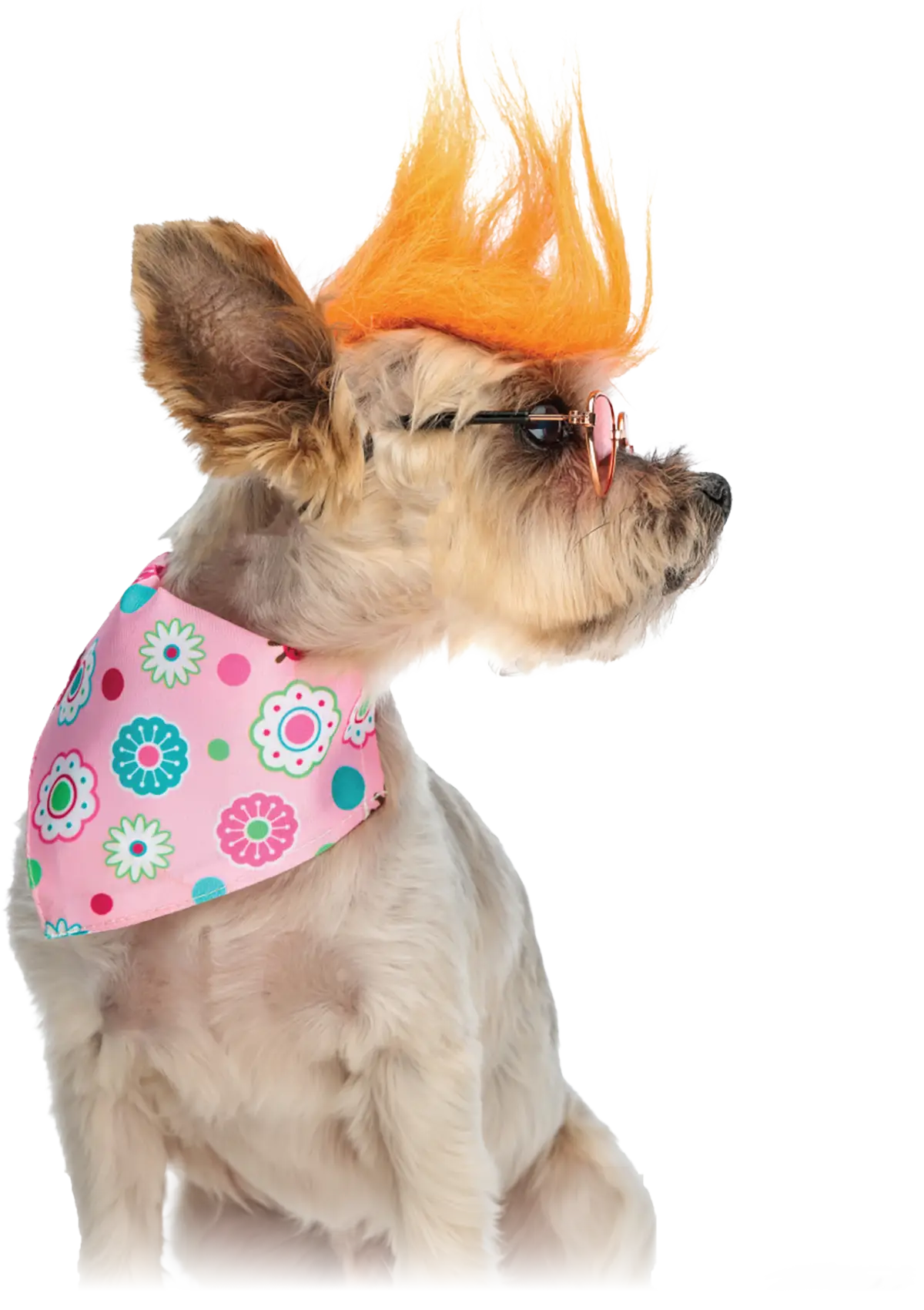

 n an industry packed with so much talent and art, making your work stand out to potential customers can sometimes feel impossible. Maybe you already have a few signature styles, but you don’t think that’s enough. If you’re overwhelmed trying to figure out what sets your work apart, sometimes the answer isn’t to go bigger, but to pay more attention to the details other groomers miss.
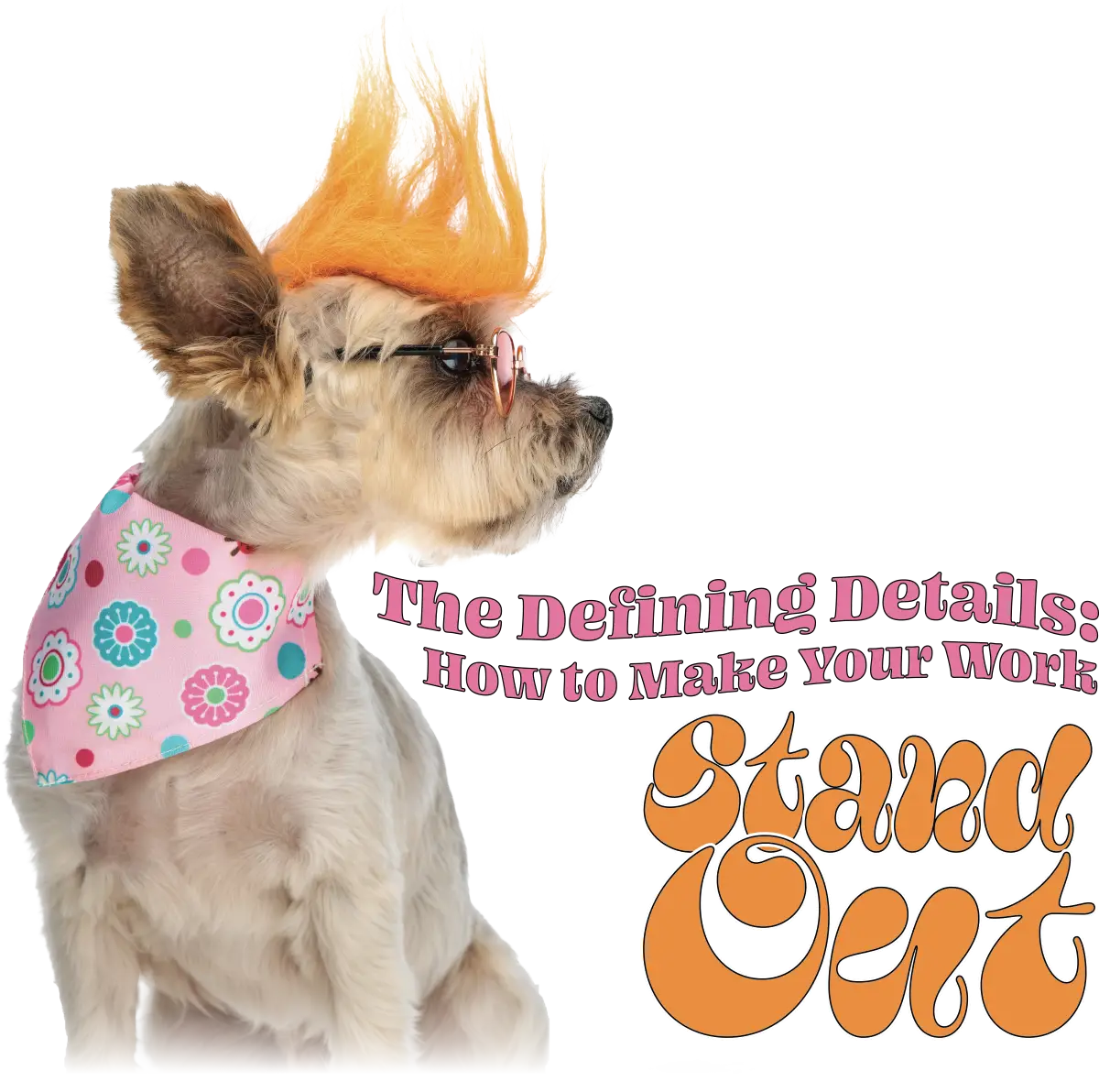 n an industry packed with so much talent and art, making your work stand out to potential customers can sometimes feel impossible. Maybe you already have a few signature styles, but you don’t think that’s enough. If you’re overwhelmed trying to figure out what sets your work apart, sometimes the answer isn’t to go bigger, but to pay more attention to the details other groomers miss.
In the popular Malcolm Gladwell book, Blink: The Power of Thinking Without Thinking, Gladwell examines this concept in great detail. There’s a quote from the book that states it perfectly: “There can be as much value in the blink of an eye as in months of rational analysis.”
Clients make quick observations when they see their freshly groomed pet—and even before. While it’s impossible to control everything, when you polish the small details in your work and presentation, you are more likely to leave the right kind of impression. Clients won’t know exactly what’s different, but they know the experience feels special, and that translates into how well they perceive their dog is cared for, too.
While these ups and downs are normal, a team that has everything under control leaves a better impression. Clients want to know that when their pet is in your care, the system your salon counts on is working correctly. Wouldn’t you feel better leaving your own pet with someone who is focused, organized and calm?
The way you present yourself says a lot about what goes on after a client walks out the door. Taking a moment to breathe and smile before you answer the phone or greet a customer at the front desk demonstrates your professionalism rather than whatever challenge you encountered moments earlier.
If you want to be even more detailed, one idea is to walk through the process as if you were a client. Ask yourself what the client sees first when they walk in with their pet and what the intake process is like, then repeat this for the pick-up process. Striving to see from an outside perspective can help inspire you.
At dog shows, fine-tuning every groom to perfection—right up until you get in front of the judge—is normal. In the salon, the same can be true. Before the dog walks out to the client, make a point of blowing off any excess hair and taking one final look. It doesn’t have to take much time either. The secret is creating a routine so you naturally remember the details at each step.
One way to start noticing even the smallest flyaways is by studying purebred dogs. Get to know breed standards and watch how handlers make dogs stand out, both in grooming and in how they present them. Handlers don’t rush through their motions; they take the time to bring the judge’s eye exactly where they want it to be on the dog. This is a unique skill that pet groomers can take inspiration from.
Don’t keep your commitment to making sure your work stands out to yourself, either. Are there any areas you are particularly proud of that you want to point out to your client? Demonstrating a passion for your work shows just how much you care.
When you’re committed to being the best groomer you can be, people will notice. This doesn’t just mean learning how to groom; it also means coming up with a routine that allows you to move with calm, confident style, and that guarantees no detail is overlooked.




 or most pet owners, a trip to the groomer is viewed as a routine spa day. However, for a dog recovering from a Cranial Cruciate Ligament (CCL) injury—commonly known as an ACL tear—the grooming table is anything but a spa. It is, in reality, a high-stakes athletic endurance event.
As professionals, our priority is the biomechanical safety of the dog. Understanding how the salon environment impacts a compromised joint is the only way to ensure a safe outcome for the pet and protect the business from liability.
When a dog stands on a grooming table, that ligament is under constant tension. If the ligament is partially torn or weakened by a recent surgery, the dog’s brain must compensate by over-firing the muscles to hold the joint in place.
Imagine trying to stand perfectly still on one leg for three to four hours while someone scrubs, dries and trims you. That is the invisible marathon the dog runs every time they visit the salon during recovery.
The Luxating Patella is an alignment issue, common in toy breeds, where the kneecap slips out of its groove. A seasoned groomer can often feel this “slip” and use gentle massage to help the joint reset.
A CCL tear, however, is a structural failure of the joint’s stability. While a patella dog might “skip” and then carry on, an ACL dog “shifts;” they dance and struggle to find a center of gravity.
For the groomer, recognizing the difference is the first step in risk management. A patella dog needs careful leg extension; an ACL dog needs total weight-bearing support at all times.
Between weeks six and eight, the body is actively remodeling the surgical site, making the graft temporarily weaker before it gets stronger. If we lift the dog’s healthy leg to trim the paw, we force one hundred percent of their hindquarter weight onto that healing repair. We hold the line at 12 weeks to ensure the dog has the muscle strength to stand safely for the duration of a groom.
Furthermore, fat tissue is an active inflammatory state. It secretes hormones like leptin, which actually breaks down cartilage and weakens ligaments. On a grooming table, an obese dog is experiencing peak force on their surgical site with every minor turn or pivot.
While a vet may prescribe a pet-specific anti-inflammatory like Rimadyl, owners should never attempt to dose their pets with over-the-counter Aspirin. Even at low dosages, Aspirin can cause severe stomach ulcers and blood-thinning issues that complicate surgery or cause excessive bleeding if a nail is accidentally quicked.
If the dog is in pain, they need a professional protocol from their vet—never a grab-off-the-shelf human solution. Our role is to report the dog’s fatigue and mobility back to the owner so they can consult their veterinarian.

The protocol should be a no-bath, no-dry, lateral comfort groom, where the dog is placed on their side on a padded surface with an assistant providing gentle restraint. To maximize safety and speed, a clipper vacuum system can be used to dry shave the dog lying down. This removes the coat quickly and keeps the blades cool without the need for the dog to stand.
Liability is the silent partner in every grooming salon. A surgical repair can cost upwards of $9,000. If a dog slips in a tub or snaps a ligament while fighting a nail trim, the financial and reputational stakes are enormous.
Every dog with a history of knee issues must have a paper trail in our system, including digital notes on their behavior and a signed medical waiver for every visit. This ensures the owner acknowledges that we are prioritizing the animal’s physical safety over the perfection of the haircut.
At the end of the day, our clippers can always fix a messy coat, but we cannot fix a broken knee. As professionals, we are the last line of defense for these dogs. While the owner might see a shaggy dog, we see a vulnerable joint that is one slip away from a surgical failure.
By holding the line on your 12-week policy and mastering the lateral comfort groom, you aren’t just doing your job—you are practicing high-level animal advocacy. Trust your gut: If a dog is too unstable to stand, or if an owner is pushing you to bypass safety for the sake of a cute haircut, have the professional courage to say no.
Our goal is to return every pet to their owner in better condition than they arrived. When we prioritize biomechanical safety over aesthetics, we protect the dog’s future mobility, our shop’s reputation and the integrity of the grooming profession.
 t’s easy to build a relationship with another person when you have something in common, and as professional groomers, animals give us a built-in shared interest from the moment we first meet the person at the end of the leash.
Since people are entrusting the care of their pet to us, our relationship is automatically different than if we were, say, small engine mechanics. There is a basic level of connectedness from the very beginning because we are caring for a loved creature, not an easily replaceable object.
“Don’t become friends with your customers,” some groomers will tell you. “Maintain your professionalism at all costs,” they say. In my opinion, people who dish out this advice are half right. Because pet grooming is a service industry, one where we are selling our skills, knowledge and professionalism to people in return for them becoming loyal clients, we often walk a fine line.
As in all service industries, however, we will not be successful unless we are friendly. It is important to keep in mind that we can be friendly without necessarily becoming friends. So why shouldn’t we forge friendships with customers?
Since we are offering a service, the business relationship is often rather one-sided. With every grooming transaction, we consider our customers’ wants, needs and desires. So many groomers put their heart and soul into their craft and business, which is very appealing and draws your customers to you and automatically makes us seem like a pretty good friend to our customers. The problem is that in this professional aspect, we don’t ask for our wants, needs and desires to be considered in return. And when your needs are not met, it can lead to hurt feelings.
Here is an example: You have been grooming Mindy’s Shih Tzu for years. The dog is adorable, fun to groom and bursting with personality. You and Mindy exchange funny text messages and pictures of the dog. You’ve even grabbed coffee out a few times. You like her so much that you have done things like open early or stay late to accommodate her schedule. Then one day, you ask her to change her standing appointment because you have something you need to do. She gripes about the inconvenience. All you can think about is the times you went out of your way to accommodate her, and her complaints feel both personal and painful. These feelings are even more intense because of the emotional aspect that has developed with friendship.
When we become friends with customers, they often ask more of us in a professional capacity than they would if we were not friends. They might expect to dodge that annual rate increase, have you add extra services at no charge or, as in the case above, ask you to change your schedule to accommodate them.
On the other hand, our work often brings us into contact with people with whom we share so much in common that it can seem a pity to rule out a potentially fantastic friend just because we met while offering a service. In my experience, it is absolutely possible to have friendships while still maintaining an equitable working relationship. Setting clear guidelines is key.
Suppose you find yourself drawn to a customer that you would like to develop a friendship with. First, set some guidelines. When you give them your cell phone number (which is often the first step towards building a relationship in today’s society), tell them you reserve that number for personal communication only. Should they forget and text you about a grooming matter, simply say, “Please call me during business hours at work, and I’ll be happy to take care of that for you.” Most people don’t need to be reminded twice. If they do, you might reconsider your choice.
If you have a social media presence, you may have customers find you there and want to interact via that medium. If you like them, this may work out well; if you have no interest in expanding your professional relationship, just tell them you reserve your personal social media for non-work-related interactions.
Business relationships can still be friendly without developing into friendships. It is up to you to discern which people you want to allow into your personal life, then set boundaries to maintain the relationship on two different planes: the service/work connection and the growing friendship.
You can maintain your professionalism and create a joyful relationship if you are mindful of the people you choose and the parameters you set.

by Lynn Paolillo
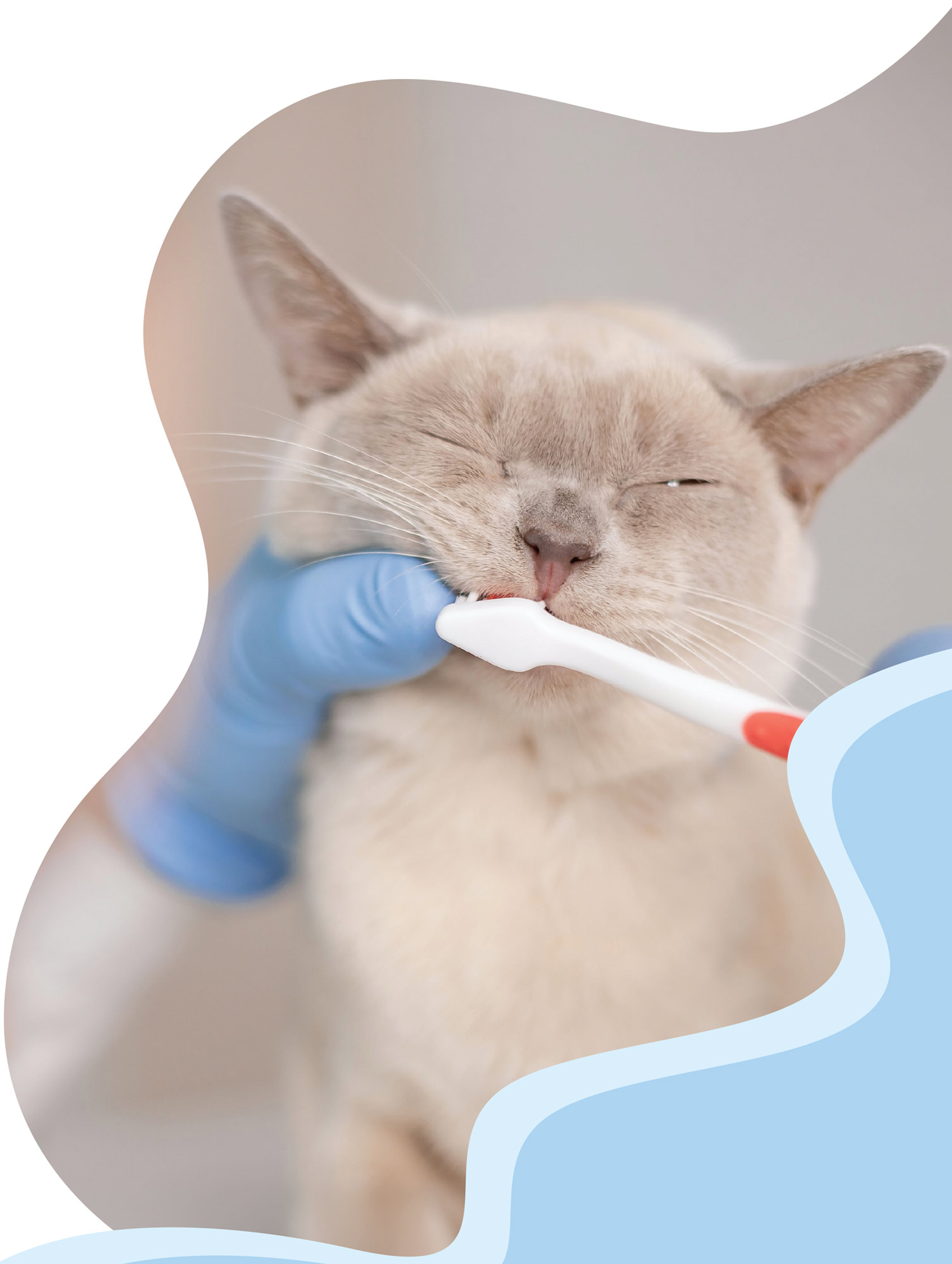
 ou brush your teeth every day (hopefully), and you probably see the dentist at least once or maybe twice a year for cleanings. But when it comes to your clients’ cats, how often are they receiving that same level of preventative care for their coat and skin?
Regular, consistent preventative grooming is just as essential for a cat’s health and wellbeing as routine dental care is for us. In fact, grooming appointments often mirror the dental journey far more than most cat owners realize.
Preventative Vs Reactive Grooming

by Lynn Paolillo
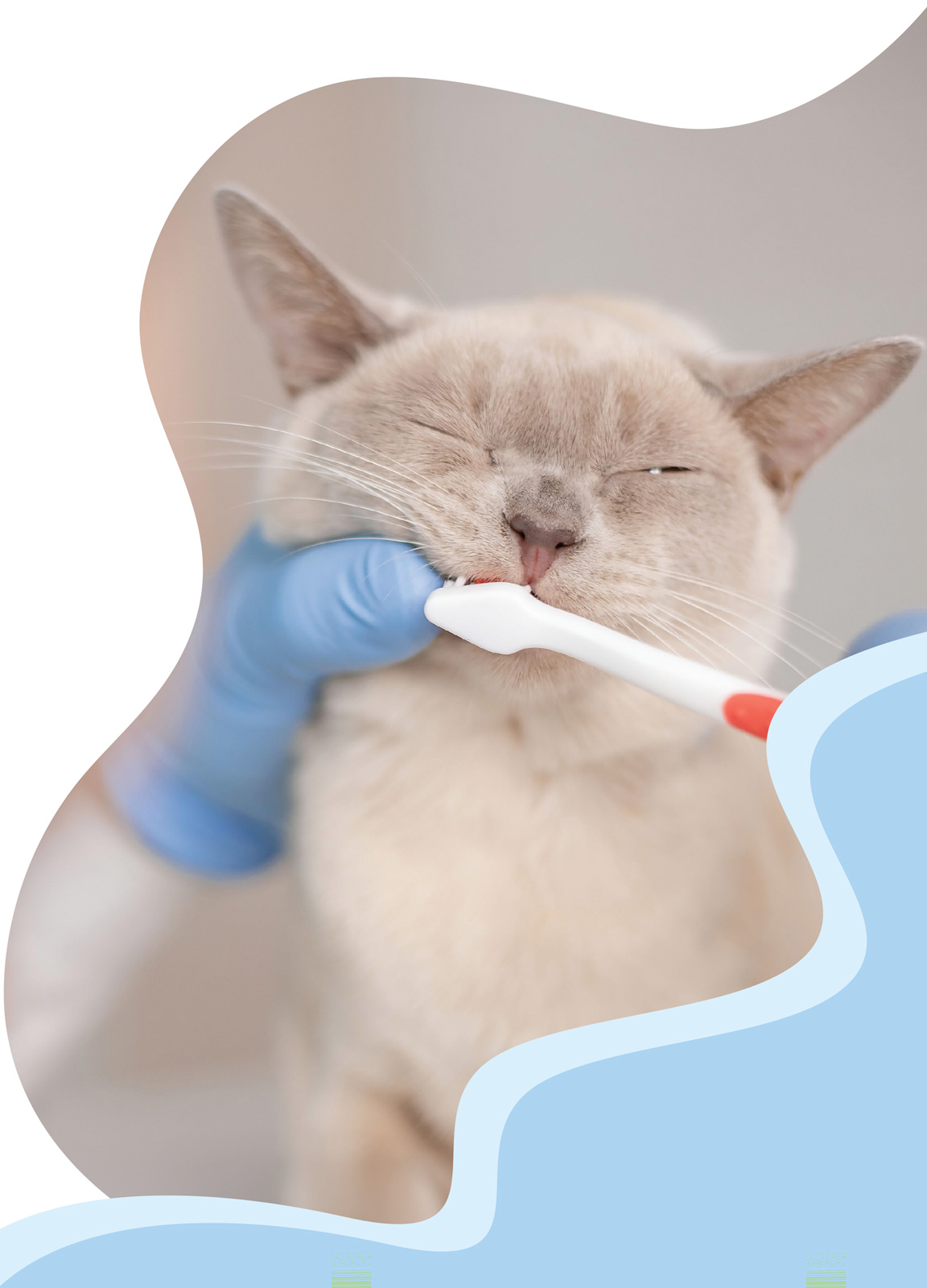
ou brush your teeth every day (hopefully), and you probably see the dentist at least once or maybe twice a year for cleanings. But when it comes to your clients’ cats, how often are they receiving that same level of preventative care for their coat and skin?
Regular, consistent preventative grooming is just as essential for a cat’s health and wellbeing as routine dental care is for us. In fact, grooming appointments often mirror the dental journey far more than most cat owners realize.
Preventative Vs Reactive Grooming
Most people don’t enjoy the dentist. An emergency appointment is especially upsetting when a toothache turns into an expensive, painful, multi-step procedure. It’s not all that different for our feline clients. When cat owners delay professional grooming until their cat is matted, greasy or throwing up hairballs, it turns what could have been a routine visit into a potentially stressful and uncomfortable situation for both cat and groomer.
Just like dental care, maintenance grooming is most effective when it starts before there is a crisis.
Here are a few factors that determine how often a cat needs grooming:
- Breed: Persians, Ragdolls and Maine Coons generally require more frequent grooming than a sleek Oriental Shorthair or Siamese.
- Coat Texture: Plush, cottony coats can tangle and mat more easily, while silky, thin coats may not. Each texture comes with its own challenges.
- Color: White or pale-colored cats tend to show staining and buildup faster, especially around the eyes and under the tail.
- Age: Senior cats often have increased grooming needs caused by changes to their skin and coat. Arthritis or dental issues can also make self-grooming painful.
- Diet and Health: Cats with poor nutrition or underlying health conditions can have a dull, flaky coat or greasy build-up.
Regular maintenance catches these issues early. Think of it like going to the dentist and discovering a tiny cavity instead of waiting until you need a root canal.
Kittens can learn that bathing, drying, combing and being handled are normal. This teaches them that the groomer isn’t scary or stressful, and that the grooming table isn’t a punishment. These early experiences build confidence, reduce fear and prevent grooming appointments from becoming high-drama, high-risk situations later in life.
When clients ask if it’s too soon to start, the answer is almost always “the sooner the better.” Kittens aged 8-16 weeks are in the best time frame for their behavioral development to be introduced to new things and be socialized. Some longhaired cats may also go through coat change around 6-18 months of age, where they can more easily mat and tangle, as compared to their kitten coat. So getting them in as early as possible can make a huge difference in how cats experience grooming both at home and with a professional.
What Clients Can Do at Home
Cat owners are no different. We tell them to brush daily with a quality comb, not a slicker; we show them how to get down to the skin, and how to check for mats in the armpits and inner thighs. And still, they forget, avoid it or do it wrong. It’s not because they don’t care, but because it’s overwhelming, they’re busy or their cat hates it.
That’s where we come in. Just like your dental hygienist reminds you to floss and does the heavy lifting every six months, as cat groomers, we are the support team between home care and catastrophe. For owners willing to brush, we can show them what tools to use and how to create a calm, successful routine. For those who can’t (or won’t), we can help them establish a professional maintenance schedule that prevents things from getting out of hand.
What Happens Without Maintenance?
So, let’s get a little deeper with this dental comparison:
- Brush and floss daily, see the dentist twice a year = Healthy mouth, minor cleanings.
- Brush and comb regularly, visit the groomer every six to eight weeks = Soft, mat-free coat, clean skin, minimal shedding, happy cat.
- Don’t floss, brush occasionally, skip seeing the dentist = Cavities, root canals, gum disease, implants, high expense.
- Ignore grooming, wait until mats develop = Shaving, painful de-matting, hairballs, skin issues, possibly sedation grooming.
For some cats, genetics and diet make it easier. There are cats who barely mat, never seem to shed and have coats that look great with minimal effort. But they are the exception, not the rule. Most cats benefit from some combination of home care and professional grooming—especially as they age.
Helping Clients Make Better Decisions
Using the dental analogy, you can explain it this way:
- Combing is like flossing. It gets to the root of the problem, just like floss gets between teeth.
- Skipping grooming appointments is like skipping cleanings. Eventually, it catches up with you.
- A short monthly groom is better than one long traumatic appointment every six months.
You can even tailor your grooming recommendations to each cat’s “oral hygiene” habits. Is this a cat with a great coat and a diligent owner? Maybe they only need quarterly visits. Is this a cat who gets matted after four weeks even with regular brushing? That’s when we can turn to haircut ideas, as even just adding a belly shave can target specific areas that repeatedly mat for that cat. Frequency of appointments, products, techniques and services done during a grooming appointment can all be options for maintaining each cat’s coat in a way that works for them.
Regular preventative grooming isn’t a luxury, it’s healthcare. And just like brushing and flossing, it works best when started early and done consistently. As professional cat groomers, we have the opportunity to change the way clients think about grooming—not as a last resort, but as a proactive, routine part of their cat’s wellbeing.
So the next time a client says, “My cat doesn’t really need grooming,” ask them: “Do you go to the dentist?” Because if they brush their teeth every day and still need checkups with their dentist, their cat’s coat definitely needs a little professional attention, too.






by Blake Hernandez
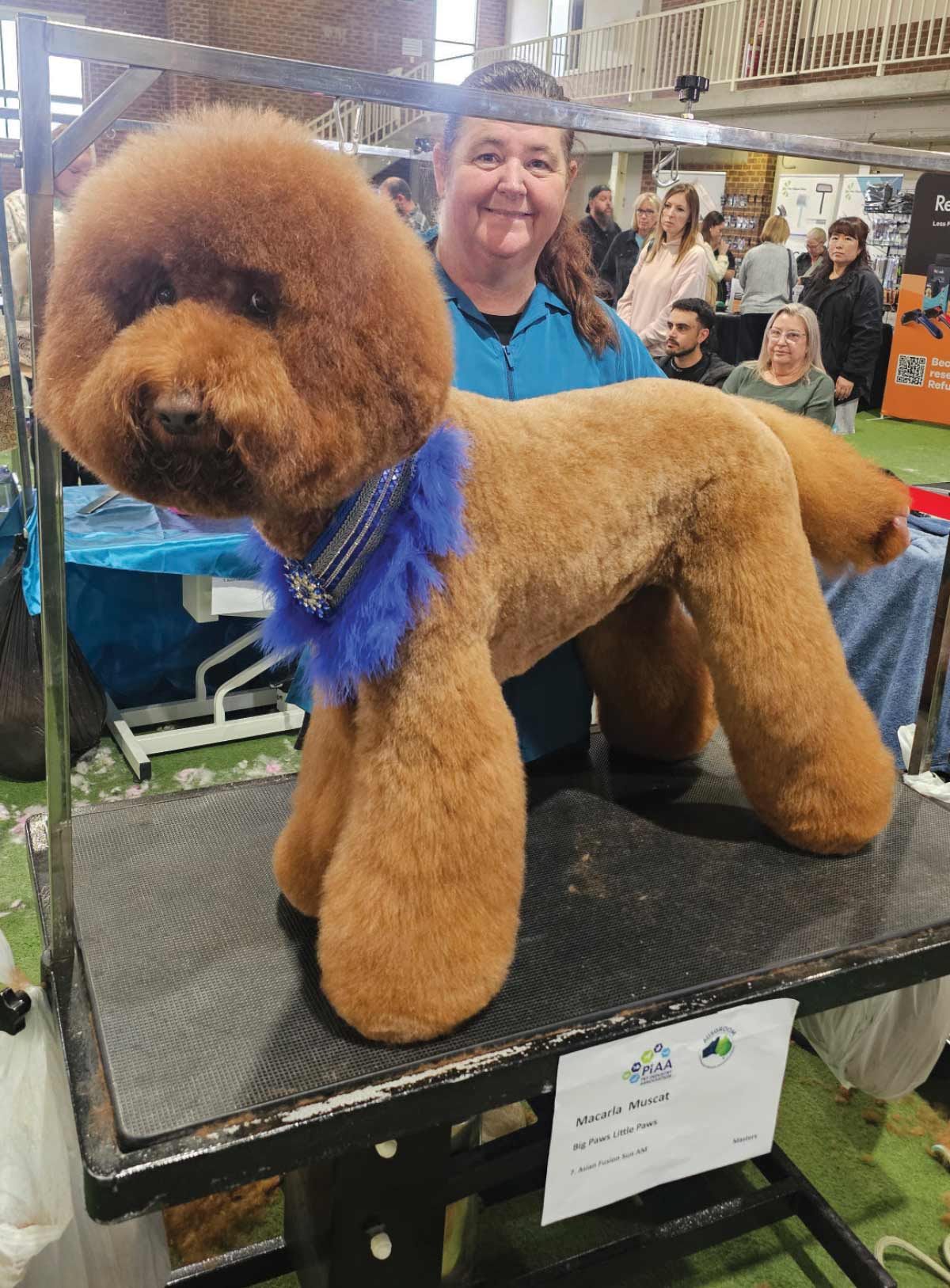
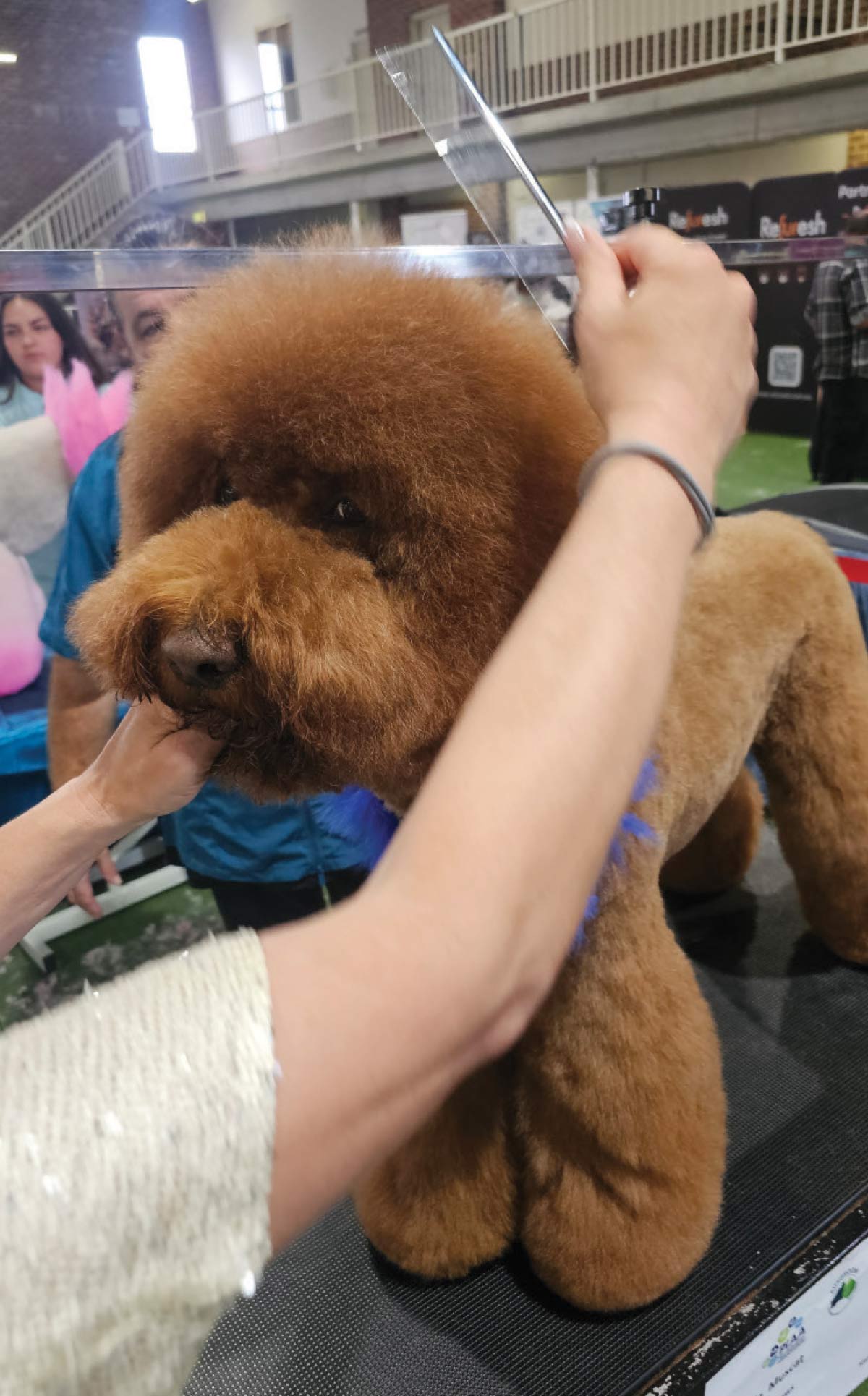
Groomed by Macarla Muscat
 he Teddy Bear trim is an all-time favorite with clients. But have you ever considered what it would be like competing against other groomers to test your most-requested style?
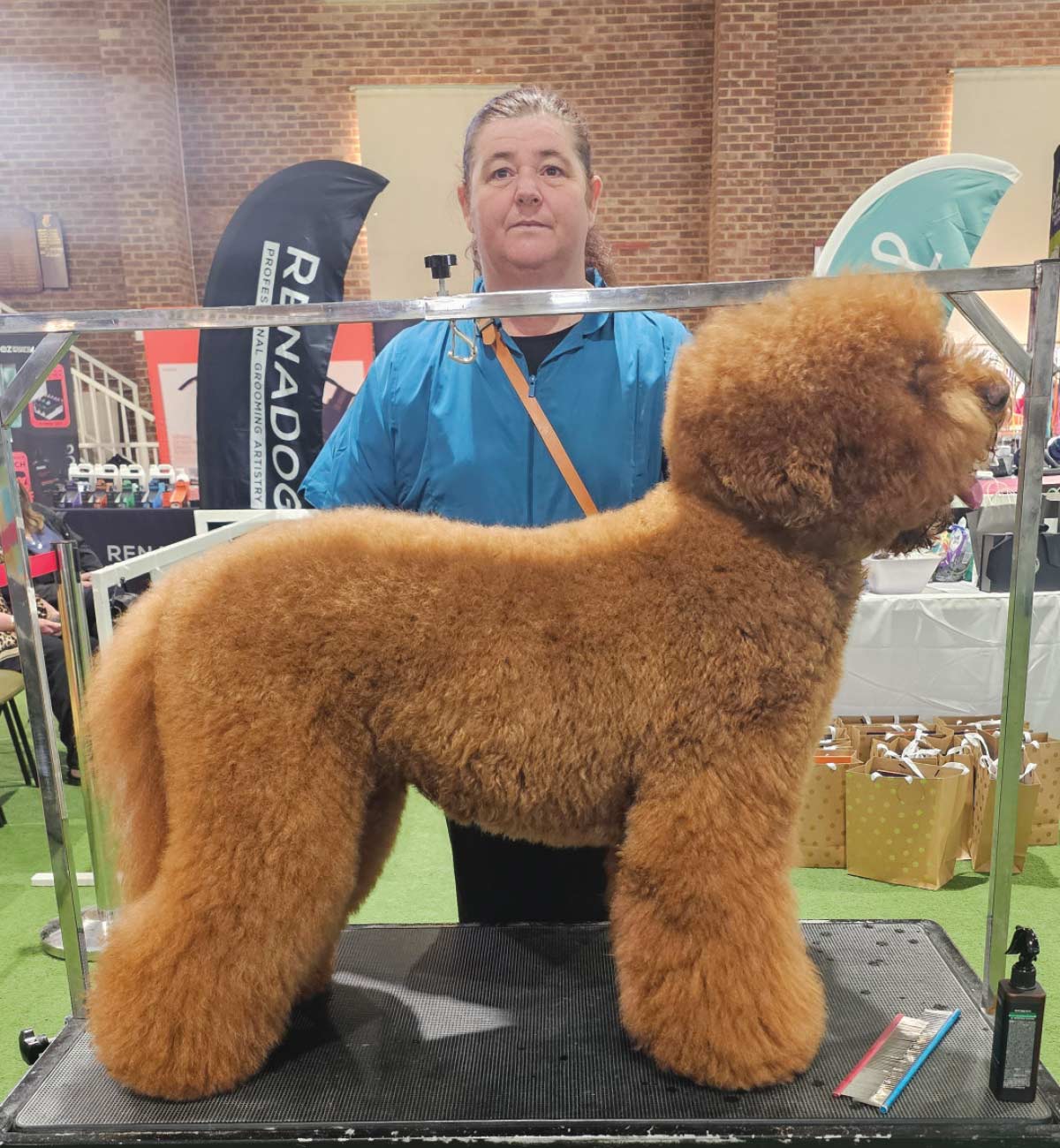
Fig. 1) When competing, two things to keep in mind are your degree of difficulty and your ability to put a competitive finish on a dog in the allotted time. This particular competitor brought a dog with loads of hair, and in order to achieve the finished look, she needed to set down the body length with a 5/8” guard comb, omitting areas like the legs and directly above.
Fig. 2) Loose hairs and mowed-down hairs affect your finish and the amount of times necessary to clip for smooth a finish. Combing the hair out and up between passes will speed up this process.
by Blake Hernandez
Groomed by Macarla Muscat
he Teddy Bear trim is an all-time favorite with clients. But have you ever considered what it would be like competing against other groomers to test your most-requested style?
Fig. 1) When competing, two things to keep in mind are your degree of difficulty and your ability to put a competitive finish on a dog in the allotted time. This particular competitor brought a dog with loads of hair, and in order to achieve the finished look, she needed to set down the body length with a 5/8” guard comb, omitting areas like the legs and directly above.
Fig. 2) Loose hairs and mowed-down hairs affect your finish and the amount of times necessary to clip for smooth a finish. Combing the hair out and up between passes will speed up this process.
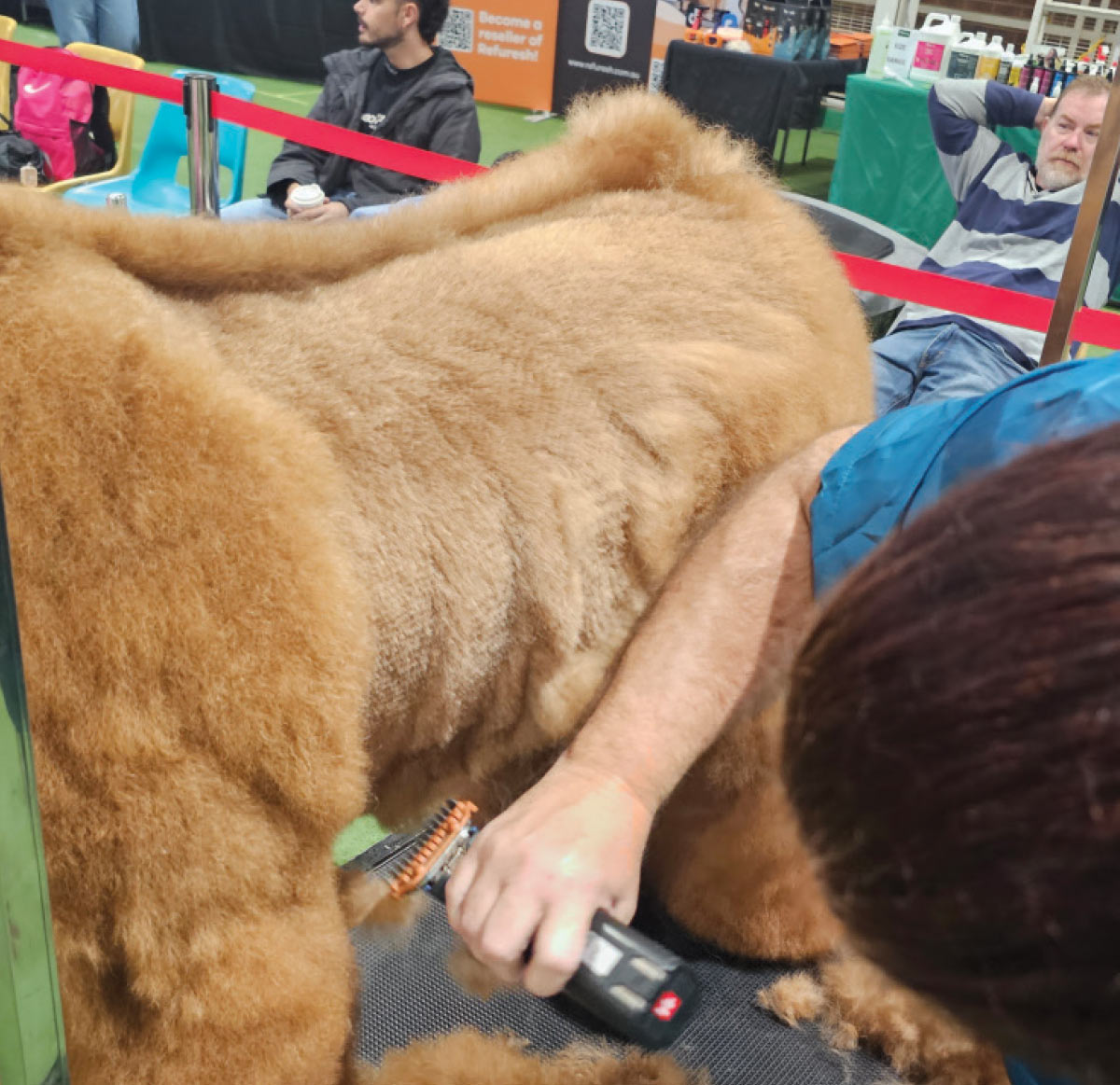
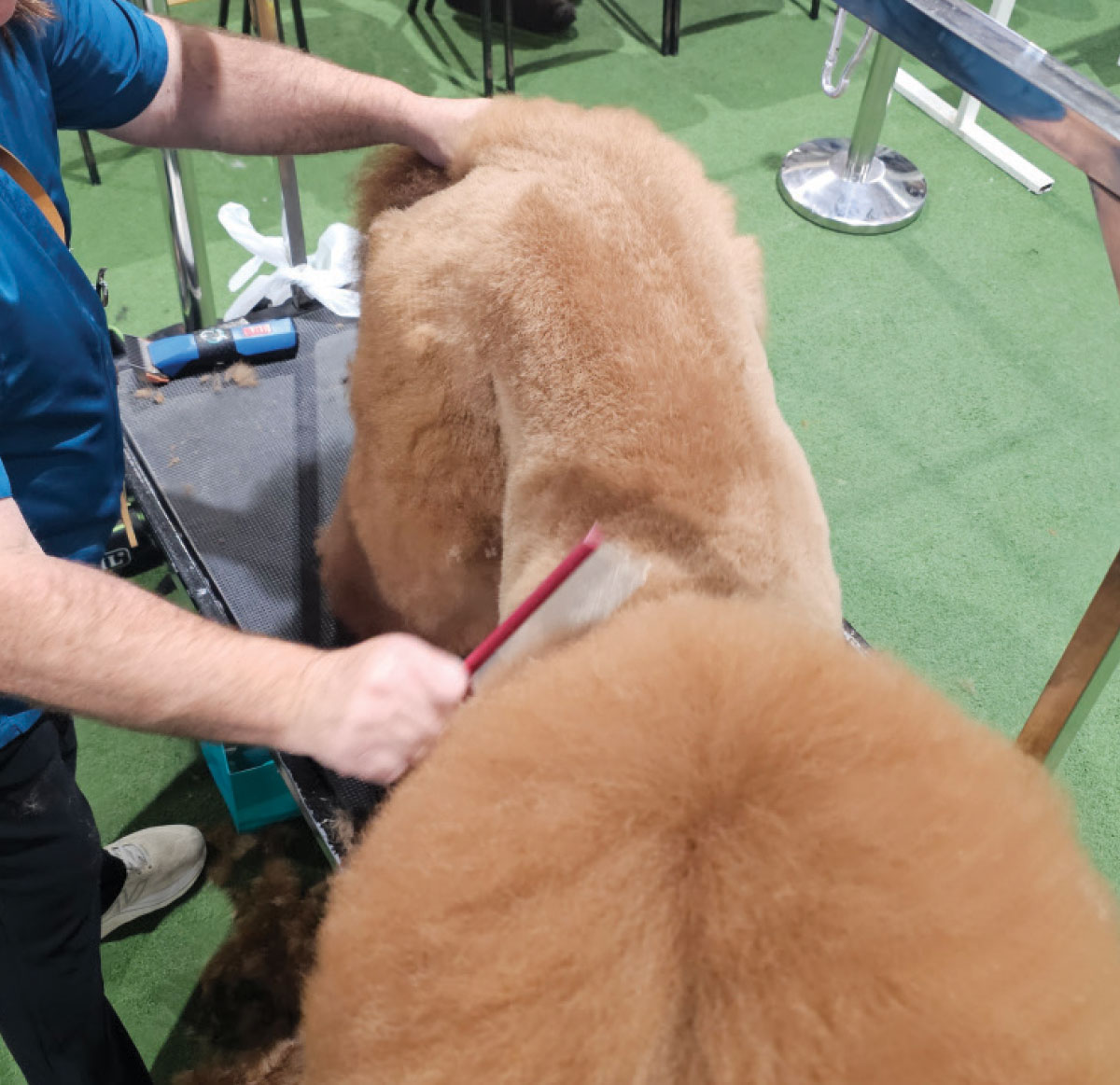
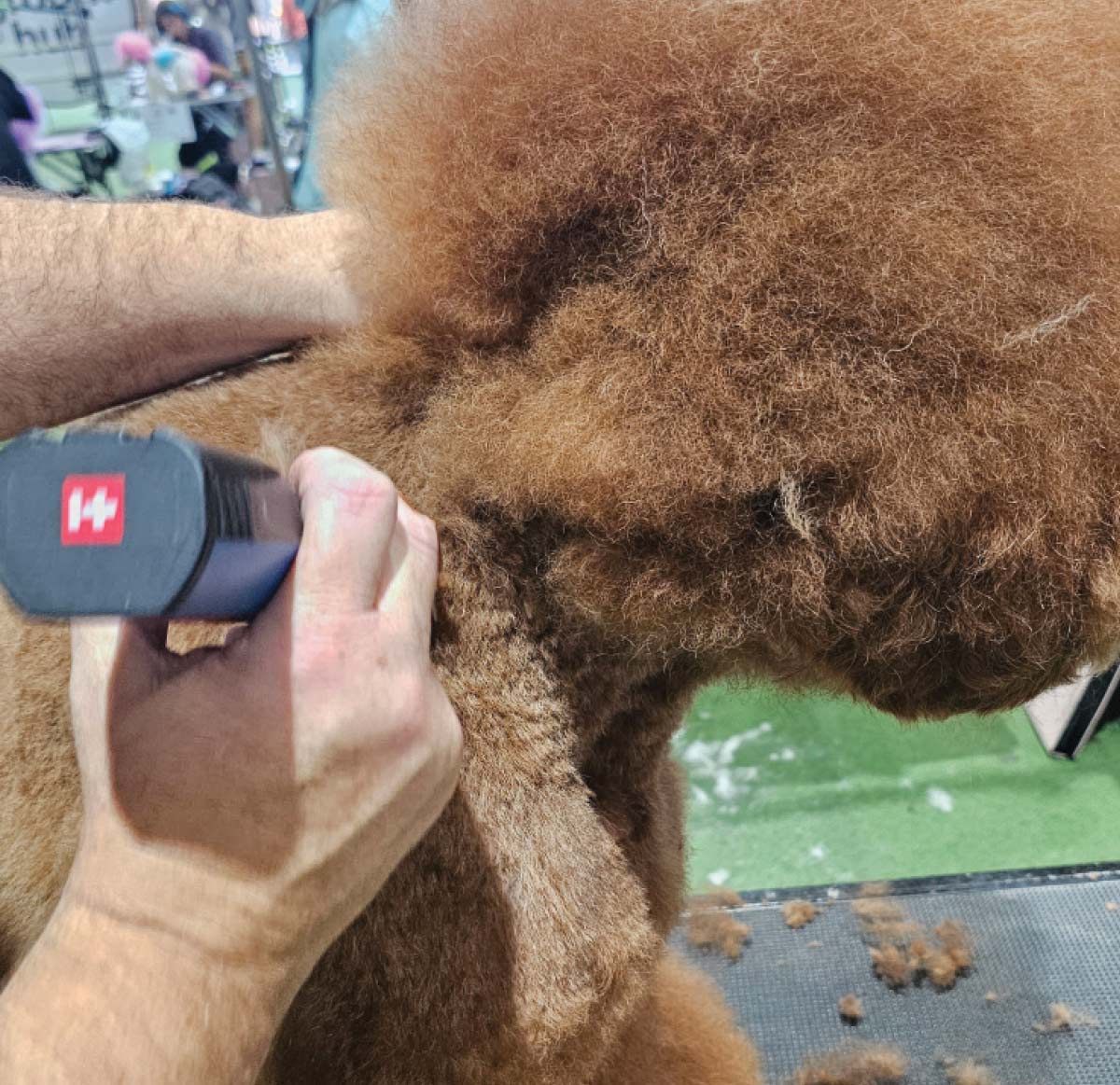
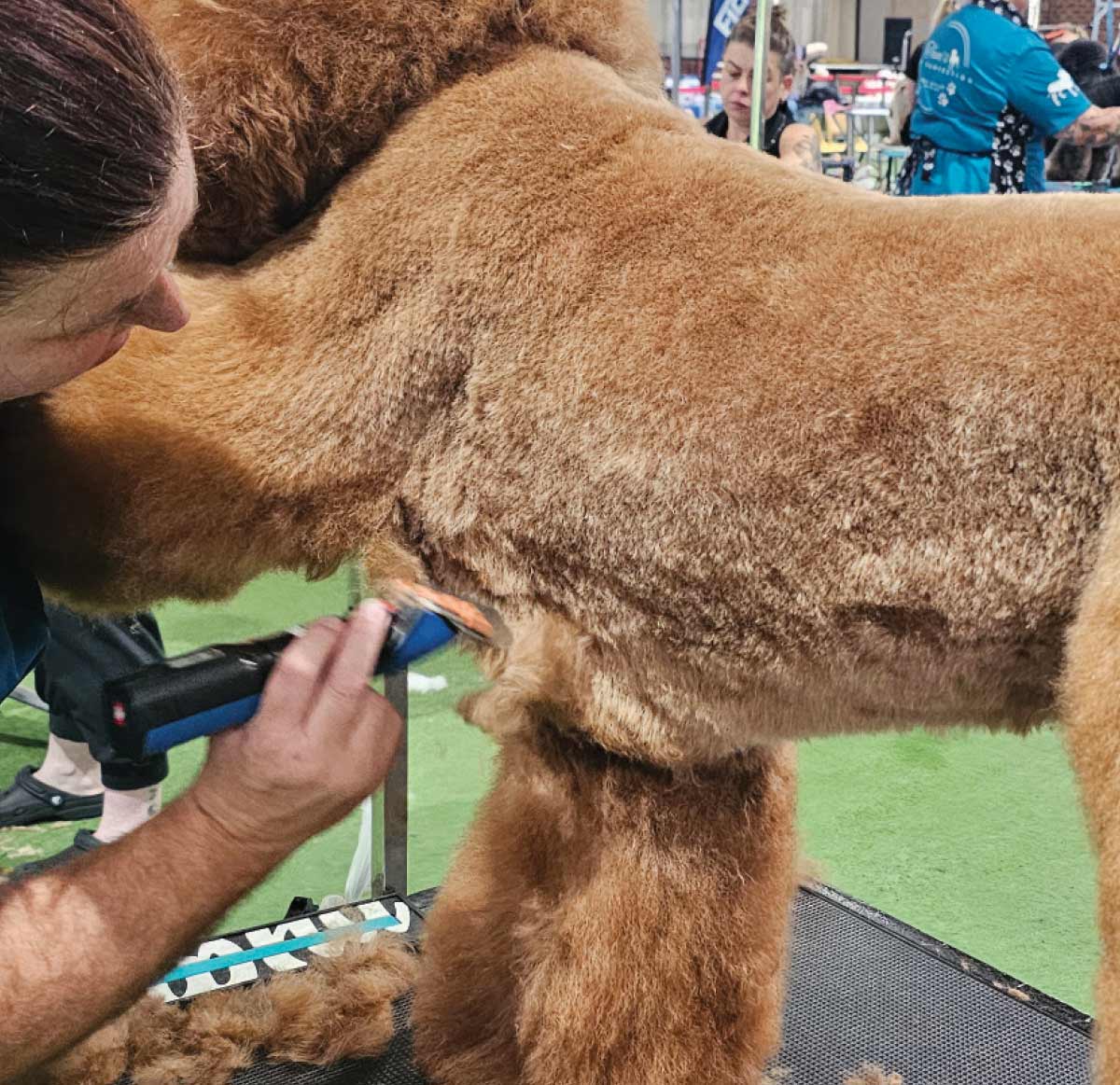
Fig. 4) Every competitor has a horror story about a matted armpit or a missed hair. Be sure to lift the legs in every direction and make sure that length and finish carries through.
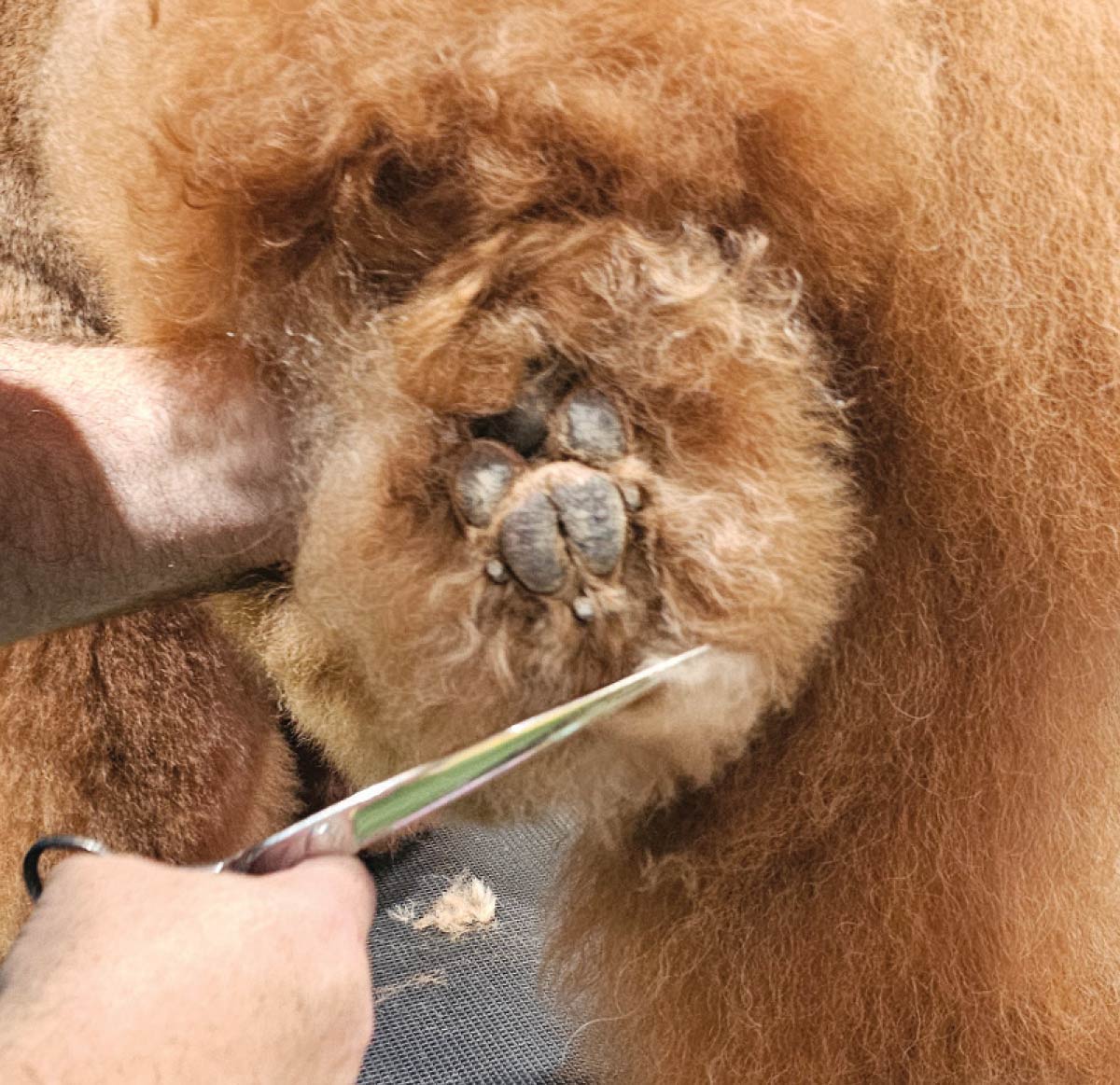
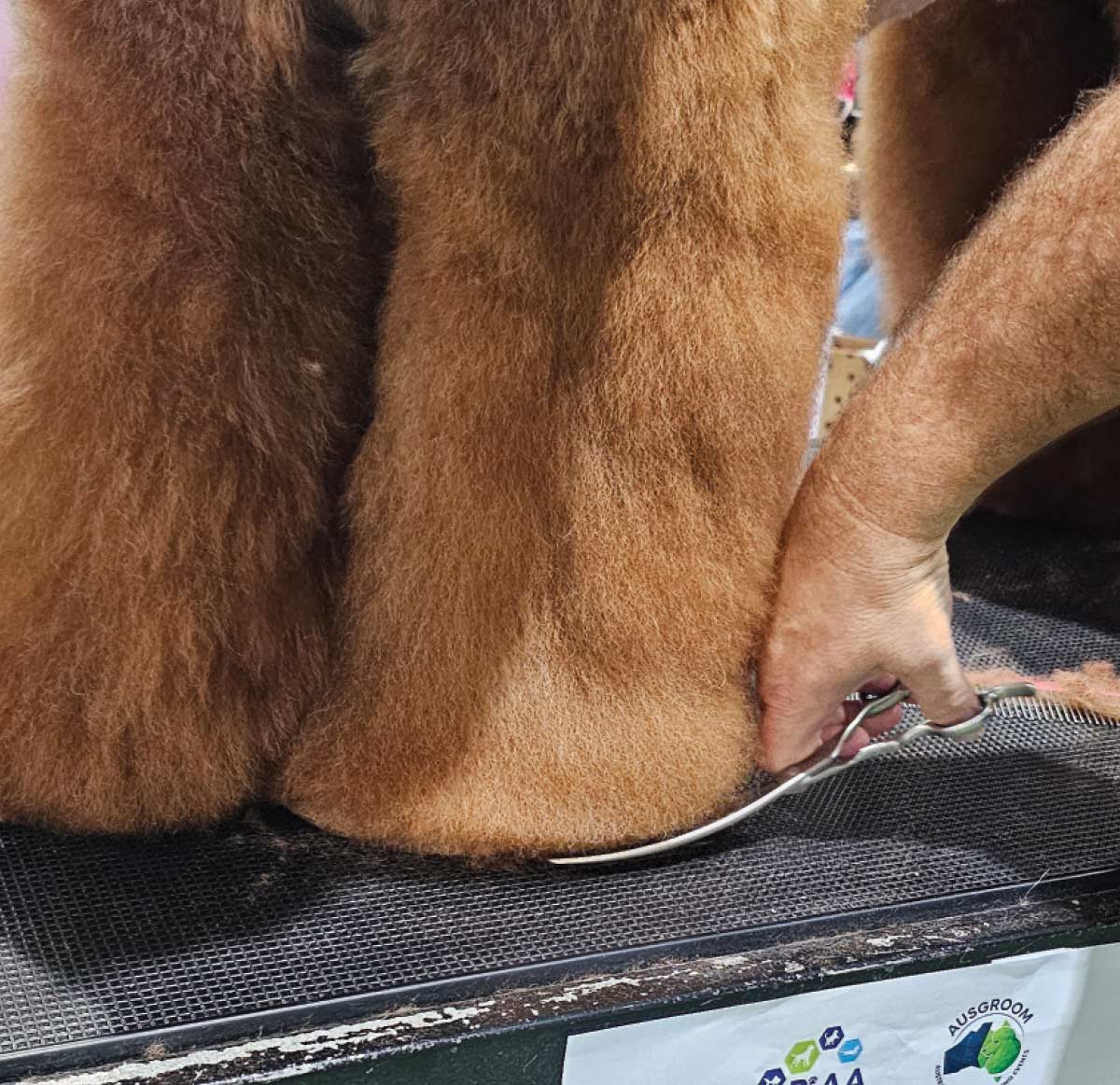
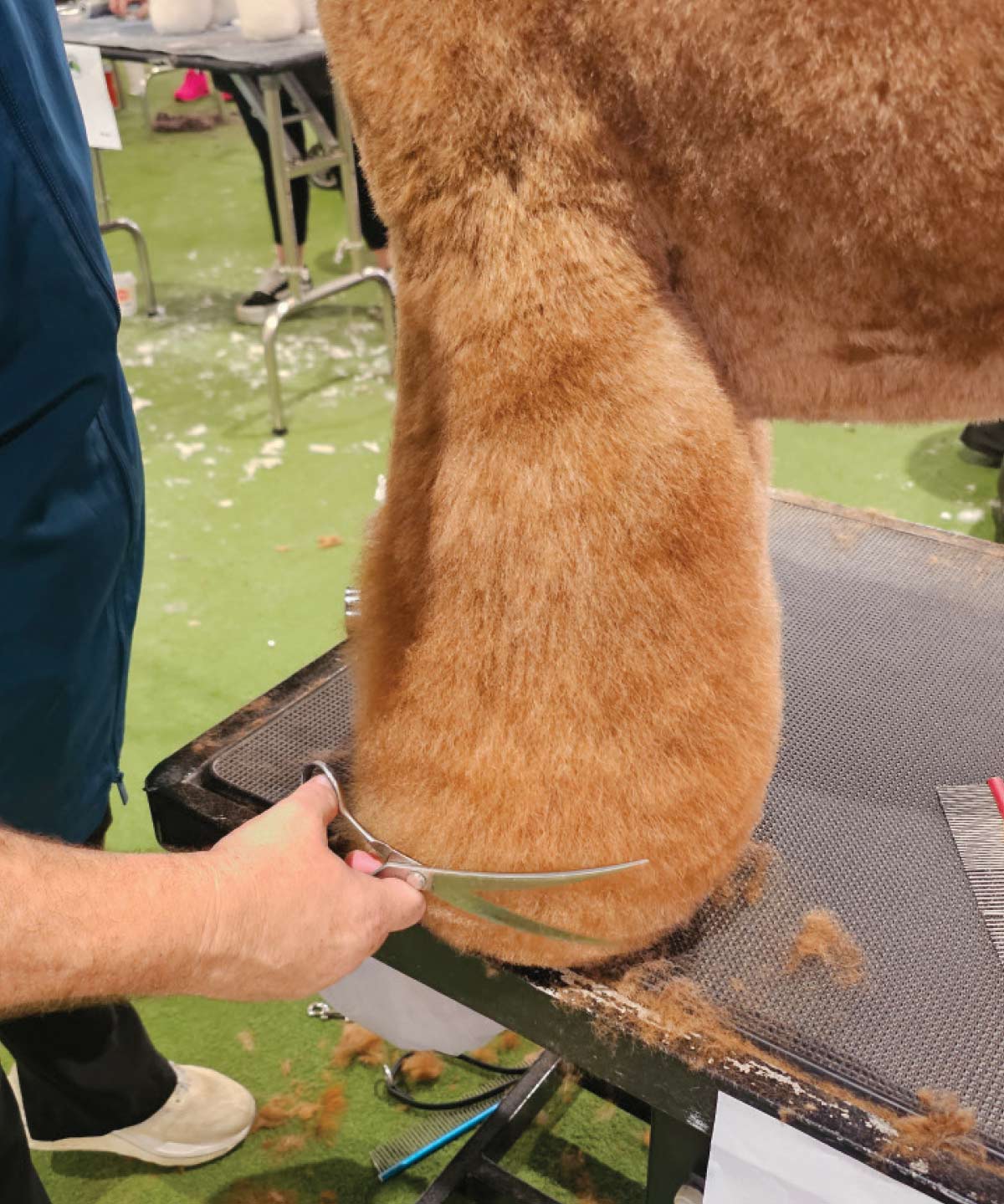
Fig. 6) Begin building your bevel up with a larger curved scissor at an angle that is very low, just barely deviating off of the same plane as the table.
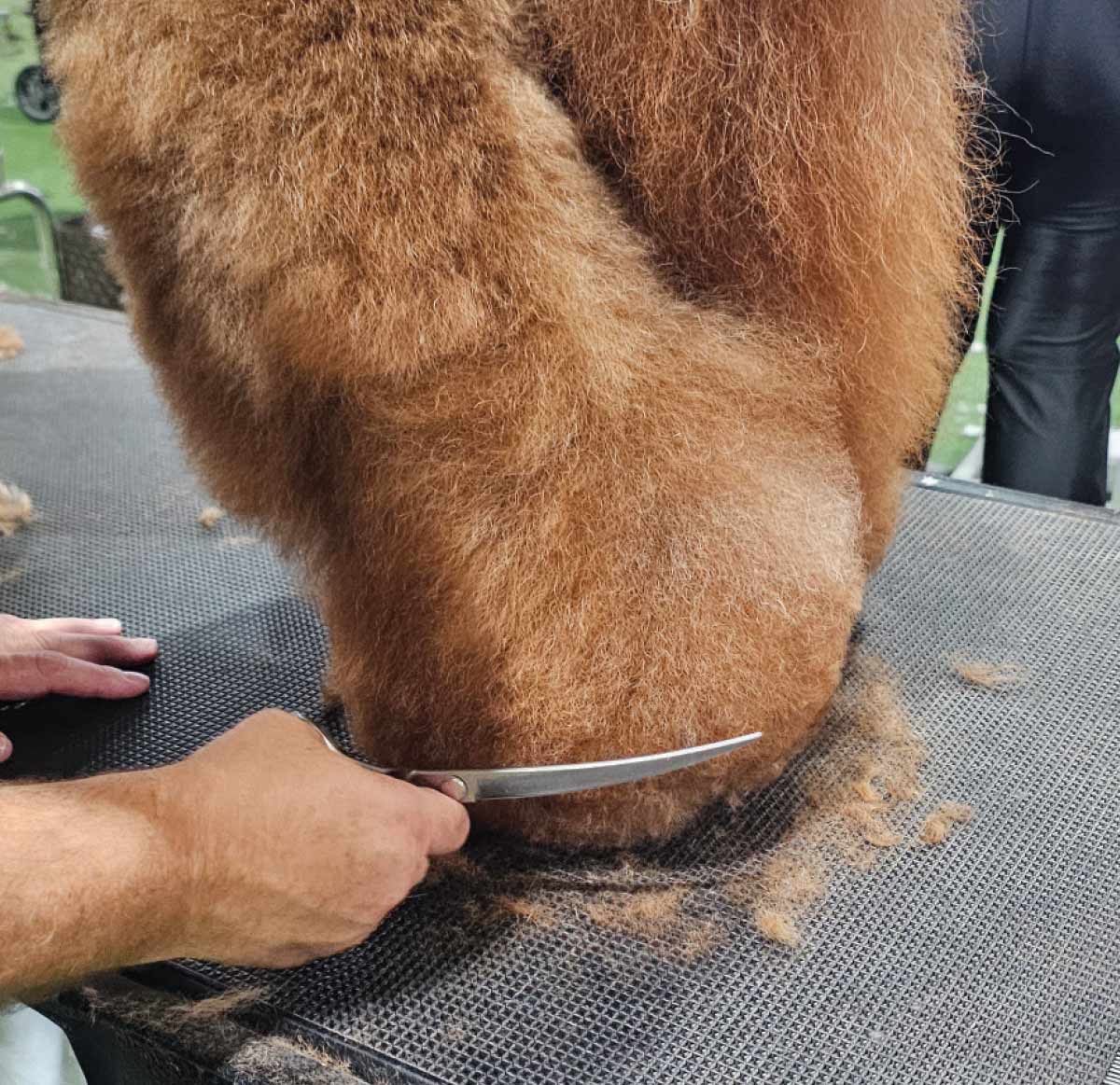
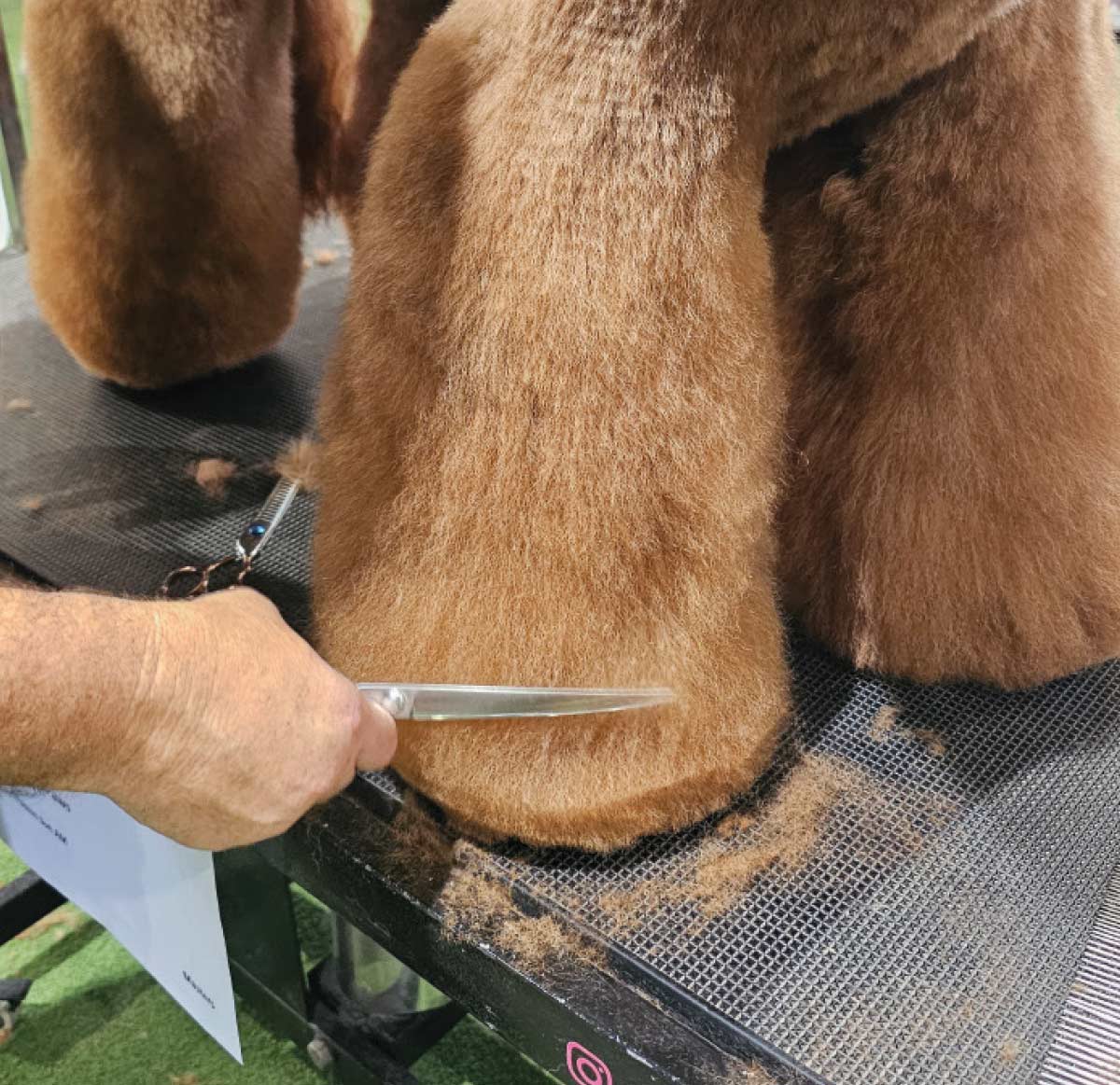
Fig. 8) As you work your way up the foot, you will also elevate the angle that your scissor is trimming to create a definitive lifted appearance off the ground.
Fig. 10) Using chunkers or blenders helps set lines while taking off a good amount of weight, which is exactly what should be done to begin transitioning from the body clipper work down the thigh and into the foot bevel.
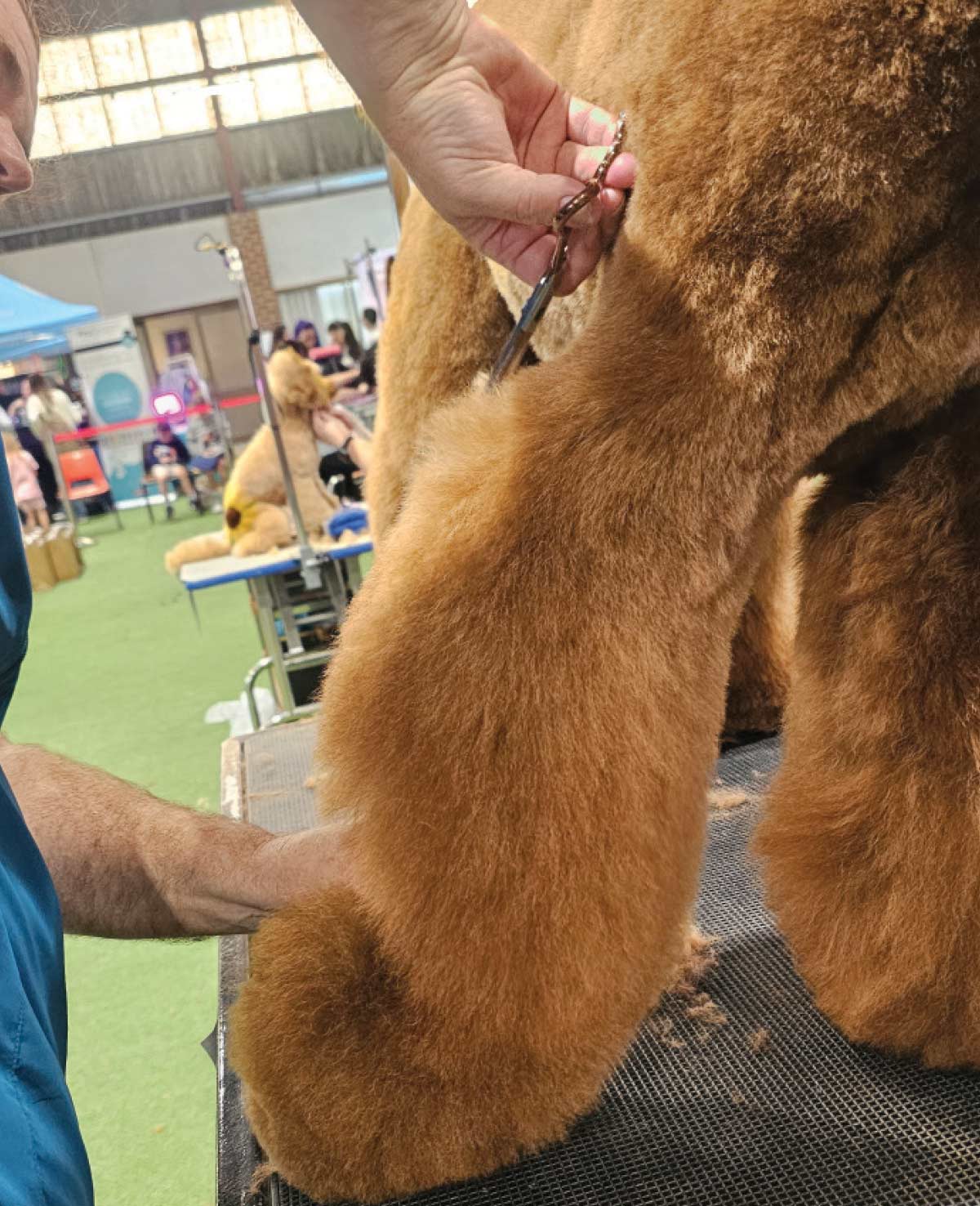
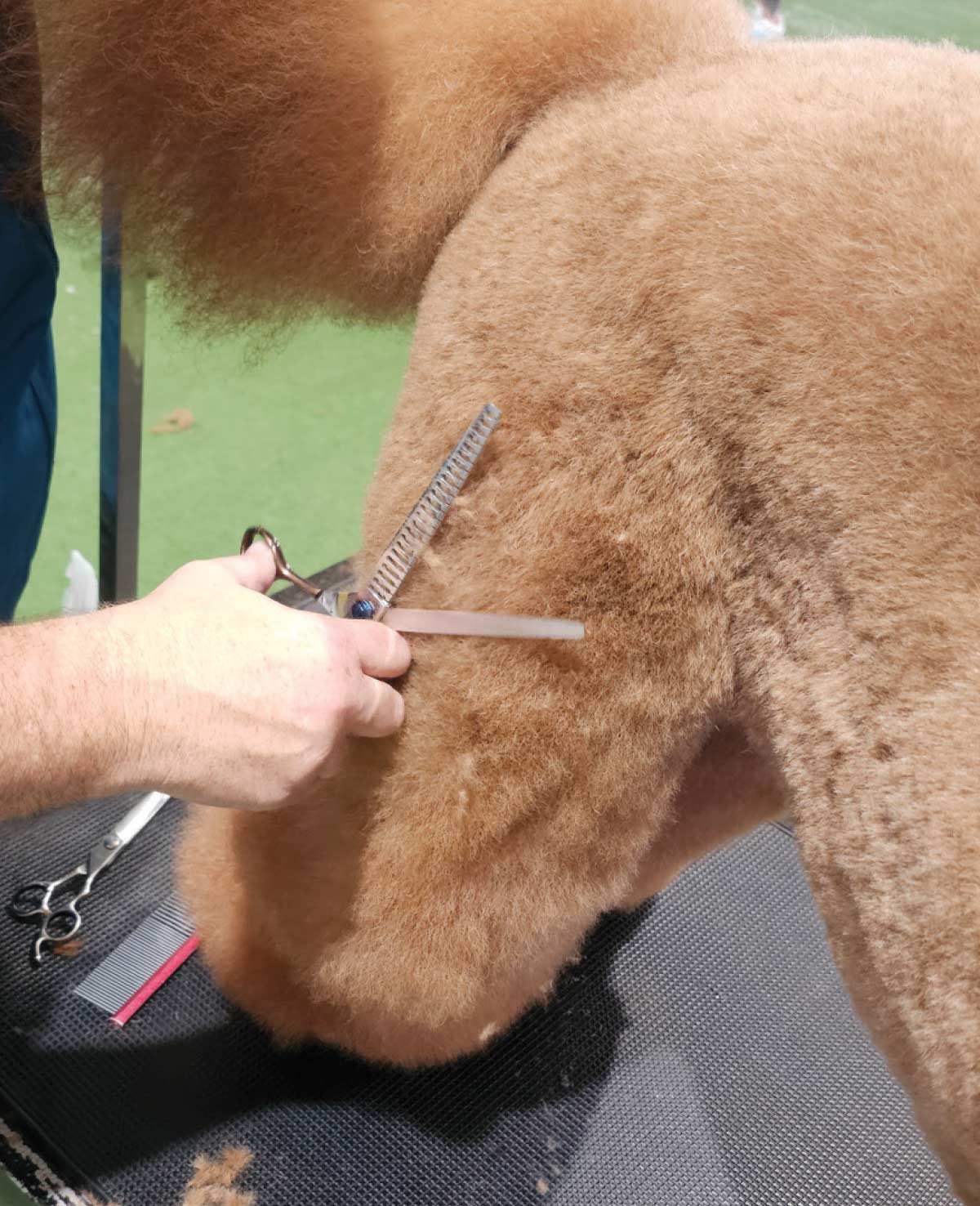
Fig. 12) Inspired by the Bichon, trim the head round while keeping the ears a part of the outline. On a dog this size, your large curved scissor will be your best friend.
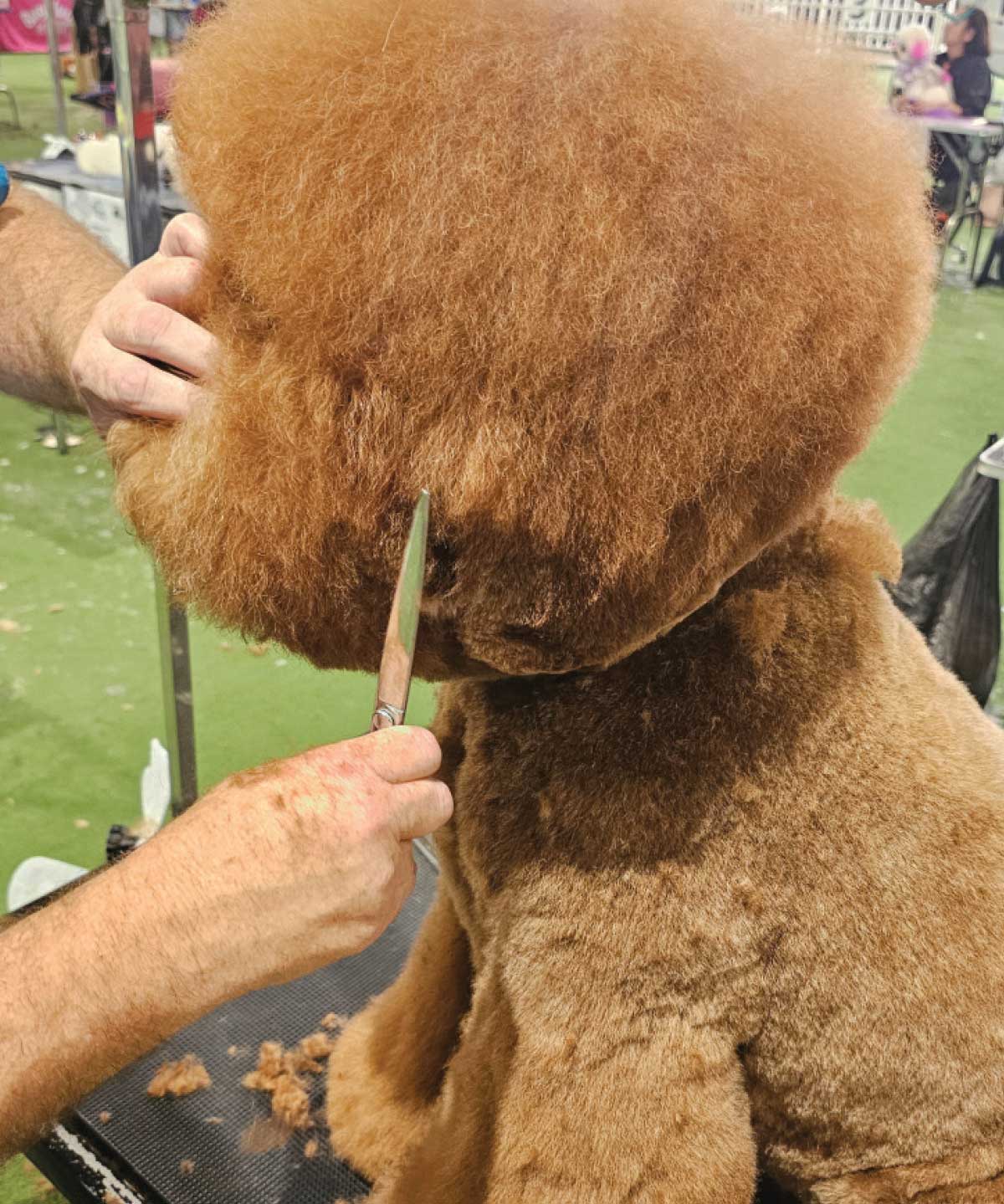
Contests can seem intimidating to most, and that’s why I would recommend a contest like this for new competitors. It allows you to do the trim you are most comfortable with and have fun making a cute dog cuter.

Call (717) 691-3388 ext 224 to place a Classified.
Rates: 25 words or less, $50.00.
Each additional word, $2.00 each.
Classified ads must be prepaid.
Call for issue deadlines.
Agency discounts do not apply.


Thanks for reading our May 2026 issue!