









Contents | November 2025
8
42

ALSO INSIDE
todd@barkleigh.com
adam@barkleigh.com
gwen@barkleigh.com
rebecca@barkleigh.com
luke@barkleigh.com
laura@barkleigh.com
brandi@barkleigh.com
carlee@barkleigh.com
evan@barkleigh.com
allison@barkleigh.com
james@barkleigh.com
karin@barkleigh.com
britany@barkleigh.com
Daryl Conner
Lynn Paolillo
Jennifer Bishop Jenkins
Melissa Viera
ALSO INSIDE
ON THE COVER
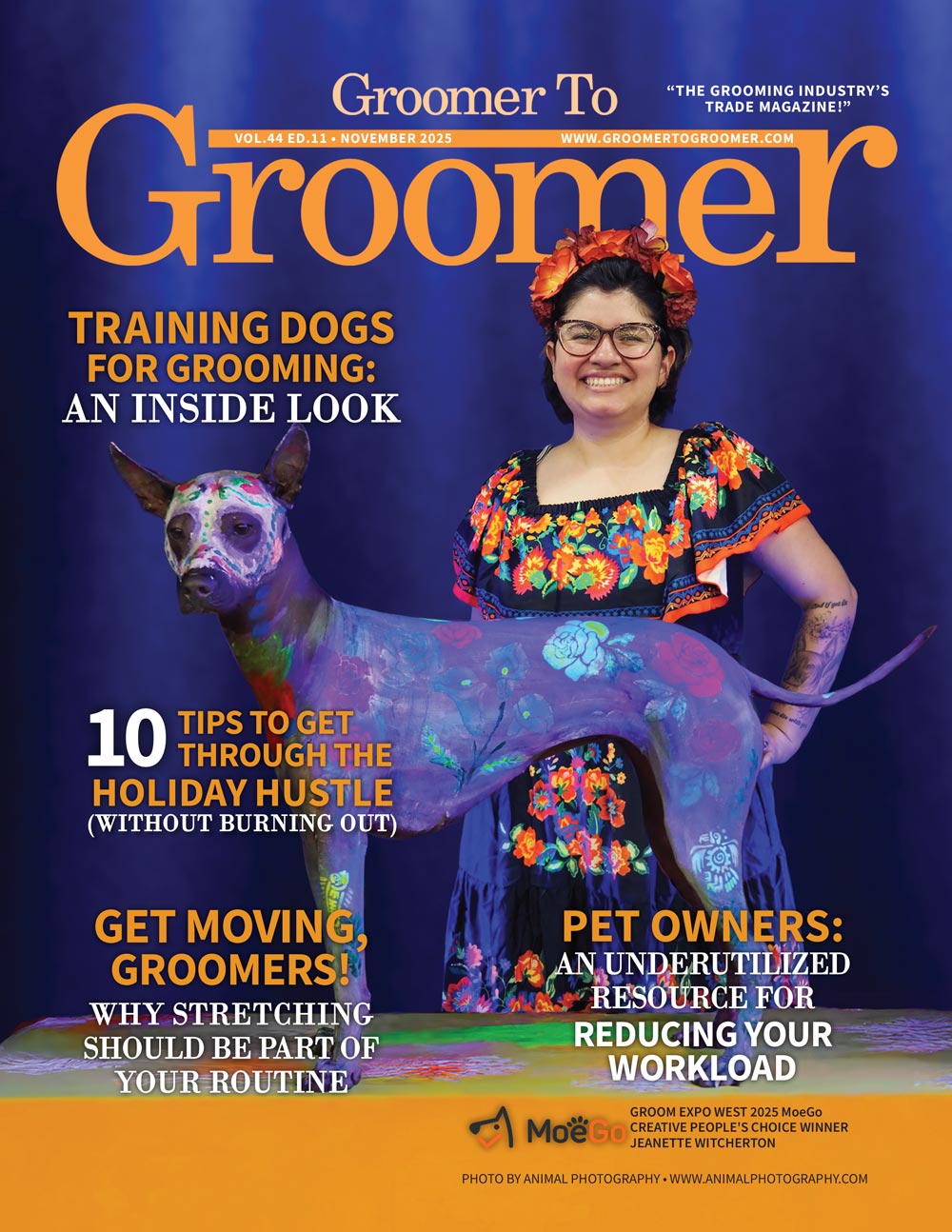
Groom Expo West 2025 MoeGo Creative People’s Choice Winner Jeanette Witcherton
PHOTO BY ANIMAL PHOTOGRAPHY
WWW.ANIMALPHOTOGRAPHY.COM
- Andis2
- Animal Photography16
- AnimalsINK7
- Artero17
- Bandanas Unlimited15
- Barkleigh Store – Meow Wow! A Complete Guide to Feline Grooming45
- Barkleigh Store – Release Forms19
- Barkleigh Store – The Pet Stylist Resource Guide48
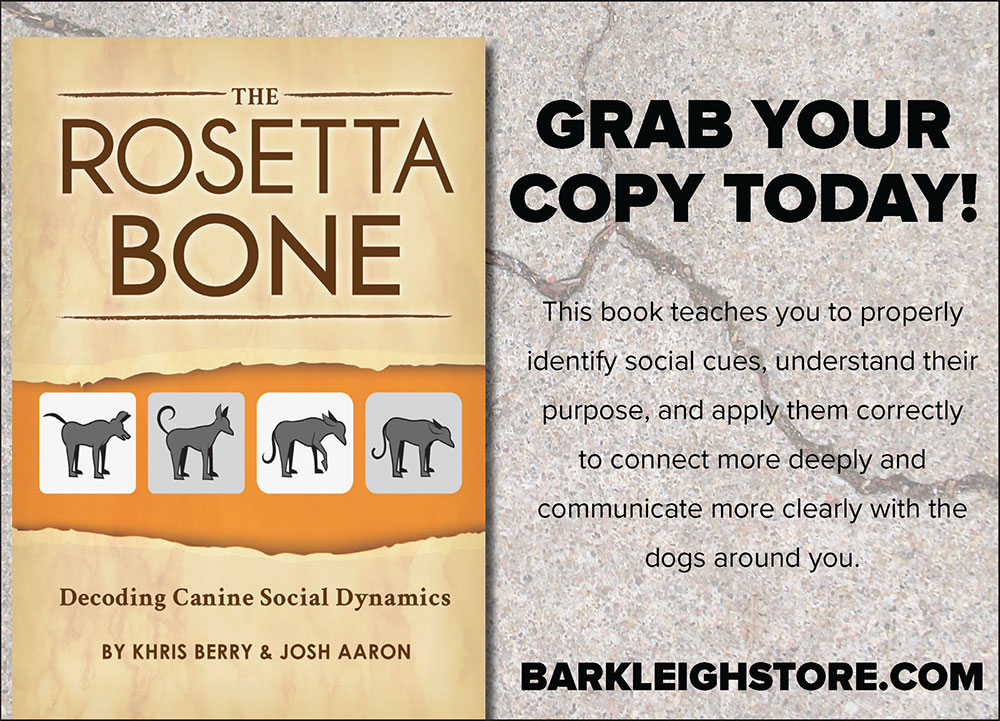
- Barkleigh Store – The Rosetta Bone35
- Barkleigh Updates22
- Best Shot Pet – MED Wellness49
- Best Shot Pet – Scentament Spa9
- Cosmos Bathing Systems40
- Direct Animal Products21
- Double K Industries3
- Electric Cleaner Company31
- Evolution Shears33
- Governor Insurance Agency47
- Groom Curriculum – Upskill Fast TrackDigital
- Groomer’s Choice4
- IV San Bernard | Pet Skin Academy10
- John Stazko44
- Laube57
- Midmark23
- Mobile Grooming World41
- Odorcide51
- Paragon School of Pet Grooming36
- Paw Brothers | Ryan’s Pet Supply58
- Pet Boarding and Daycare Podcast11
- PetBizInsurance.com39
- PetLift29
- Puppy Playground32
- Quadruped Pet Care37
- Ryan’s Pet Supplies | Leading Edge Grooming AcademyDigital Only
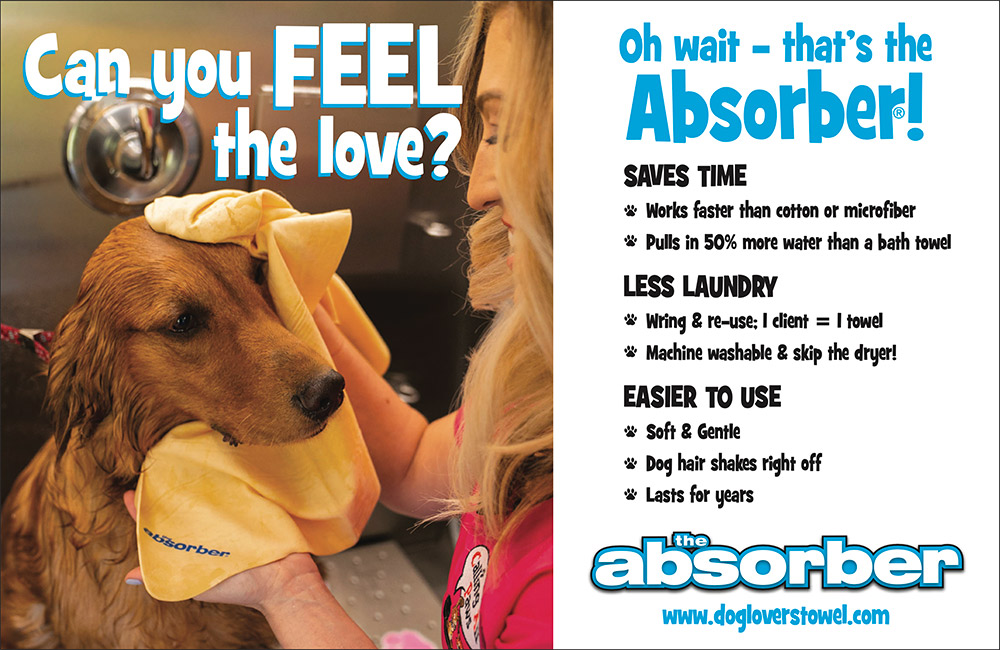
- The Absorber Dog Lover’s Towel43
- Wag’n Tails54
Featured Spotlight Profile
Midmark




















 ime is one of the most precious commodities in a groomer’s day. That’s why we invest in high-quality clippers, dryers and shears, and why we use techniques to help maximize productivity and increase efficiency. But even the best equipment can’t eliminate one of the biggest time-consuming, physically demanding and frustrating aspects of grooming: de-matting.
Think about it: How much of your day is spent brushing, combing and working through mats? And do you know the physical toll that it takes on your body? What if there was a piece of equipment to help you cut your brushing workload?
Well, there is. And it’s already walking through your salon doors and handing you money! Pet owners can become one of your most powerful grooming aids.
Getting pet owners to brush and comb at home is a resource that many groomers are not taking advantage of. But with a little creative education, you can enlist them to take on basic grooming duties so their pets arrive in far better condition for their regularly scheduled appointments with you.
Unfortunately, though, many pet owners are clueless when it comes to caring for their pet’s grooming needs at home. Here’s a real-world example:
When Ashlee came to pick up her freshly groomed doodle, Dudley, the salon owner, Claire, greeted her: “Hi, Ashlee. Here’s your sweet Dudley, all ready to go,” Claire said. “Did you realize that Dudley’s ears and tail were badly matted? That’s why he took more time than usual today.
“He was such a good boy,” Claire continued, “but getting those mats out was not easy for us or pleasant for him. Because of all the extra time we had to take to carefully and humanely remove the matting, the cost of his groom will be higher today.”
“Oh no,” Ashlee gasped. “I didn’t know he had knots in his hair.”
“Yes, unfortunately he did,” Claire replied. “Do you ever brush him at home?”
“Well, no,” Ashlee stammered. “I thought that’s why I bring him to you.”
Ashlee nodded thoughtfully, then said, “Yes, I do, but I never really thought about my Dudley’s hair like that.”
“Brushing him between visits with us isn’t just about looks; it’s about keeping Dudley comfortable, happy, and mat-free,” Claire added.
“I feel like such a bad dog mom!” Ashlee confessed. “I’m embarrassed to tell you, but I don’t even have a brush for Dudley.”
“Oh, that’s no problem,” Claire reassured her. “I have exactly the right tools that Dudley needs. And, I will gladly show you how to brush and care for him between his grooming appointments.”
Ashlee’s face lit up as she said enthusiastically, “I’m in! I will do whatever my boy needs.”
Of course, not all owners will be as agreeable as Ashlee and some will not want (or be able) to care for their pet’s grooming needs between professional visits. But it’s important to use the right approach, as you seldom see positive results by just telling an owner that they need to brush their pet regularly at home. Explaining it in a way that makes sense to the owner really improves the chances of them taking an active role in the at-home care of their pet.
Even better, don’t just tell them—show them. Spend a few minutes demonstrating on their pet and show them the tools they should be using and how to use each one correctly. Then hand them the tools and let them try while you watch and guide them. Offer encouragement as they follow your instructions.
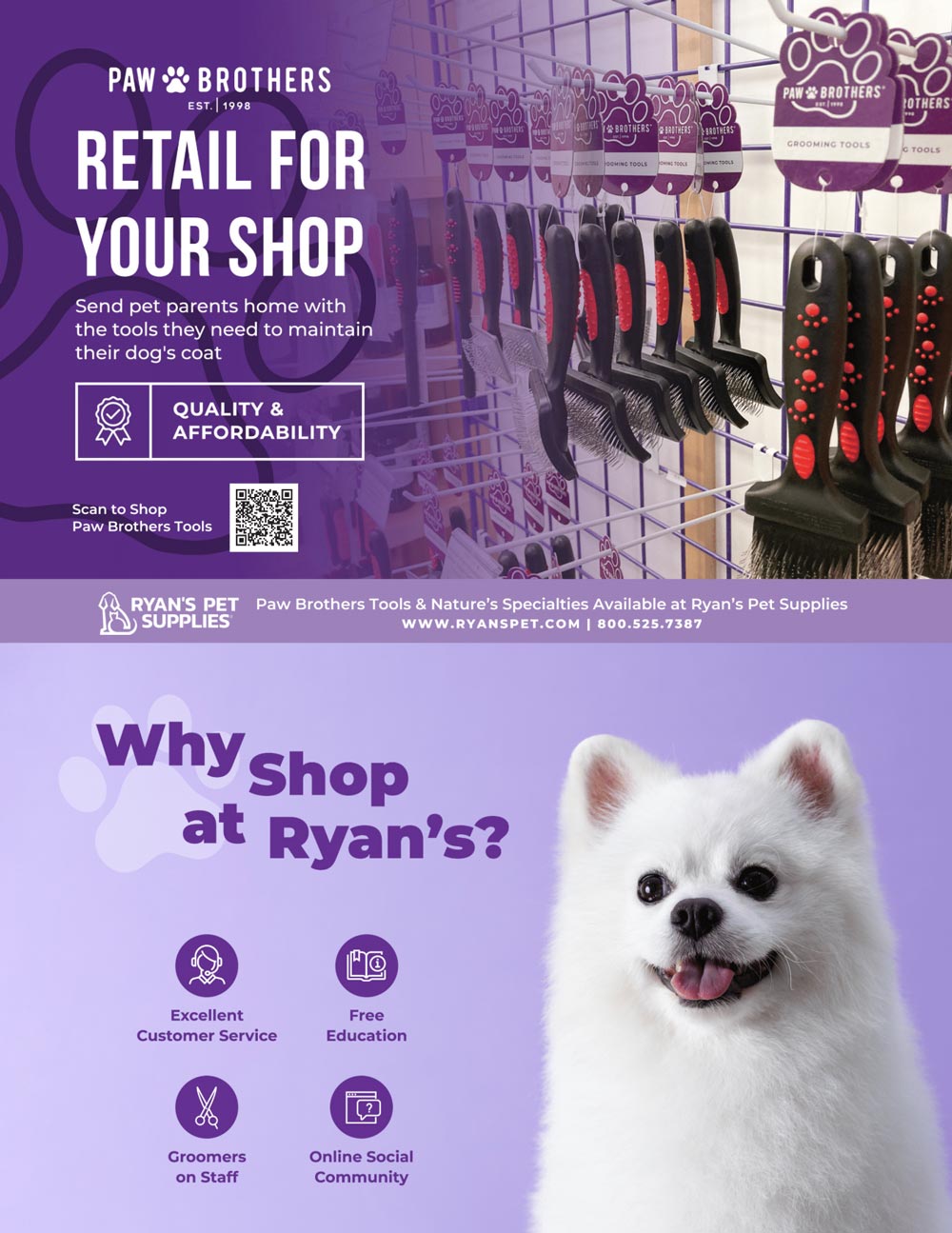
If retail is an option, you can stock and sell the brushes, combs, and other tools and products you recommend. You can even assemble and sell “home-care kits” for different coat types—curly coats, double coats, shedding coats, etc. This can make it easier for the owners to succeed and also adds retail revenue for you.
If you have owners that tell you they don’t have the time or the ability to care for their pet’s grooming needs at home, you can offer “maintenance” grooming packages with options that are tailored for their pet’s individualized needs, such as weekly brush-outs for high-maintenance coats, bi-weekly bath-and-tidies and seasonal de-shedding sessions for heavy shedders. Maintenance programs provide peace of mind for the owners while ensuring their pet’s grooming needs are not neglected between their regularly scheduled full grooming appointments.
By spending a little time to educate owners about the tools and products they need for at-home care and how to properly use them, and by offering maintenance programs, owners will have the resources to care for their pet’s brushing and combing needs on a regular basis.
When you learn how to utilize owner participation effectively, you will be able to turn pet owners into admirable grooming assistants (without putting them on your payroll), therefore transforming one of your biggest frustrations and time-consumers into a win-win-win outcome. The pets are happier and more comfortable, the owners feel empowered and like they are part of “the team,” and you save time, protect your body and increase your income.
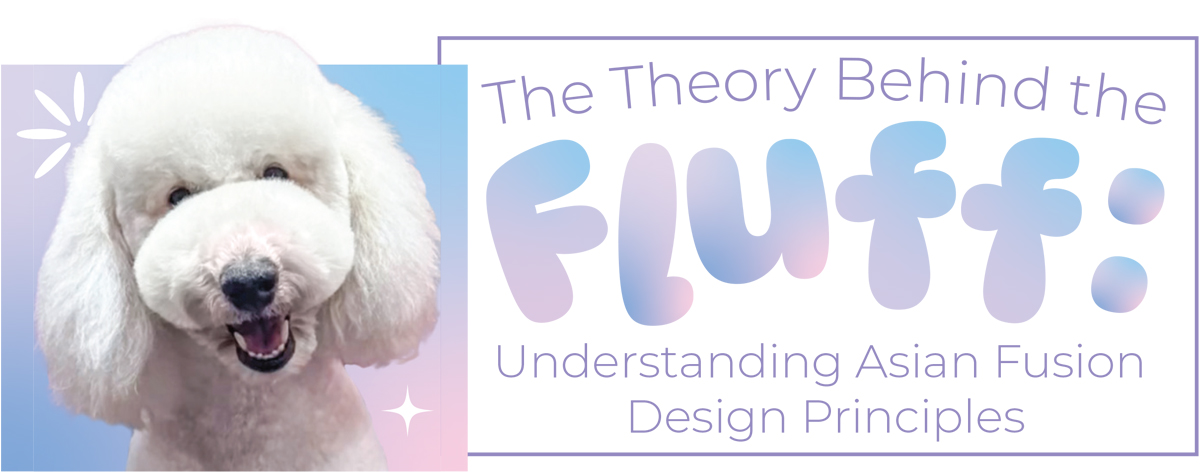
The Theory Behind the

Photos provided by Dillon Gonzales
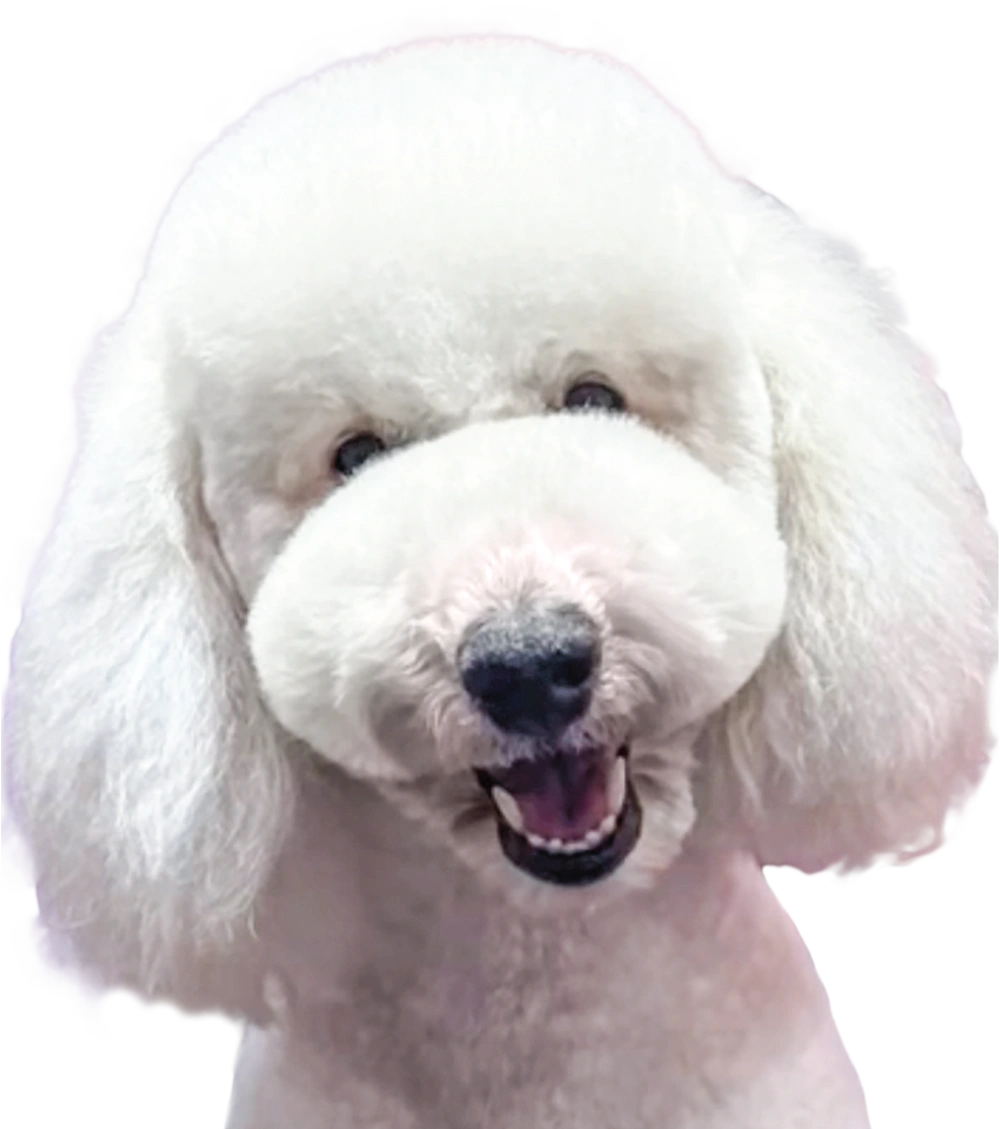
 sian Fusion grooming often gets called “cute,” and it is, but there is so much more behind the fluff than just cute for the sake of being cute.
The first time someone told me about Asian Fusion grooming, I Googled a picture of it, saw a fluffy, round-faced pup and thought, “easy.” Fifteen minutes into the haircut, I realized I had no idea what I was doing. The shape wasn’t right and the face looked off. That was the day I realized this style was not just adorable, it was architectural.
Specializing in Asian Fusion has taught me to stop thinking in terms of “just shape it round” and start thinking like a designer. This style has its own set of visual rules just like art or architecture. It is about intention, contrast and knowing how to flatter a dog’s structure while still adding personality. That mindset changed how I groom, and I think it can elevate anyone’s work if they dig into the why, not just the how.
Design Isn’t Random, It’s Calculated
Asian Fusion is often paired with freestyle, but I think it is in a class of its own. It is incredibly technical, and not knowing balance, symmetry/asymmetry, shape and expression can make or break your Asian Fusion-style groom.
Here are some commonly used terms and what they mean in reference to the groom:
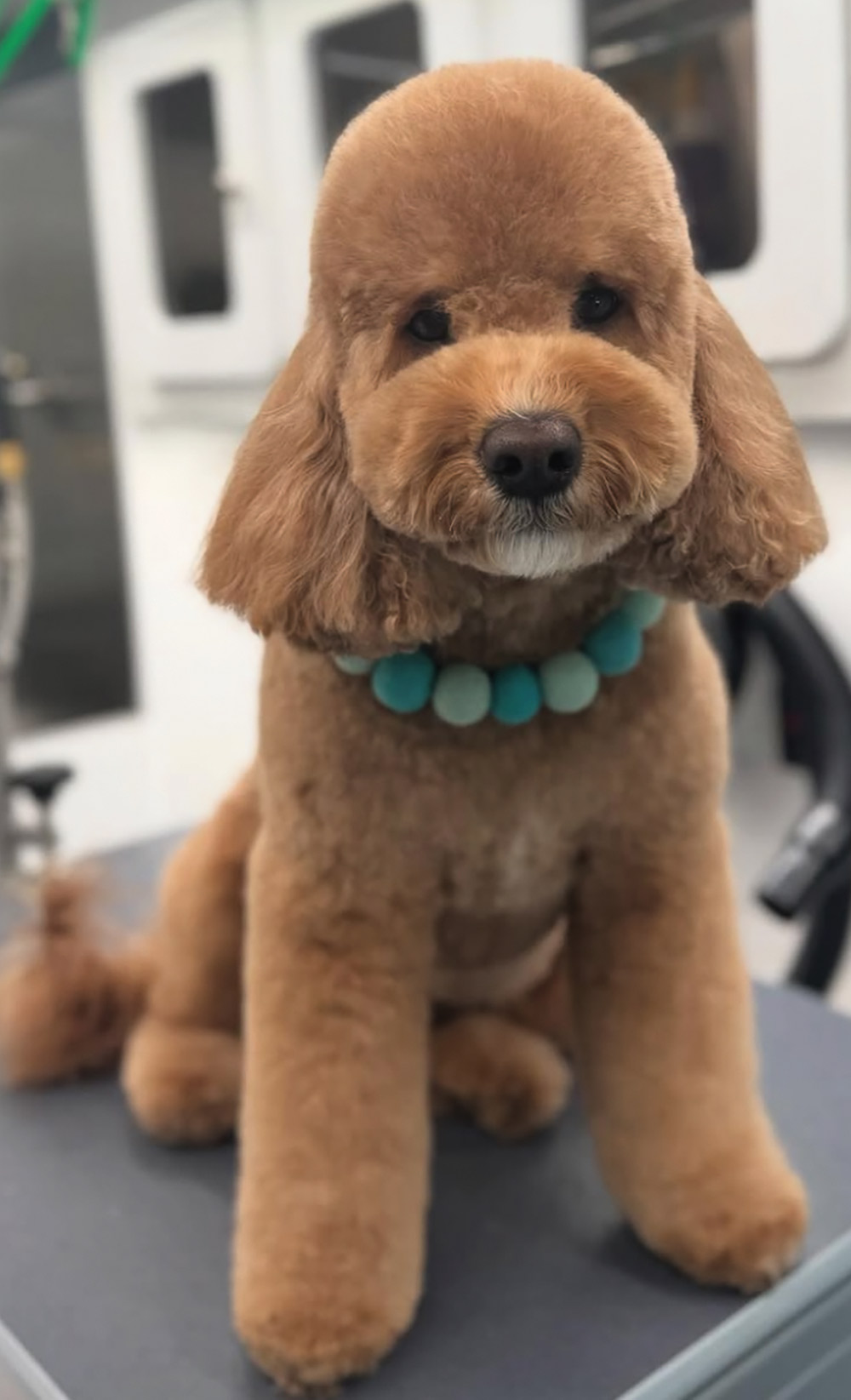
- Balance: Pairing a large head with flared legs and a compact body.
- Symmetry vs. Asymmetry: Sometimes an uneven ear set or off-centered bow makes a look pop.
- Shape: Round = soft and sweet; Square = bold; Longer Lines = elegant.
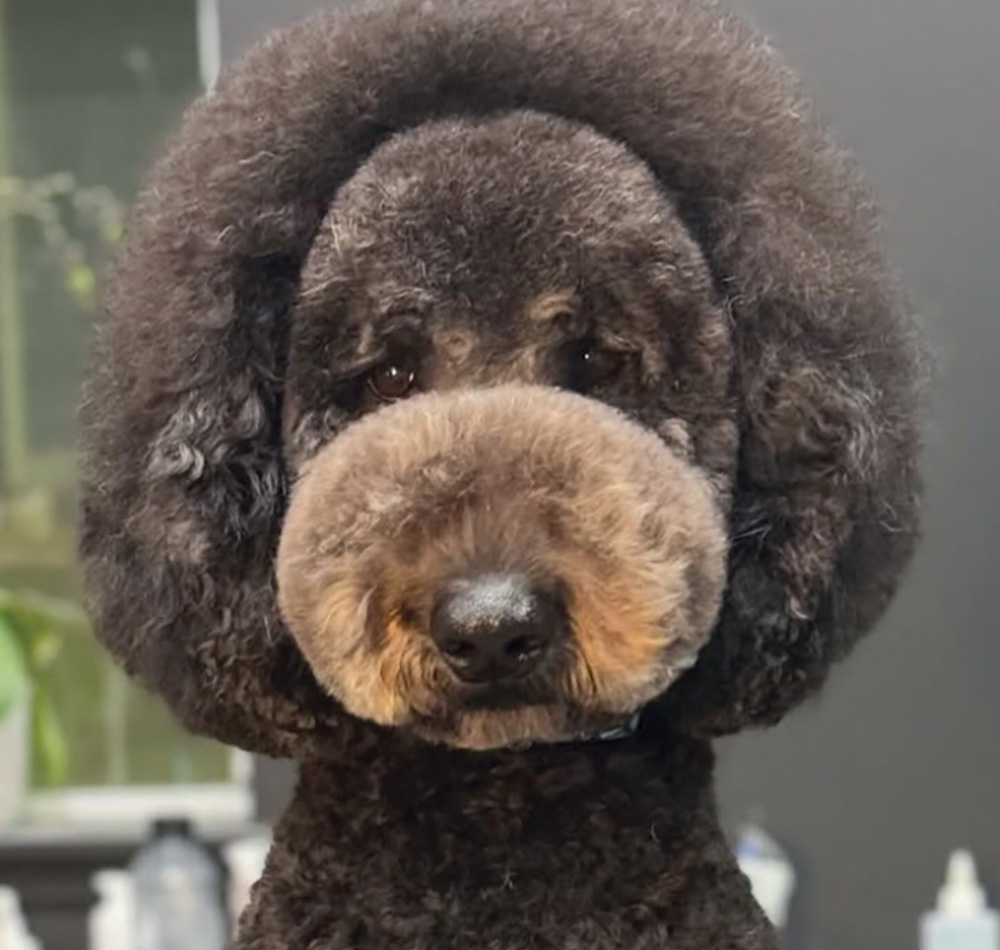
- Expression: Head shape based on what emotion you want to bring out—playful, pouty, pouty but fierce, etc.
Head
I always start by asking myself, “What story am I telling?” A round head says “puppy cute.” A wide donut muzzle might feel more cartoonish. The ears? Everything from lamb drop ears or sharp teddy cuts to big flared beveled ears changes the vibe. Having a clear vision is key to a cute, well-executed face and head.


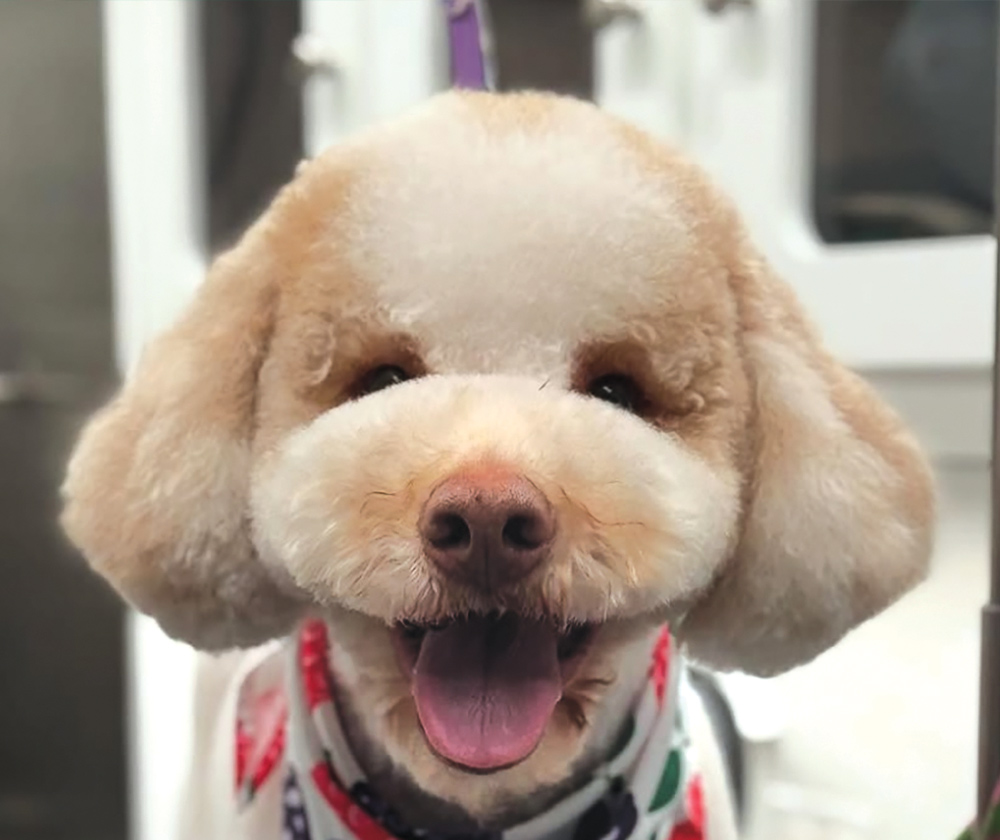
It is all about communication and understanding what the client wants versus what you can create. Having a good portfolio of grooms you have done is a great idea to showcase the style you envision. Building trust with your clients leads to success and creativity.
The following outlines a few common pitfalls often seen in Asian Fusion grooming:
- Over-shaping without intention: Making everything round does not make it cute; it can make it clunky if not paired with structure.
- Ignoring the dog’s anatomy: Forcing a look on a body type that cannot support it leads to awkward silhouettes.
- Overdoing transitions: Blending should lead the eye, not blur everything into one fuzzy mess. Be deliberate.
- Copying trends blindly: Just because a trim is viral does not mean it works on every dog. Adjust for coat, structure and personality.
Asian Fusion grooming is about more than just cute faces and fluffy legs. It is about using design to tell a story, flatter a frame and turn everyday dogs into walking artwork. Once you start thinking with intention instead of autopilot, everything about your grooms will level up. So next time you lift your shears, ask yourself: What am I designing here?

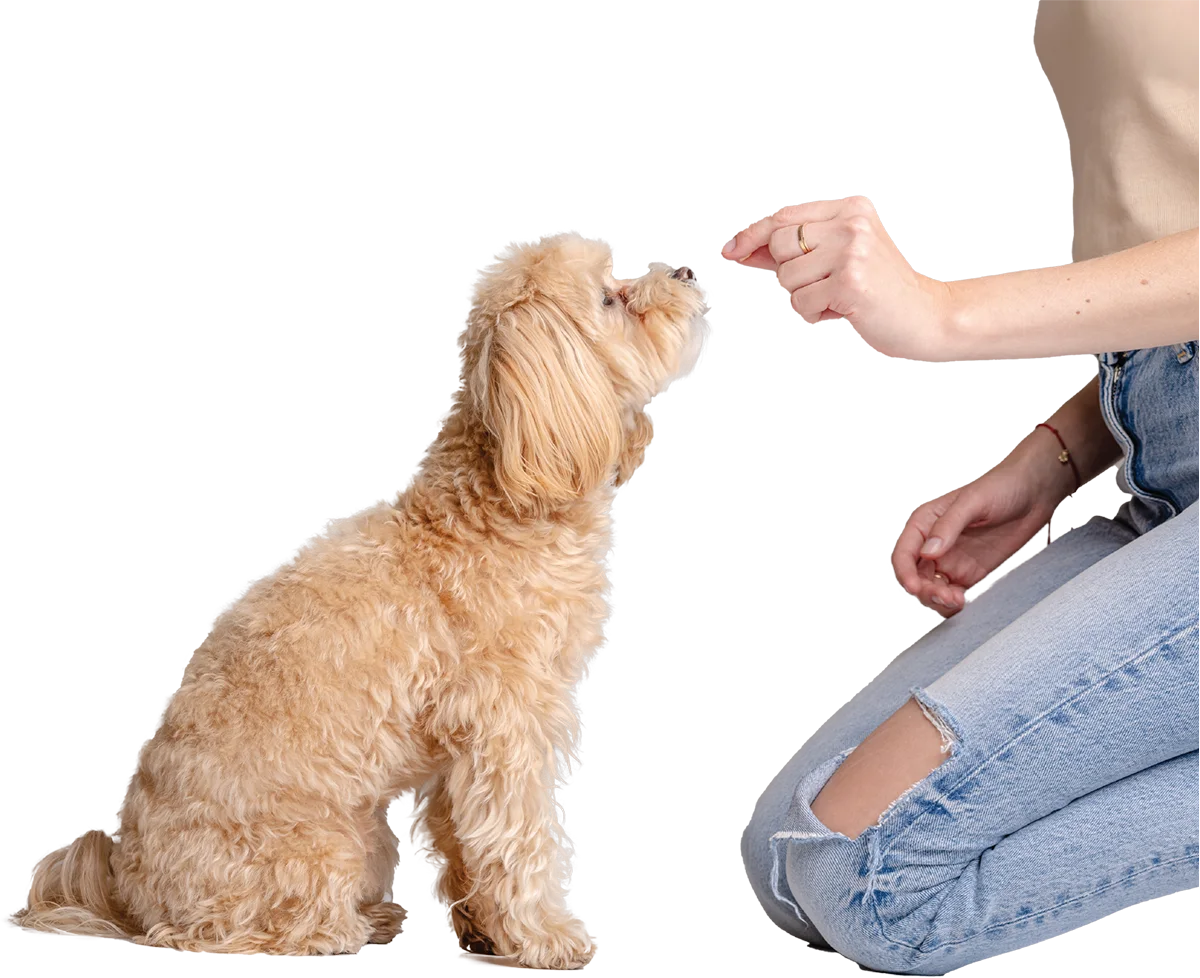

 ost pet dogs don’t stand still like a show dog on the grooming table. A little shifting around is normal, but when dogs show fear, aggression or extreme excitement, grooming can quickly become unsafe for both the dog and the groomer. In these cases, it’s up to the owner to help their dog prepare for grooming—and sometimes that means professional training.
What Training Can (and Can’t) Do
Understanding the training process can also help groomers determine whether they should give a dog another chance at their salon after completing training. Since every approach is different, it’s always best to communicate directly with the trainer whenever possible.
While a trainer shouldn’t design a plan based solely on assumptions—such as assuming the dog finds grooming aversive due to a painful association with being groomed—it’s essential to consider all available information. Even partial details can help to shape a custom plan.
From there, trainers can recreate the grooming process by breaking it into micro steps. Since it’s essential to observe the dog’s responses to establish a customized plan, working on each aspect of grooming individually makes the most sense. The goal is to make every stage predictable and tolerable in order to reduce stress before moving on.
For example, if a dog shows any signs of stress when the trainer picks up their paw, the trainer may stop instead of continuing to push forward. This technique builds trust and gradually extends the dog’s tolerance.
Instead of stopping when the dog’s behavior becomes too challenging to continue, this approach means the handler stops when the dog gives a quiet signal, before pulling away or attempting to bite. In the salon, however, groomers might find it impossible to use this technique since stress signals are frequent.
Bridging Training and Grooming Reality
A helpful exercise pairs one groomer as the handler and another as the observer, noting lip licks, yawns, changes in body posture or other signs of stress during a short session. Switching roles helps sharpen awareness of canine body language in the salon.
Some trainers will also work on transition points that naturally occur, such as moving dogs from a tub to a table or a table to a crate, and use pattern exercises to build confidence in each step. Over time, “stand on the table” expands into “stand, be brushed” or “stand, be clipped,” preparing the dog for the flow of a real session.
Groomers can then incorporate clear communication and micro breaks into their routines. Giving the dog a cue before a sudden change, such as turning on the water or the dryer, can help. Also, allowing the dog to move away from the grooming table briefly and shake off can reduce stress and help the dog reset.
When owners are grooming their own dogs, even basics such as brushing, trainers might introduce skills the owner can use by giving the dog the corresponding cue. In cases where groomers and trainers collaborate or work within the same business, trained behaviors can also be effective.
Examples of trained behaviors include:
- Focus Target: Looking at a set point on cue.
- Side Settle: Relaxing on a mat placed on the table.
- Chin Rest: Holding still with the chin on a grooming pillow.
- Stand: Stand squarely on cue.
- Paw Lifts: Lifting paws on cue.
These trained behaviors require practice, but can result in a smoother grooming process.
Training is a lifelong process, and not all dogs respond in the same way. Some will quickly return to regular appointments after a few training sessions, while others require ongoing breaks and patience. Also keep in mind that if a dog starts to improve, and then has a stressful grooming visit, everything can be undone.
Recognizing when a dog is experiencing stress before they become too difficult to groom is a valuable skill that benefits everyone involved if the problem is addressed early.
by Mary Oquendo
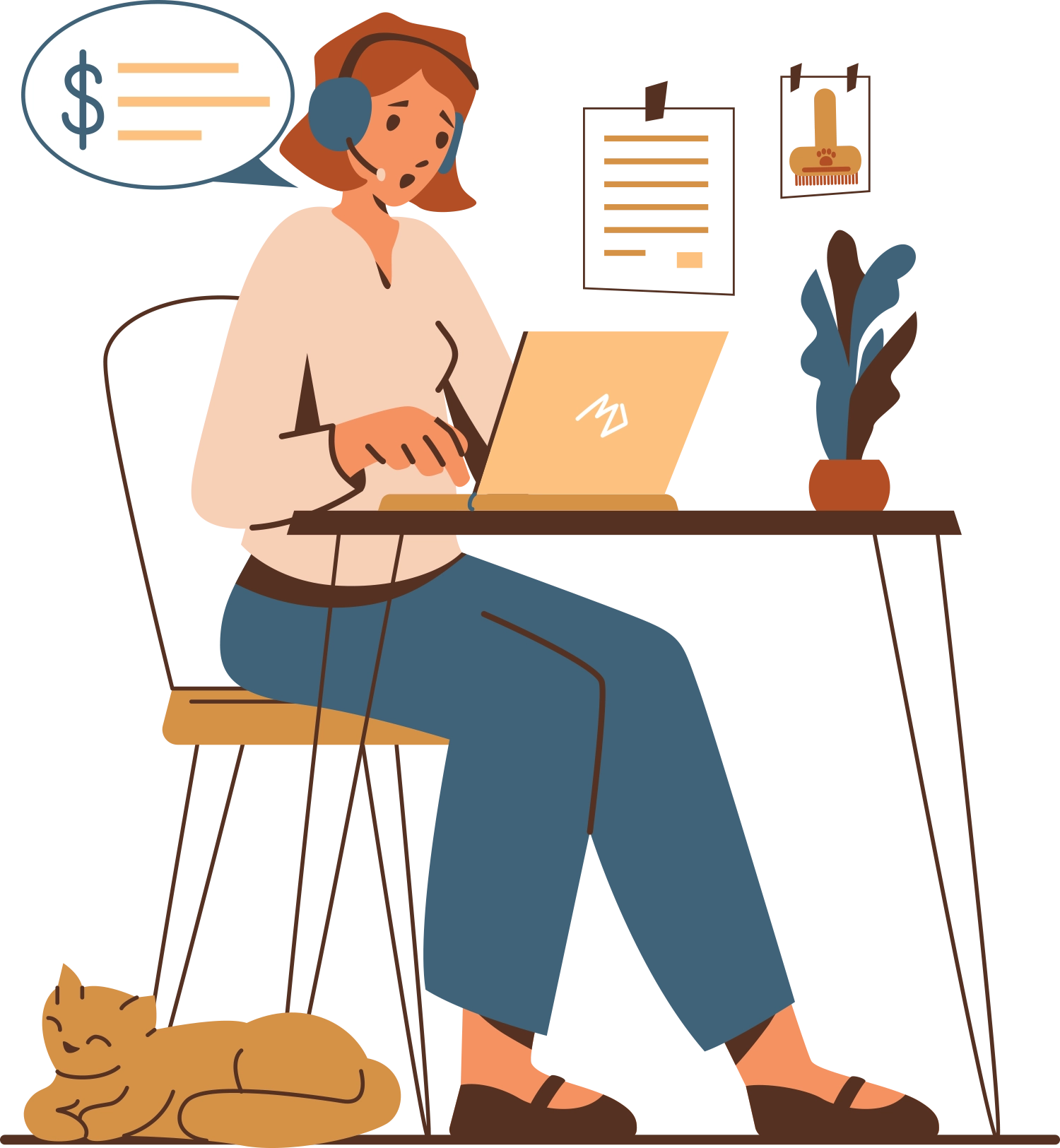
 here’s a kind of magic that happens when you genuinely look forward to unlocking the doors to your business each morning, which is often the result of a thriving workplace culture where joy, purpose and connection intersect to create something truly special. But when the business layer of your salon falls out of balance, the ripple effects can be profound.
A struggling business often grapples with a host of challenges, from high employee turnover to a dwindling client base. The owner, once full of hope and ambition, now feels overwhelmed and disillusioned—questioning whether starting the venture was the right choice at all. Despite investing an exhausting 80-hour workweek, they find themselves caught in a relentless cycle of financial instability, unable to pay the bills or enjoy the rewards of their hard work.
Organization goes beyond simply knowing where your supplies and forms are stored for easy access. It encompasses the automation tools and software systems that streamline your operations, like accounting, client management, scheduling and payroll. It means regularly re-evaluating your schedules, policies and procedures to ensure they still serve your business effectively. And it involves developing strong leadership skills, including the wisdom to know when to stand firm and when it’s time to compromise.
What truly brings a business joy? At its core, financial success plays a vital role. But it’s not just about generating profit—it’s about ensuring employees are fairly compensated and the business owner enjoys a sustainable, comfortable livelihood.
Equally important is the growth trajectory. Is your business expanding in a way that honors its core values and mission? Striking the right balance between profitability and integrity is key to fostering a workplace culture that inspires both dedication and innovation. In the end, true joy in business comes from the harmony of financial stability, engaged team members and ethical, value-driven growth.
One of the most encouraging developments in our industry has been the growing availability of specialized coaches. Today, there’s a coach for nearly every aspect of your business—no matter the challenge you’re facing. A skilled coach can help you navigate around obstacles and cut through the tangle of your business with clarity and objectivity—something that’s often difficult for emotionally invested owners. Simply put, a great coach is worth their weight in gold.
A business doesn’t happen by accident. It’s cultivated through intention, compassion and a shared commitment to excellence. When happiness is part of your business model, it shows in every interaction, every tail wag and every satisfied smile. The real success isn’t just in the numbers; it’s in the atmosphere you create and the lives you touch, both human and animal alike.
 he invention of the high-velocity dryer was an innovation that has forever changed and bettered our grooming industry. These high-velocity, or “HV,” dryers are so effective and universally used today that most younger groomers have never known grooming without them.
What we older groomers remember is having to use more bulky stand dryers which gently blew out electrically heated air. They had three or five legs on wheels with a metal arm and rotating head that could swing over the grooming table, which we had to constantly adjust to dry different sections of the dog. Some of us felt it was less stressful on the dogs, but it was more stressful on us, and certainly more time-consuming.
The easy-to-use hose and nozzle of today’s wonderful HV dryers are so much faster, easier and more effective in drying the dogs, making them an almost indispensable piece of equipment for pet groomers. But there is one weird thing that groomers often do with our HV dryers, which I call the “flippy dryer” thing.
This is where some of us shake the HV dryer nozzle at the end of the hose back and forth in a rapid motion on the dog we are drying. And I assume groomers do this because we are mimicking what we sometimes do on our own hair when we use our much-less-powerful, handheld human hairdryers on our own heads. But let’s think about this habit some of us have transferred to our big HV dryers…
We know that these two types of dryers are not at all the same. Human hairdryers are more heat than force, while HV dryers are the opposite and are much more powerful. The physical impact of the air from an HV dryer hitting a dog’s skin is felt and experienced by the dog in a much stronger way. Dogs also have to endure the drying process for much longer than we would, as they have much more hair, and have it all over their bodies.

HV dryers require us, as well as the dogs, to wear hearing protection. RAPIDLY WHIPPING the dryer around that is already FAR MORE POWERFUL than any human hairdryer also makes it MUCH NOISIER.
HV dryers require us, as well as the dogs, to wear hearing protection. Rapidly whipping the dryer around that is already far more powerful than any human hairdryer also makes it much noisier.
In addition, the “flippy” thing with the HV dryer has been linked to an increased risk of carpal tunnel syndrome in our wrists. Any repetitive motion can lead to this seriously debilitating pain and weakness in our wrists that ultimately requires surgery.
We also know that “white lung disease” can happen to groomers from breathing in the cast-off particles from blow-drying. Flipping the dryer around worsens the amount of these microscopic particles in the air that we breathe.
Unlike the waving around of a hand held human hairdryer on our own minimally haired heads, waving an HV dryer back and forth actually can reduce the air impact on many dogs’ coat types because you are pulling the air away and then back again from the area you are trying to dry.
And we aren’t just drying hair, we are drying skin! Holding the HV dryer still on an area allows the skin to dry before the hairs, which is important if we want the coat to be fluffed and straightened after we are finished drying. If we leave the skin a little damp while drying the hair, which flipping the dryer around constantly can do, then the coat can curl back up because of the still partially wet skin underneath. Drying from the skin out helps the coat stay straighter and fluffier.
The one exception to this rule is short double coats such as Labrador Retrievers with their very thick undercoats and loose skin on their chests, which can be very challenging to get completely dry. Using the HV dryer in a flipping motion on their chest, underside and rear-end areas, especially while they are still in the tub and before we take a towel to them, can remove a ton of excess water and can save significant time in the final drying process.
One always has to be very careful about HV drying any of these short-coated breeds, however, especially on their upper torso or “jacket” areas, as it could tear the delicate arrector pili muscles that give the tight grain of their coats. Holding the HV dryer at an angle that protects the lay of the coat, as well as that delicate microscopic hair follicle muscle that creates the direction of the growth of the coat, is very important for us to do to prevent causing the dogs any discomfort.
So the next time you find yourself doing the “flippy” thing, put yourself in their paws and hold the dryer more gently and move it slower. The dog will dry just as quickly, the hair will tangle less, de-shed better, stay dry from the skin out, look straighter and your beloved four-legged client will be much less stressed.

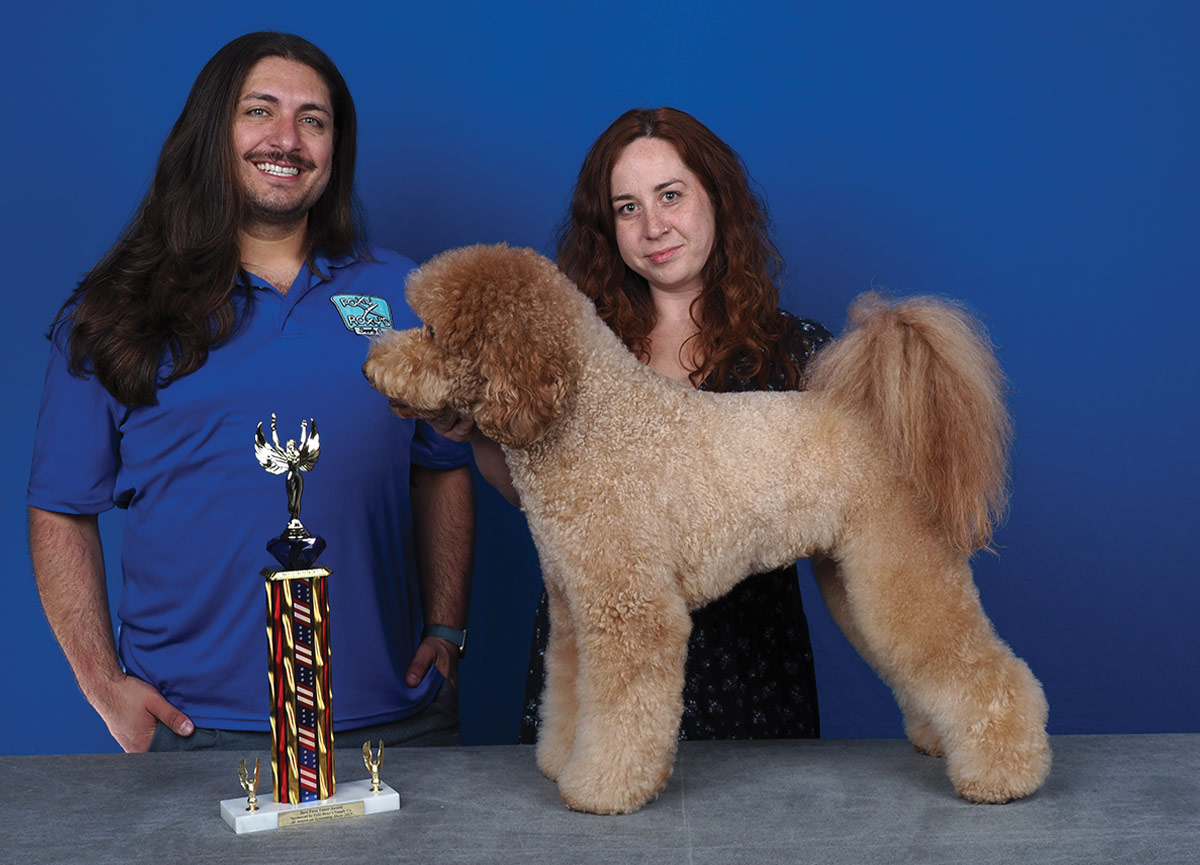
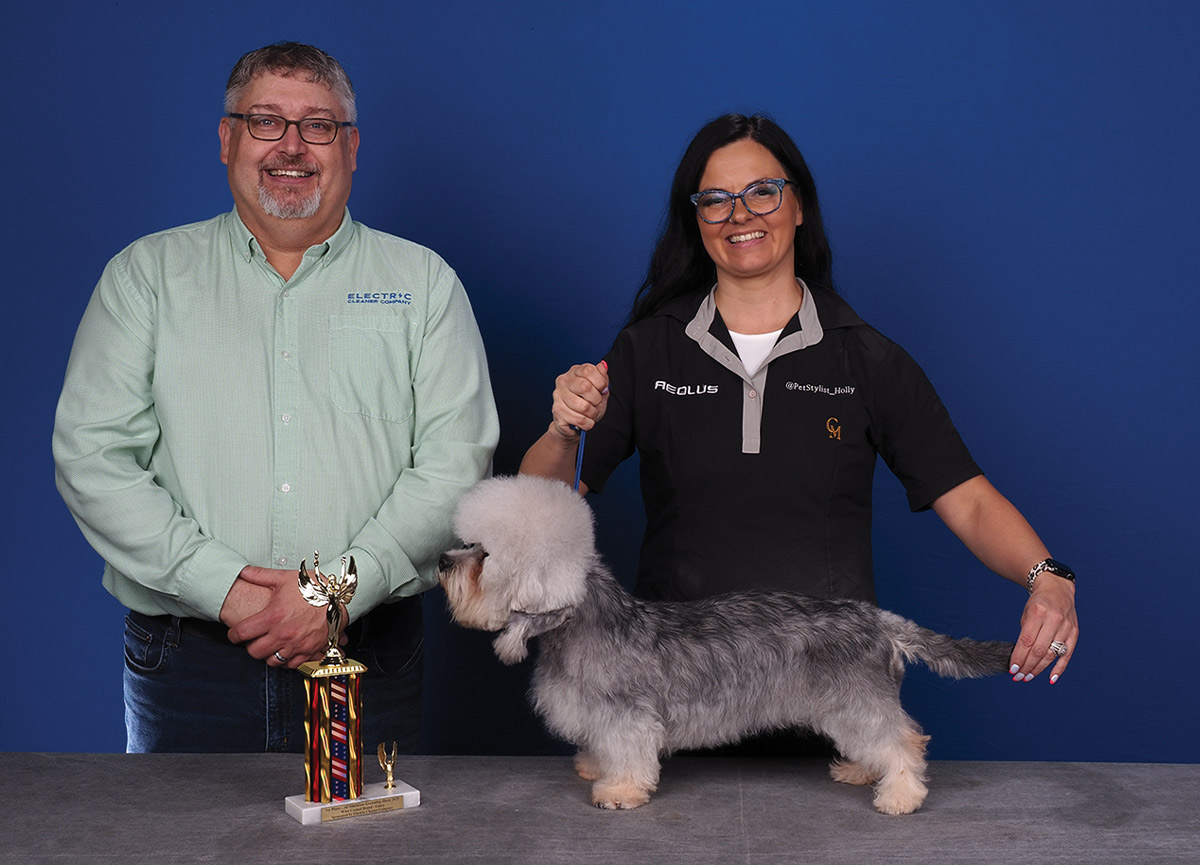
Contest Results
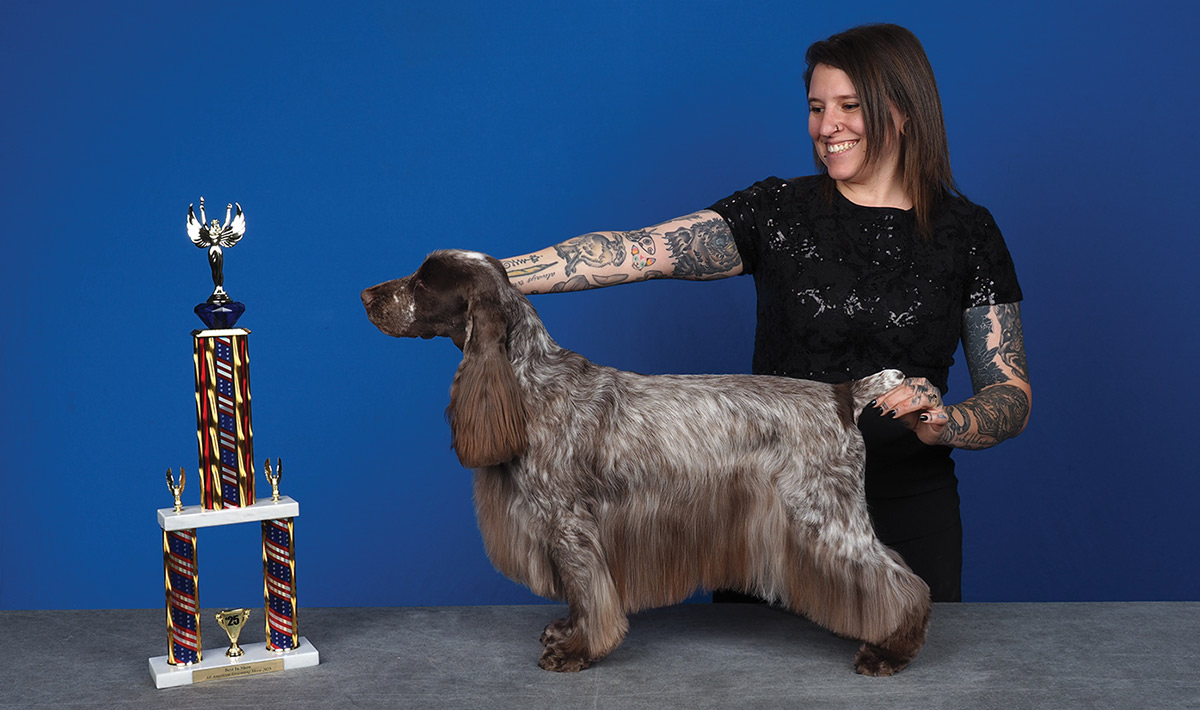
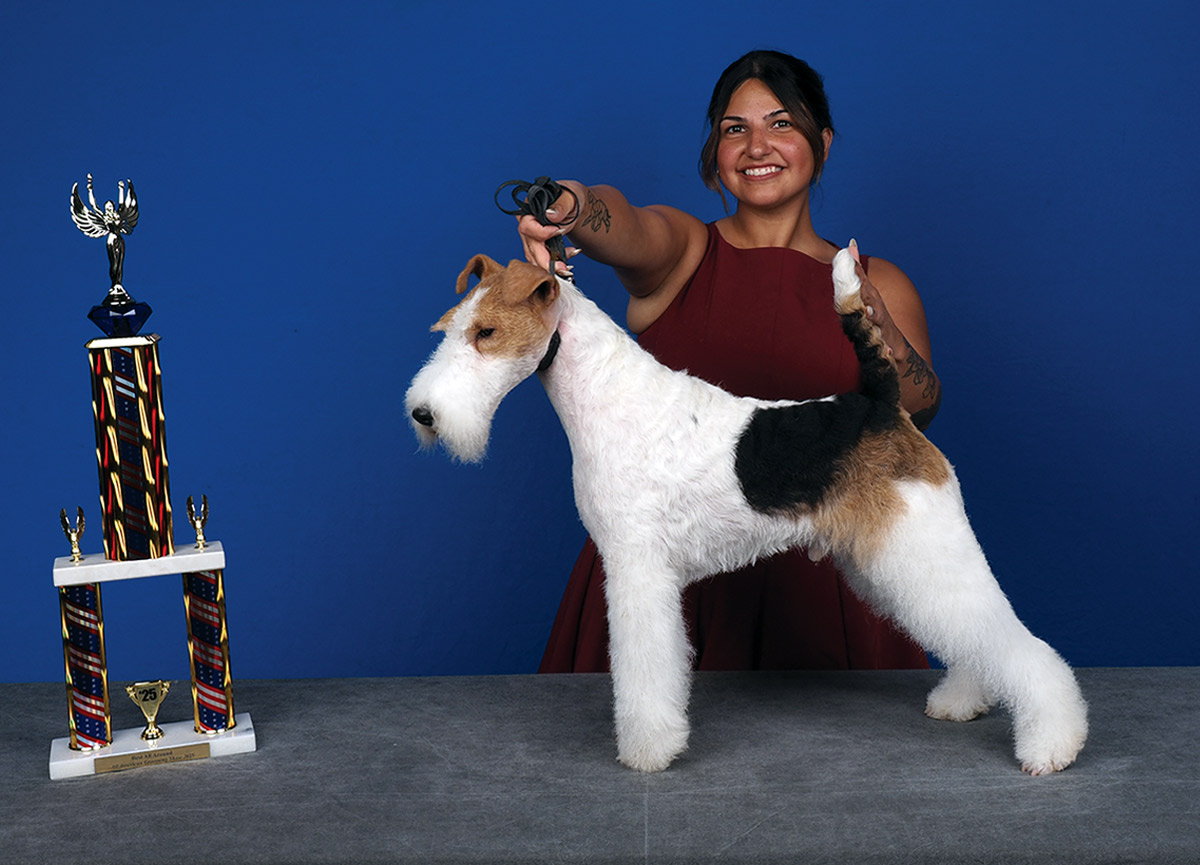
Wire Coated Breeds Sponsored by Electric Cleaner Co.
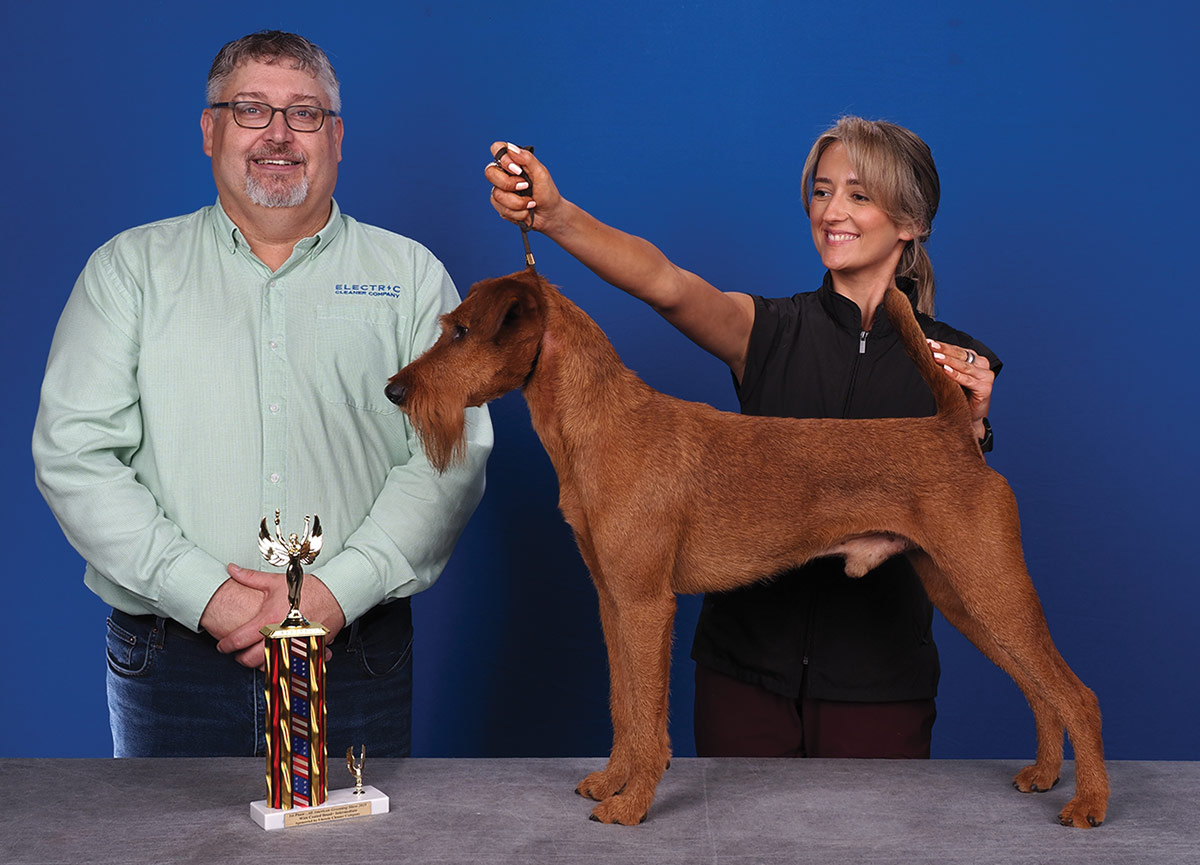
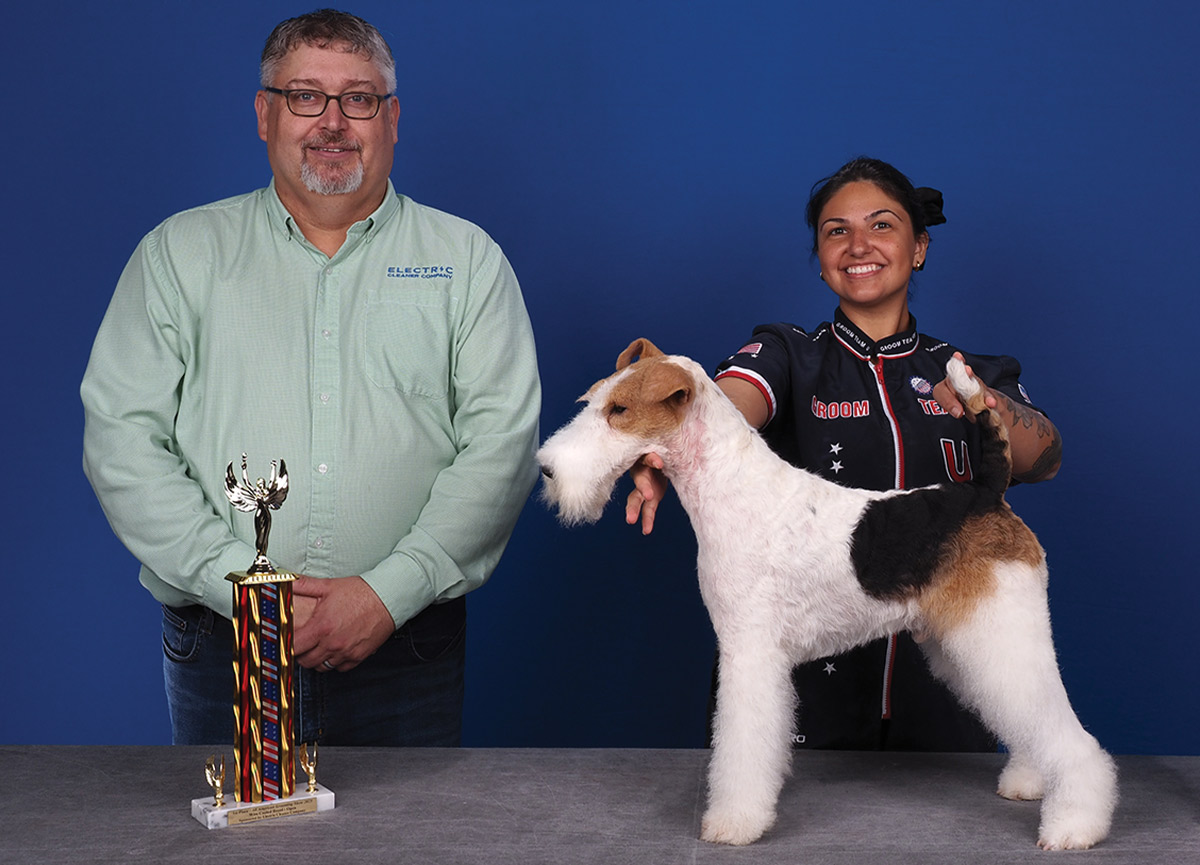
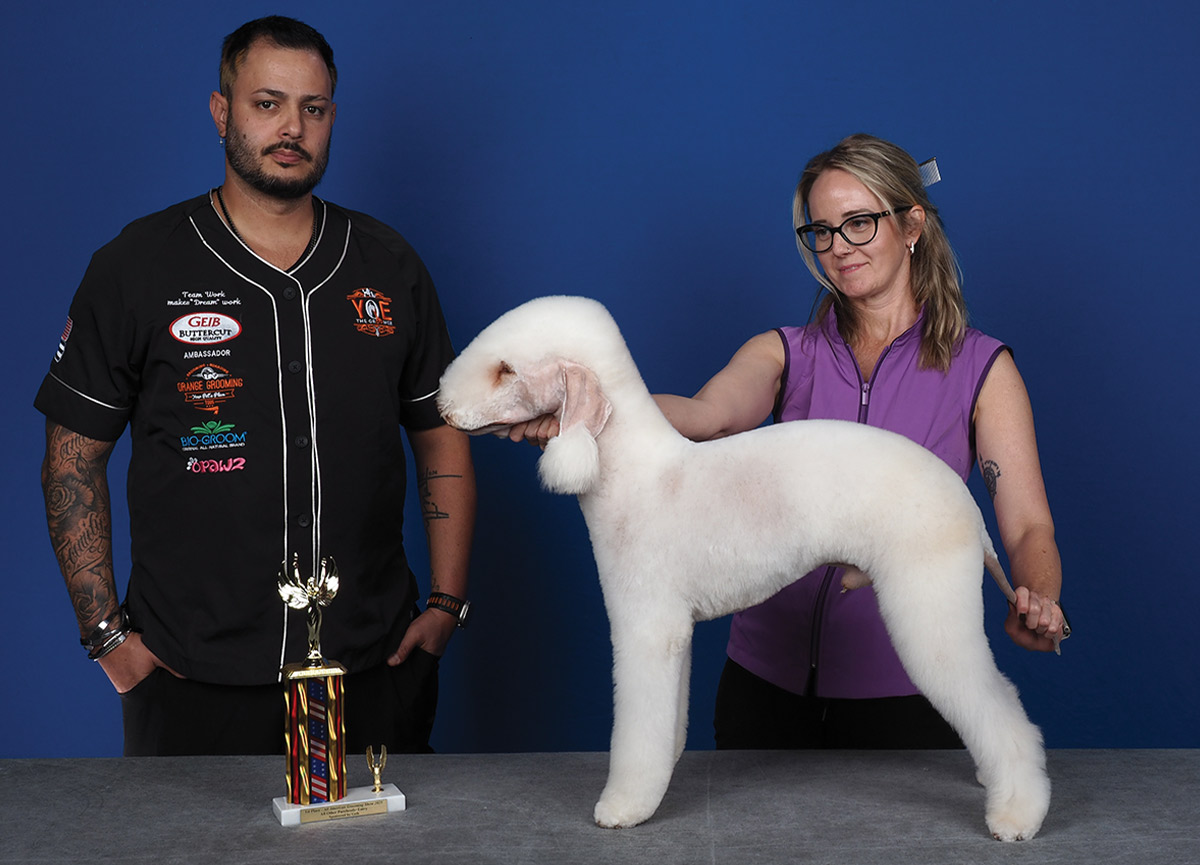
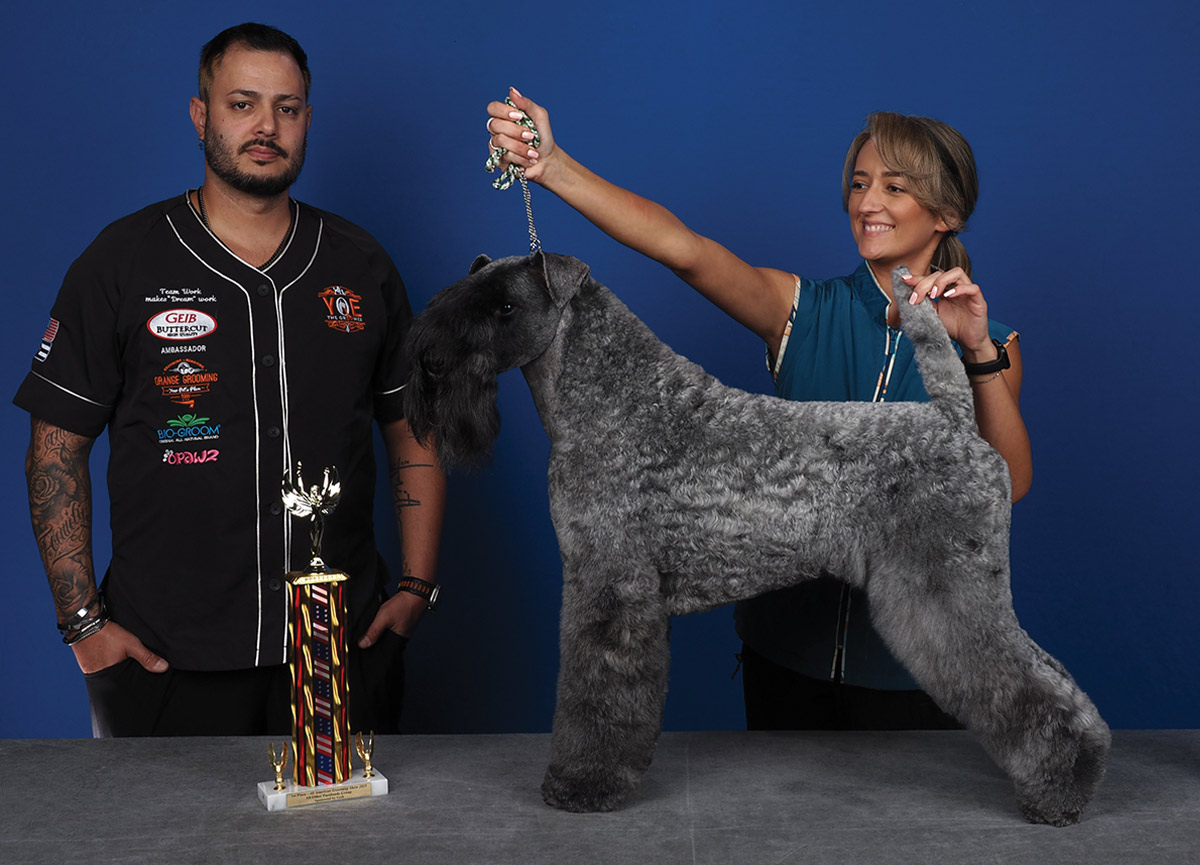
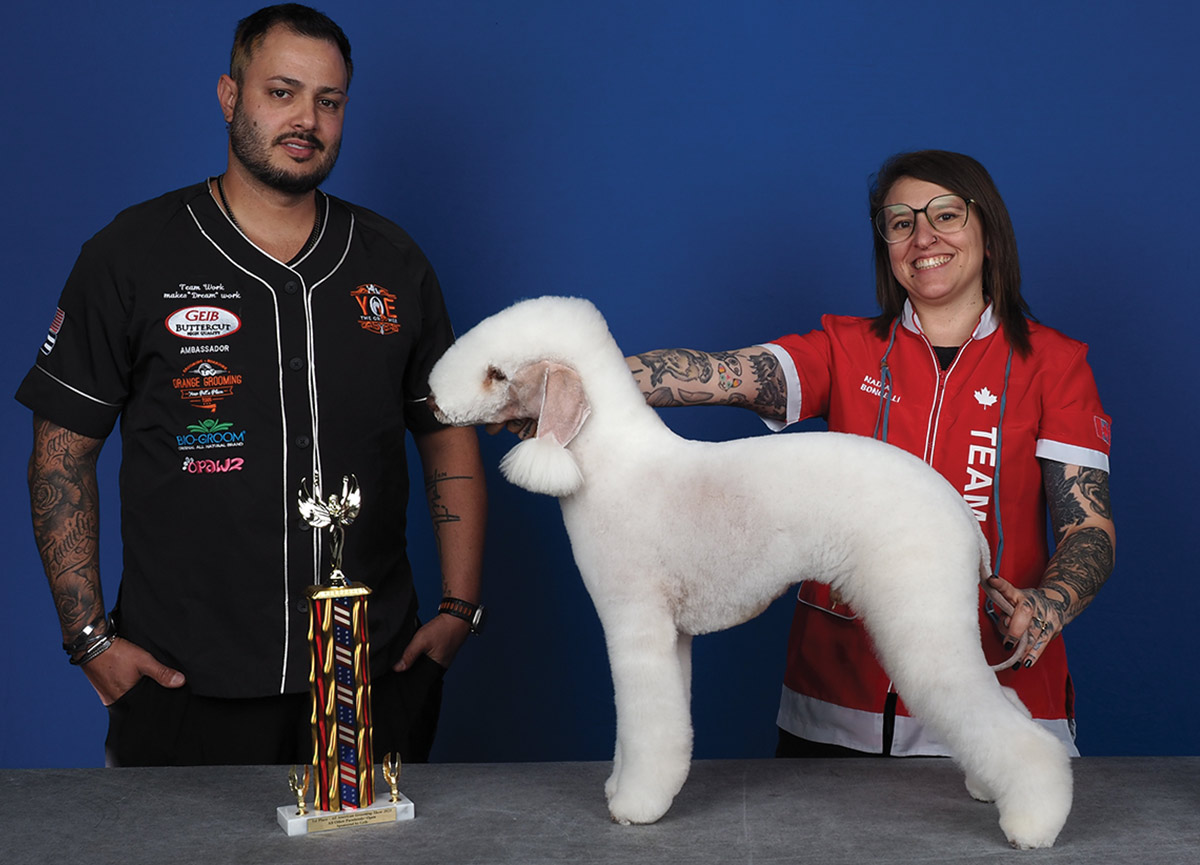
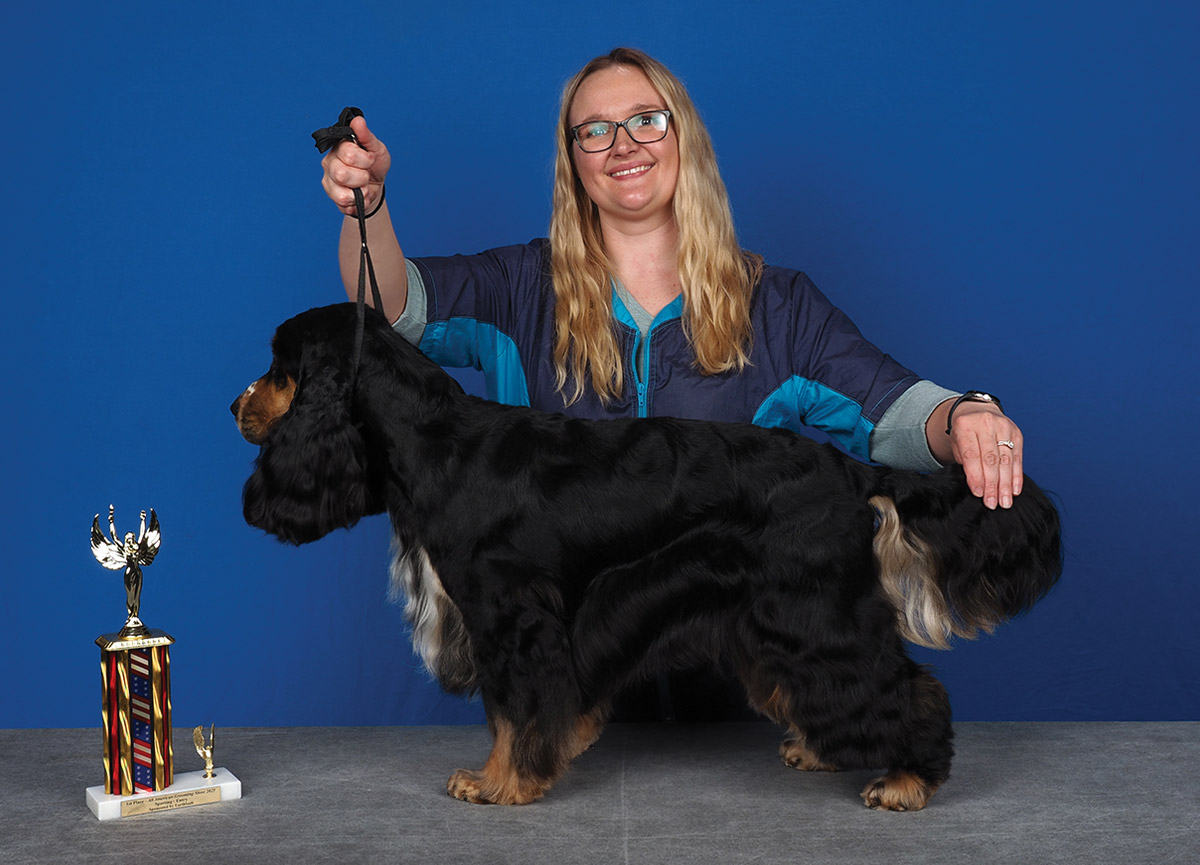

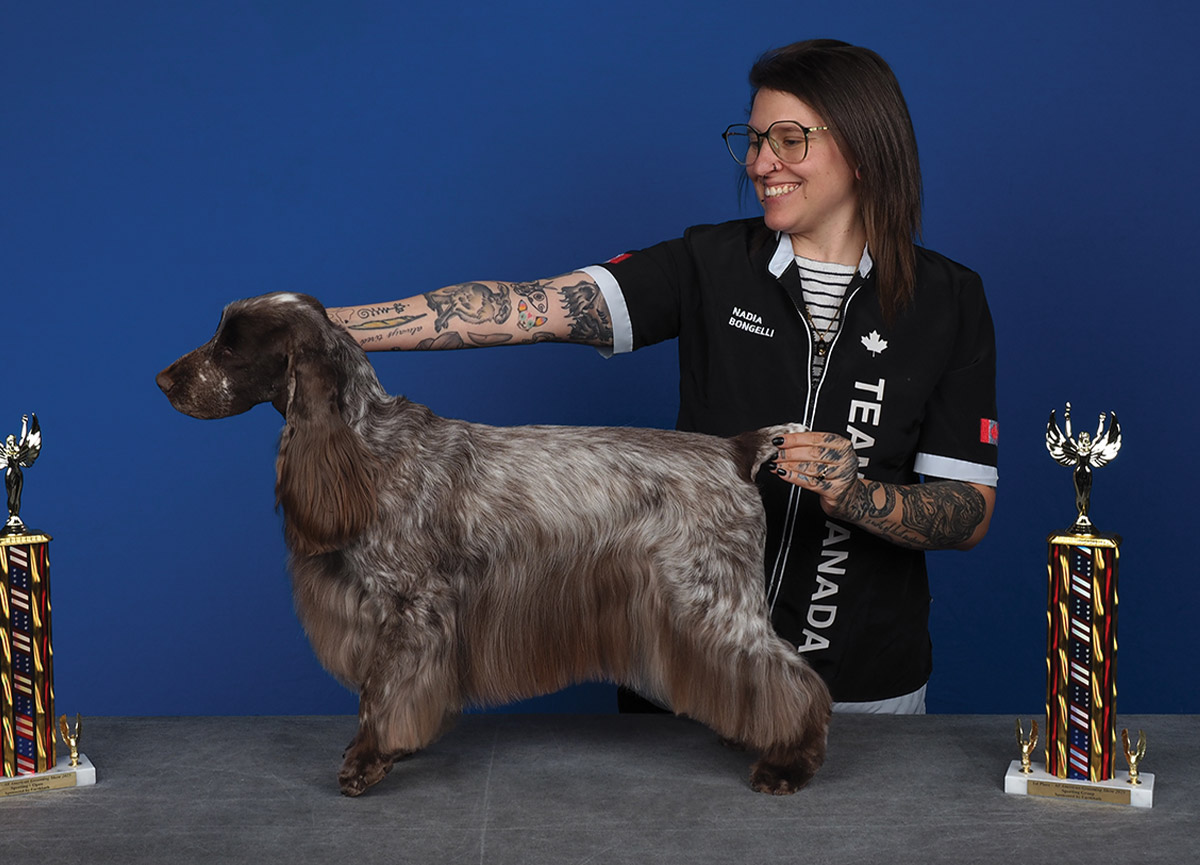
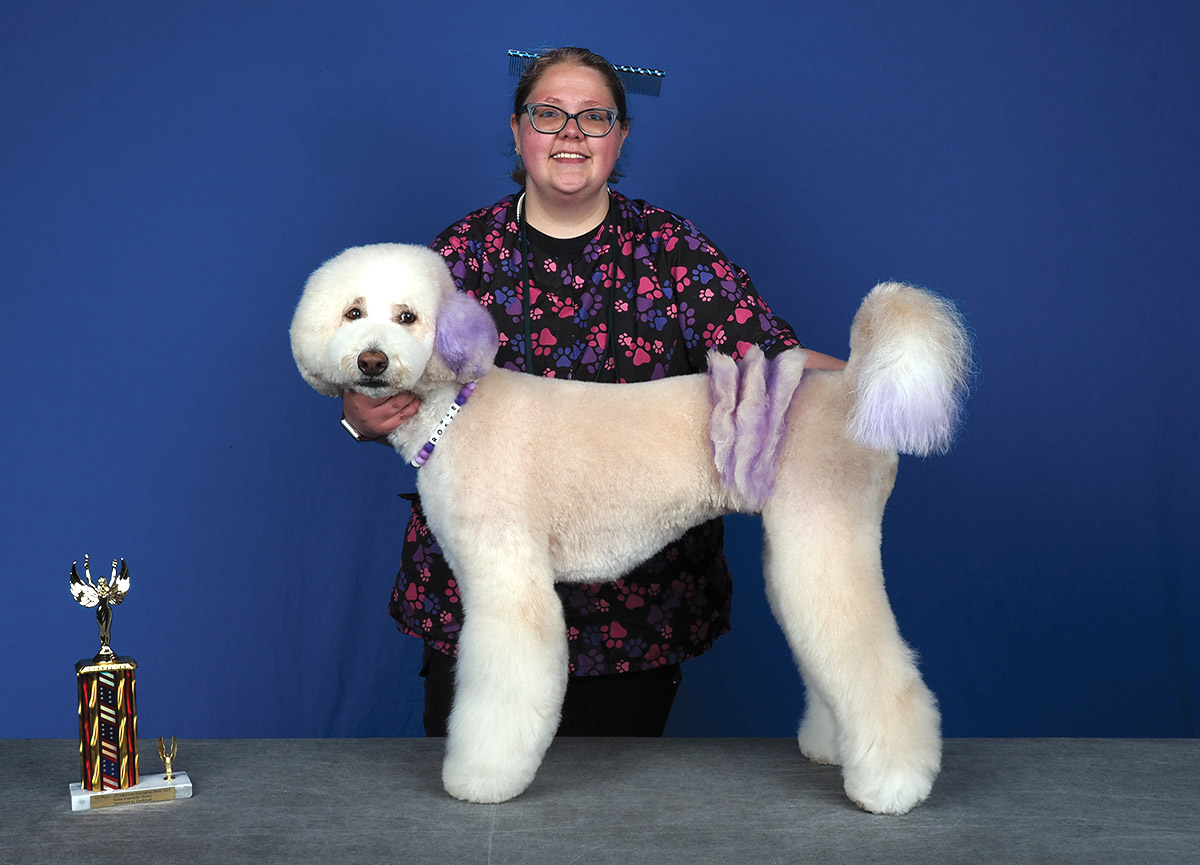


Poodles

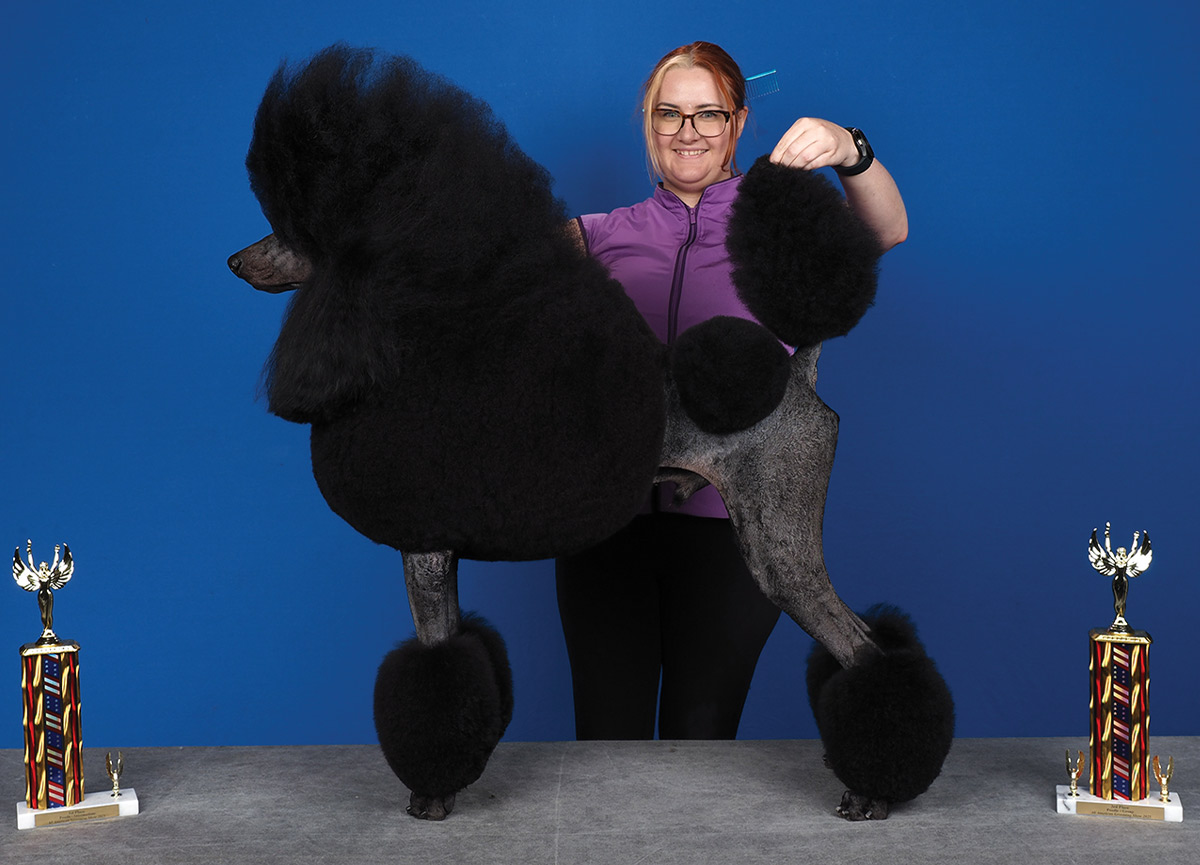
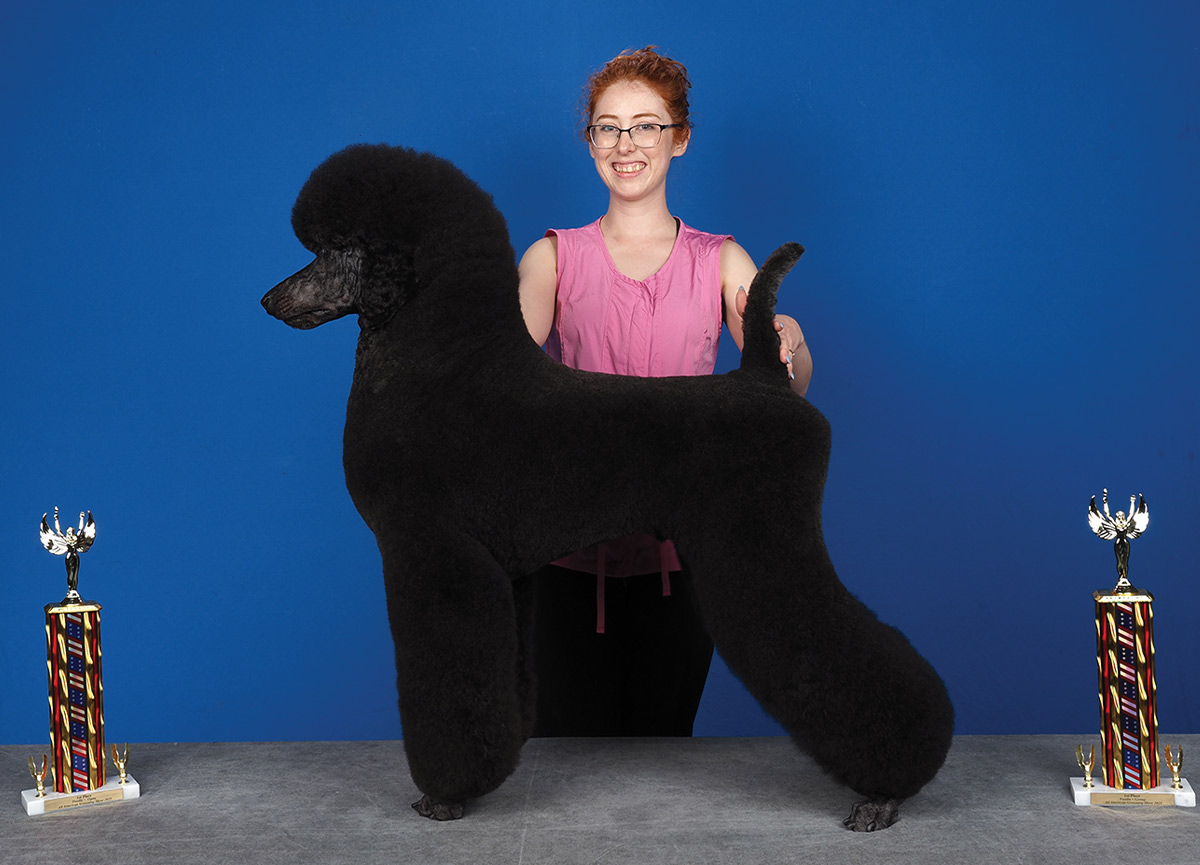
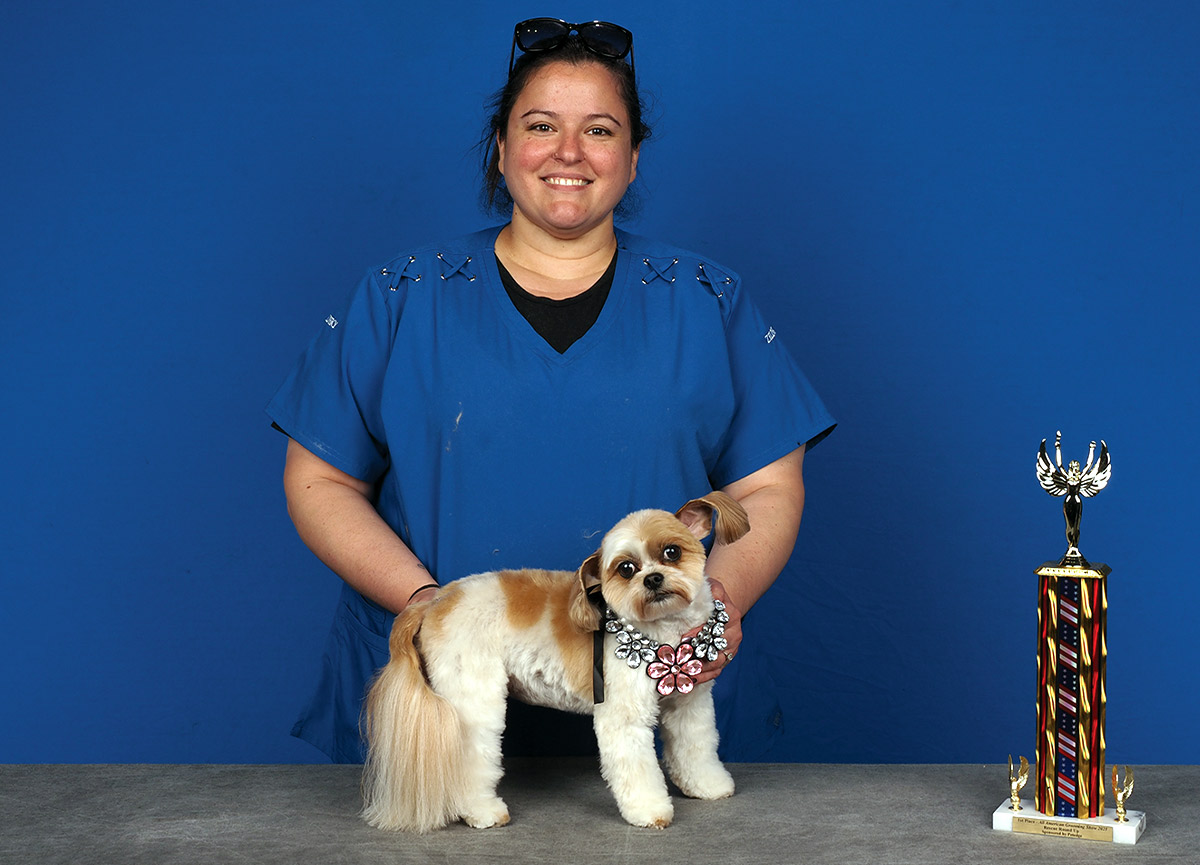
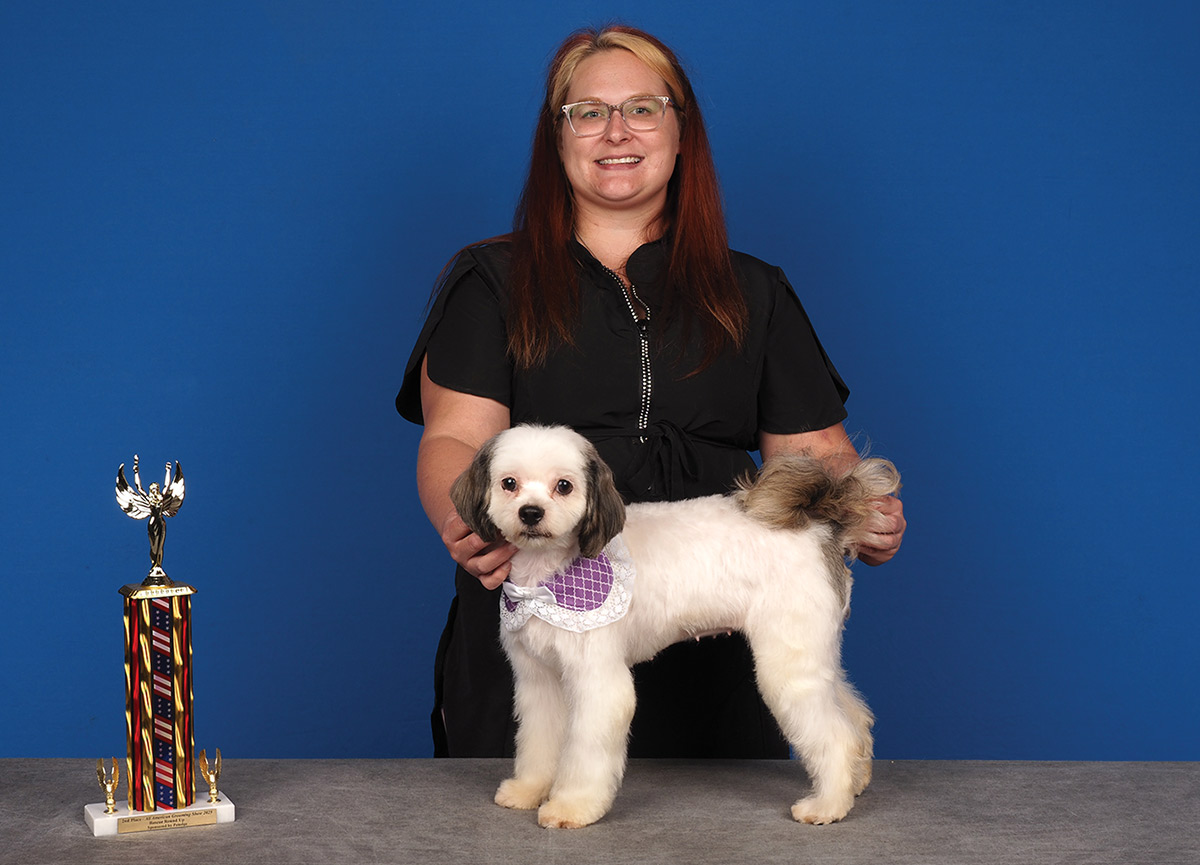
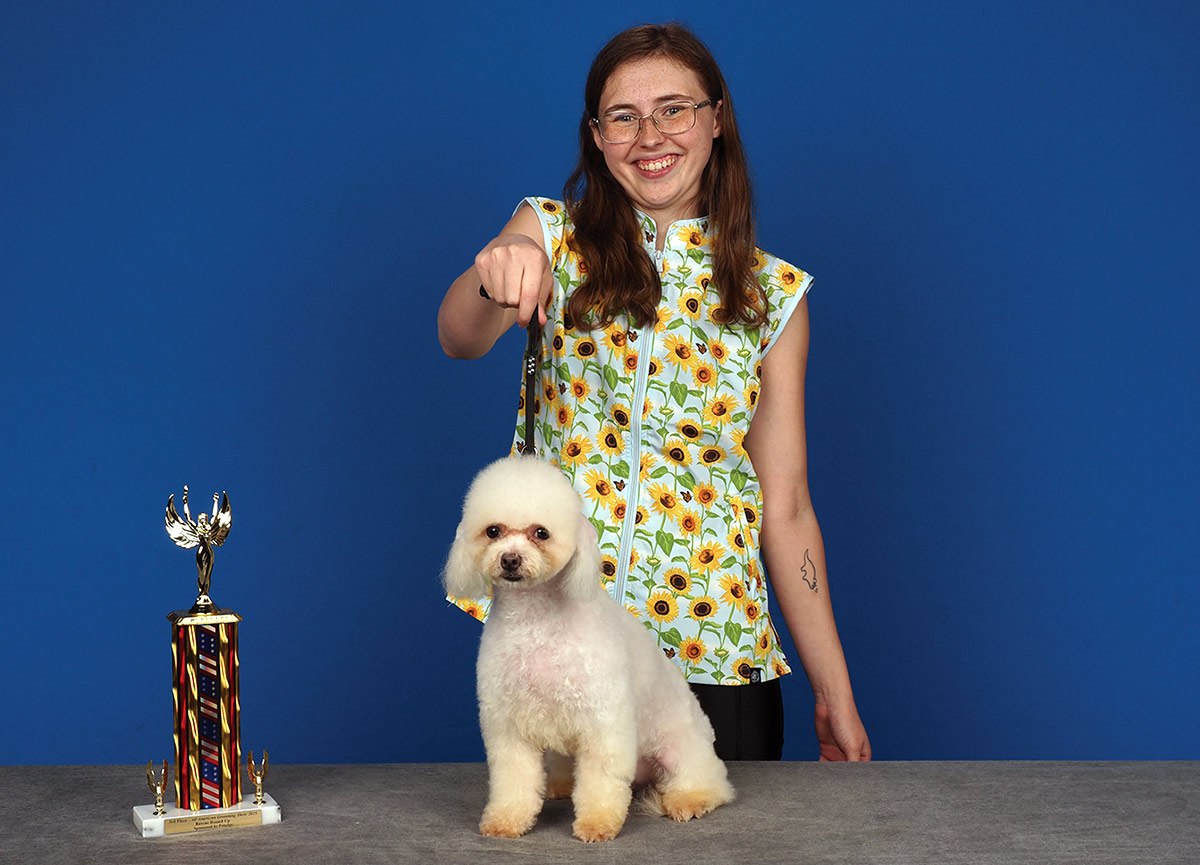
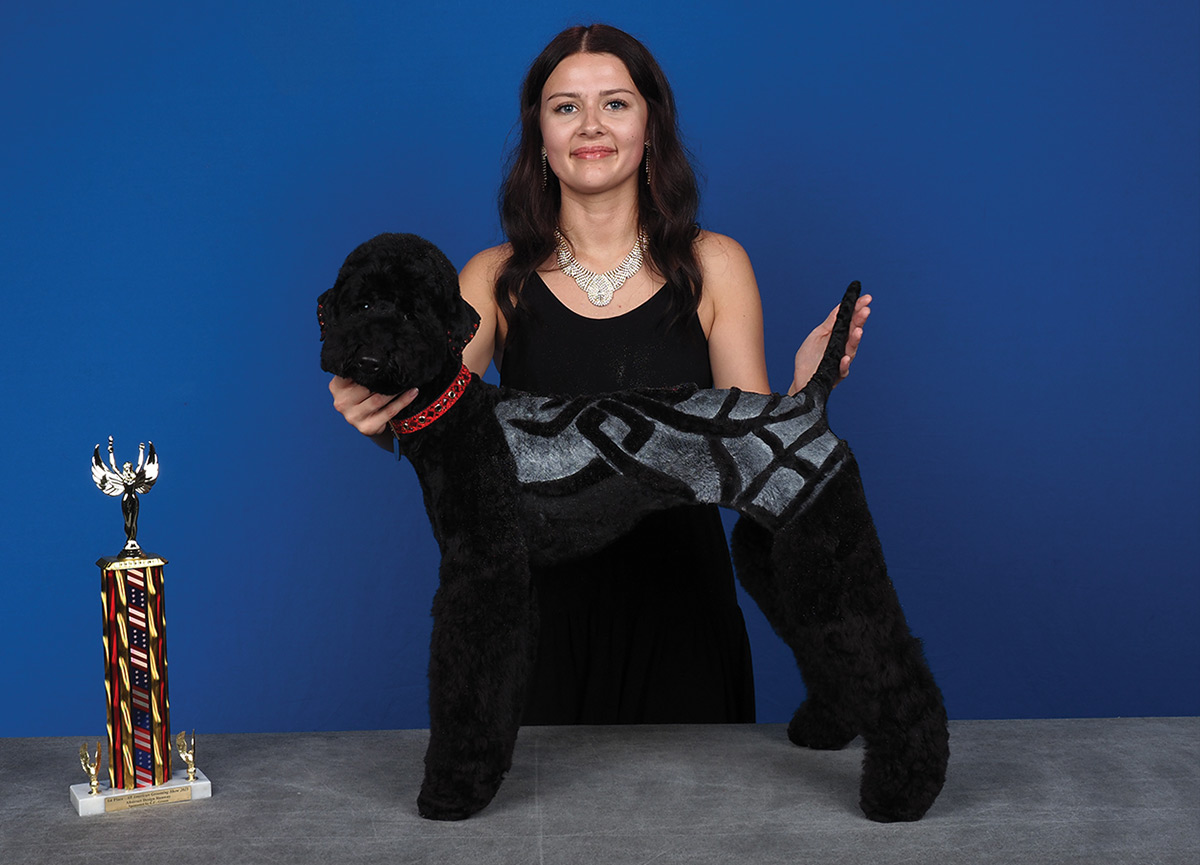
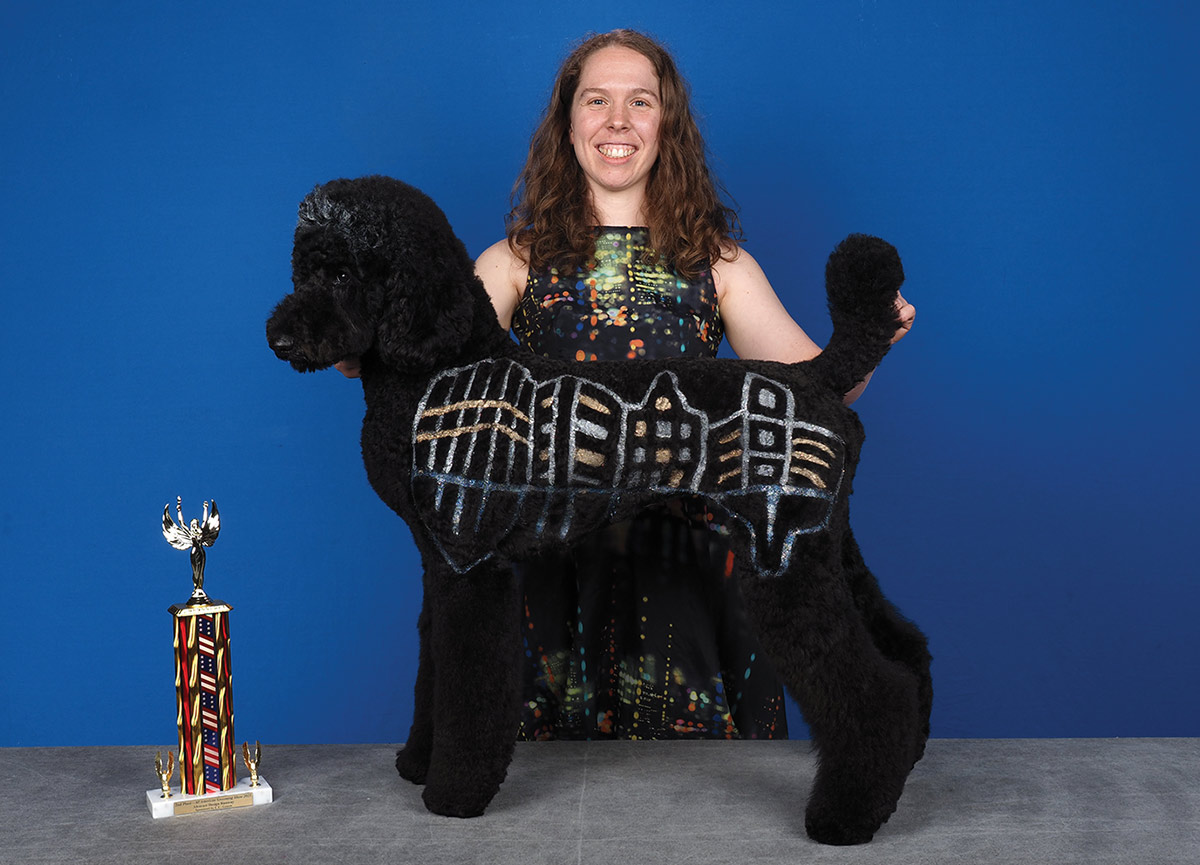

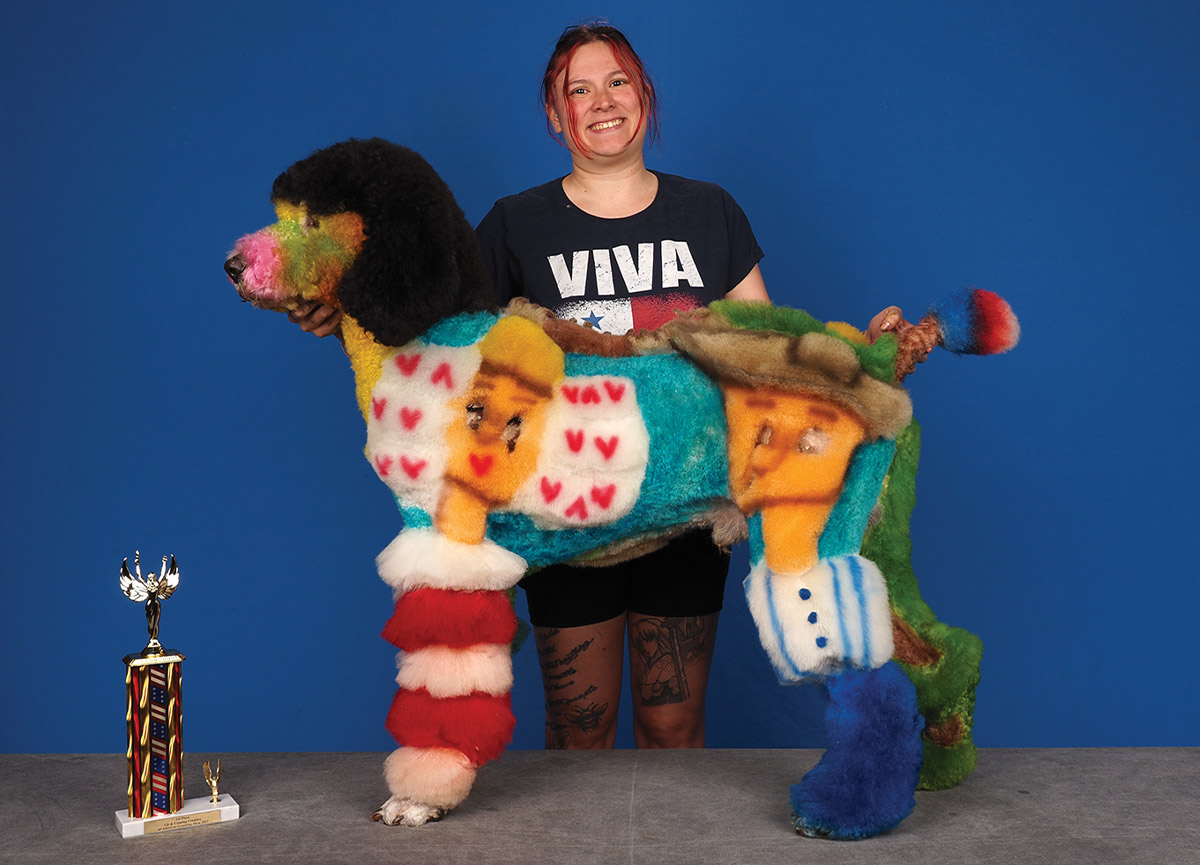
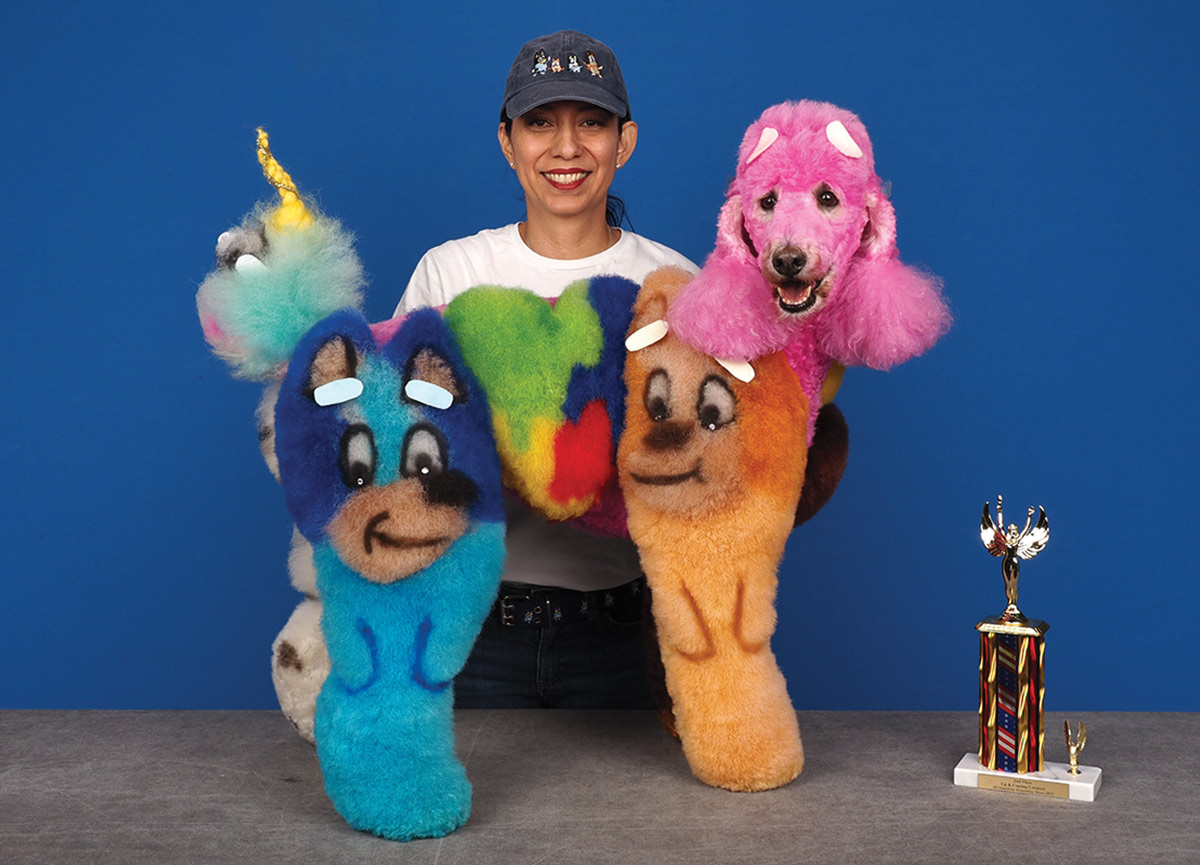

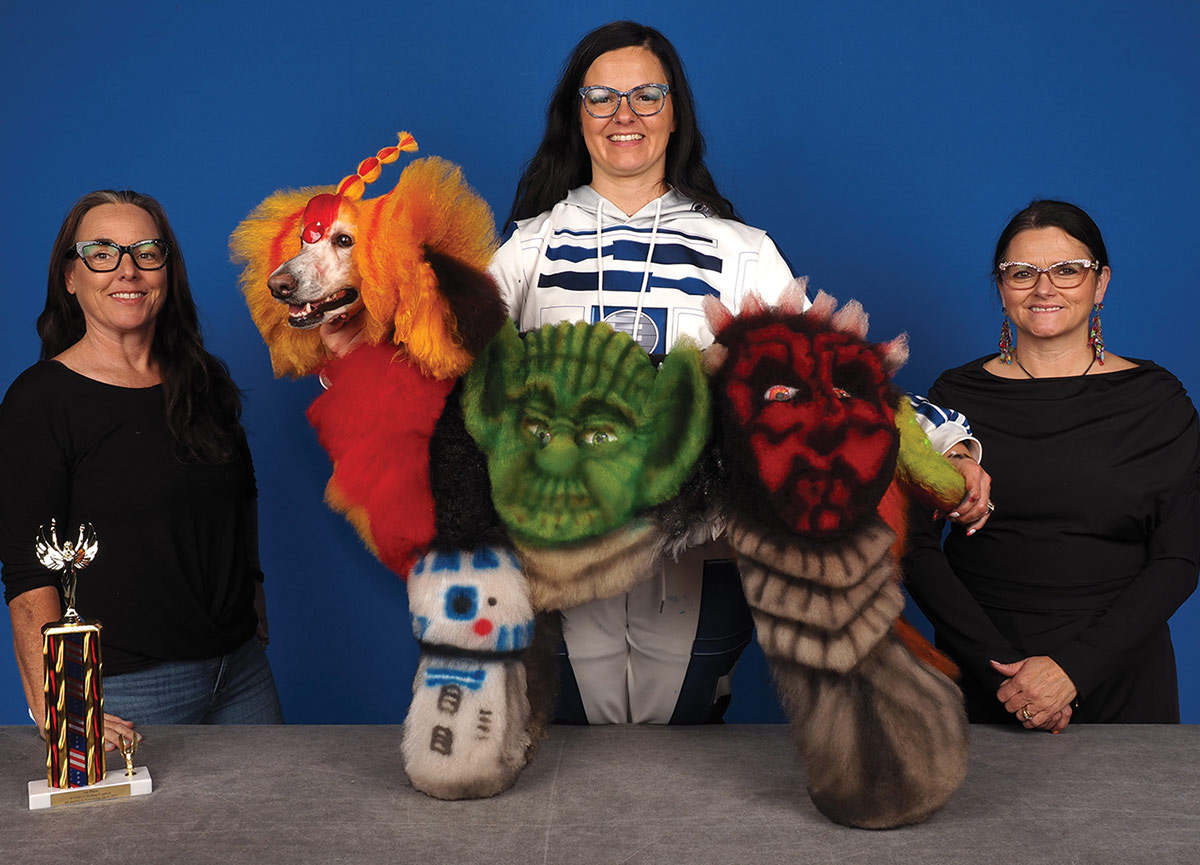

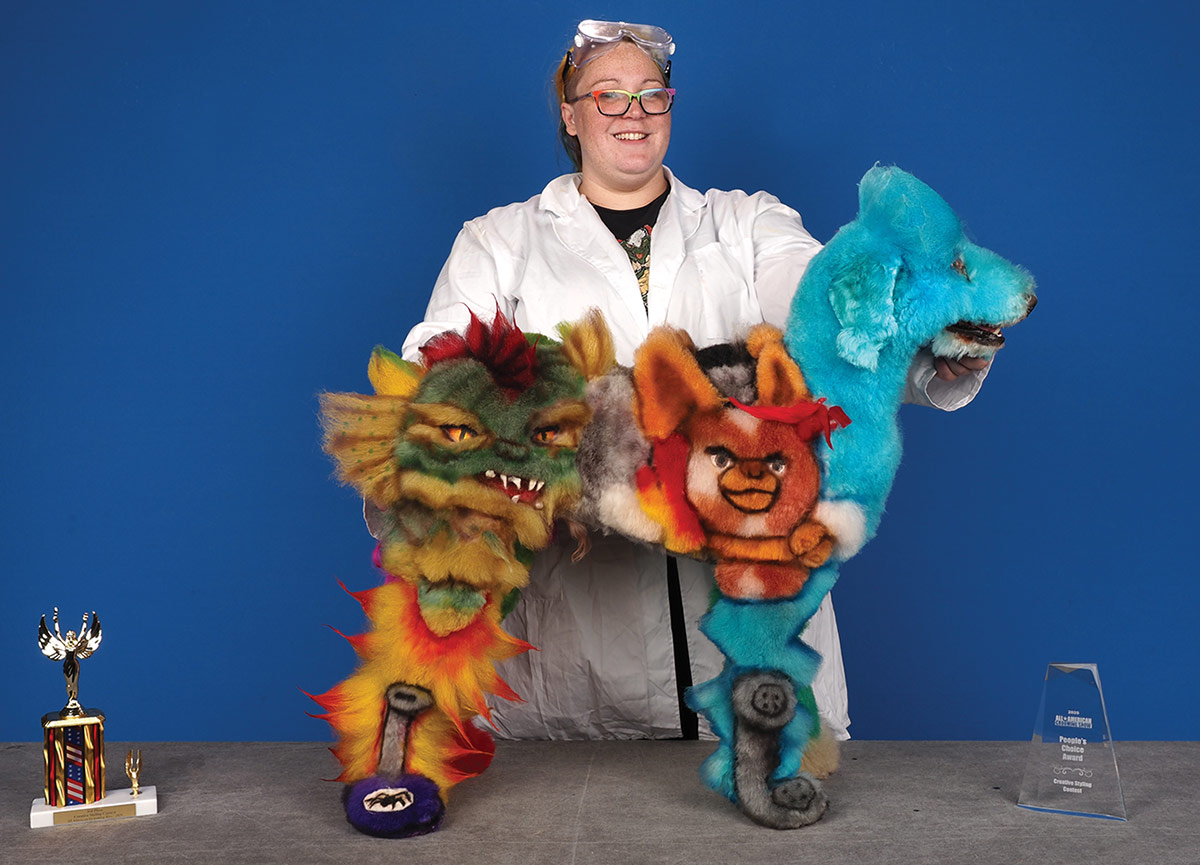
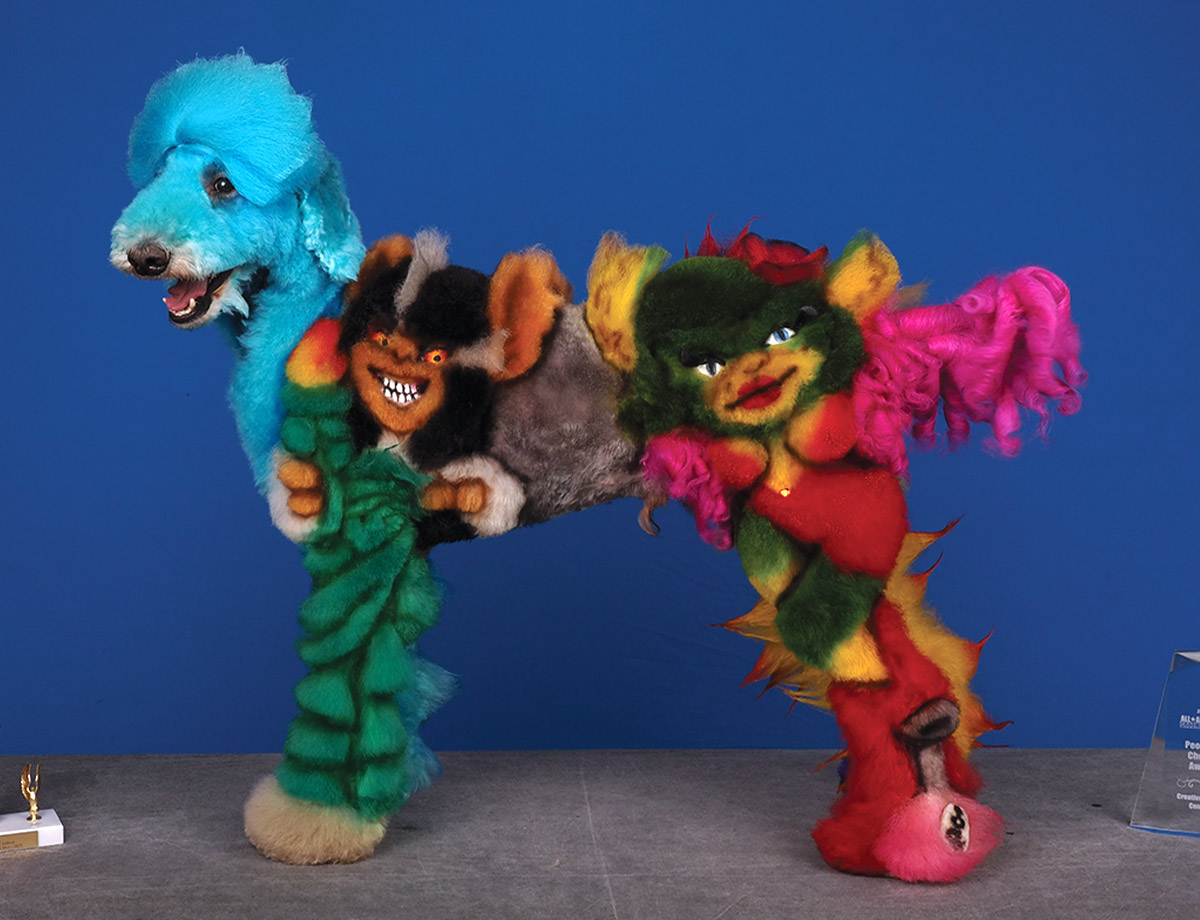

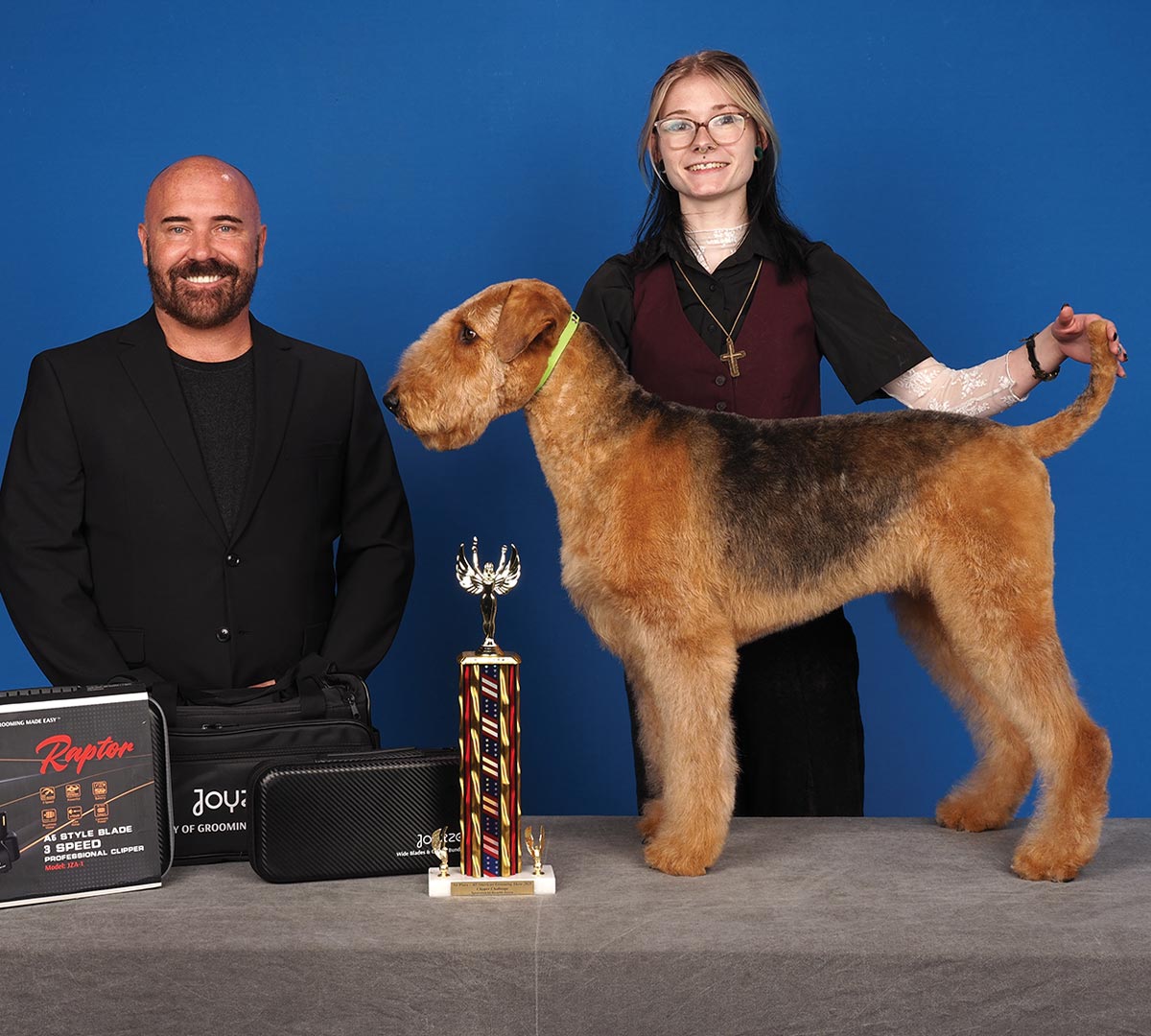
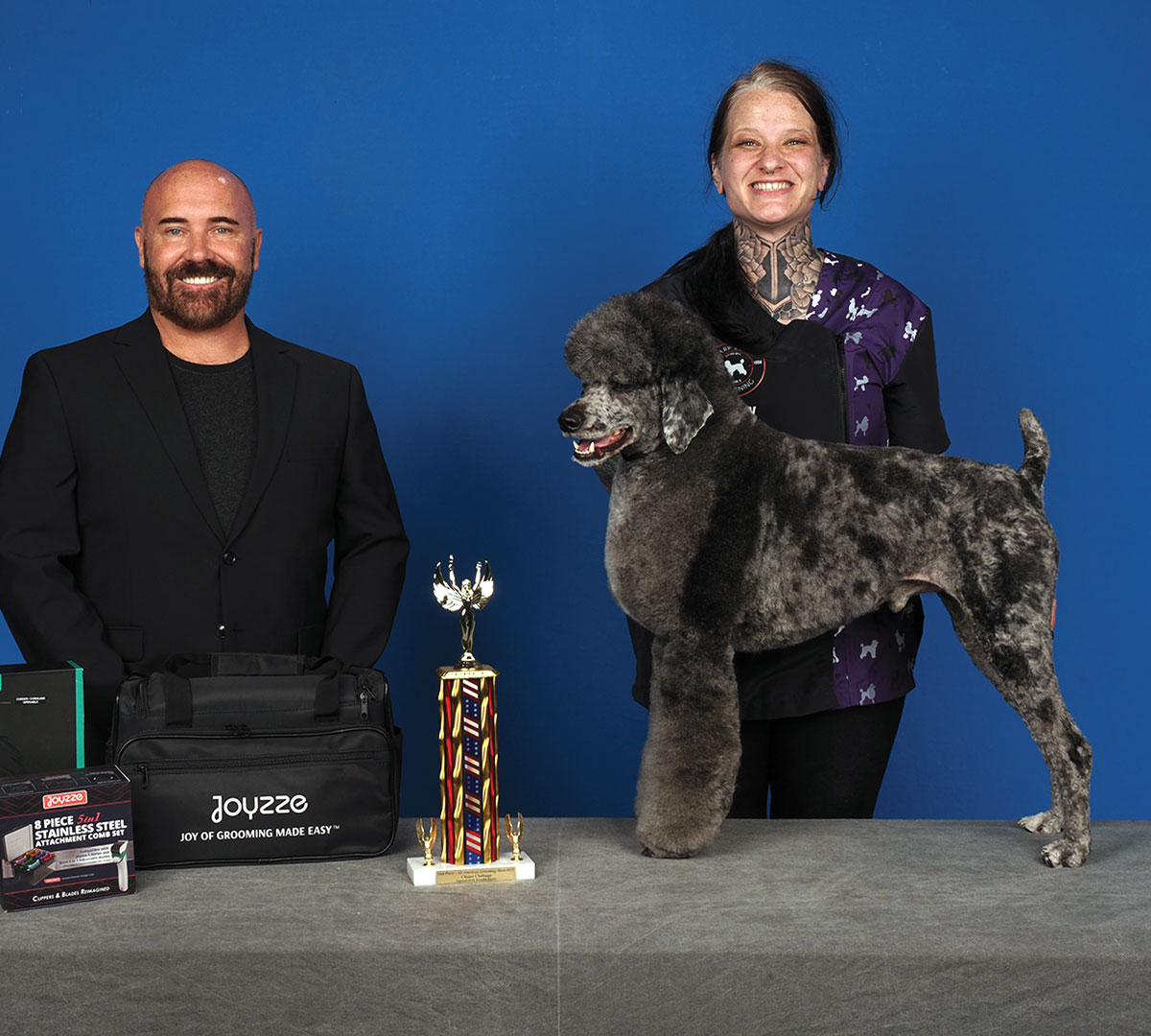
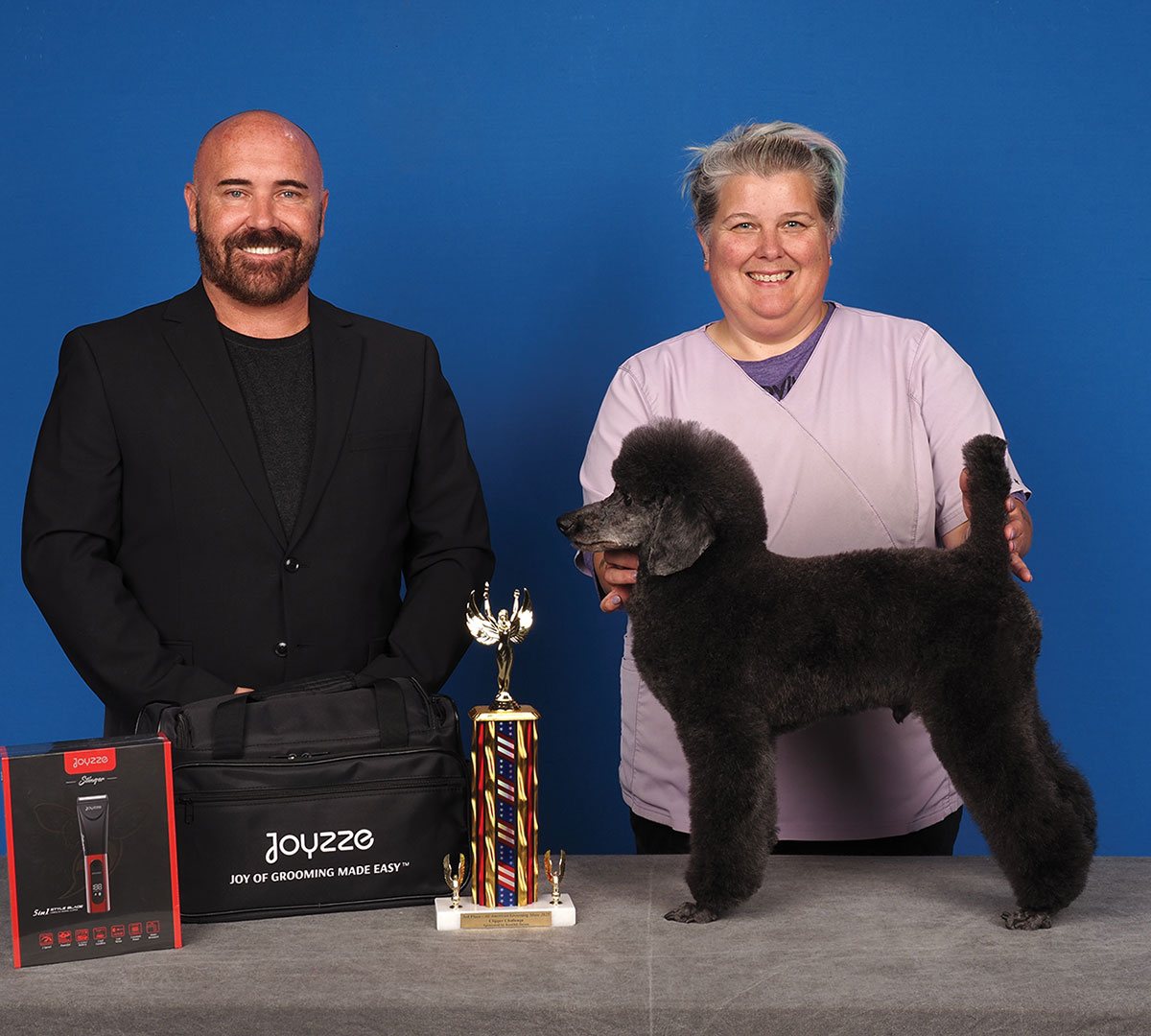



by Dr. Cliff Faver
Photos provided by Dr. Cliff Faver
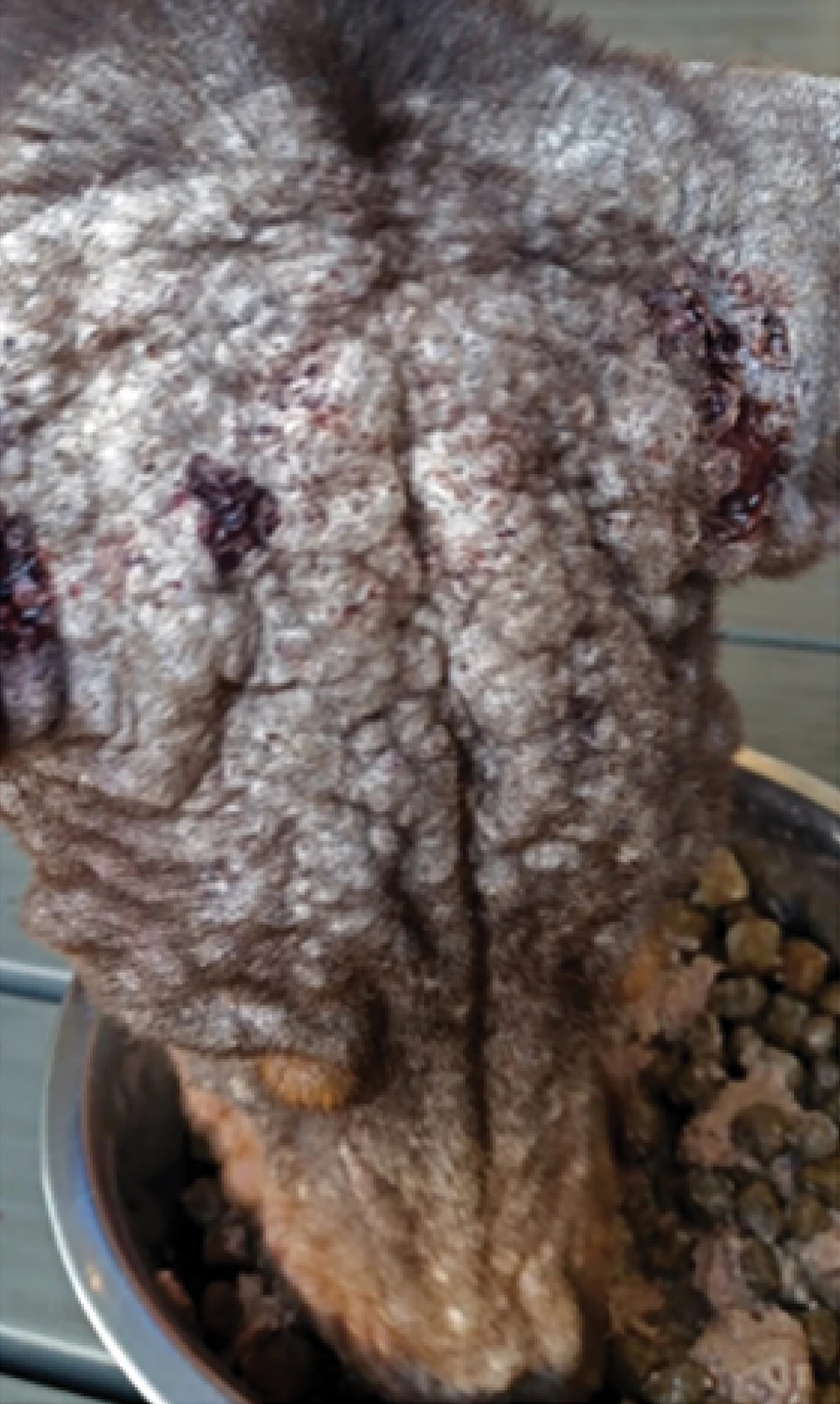
 here are many different mites that can cause “mange,” and it is very important that we understand the difference to be able to deal with them effectively. Demodectic mange, sometimes referred to as “red mange,” is probably one of the more common mites that we encounter, which is caused by demodex mites.
It is speculated that the infants of different animals pick up the mites from their mothers during nursing, as the most common areas affected tend to be the face and paws, although they can be found anywhere on the body. The mites actually live down in the follicles, and it is believed they live off the sebum located in the follicles and sebaceous glands.
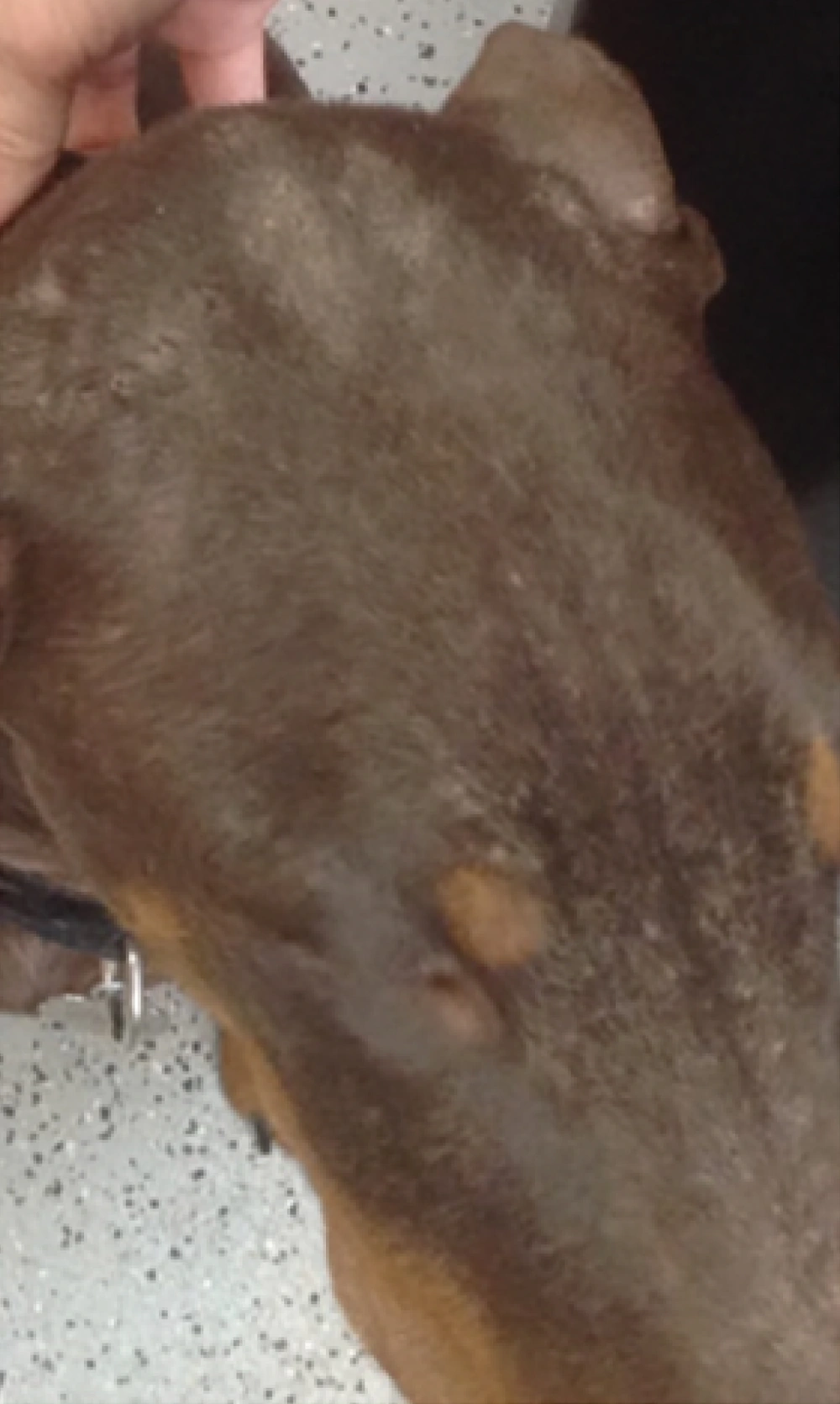
Symptoms & Hosts
The most common age we see demodectic mange is in puppies from about 3-18 months. The reason for this is that the immune system is just developing. As the pet ages, its immune system will eventually be able to control the overgrowth of these mites.
If demodex mites are seen in older dogs, we need to be concerned that the pet’s immune system may be compromised in some way. Commonly, we will see this in pets that are fighting off some other disease process that is not allowing the body to keep the mites in check or fight them off.
The mites are considered to have a symbiotic (mutually beneficial) relationship with the pets. They may play an essential role in cleaning up dead cells and debris since they live off the sebum of the follicle. They do not survive very long outside the follicle, but can thrive within the follicle.
The mites themselves have a cigar shape and have noticeable legs that are commonly active when looked at under a microscope (using oil prep and slide cover). Seeing any mites is significant, but more mites and activity indicate that there is an overgrowth scenario. It’s not uncommon to see 10-15 per high-powered field.
Some cases of demodectic mange, if localized and in young puppies, are self-limiting. As the immune system develops, the mites tend to decrease in numbers. Other times, we have a more generalized infection. Or, if it is with an immunocompromised (poor immune system) pet, they are more involved and need to be treated.
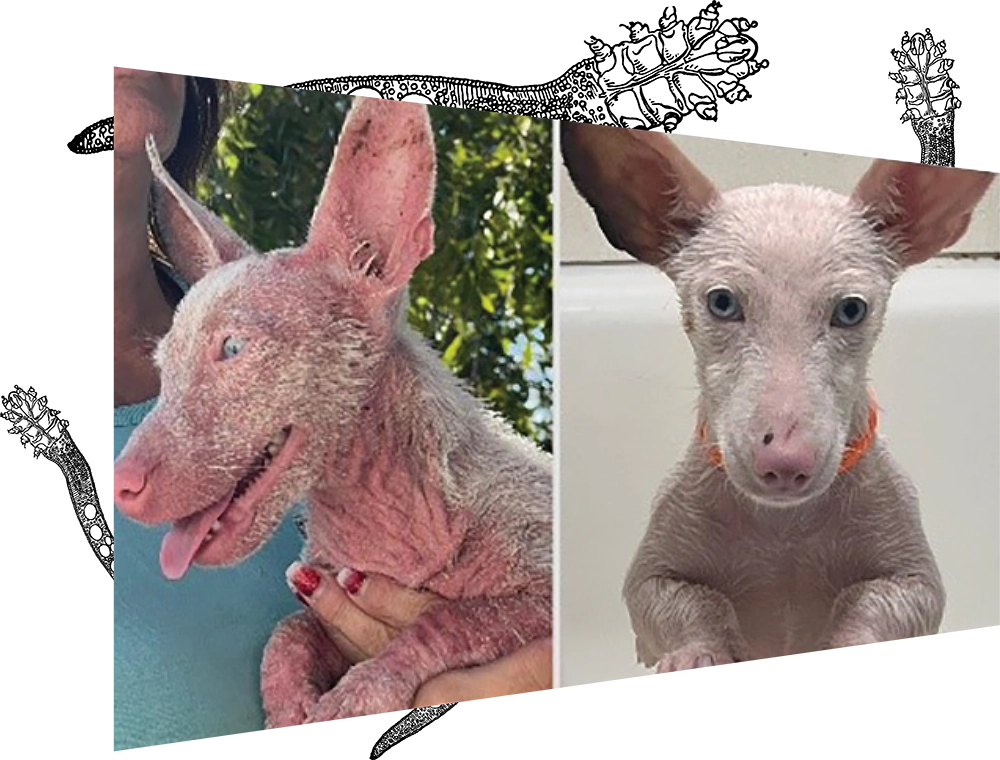
It is essential to know that when you use any of these products, as the mites die, it can cause an increased inflammatory process as the body breaks down the dead mites. In other words, they often get worse before they get better.
Many of these pets will have secondary infections, which will also need to be dealt with, along with rebuilding the skin barrier, especially if harsh topical products are used. Pyoben and benzoyl peroxide shampoos are commonly used in conjunction with topical treatments with the intention of helping to clean out the follicle. However, they are also very drying, which can hinder the healing and rebuilding of the skin barrier process.
Many of these dogs will go undiagnosed, however. If you are seeing puppies (6-18 months) that have an itchy skin condition, the two major rule-outs are dry skin and demodectic mange. Allergies usually don’t develop until a little later in age.
Using a very mild sulfur product can be particularly helpful because it serves multiple purposes: it is anti-parasitic, anti-fungal (and yeast) and offers benefits against bacteria. When in doubt, consult a veterinarian, or they will consult with you to help in the process.
Having the knowledge of what is involved in taking care of skin issues and recognizing them early makes a big difference. Treating pets with mites can be very rewarding and is reasonably straightforward when you know what is needed. Always remember, this is a process, not just a product.
Dr. Cliff Faver graduated with a BS in Biology/BA in Chemistry before getting a Veterinary degree in 1987. He is the past owner of Animal Health Services in Cave Creek, Arizona and now the US distributor for Iv San Bernard products, teaches the ISB Pet Aesthetician Certification program, and speaks internationally on hair and skin. His passion is to merge groomers and veterinarians to aid in helping and healing pets. He is also a member of AVMA, AAHA, AZVMA, Board member with Burbank Kennel Club, and has served on Novartis Lead Committee, Hill’s International Global Veterinary Board, and a Veterinary Management Group.

by Chris Anthony
 et grooming can be a very physically demanding job, even with weight limits. And unless you’re already a fitness enthusiast or wanting to make major life changes, you’re probably not looking to add a workout schedule to your already overbooked life. However, small additions to your day that take mere minutes can lead to significant changes.
One way grooming ergonomics differs from office ergonomics is that it’s not just about getting our “stand hours” or steps/activity in, but rather movement with intent and purpose, specifically stretching.
Many of the movements we perform throughout the day fall under the repetitive movement category, which can contribute to repetitive motion injuries. Since our goal is to reduce these types of injuries, let’s look at some benefits of simple stretching.
Studies on the benefits of stretching and exercise performance are mixed, but they do agree on some things, such as increasing our range of motion, improving our flexibility, increasing blood flow and improving our posture.
Increasing our range of motion is essential because, as we age, our joints lose flexibility and range of motion. Improved flexibility may help improve overall physical performance and decrease the risk of injury. Increased blood flow to our muscles and joints means they’re getting more oxygen and nutrients.
While being super flexible is usually a good thing, it is not an excuse to do the “anti-yoga” of twisting sideways and upside down to access the harder-to-reach places on a dog. Increased flexibility can reduce the strain on our bodies when we do have to reach odd places on the dog and make our daily movements easier.
Taking a moment to stretch can also have the added benefit of helping reduce stress levels and improving your emotional ergonomics. We know when we’re having a frustrating day that stopping to take a deep breath can help because one of the things it does is increase oxygen flow to our brains, therefore resulting in improved concentration. Since stretching can also improve blood flow, you’re getting multiple benefits at once.
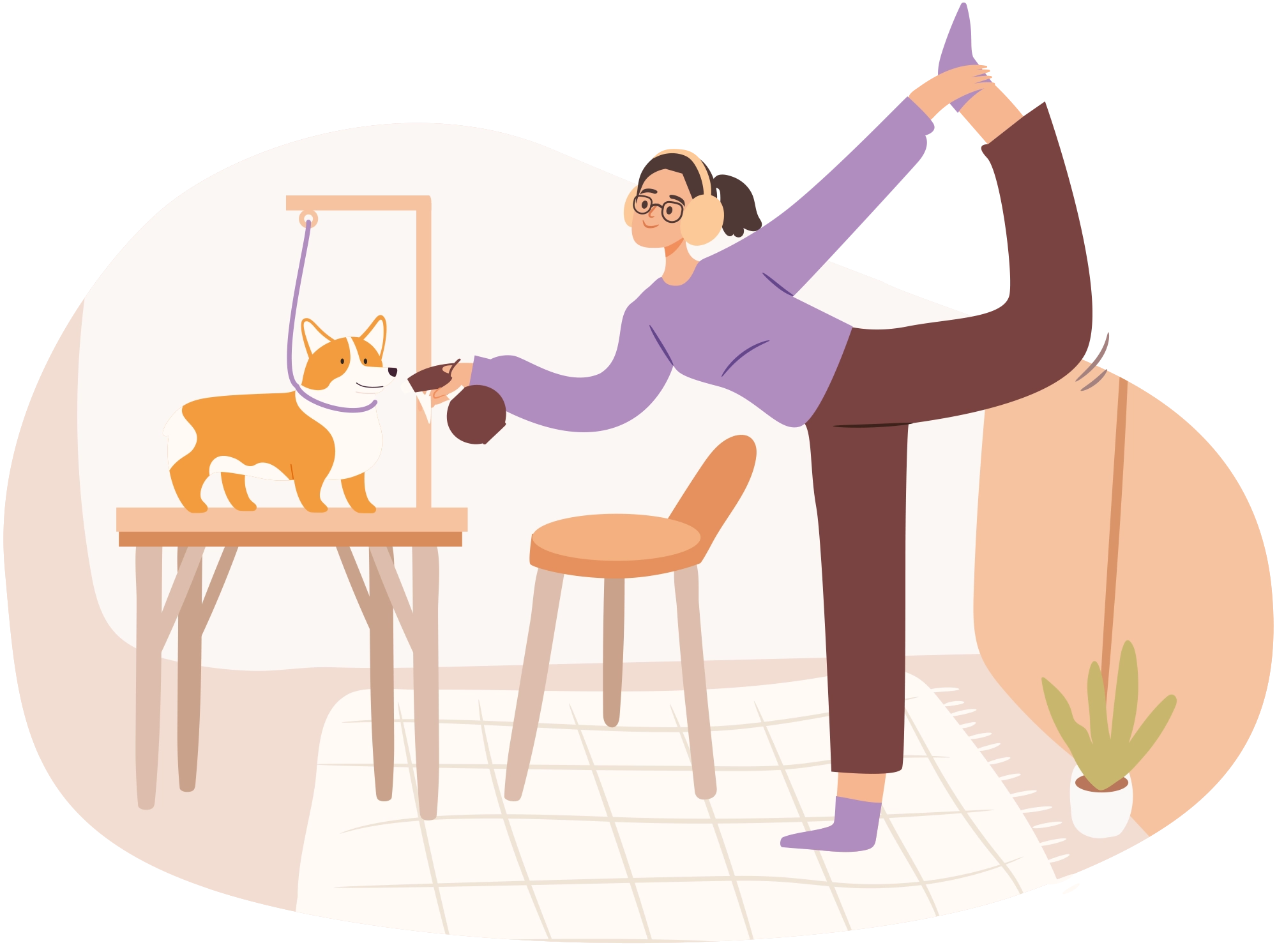
Unless your frustration levels have hit critical with a spicy pup and you need to walk away from the grooming table while you remind yourself that the pet is also having a stressful time, here are three simple stretches that can be done right at the grooming table. Some of them you might recognize as variations on simple yoga poses.
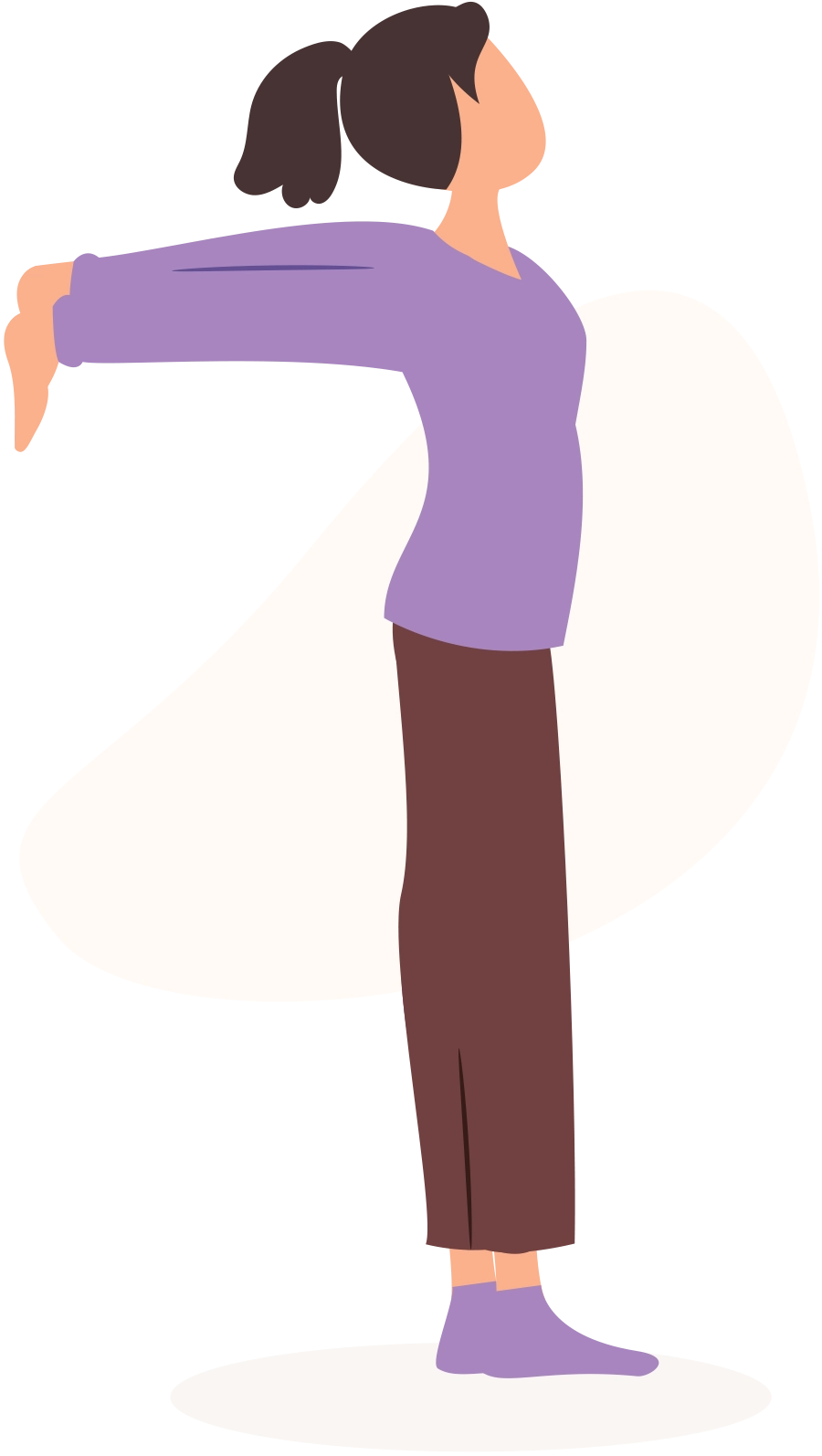
Chest Opener
If your current flexibility does not allow you to clasp your hands behind your back, just grab a handy slip lead or grooming loop to use as an improvised yoga strap. The stretch can be done while holding the loop behind you with your hands as close together as comfortable. With practice, you’ll soon find that you no longer need the loop!

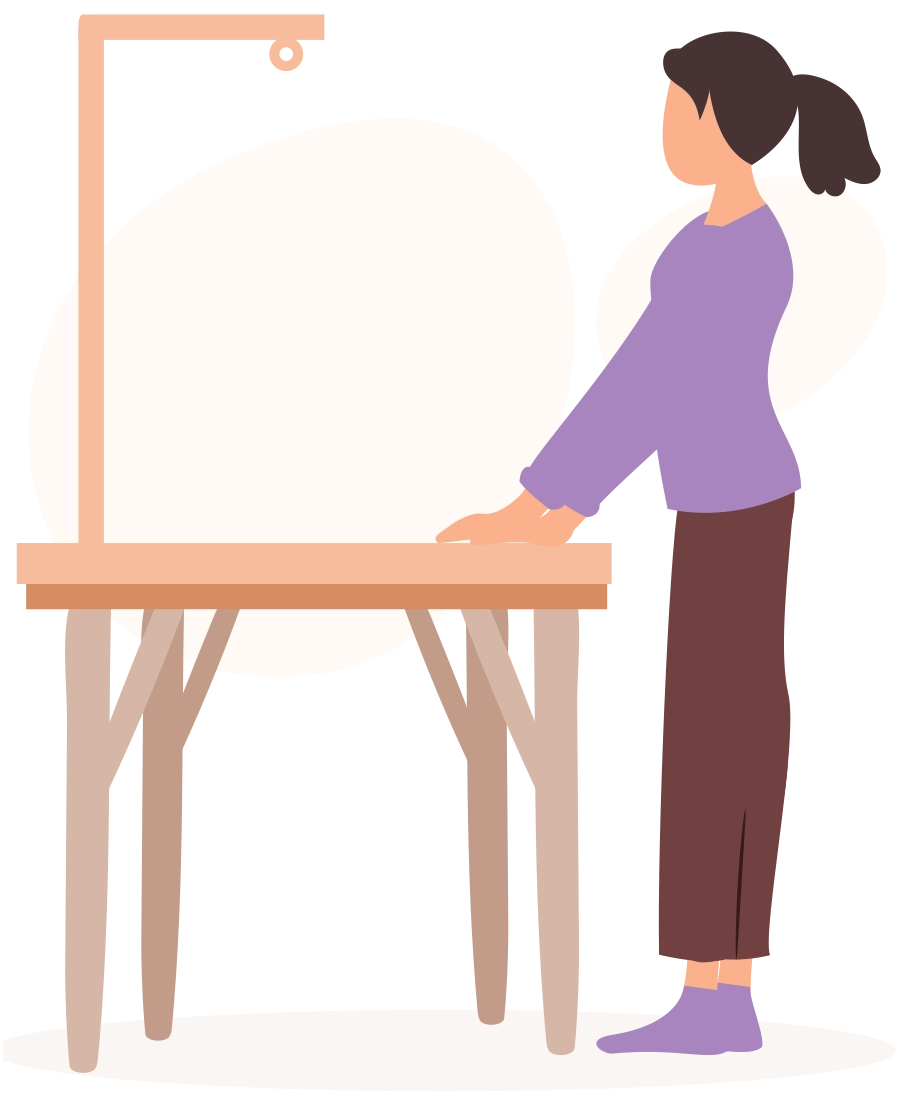
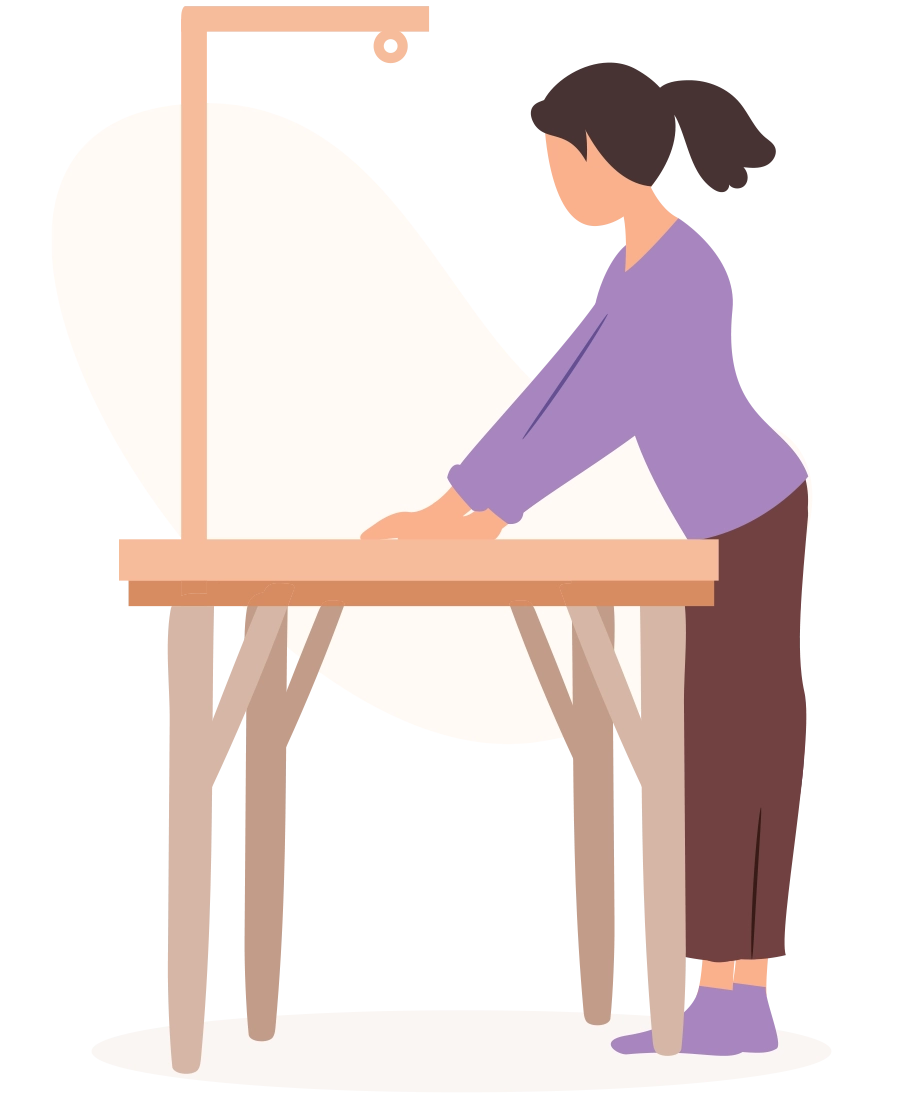
For a bonus move, this is the starting place for a variation of pyramid pose. After your 10 breaths in downward dog, step one foot forward and straighten your legs while sliding your arms forward on the table, then lean forward. Hold this for five breaths and then switch which leg is forward.
When doing these stretches, it’s always important to listen to your body. If something hurts or goes against your doctor’s advice, don’t do it! Stretching should not hurt; you should aim for somewhere between “Oohh, big stretch” and “Hurts so good,” but never cause pain. It should feel something like a gentle rubber band expanding, nothing sharp or burning.
If you think that you don’t have time, I want you to ask yourself one question: Why don’t you think you deserve to take 30 seconds for your health? Doing one of these stretches can take anywhere from 10 to 30 seconds, and you can cycle through several in five minutes.
You absolutely deserve to take care of your physical and emotional wellbeing—you deserve to be happy and healthy!
 eer around the average grooming area and what do you see? Probably lots of tools and equipment. From simple, basic combs and brushes to complicated bathing systems, electric and hydraulic tables, clippers, vacuum systems and more. We may have gotten into the business because we want to work with animals, but we fairly quickly discover that we need to learn to take care of and maintain the tools and equipment that keep us going.
So, let’s play a little multiple-choice game and see how well you know how to take care of your precious, hardworking possessions…
- Go buy a new vacuum.
- Change the paper filter in the vacuum.
- Clean the canister.
- Soak the hose and wand in disinfectant, and then let them dry in the sun.
Demystifying the Death-Smell Vacuum
You turn on your shop vacuum to suck up the bushel-basket of fur you just clipped off an 80-pound doodle (that somehow missed its last two scheduled appointments). The air is suddenly filled with a very unpleasant scent. It smells a bit like something crawled into the vacuum and died.
- Go buy a new vacuum.
- Change the paper filter in the vacuum.
- Clean the canister.
- Soak the hose and wand in disinfectant, and then let them dry in the sun.
Finally, fill your tub up deep enough that you can soak the vacuum hose and wands in hot water and disinfectant. Let them soak for an hour or two, or even overnight, then flush with hot water and hang them somewhere to dry. Bonus points if you can manage to hang them somewhere in the sun. Doing this monthly will prevent that death smell from permeating your vacuum.
- Scrub it with a metal scrubbing pad.
- Gather your dish soap, white vinegar and maybe some oil.
- Grab some scouring powder and go to town.
- Bring out the bleach.
To keep your investment looking shiny and spot-free, B is the best answer. Choose mild products to keep the metal clean without damaging it. High-quality dish soap applied with a soft cloth or sponge can be used, as can white vinegar in a spray bottle, which is also effective.
The benefits of cleaning with vinegar are that, because it is mildly acidic, it effectively kills some bacteria and has a deodorizing effect, while also being perfectly safe around animals. Some people add a few drops of their favorite essential oil to the vinegar to give it a pleasant scent.
After spraying the metal with soap or vinegar, rinse well. Wipe the area with the metal’s grain to remove all moisture. Lint-free microfiber cloths do a beautiful job without scratching and will prevent spotting.
To make the stainless shine, try using a Magic Eraser. Some people also polish the metal with coconut or olive oil to give it a deep luster. To do this, apply a small amount of oil to a clean, dry cloth and wipe the surface with the grain.
- Say unkind things about your sharpener.
- See if clipping in reverse helps.
- Try a different blade.
- Change your blade drive assembly.
If you chose C or D, you get a gold star. If the second blade also leaves an uneven finish, it’s time to replace your blade drive. This small plastic part on your clipper allows the cutting portion of your clipper blade to move back and forth, and as it wears, the movement of the blade is restricted and shortened, resulting in an uneven, ridged clipping pattern.
It requires changing more often than you’d think, and keeping spares on hand is a must. You can refer to the instructions that came with your clipper or check the internet for informative videos. Once you know how, keeping this vital part of your clipper in good working condition is not difficult.
- Ignore it. You are busy, and those dogs don’t dry themselves.
- Hurl it to the ground and do a dance of frustration.
- Secretly switch the dryer with the one your co-workers usually use and hope they will figure out what the problem is.
- Unplug it and remove the case to investigate the problem.
If you discover that is not the problem, check the brushes (if your dryer has them) to make sure they are not worn. If you can’t find an obvious problem, it’s time to send the dryer to a professional for repair. Using a dryer that is not running correctly isn’t safe.
Maintaining the grooming tools and equipment that help us perform our job to the best of our ability, clean and in good repair, can be a challenge. Keeping backup tools and spare parts on hand, along with a toolkit, the ability to do some research online and a good sense of humor, can see us through.

by Amanda McGrath
 or many grooming salons, the holiday season feels like a whirlwind—phones ringing nonstop, clients begging for last-minute appointments and a schedule that’s bursting at the seams. While this time of year is an incredible opportunity to boost revenue, it’s also when burnout and stress can hit the hardest. But with the right planning and systems in place, you can survive the holidays, avoid burnout and make time for the things that matter the most to you.
Here are 10 tips to help you get through the holiday rush smoothly and with your sanity intact:

Under Control
Before things get really busy, take a moment and write out all of your commitments on the calendar. Sitting down and filling out the things you need and want to do will give you a baseline of how your days should be scheduled.
Fist write in everything you must attend or want to do—from your kids’ holiday concerts to your favorite holiday traditions. Now mark off on your grooming schedule the time you need to stop for the day, or days you will need entirely off, and make these nonnegotiable. Protecting personal time keeps you from resenting work and helps you truly enjoy the season.

Loyal Clients
Take a look at your client list and make sure that your regulars are guaranteed a spot. Many pet owners will wait until the last minute, and those once-a-year pets will be calling around desperately to see where they can get squeezed in.
If you have the space and time, you may be able to pick up some new regular clients—but don’t let it come at the expense of your loyal customers. A full book looks great, but overcommitting can lead to frustration and poor service.
You Offer
Many clients are simply looking for their pet to be clean and fresh for holiday gatherings. So structuring your services this way allows you to maximize both your time and your revenue without adding unnecessary stress.

and Often
Another important piece of communication: set realistic expectations. Let owners know their normal grooming time may be extended due to the holiday rush. A simple sign in the lobby, as well as personally telling them at check-in, goes a long way toward preventing client complaints. This helps clients plan their busy day accordingly and saves you from the dreaded pop-in to see if Fluffy is done yet.

Routines
A chaotic salon environment only adds to stress. Staying consistent keeps the foundation strong, even when things are hectic.


Yourself Well
The same goes for lunches. Stock up on healthy grab-and-go options so you’re not surviving on coffee and adrenaline alone. If you have employees, keep a snack drawer or break room stocked with quick options. When your team is nourished, they’ll stay energized and more focused, helping everyone survive the season.

Think of the season as a chance to show off your professionalism and creativity. Clients love the festive spirit, and a well-planned campaign not only boosts revenue but strengthens your brand for the year ahead.

You Can
The more you share the workload, the more energy you preserve for the high-value tasks only you can do, such as leading your team, serving your clients and keeping your business running smoothly.
and Keep Morale High
Allowing them some autonomy with their scheduling and giving them the time off they need to spend with friends and family is always the right choice. Encourage short breaks, provide healthy snacks and remind your team that their wellbeing matters as much as the bottom line.
A burned-out staff can’t give clients the service they deserve. Investing in morale means investing in the long-term health of your business.
 doesn’t have to mean
doesn’t have to mean

After the Rush
We always think we’ll remember what to change for next year, but the details fade quickly. Having notes to reference when you start planning next season ensures you’ll refine and improve your systems year after year.
The holiday season will always be the busiest time of year, but busy doesn’t have to mean burned out. With preparation, communication and a focus on balance, you can turn the holiday hustle into an opportunity for growth instead of exhaustion.
Protect your schedule, fuel yourself and your team, and approach the season with intention. Don’t miss out on precious time spent with friends and family just to groom one more dog. Remember, we can always make more money, but we can never make more time.
Amanda McGrath is a Certified Feline Master Groomer and the owner of a successful home-based grooming salon. Amanda has a unique talent for time management and organization, and hosts “The Groomer’s Game Plan,” a two-day strategic planning event specifically for grooming businesses. She is the co-owner of Hause of Bones, a small business that creates humorous stickers for the witty side of grooming, and she serves on the board of the Pet Stylist Relief Fund. Currently, Amanda is developing a podcast focused on the unique aspects and advantages of home-based grooming salons.

 f I had a dollar for every time someone said, “But I thought cats groom themselves,” I could retire early. But here we are, still untangling the myth that cats are self-cleaning. It’s one of the biggest misconceptions in the grooming world, and one of the most frustrating to explain over and over again.
So, just to be clear: Yes, cats absolutely need baths. And when done right, it’s not traumatic for the groomer, the cat or the owner.
A cat’s self-grooming habits aren’t meant to handle full-body coat maintenance. Over time, that “clean” cat starts to shed more, mat easier, and develop skin issues like dandruff or stud tail. Add in changes due to age, weight or illness, and you’ve got a cat that’s licking but not actually grooming.
Matting, greasy buildup, odor and even hairballs are often signs that the cat’s coat needs professional intervention—not just a better brush at home.
- Loosens and removes dead coat before it mats.
- Helps manage seasonal shedding.
- Reduces dander and airborne allergens (for cats and their people).
- Prevents painful skin conditions under buildup or clumps.
- Improves coat texture, volume and cleanliness.
- Identifies changes in skin, coat and weight between appointments.
When you pair a thorough bath with a proper blow-dry and comb-out, you’re delivering more than a fluffy cat; you’re helping them stay healthier and more comfortable between visits.
One effective way to jumpstart the process is degreasing on a dry coat. Apply product directly to oily areas like the back and tail before turning on the water. It penetrates more easily and sets the stage for a cleaner, faster bath.
Skip the leave-in products for most cat grooms unless you’re prepping a show coat you plan to rewash later. Conditioners and sprays that stay in the coat often attract dirt, interfere with shedding and can make cats greasy faster between appointments.
Cats don’t need to be “manhandled” into compliance. With calm handling, minimal restraint and cat-specific techniques, most felines tolerate bathing just fine. A thoughtful, well-prepped groom in a quiet space with the right tools can make all the difference.
Towel wraps and lap grooming can be especially helpful for cats who panic when placed on a table. These cats often feel more secure with body contact and soft restraint, instead of loops or arms.
Drying for Success
And yes, you must blow-dry. Air-drying or sending cats home damp almost always backfires. Blow-drying removes the remaining dead coat, prevents post-bath matting and finishes the coat to a smooth, polished state.
Start with no nozzle or use a flat/wide one for sensitive cats, and skip cone-style attachments that concentrate airflow too harshly. Dry the belly and legs first. Many cats have a built in “turkey timer,” and once it pops, you’re done. Focus your energy early on the high-friction areas that matter most: belly, armpits and thighs. Save the topcoat fluff for last.
Once the cat is fully dry, a soft boar-bristle brush can help sweep out any remaining dander or loose hair. Combine this with low-speed airflow and light pressure, and you’ll often reveal a flake-free, beautifully finished coat, even on your trickiest clients.
And while we’re at it, rebook before they leave. The best time to set the next appointment is when your client is standing at your counter holding their clean, fluffy cat. Waiting until matting starts again only increases stress (for everyone).
So yes, cats need baths. Not just the longhaired ones. Not just the dirty ones. Not just when things get out of control. Every cat deserves to feel clean, comfortable and cared for. And that starts with a good bath.
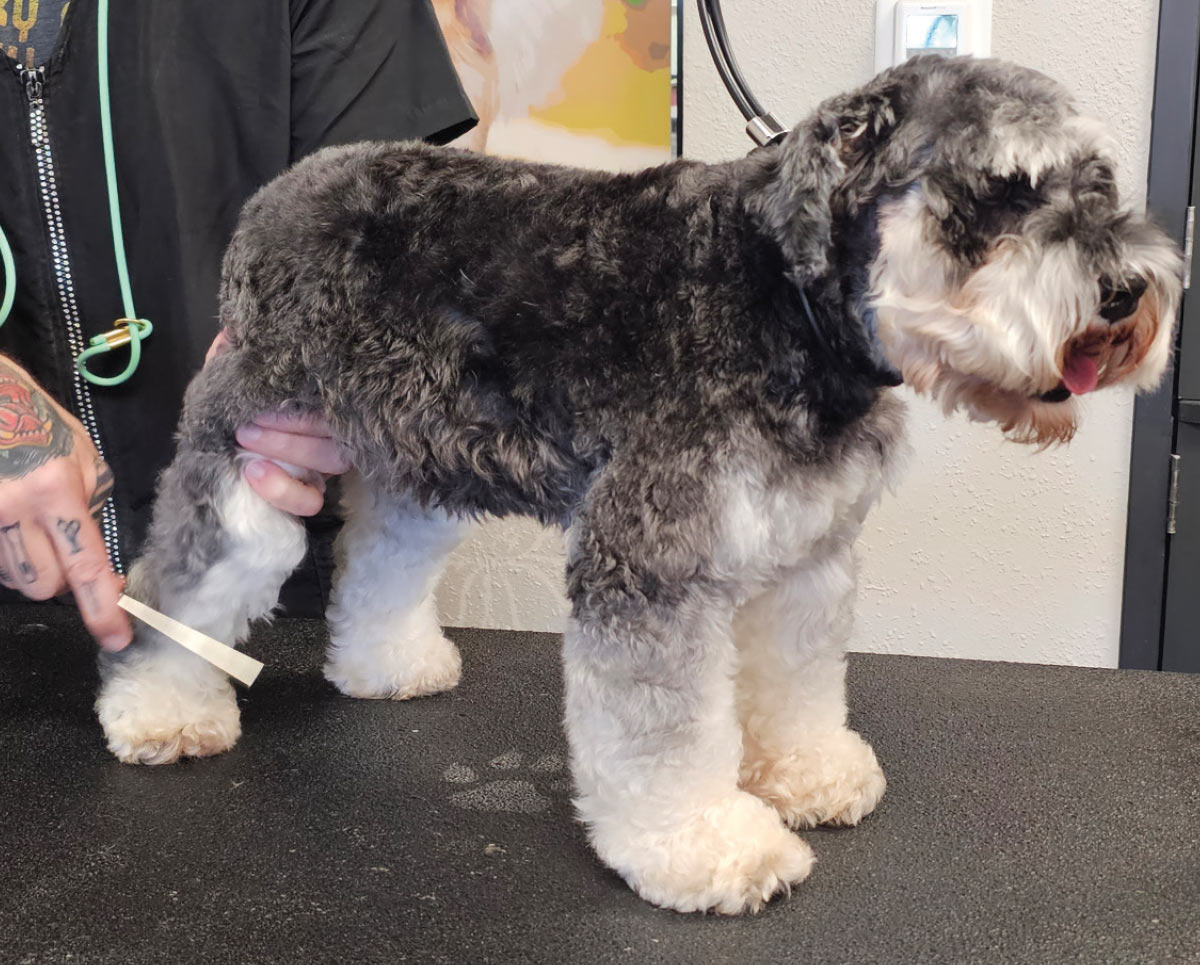
Groomed by Andrew Zuzma
 chnauzers come in three sizes with countless different lifestyles and types of owners. Here we have a not-so-unfamiliar situation where the owner wants their dog to resemble the breed standard, yet have a haircut that lasts longer and keeps the house a touch cleaner. It’s not an overly refined breed trim or a fantastical freestyle; it lives somewhere between those two extremes to suit the everyday family.
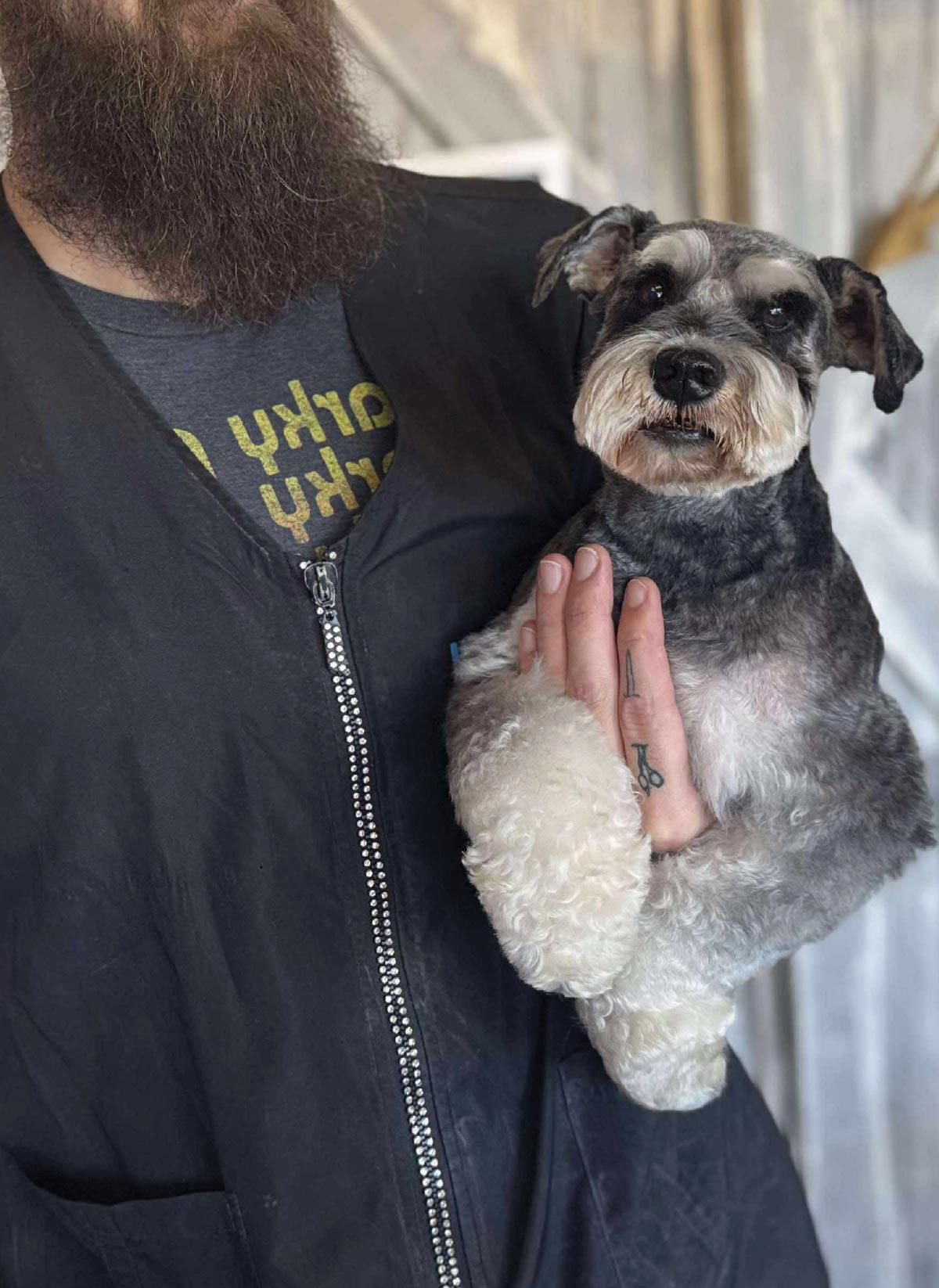
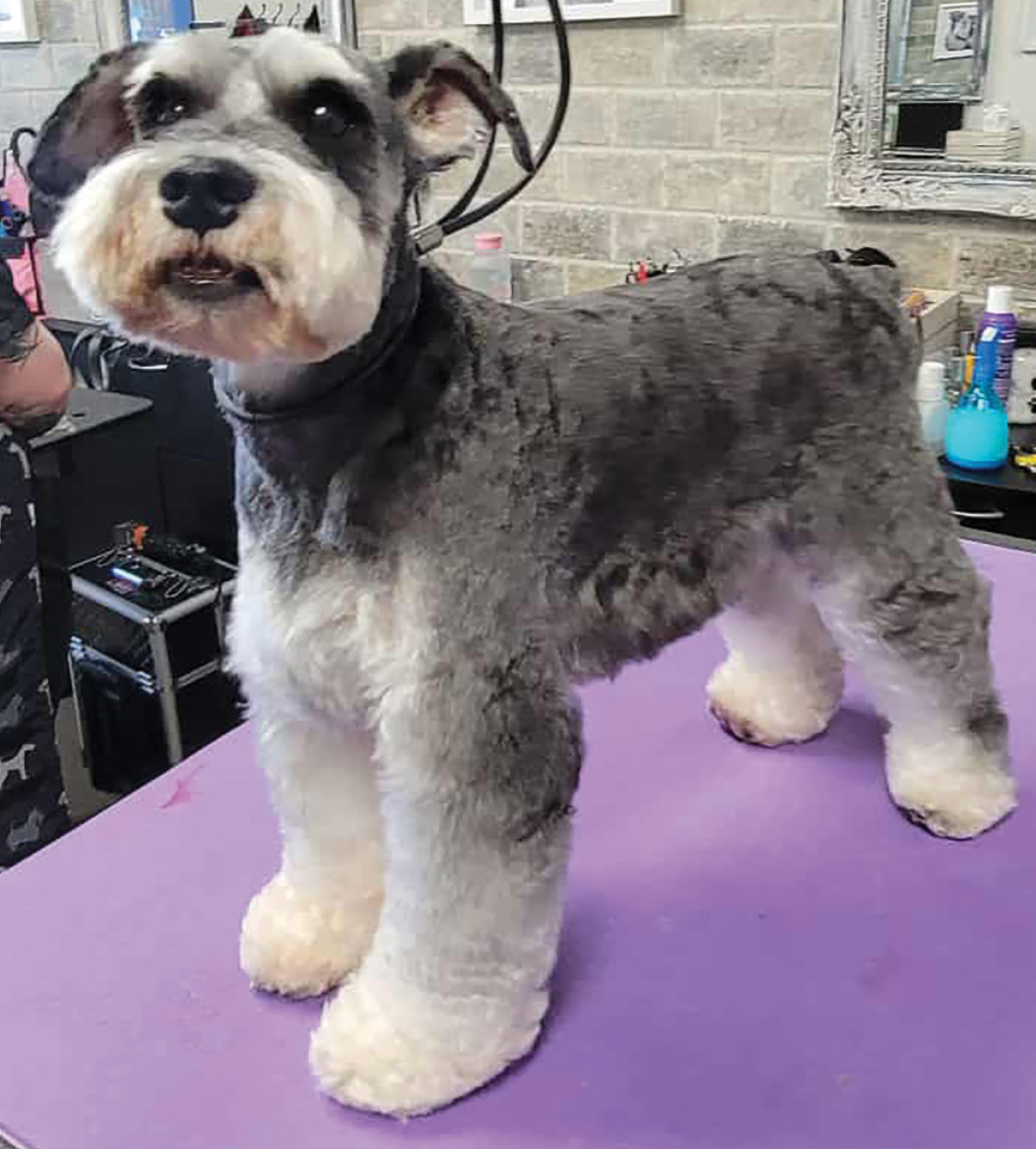

Groomed by Andrew Zuzma
chnauzers come in three sizes with countless different lifestyles and types of owners. Here we have a not-so-unfamiliar situation where the owner wants their dog to resemble the breed standard, yet have a haircut that lasts longer and keeps the house a touch cleaner. It’s not an overly refined breed trim or a fantastical freestyle; it lives somewhere between those two extremes to suit the everyday family. Fig. 2) Continue that pattern down the thigh and behind the dog’s rear legs. This is an area that is frequently groomed extra tight on pets for sanitary reasons.
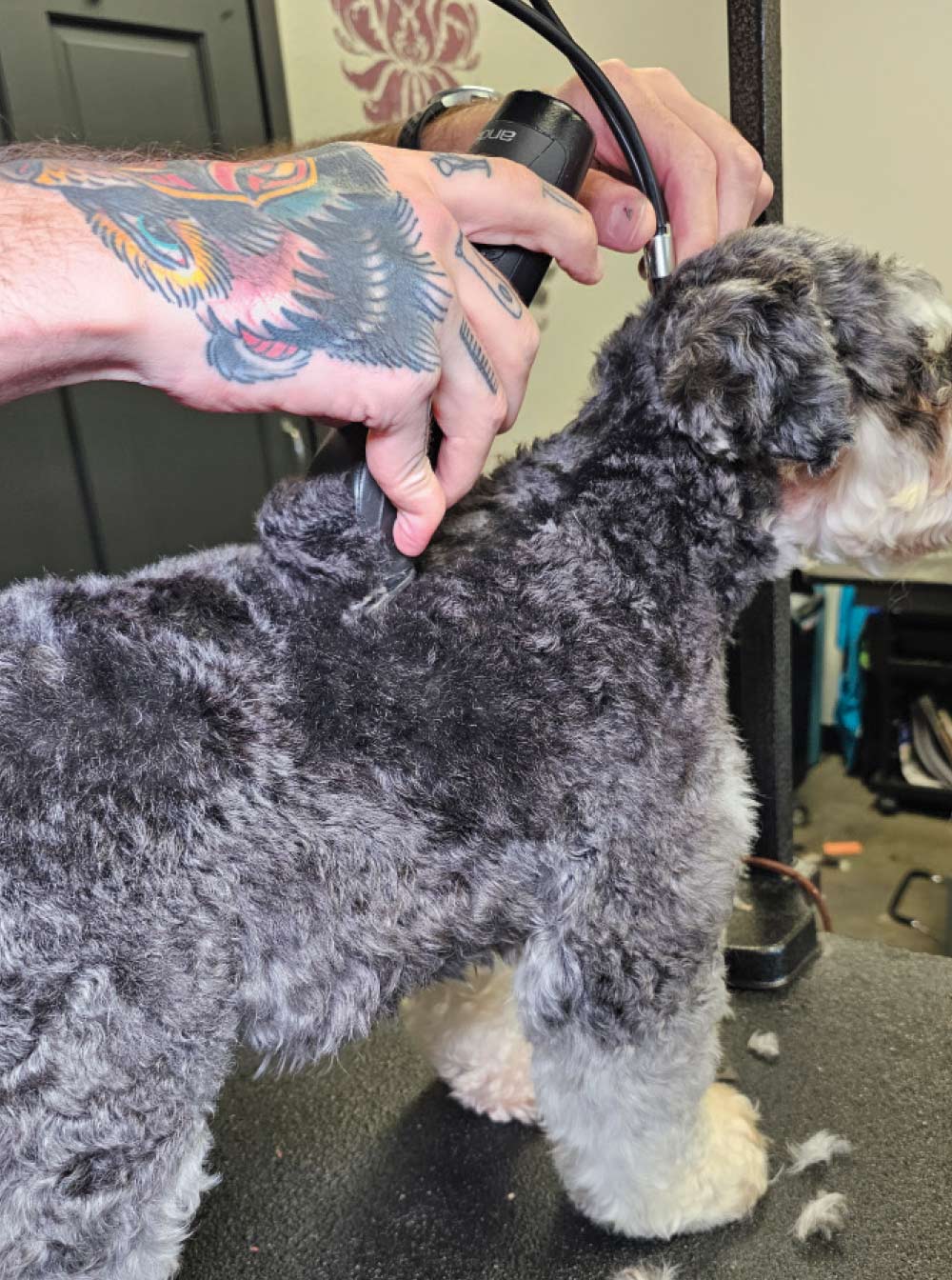
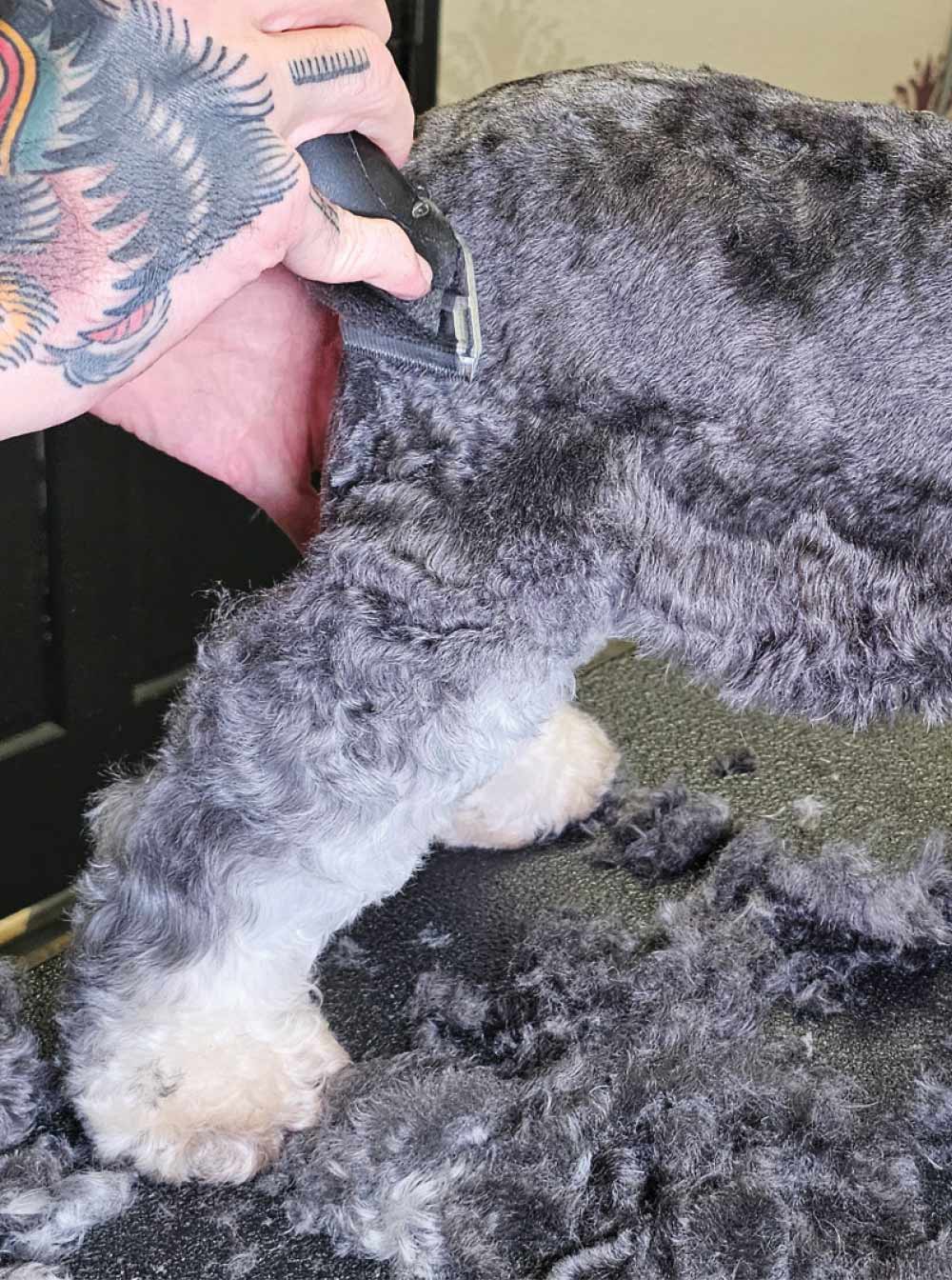
Fig. 4) Continue clipping tight under the chin, down the neck and to the front of the shoulder. This will aid in giving the dog that more long-legged terrier-type front.
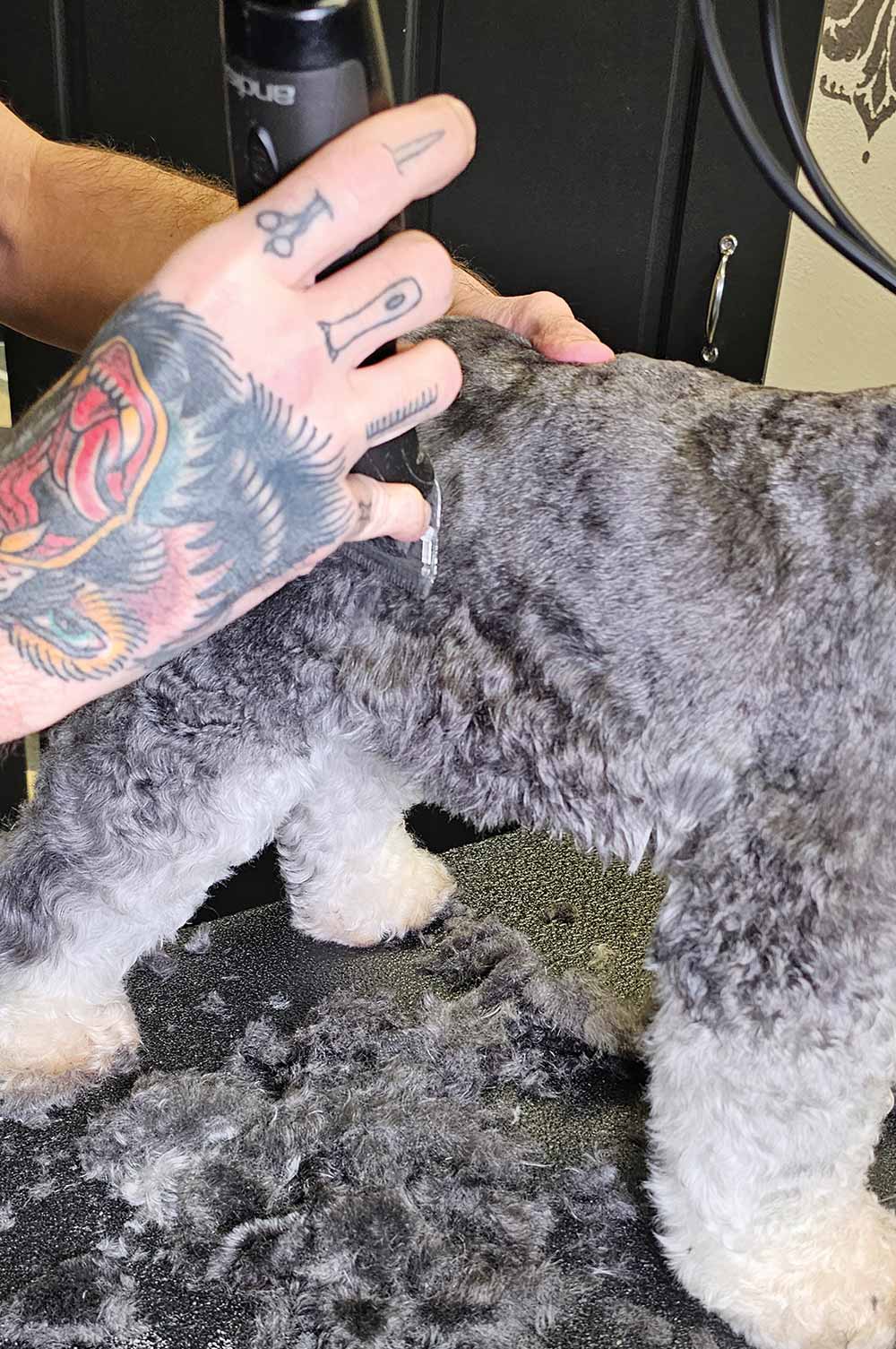
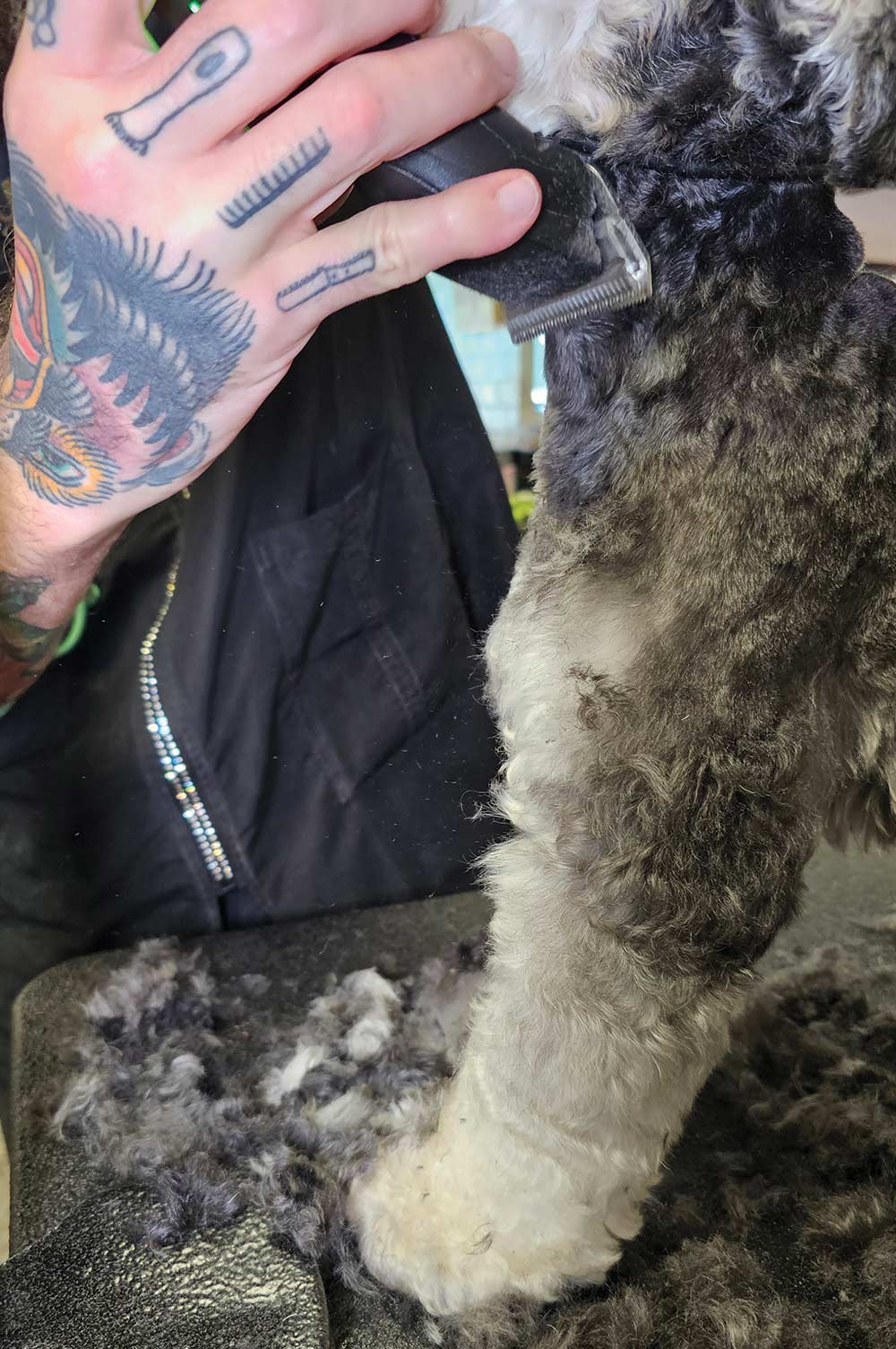
Fig. 6) Shears with teeth can be a great way to trim lines without all the commitment. The double-sided chunkers used here provide a quick way to achieve an inside parallel line for the rear legs.
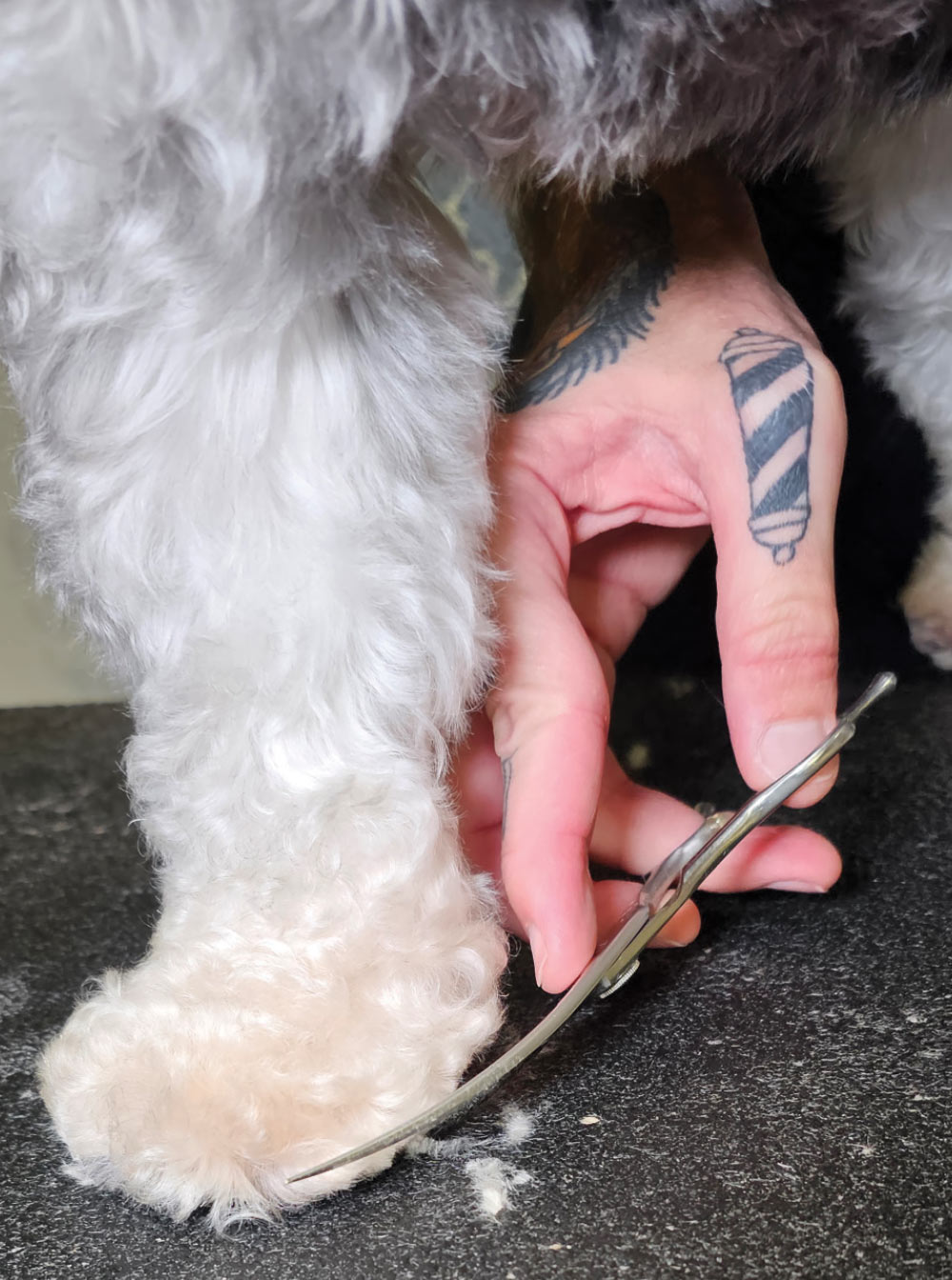
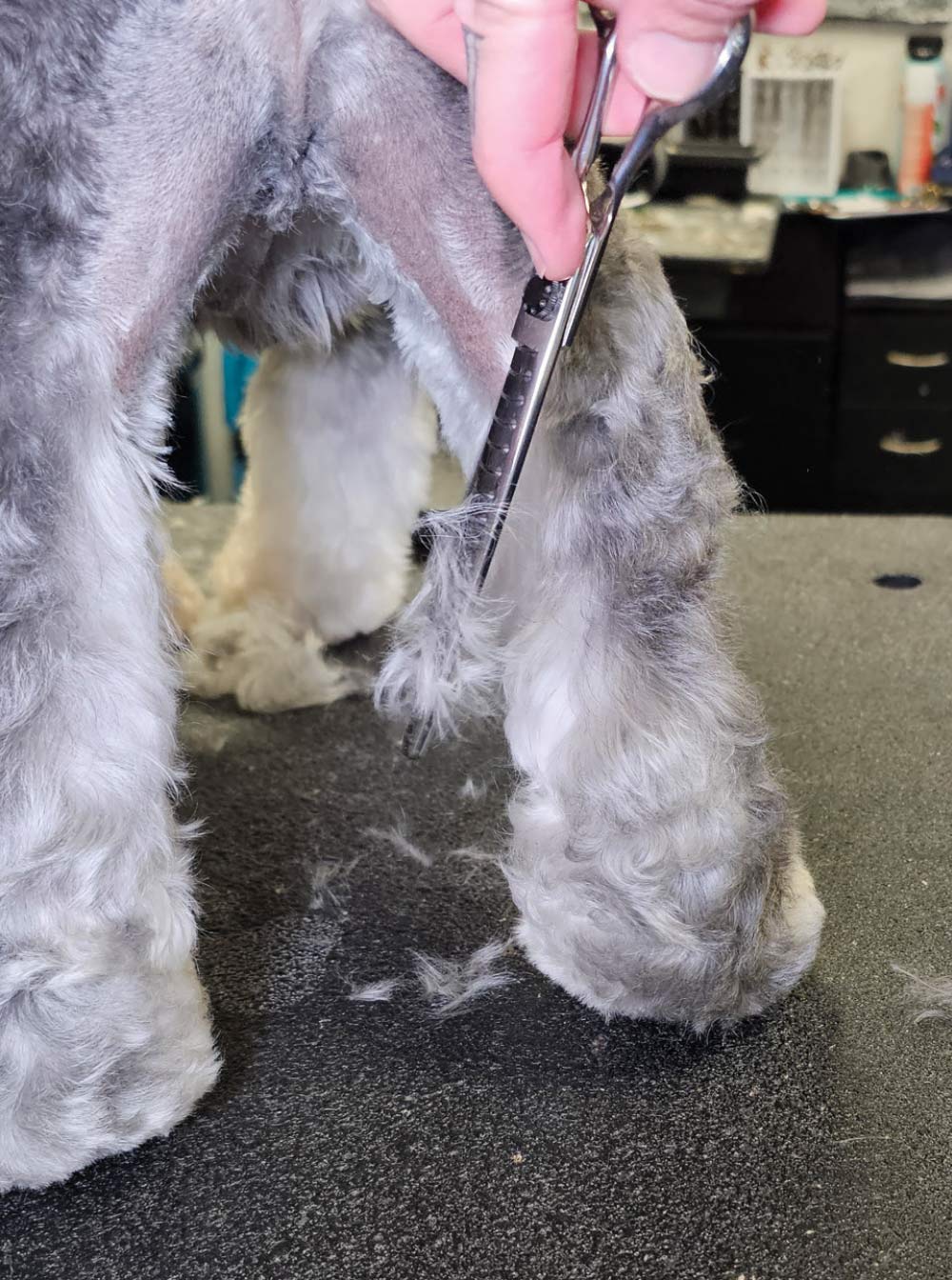
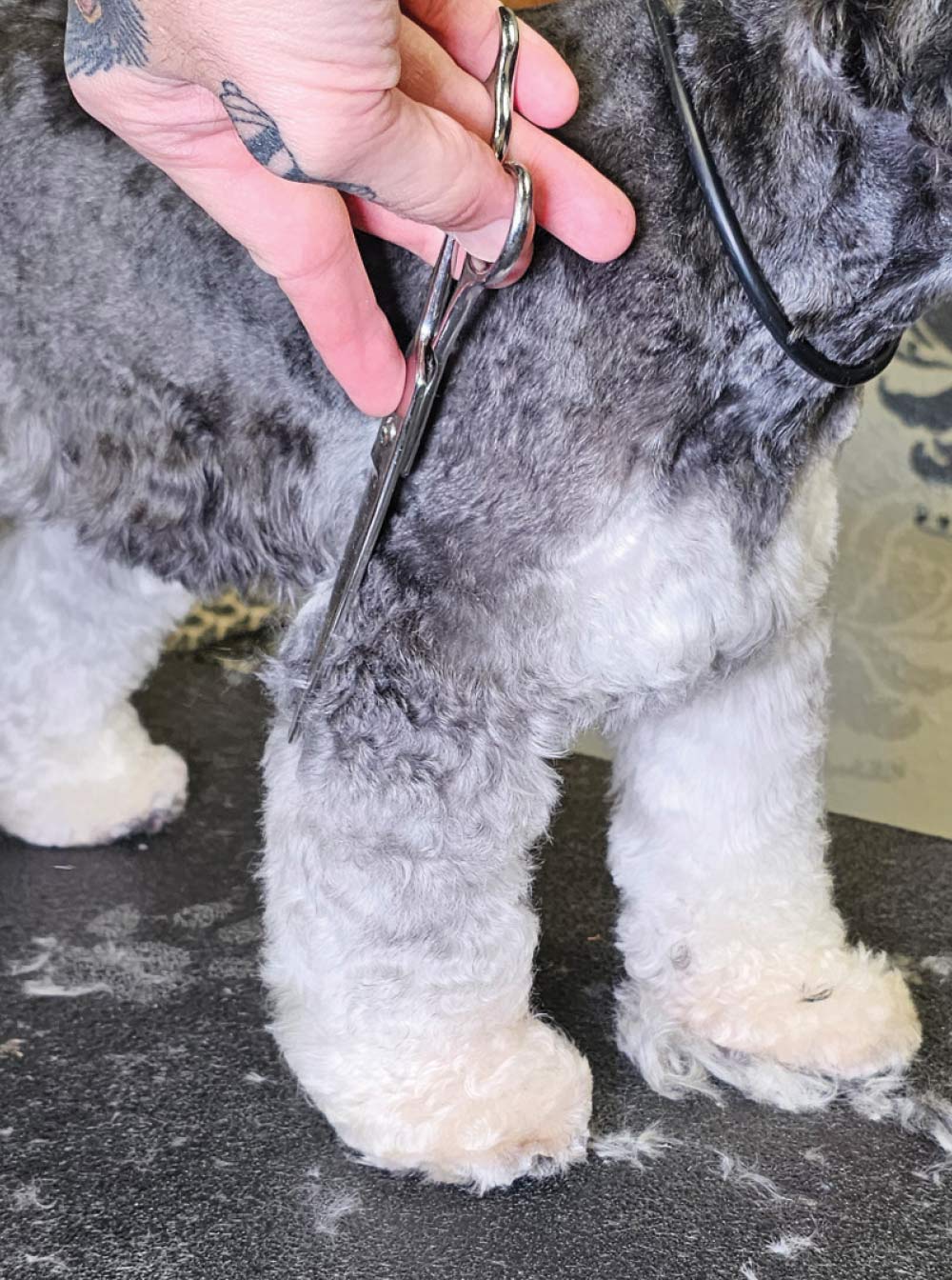
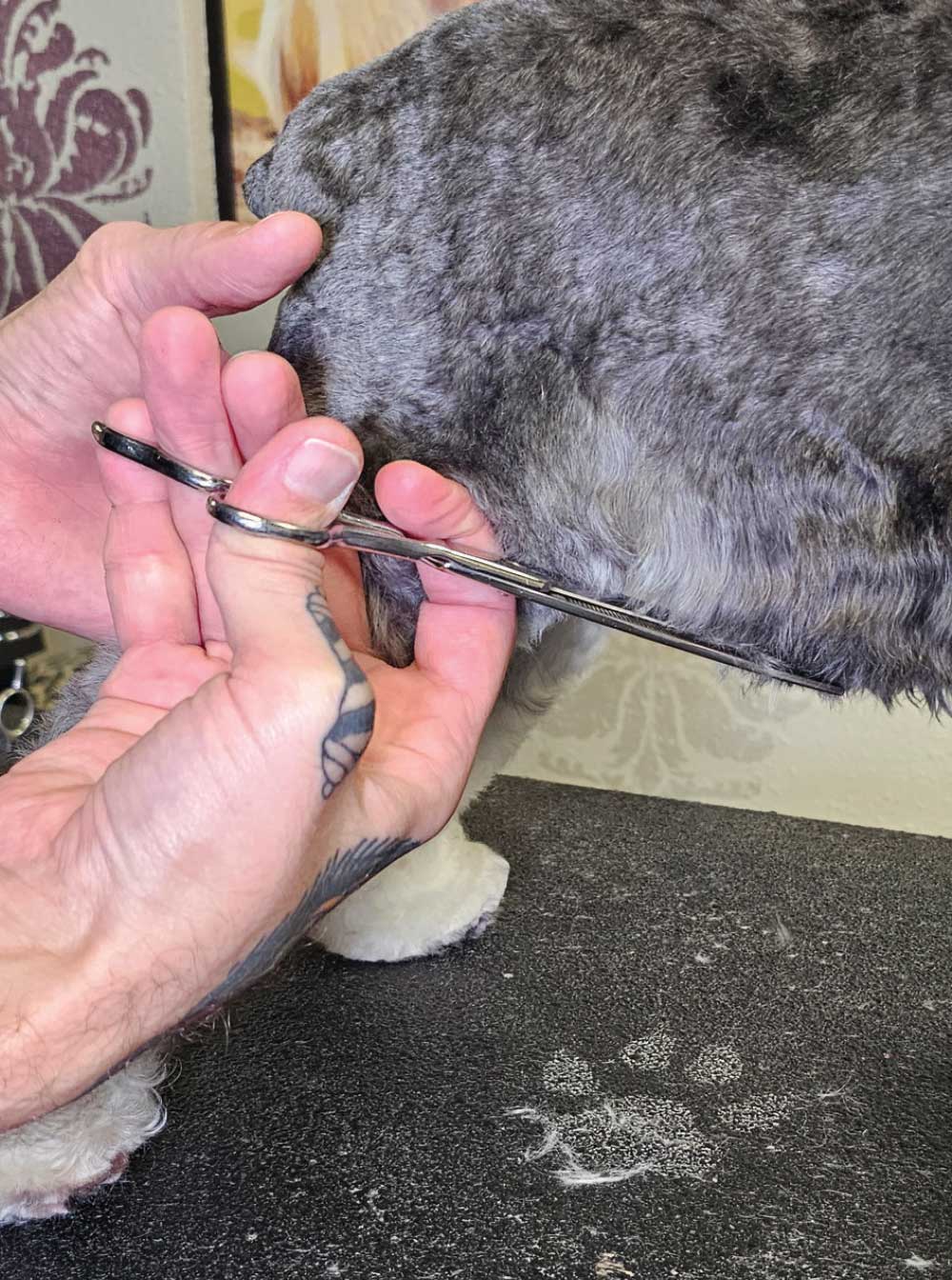
Fig. 8) The hair left beneath the barrel and that drops from the deepest part of the dog’s brisket should not be visible when viewed from above. Trim this line near parallel with the ground with just a slight angle up towards their waist or tuck-up.
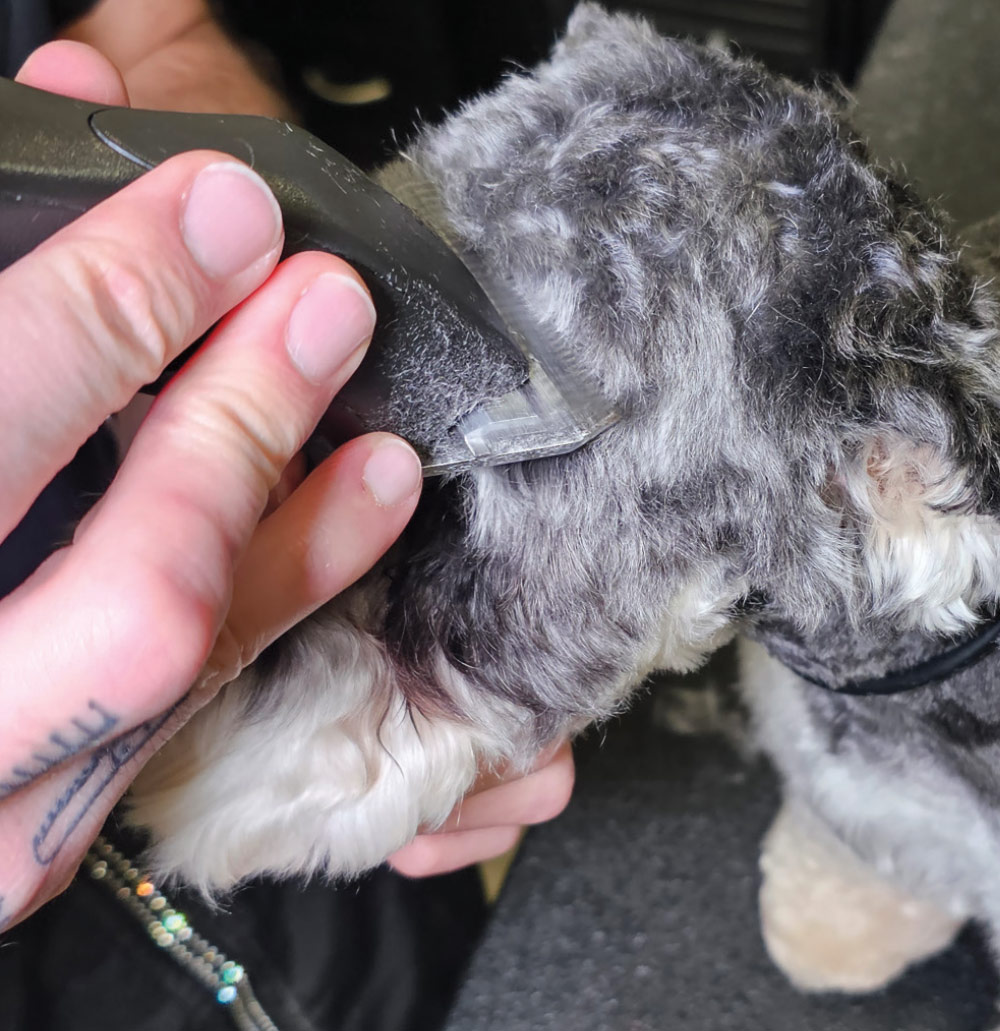
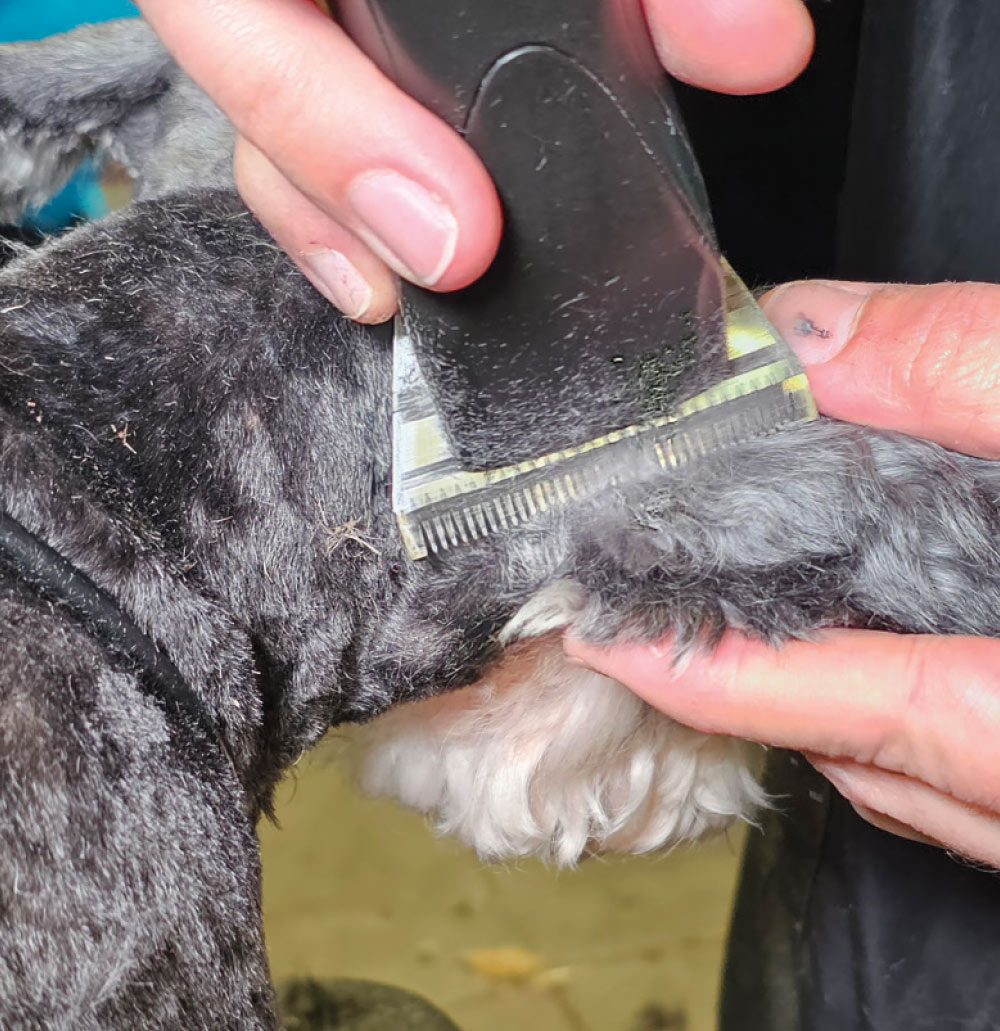
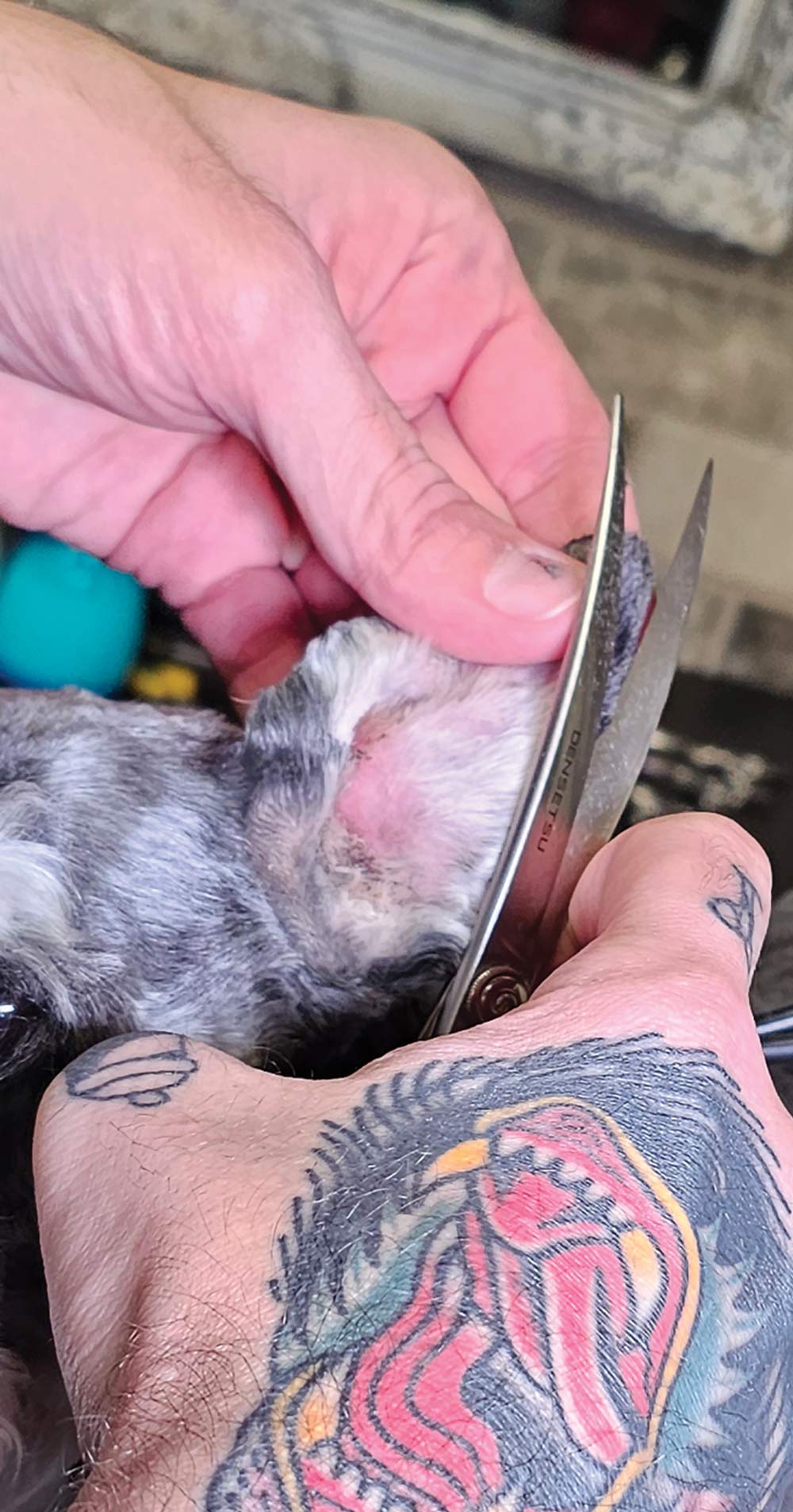
Fig. 10) Clip the ears down in a #10 with the grain while creating a firm, flat surface beneath the ear leather for safety.
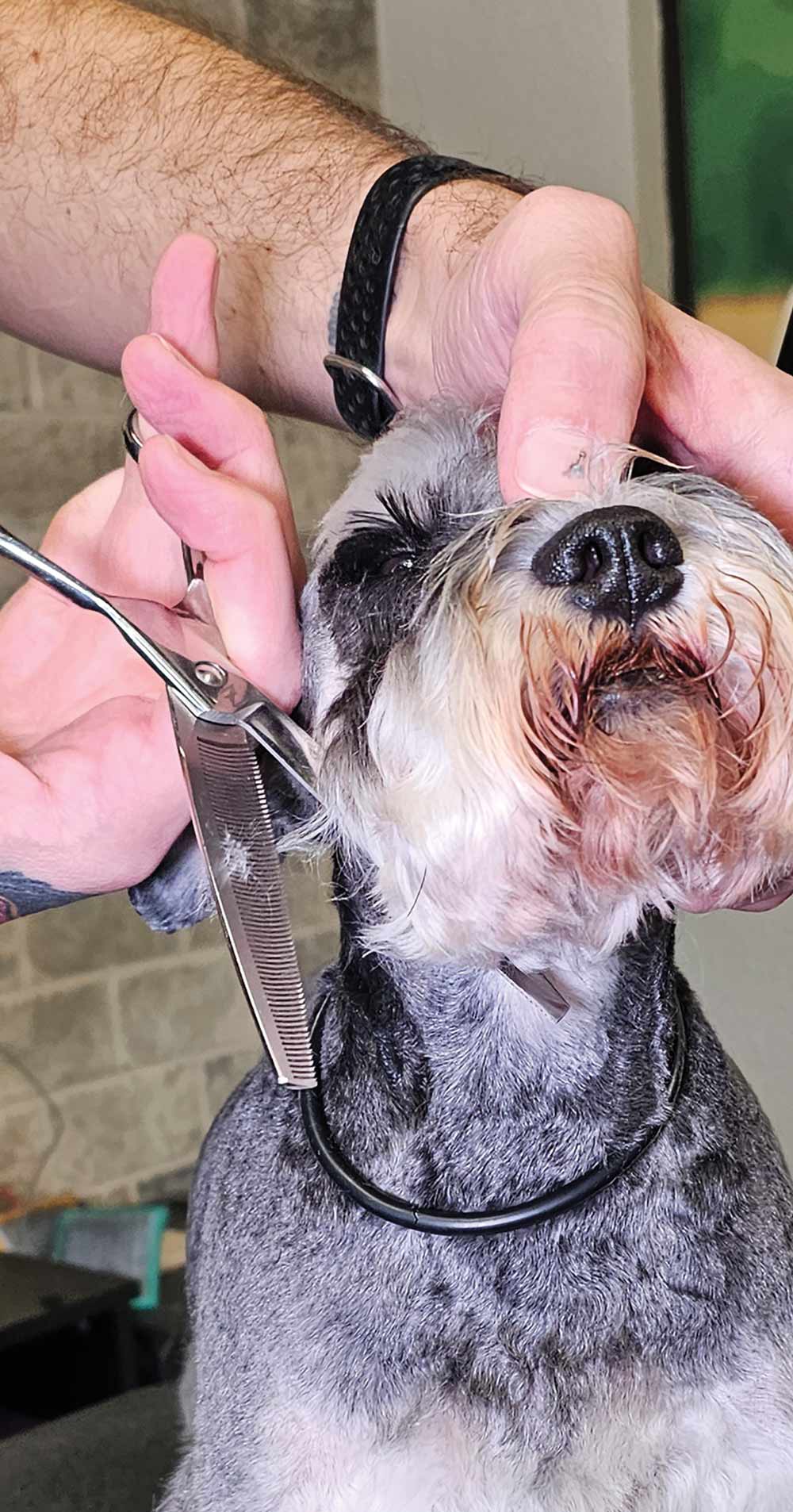
The soft roundness of the beard is just a bit lower maintenance for the pet parents, as well as keeps the house a lot cleaner around the water bowl. But the breed standard body pattern and underline still give the dog its strong Schnauzer presence!
Fig. 12) For a pet-friendly trim, round up and blend in the beard from the clipper work on the cheek.
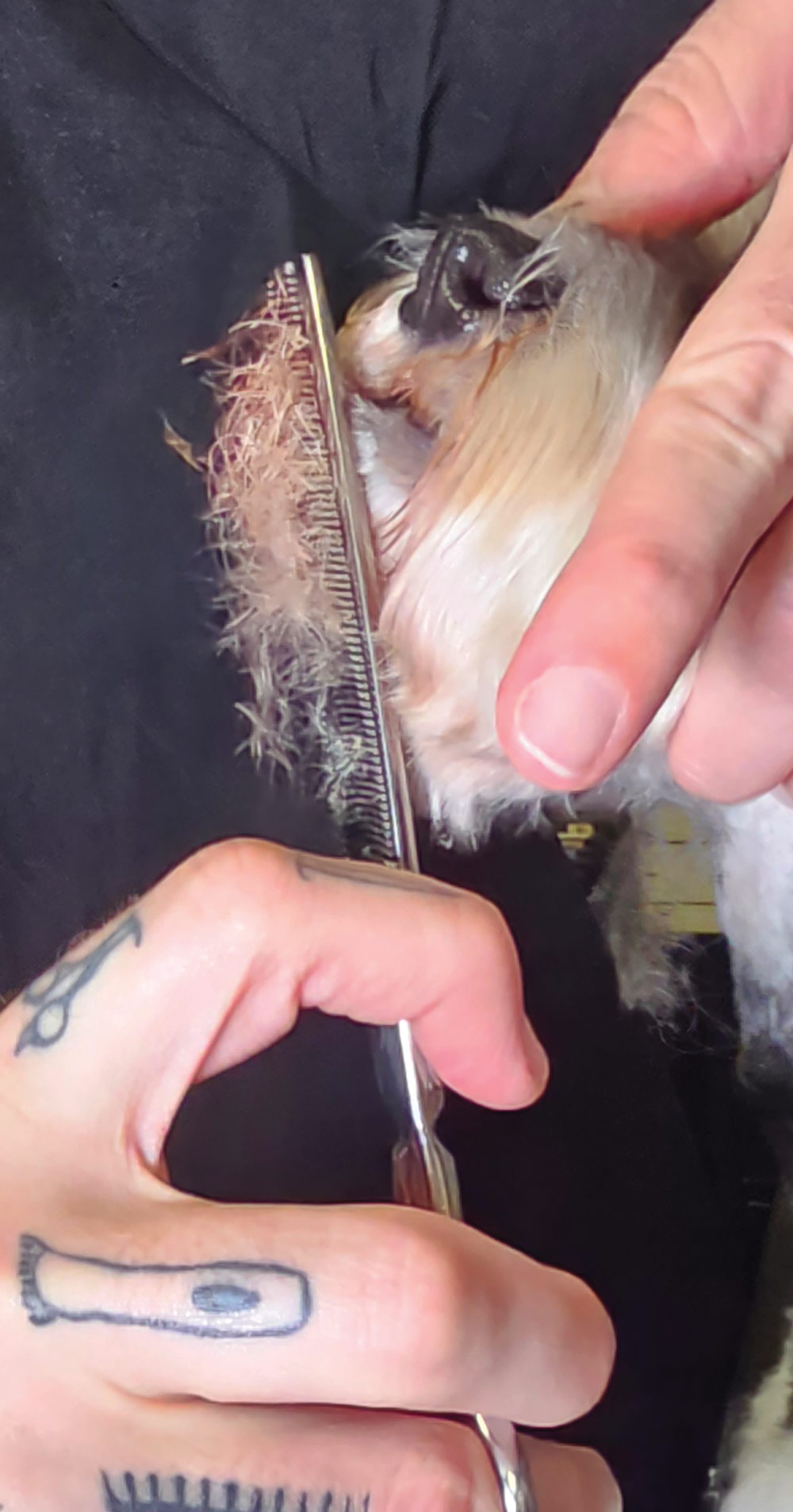
Fig. 13) Do the same for everything that reaches past the nose.
The soft roundness of the beard is just a bit lower maintenance for the pet parents, as well as keeps the house a lot cleaner around the water bowl. But the breed standard body pattern and underline still give the dog its strong Schnauzer presence!


Call (717) 691-3388 ext 224 to place a Classified.
Rates: 25 words or less, $50.00.
Each additional word, $2.00 each.
Classified ads must be prepaid.
Call for issue deadlines.
Agency discounts do not apply.


Thanks for reading our November 2025 issue!