


by Chris Anthony
 et grooming can be a very physically demanding job, even with weight limits. And unless you’re already a fitness enthusiast or wanting to make major life changes, you’re probably not looking to add a workout schedule to your already overbooked life. However, small additions to your day that take mere minutes can lead to significant changes.
One way grooming ergonomics differs from office ergonomics is that it’s not just about getting our “stand hours” or steps/activity in, but rather movement with intent and purpose, specifically stretching.
Many of the movements we perform throughout the day fall under the repetitive movement category, which can contribute to repetitive motion injuries. Since our goal is to reduce these types of injuries, let’s look at some benefits of simple stretching.
Studies on the benefits of stretching and exercise performance are mixed, but they do agree on some things, such as increasing our range of motion, improving our flexibility, increasing blood flow and improving our posture.
Increasing our range of motion is essential because, as we age, our joints lose flexibility and range of motion. Improved flexibility may help improve overall physical performance and decrease the risk of injury. Increased blood flow to our muscles and joints means they’re getting more oxygen and nutrients.
While being super flexible is usually a good thing, it is not an excuse to do the “anti-yoga” of twisting sideways and upside down to access the harder-to-reach places on a dog. Increased flexibility can reduce the strain on our bodies when we do have to reach odd places on the dog and make our daily movements easier.
Taking a moment to stretch can also have the added benefit of helping reduce stress levels and improving your emotional ergonomics. We know when we’re having a frustrating day that stopping to take a deep breath can help because one of the things it does is increase oxygen flow to our brains, therefore resulting in improved concentration. Since stretching can also improve blood flow, you’re getting multiple benefits at once.
Unless your frustration levels have hit critical with a spicy pup and you need to walk away from the grooming table while you remind yourself that the pet is also having a stressful time, here are three simple stretches that can be done right at the grooming table. Some of them you might recognize as variations on simple yoga poses.
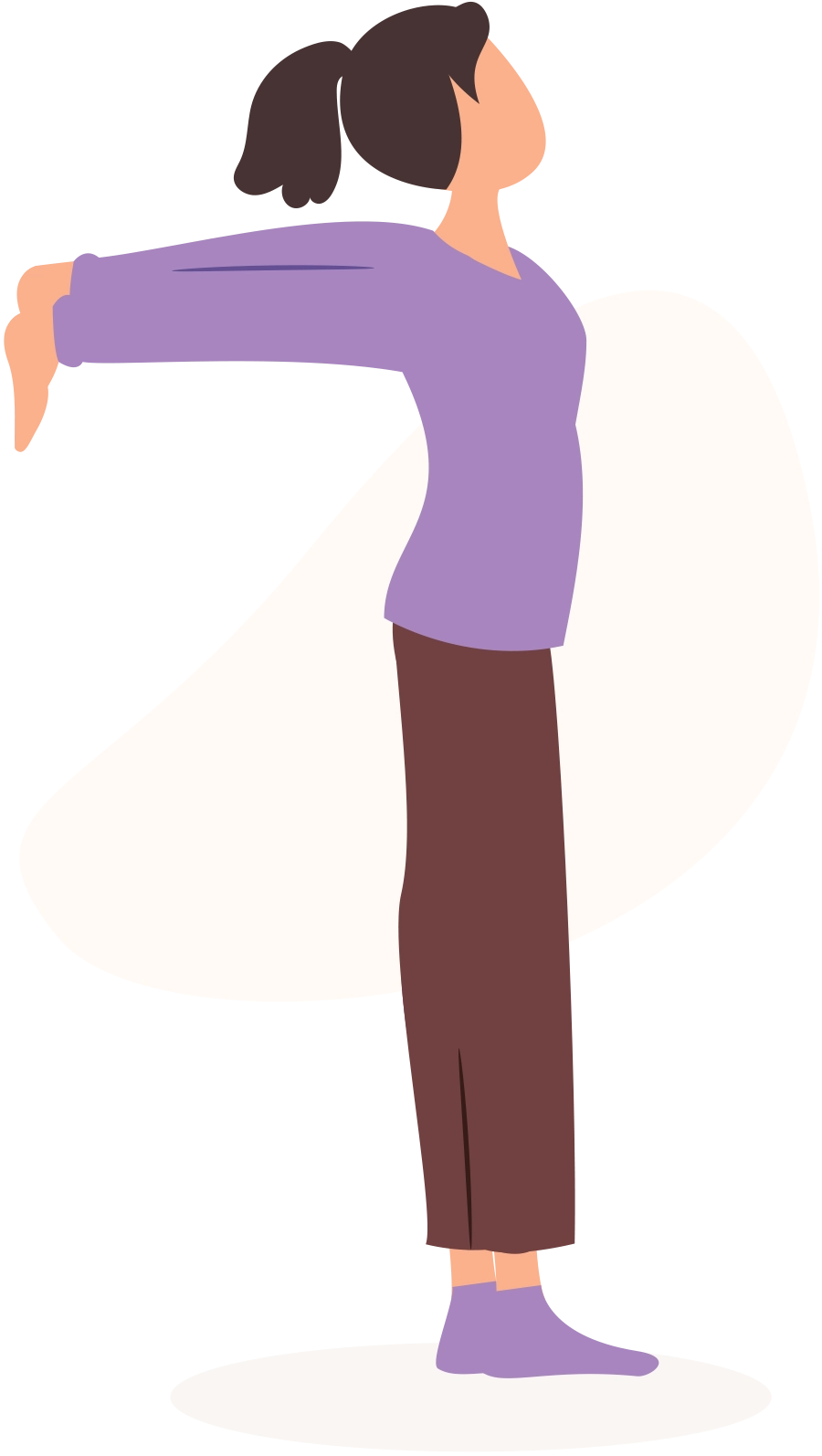
Chest Opener
If your current flexibility does not allow you to clasp your hands behind your back, just grab a handy slip lead or grooming loop to use as an improvised yoga strap. The stretch can be done while holding the loop behind you with your hands as close together as comfortable. With practice, you’ll soon find that you no longer need the loop!
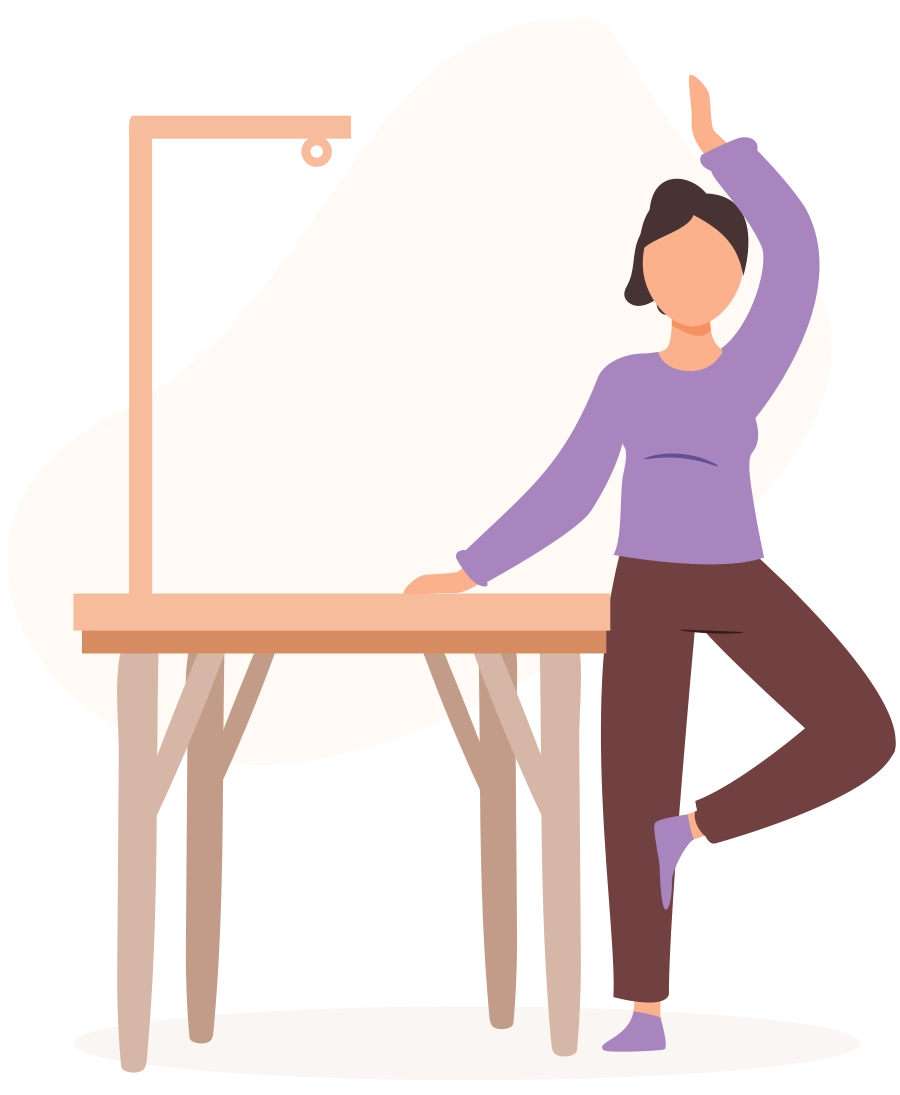

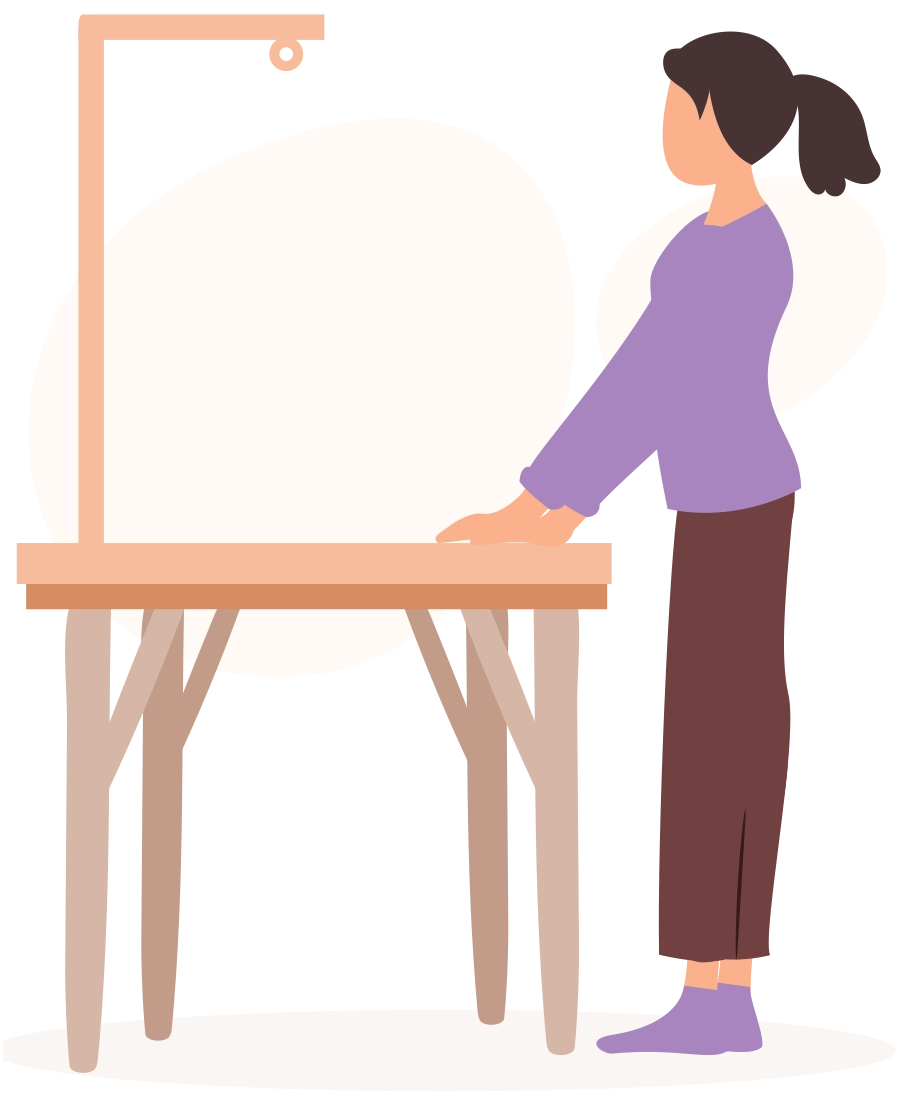
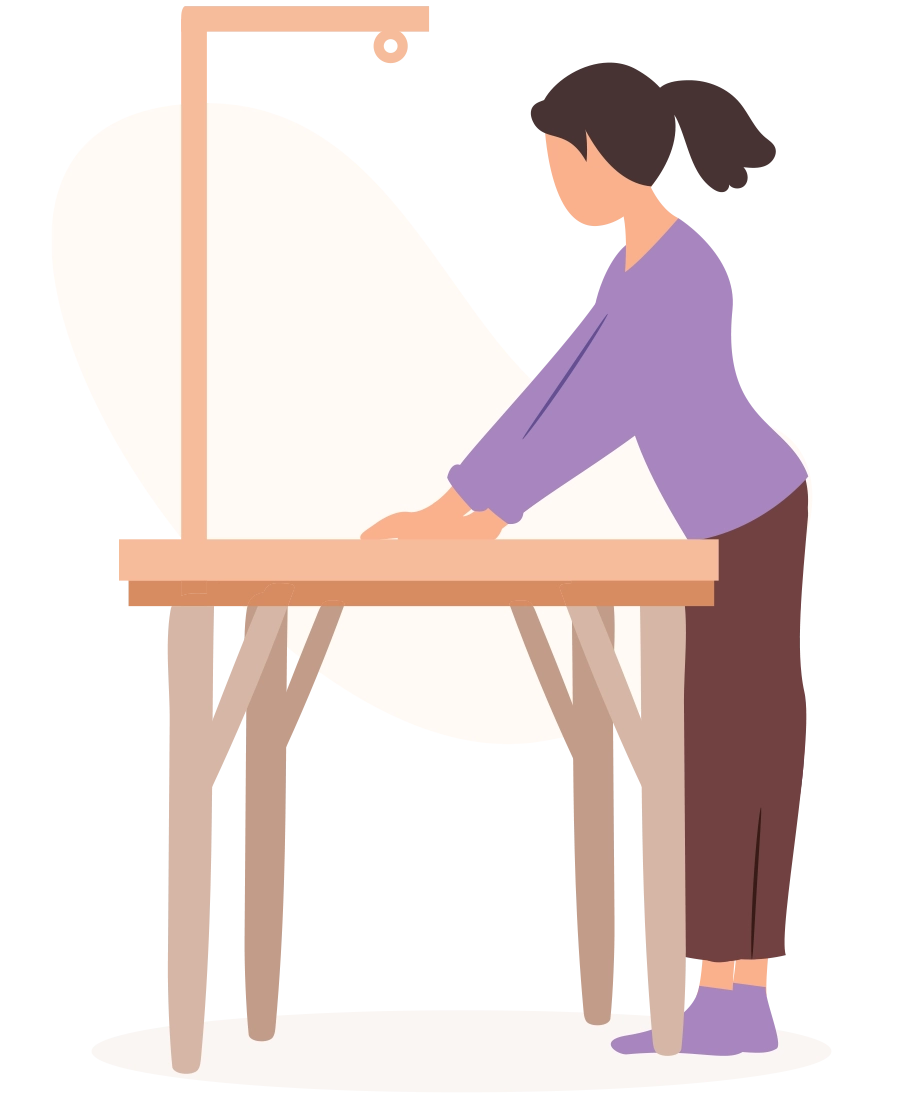
For a bonus move, this is the starting place for a variation of pyramid pose. After your 10 breaths in downward dog, step one foot forward and straighten your legs while sliding your arms forward on the table, then lean forward. Hold this for five breaths and then switch which leg is forward.
When doing these stretches, it’s always important to listen to your body. If something hurts or goes against your doctor’s advice, don’t do it! Stretching should not hurt; you should aim for somewhere between “Oohh, big stretch” and “Hurts so good,” but never cause pain. It should feel something like a gentle rubber band expanding, nothing sharp or burning.
If you think that you don’t have time, I want you to ask yourself one question: Why don’t you think you deserve to take 30 seconds for your health? Doing one of these stretches can take anywhere from 10 to 30 seconds, and you can cycle through several in five minutes.
You absolutely deserve to take care of your physical and emotional wellbeing—you deserve to be happy and healthy!