


by Blake Hernandez
Groomed by Amy Lupcho
 andstripping is as mysterious to new groomers as it is challenging and physically taxing. The technique is the direct attack and removal of hard top coat, while its “sister technique”—carding—is the direct attack and removal of soft undercoat. Both techniques are used on dogs with wiry and, sometimes, silky coats that shed.
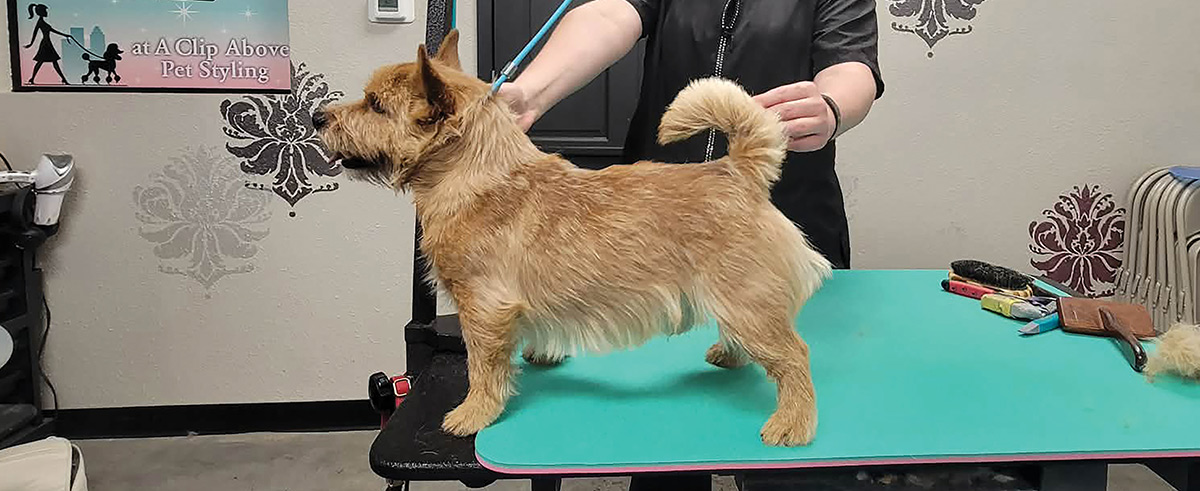
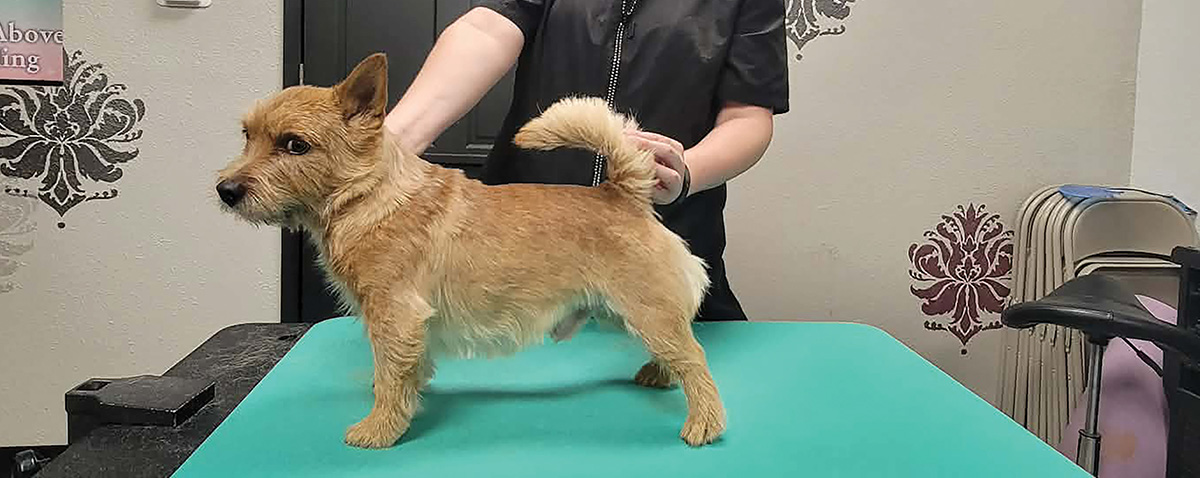
The Norwich Terrier being groomed here has had odd layering and timing for his grow out, so it was decided to not pull for pattern but to just pull a single layer off everywhere. This will allow the groomer to start sculpting and manipulating his shape and furnishings more easily at upcoming appointments.
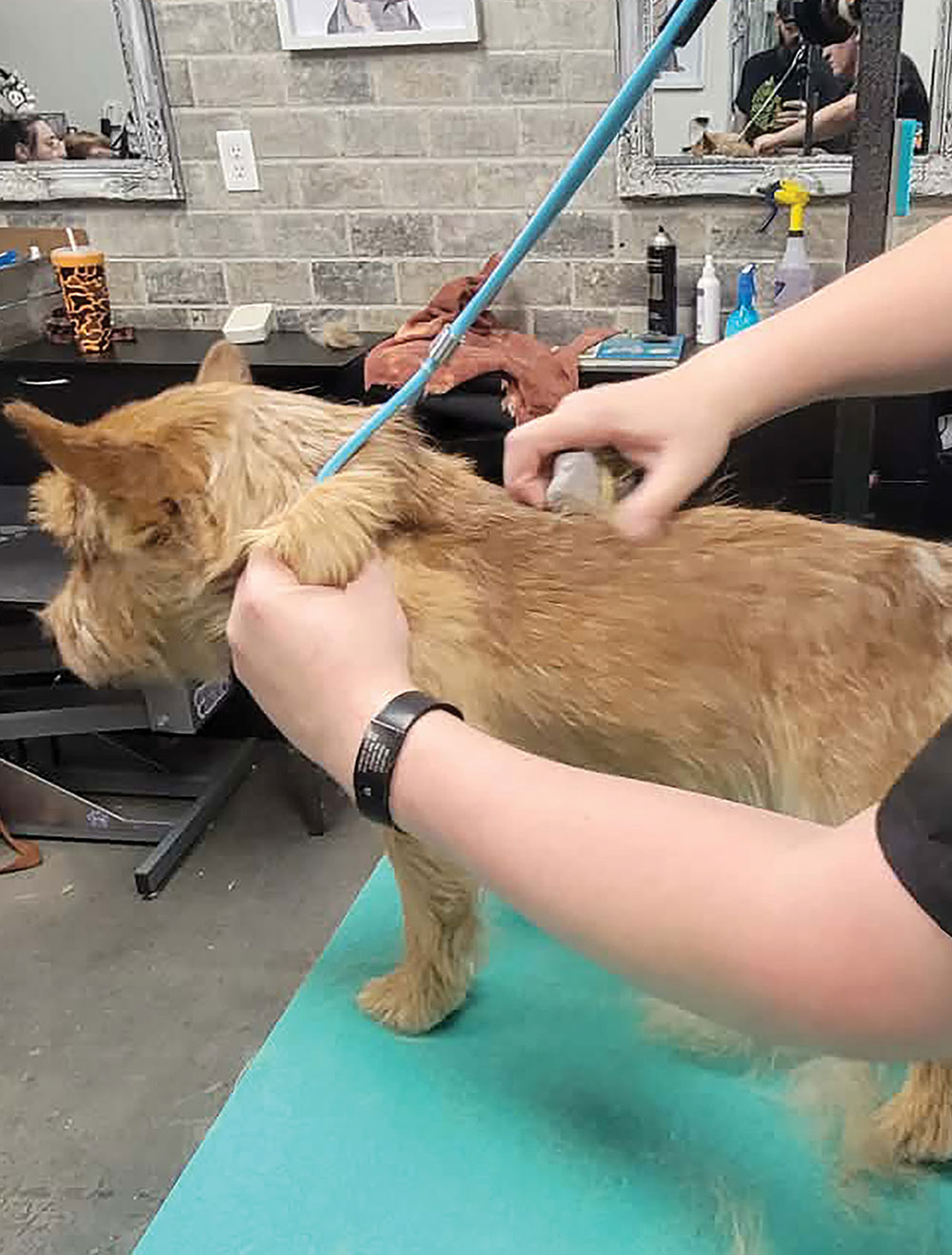
Fig. 1) The tool being used here is a pumice stone which is nice for beginners, as you can really mold it to fit your hand and it does not have a determined blade that will cut hairs.
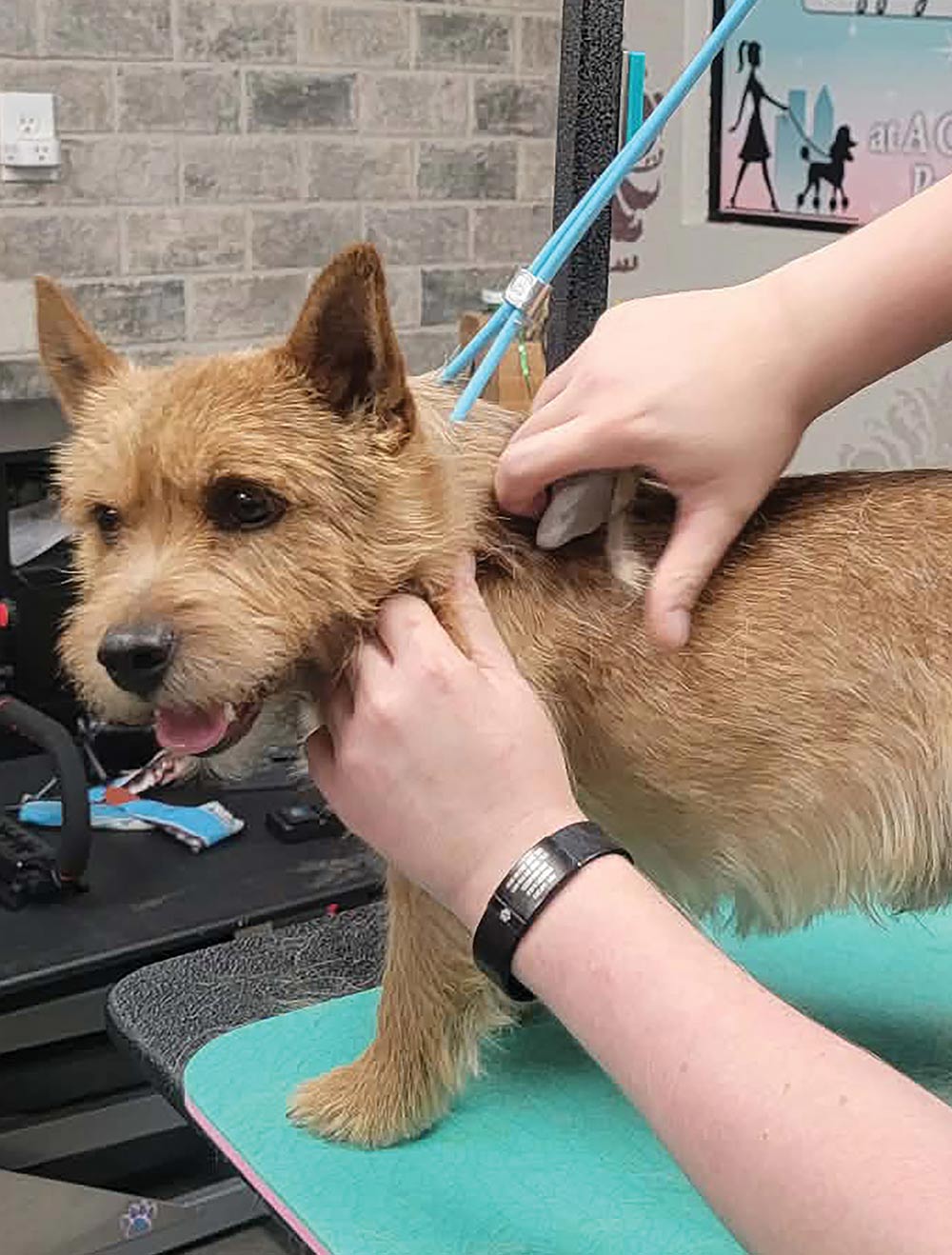
Fig. 2) No matter the tool being used or area that you are working on, it is important to keep the skin tight because it makes the hair-pulling easier on you and less irritating for the dog.
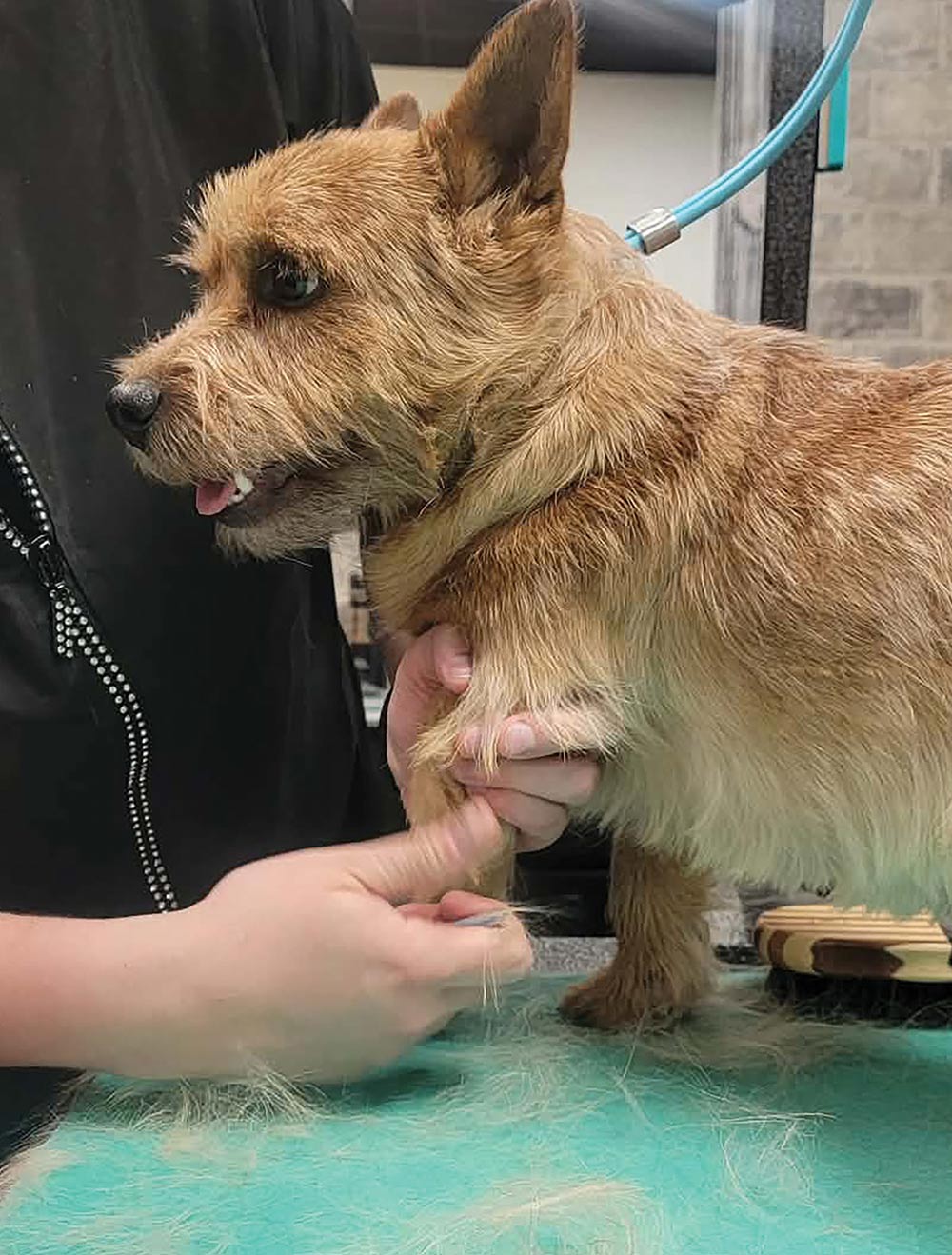
Fig. 3) Even with handstrips it is imperative that you mind the dog’s natural bend of joins to keep them as comfortable as possible as you move parts like lower legs and feet.
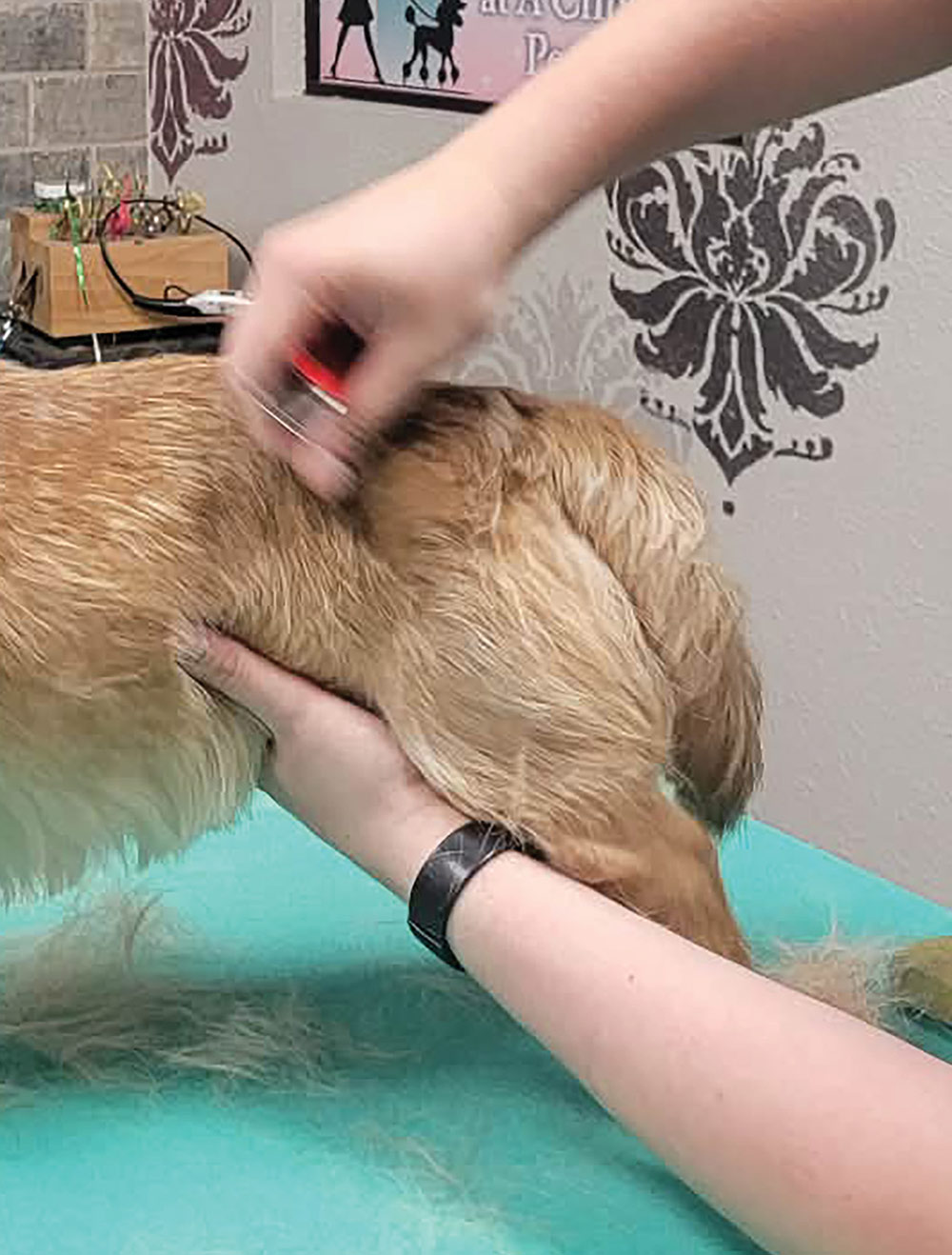
Fig. 4) As you work down and back on the dog, the holding hand should be braced underneath to still provide some tension in the skin and make for clean and consistent pull work.
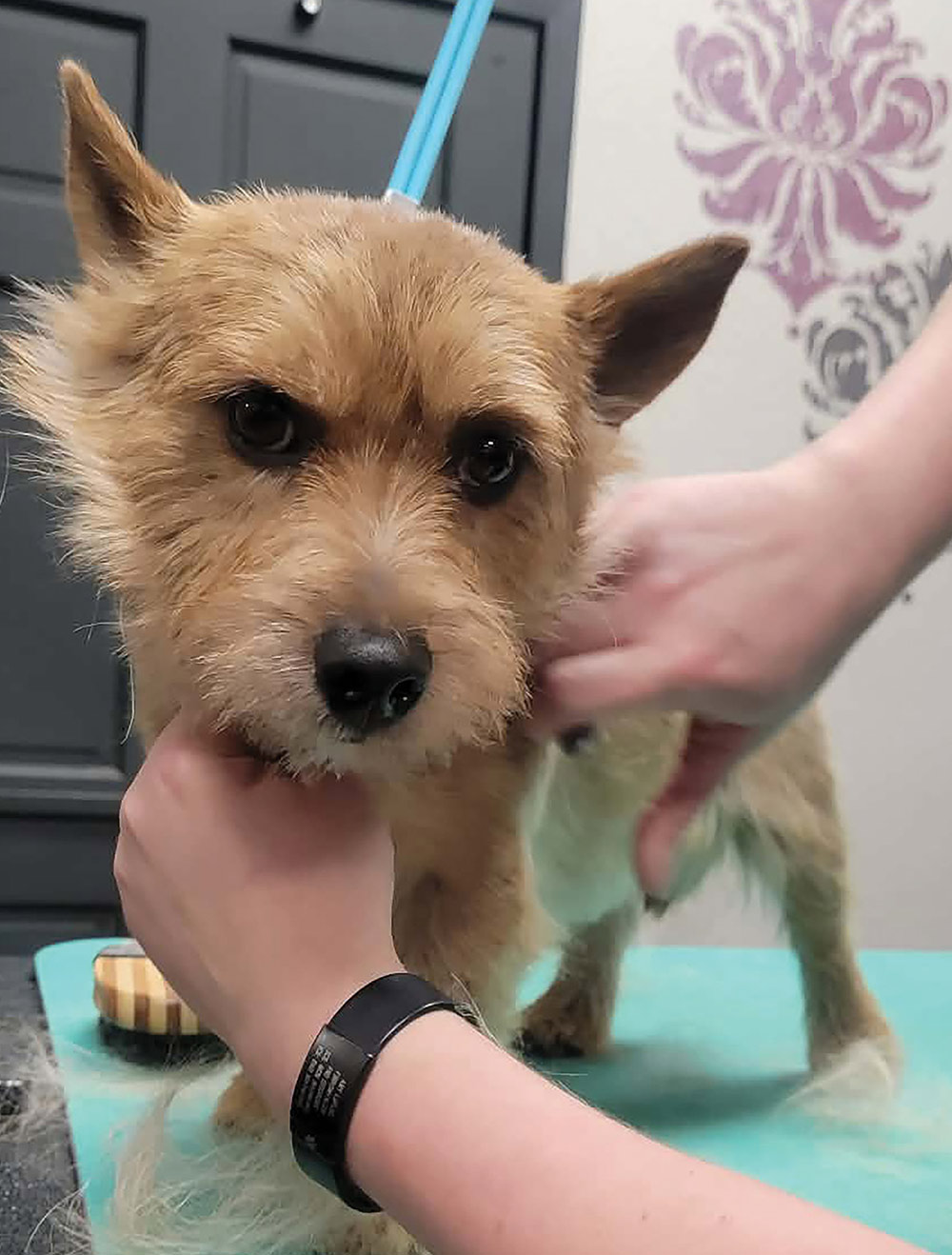
Fig. 5) The fronts of shoulders can be hard to reach, but if they are not pulled tight to show the muscle, the dog will appear weak and less angulated.
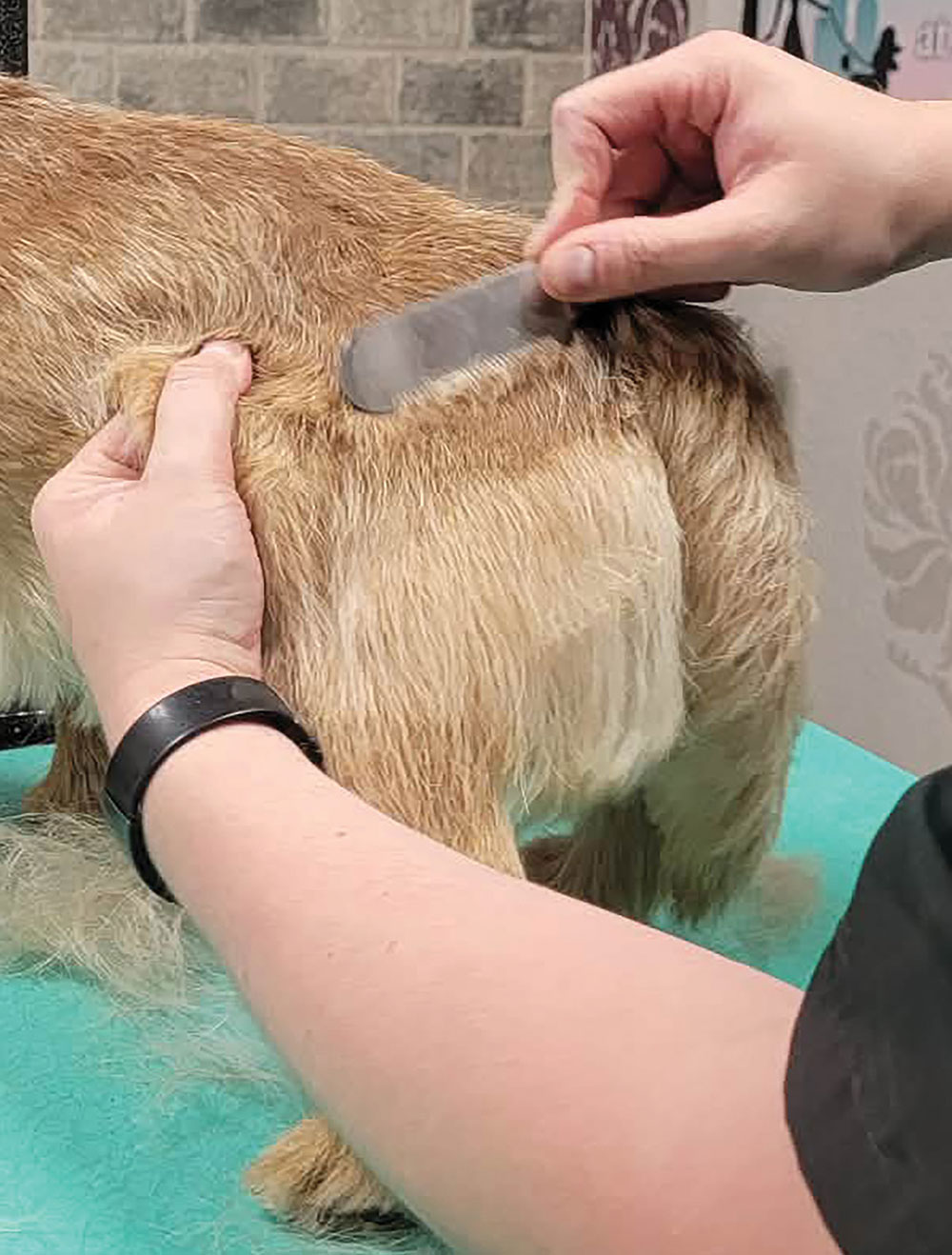
Fig. 6) To help blend all the work together, you will take a carding knife at a very low angle, almost parallel with the skin, and drag to pull out the soft undercoat.
Handstripping is often thought of as a wire-coat technique, but it can also be done on sporting coats and countless mixed breeds. Handstripping, as well as carding, prevents hair follicles from getting impacted with coat that needs to be released before it can produce a new healthy hair. Improve your skill and improve dogs’ skin by giving these techniques a try on your next scruffy pup.