


by Chris Anthony
Photos provided by Chris Anthony
 hen we’re talking about grooming tools, there seems to be very little middle ground regarding swivel shears. Groomers seem to either love or hate them. But why? Why all the love and why the hate? The following aims to give you the knowledge to decide for yourself and to know that both comfort and full control of your shears are possible with swivel shears.
One of the main reasons some groomers say they dislike swivel shears is a lack of control. That’s completely understandable because feeling like you are not in control of your sharpest tool can be terrifying. But the problem lies not in our hands, our skills or even the “weird” movement of the shears themselves; it’s in our training.
No groomer has, completely untrained, picked up a pair of shears and completed a fully hand-scissored continental that is show-ring ready. We had to be taught how to properly use our tools, yet we can be so hard on ourselves as professionals that we are often expected to pick up a new tool that works differently from how we have been trained and run with it. We had to be taught how to hold our shears, and conventional shear techniques often do not apply to swivels.
One of the first things we’re taught about how to properly hold (non-swivel) shears is not to put our fingers in all the way. This helps us control the angle we’re cutting into the hair and move the shear into the positions we need. Unfortunately, it also puts pressure on our carpal tunnel area and adds stress on our hands and wrists.
We contort ourselves, trying to get into various positions that get the results we need and are comfortable and safe for the pets in our care. But try to grasp something that moves with just barely the tips of our fingers, and you have the wildly moving chaos that many groomers only experience with swivel shears.
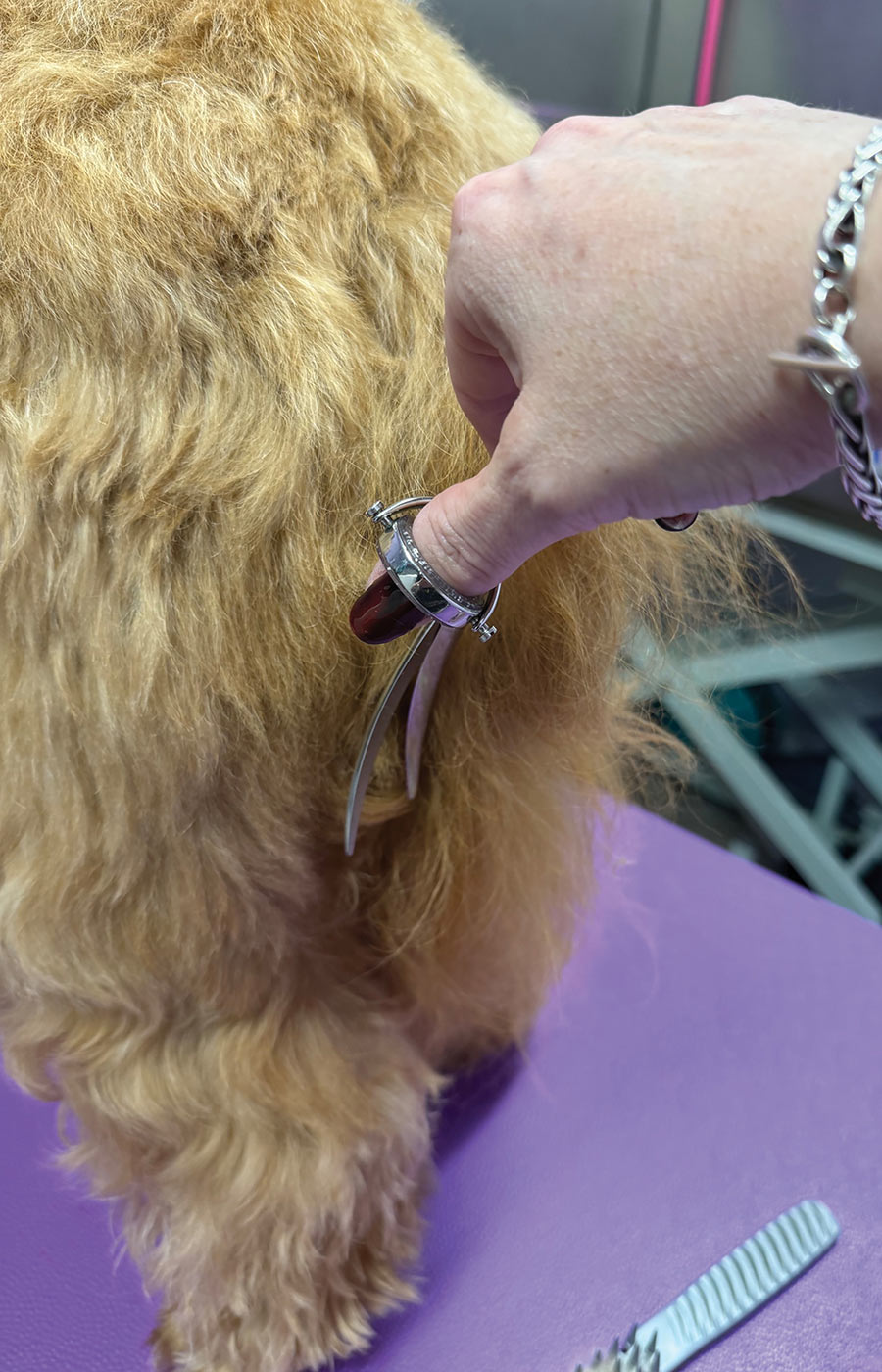
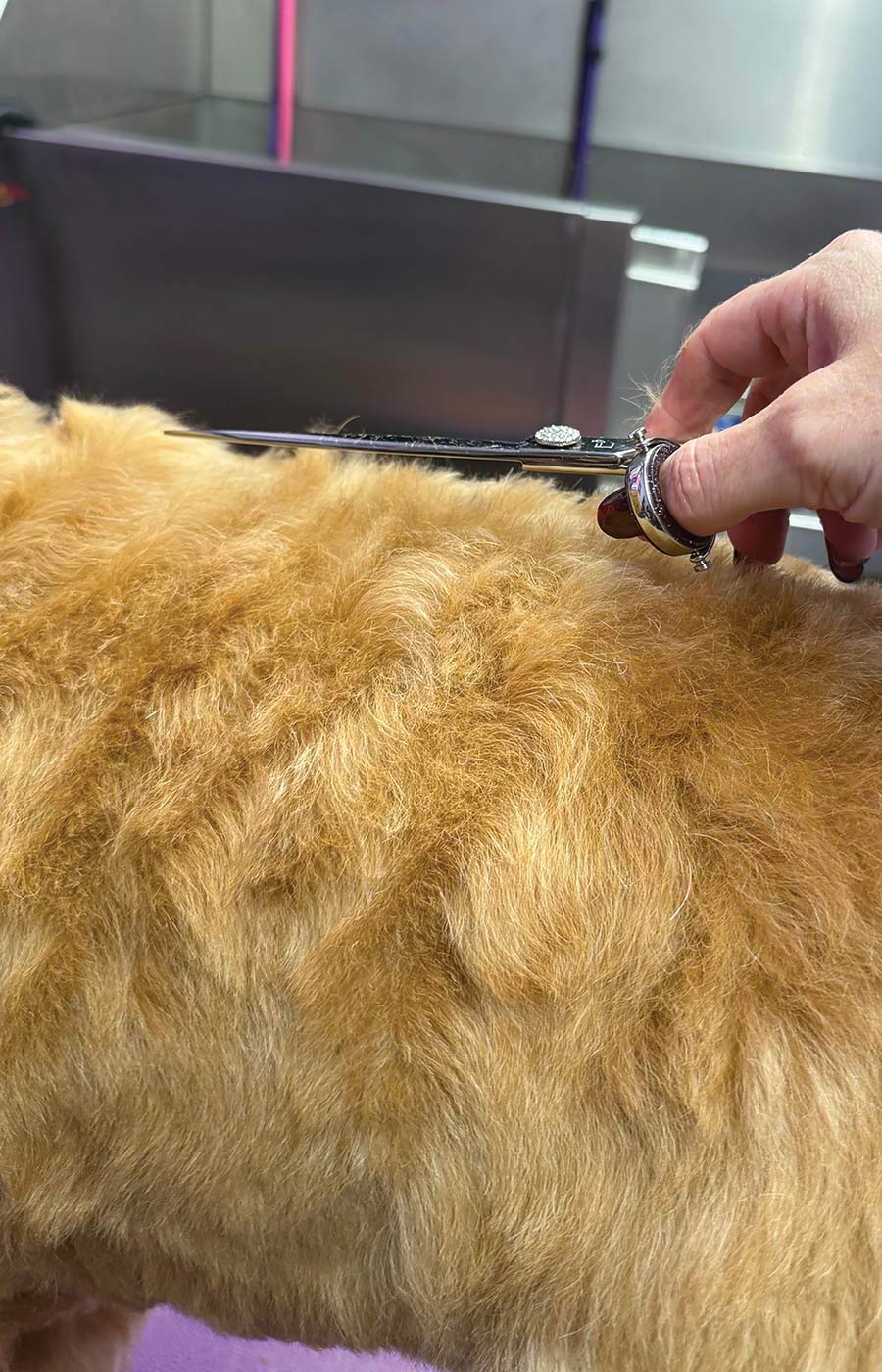
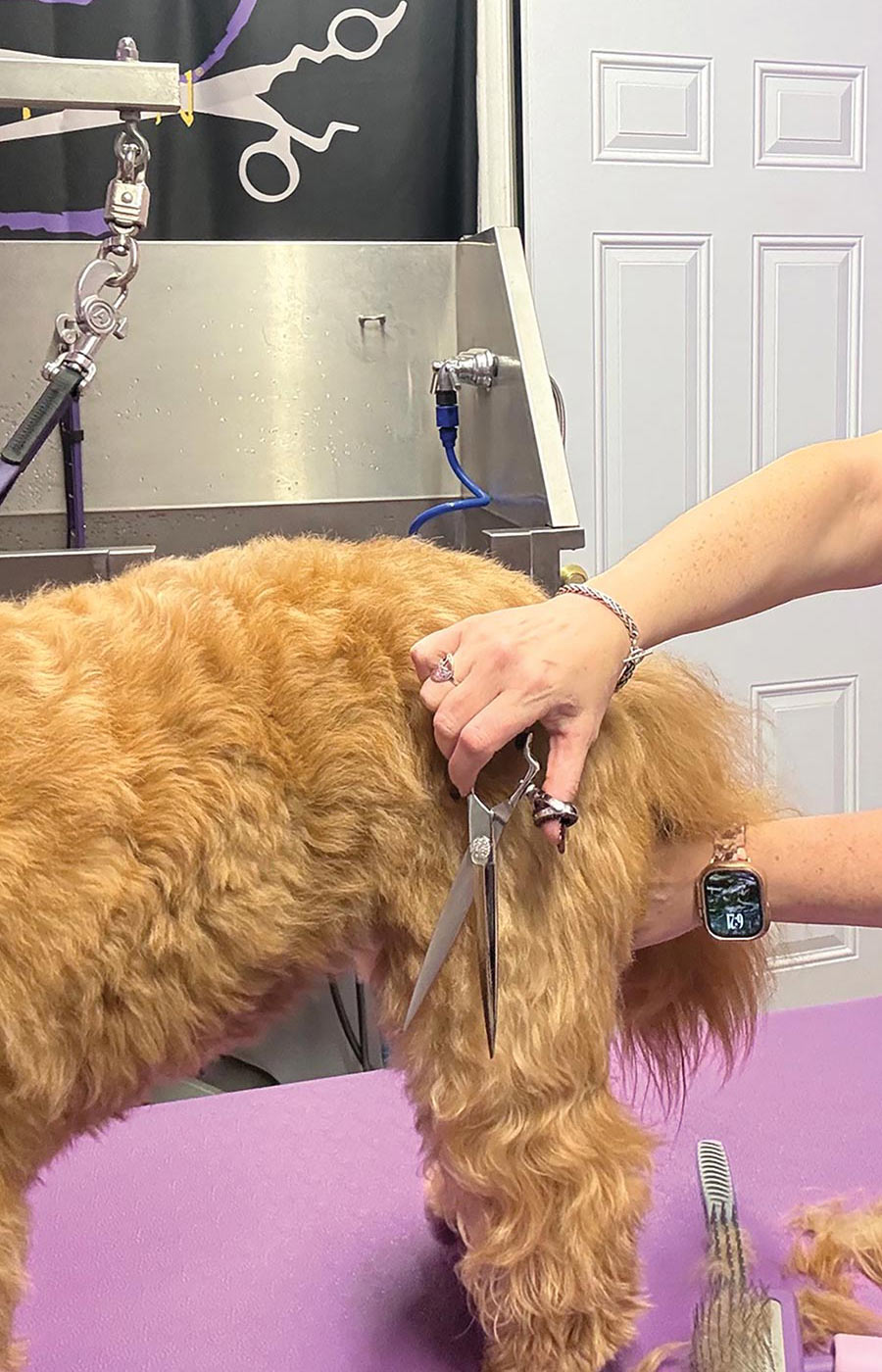
You may actually find you have more control of your shears with swivels than with standard shears because you can position the shear wherever you need to. Imagine grooming the inside of a leg without having to turn yourself sideways and halfway upside down. They can also allow you to relax your hand more and move more naturally, not gripping tightly.
Speaking of moving naturally, let’s briefly address carpal tunnel syndrome. When we put our hands and wrists in awkward positions, it compresses the carpal tunnel area. Think of how many times a day we use our thumb to drive the shear, potentially compressing the carpal tunnel area.
Not every groomer gets carpal tunnel issues, but most of us will have some level of hand or back pain at the end of the day. Swivel shears help keep our wrists straight, and properly fitted ones even keep our thumbs and hands in a more neutral position. Every little thing we can do to use better ergonomics helps our bodies and careers last longer.
Once we know how to properly hold our swivels, controlling them becomes a breeze. It is a learning curve, but so was the first time we picked up shears or clippers. Muscle memory may tell us it feels strange, but once you tune that out and listen to your body, everything falls into place.
Our body and instincts are very often “smarter” than our brains. Our brains can get hung up on how things are “supposed” to be done and don’t always account for new ways of doing things. So, try something new and pick up that pair of swivels in the back of your drawer or at the next trade show—you may just fall in love.