


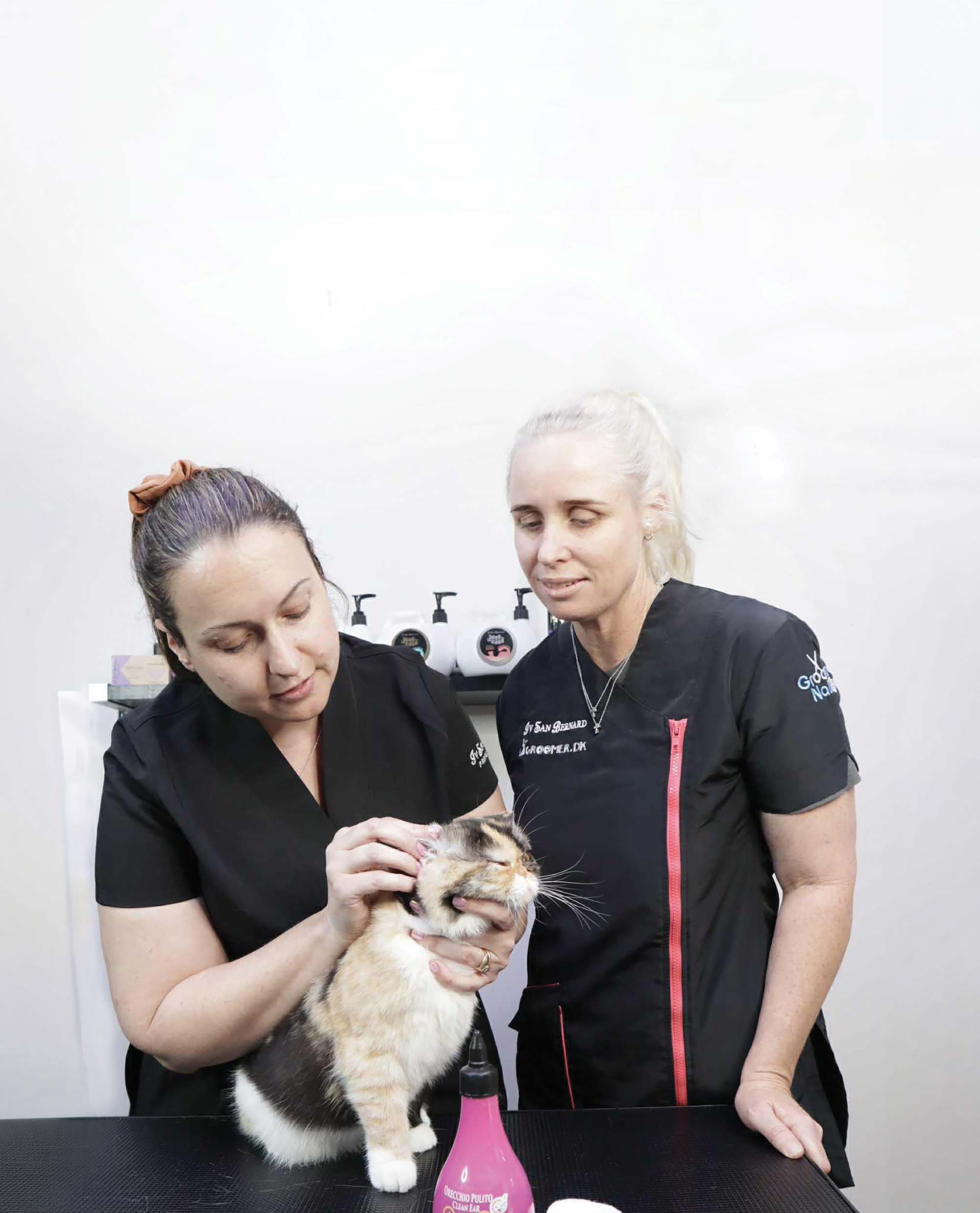

Photos by Groomer Nation PTY LTD
 s feline grooming continues to establish itself as a specialized discipline within the pet grooming industry, many experienced groomers are beginning to ask an important question: Are we teaching cat groomers enough?
While existing training pathways provide a useful starting point, a growing gap between entry-level cat grooming education and the realities of working safely and ethically with cats in a professional grooming environment was apparent. The result was not simply the development of another grooming course, but a reconsideration of what modern feline grooming education should look like.
Yet, historically, much of grooming education has focused heavily on techniques and coat care, often leaving groomers to gain deeper knowledge through years of experience. This revealed an obvious need for training that went further—not only in technical skills, but in anatomy, feline behavior, first aid, welfare assessment, communication and critical thinking.
If a groomer notices signs of pain, respiratory distress, stress, skin disease, arthritis, obesity, cognitive decline or behavioral changes during the appointment, the plan should change accordingly. This approach represents a move away from the traditional view that every cat should fit into a predetermined grooming process; instead, the cat determines the plan.

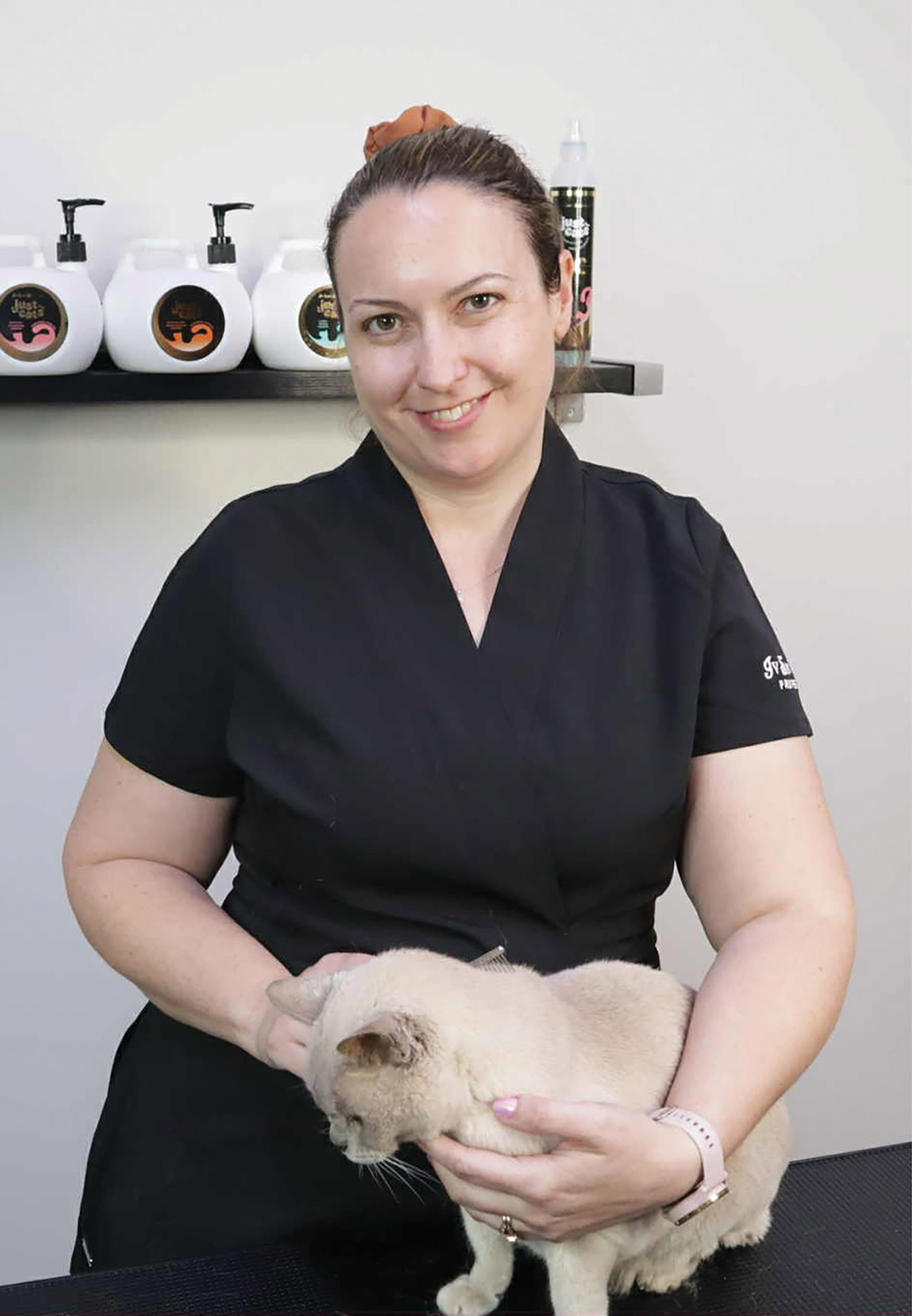
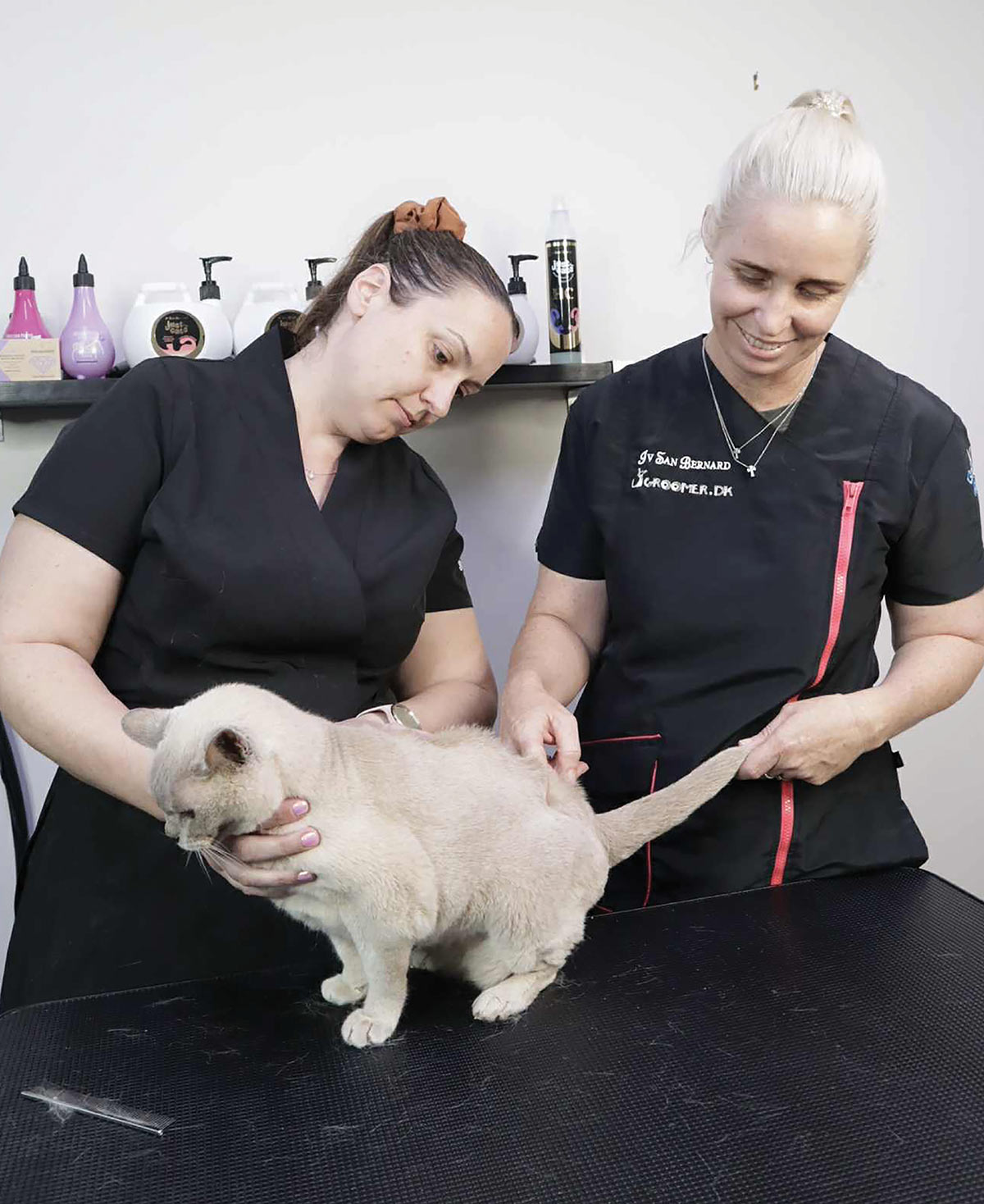
A cat is rarely aggressive without reason. More often, what groomers are witnessing is a cat communicating extreme fear, anxiety, stress, pain, frustration, illness or a combination of these factors. When viewed through that lens, the groomer’s role changes dramatically.
Rather than asking, “How do I control this cat?” the question becomes, “What is this cat trying to tell me?” This shift in perspective encourages observation, empathy and adaptation, creating safer outcomes for both the cat and the groomer.
- Understanding feline body language
- Recognizing early stress signals
- Identifying fear responses
- Adjusting handling techniques
- Reducing restraint wherever possible
- Knowing when a procedure should stop
Low-stress handling does not mean every cat enjoys grooming; it means the groomer develops the skills to minimize emotional distress while maintaining safety and welfare. For many experienced cat groomers, this represents one of the most important advances in the profession over the past decade.
A stronger understanding of anatomy helps groomers identify potential concerns and modify procedures appropriately. It informs positioning, handling, clipping techniques, bathing procedures, drying methods and overall welfare decisions. In short, understanding what is happening beneath the coat can be just as important as understanding the coat itself.
Experienced feline groomers are learning to assess coat texture, hydration levels, skin condition, sebaceous activity, environmental factors, age-related changes and overall coat integrity. The goal is not merely to strip oils from the coat, but to support healthy skin function, maintain coat quality and select products that meet the individual needs of each cat.

This philosophy encourages groomers to see every appointment as more than a grooming service. From the first client conversation through to the completion of the groom, each interaction becomes part of an ongoing welfare assessment. The cat becomes more than a coat, and the groomer becomes more than a technician.
As the industry evolves, so too do expectations. Today’s cat groomers are often among the first professionals to notice changes in behavior, mobility, skin condition, coat quality, body condition, or signs of pain and illness. Understanding anatomy, first aid, infection control, zoonotic disease risks, low-stress handling and feline behavior is becoming just as important as technical grooming skills.
This educational philosophy has also expanded beyond Australia through the Professional Certified Cat Groomer (PCCG) program. While the Australian qualification has been tailored to local legislation, diseases, welfare requirements and salon practices, the PCCG has been adapted to reflect international regulations, regional health concerns, zoonotic risks and best-practice standards worldwide.
Regardless of location, the principles remain the same: Cats come first, behavior is communication, low-stress handling matters and welfare should guide every decision. Ultimately, the aim is not simply to create groomers who can complete a groom, but to develop professionals who understand the whole cat and recognize the connection between health, behavior, welfare, handling, skin, coat and client communication. Because the most important evolution in feline grooming may not be a new technique or a new qualification—it may simply be a new way of seeing the cat in front of us.
Lexie Goldsmith is a Qualified Veterinary Nurse, Certified Master Cat Groomer, and qualified Trainer and Assessor with over 18 years of experience in feline care and grooming. A strong advocate for low-stress handling, she has helped reshape modern cat grooming by promoting techniques that prioritize feline welfare while delivering exceptional results. Through the Australian Certified Cat Groomer Program, Lexie shares the knowledge and methods she has refined throughout her career, helping grooming professionals worldwide develop confidence, skill, and a deeper understanding of feline grooming. To learn more about the program and start your journey in professional cat grooming, visit www.learncatgrooming.com.au