


 airlessness in cats is rare but has become a breed-standard coat type for certain cat breeds. The hairless gene in cats occurred randomly and naturally, just as it did in dogs and in many mammalian species. Their distinctive lack of coat means unique grooming routines and specialized products.
The cat breeds most commonly hairless are Sphynx, Donskoy and Peterbald. There is also a hairless cat breed called Bambino, a result of a cross-breeding between hairless cats to a munchkin cat, sadly rendering them with short legs, unable to jump and move about as other cats of normal size and build do.
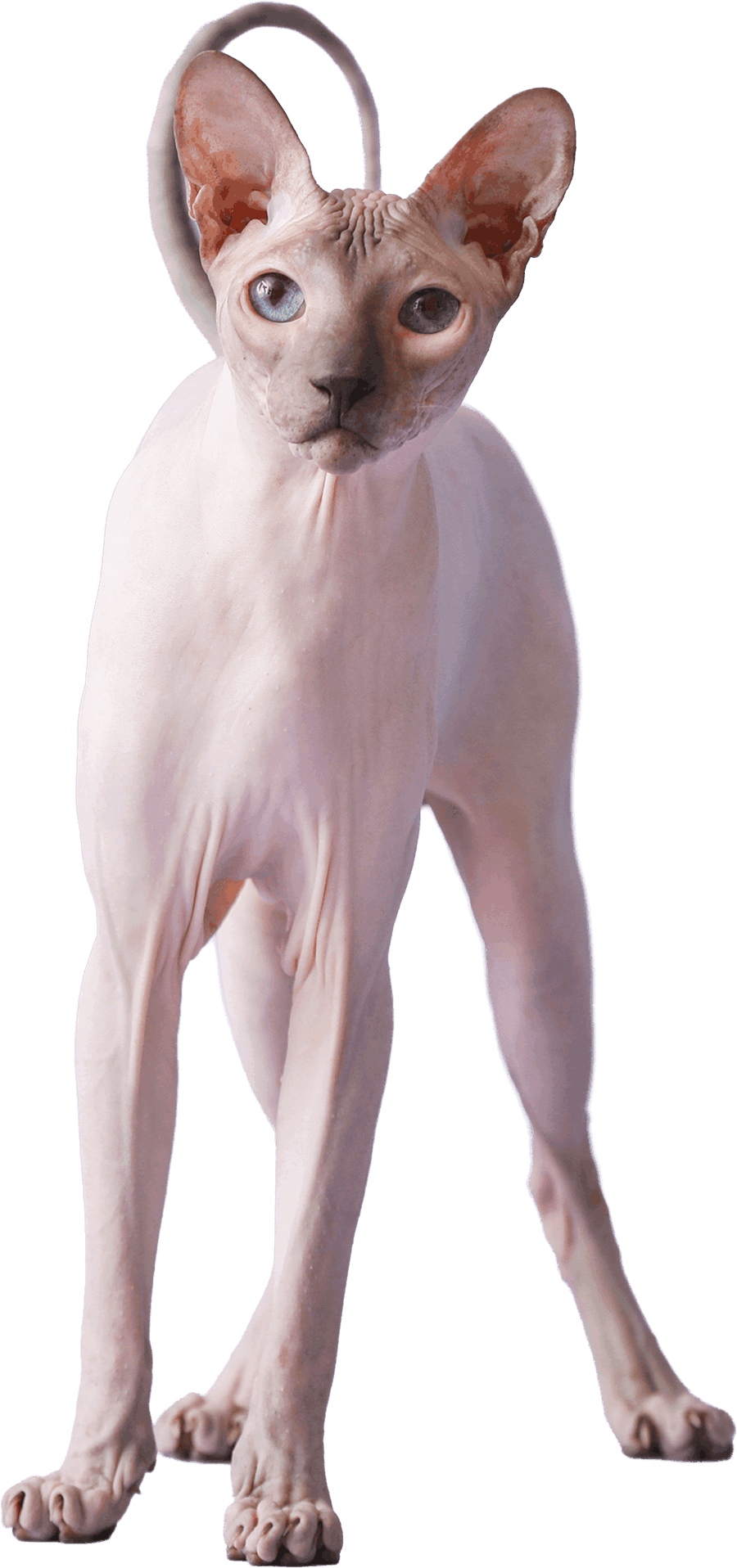
Hairless breeds have special needs for warmth and soft, immersive bedding. Gentle heating can be helpful. Groomers who take hairless cats in for grooming must be particularly attentive to this issue and provide a warm environment and soft blanket inside their crate.
Some hairless cats can also be prone to certain health concerns such as heart issues. They need a safe and stable environment, protecting them from extreme stress from temperatures, humidity and sun exposure. This, of course, means no high-velocity drying. Regular veterinary check-ups and monitoring is especially important for hairless cats.
Most importantly, though, they must be kept as indoor cats only. And because of their hairlessness, must even be generally kept from sunlight through windows. Sunlight can cause problems with their sensitive skin, including cancer.
airlessness in cats is rare but has become a breed-standard coat type for certain cat breeds. The hairless gene in cats occurred randomly and naturally, just as it did in dogs and in many mammalian species. Their distinctive lack of coat means unique grooming routines and specialized products.
The cat breeds most commonly hairless are Sphynx, Donskoy and Peterbald. There is also a hairless cat breed called Bambino, a result of a cross-breeding between hairless cats to a munchkin cat, sadly rendering them with short legs, unable to jump and move about as other cats of normal size and build do.
Many people also think that they are the right cat for someone with allergies; however, hairless cats have a unique property in their saliva which most people with allergies are highly allergic to. They lick themselves all over, so a hairless cat is not a solution for a person with allergies.
Hairless breeds have special needs for warmth and soft, immersive bedding. Gentle heating can be helpful. Groomers who take hairless cats in for grooming must be particularly attentive to this issue and provide a warm environment and soft blanket inside their crate.
Some hairless cats can also be prone to certain health concerns such as heart issues. They need a safe and stable environment, protecting them from extreme stress from temperatures, humidity and sun exposure. This, of course, means no high-velocity drying. Regular veterinary check-ups and monitoring is especially important for hairless cats.
Most importantly, though, they must be kept as indoor cats only. And because of their hairlessness, must even be generally kept from sunlight through windows. Sunlight can cause problems with their sensitive skin, including cancer.

Some hairless cats will have minimal hairs in some places that need gentle brushing with a soft bristled brush. No metal tools should ever be used. Their hairless skin is known most of all for excreting oils that need frequent bathing and grooming, and they have a tendency to carry yeast in their skin. The cat’s veterinarian should guide how this is handled.
Groomer communication with the owner is critical, as these cats require bathing on a generally-recommended weekly basis, though sometimes this can be extended to once or twice a month in some cats with close monitoring. It might be rare that the owners of hairless cats would be coming to a professional groomer that often for bathing, but if the owner is not trained and willing to do it, this could be the frequency for which our services would be required.
Special wipes are also manufactured strictly for the special needs of hairless cats’ skin and heavy oil secretion. These cleaning cloths should carefully be used around the nail bed, where the nails meet the foot skin, and the nails themselves at least weekly to remove caked-up oil secretions.
Special attention must be paid to the eyes and ears, again using products made specifically for hairless cats because of oil buildup around those areas. The general rule is not to use Q-Tips because it risks injury; just a soft cloth is best for use in the ears.
While many people might think of the hairless cat as an easy-care pet, they are quite the opposite. They are the most loving companions and truly great cats, but are a commitment to specialized, knowledgeable and frequent grooming.