







Contents | June 2026
8
by Chris Anthony
ALSO INSIDE
todd@barkleigh.com
adam@barkleigh.com
gwen@barkleigh.com
rebecca@barkleigh.com
luke@barkleigh.com
laura@barkleigh.com
brandi@barkleigh.com
carlee@barkleigh.com
evan@barkleigh.com
allison@barkleigh.com
james@barkleigh.com
karin@barkleigh.com
presley@barkleigh.com
Daryl Conner
Amanda McGrath
Dr. Cliff Faver
Blake Hernandez
Melissa Viera
ALSO INSIDE
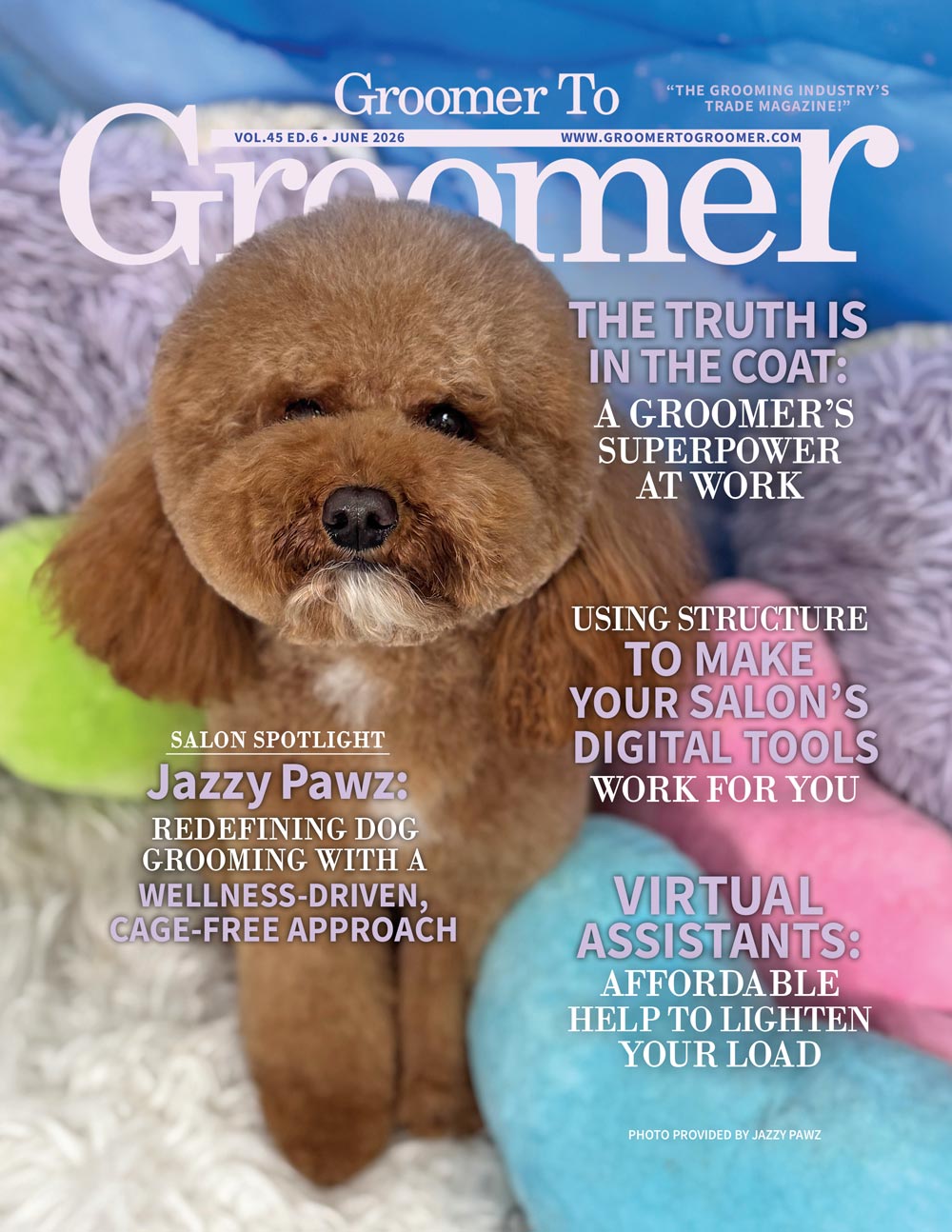
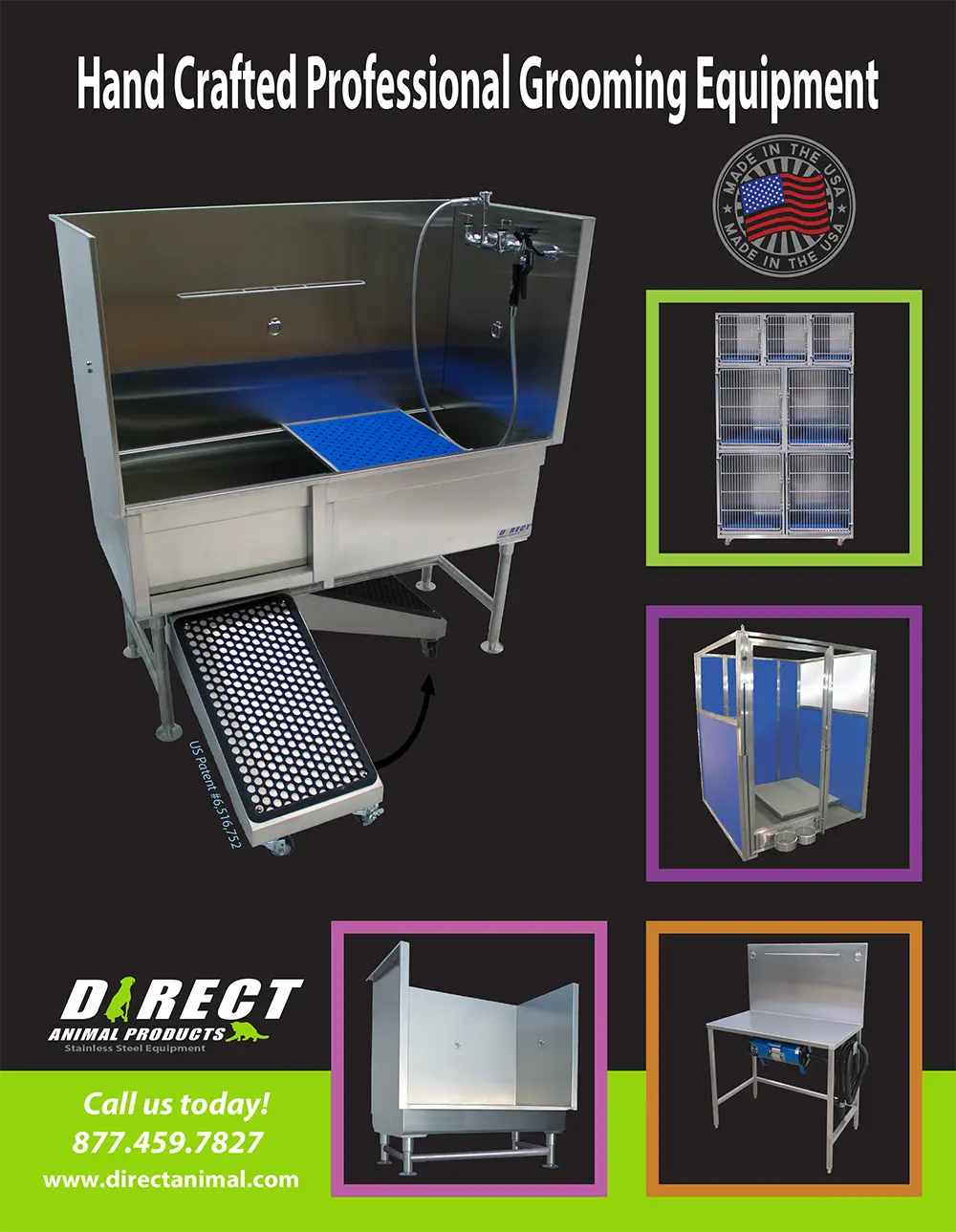
ON THE COVER
- Andis2
- Animal Photography10
- Best Shot Pet – 3 Step System43
- Best Shot Pet – UltraMAX21
- Cosmos Bathing Systems27
- CU1000 Pet Shears45
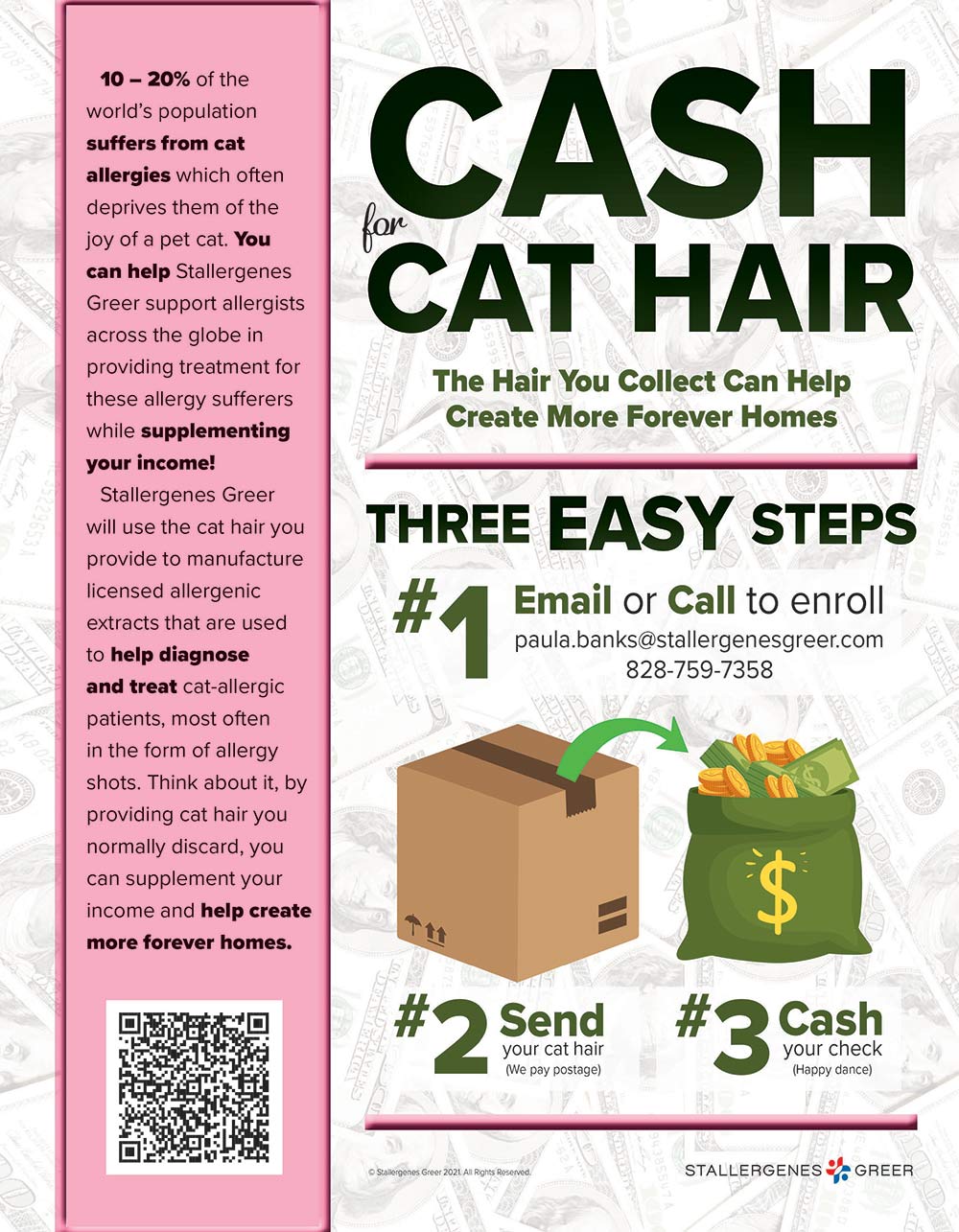
- Direct Animal Products15
- Double K Industries3
- Electric Cleaner Company49
- Envirogroom | Special FX Premium Products51
- Evolution Shears9
- Governor Insurance Agency37
- Groomer’s Choice4
- Groomsoft25
- Hanvey Engineering & Design39
- IV San Bernard29
- Laube55
- Midmark38
- Mobile Grooming World56
- Odorcide23
- Paragon School of Pet Grooming19
- PetBizInsurance.com24
- Poly Pet Tubs41
- Puppy Playground14
- Quadruped Pet Care11
- Stallergenes Greer47
- Stylist Wear28
- Tidy Paws20
- Wag’n Tails53
- World Pet Association | SuperZooDigital Only
Featured Spotlight Profile
Midmark



















 n our industry, productivity is often treated like a race—groom faster, work harder, fill every spot in your schedule, squeeze in another bath dog before lunch, or skip lunch entirely and just keep working.
But what you soon discover is that speed alone is not the answer. In fact, rushing through grooms is one of the fastest paths to burnout, mistakes, injuries, anxious pets and a career that feels exhausting instead of fulfilling.
The old proverb, “Haste makes waste,” was one I didn’t fully appreciate when I was newer to grooming. Back then, I thought being productive meant being able to groom a certain number of dogs a day. If I could groom five, then I’d set a goal to do six or even seven.
I soon found out, however, that “speed” grooming is not the same as “good” grooming. Rushing through a groom can lead to bad prep work, uneven finishes, nicks or other injuries, or stressed-out pets that fight every step of the way instead of cooperating. Then, the time you thought you saved by hurrying is spent fixing mistakes and dealing with unhappy clients.
I then had to explain what happened to the dog’s owner. Sure, it was just hair and it would grow back, but the owner was livid. She told all her friends that I was incompetent, and she never came back.
True productivity isn’t about how fast you can groom a pet—it’s about how safely, consistently and professionally you can groom every pet on your schedule. Results matter more than speed. Think of it this way: Even if you have the fastest car in a race, you will never win if you’re driving in the wrong direction.
Many groomers work incredibly hard. They show up early, stay late, and push through aches and fatigue. They hustle non-stop yet constantly feel behind. The issue usually isn’t a lack of effort but lack of efficiency. This may sound counterintuitive, but slowing down—at least temporarily—is often the smartest move you can make.
Your energy affects the pets you groom. When you rush, your hands become tense, your movements can become abrupt and your voice tightens. Even the calmest pets may react negatively when they sense frantic energy. That can lead to struggling, biting, fear responses and longer grooming times overall. A calm, confident groomer working at a steady, deliberate pace will often finish faster than a stressed groomer racing the clock.
One of the biggest traps we fall into is assuming we already know everything we need to. After all, many of us have been grooming for years. We’ve handled difficult coats and challenging pets—we’ve “seen it all!” However, the real truth is, there are always smarter, safer and more efficient ways to groom.
Using the correct blade length and comb attachments for each coat type can reduce the need to go over an area multiple times. Improving your scissoring skills can dramatically cut finishing time without sacrificing quality. Refining your drying techniques by using proper stretch-drying methods or learning to use your high-velocity dryer more efficiently can substantially cut your prep time.
Smarter de-matting decisions are another major productivity factor. Knowing when you can work through tangles and light matting, as well as realizing when the only humane answer is a short clip, should be a no-brainer.
Oftentimes, in an attempt to please an owner, groomers will feverishly try to de-mat a pet for over an hour. The pet is distressed, the groomer is frustrated, and in the end, the pet has to be shaved anyway. Making the correct choice protects the pet, your schedule, your wrists and your sanity.
An organized workspace is another game-changer. It sounds simple, but clutter and inconsistency can eat away at your day. If your tools are in a specific place every day, you know where to automatically reach for them. You won’t lose time wondering where you laid your nail clippers or searching for your favorite curved shears mid-groom when they are kept in their assigned place.
It’s also important to maintain your equipment regularly. Have a back-up supply of sharpened clipper blades and scissors, as well as tools and equipment (dryers, clippers, etc.) just in case. Organization and preparation create flow which leads to efficiency.
As much as possible, limit your workplace distractions, as they are productivity killers. Phones ringing, walk-in client questions and social media notifications can easily become time-consuming disturbances. Constant interruptions break your concentration, and every time you’re pulled away from a groom, it takes time to mentally reset.
Ultimately, one of the most powerful productivity tools you will ever invest in is education. Groomers who thrive long-term aren’t the ones who work themselves to exhaustion—they’re the ones who keep learning, refining and improving how they work.
Continuing education isn’t just about learning new styles or breed trims, either. It’s about becoming more efficient, more confident and safer in your work. Education helps you work faster without sacrificing quality, handle difficult pets more effectively, charge appropriately for your skill level, and reduces physical strain and injury. It also helps you learn to work smarter.
Working smarter doesn’t necessarily mean working less—it means working better and respecting your body. Our wrists, shoulders, feet and backs are our livelihood. Learning the correct techniques and using ergonomic tools and equipment make a world of difference in how you feel at the end of the day.
You don’t need to groom yourself into the ground to be successful. Chronic stress and putting overwhelming pressure on yourself is not a badge of honor—it’s a warning sign. Working smarter allows you to build systems that support you instead of draining you.
Slow down long enough to build an efficient routine and learn smarter ways to work. When you do, you’ll discover something powerful: productivity that doesn’t come at the cost of your health, your passion or your love for the profession you chose.
Don’t measure your success by the number of pets you groom in a day. Measure it by the quality of your work, the comfort and safety of the pets in your care, and whether you still love what you do and look forward to each new day. Burn bright, don’t burn out!
 e live in amazing times where information is everywhere. Pull out your phone, and you can look up anything you can imagine. And with AI, it not only has the ability to research topics but also write articles and present the latest information circulating online. It will even suggest the best products for your pet. But where did that information come from? Is it a reliable source or simply someone’s opinion?
When I was in school, we had to go to the library, search through reference books and document our sources for any paper we wrote. Most references, especially at the veterinary school level, came from refereed articles, meaning they were reviewed by a board of peers who determined whether the information was valid based on current knowledge. Today, with social media, online influencers and open platforms, that double-check system is often missing from the information we access so quickly.
An equally concerning issue is that marketing has, in many cases, replaced science, and many people aren’t even aware of it. Terms like “holistic,” “all-natural” and “hypoallergenic” are used regularly to describe pet products. But are these scientific terms or marketing terms? The reality is that there are no consistent legal definitions for these product-related claims, which means they can be shaped to fit whatever a company wants to promote.
We often get pulled into online discussions about “good” or “bad” ingredients and feel confident we are making scientific decisions. The problem is that most products are not made from a single ingredient. When multiple ingredients are combined, often in unknown amounts, they create chemical interactions that affect the final outcome. Since product labels do not disclose concentrations, how can we truly evaluate them?
For example, a product may contain oatmeal, which is generally considered beneficial. But if it is combined with a harsh detergent in an unknown quantity, are we still getting the benefits of the oatmeal? We all agree that not all oatmeal products are created equal, so simply seeing “oatmeal” on a label does not guarantee quality or effectiveness.
Unfortunately, there is no easy answer. It requires research, experience, trial and error, and, most importantly, observation. As professionals, we must be cautious about making decisions based solely on internet content, social media or influencers without verifying the credibility of those sources. Information driven by marketing, money or popularity does not always equate to accuracy.
This is where the groomer’s true “superpower” comes in: the power of observation. You cannot consistently produce great grooms without the ability to evaluate your results. Learning to use this skill effectively means looking beyond immediate outcomes and focusing on long-term results.
For example, dish soap may clean a dog and leave it looking fantastic when it walks out the door, but what does that coat look like the next day? Two days later? A month later? The same applies to any product that smells great and feels good during use. What happens to the coat after three or four months? Is it drying out? Is the dog starting to itch? Short-term results are not nearly as valuable as long-term performance.
So, what are the key indicators that we are using the right products?
First, evaluate how the dog looks and feels when it leaves. Does the coat feel truly clean, or is there still residue or greasiness? Are the skin and coat properly hydrated? How easy was it to scissor? Does the coat have the correct lift and texture, or does it feel heavy and weighed down? Remember, results are influenced by both products and technique, so if something is off, both should be evaluated.
Next, observe how the dog looks in the days and weeks following the groom. If the dog becomes dirty quickly or mats easily, it may indicate an issue with the product choice or process. If the dog begins itching within the first week that is a strong signal to reassess both shampoo and conditioner.
Conditioning should be part of every grooming process to help maintain hydration and barrier function. Dry, itchy skin is often the result of harsh shampoo combined with a lack of proper conditioning, particularly the absence of effective humectants.
Another important indicator is your own hands. If your hands are dry or irritated at the end of the day, that is valuable feedback. The products you use affect you just as they affect the pet. Ideally, with the right products, your hands and the pet’s skin should be in better condition at the end of the day/groom than when you started.
In ideal conditions, a quality groom should last three to four weeks, aligning with the normal skin cycle of approximately 21 days. If results do not last that long, it is time to evaluate why. This is where your power of observation becomes critical.
Sometimes the issue is not the product or technique at all. It could be a need for more frequent baths, seasonal changes, weather conditions, environmental factors, dietary changes or underlying health issues. The key is to observe, identify patterns and adjust accordingly.
Social media and the rapid access to information have transformed our industry in many positive ways. However, they are not a substitute for professional judgment and real-world experience. Successful grooming results come from a combination of knowledge, critical thinking, hands-on experience and careful observation—factors that are not always reflected in online content.
At the end of the day, your knowledge, your common sense and your “superpower” of observation are what truly determine your success. Use them to evaluate products, refine your techniques and ultimately provide the best possible care for the pets.
Dr. Cliff Faver graduated with a BS in Biology/BA in Chemistry before getting a Veterinary degree in 1987. He is the past owner of Animal Health Services in Cave Creek, Arizona and now the US distributor for Iv San Bernard products, teaches the ISB Pet Aesthetician Certification program, and speaks internationally on hair and skin. His passion is to merge groomers and veterinarians to aid in helping and healing pets. He is also a member of AVMA, AAHA, AZVMA, Board member with Burbank Kennel Club, and has served on Novartis Lead Committee, Hill’s International Global Veterinary Board, and a Veterinary Management Group.


 alk into almost any grooming salon today, and you’ll find no shortage of technology. Online booking systems, automated reminders, digital client notes, point-of-sale systems, social media platforms and mobile apps have all become part of daily operations. These tools promise efficiency, organization and growth. But for many salon owners, technology ends up creating just as many problems as it solves…
Missed notes, double bookings, inconsistent communication and staff using systems differently can quickly turn helpful tools into daily frustrations. The issue usually isn’t the technology itself—it’s the lack of structure around how it’s used.
Technology should support your business, not run it. When paired with clear routines and expectations, it becomes one of the most powerful tools you have. Without that structure, it can lead to confusion, inconsistency or unnecessary stress.
Having the Right Tools
The reality is that more tools do not automatically mean a better system. A well-run salon often relies on just a few core pieces of technology:
- Scheduling and client management software
- Automated reminders and confirmations
- A reliable payment system
- A way to track client notes and history
Before adding anything new, ask yourself: What problem am I trying to solve? Will this simplify my workflow or complicate it? And can my team realistically use this consistently? The goal is not to have the most technology but to have the right technology, used well.
Every salon operates a little differently based on staffing, services offered, client volume and workflow. The goal is not to copy someone else’s system but to build routines that support how your business actually runs.
When creating routines around technology, start by thinking about how information flows through your salon. Consider questions like:
- When should client notes be entered so they are accurate and useful?
- At what point in the process should appointments be confirmed or adjusted?
- Who is responsible for responding to messages, and how quickly should that happen?
- How are important details, like behavior, matting or health concerns, flagged so they are not missed?
Without clear answers to these questions, systems become inconsistent very quickly.
It is also important to think about timing and workload. If a process is built in a way that requires staff to stop in the middle of a busy or stressful moment, it is less likely to be followed consistently. On the other hand, if it fits naturally into the flow of the day, it becomes part of the routine instead of an added burden.

It should be clear who is responsible for each part of your system, whether that’s updating client records, managing the schedule or communicating with clients. When responsibility is shared but undefined, tasks are often overlooked.
Accountability matters here as well. It should be clear who is responsible for each part of your system, whether that’s updating client records, managing the schedule or communicating with clients. When responsibility is shared but undefined, tasks are often overlooked.
Finally, keep your routines realistic. It is better to have a simple system that is followed regularly than a detailed system that no one has time to maintain. By building routines that align with how your salon actually operates, you create systems that are reliable and sustainable over time.
Standardizing Client Communication
Creating clear, consistent templates removes this problem. Examples of messages to standardize include:
- Appointment confirmations
- Late arrival policies
- No-show or cancellation responses
- Matting explanations
- Pick-up notifications
This doesn’t make your business feel robotic, it makes it professional. It also ensures that policies are communicated clearly and consistently, no matter who is responding, and it protects your staff from having to “figure out what to say” in uncomfortable situations.
Maintaining Personal Touch
Automation works well for appointment confirmations and reminders, letting owners know their pet is overdue for a groom, and basic policy or procedure correspondence. However, personal communication should still be used for first-time clients, follow-ups after difficult grooms, thank-you messages, and addressing concerns or complaints. Technology should create space for better relationships, not eliminate them.
Training Your Team
- What details must be documented
- How to flag behavioral or safety concerns
- How to handle scheduling adjustments
- Details for how staff should be communicating with clients
Written SOPs for your systems can make a significant difference. They remove guesswork and create accountability. Regular check-ins or quick refreshers can also help keep everyone on track. Technology should support your team, not create frustration for them.
- Are reminders being sent consistently?
- Are client notes detailed and useful?
- Is online booking working within your boundaries?
- Are there recurring errors or issues?
Small problems in systems tend to grow over time. Catching them early prevents larger disruptions later. This is also an opportunity to simplify. If something isn’t working or isn’t being used, it may not belong in your workflow.
You don’t need to overhaul everything at once. Start small by creating one daily routine, standardizing one type of communication, or training your team on one expectation and build from there.
When used with intention, technology becomes more than just a convenience. It becomes a foundation for a more organized, professional and sustainable grooming business. And in an industry where consistency, safety and trust matter every day, that structure makes all the difference.


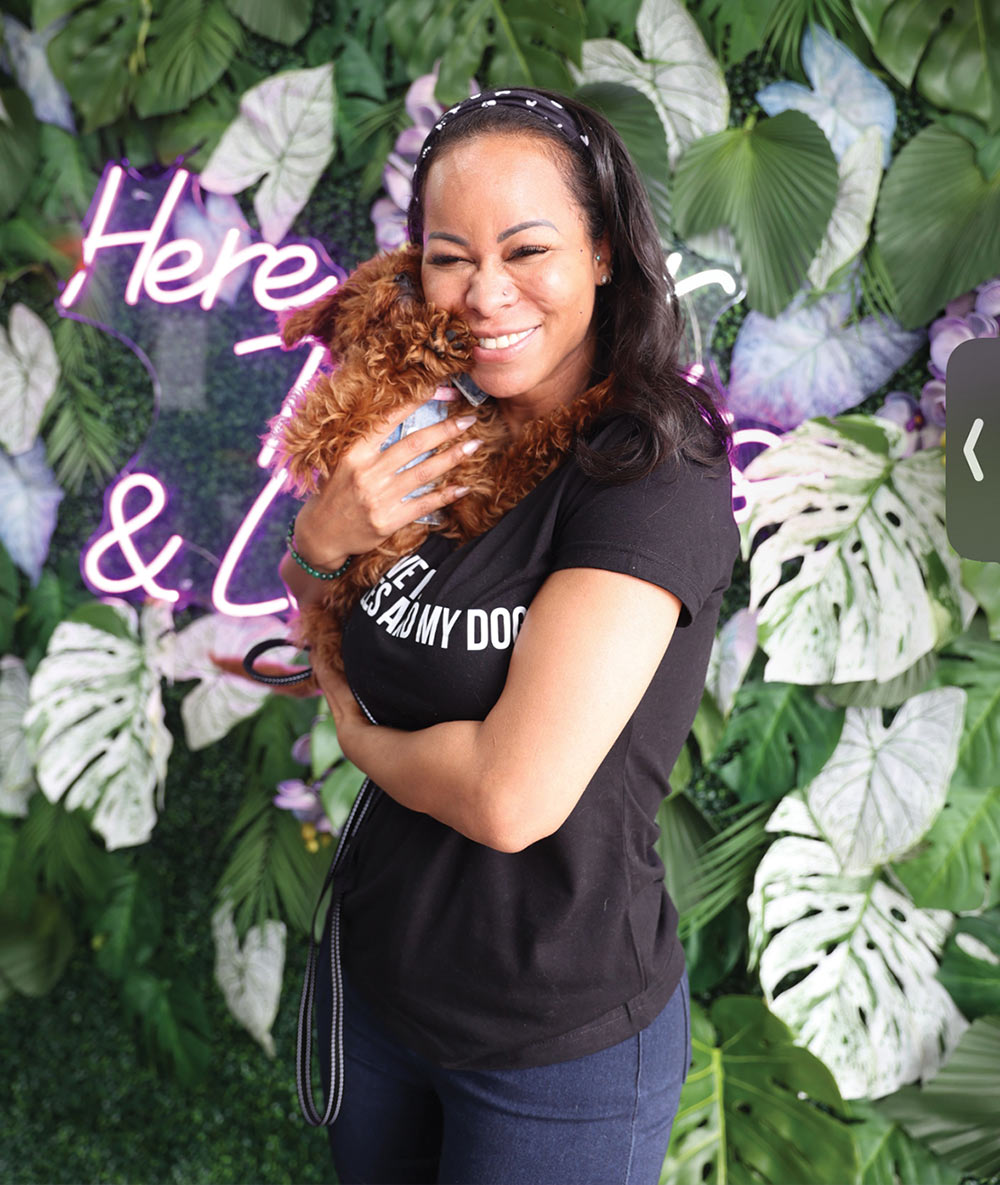
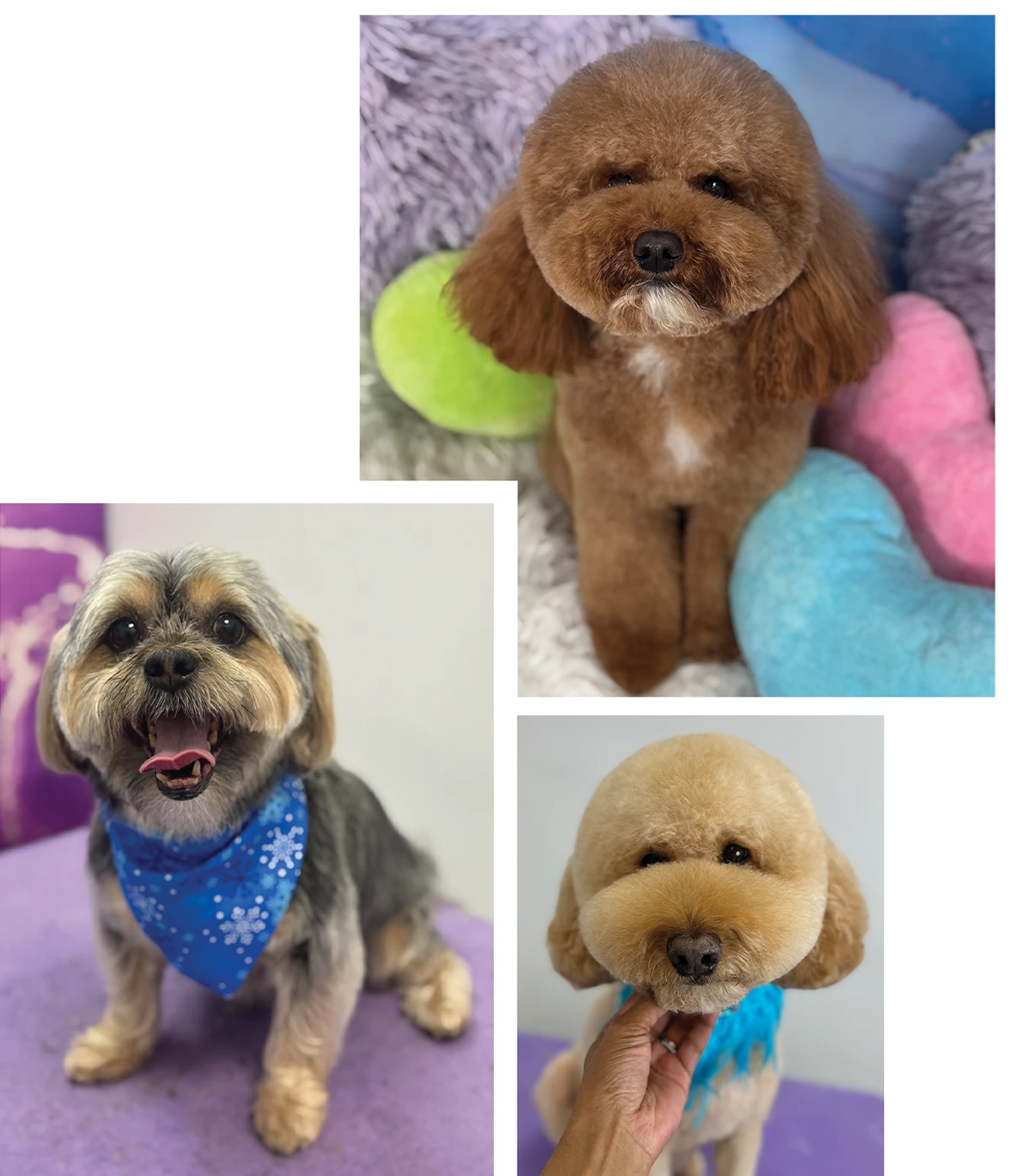

Photos provided by Jazzy Pawz
 n a quiet corner just outside downtown Atlanta, the atmosphere at Jazzy Pawz by Andrea feels more like a spa than a traditional grooming salon. Soft jazz hums in the background, the air carries subtle notes of lavender and chamomile, and dogs move calmly through private suites, each receiving undivided attention from a groomer who knows their name and their personality.
For founder Andrea Jenkins, that environment isn’t a luxury add-on, it’s the entire point. When she first formed the idea for her grooming business, pet wellness was at the forefront of her mind.
“I asked myself, ‘How would I want my own fur baby to be treated?’” Andrea explains. “I wanted something calm—something more homelike—where the dogs can feel comfortable and actually trust the groomer.”
That philosophy has helped transform Jazzy Pawz into one of Atlanta’s most distinctive grooming businesses—one that blends technique, empathy and innovation into a model that’s gaining traction in a rapidly evolving pet care industry.
Andrea’s journey into grooming wasn’t planned, though. In fact, her original path looked entirely different.
“I was actually working in hotel hospitality and thought I would have a career in that, following in my dad’s footsteps,” she shares. “But after my mom passed away unexpectedly, I just felt like I needed to follow my passion.
“I’ve always loved animals,” continues Andrea. “Growing up, I wanted to be a vet, but I knew I’d be worse off than the pet parents if I couldn’t save them all.”
Instead, she found a different way to work with animals; one that focused on care, comfort and transformation.
“In 2014, I started grooming—really just practicing at first,” Andrea notes. “I couldn’t find anyone to teach me, so I taught myself by watching YouTube videos, to be honest.”
But what began as a self-taught skill soon turned into something more serious for the blossoming groomer.
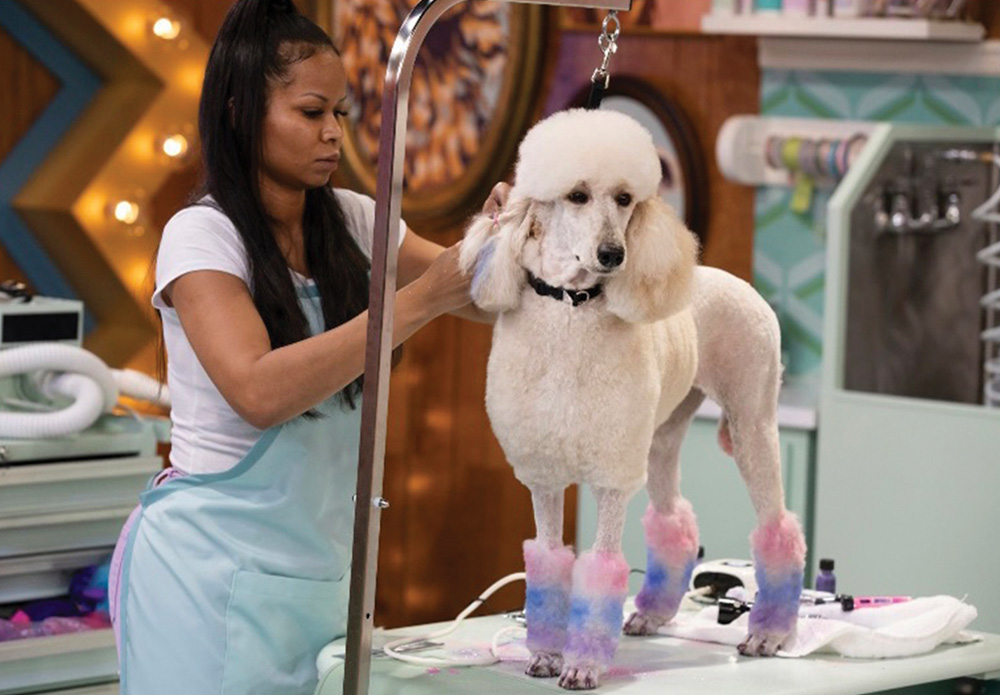

“I wanted something calm—something more homelike—where the dogs can feel comfortable and actually trust the groomer.”
-Andrea Jenkins
By 2016, opportunity knocked in an unexpected way when one of Andrea’s friends, who was also a grooming client, told her about a small space in Inman Park that she thought would be perfect. But opening the doors was only the beginning, and Andrea faced challenges with getting the business up and running.
“The biggest hurdle was moving to an area where I didn’t know anyone,” she says. “I had moved from South Carolina years earlier, and when I really got started, I only knew my dad and my sister.”
As a self-proclaimed introvert, building a clientele required Andrea to step outside her comfort zone in order to get her name out there. But over time, word-of-mouth began to take hold.
“My live-work space was about 15 minutes away, so I wasn’t really pulling clients from there into Inman Park,” Andrea notes. “I really had to build my name from scratch in that neighborhood. Now I have people who travel from all over Atlanta to come to Jazzy Pawz.”
“The second location is more of a retail boutique featuring small local brands,” she says. “We also have a self-wash station.”
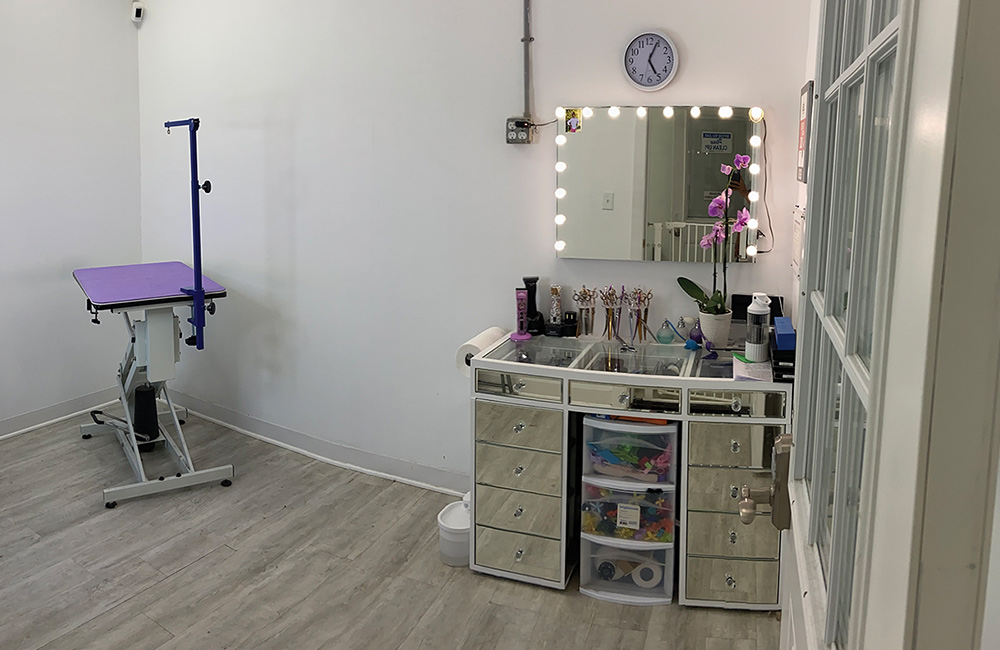
What sets both locations apart is immediately apparent: There are no cages, no crowded waiting areas and no assembly-line grooming. Instead, the business model was designed for calm, individualized care.
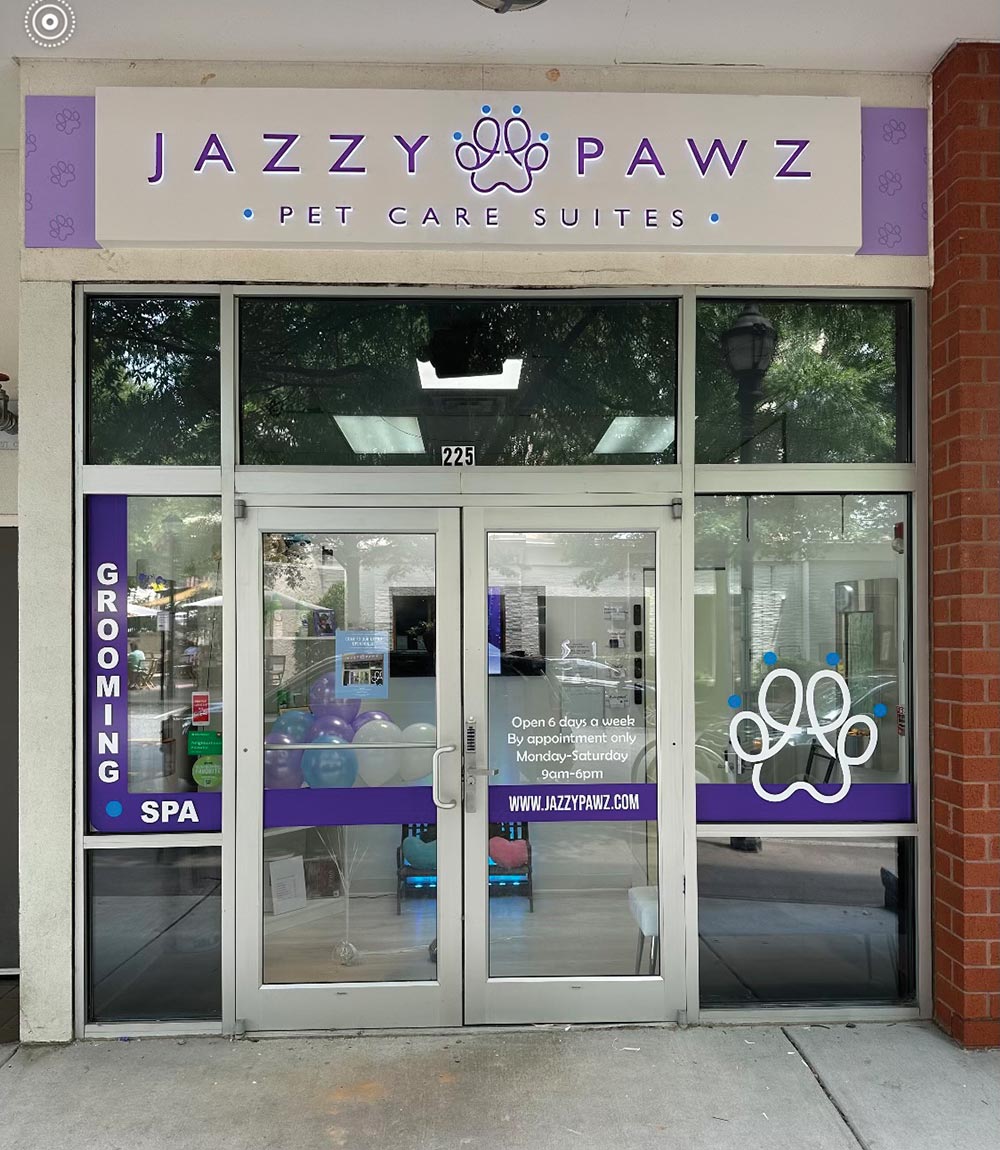
“We work in a salon suite setting with private rooms,” explains Andrea. “At the Inman Park location, we have four suites, and at our second location, we have six. It’s all one-on-one, and we’re appointment-only with no walk-ins.”
The idea mirrors the experience many people seek for themselves in a salon, including Andrea.
“I don’t want a crowded place,” she says. “I want my stylist focused on me. That’s the same experience I wanted for the dogs.”
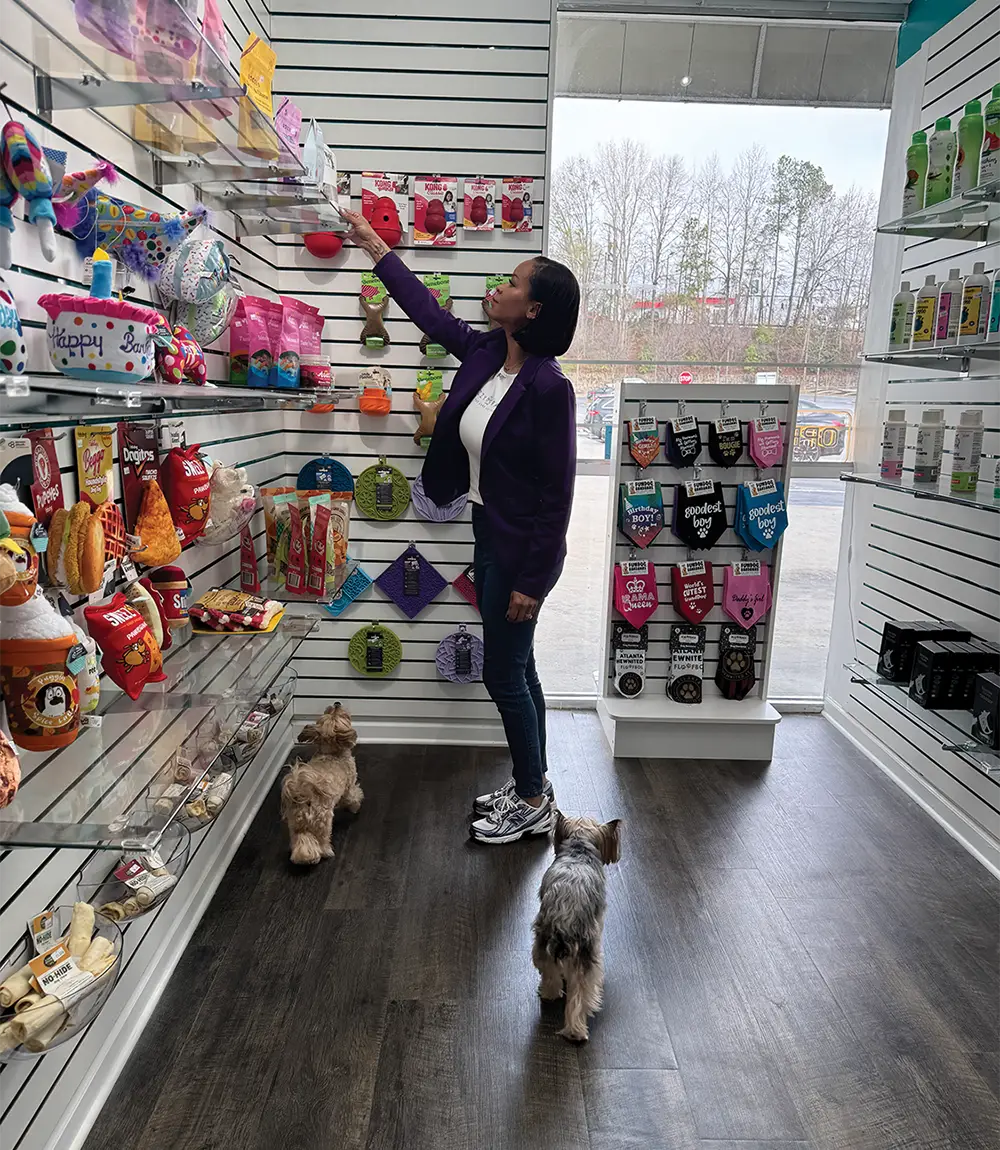
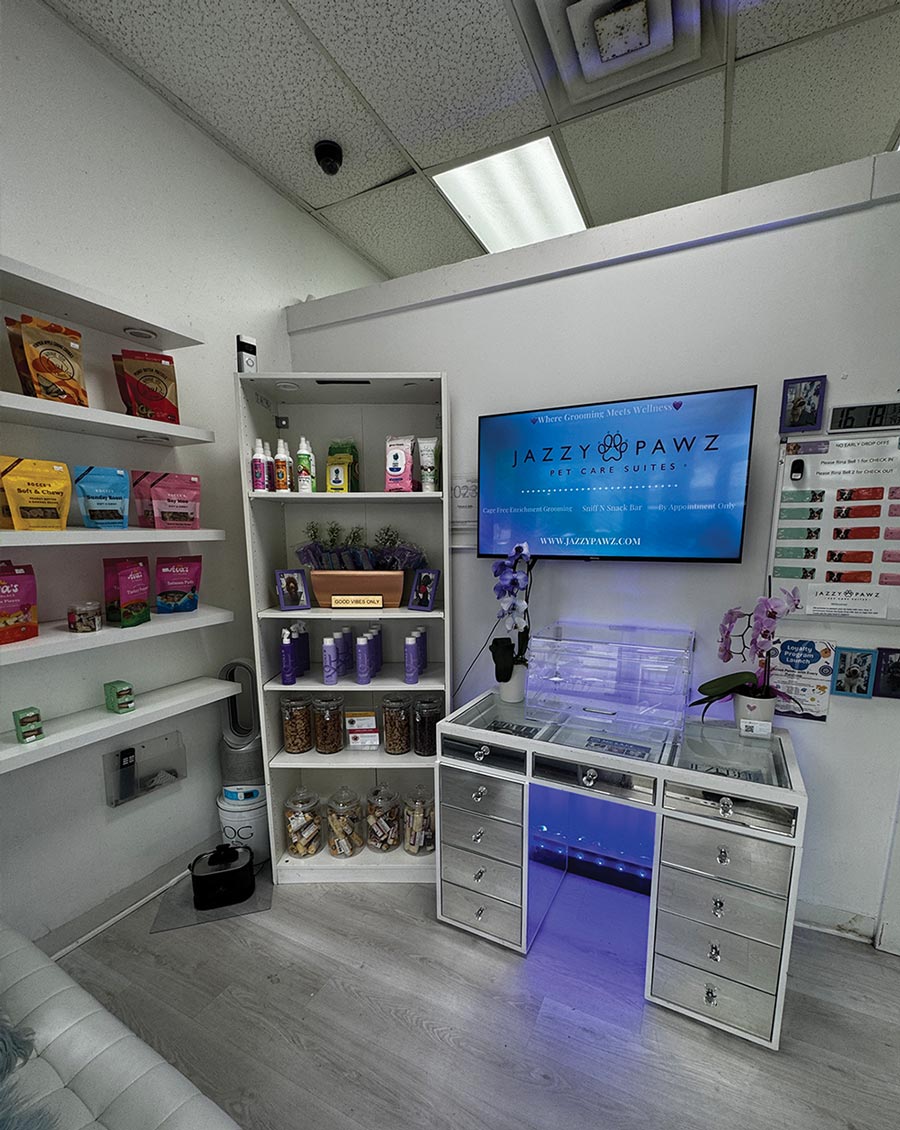
“I saw how stressed dogs could get—being in a small space and already not liking the grooming process,” Andrea notes. “So I wanted to create something more enriching.
“We usually groom about four to five dogs per day per groomer,” she adds. “It’s not about doing as many as possible, it’s about doing it right.”
Beyond the physical setup, Andrea has carefully curated the sensory environment of her grooming spaces, which she says comes from human wellness.
“Certain essential oils like chamomile and lavender are calming and relaxing for us, and they have the same effect on dogs,” she explains.
Then, of course, there’s the music. True to its name, Jazzy Pawz plays jazz music at a low volume to cater to dogs’ sensitive hearing, which creates a calm environment.
Every appointment is designed to feel intentional—from arrival to departure. The business uses check-in and check-out bells so they can manage the flow and keep things safe. And the team rotates to greet clients, which helps the dogs get familiar with everyone.
“When clients arrive, they come into our lobby where we have a retail area with bakery items, shampoos, and treats,” Andrea says. “We even have a TV that displays the dogs’ names to welcome them to their spa day.”
However, customization is an even bigger focus.
“We’re adding a special touch where pet parents can choose their dog’s bath—like a moisturizing or calming bath—and select a fragrance,” explains Andrea.
-Andrea Jenkins
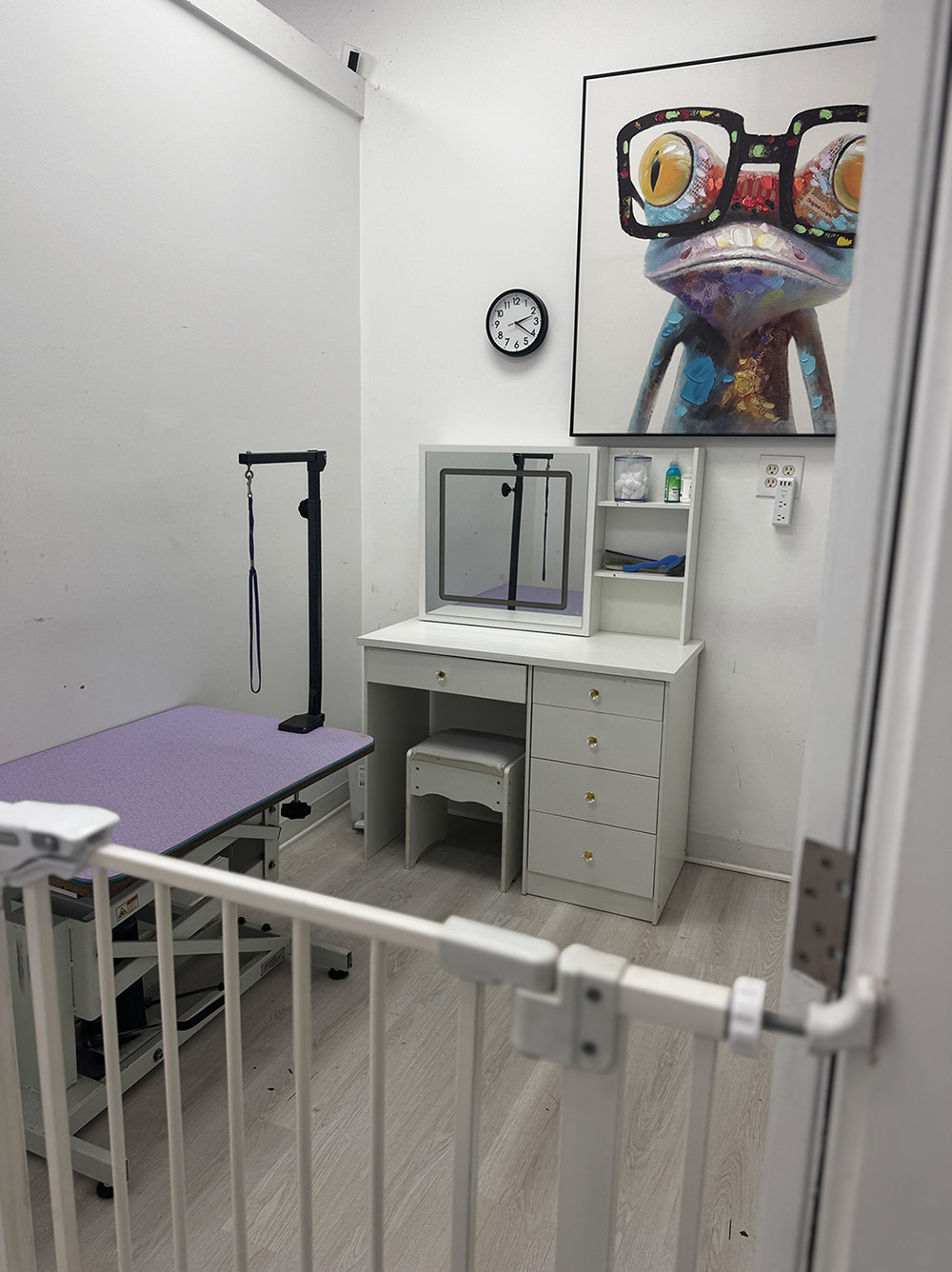
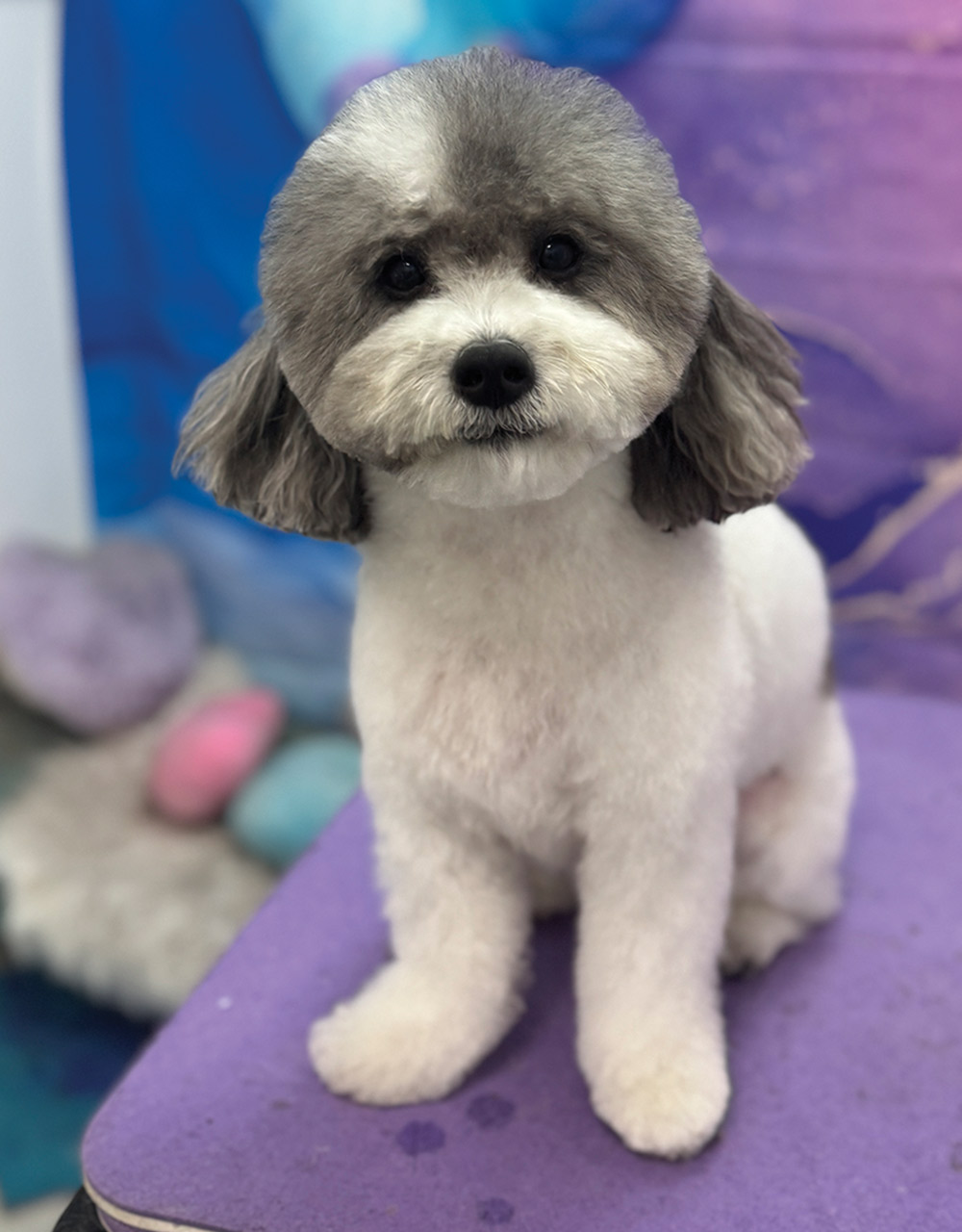
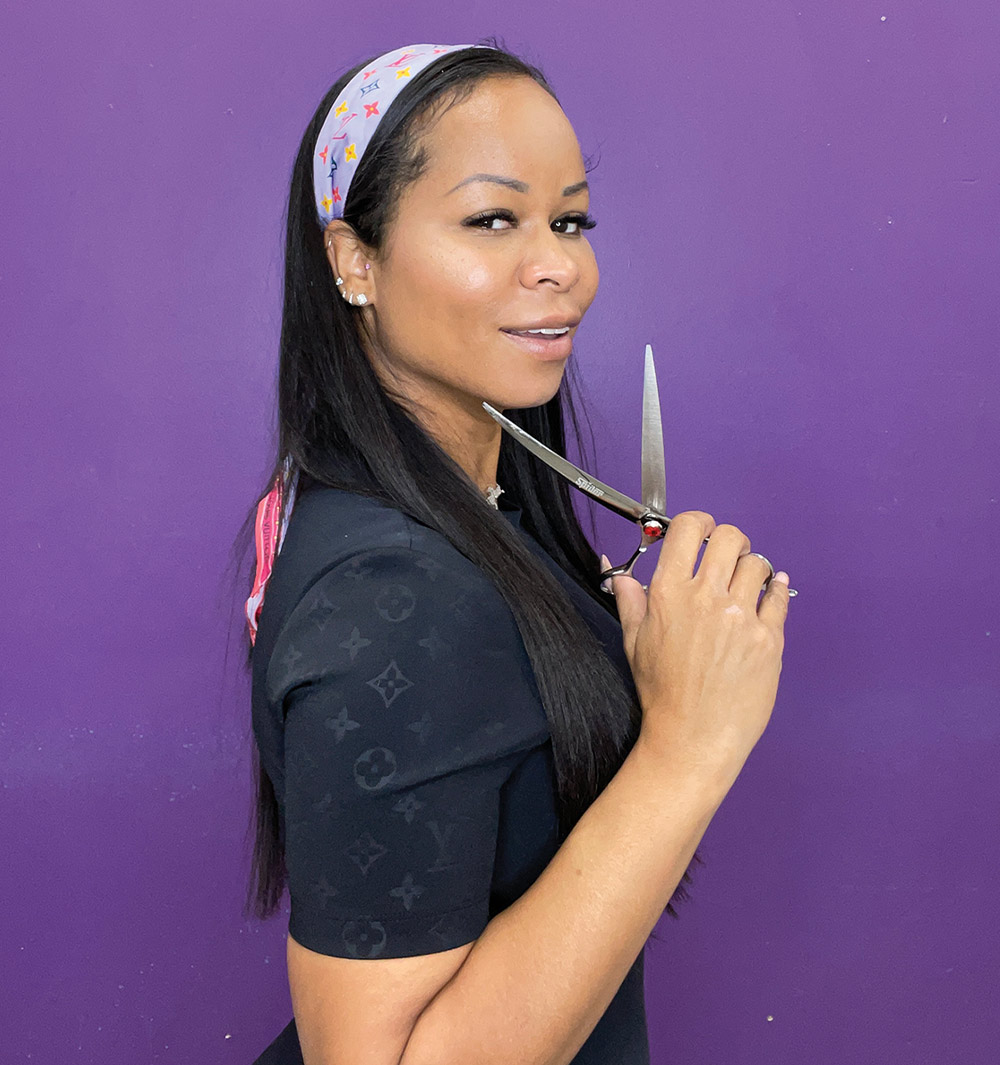
“We’re known for doodles, poodles, and poodle mixes,” Andrea shares proudly. “And I specialize in hand-scissoring and creating really round faces.”
Jazzy Pawz also offers an apprenticeship program, which reflects Andrea’s desire to give others the opportunities she didn’t have.
“It’s an 80-week program that combines classroom instruction and hands-on training,” she explains. “Apprentices can earn certification with the International Pet Groomers Association.”
The program is officially recognized, carrying approval from the U.S. Department of Labor and inclusion on Georgia’s Eligible Training Provider List. Andrea is also working to expand its reach.
“I’m partnering with Georgia Piedmont Technical College so students can earn credits,” she says. “That way, even if they decide grooming isn’t for them, they still have something to show for it.”
However, the apprenticeship program also ties into a broader mission.

-Andrea Jenkins
As Jazzy Pawz continues to grow, Andrea is thinking carefully about what comes next.
“A mentor asked me if I’ve thought about franchising,” she notes. “It’s a possibility, but I’m very particular. I want to make sure anyone involved really cares about the dogs and the community and not just making money.”
Her long-term vision builds on the foundation she’s already created, though.
“I’d love to combine the salon suite concept with a school,” Andrea explains. “So one side is for groomers renting suites, and the other is for people learning the trade.”
For now, she’s focused on continuing to refine what Jazzy Pawz already does best—providing a calm, thoughtful, deeply personal grooming experience. And, of course, finding the right apprentices to carry that mission forward.
“I really want people who love dogs and genuinely want to be in this industry—to help both the animals and the community,” concludes Andrea.
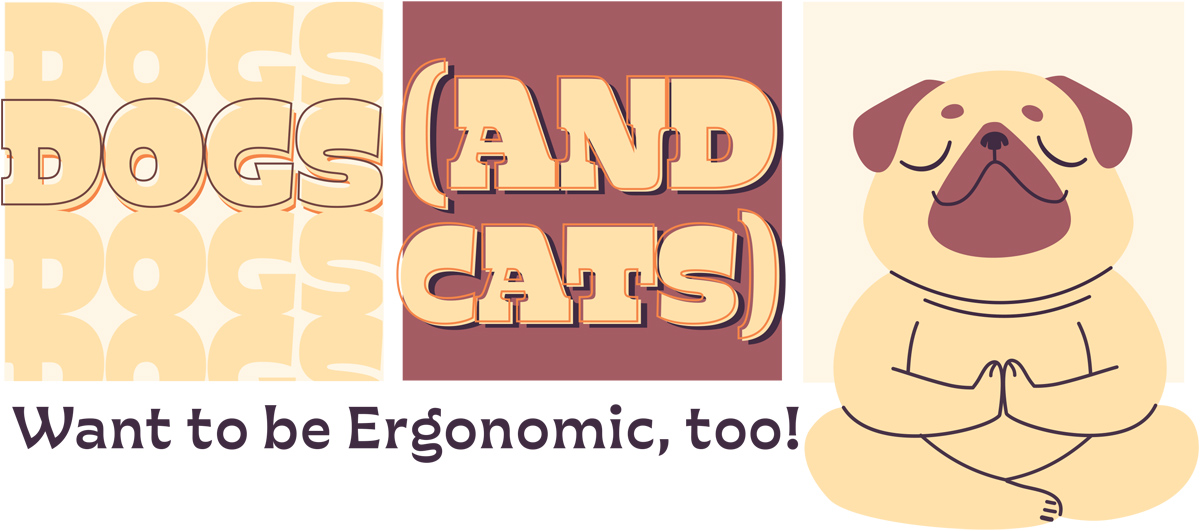
 ost of us are familiar with ergonomics—the science of work—but how does that apply to the actual pets getting groomed? After all, the pets aren’t the ones doing the work.
Grooming is, or should be, a part of daily life for our pets, both at home and in the grooming salon. And just as proper ergonomics should be a part of our daily lives, grooming should be as ergonomic for the pets in our care as we can humanly make it. How we move and handle the pets play a huge part in the health and comfort of both them and of us as the groomer.
Our industry has come a long way in the past 20 years, and we’re constantly learning new handling techniques. A pet that is in discomfort isn’t going to cooperate with the groom, so understanding how a pet’s joints move—or don’t move—can make everything easier, from a nail trim to a dog that doesn’t want to stand.
We know seniors need special handling, but are we giving puppies and younger dogs the same consideration?
We know seniors need special handling, but are we giving puppies and younger dogs the same consideration? The world is still a new place for puppies, and while they may seem more resilient than seniors, they are still growing, developing and learning about the world around them. It can be during a puppy’s first grooms that congenital issues may be found (like those east-west feet) that the new pet parents didn’t know were an issue. Comfort can be just as important for puppies as it is for seniors, so using soft mats for the table and gentle restraint methods can set the pet up for success in a lifetime of grooming.
When it comes to cat and kittens and ergonomic handling, it’s well-known that less is more when restraining this species. Recent veterinary studies have shown that while scruffing is a method that mother cats use on their young, its efficacy actually decreases with age.1 There is a huge difference in cats receiving medical treatment that may be lifesaving and having to be forcibly restrained for the duration of a grooming session. Further studies have shown that scruffing can actually cause more stress and anxiety for the cats, in addition to damaging their trust in you.2
Even something as simple as a nail trim can have a massive impact on a pet’s overall health. We’ve all seen nails curled into paw pads as an extreme example, but regular trimming can help improve their posture and gait. A once-monthly nail trim done using improper ergonomics isn’t likely to cause a musculoskeletal disorder, but it is going to be uncomfortable for the pet.
While they can’t tell us themselves, it goes without saying that the pets in our care want to be ergonomic too. It’s up to us to provide comfort throughout the groom, moving with their anatomy, physiology, and temperament to provide the most positive and stress-free grooming experience.
References:
- Andrews, C., Cosner, Z., Thomas, D. The efficacy of pinch-induced behavioral inhibition (clip restraint) in domestic cats (Felis catus) declines with age. Journal of Veterinary Behavior, Volume 49, 2022.
- Moody C., Mason G., Dewey C., Niel L. Getting a grip: Cats respond negatively to scruffing and clips. Vet Rec. 2020 Mar 28;186(12):385. doi: 10.1136/vr.105261. Epub 2019 Oct 5. PMID: 31586939.


 n the grooming world, we pride ourselves on being tough. We handle the biters, the large breed powerhouses and the twelve-hour holiday rushes without blinking. But when that second line appears on a pregnancy test, the “tough it out” mentality suddenly meets a biological reality that doesn’t care about your packed schedule.
For many of us, pregnancy in the salon feels like a secret marathon. But what I’ve learned is that a successful pregnancy in this industry isn’t about how much you can endure; it’s about the partnership between your body, the tools available to you and your employer.
Mile One: Navigating the Sensory Minefield
To survive the salon during these weeks, you have to “graze.” An empty stomach is a nauseous stomach. By keeping a stash of saltines, ginger chews or pita chips in the breakroom and sipping water all day, you aren’t just snacking—you’re managing your blood sugar to prevent the dizziness and nausea that lead to accidents. It’s okay to step away for five minutes. Your body is doing the work of a construction crew on a cellular level; give yourself the grace to breathe.
The Mid-Course Correction: Scaling for Safety
- The First Trimester (The Fatigue Phase): During these weeks, you aren’t just tired; you are exhausted and easily winded. It is crucial to set no-aggressive and no-cat boundaries immediately. The risk of Toxoplasmosis from feline waste and the potential for Cat Scratch Fever are dangers that simply aren’t worth the gamble. Furthermore, an aggressive dog bite often requires high-risk antibiotics that may not be safe during pregnancy. Protect your health by removing these unnecessary risks from your table right away.
- The Second Trimester (The Energy Surge): Many women feel like an energizer bunny during these weeks. You get your “glow” back, and the nausea often subsides. While you have the stamina, use it wisely and don’t overdo the lifting. The hormone relaxin is already circulating, loosening your joints and ligaments. This makes you much more susceptible to an injury, such as a pulled back or a strained wrist, which won’t heal as quickly because your body’s resources are being used elsewhere.
- The Third Trimester (Second Fatigue Phase): The fatigue returns, accompanied by shortness of breath as the baby crowds your lungs. This is the time for a “boutique” schedule; your client count should be at its smallest—both in the number of dogs per day and their physical size.
We are hardwired to please; however, when the decision to reduce your workload is made by a medical doctor, that psychological weight is lifted. It is much easier to say, “My OB has restricted me,” than to feel like you are just not wanting to do the work. The doctor’s note is a shield for your own mindset.
Protection and Support: Putting our Bodies First
Investing in top-tier anti-fatigue mats is essential for absorbing the shock of standing all day. These mats are engineered with a high-density, closed-cell structure that provides a consistent “rebound,” acting as a shock absorber for your skeletal system. Standing on a good mat encourages your muscles to make microscopic adjustments to stay balanced. These tiny movements keep your blood circulating, which is vital for preventing leg swelling. And because these mats reduce the impact on your joints by up to 50%, they allow you to finish your day with strength rather than pain. Don’t be afraid to pair this with a grooming stool whenever possible to take the pressure off your feet entirely.
Beyond the shop floor, maintenance is key. Use lotions to keep skin from itching as it stretches, keep up with your stretching to manage sciatica and seek out a certified maternity massage therapist.
The Ergonomic Pivot: Your New Center of Gravity
First, the height of your table is no longer just about the dog; it’s about your reach. You should raise your electric table higher than usual to prevent leaning over the dog, which puts extreme shearing force on your lumbar spine. If you find yourself reaching too far, move the dog closer to you rather than stretching your arms out. The use of a wall, or tool designed for this purpose, prevents the dog from drifting to the back of the table, which is the number-one cause of overextending your reach and straining your back.
Secondly, consider the “one foot up” rule. When standing at the tub or table, try resting one foot on a small step stool or the base of the table. This simple shift tilts your pelvis back into a neutral position, instantly relieving the pressure on your lower back and opening up space for the sciatic nerve.
Finally, do not underestimate the power of active rest. Between grooms, take two minutes to do a wall stretch—stand with your back against a wall and try to flatten your spine against it to reset your posture.
Salon Safety: The Chemical Conversation
Switching to natural, scent-free cleaners where possible can significantly reduce nausea and respiratory irritation. Be wary of heavy flea and tick shampoos that contain harsh pesticides; during this time, it is best to delegate those baths to another team member. Even the finishing sprays we love can be overwhelming in a confined space.
If you are scissoring in a station with poor ventilation, consider using a small personal fan or wearing a high-quality mask to prevent inhaling fine hair and product mist. Your lungs are sharing space with a baby; keeping the air as clean as possible is a top priority.
Ditch the “Trash Bag:” Protecting Professional Identity
Thankfully, some companies are now carrying a maternity line that uses athletic-grade stretch fabric that actually grows with you without losing its shape. When you look in the mirror and see a professional, high-end version of yourself, your confidence changes. And when an employer invests in a proper pregnancy smock for their staff, they are buying them dignity.
The Final Stretch: Pulling the Emergency Brake
However, you must be prepared for the moment your body says, “No more.” And it can happen in a heartbeat. Whether you are mobile or brick-and-mortar, you should never be in the salon alone in the third trimester. If labor starts or a medical emergency hits, you need a partner to take the wheel or step in. This isn’t just about your safety; it’s also about the safety of the dogs in your care.
The “Fourth Trimester:” Pumping and a Plan
However, breastfeeding is a biological clock you can’t ignore. If you are nursing, your body will let you know when it’s time to pump, and ignoring those cues can lead to pain or infection. A salon’s handbook should clearly outline where and when a stylist can pump in privacy. And remember that milk is a bodily fluid and must be handled with respect—keep it in a labeled, closed cooler inside the fridge to satisfy OSHA.
The Steepest Drop: Navigating the Grief of Loss
The physical “crash” of hormones is just as real as the emotional pain. You might find yourself crying over a puppy’s antics or feeling a sudden surge of anger at a difficult client. A truly supportive employer understands that light duty isn’t just for the body—it’s for the mind. Grace is the most important tool in your kit during this time.
Every pregnancy is different, and every outcome requires a different kind of strength. But whether you are celebrating the arrival of a new life or quietly recovering from a loss, remember this: The grooming community is a sisterhood. You are not on this path alone, and you don’t have to be “tough” in silence. Be vocal, ask the hard questions and don’t be afraid to set boundaries that protect your health. After all, the most physical thing we will ever do is grow a human.

 ou can do everything right and still lose. You can disinfect your tools, check the dog over thoroughly and follow every safety protocol you’ve ever been taught. But if you didn’t document it, it didn’t happen.
There is a very specific kind of panic that only happens after the fact—like when a client says, “They didn’t have that when I dropped them off,” and you know you checked. But knowing isn’t proof. And in this industry, proof is everything.
Grooming is physical and emotional work, and increasingly a liability. We are handling living bodies, sharp tools, unpredictable behavior and client expectations that don’t always match reality. The difference between a stressful situation and a business-threatening one often comes down to a single thing: documentation. Not vibes, not habits, not “I swear I checked”—documentation.
The Lie We Tell Ourselves
Stress distorts your memory and repetition erodes it. And when you’re put on the spot, trying to recall exactly what a dog looked like three hours ago, your brain will not show up the way you think it will. Documentation fills that gap.
What Counts as Documentation
- A quick note in your system before you start
- A photo of the dog’s condition at intake
- A short line about behavior or existing issues
- A cleaning checklist that logs when it was done
- A timestamp attached to your work, not your memory
It doesn’t have to be perfect—it just has to exist.
Technology as Your Silent Witness
Cameras aren’t about paranoia, they’re about proof. Digital cleaning lists aren’t about micromanaging, they’re about timestamps. Smart thermostats aren’t just convenient, they document your environment. Digital locks and scheduling systems aren’t cyber security, they create a record of who was there and when.
Technology doesn’t replace skill—it backs it up.
Where This Actually Matters
- A dog comes in matted. You note it, or better, photograph it. Later, the client questions the condition. You don’t argue, you show them the proof.
- A dog has skin irritation under the coat. You document it before the bath. Now it’s not something that “happened here.” It’s something that was already there.
- A cleaning protocol gets questioned. Your digital checklist shows exactly when it was completed.
- A handling concern is raised. Your cameras show what actually happened, not what someone remembers.
- Documentation removes the guesswork, and, more importantly, it removes the argument.
The First Five Minutes
This is where your safety system starts and the following should be performed:
- Intake photos
- Quick hands-on check
- Noting coat and skin condition
- Recording any abnormalities
- Observing behavior baseline
Before the dryer, before the bath and before anything changes the evidence, you are capturing a snapshot of reality before your work begins.
Making It Doable
Documentation is built in layers—one habit at a time, one system at a time. And every single one you add makes it a little harder to place blame, a little easier to defend and a lot safer overall.
At first, building these systems will take extra time. It may feel clunky, and you may forget and have to stop and think about it. And that’s normal because you’re building a new habit, not revealing one you already had.
If you need to, put up a sign on your table, by your tub or on your mirror; something simple that says: “Photo first” or “Check. Then start.” It doesn’t have to stay there forever, just long enough to build the pattern.
Luckily, habits turn into muscle memory faster than you think. What feels like an extra step now becomes something you do without thinking later. Because once it becomes part of your routine, it stops feeling like extra work and just becomes how you groom.
A Starting Point
You don’t need to overhaul your entire business tomorrow; you just need to start building the habit of proving what you already do. Because in this industry, doing it right isn’t enough—you have to be able to show it.
www.NWGroom.com
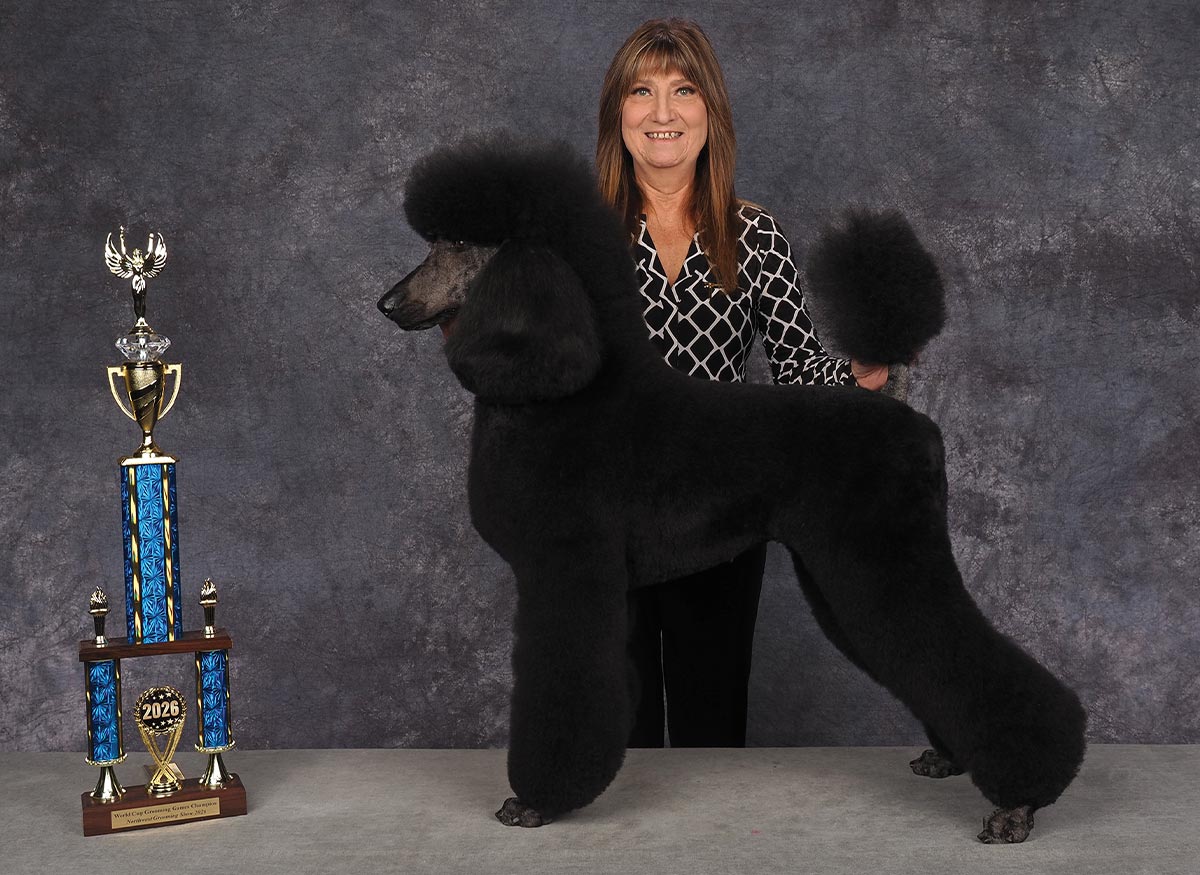


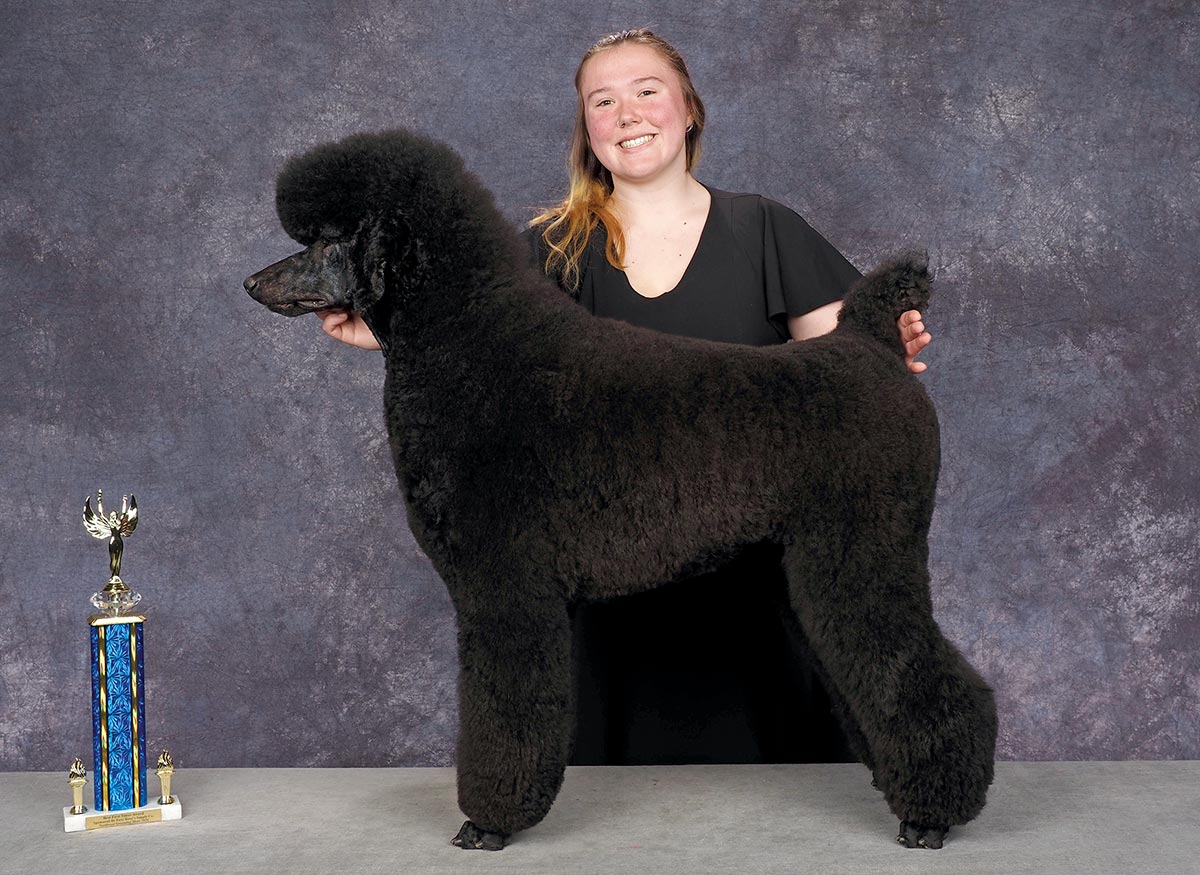



Clipper Challenge Sponsored by Joyzze & Kenchii

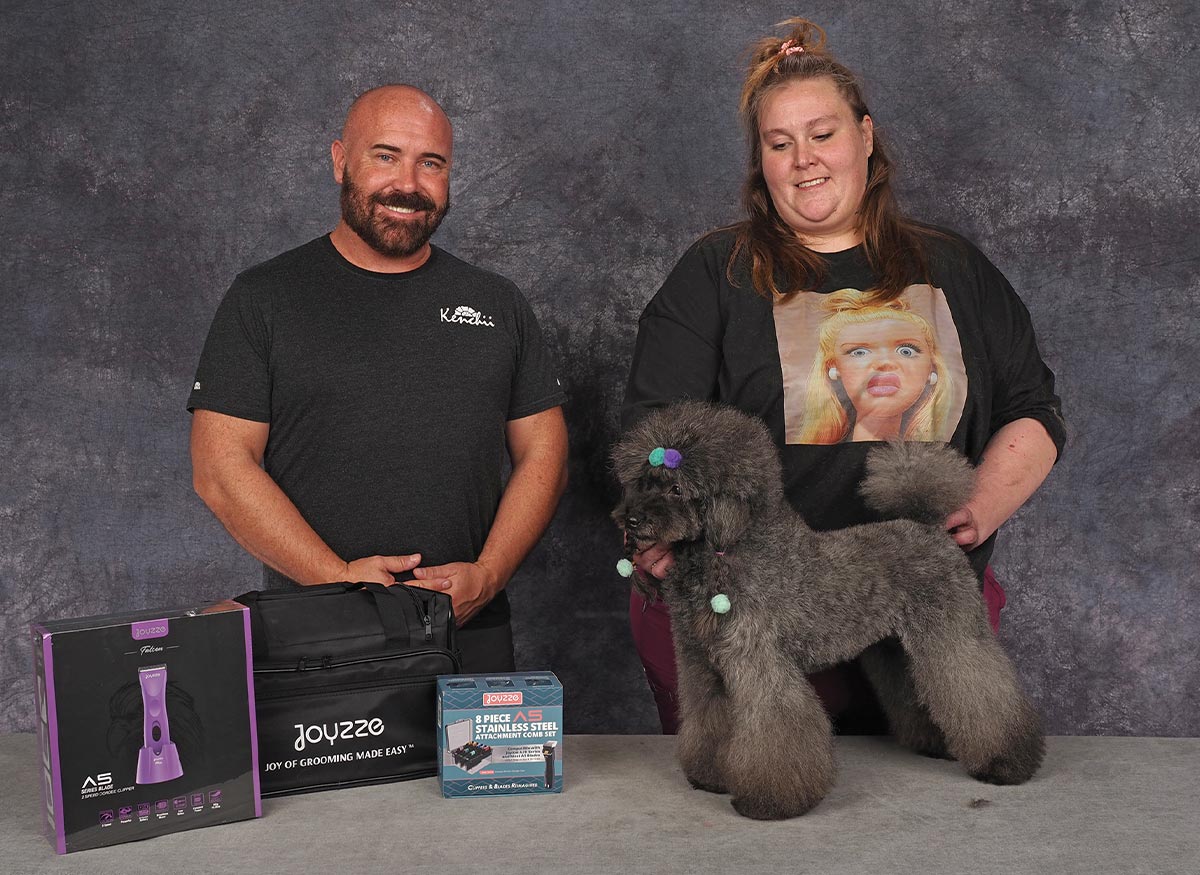

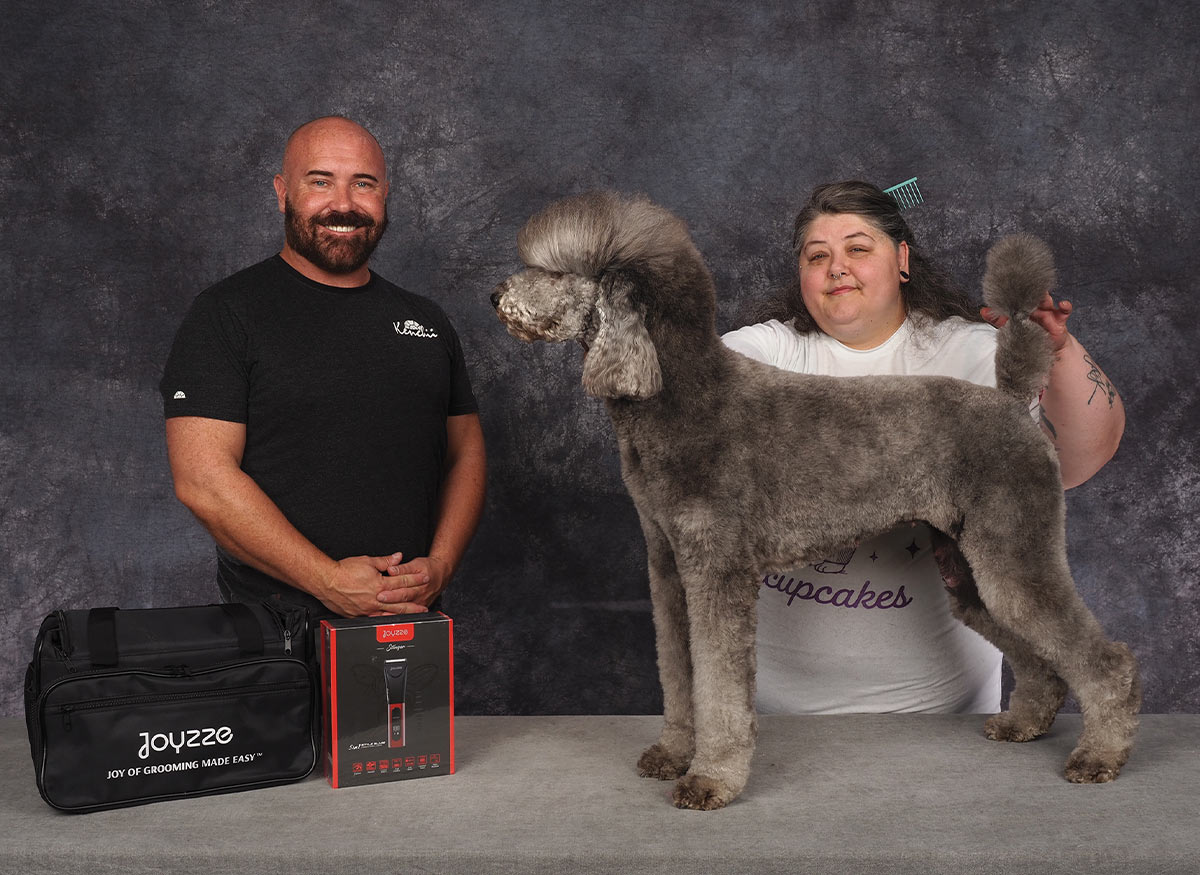

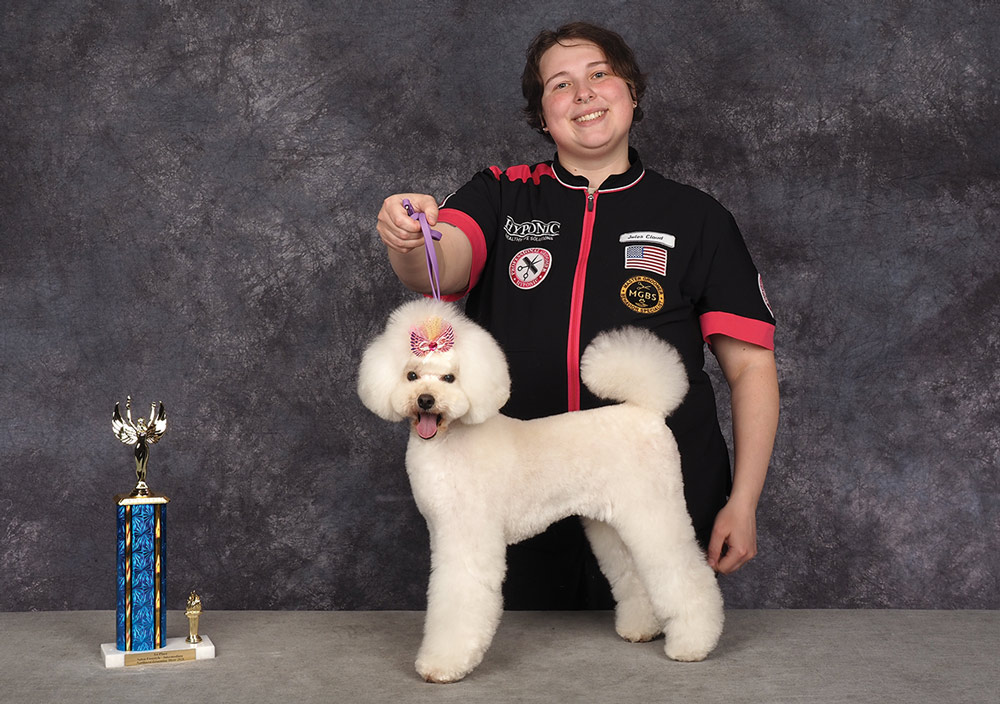
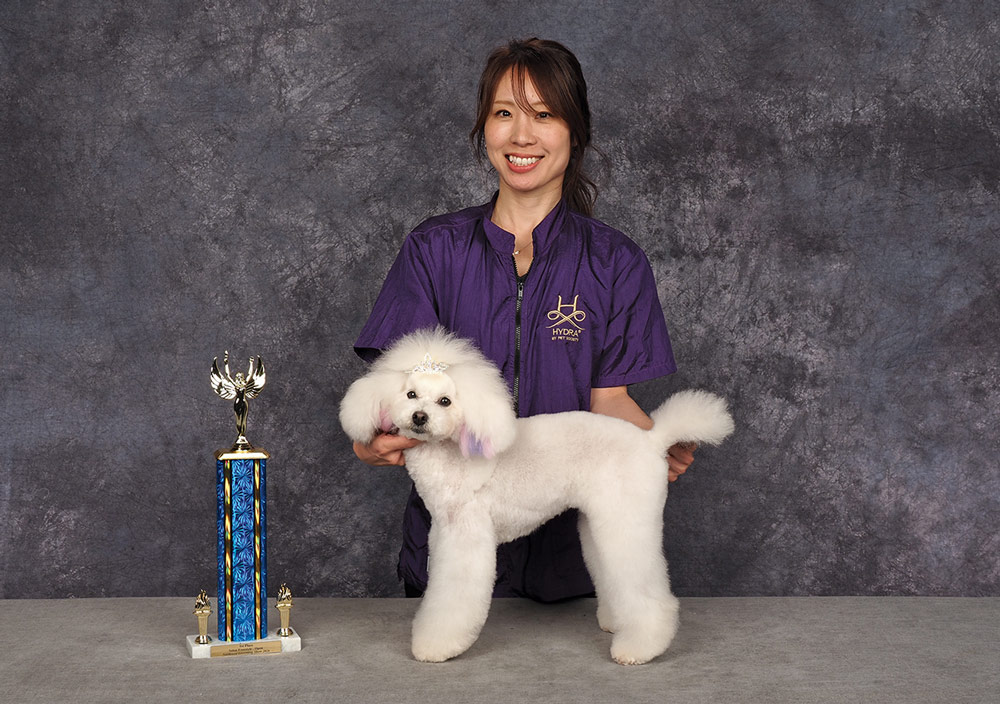
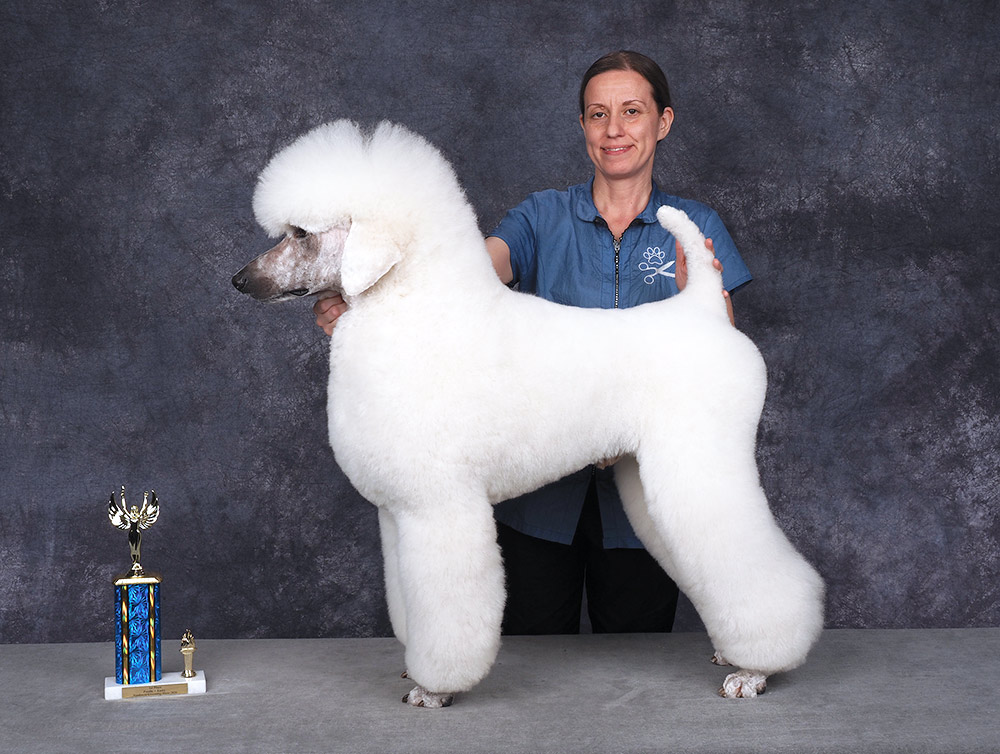


Wire Coated Breeds


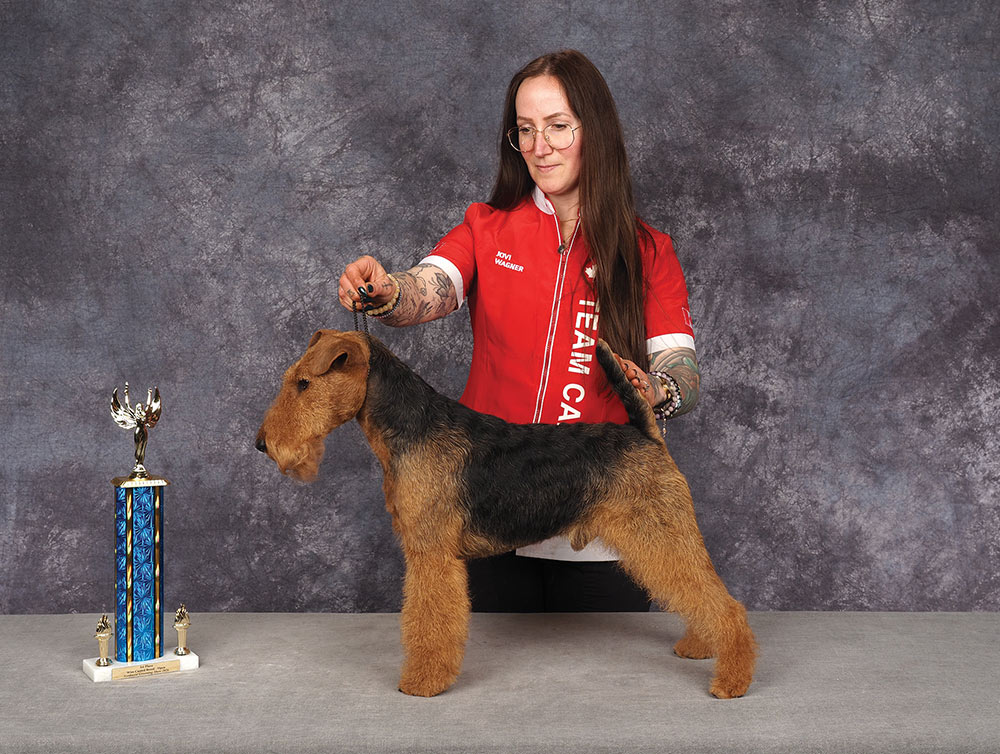




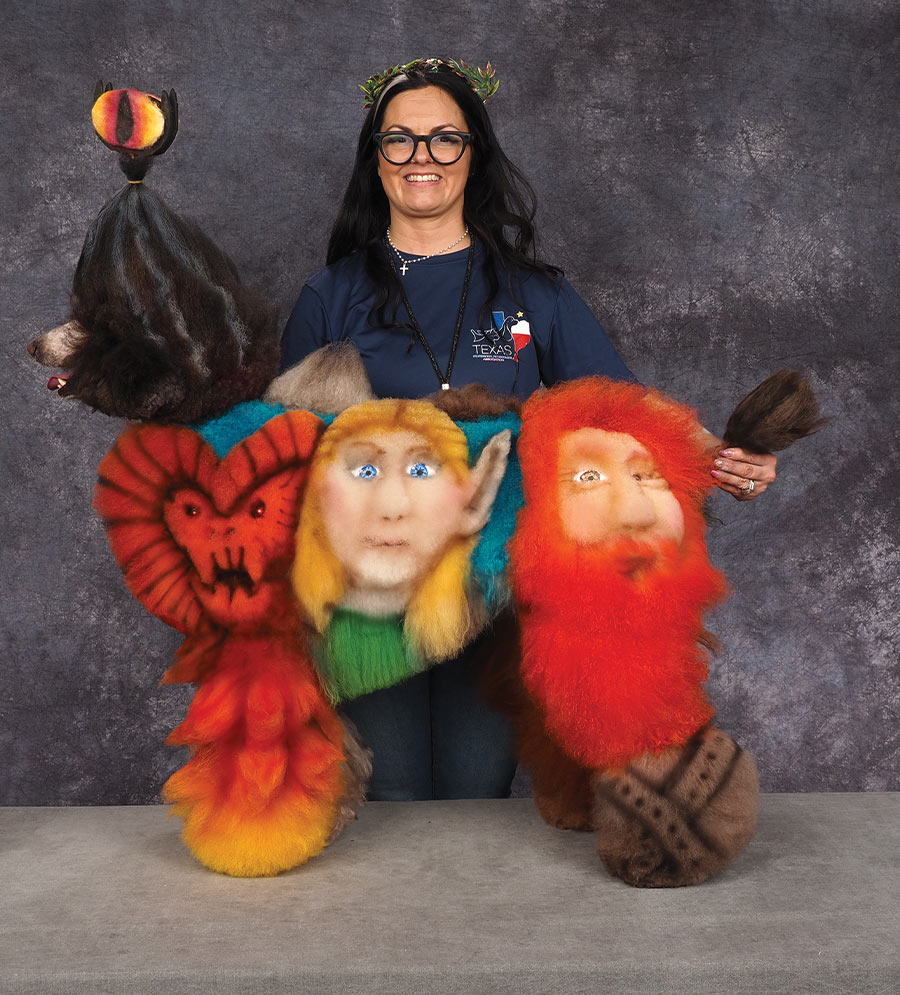





Photos provided by Animal Photography
www.animalphotography.com


 t shouldn’t be lost on any of us how much easier our lives are because of the internet. It allows us to advertise our grooming services using engaging social media for little to no cost, and it makes it so much more efficient to use online software to manage all aspects of our businesses. Now we can even get staffing assistance to help manage our grooming schedules, books and logistics without having to hire an in-person employee through the use of virtual assistants.
The term “Virtual Assistant,” or “VA,” can sometimes be used to refer to an AI tool that records what you are saying or uses voice commands to compose emails or perform searches. However, the most common form of a VA is a real human being that works independently and remotely from home, which can be invaluable for us busy, hard-working grooming business owners.
VAs can help take your social media or bookkeeping to the next level—but they also really shine in client communication, scheduling and backend organization. Think of tasks like a virtual receptionist or even auditing client notes.
“This model could work exceptionally well for the many groomers that work alone, or for the very small salons where everyone that works there is working on dogs all day long,” she adds.
Independent VAs who work remotely may not need to be not paid as employees, which can be a great money-saver since you wouldn’t be paying for all the associated employee taxes. If they are fully legal independent contractors, they may be saving money themselves by working from home.
While virtual assistant regulations vary with the situation, many VAs can qualify legally to be treated as an independent contractor, not working in the same line of business as your grooming salon. But be sure to check with your accountant or tax attorney to make sure you are following all the appropriate laws.
“A virtual assistant is someone who supports a business remotely by handling tasks that do not require them to be physically present in the salon or office. They help take administrative, communication, marketing, and organizational work off the business owner’s plate so the business can run more smoothly.”
– River Lee

“The price varies depending on the VA’s experience, skillset, and specialty,” explains River. “A highly trained VA who understands the grooming industry, systems, and customer communication, and can help reach business goals will charge more than a basic administrative assistant.”
The remote tasks they can perform are virtually endless. Depending on which VA you hire, they can answer your emails, update your website, manage your social media and schedule appointments. A busy groomer can have calls forwarded to the VA’s phone so your grooming business still retains that personal touch with a live, welcoming voice. They can even call or text clients to notify them of pick-up times when their dogs are ready.
Given the importance of the outreach of social media and its ability provide free advertising and build clientele, a virtual assistant with social media skills can be especially helpful. By giving the VA your social media accounts to manage, they can do the work of putting out fun, entertaining, educational and professional-looking posts that will draw in more clients.
“The best fit is going to be someone who understands the grooming industry and the tone of your business,” advises River. “In a mobile grooming business, for example, it helps tremendously if the VA understands client behavior, mobile scheduling challenges, one-on-one grooming workflow, and the difference between rescheduling due to weather versus clients simply trying to stretch out appointments.”
“The best way to evaluate if someone is the right fit is to look at more than just price,” River explains. “Ask how they communicate, what types of businesses they have supported, how they handle difficult pet parents, what systems or tools they are familiar with, and how they handle real-life situations in your business.
“It can also help to start with a short trial period or a clearly defined set of tasks so both sides can see whether it is a strong fit before making the bigger commitment,” she adds.
You may even think about becoming a virtual assistant yourself if you’re ready to give up or cut back on the daily physical labor of professional pet grooming. For a groomer ready to stop the hard work of grooming but not yet ready to give up the income, this is a great way to transition and still use your grooming knowledge.
“A virtual assistant is not just a cheaper replacement for staff,” River notes. “They are a strategic support role. For many grooming business owners, hiring a VA can be a smart first step towards getting out of survival mode. The right VA helps create more structure, consistency, and breathing room, allowing the owner to focus on the parts of the business only they can do.”

 didn’t place in that poodle competition because I’m good, there just weren’t many competitors.”
“I wasn’t invited back to that international show because of my hand-stripping skills, they wanted to boost their international presence.”
“I can’t enter that online model dog competition. I have no business placing my work next to groomers who have been doing this longer.”
“Will this be the day I am called out for being the fraud I secretly believe I am?”
If any of those thoughts sound familiar, you have likely met Imposter Syndrome. And if you’re in the grooming industry, you are not alone.
It convinces you that your success is the result of luck, circumstance or coincidence rather than skill. It whispers that you are incapable of the job, the groom, the business or the stage. It leads to self-criticism, chronic self-doubt and the quiet sabotage of your own progress.
Importantly, these thoughts do not reflect reality—they are protective mechanisms. Your ego attempts to shield you from failure by convincing you not to try. In grooming, where artistry meets precision and public critique is part of the culture, those thoughts can become especially loud.
- The Expert: The Expert believes they must know everything before they are qualified. This is the groomer with every textbook, every certification and every seminar under their belt. Before entering a competition, they want to know who is judging, who is competing, what breeds are entered and what tables are supplied. For the Expert, failure is ignorance. It is not knowing something they believe they should know. Even a minor knowledge gap feels like exposure.
- The Natural Genius: The Natural Genius is accustomed to things coming easily. They learn techniques quickly and rarely struggle. Because of this, they measure competence by ease and speed. If they cannot master a skill immediately, they interpret the struggle as proof they are not as talented as they thought. For them, effort feels like evidence of inadequacy.
- The Perfectionist: The Perfectionist needs everything to be flawless—not just the finished groom but the process itself. If it cannot be done perfectly, it may not be worth doing at all. A 99% score feels like failure. Minor mistakes lead to restarting projects. Progress is stalled by the pursuit of “just right.” For the perfectionist, the smallest error is the flashing light of failure.
- The Soloist: The Soloist believes asking for help equals weakness. No one can clean the bathing room quite right. No one can prepare a dog the same way. No one else can handle the paperwork as neatly. Rather than delegate, they shoulder everything. To the Soloist, needing assistance feels like proof that they are not capable.
- The Superhuman: The Superhuman wears every hat: receptionist, bather, groomer, bookkeeper, marketing department, cleaning crew and so on. Often, salon owners juggle endless responsibilities and measure their worth by how much they can carry. If one ball drops, they think, “I should have been able to handle it, but I wasn’t good enough”.

The result is a vicious cycle. You doubt your ability, avoid the opportunity and interpret avoidance as confirmation that you were not capable in the first place. And so you stay stuck.
- Talk About It: Isolation strengthens doubt, conversation weakens it. Share your thoughts with trusted colleagues. The perspective of someone not living inside your head can be transformative. You may discover that the groomers you admire most struggle with the same feelings. And often, they admire you back.
- Mentor Someone Else: Supporting another groomer through their doubts reinforces your own competence. When you help someone recognize their strengths, you begin to see your own more clearly.
- Step Back and Assess Reality: Make a factual list of your skills and accomplishments. Have you mastered rounded feet? Placed in a competition? Built a loyal clientele? Blended color beautifully? Written an article? Trained an apprentice? Those are all things worth assessing and appreciating. Track your positive feedback and keep a record of credentials. Review this list when doubt creeps in.
- Move Forward Slowly: Confidence is built, not awarded. Focus on steady growth, not perfection or speed. Progress compounds.
- Never Stop Learning: Struggle is not evidence of incompetence, it is evidence of growth. We work with living, breathing, unpredictable animals, and mastery requires time.
- Question the Narrative: When you think, “I’m not good enough to compete,” pause and ask yourself whether that thought is rational or protective.
- Stop Comparing: Comparison breeds feelings of inadequacy. Instead of measuring yourself against others, learn from them. The best groomers in our industry are known to be generous with their knowledge. Growth accelerates when we collaborate rather than compete internally.
- Seek Professional Support: If these thoughts are persistent or overwhelming, professional guidance from a mentor, coach or therapist can provide long-term tools for resilience.
Imposter Syndrome is a voice, it is not the truth. It is the voice that says you cannot compete, cannot grow, cannot succeed or cannot belong. However, the evidence of your career says otherwise: the clients who return, the dogs that leave better than they arrived, the skills you have built and the risks you have already taken.
We are an industry built on craftsmanship, creativity and courage. None of us arrived fully formed—we learned, we practiced, we failed, we improved. So the next time that quiet voice asks, “Will this be the day?” Answer it, and say no. Because I know who I am and I know what I can do and I will never stop pursuing my goals and chasing my dreams.
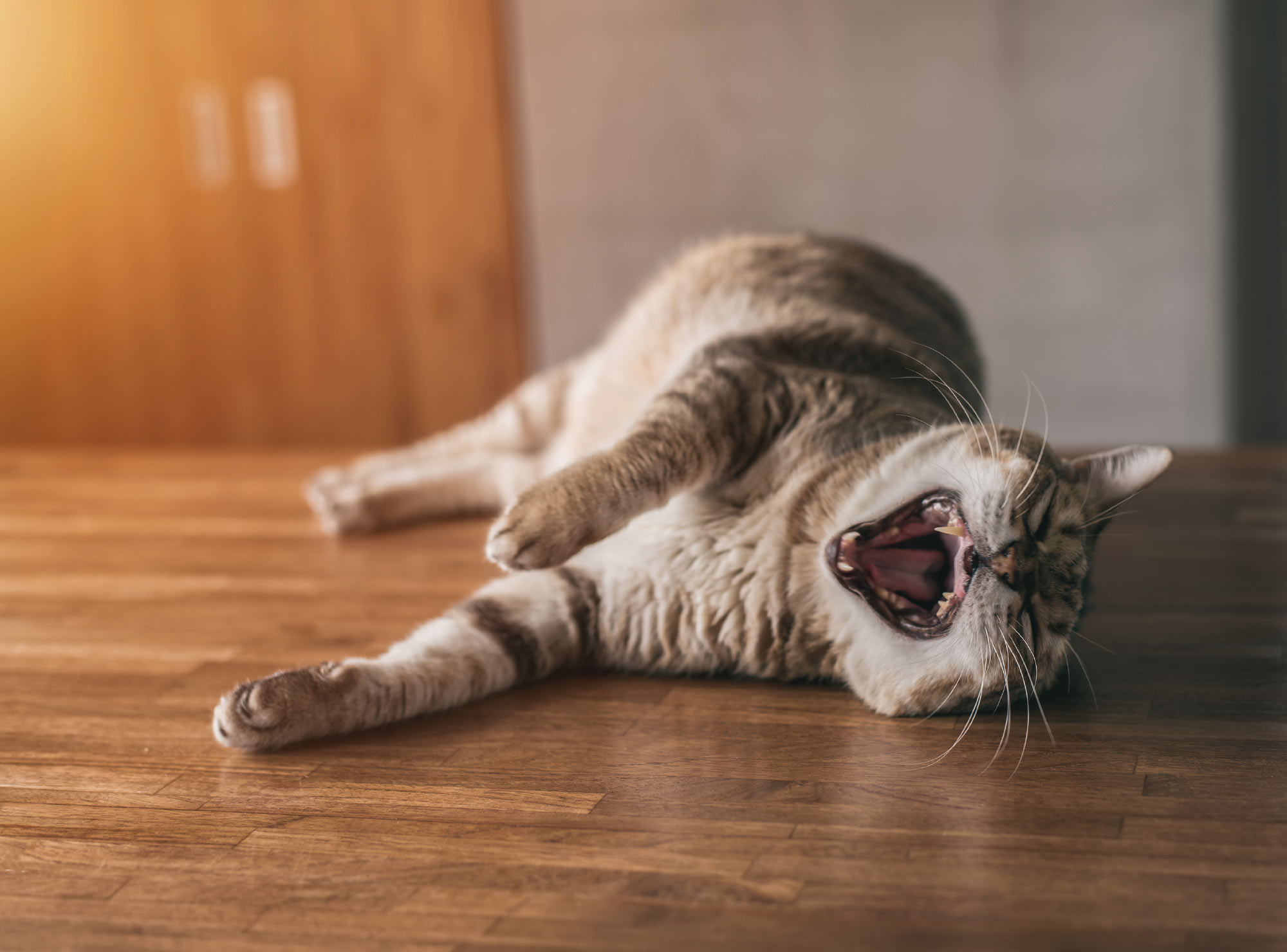
 nyone who works with cats long enough will eventually see a cat experience a meltdown. One moment the cat is tolerating the groom reasonably well, and the next moment you have a hissing, twisting chainsaw of claws and teeth. It can feel sudden and unpredictable—especially for groomers who are new to working with feline clients—but most meltdowns are not random; they are the result of the cat escalating quickly due to an overwhelm of stress.
When we learn how to read the signs earlier and adjust our approach, many of these situations can be prevented long before they turn into a full‑blown tornado. By focusing heavily on preventing escalation, success often comes from adjusting handling techniques, scheduling, selection of grooming services and even the salon environment to match the individual cat.
Cats communicate with their whole body. When evaluating a cat’s stress level, pay attention to:
- Ear position and direction
- Tail movement
- Eye shape and pupil size
- Muscle tension
- Vocalization
- Breathing rate
- How they respond to touch, noises, etc.
A cat with dilated pupils, a twitching tail and tight, hunched body posture is telling you something very different than a relaxed cat with soft eyes and a gently swaying tail. When we look at the entire picture instead of a single signal, we can often predict escalation before it happens.
These cats benefit from a slower, quieter approach. Towel wraps can provide security, and covering their head briefly can reduce visual stimulation. Slowing down the introduction of tools such as the dryer can also make a big difference.
Shy cats often respond well to patience and consistency. They may not love the grooming process, but they can learn that it is predictable, doesn’t hurt and isn’t scary.
For example: If the dryer is causing agitation, try a towel wrap or e-collar/muzzle, switch dryer type or move it further away from the cat’s body. If the cat is becoming tense during clipping, limit what needs shaving to only the absolute necessities. If the cat is overstimulated by touch, reduce handling and work more efficiently. Not all cats respond well to holding close to your body, snuggling or towel wrapping.
Flexibility is one of the most valuable skills a cat groomer can develop. Every cat is different, and what works beautifully for one cat may be completely wrong for another.
Sudden noises such as barking dogs, clanging cages, dropped tools, equipment turning on or the doorbell ringing can instantly spike a cat’s stress level and put them on high alert.
Strong smells can also contribute to anxiety. The smell of unfamiliar people, other cats or even a recently groomed dog can make a nervous cat feel unsafe.
Managing meltdowns is not about overpowering the cat or pushing through difficult behavior; the goal is to prevent escalation in the first place.
Creating a calmer environment for feline clients can go a long way toward preventing meltdowns. That might mean grooming cats in a quieter room, minimizing interruptions, and being mindful of controlling scent and noise levels in the cat space.
When a cat is in full meltdown mode, continuing the groom usually makes things worse.
Signs of a true meltdown can include:
- Rapid breathing or panting
- Thrashing or frantic movement
- Screaming or continuous vocalization
- Attempts to bite repeatedly
- Loss of coordination
When you see these or a combination of these signs, the safest option is usually to stop. Give the cat time to settle in a carrier or kennel, dim the lights if possible, reduce stimulation and allow their nervous system to calm down.
Sometimes a short break is enough to reset the cat so you can safely finish a small portion of the groom. Other times the best decision is to send the cat home and regroup for another day. Stopping does not mean failure; in many cases it is the most responsible choice.
The more we tailor the grooming plan to the individual cat, the more successful those appointments tend to be.
If medication is being considered, it should always be prescribed and monitored by the cat’s veterinarian. The groomer and veterinarian can then discuss whether a medicated grooming appointment is something that can be safely attempted.
Sometimes the safest decision is recognizing that a grooming salon may not be the right environment for that particular cat. A veterinary-assisted groom may be appropriate if a cat:
- Is severely matted with skin damage
- Cannot be safely handled without extreme distress
- Has significant medical issues
- Has a history of dangerous aggression during grooming
Working with a veterinarian allows sedation and medical monitoring when necessary. That collaboration can protect the cat, the groomer and the long-term grooming relationship.
Managing meltdowns is not about overpowering the cat or pushing through difficult behavior; the goal is to prevent escalation in the first place. When we pay attention to body language, adjust our techniques and create a calmer environment, many cats are able to tolerate grooming far better than people expect. And when a cat does reach their limit, recognizing that moment and making the appropriate decision protects everyone involved. The cat stays safer, the groomer stays safer and the next grooming appointment has a better chance of being a positive experience. And that, ultimately, is what better cat grooming is all about.

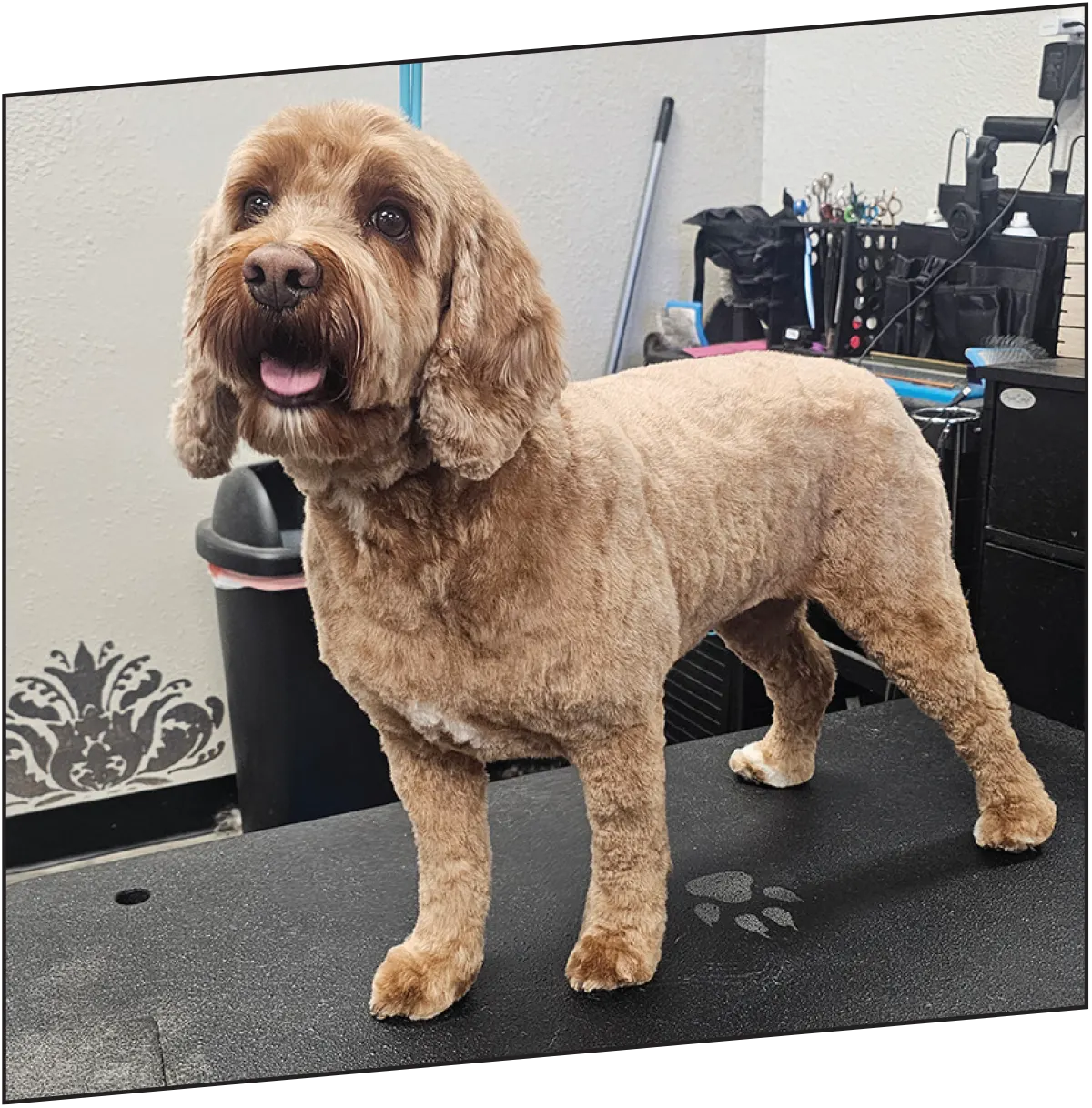
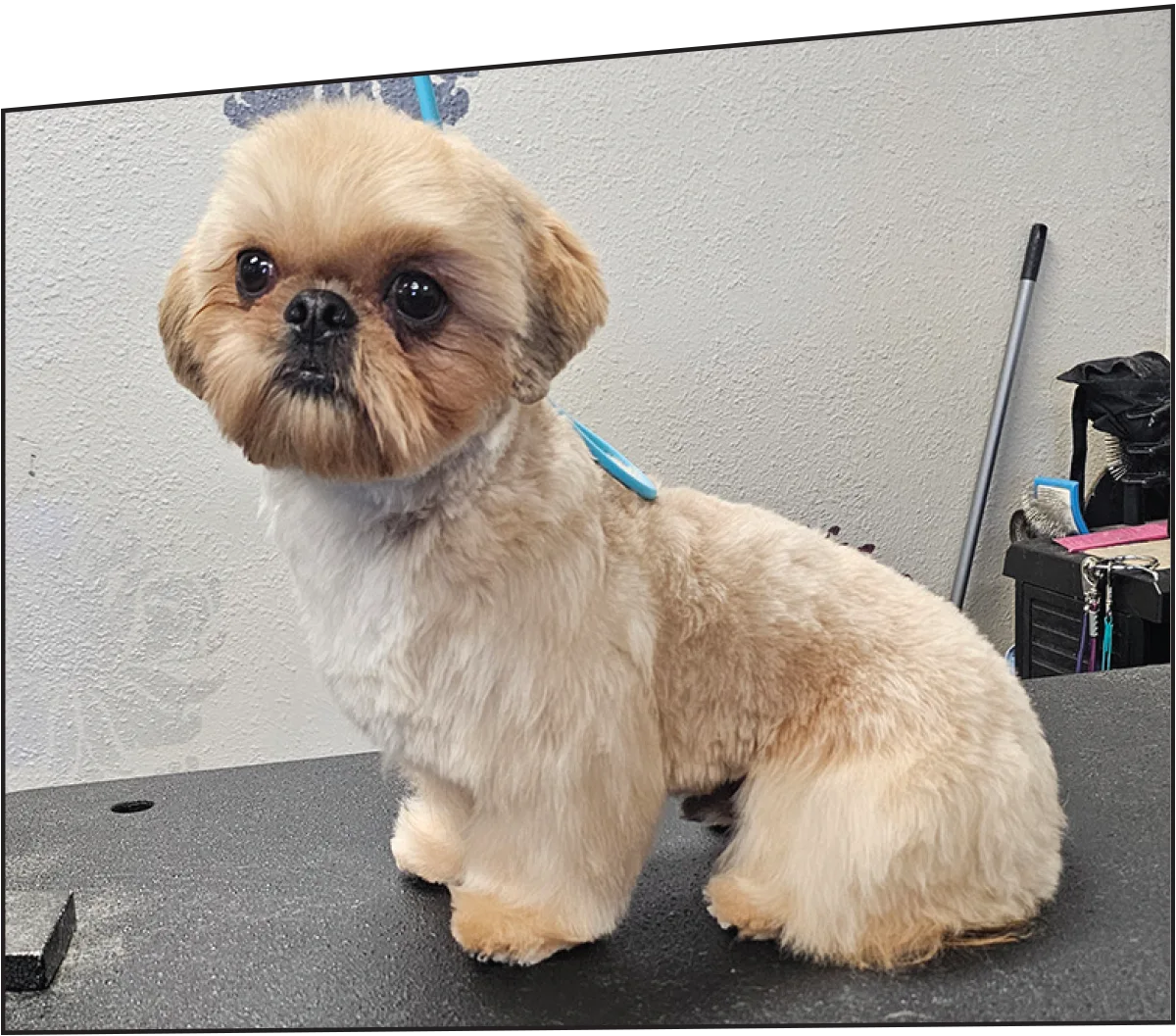
by Blake Hernandez
Photos provided by Blake Hernandez
 n grooming salons everywhere, everyday trims tell a more nuanced story than people realize. From full clip-offs to short bodies with long legs and carefully scissored heads, each haircut reflects the dog in front of the groomer, but also the hands shaping the result. The same requested length can look different across coat types and sizes, while variations in technique, training and personal aesthetic influence the final finish.
 Fig. 2) Groomed by Sydney Porras: This #4 with scissored legs has a much fuller appearance of the body. The smaller a dog is, the longer each blade length will look when compared to a larger dog. Because this dog’s coat falls and drops, it is important to blend off into the legs the same direction the hair grows. A nice solid bevel at the bottom of the foot will help support the long draping coat from getting too filthy too fast. The head is a mix between a clipper length on top and a hand-scissored fore face. While the dog is smaller, the trim is more stylized and would take nearly as long as the simple all-over trim on the previous dog.
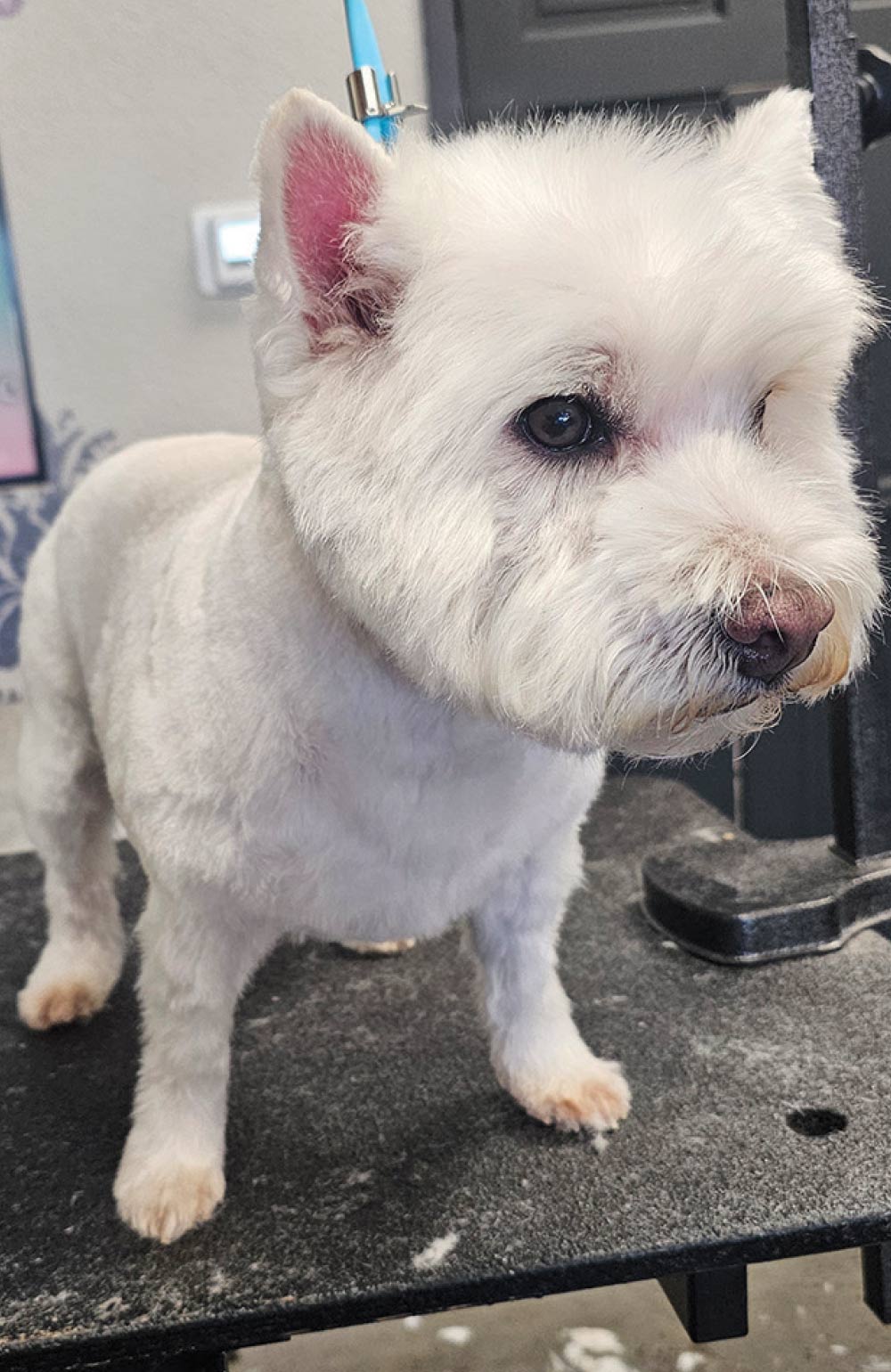
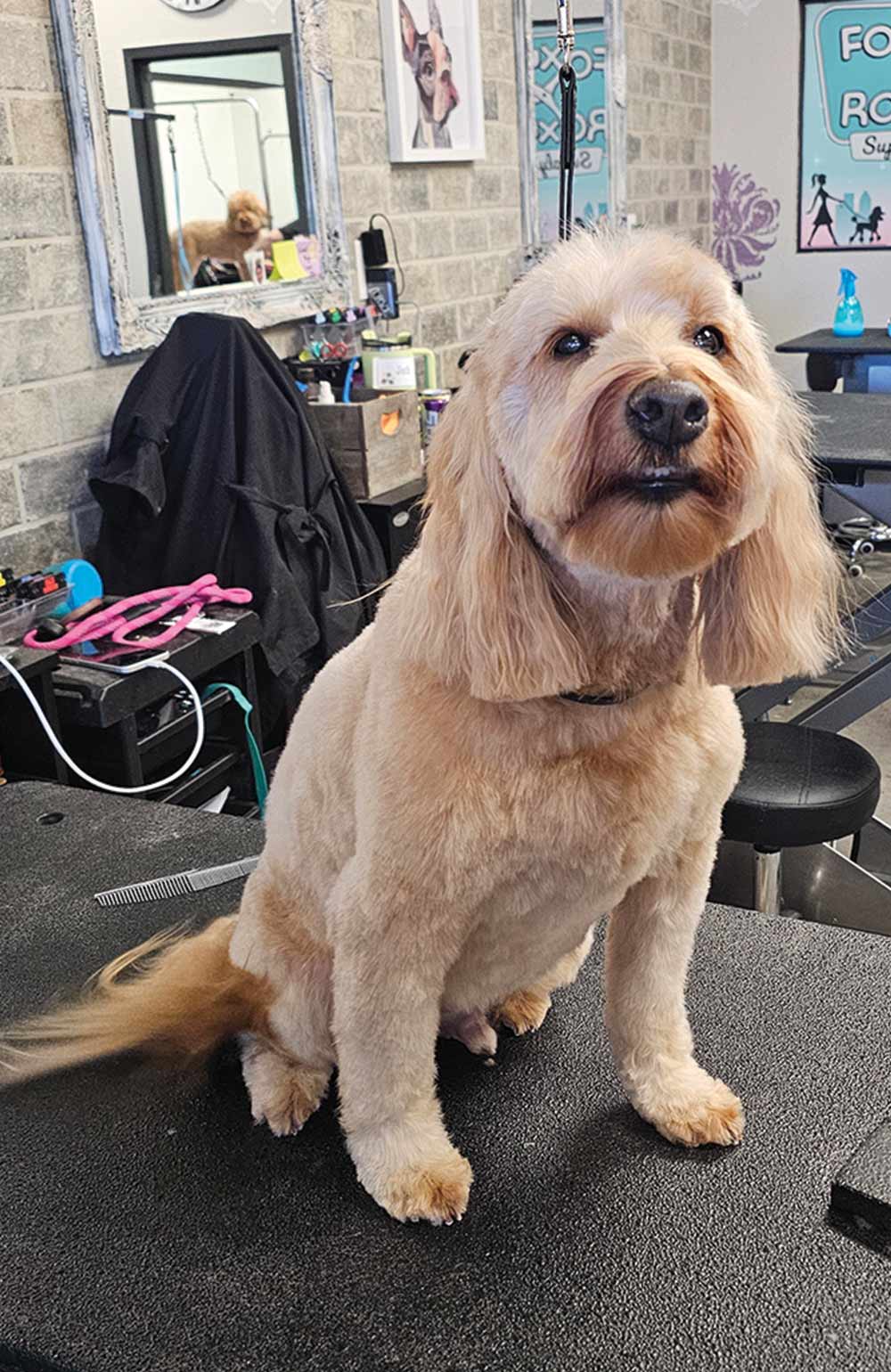
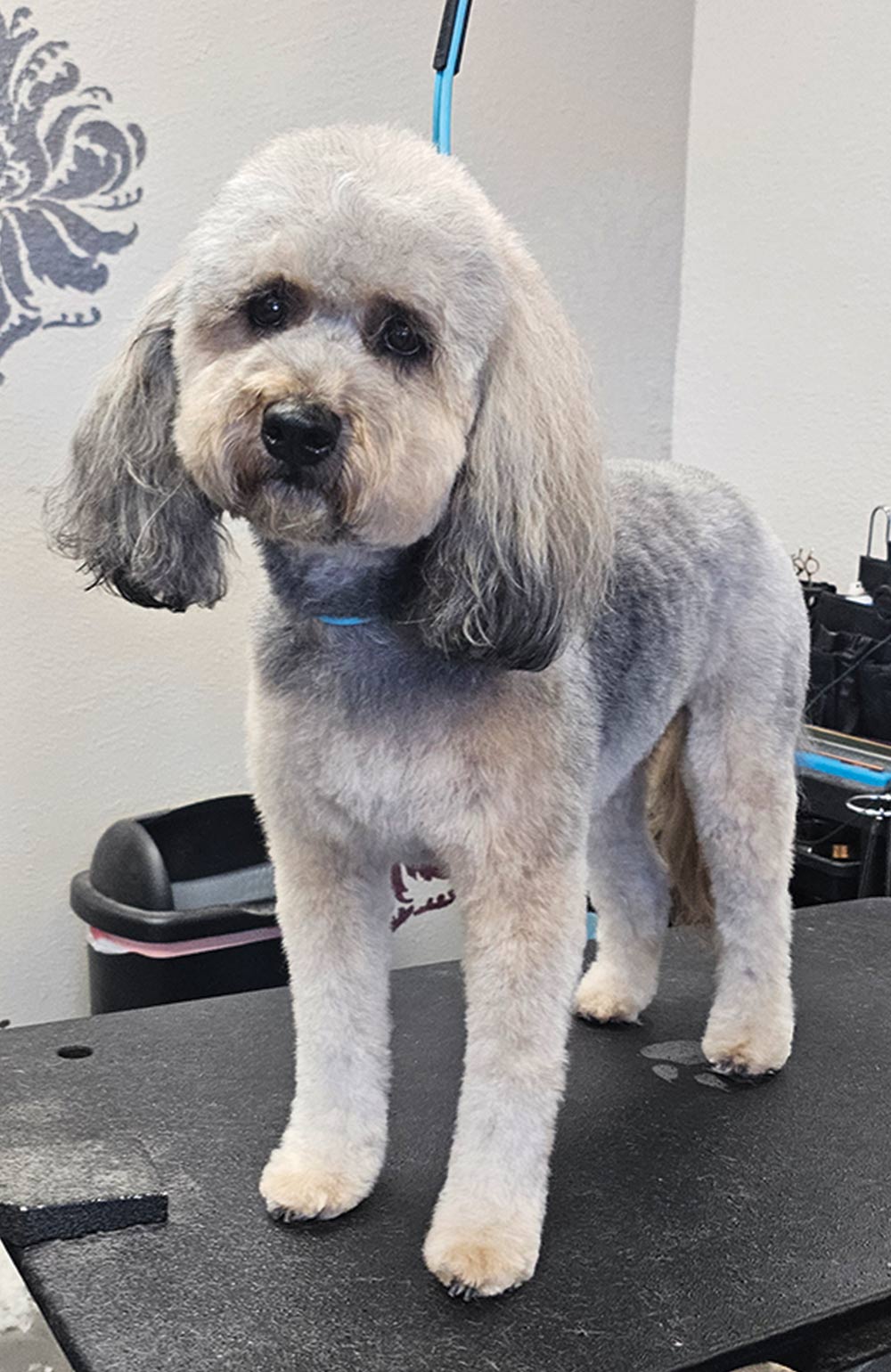
Fig. 5) Groomed by Natasha Hassany: This half-inch all-over trim simply deviates by having a much longer length on the head. The height of the topknot adds length to the dog’s neck when in profile and adds a little something special to the dog’s expression. The coat type here is super harsh but rather thin in density which can be fun to scissor but challenging to finish. This dog is slightly smaller than the previous dog, but the legs appear fuller, which is the illusion that is created by different-sized dogs in the same lengths.
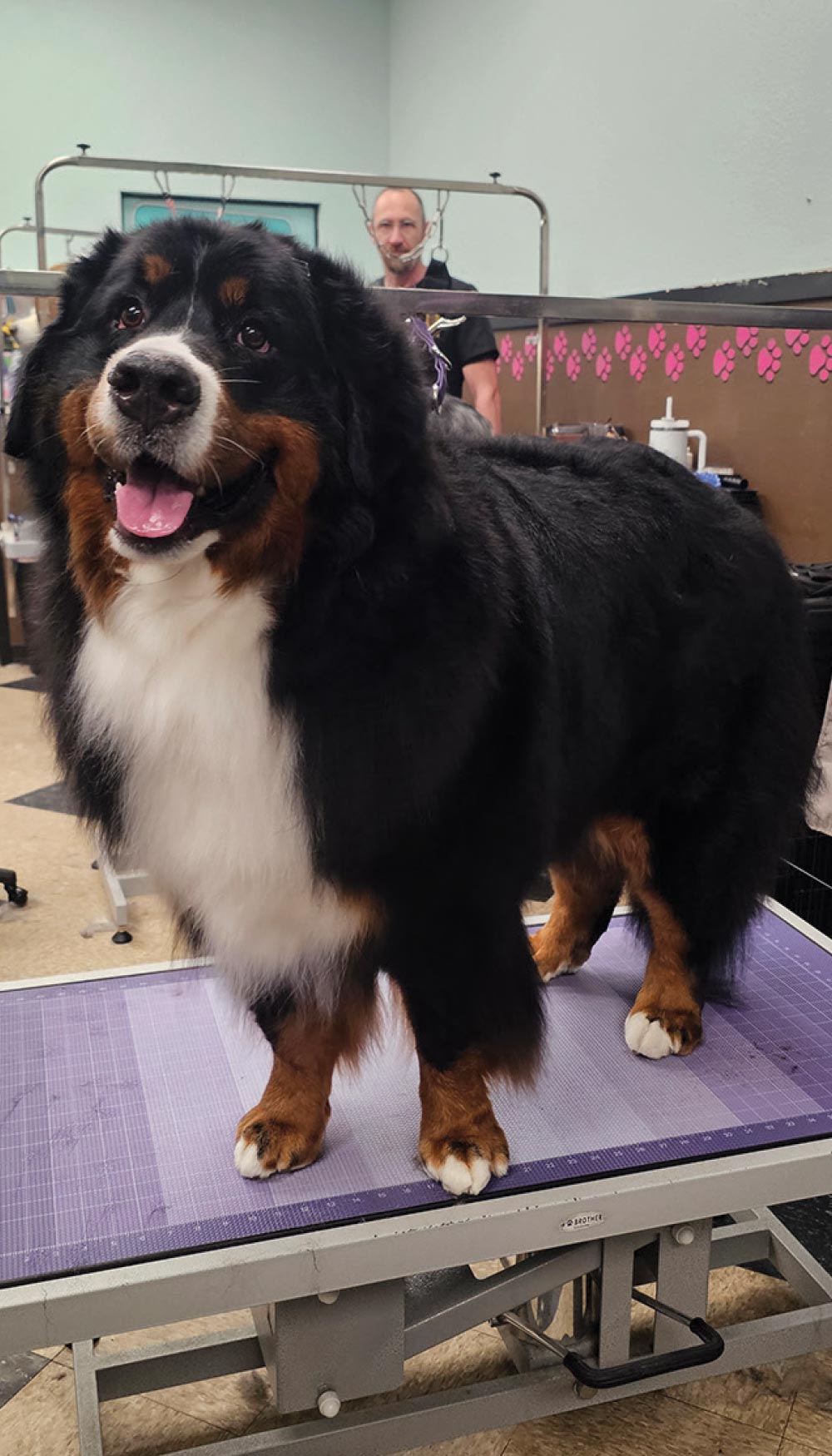
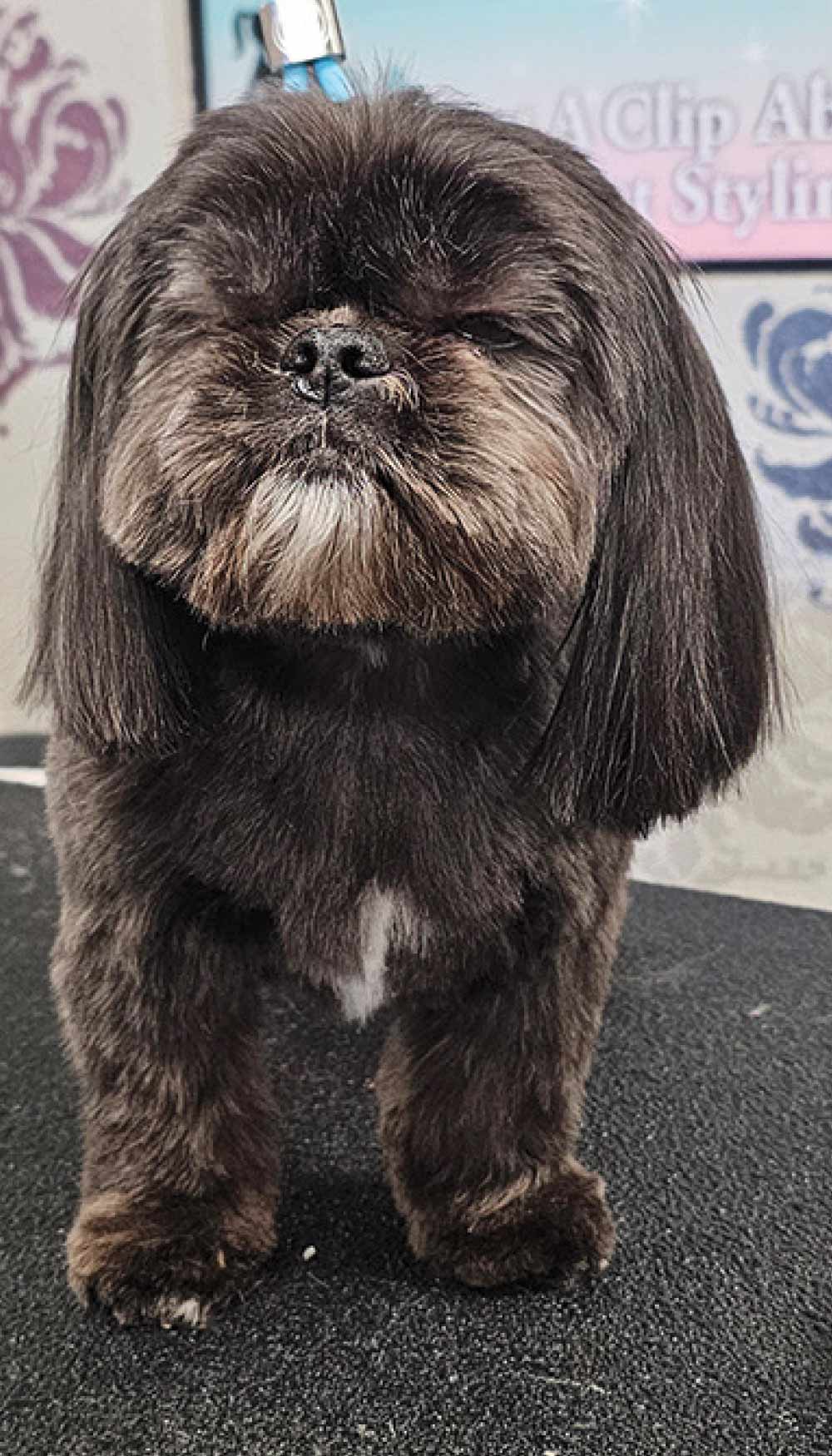
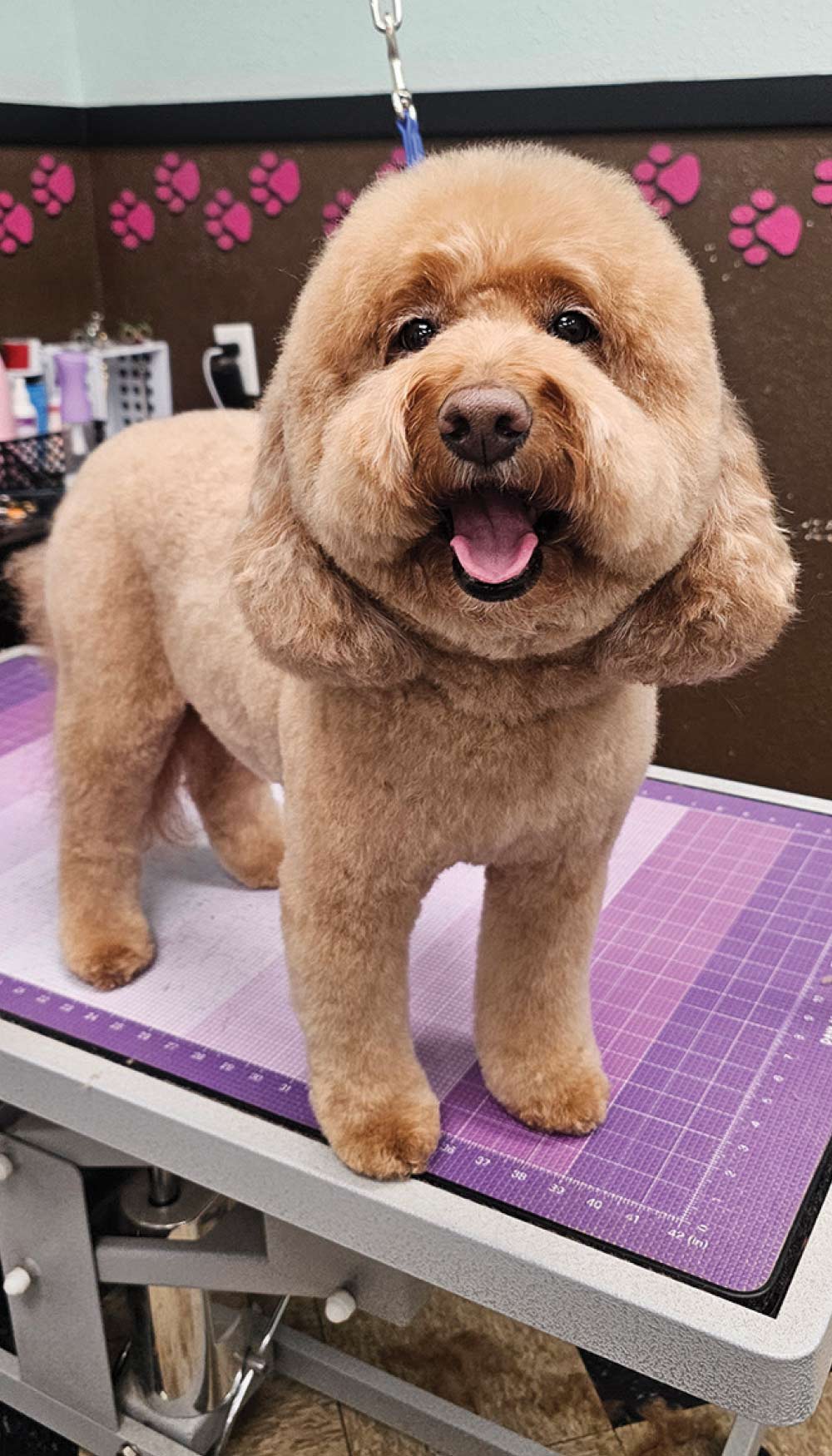
This variety of dogs goes to show that even when the request sounds the same, the outcome rarely is. A dog’s size, coat type and overall structure all play a role in shaping the final look, while the individual hand of the grooming artist brings its own interpretation to the work.
The result is not a single, standardized trim, but rather a range of real-life request variations. The reality is that a great groom is not just about technical ability; it’s about skill, artistry and the client’s vision aligning to create a finish that is Instagram-worthy.
Fig. 7) Groomed by Blake Hernandez: Many owners realize their small dogs will need more baths due to being so low to the ground in order to keep their house clean. A professional bath between grooms requires not only the cleansing of the skin and coat but also a nice dusting of the feet and pads and an opening of the eyes. It should be a simple and stress-free groom.
This variety of dogs goes to show that even when the request sounds the same, the outcome rarely is. A dog’s size, coat type and overall structure all play a role in shaping the final look, while the individual hand of the grooming artist brings its own interpretation to the work.
The result is not a single, standardized trim, but rather a range of real-life request variations. The reality is that a great groom is not just about technical ability; it’s about skill, artistry and the client’s vision aligning to create a finish that is Instagram-worthy.

Call (717) 691-3388 ext 224 to place a Classified.
Rates: 25 words or less, $50.00.
Each additional word, $2.00 each.
Classified ads must be prepaid.
Call for issue deadlines.
Agency discounts do not apply.


Thanks for reading our June 2026 issue!