







Contents | April 2026
28
46
by Lynn Paolillo
ALSO INSIDE
todd@barkleigh.com
adam@barkleigh.com
gwen@barkleigh.com
rebecca@barkleigh.com
luke@barkleigh.com
laura@barkleigh.com
brandi@barkleigh.com
carlee@barkleigh.com
evan@barkleigh.com
allison@barkleigh.com
james@barkleigh.com
karin@barkleigh.com
christina@barkleigh.com
Daryl Conner
Lynn Paolillo
Amanda McGrath
Jennifer Bishop Jenkins
Blake Hernandez
ALSO INSIDE
ON THE COVER
- Andis2
- Animal Photography7
- AnimalsINK19
- Bandanas Unlimited33
- Barkleigh Store – Release Forms47
- Barkleigh Store – The Pet Stylist Resource Guide38
- Best Shot Pet – Scentament Spa13
- Best Shot Pet – UltraMAX9
- Cat Wash Center20
- Cosmos Bathing Systems27
- Direct Animal Products15
- Double K Industries3
- Electric Cleaner Company48
- Envirogroom | Special FX Premium Products21
- Evolution Shears17
- Friedman Tax31
- Governor Insurance Agency12
- Groomer’s Choice4
- Hanvey Engineering & Design23
- Happy Hoodie44
- IV San Bernard | Pet Skin Academy16
- Laube55
- Odorcide45
- Paragon School of Pet Grooming41
- Pet Boarding and Daycare Expo West56
- PetBizInsurance.com26
- PetLift25
- Poly Pet Tubs8
- Puppy Playground24
- Quadruped Pet Care39
- Stallergenes Greer49
- Wag’n Tails53
- World Pet Association | SuperZooDigital Only
Featured Spotlight Profile
Midmark

























 y dog looks so white after you bathe him.” “My dog stays clean a lot longer after he’s been groomed by you.” “My dog smells great for a long time after his appointment.”
These and similar comments are things we frequently hear and are grateful for. Most of the time, customers compare our bathing results with their own, but sometimes they are referring to another groomer’s work.
The woman who taught me to groom used to say, “You don’t have to be the most talented groomer in the world; send dogs home very clean with a cute face and neat trim, and you’ll have plenty of business.” So, how do you get dogs “very clean?”
- Consider investing in a bathing system. A bathing system will get dogs cleaner faster, reduce wear and tear on your body while you work, conserve water, and save you money on shampoo and conditioning products by using less per pet. I groom in a rural area and use well water, so our water pressure is not impressive. It would be exceedingly difficult for me to get thick double coats and many curly coats clean without a bathing system. If you have good water pressure, though, a non-recirculating, siphon bathing system may be a better fit.
For many dogs, a single bath with a bathing system leaves them squeaky clean. Others require two baths, and occasionally we groom a dog that resembles a swamp creature and needs three. Of course, extra baths are time-consuming, but you make up for the time spent sudsing during both the drying process and finishing work.
- Choose your products wisely. There are so many excellent shampoos and conditioners available to us now. You don’t necessarily need an extensive product selection on hand, but keep a few tried-and-true options at your fingertips. For me, that includes clarifying or degreasing shampoo for extra-dirty or oily pets, a good basic cleansing product, a whitening shampoo, and one that helps with shedding and matting.
I also keep a small selection of conditioners and use one on every pet to replenish the natural oils the shampoo removed. My go-to is a light conditioner that doesn’t weigh down the coat, but I keep a heavier-duty one on hand for dry or damaged fur that needs extra care.
- Develop a system that makes sense to you and use it on every pet. You can be creative with this part, but come up with a plan that feels right and is effective. I start bathing behind the ears and work in a pattern that moves down the spine, then down each leg, then from the spine down the sides to the belly. Next, I work on the tail and hindquarters, then the head, face and fore chest.
I like working from top to bottom so the dirt and water run downward, and I generally wash with the lay of the coat. If I am giving more than one shampoo, I squeeze the suds from the first bath out lightly, then rewash.
- Don’t be afraid to bathe the dog more than once. If the water is not rinsing clean, just suds that pup up again. Sometimes you will find that the body and legs look and feel clean but the head and ears still seem iffy. This is a good time to apply facial cleanser. Try saturating the head and ears, then lightly brushing the product through to get that fur perfectly clean.
- Use a degreasing or clarifying shampoo first. For pets with greasy, extra-dirty or naturally oily coats, try using one of these specialized products first, and then use whichever shampoo gives the best results for that dog’s coat type.
A groomer on social media recently posted that on some of her Standard Poodle clients, the coats still feel oily after a bath, and sometimes she could even see greasy, dusty, whitish residue at the base of the hair when she dried the dogs. This method would help get those curly coats clean.
- Rinse like you mean it. I tell pet owners and new groomers alike: rinse, rinse, rinse until you are sure you have removed every trace of shampoo and conditioner, then rinse again just to be sure. Pay special attention to the sanitary areas, armpits, the part of the neck where your grooming loop lies, face and feet.
Products left in the coat can leave it limp, dry it out, cause skin irritation and even attract dirt after the bath. Your goal should be a coat that is residue-free when you are finished. (Of course, if you are using a “leave-in” conditioner, that is a different story.)
My daughter once met a man in a dog park who was complaining about a recent grooming experience, saying, “I’ll never take my dog there again. He smelled like shampoo for months!” We both wish she’d thought to ask who the groomer was that made a dog smell good for months—because that is something to aspire to!
Meanwhile, we do our best to make every pet very clean, showcase our grooming skills, and help them look and smell as good as possible between visits.

Photos provided by Stephenie Calhoun
 hen people talk about Korean grooming, the conversation usually starts with the finish—clean lines, balance, that unmistakable polish that makes you pause mid-scroll. And yes, the haircuts are beautiful. But after spending time watching how groomers are actually taught there, I realized the finish is the least interesting part of the process.
What really stood out to me was how much emphasis is placed on thinking before cutting. And not just how to execute a pattern, but how to look at a dog, understand what you are seeing and decide what to do next without immediately asking someone else for the answer. Once I noticed that, I could not stop seeing it everywhere.
Korean grooming education exists inside a very structured system. Many academies operate as formal adult education institutions with published hours, tuition, enrollment limits and clear certification paths tied to national organizations like the Korean Kennel Club (한국애견협회). That level of structure shapes everything that comes after it.
When education is required to be transparent and standardized, teaching naturally becomes more intentional. Students generally know where they are in the process, what is expected of them at each stage and what comes next. There is very little guessing.
That predictability removes a lot of background stress, which frees up mental energy for learning. Instead of constantly wondering if they are doing enough or doing it right, students can focus on understanding the material in front of them.

Dogs were not coats to be trimmed in that moment.
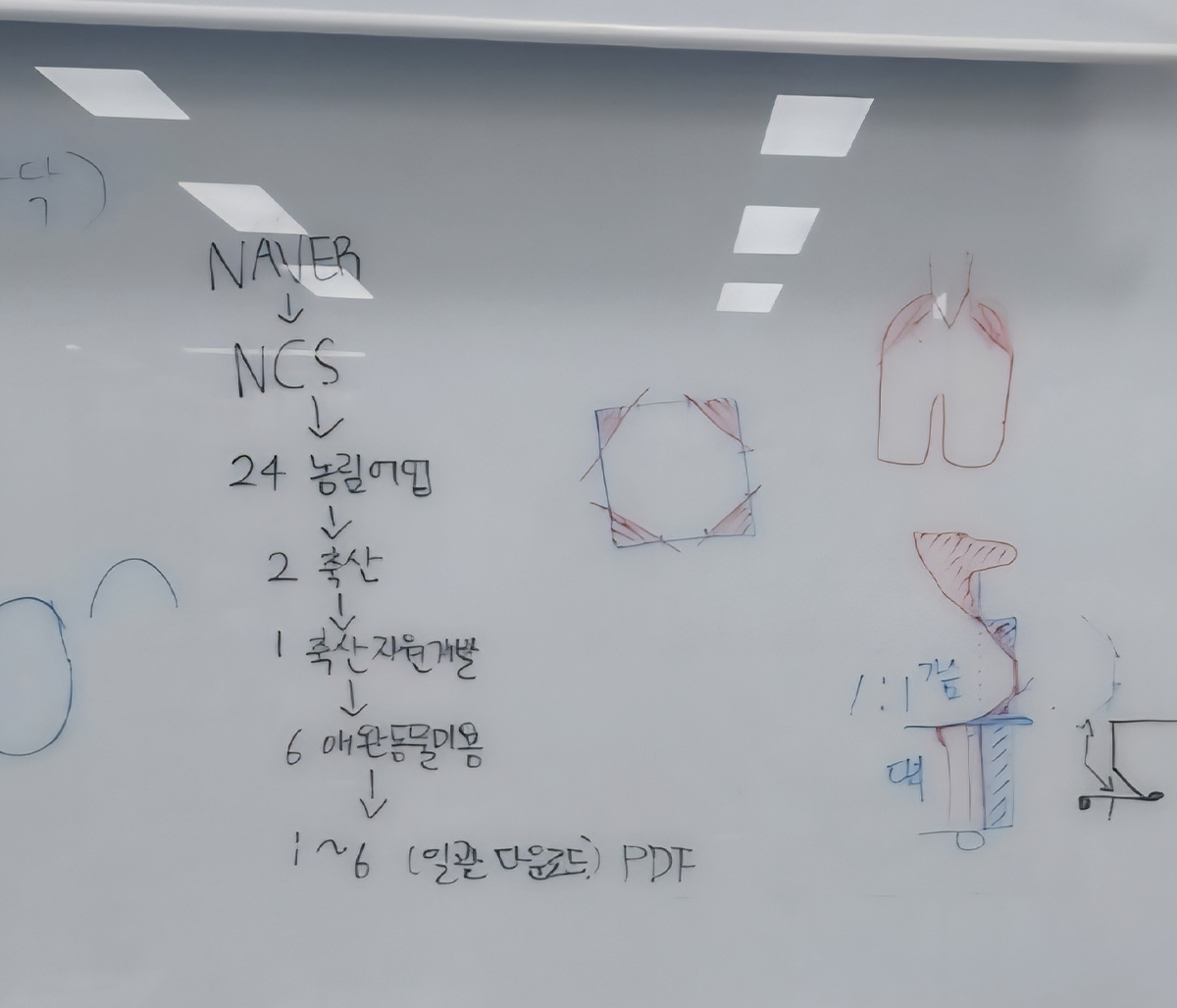
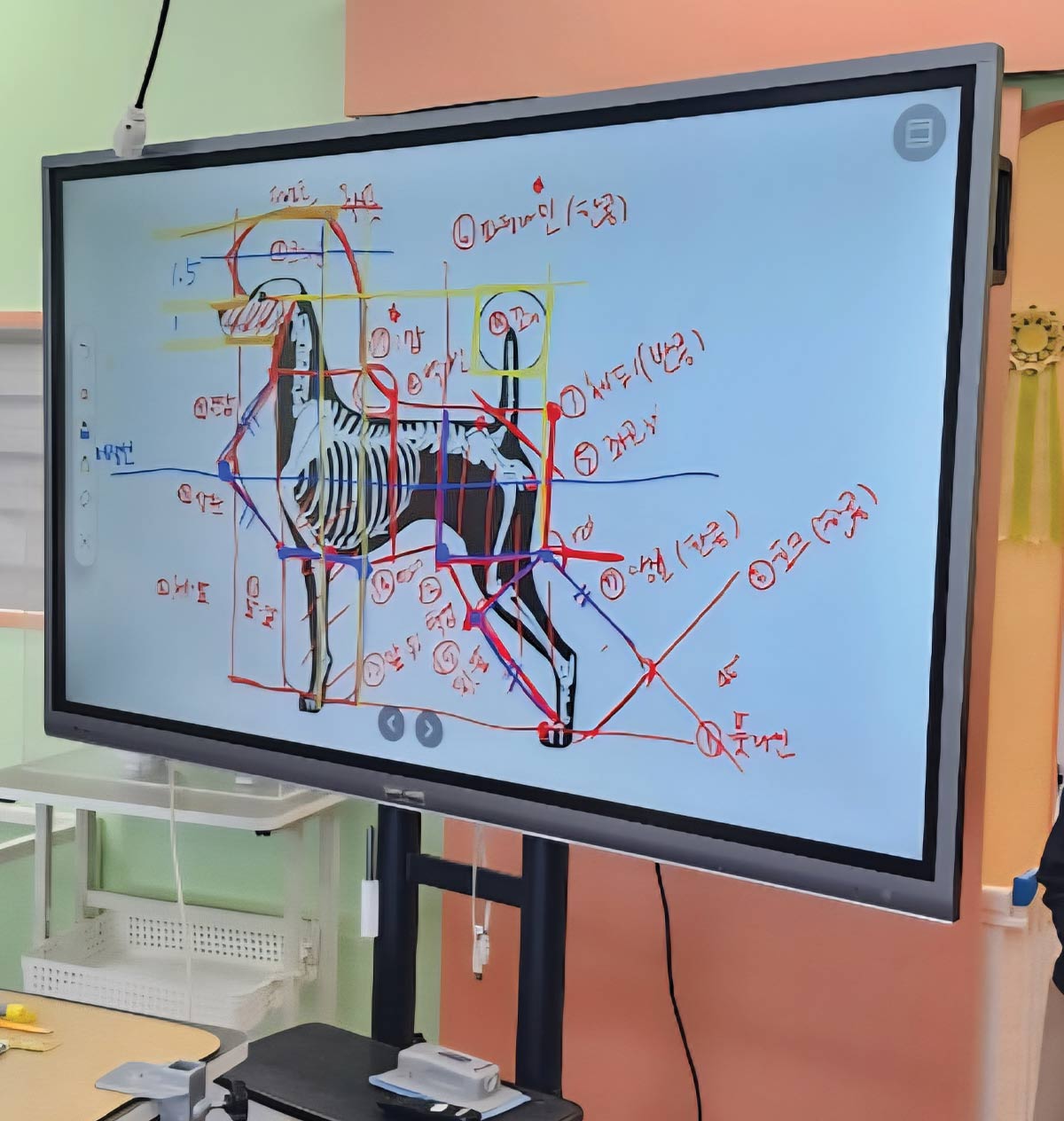
They were shapes to be understood.
That separation matters. When students learn how to see structure before they ever touch a live dog, grooming becomes a series of informed choices rather than educated guesses. By the time they get to the table, they are not just copying a pattern, they are adapting it.
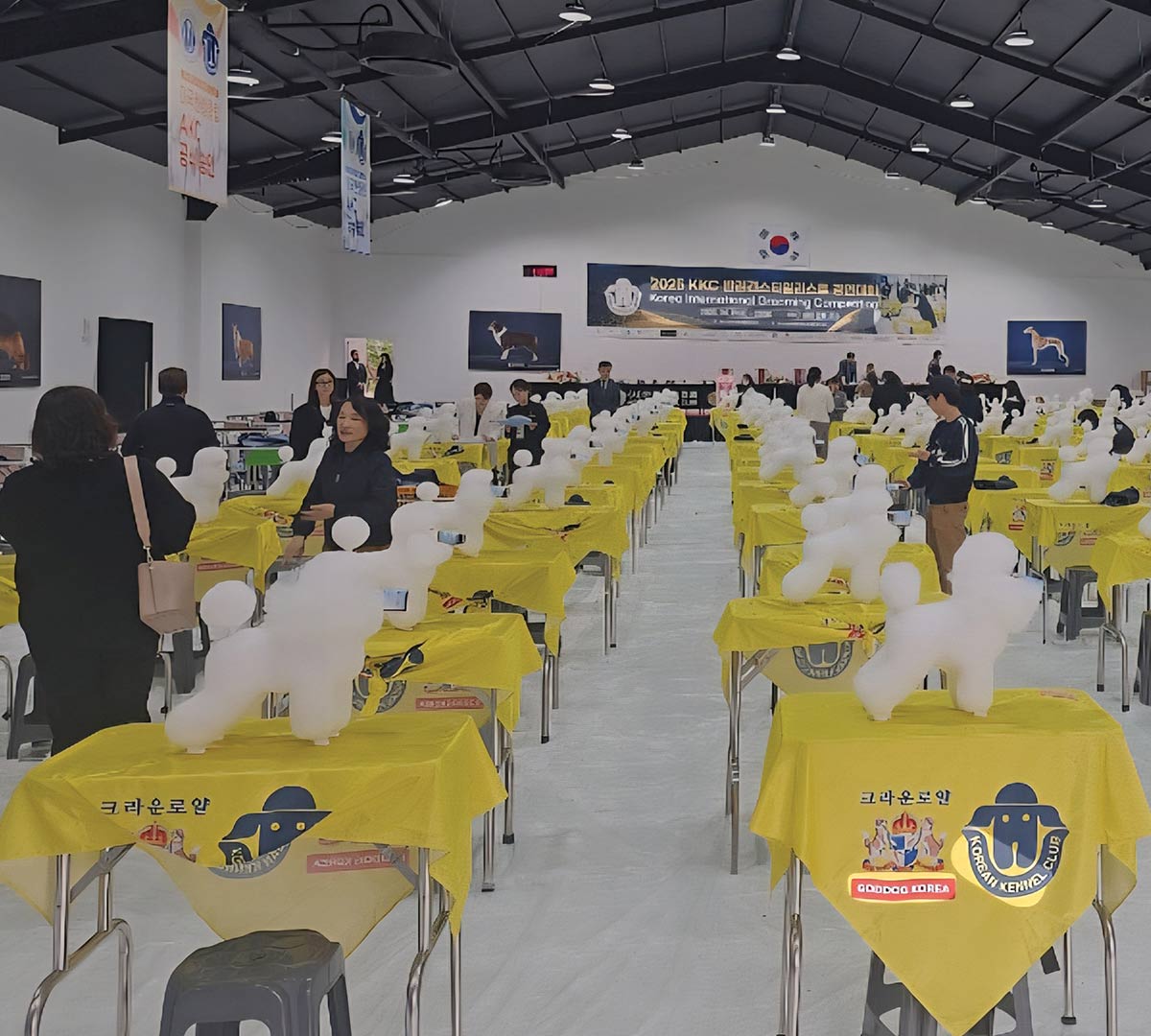
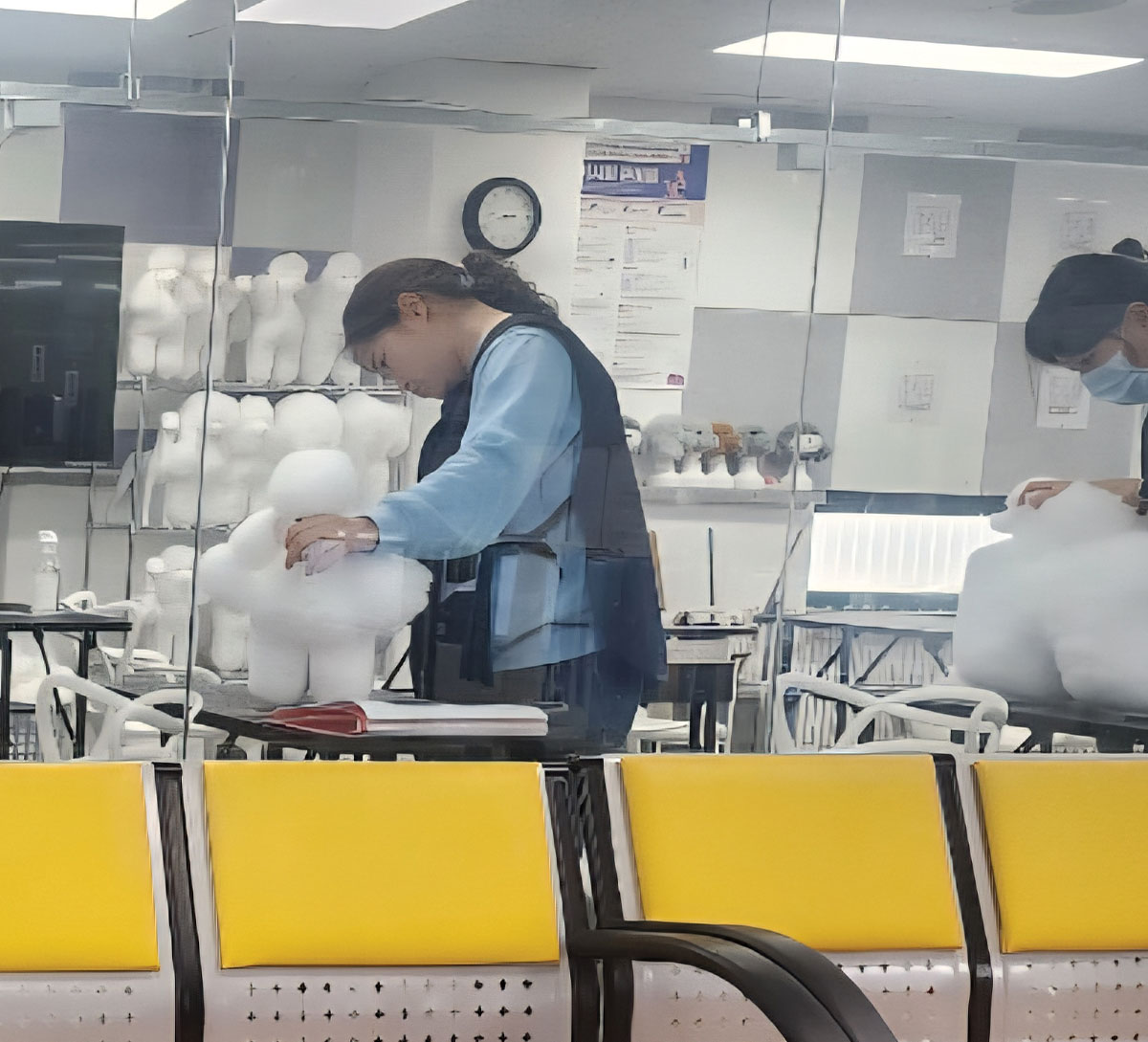
You see the same philosophy echoed in other Korean programs through the use of modeling heads, mannequins and repeated form practice. These tools allow students to make mistakes safely—no anxious dog, no pressure to rush, just repetition and refinement until the eye starts to recognize balance automatically. Muscle memory and visual memory get to develop together.
One educator whose teaching really resonates with me is Park Eun-taek (박은택). His approach consistently centers on finding the right haircut for the individual dog in front of you—not the trend, not the template, but the dog.
What I appreciate most is that his teaching prepares students to make their own decisions. Instead of defaulting to asking someone else what to do next, students are taught how to assess structure, evaluate balance and choose intentionally. That kind of training builds confidence fast. And not the loud kind, but the quiet kind that shows up when something does not go exactly as planned.
On a personal level, this style of teaching works incredibly well for my brain. Highly structured, visual learning environments reduce cognitive overload for me. When information is organized clearly and taught intentionally, I am able to absorb it more deeply and retain it longer.
Watching how Korean educators build their lessons helped me identify better ways to structure my own teaching. Since then, I have been more mindful about creating clearer frameworks for my students—visual references, defined decision points and predictable progression. And not to limit creativity, but to support it. When students feel grounded, they take more thoughtful risks.
Grooming education in the United States often leans more heavily on mentorship and hands-on learning from the very beginning. There are real strengths in that approach—especially when it comes to adaptability and relationship building—but it can also leave gaps, particularly for learners who need more structure to feel confident moving forward. This is not about one system being better than the other. It is about recognizing what each model does well and what we can borrow to improve how we teach.
At the end of the day, how groomers are taught shapes how they see the dog in front of them. When education prioritizes structure, visualization and decision-making, the haircut becomes more than a finished look. It becomes a thoughtful response to anatomy, lifestyle and communication. And once you start seeing that, it is hard to unsee.

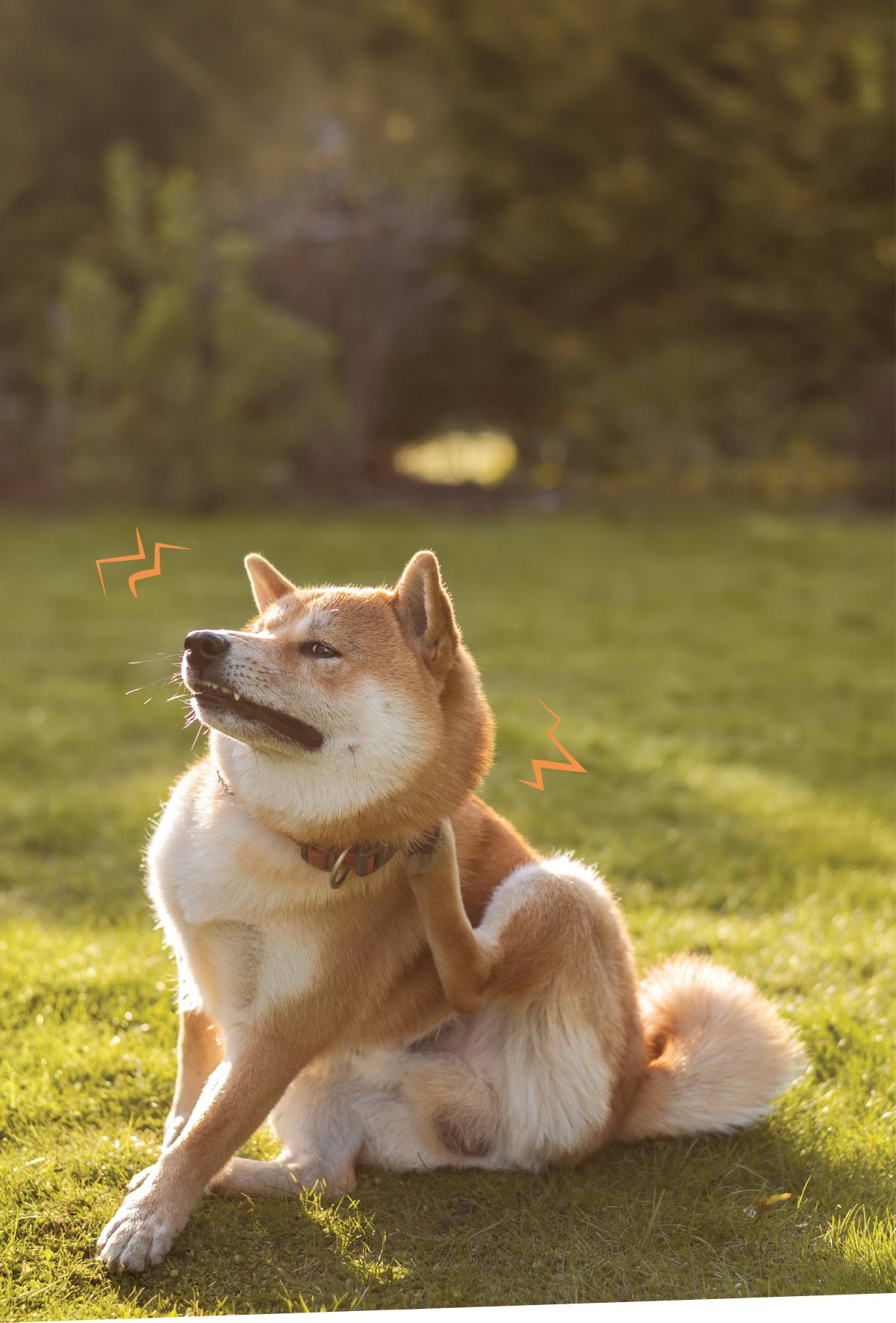
 llergy season is upon us, and many pets will soon be suffering from the spring bloom and changes in weather. However, our “allergy seasons”—spring and fall—are often accompanied by weather changes, particularly increased dryness. That raises an important question: Are we truly dealing with allergies, or are we dealing with dry skin?
One thing that always stands out to me is how veterinary dermatologists approach these so-called “allergy” cases. Their list of rule-outs typically includes environmental allergies, food allergies and parasites. But when fall arrives and we are complaining about our own dry skin, do we assume we all suddenly have allergies or parasites? Sometimes common sense needs to prevail.
Dermatologists emphasize that infections are almost always secondary, not the primary cause. It’s also important to remember that bacteria and fungi exist in competition; eliminate one, and the other often flourishes.
In an ideal world, once the primary “bug” is identified, it gives the veterinarian a starting point for treatment. I say starting point because many of the bacteria we see in skin infections are drug resistant.
Most of us are familiar with MRSA (methicillin-resistant Staphylococcus aureus), but in pets the more common concern is MRSP (methicillin-resistant Staphylococcus pseudintermedius). One dermatologist stated last year that 80% of his patients were MRSP-positive. With this in mind, when clients take their pets to the veterinarian for itching, it’s critical they request a culture and sensitivity test so treatment can be properly targeted.
In more refractory cases, or when autoimmune disease or cancer is suspected, a biopsy may be performed. This involves removing a full-thickness sample of skin so it can be fixed, sectioned and examined under a microscope. Biopsies are essential for diagnosing autoimmune diseases, sebaceous adenitis and many cancers.
It’s also important to note that a pet can test positive for an allergen without that allergen being the cause of their itching. Many of these reactions are subclinical, which likely contributes to the low success rate.
So, what about a definitive test for allergies? Unfortunately, there isn’t one. Allergies are a diagnosis of elimination—or, put another way, an educated guess—especially when dry skin isn’t even part of the conversation.
Treatment for these “allergies” commonly involves anti-itch medications such as steroids, Apoquel, Cyclosporine, Zenrelia or Cytopoint. Several dermatologists emphasized that Cytopoint, while effective for itch, does not function as an anti-inflammatory like the other drugs.
Most treatment protocols also include medication to address secondary infections. Food changes/trials may be recommended if food involvement is suspected, but this was not emphasized as strongly as other approaches.
Topical therapies are becoming increasingly popular in treating skin conditions. For resistant infections such as MRSA or MRSP, dermatologists recognize that topicals may provide benefit without the risks associated with strong systemic antibiotics. This is where many groomers were surprised.
Chlorhexidine was repeatedly recommended because, at a 3–4% concentration, it kills bacteria and fungi and has residual activity. That sounds great—until you consider what it does to the skin. You’re taking an itchy dog and applying a product known to dry and irritate healthy human skin. What outcome would you expect?
Repairing the skin barrier is paramount for long-term success. And replacing the skin’s oils is achieved through conditioners.
Anyone experienced with skin issues knows repairing the skin barrier is paramount for long-term success. And replacing the skin’s oils is achieved through conditioners. Yet in the last three years (and roughly 70 hours of continuing education), I have not heard a single dermatologist mention conditioners.
It’s also important to understand that dermatologists consider a 3/10 on the itch scale a successful outcome. But if you continue to be a good student of the science of hair and skin, and products and techniques, you can achieve results that go beyond what many dermatologists consider a good outcome. Groomers, you’ve got this—we aim for 0/10! &
Dr. Cliff Faver graduated with a BS in Biology/BA in Chemistry before getting a Veterinary degree in 1987. He is the past owner of Animal Health Services in Cave Creek, Arizona and now the US distributor for Iv San Bernard products, teaches the ISB Pet Aesthetician Certification program, and speaks internationally on hair and skin. His passion is to merge groomers and veterinarians to aid in helping and healing pets. He is also a member of AVMA, AAHA, AZVMA, Board member with Burbank Kennel Club, and has served on Novartis Lead Committee, Hill’s International Global Veterinary Board, and a Veterinary Management Group.


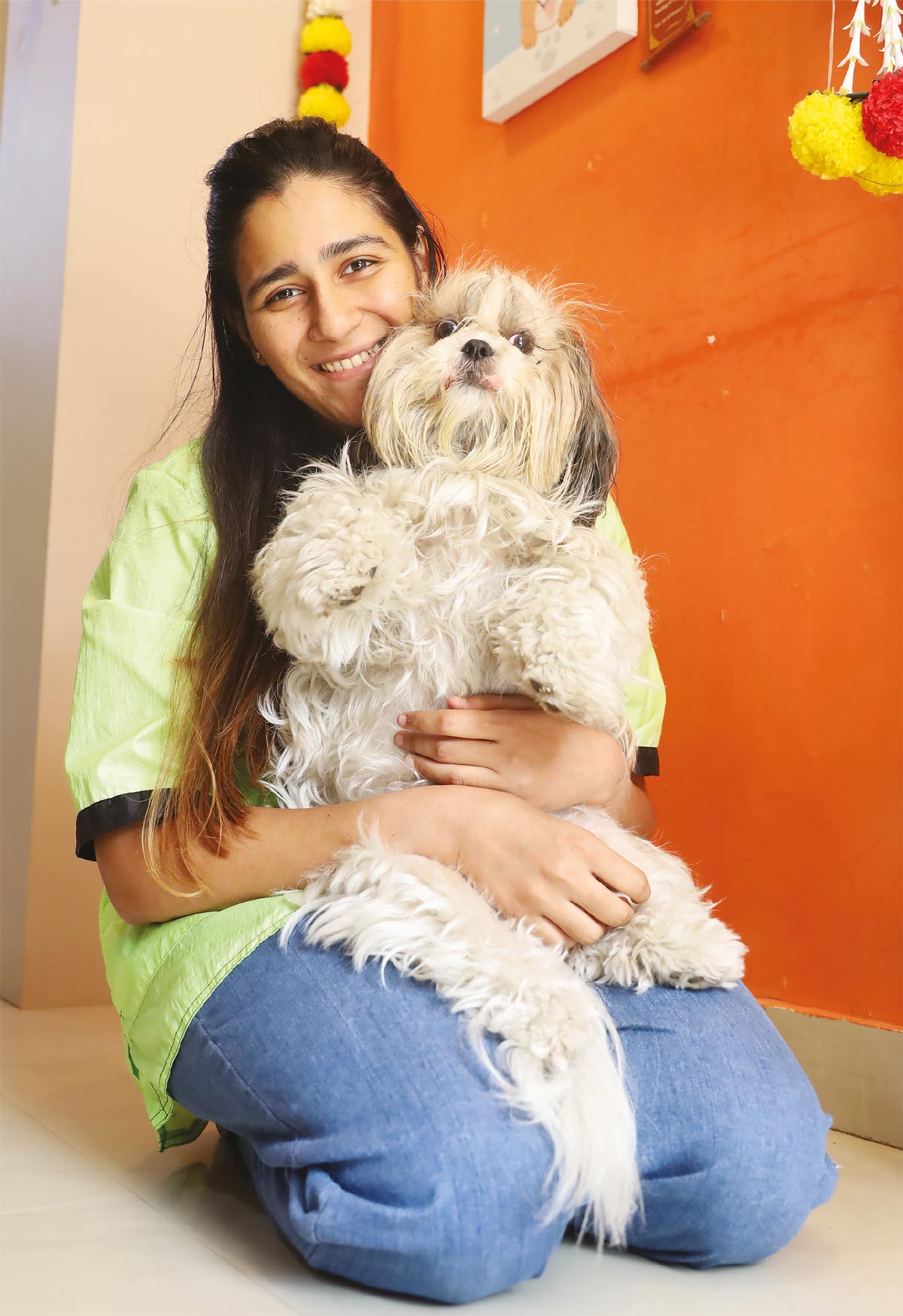
Photo provided by Niti Bavishi
 he nation of India and its place in the world is changing dramatically. Less than three years ago in 2023, India surpassed China as the largest nation in the world by population. And while it has historically had high rates of poverty, it is booming today as the world’s fifth largest economy.
Geographically, India is referred as a “subcontinent” because its slow northward movements into the Eurasian plate over the millennia are growing the Himalayan mountain range that separates India from the rest of Asia. Southern India is not far from Earth’s equator, keeping it warm or hot much of the year. Its location also means a heavy monsoon season every year. This affects the kinds of grooming issues they face.
One wonderful groomer from India, Niti Bavishi, came to the U.S. with family members who were working and studying in the Chicago area, where I had newly opened my salon and was also running a small grooming school. Niti was one of my first trainees, but she quickly grew to be a friend for life. She was also one of the best groomers I have ever trained, as she was a natural artist and fabulous with the dogs.

Another challenge India faces is the stray dog population. With estimates as high as 70 million free-ranging dogs, India has the largest population on earth.
Upon her return to India, Niti opened her own grooming salon, The Woof Bond, in Ghatkopur East, Mumbai, which she has successfully run for many years now. She also works to grow the grooming profession in India by helping to train young people to become groomers and has started getting involved in competitive grooming. India has its own grooming associations, such as the Professional Pet Grooming Association of India (PPGAI),1 and even some trade shows with competitions, including the India International Pet Trade Fair (IIPTF).2
Niti reports that her greatest grooming challenges are dealing with a common “skin and coat funk” that she sees in many of her client dogs. These skin conditions are a result of the challenges of a very populous, polluted and crowded city, as well as the climate effects of the monsoons. Damp conditions encourage fungal infections, bacterial growth, matting and unpleasant odors, while also triggering allergies.3
Niti has worked to develop the treatments needed to address these skin issues and is having some success with her therapies, including acquiring a Japanese-made microbubble machine for deep-cleaning her client dogs.
Another challenge India faces is the stray dog population. With estimates as high as 70 million free-ranging dogs, India has the largest population on Earth. These medium-sized dogs often have sturdy builds and short coats in various colors, helping them adapt to the Indian climate. Many street dogs trace their lineage to the ancient Indian Pariah Dog and exhibit adaptive behaviors for survival.4
While these free-ranging street dogs are not typically Niti’s grooming clients, similar to in the U.S., she sees mostly purebred or mixed breed dogs like doodles. She reports that drop coats are her most common clients, but other breeds are also popular, including Siberian Huskies, who have seemingly evolved away from their thicker arctic triple coats and feature a standard double coat such as that found on a shepherd to better tolerate the hot climate.
Niti spoke with concern about what she fears are cruel government plans to deal with the staggeringly large street dog population. For example, the news in India reported: “On August 11, 2025, a two-judge bench of the Supreme Court of India . . . passed an order requiring municipal authorities in and around the region of Delhi and the National Capital Region (NCR) to pick up and relocate all stray dogs in the area (estimated to be around one million) to shelters and pounds that were to be ‘immediately’ and ‘simultaneously’ created.”5
The Supreme Court further emphasized that, “In no circumstances, should these stray dogs after their relocation be once again released back onto the streets.” And that, “If any individual or organization comes in the way of forceful picking up of the stray dogs and rounding them up . . . we shall proceed to take the strictest of actions against any such resistance which may be offered.”6 This order had followed the death of a six-year old girl from rabies.
The more traditional approach that uses a trap-neuter-release method has only been done sporadically and would have to be done more consistently to be effective. Both WOAH (World Organization for Animal Health) and the WHO (World Health Organization) prefer CSVR instead—“catch, sterilize, vaccinate, return.”7 These programs help introduce herd immunity, especially against Rabies. This would be a massive and expensive effort but the best for the dogs as well as the people of India.
With the tireless efforts of dog advocates, organizations and groomers like Niti, the future is looking bright for the dogs of India.

- Professional Pet Grooming Association of India. https://www.ppgai.com/
- India International Pet Trade Fair. https://iiptf.in/
- The Effects of Seasonal Monsoon Humidity on Pet Skin and Fur Care. https://www.rpets.in/articles/2899/the-effects-of-seasonal-monsoon-humidity-on-pet-skin-and-fur-care
- India’s Street Dogs: Population, Public Health, and Policy. https://biologyinsights.com/indias-street-dogs-population-public-health-and-policy/
- In The Supreme Court Of India Extraordinary Original Jurisdiction Suo Moto Writ Petition (C) No. 5 Of 2025. https://api.sci.gov.in/supremecourt/2025/41706/41706_2025_8_31_63158_Judgement_11-Aug-2025.pdf?
- India’s Supreme Court Tackles Issue of Stray Dogs. https://animal.law.harvard.edu/news-article/indias-supreme-court-tackles-issue-of-stray-dogs/
- Dog Population Management. https://www.woah.org/fileadmin/Home/eng/Health_standards/tahc/current/chapitre_aw_stray_dog.pdf



 f you’ve been in the grooming industry long enough, you’ve probably had at least one conversation you dreaded. Maybe it was telling a long-time client their dog could no longer be groomed safely, or maybe it was addressing a staff member who was chronically late, cutting corners or bringing negative energy into the salon. These conversations don’t come with a script, and most groomers aren’t trained for them, but they are a necessary part of running a professional business.
The problem is that avoidance doesn’t make issues disappear, it only allows them to grow. Difficult conversations are about leadership, clarity and protecting the health of your business—not about confrontation.
When expectations aren’t clearly communicated, staff become confused, policies are applied inconsistently and clients begin to push boundaries. Over time, this creates resentment, burnout and a feeling that you’re constantly putting out fires.
Preparation keeps emotions from taking over and helps you stay focused on the outcome instead of the discomfort.
Just as uncomfortable can be difficult employee-facing conversations, which can include topics such as attendance and punctuality issues, performance concerns, attitude or professionalism, policy violations, and clarifying roles, responsibilities or boundaries.
These situations don’t mean you’re failing as a business owner or leader—they simply mean you’re running a business that involves people, and people require communication.
Before the conversation, ask yourself: What specifically needs to change? What does success look like after this conversation? And what boundary or expectation needs to be reinforced?
This isn’t the time to unload every frustration you’ve been holding onto. Focus on one issue and one outcome. For staff issues, having frequent one-on-one meetings allows you to discuss concerns and bring up issues before the need to have a more challenging conversation.
Documented examples, dates, and policies keep conversations grounded and professional. It is important that you have clear examples of any issue that is being brought up. If not, employees could feel that you are picking on them or that personal feelings are what is behind the difficult conversation.
If your salon does not have an office or private room for employee conversations, consider going to a coffee shop, asking them to come in a few minutes early or stay a few minutes after their shift, or taking a walk outside if the weather is pleasant enough. If speaking with a client, avoid doing it in front of other clients or staff members.

- Open with purpose. Start by explaining why you’re having the conversation: “I want to talk about something important so we can make sure we’re on the same page.” This sets the tone without sounding accusatory.
- State the facts clearly. Describe what happened using observable facts: “Over the last month, you’ve arrived late five times without notice.” Avoid exaggerations like “always” or “never.”
- Pause and listen. Give the other person space to respond. Listening doesn’t mean agreeing, it means allowing them to feel heard. Interrupting or defending yourself too quickly often escalates emotions.
- Set clear expectations and the impact they have if not met. Be specific about what needs to change: “Moving forward, start times are non-negotiable. When you are late for a shift it puts extra pressure on the rest of the team and it creates an unsafe situation for the pet when you are rushing to get caught back up.”
- Close with support. You can be firm without being harsh: “I want you to succeed here, and I’m happy to support you, but this expectation needs to be met.” End with clarity, not uncertainty.
Over-apologizing can unintentionally suggest wrongdoing where there isn’t any. Stick to calm, neutral language and let the facts speak for themselves. When leaders are not sure of the situation, it can be tempting to fill all the empty space by talking. Thinking about the conversation and planning ahead for it can help alleviate this.
If emotions escalate, pause and slow the conversation, repeat key points calmly, avoid matching their emotional intensity and, if necessary, suggest taking a break and revisiting the conversation later.
Avoiding hard conversations creates mental clutter. You replay situations in your head, question your decisions and carry unresolved tension into every workday, and that stress adds up. By addressing issues quickly and having consistent communication, you can reduce resentment, prevent misunderstandings and protect the energy in your salon.
Leadership isn’t about being harsh, it’s about being clear, fair and consistent. When expectations are known, everyone can do their job with confidence. Every tough conversation you have builds confidence and strengthens your leadership skills. And over time, these conversations become less intimidating.
The art of the difficult conversation isn’t about saying the perfect thing, it’s about showing up with clarity, professionalism and respect. And that is what builds a strong, sustainable grooming business.




by Keith Loria
Photos provided by Maria Zakharchenko
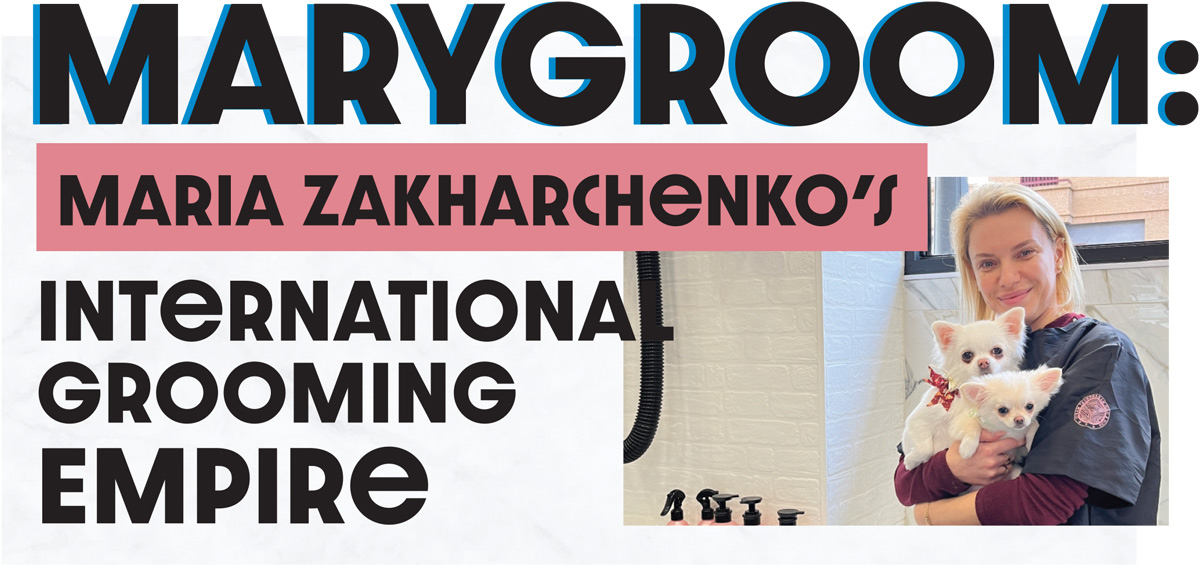
 aria Zakharchenko always knew her career would involve animals. She trained as a veterinarian in Ukraine, earning a diploma as a doctor of veterinary medicine and preparing for a life in clinics and surgery rooms. But when she became a mother, the realities of veterinary medicine—its urgency, emotional weight and constant demand for continuing education—began to conflict with the balance she wanted for her family.
Looking for a profession that would still keep her working hands-on with animals, she began exploring grooming. The nearest place at the time where she could study the craft was in Moscow, so this is where her grooming journey began nearly 20 years ago.
“After two or three months, I understand that grooming is much more comfortable for me,” Maria shares. “I still work with animals, but animals will not die during grooming.”
Her decision wasn’t about avoiding responsibility, but about choosing the kind of responsibility that fit her life. Veterinary work requires immediate action. Animals can’t wait days—or even hours—for treatment. Grooming, by contrast, allowed flexibility.
Another difference was the emotional burden. As a veterinarian, Maria often saw animals suffer unnecessarily because owners didn’t follow medical advice. Grooming offered clearer boundaries.
by Keith Loria
Photos provided by Maria Zakharchenko
aria Zakharchenko always knew her career would involve animals. She trained as a veterinarian in Ukraine, earning a diploma as a doctor of veterinary medicine and preparing for a life in clinics and surgery rooms. But when she became a mother, the realities of veterinary medicine—its urgency, emotional weight and constant demand for continuing education—began to conflict with the balance she wanted for her family.
Looking for a profession that would still keep her working hands-on with animals, she began exploring grooming. The nearest place at the time where she could study the craft was in Moscow, so this is where her grooming journey began nearly 20 years ago.
“After two or three months, I understand that grooming is much more comfortable for me,” Maria shares. “I still work with animals, but animals will not die during grooming.”
Her decision wasn’t about avoiding responsibility, but about choosing the kind of responsibility that fit her life. Veterinary work requires immediate action. Animals can’t wait days—or even hours—for treatment. Grooming, by contrast, allowed flexibility.
Another difference was the emotional burden. As a veterinarian, Maria often saw animals suffer unnecessarily because owners didn’t follow medical advice. Grooming offered clearer boundaries.
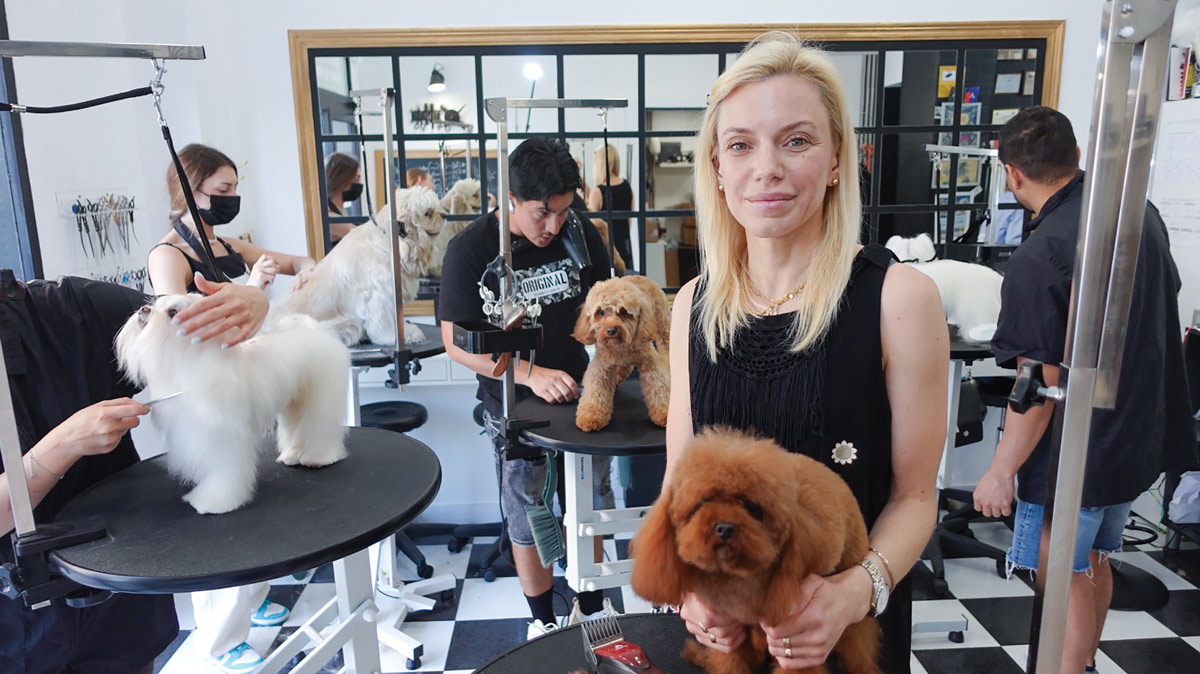
That clarity, combined with her love of animals and strong technical foundation, helped her commit fully to grooming—and to advancing quickly.
In 2009, Maria entered her first grooming competition. She finished in second place, an achievement that changed everything.
“After that, I decided to move on and open my own grooming salon,” Maria recounts.
By the end of that year, she had done exactly that, launching her first salon in Ukraine. From there, growth came steadily but deliberately. Maria continued competing internationally, traveling to seminars and championships across Europe and beyond to refine her skills.
“Every year I went to different countries to improve my skills,” she notes. “It helped me a lot.”
Competitions weren’t just about medals for Maria, though. They were about discipline, preparation and understanding breed standards at the highest level. Those lessons became the foundation for her business expansion.
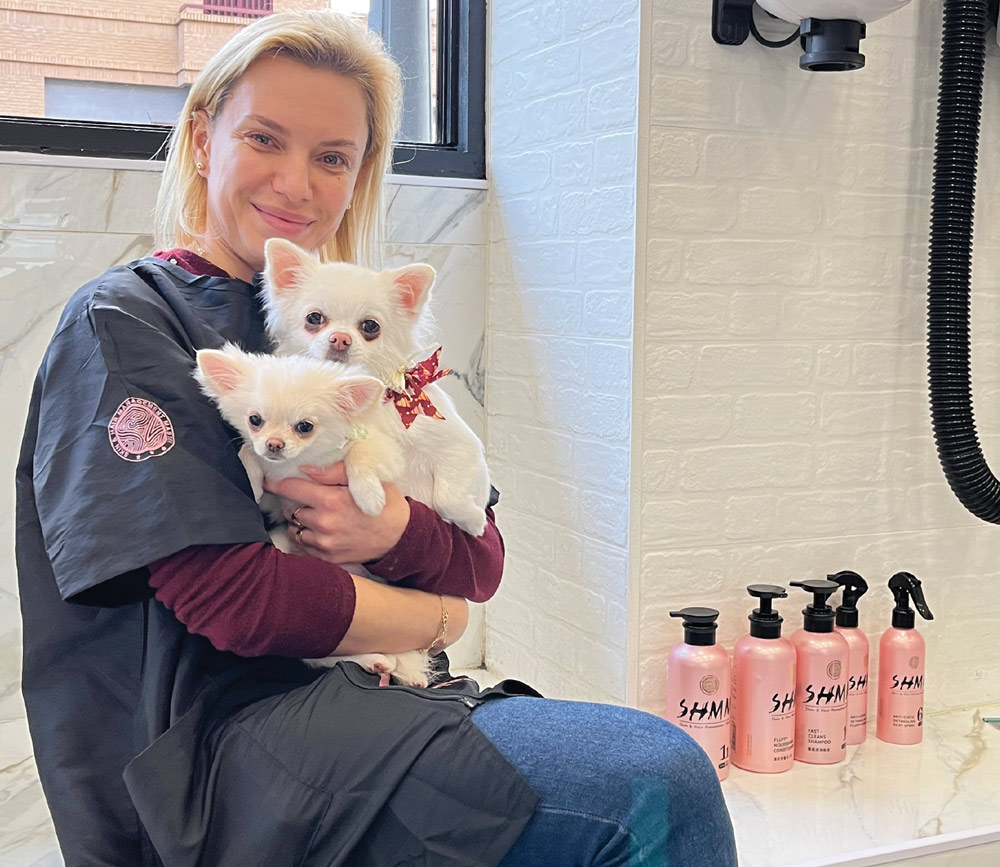
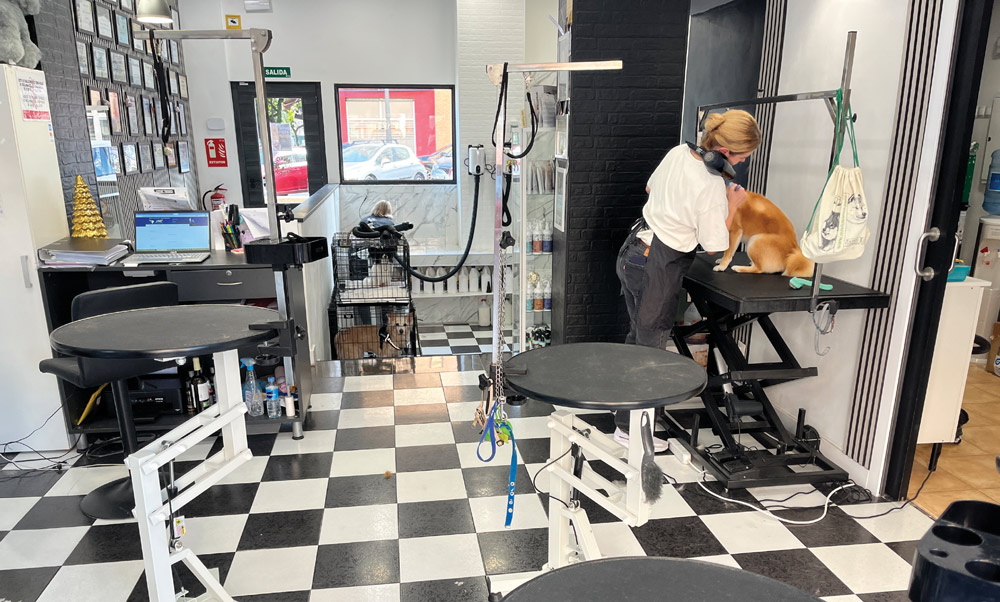
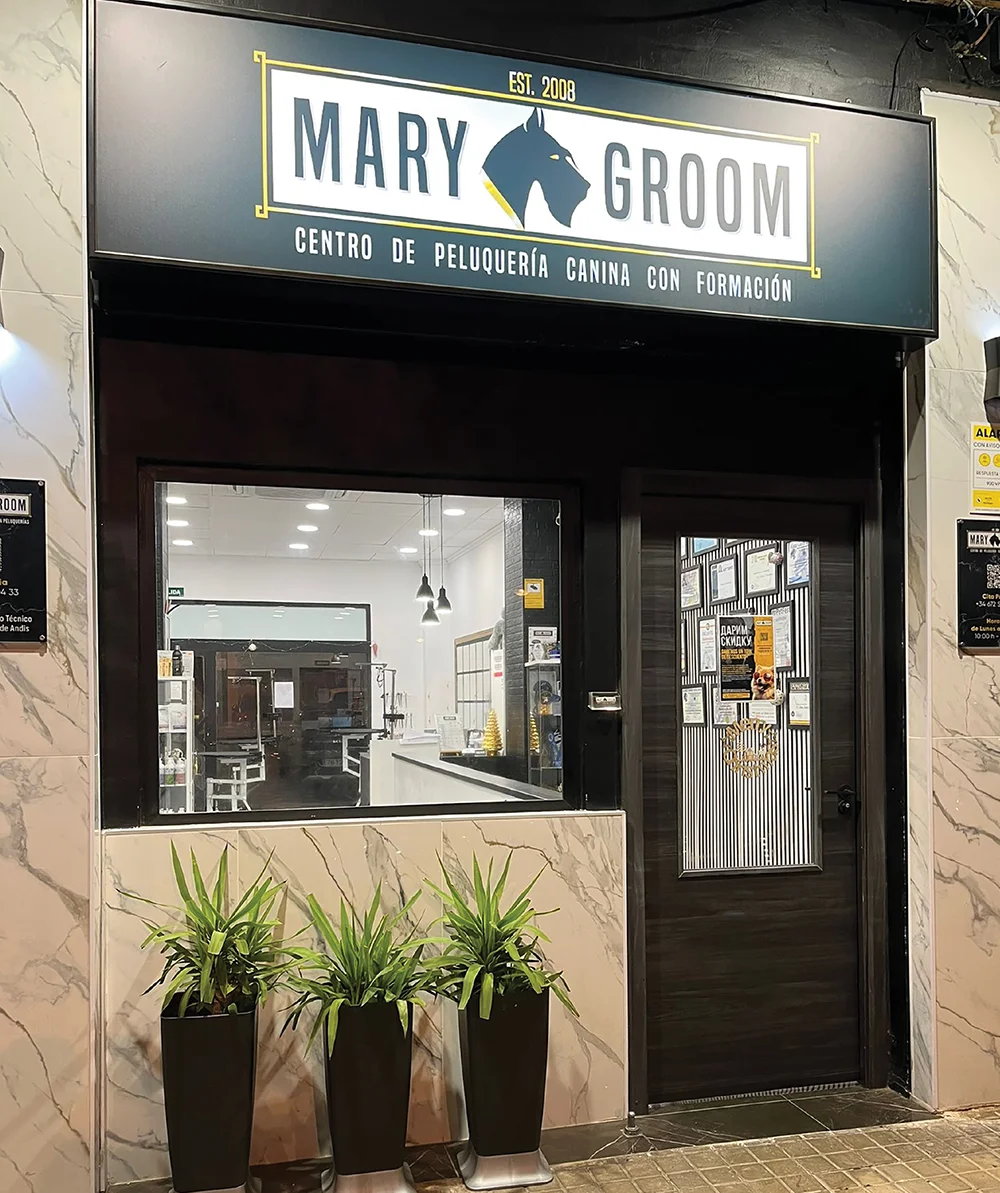
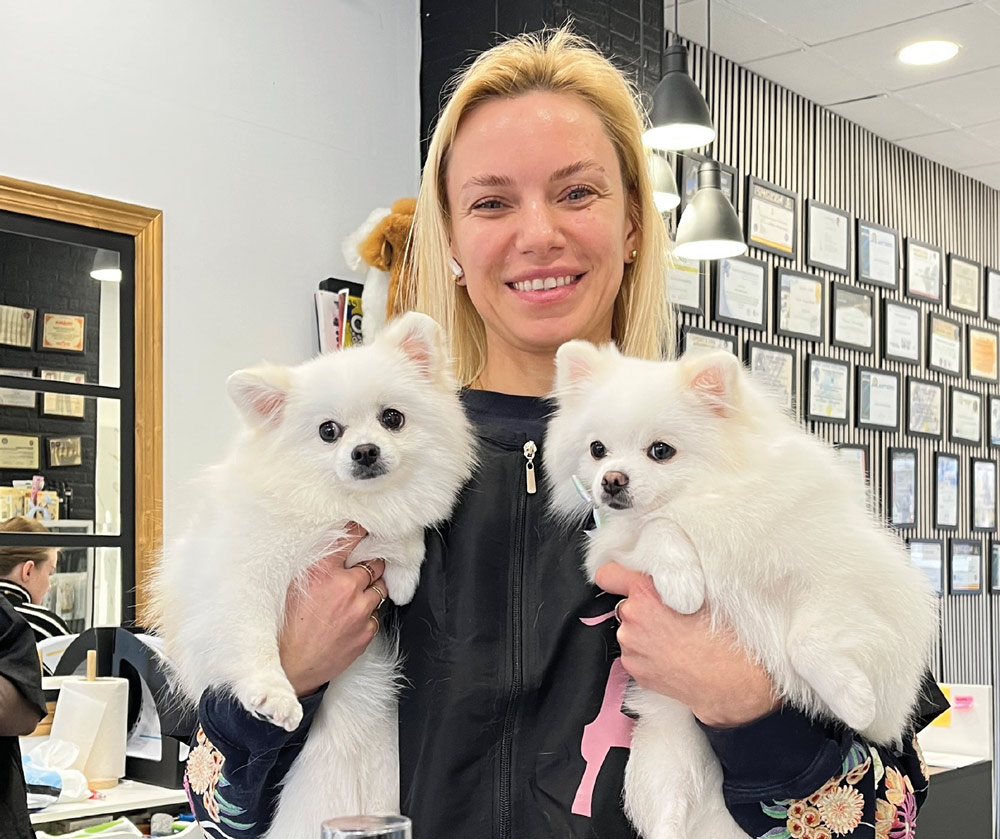
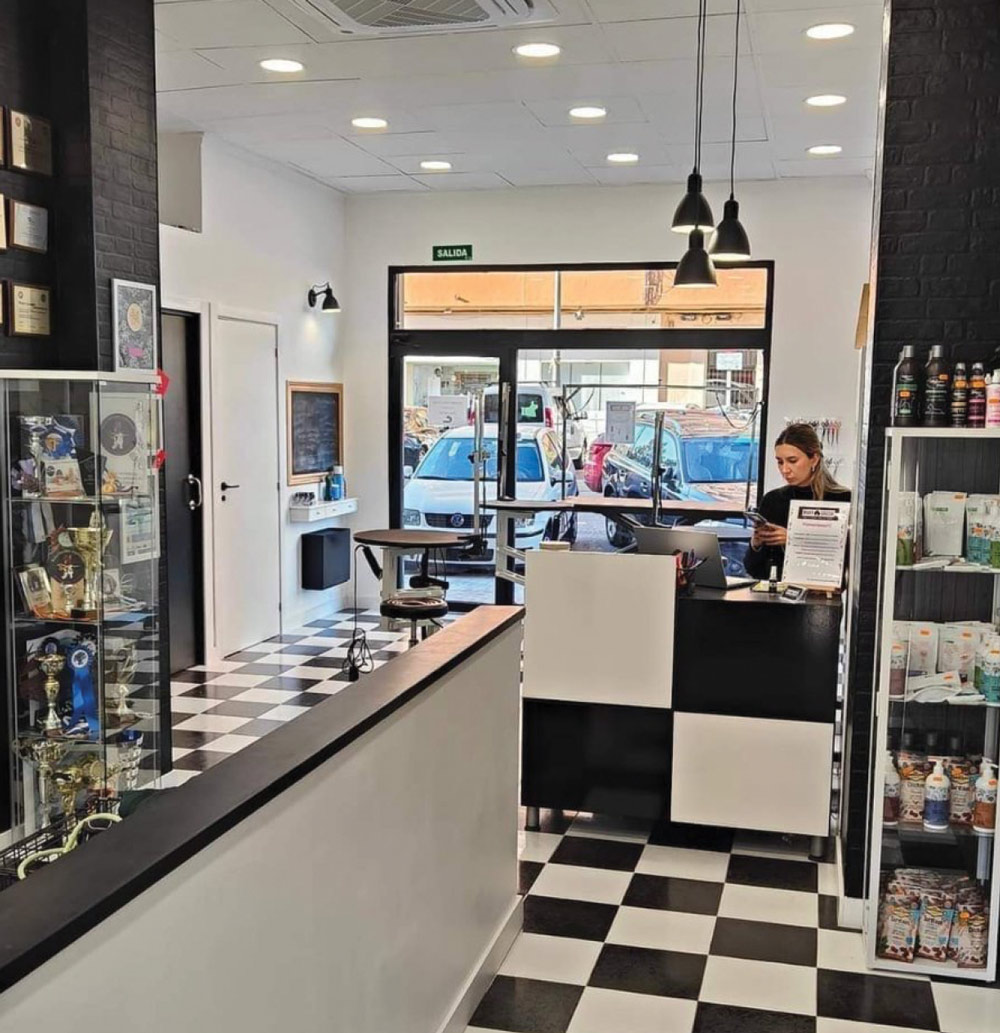
Alongside the salons, she launched MaryGroom, a grooming school that trained professionals across the region, as well as a grooming tools retail store and service center.
Maria’s influence and expertise extended even further, leading her to create her own grooming magazine, Groom Service, in 2014.
“I was editor of the magazine, and it was the only grooming magazine in Ukraine,” she shares. “I have my husband and he helps me with my son. That’s why I can grow little by little.”
A few years later, Maria made a major life change, relocating to Valencia, Spain. At first, she assumed her experience would translate easily. But after working briefly as an employee in Spanish grooming salons, she realized the reality was more complex. Customer expectations, grooming styles and even business regulations differed significantly.
“It’s another mentality,” Maria explains. “Different needs for grooming and different needs for customers.”
Instead of rushing to open her own salon, she took a step back. For seven years, Maria worked in three different grooming salons and a grooming school, learning the Spanish market from the inside.
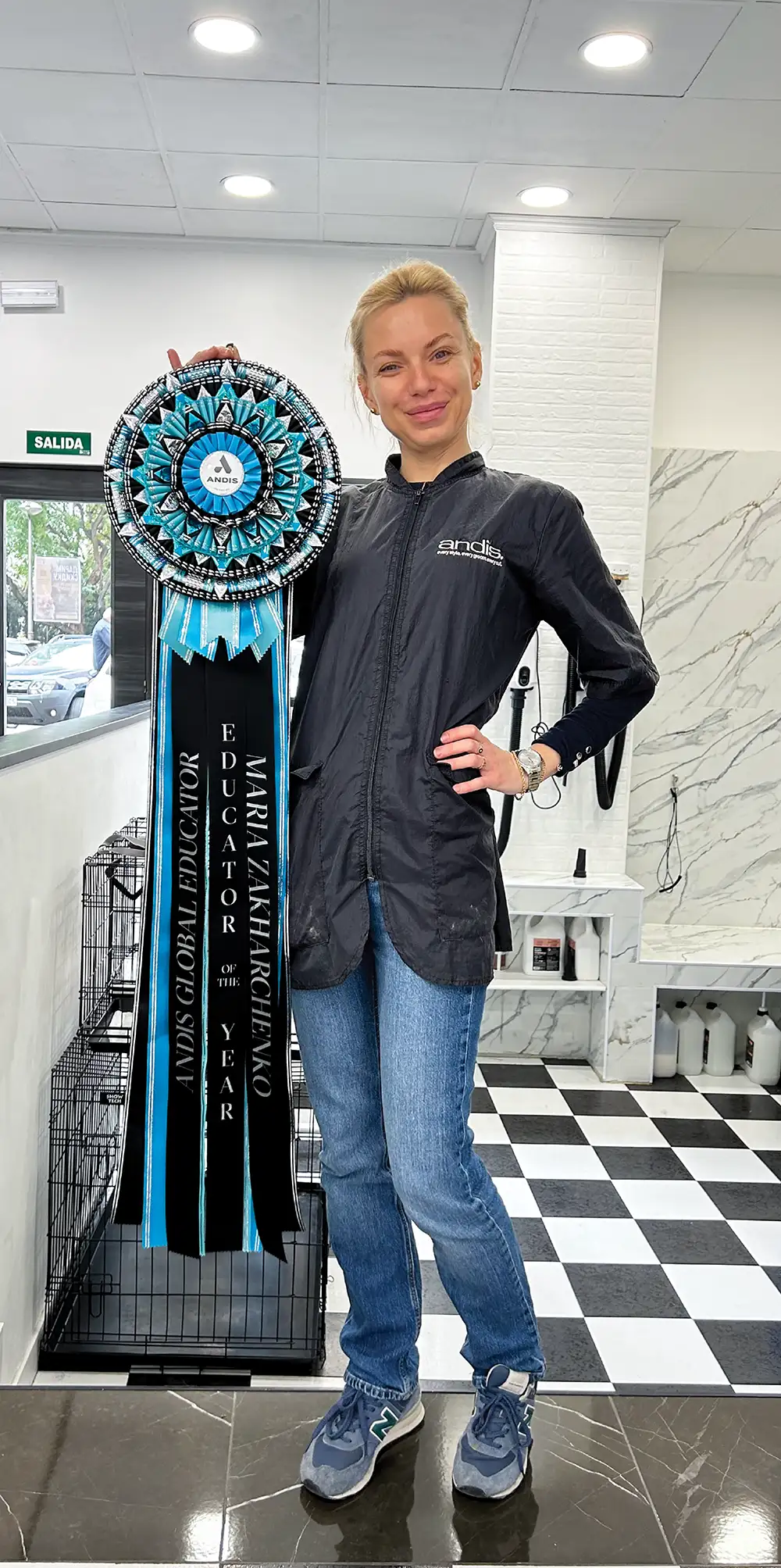
Her academy, officially launched in its current form in 2023, offers diplomas recognized by the Spanish government. It is also an official grooming school powered by Andis—something she notes is unique globally.
In addition, the business functions as an official Andis service center in Spain. Maria’s husband plays a key role here, providing sharpening services for groomers and barbers.
“It’s very important for professionals to have service and sharpening in one place,” she notes.
Alongside running her business, Maria has become a prominent educator and judge. She works internationally with Andis as an educator and ambassador and collaborates with scissor brands and cosmetic companies across Europe and Asia.
In recent years, she also began working with Nash Grooming Academy in the United States, allowing her to certify groomers under its system and serve as a judge and educator for the organization. As a judge, Maria says she looks for fundamentals first.
“Preparation of the dog is very important,” she expresses. “Coat must be properly washed, dried, brushed, and straightened. Nails, hygiene areas, and ears must be handled correctly before style is even considered.”
From there, Maria evaluates balance and symmetry. She is also firm about accountability.
“You don’t need to find excuses; you should be proud of your work,” she adds.
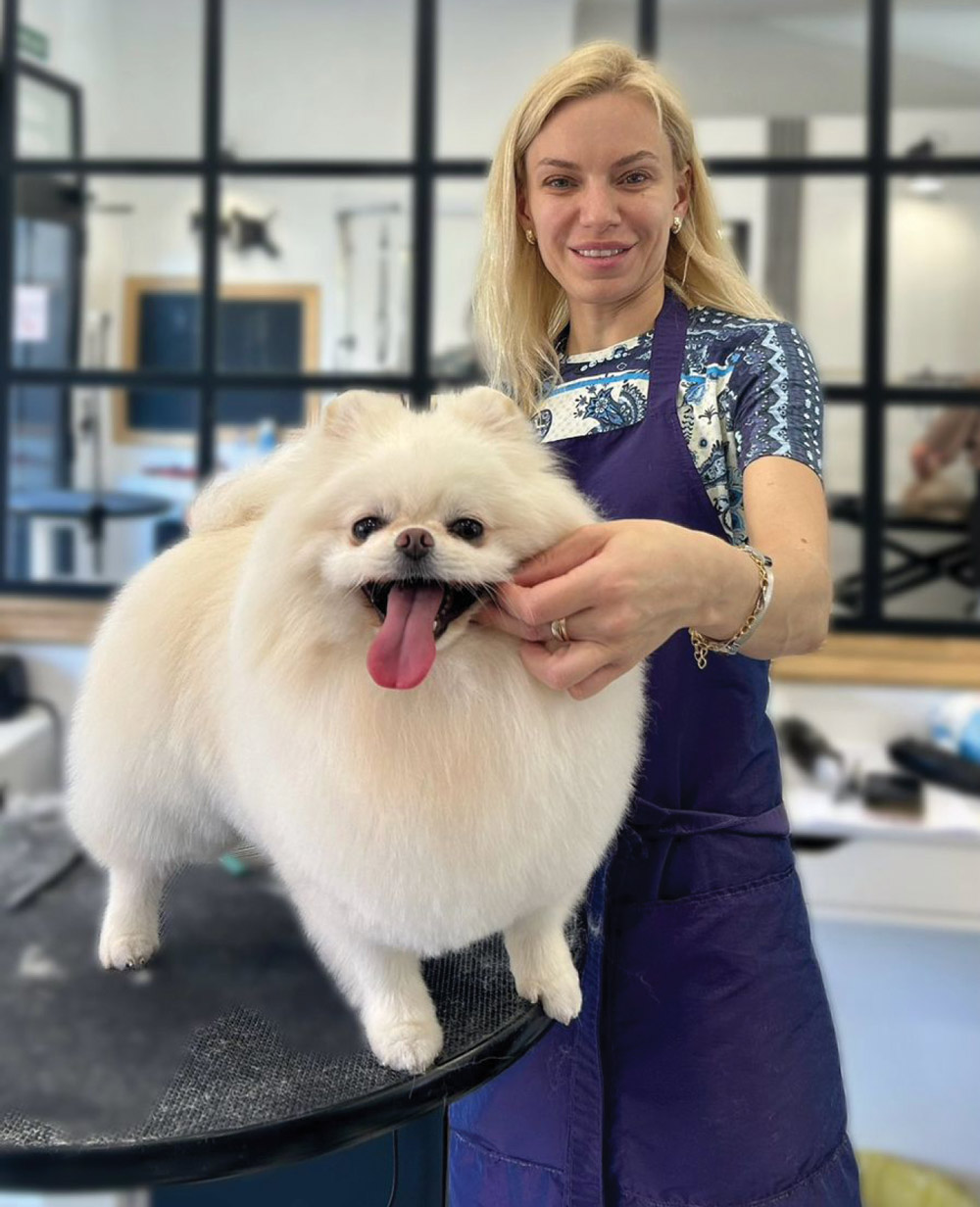
“In Europe and the U.S., groomers typically work within tight time limits—often 90 minutes to two hours per dog,” she explains. “In parts of Asia, groomers may spend three to four hours on a small dog.
“They focus more on the face and expression,” she continues. “Body coats may be shaved simply, while the head receives extensive detail work. Asian groomers often use shorter scissors and cut primarily with the tips, while Western groomers tend to use longer shears and broader strokes.”
While she believes every groomer should be versatile, Maria acknowledges that most professionals have favorite breeds. For her, those include Bichon Frise and American Cocker Spaniels.
In her salon, each groomer may have a specialty—cats, poodles, hand stripping—but Maria’s expectations remain high.
“They must do all breeds, and also cats, and also trimming,” she explains.
Despite all her accomplishments, Maria says grooming always offers room to grow. Her current focus is expanding online education, including webinars on building profitable grooming salons and succeeding in grooming competitions. These programs are available in multiple languages to reach groomers globally.
She is also preparing to launch a franchise model for both salons and grooming schools. Interest has already come from countries including Germany, Romania and the Czech Republic.
Above all, though, Maria wants groomers to respect the business side of their profession.
“Grooming is not just play with dogs,” she says. “It’s business and it should earn money.”
For Maria, success has come from blending passion with precision and artistry with structure. From veterinary medicine to grooming education, her career reflects a belief that caring for animals also means building systems that support professionals.
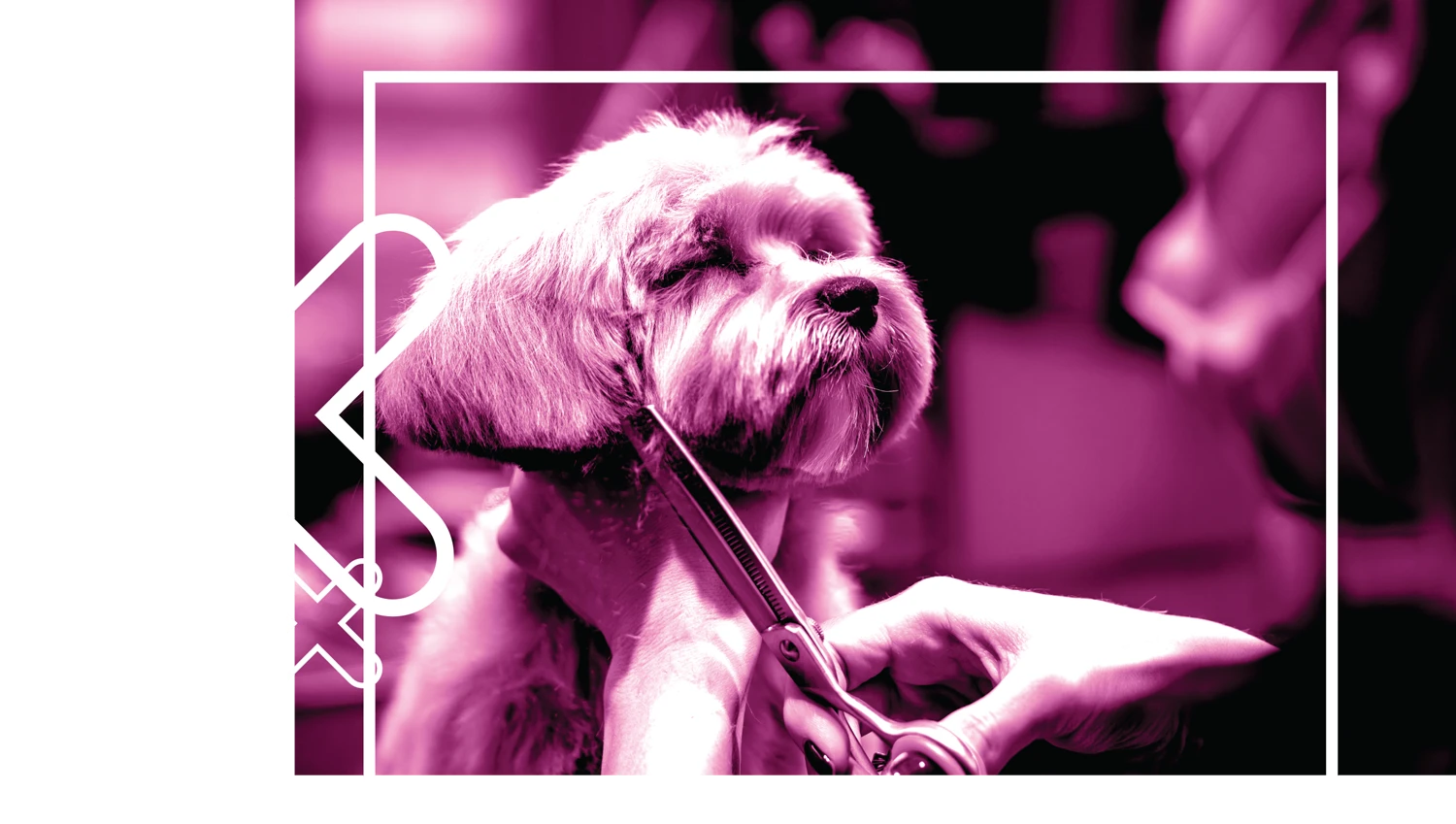




 t’s time to talk about our favorite tools again: shears! Straights, curves, thinners, chunkers—there’s no shortage of love between groomers and their favorite tool. Here in the U.S., they’re almost taken for granted, but what about shears around the world? What are the differences and similarities between North American groomers and their shears and groomers elsewhere in the world?
East Asia has given us the ever-increasing popularity of Asian fusion grooming, but how is their relationship with shears different than ours? It starts at the very beginning, in training…
It’s common practice in many Asian countries to train for six months to a year before even starting work with a dog. The focus is on shear control, working on fake fur and building muscle memory scissoring with straight shears to turn columns into squares, then octagons, and finally round. The training is more on shears and prep work, often leaving clipper work as almost an afterthought.
Focusing on training and building skills with our favorite equipment before handling sharp things and wiggly pups seems like a fantastic idea. It lets groomers in training focus on being able to control one thing at a time and builds confidence with grooming skills before having to learn behavior and handling as well.
We also tend to be shear collectors, which you are less likely to see in Asia. Instead of purchasing multiple shears for their “disposability” or looks, more money is spent on a single high-quality set, with perhaps one set of lower-quality backups.
The type of shears that make up our arsenal differ by region as well. In South America, chunkers are much more frequently used from start to finish, resulting in a finish that’s not as crisp or sharp. Meanwhile in Asia, straights, curves and fluffers are used over thinners, with chunkers being a rarity. We might be more used to fluffers being referred to as hybrid or speed thinners, and they leave a line similar to what a straight shear would, just a little softer and not as aggressive as a chunker.
Preferred length also varies based on location. Our standard eight-inch shears are rare; six and six-and-a-half are more common in Asia.
How we use our shears and what shears we use may vary wildly, but the key to getting a good scissor finish is universal across the globe: prep, prep, prep. Those beautiful hand-scissored Asian fusion grooms are impossible without a properly prepped dog.
Many groomers, including myself, have worked in salons without a fluff-dryer in sight, where we struggled to get that crisp, plush finish, beating ourselves up for lack of scissor skills. However, many of us have gotten so used to not having them around, or hating their awkwardness, that we’ve developed techniques to almost mimic a fluff-dry.
Fortunately, technology has come a long way from those large, bulky stand dryers that seem to get tripped over more than used. They are now small and affordable enough to be added to any mobile or house-call setup. Fluff-drying and a good comb are as essential to a good scissor finish as a quality pair of shears.
While not directly shear related, another interesting difference is how salons tend to be structured. Much like human hair salons here, pet stylists overseas are often assigned an A to C ranking system, with prices structured accordingly. Want a fancy haircut for your dog and have the budget to match? Book with an A stylist. This month’s budget tight but your dog still needs to be groomed? You can book with a C-level stylist. There is, of course, room for the stylists to improve and move up in the rankings.
While we all don’t have the ability to globe trot, seeking out the latest trends and styles across the world, we still have amazing trade shows, publications and educators that can bring that information to us. What a wonderful time to be a pet stylist!

www.GroomExpoWest.com




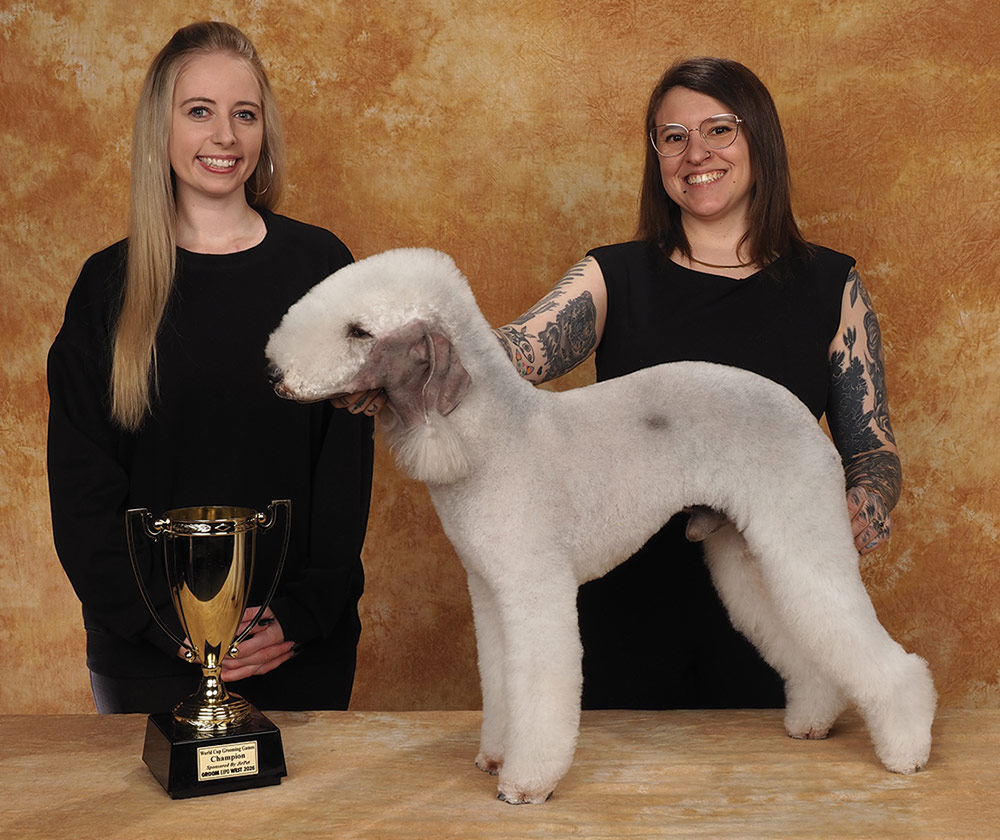
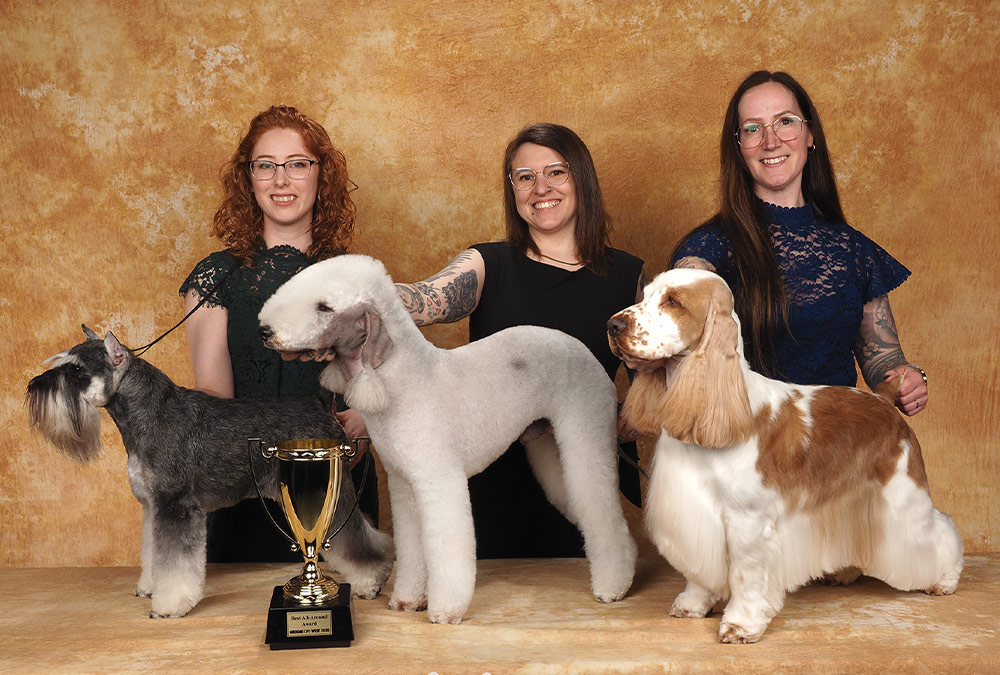
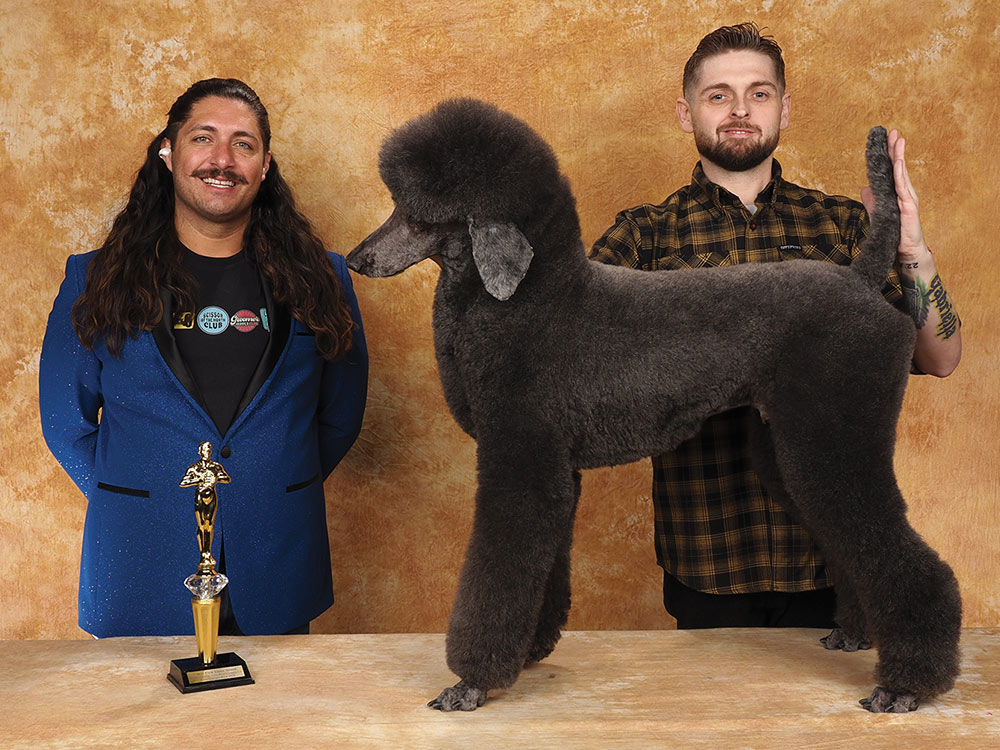




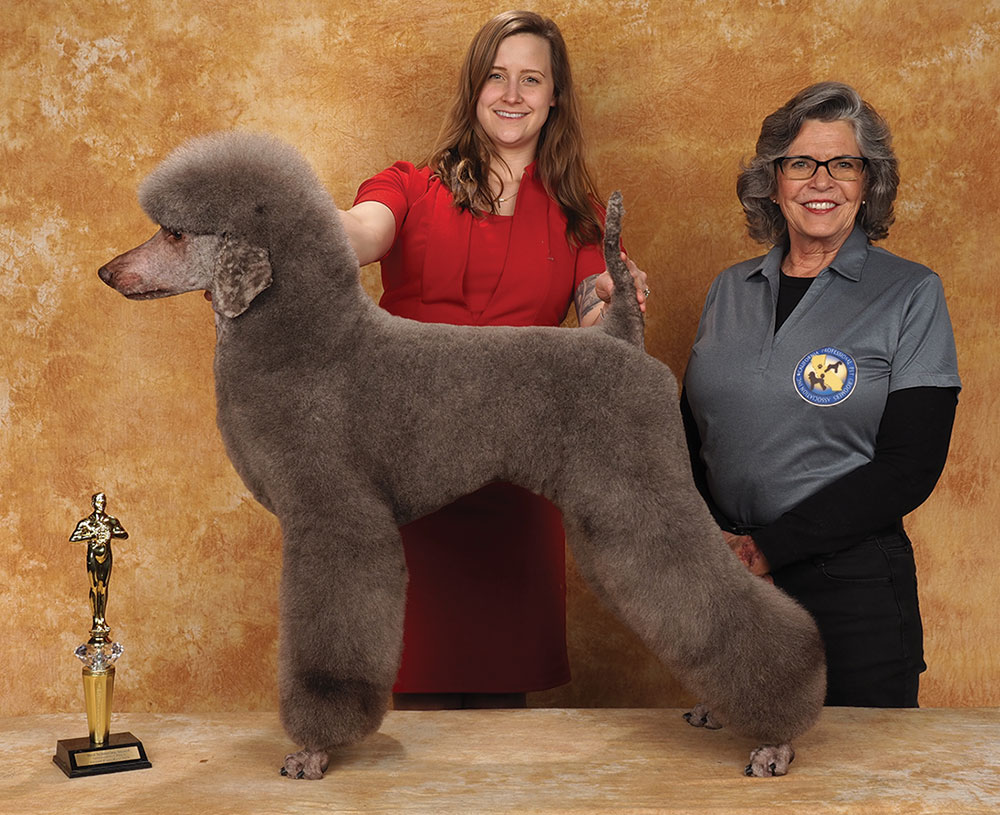
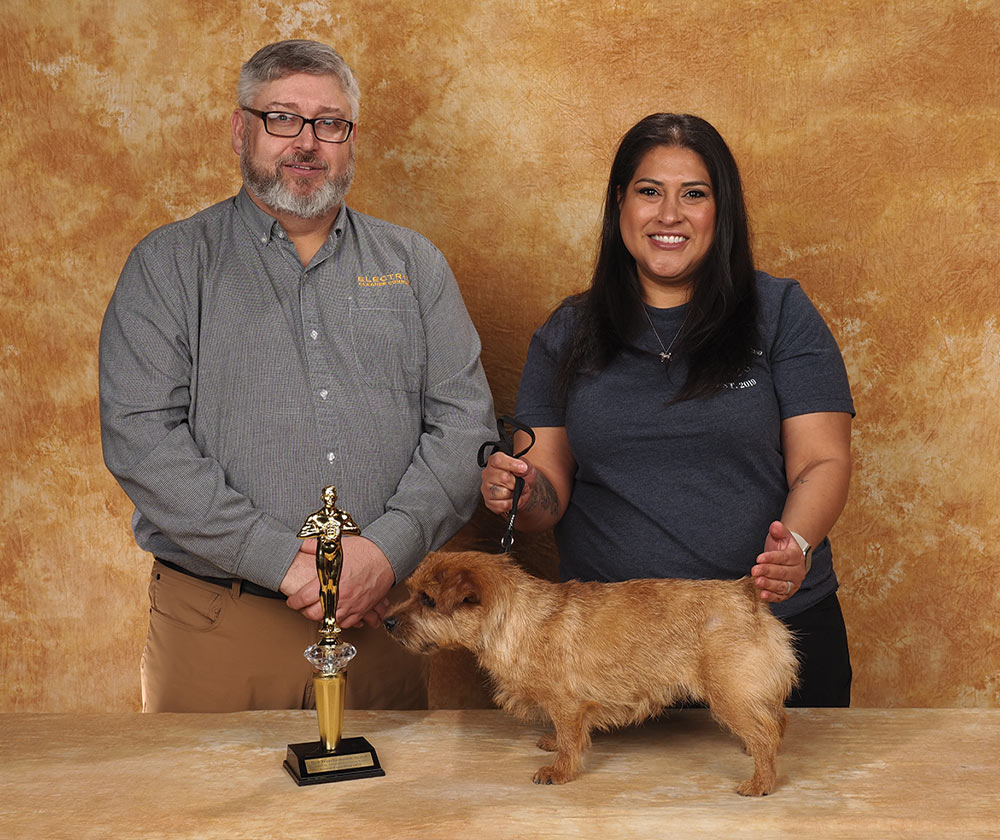

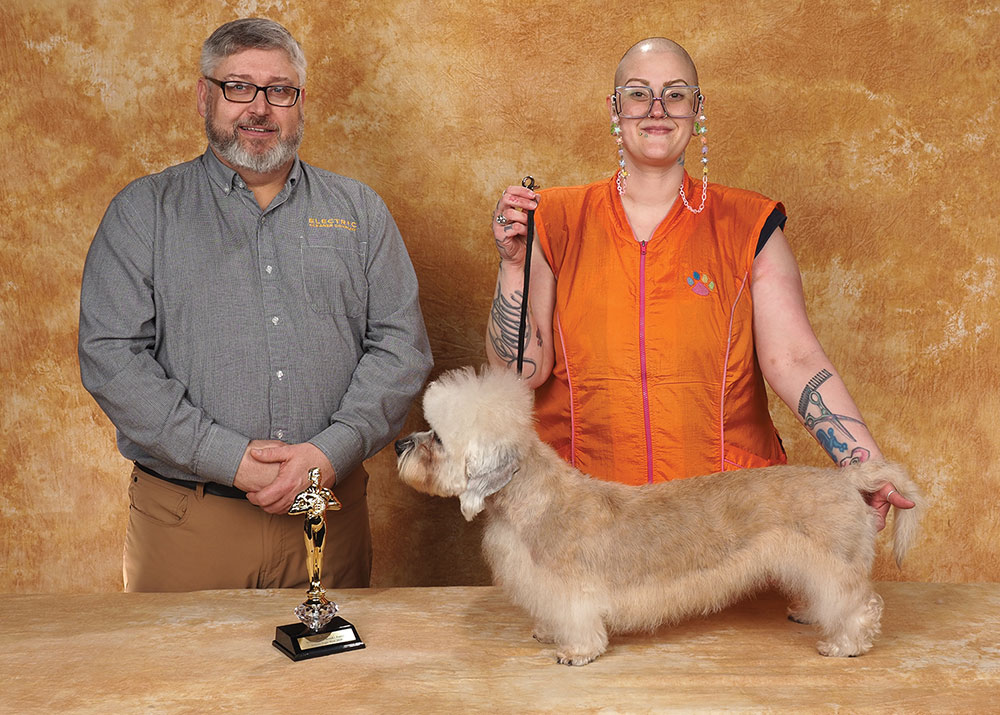
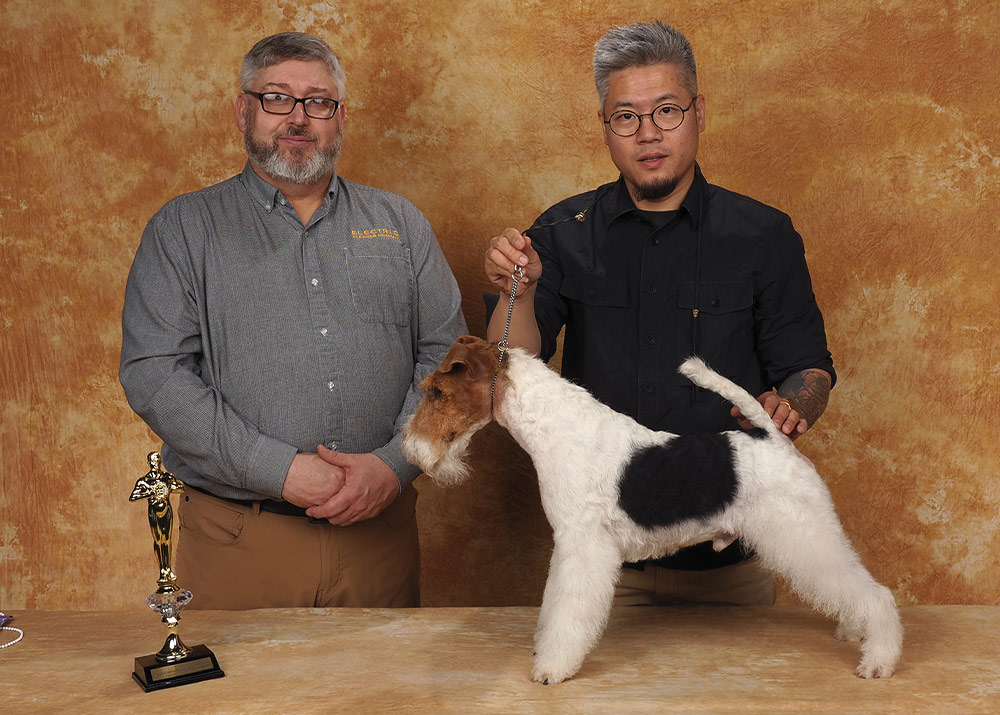

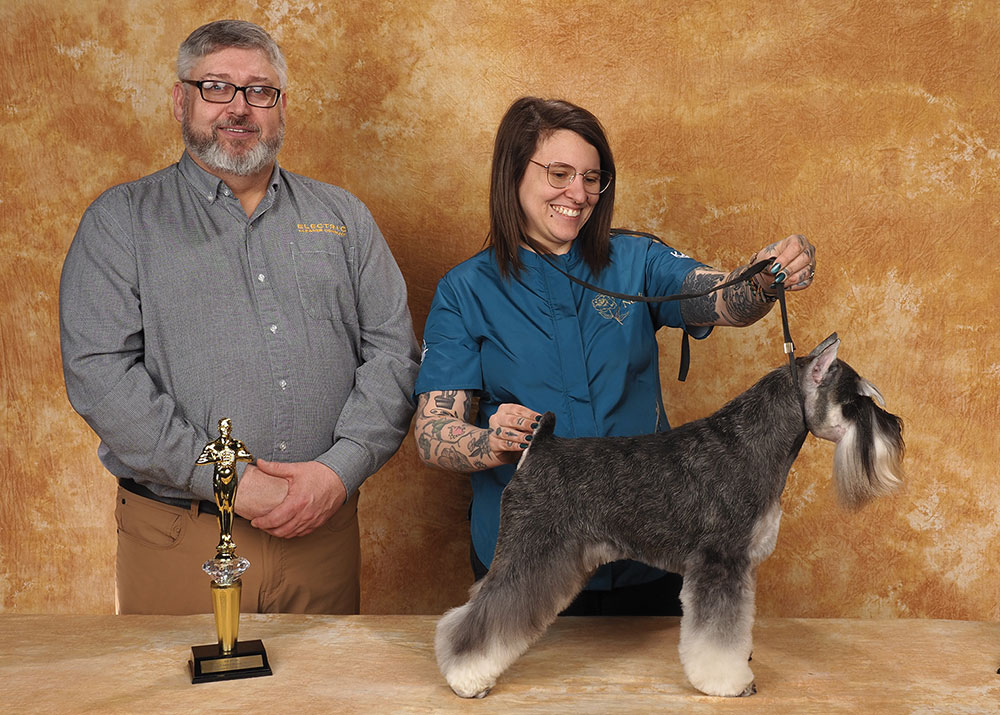
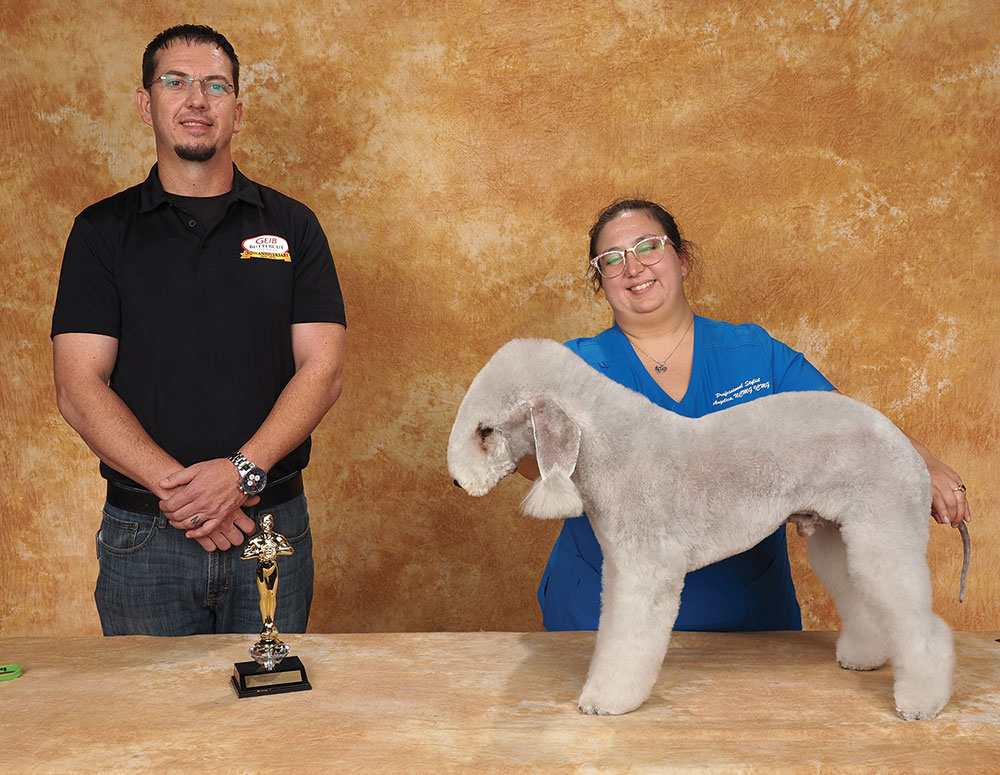
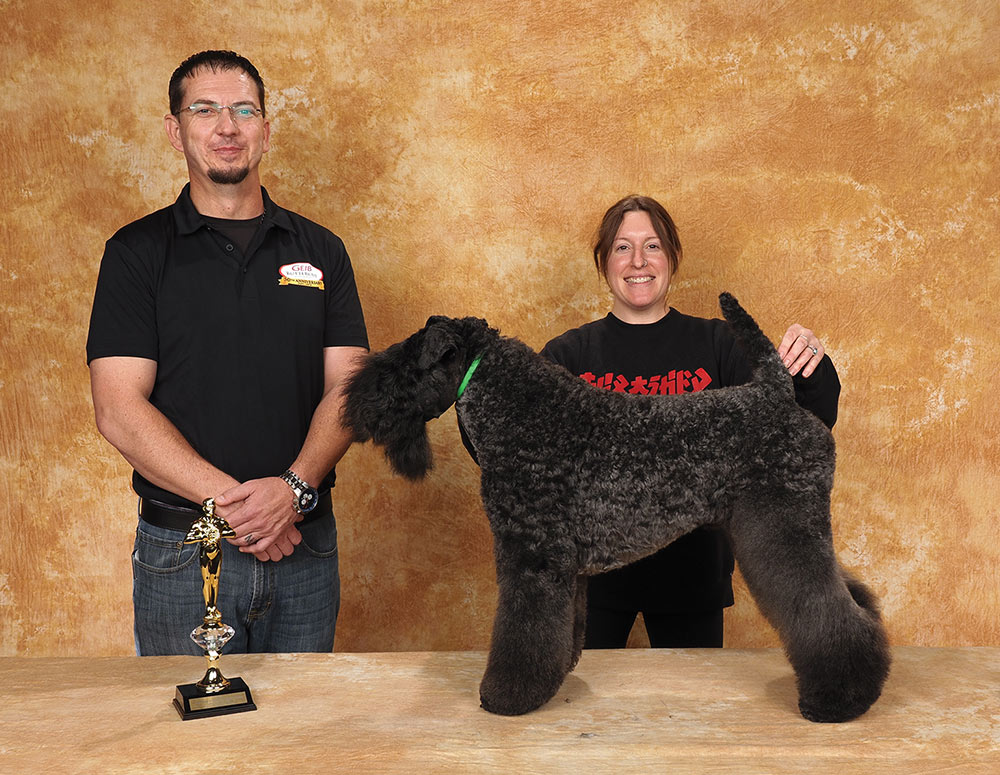
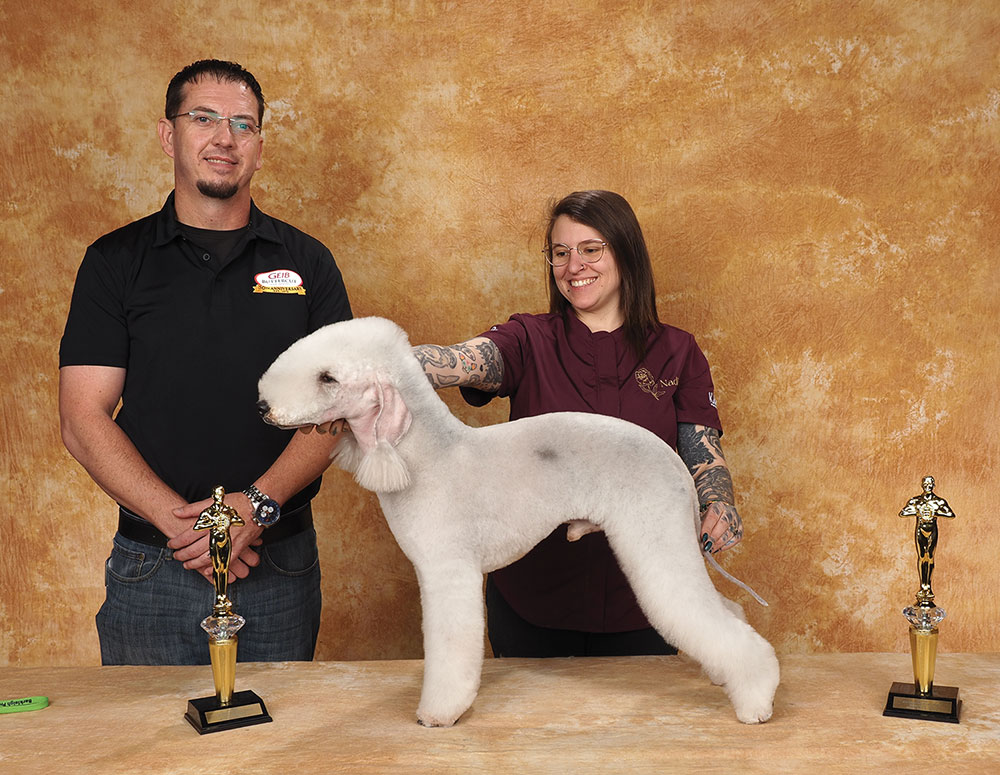
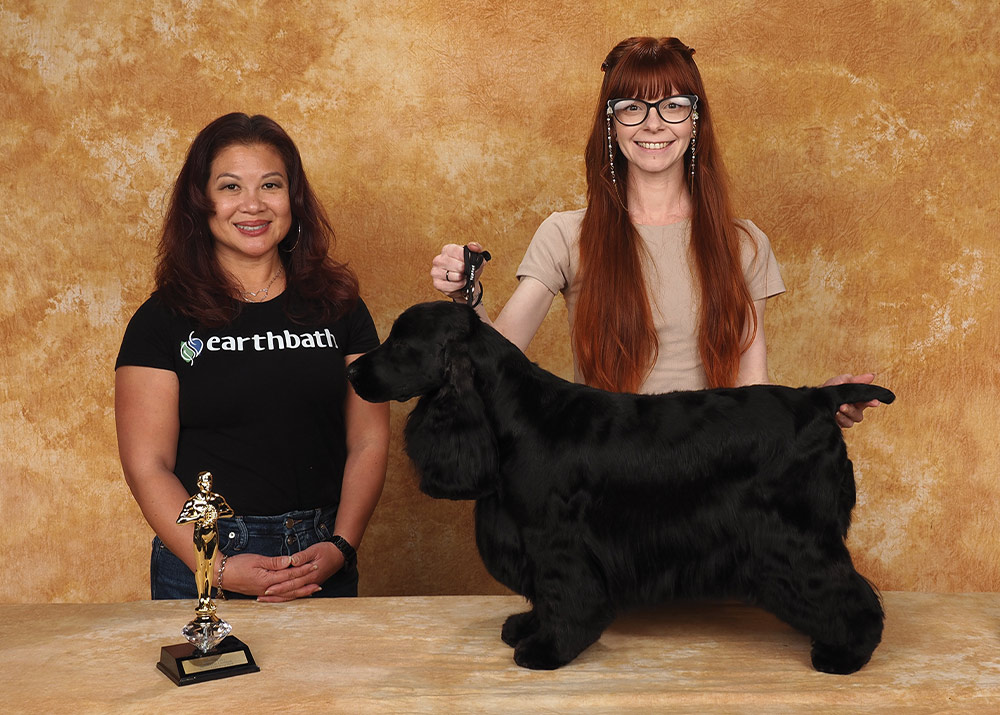
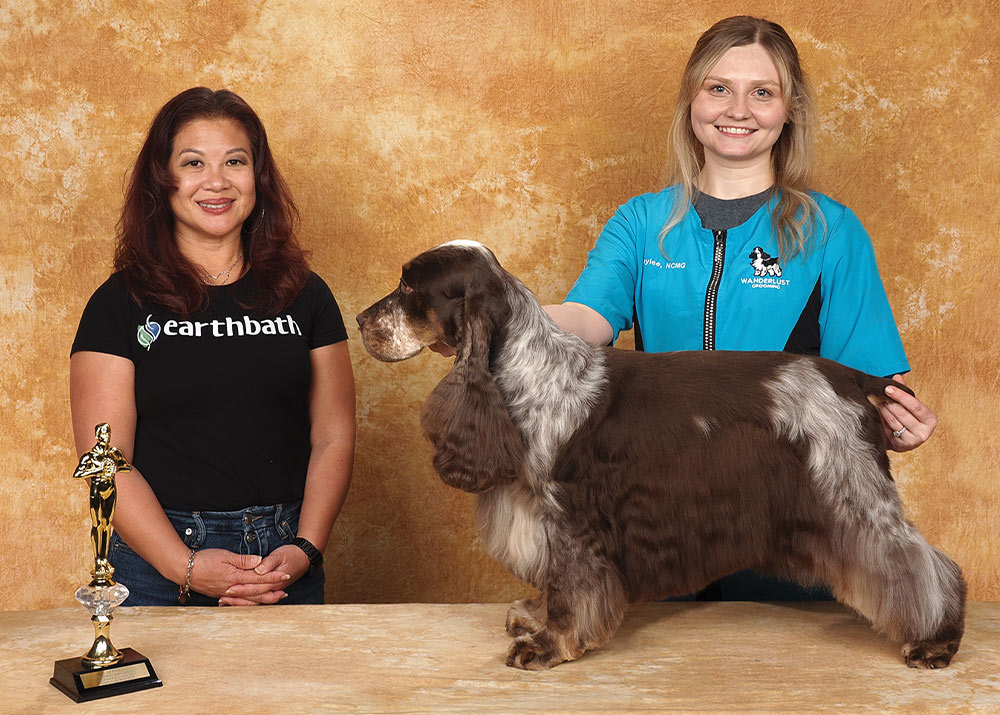
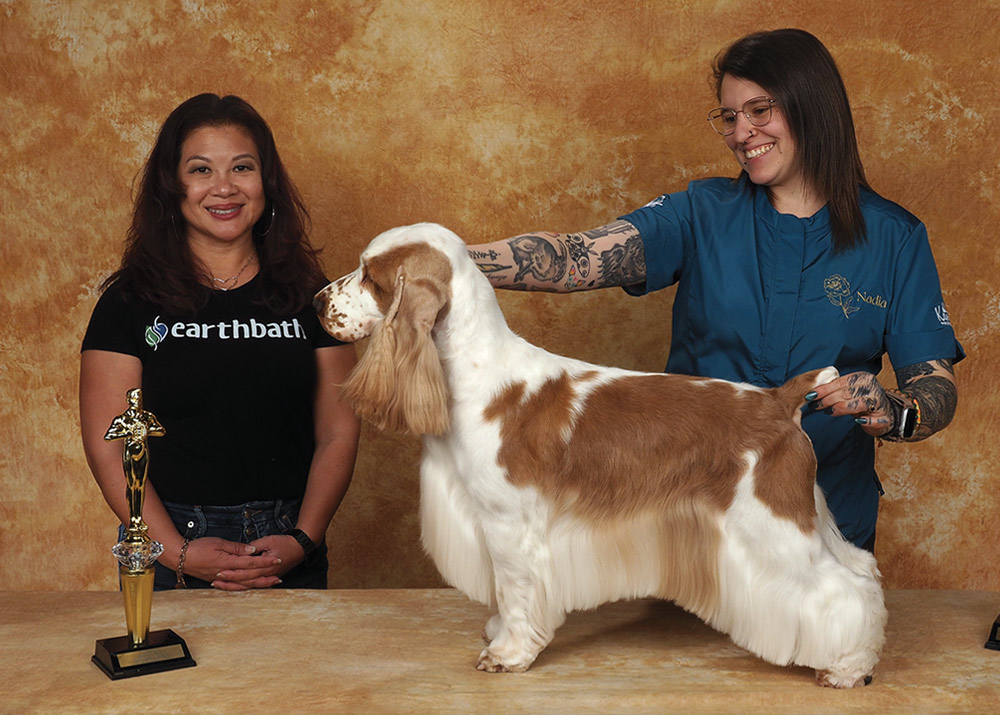
Salon Freestyle Sponsored by Earthbath
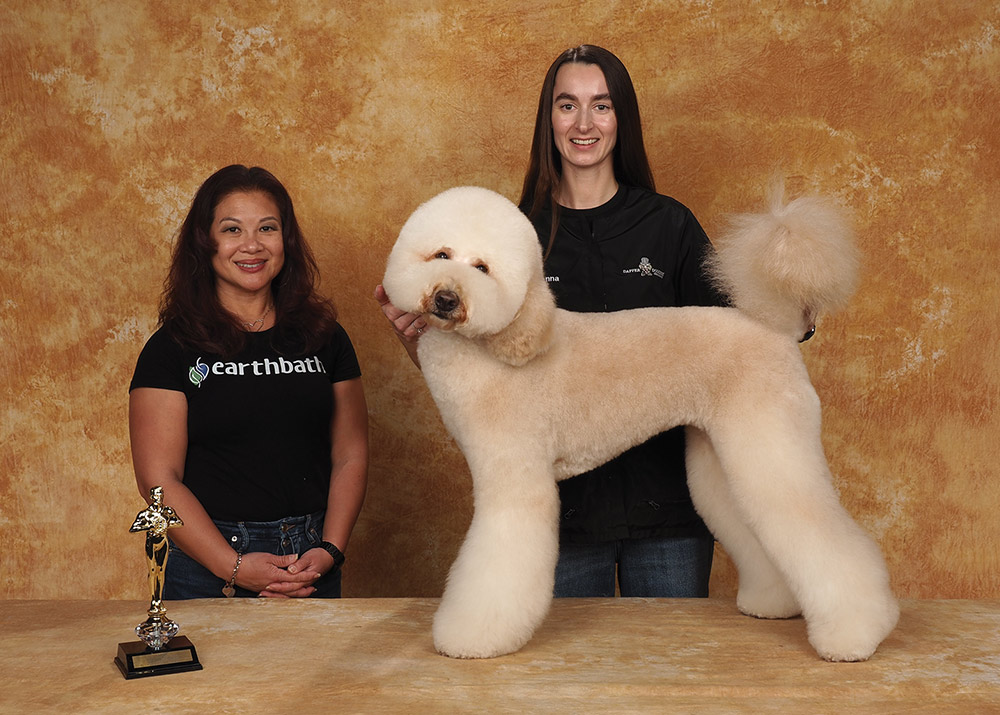
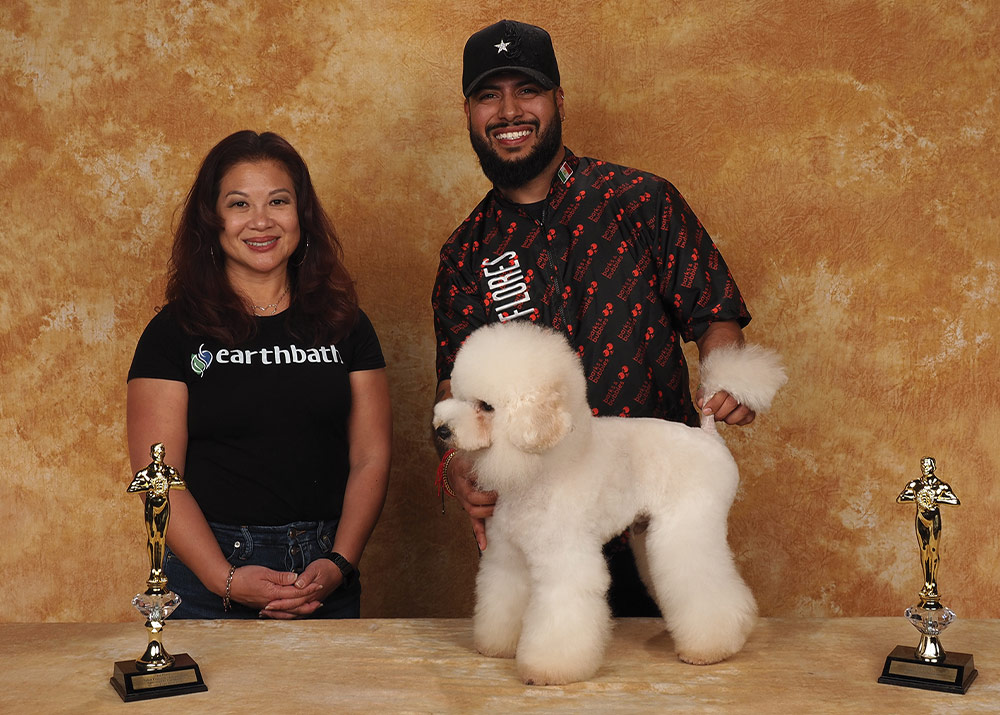
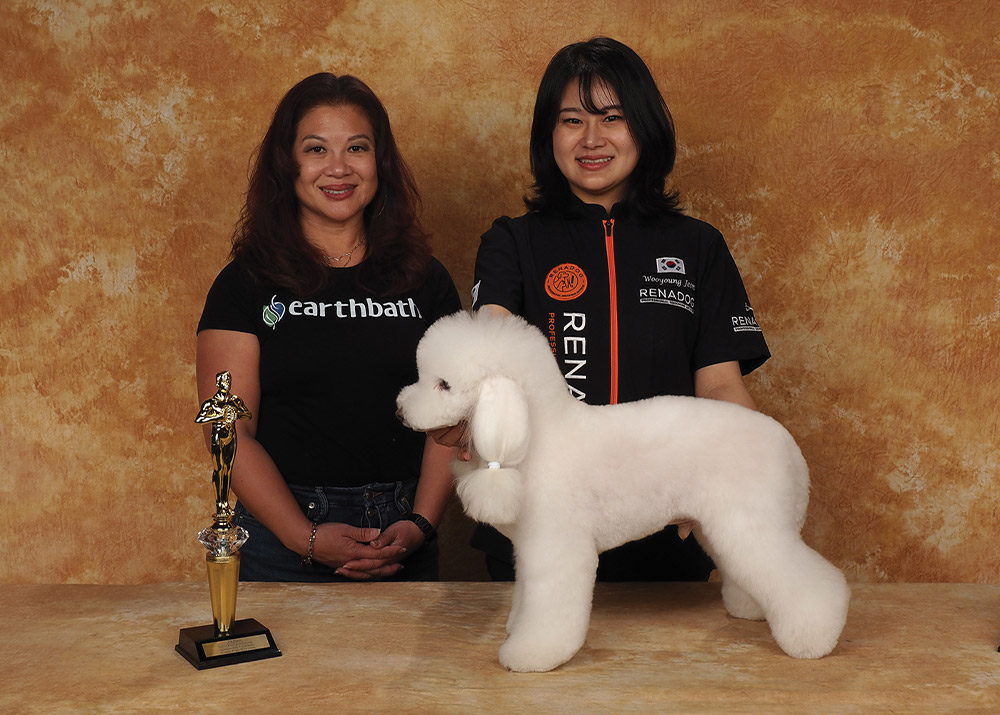
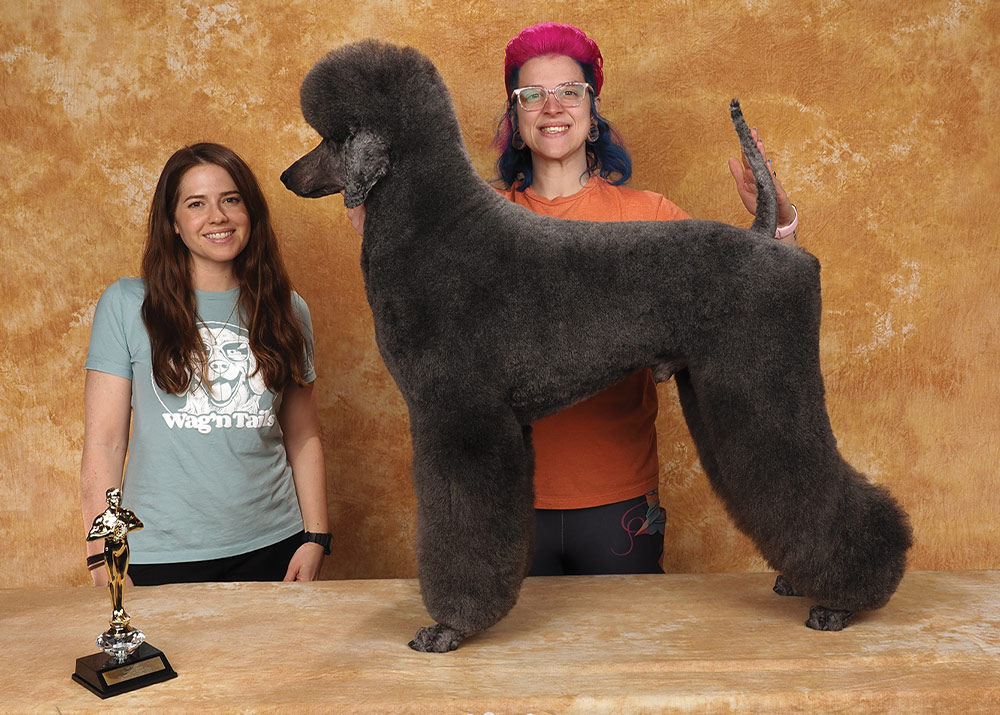
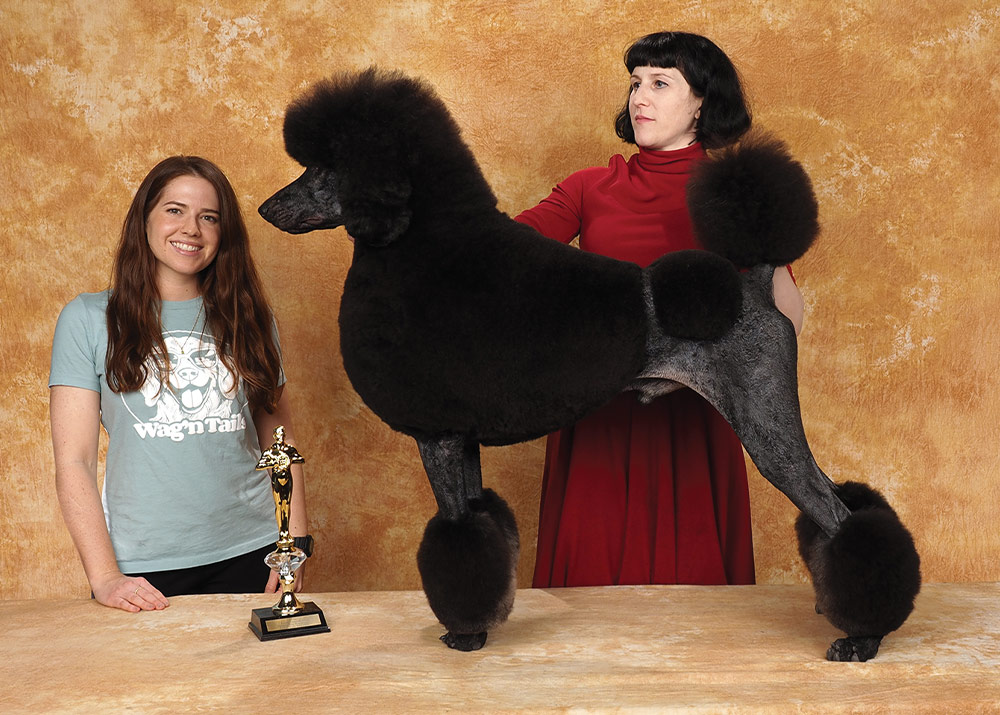
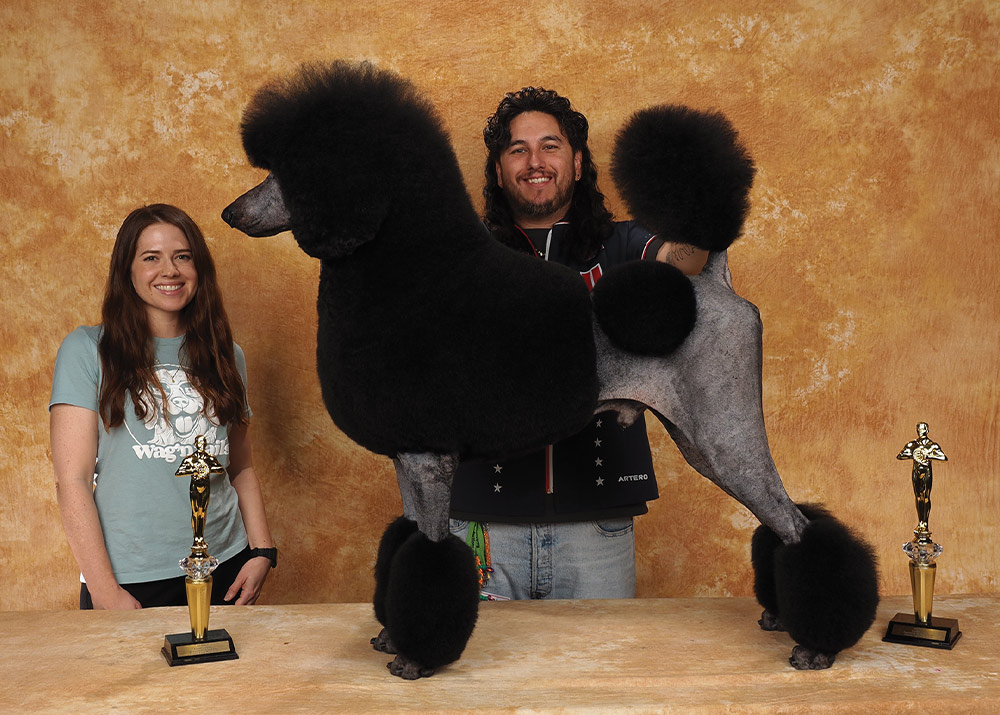
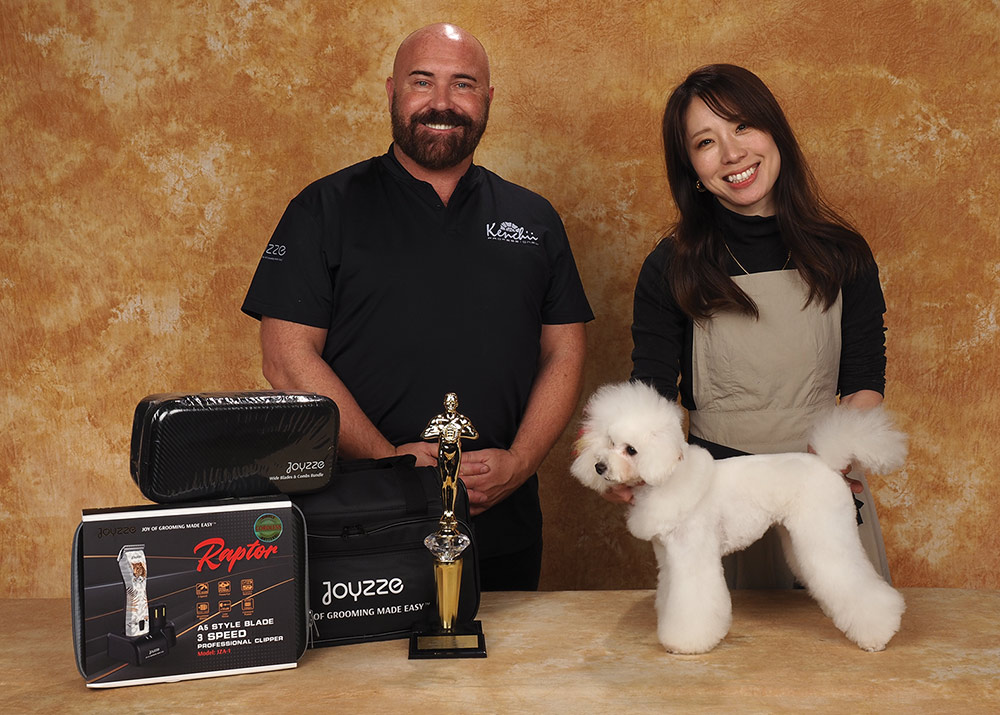
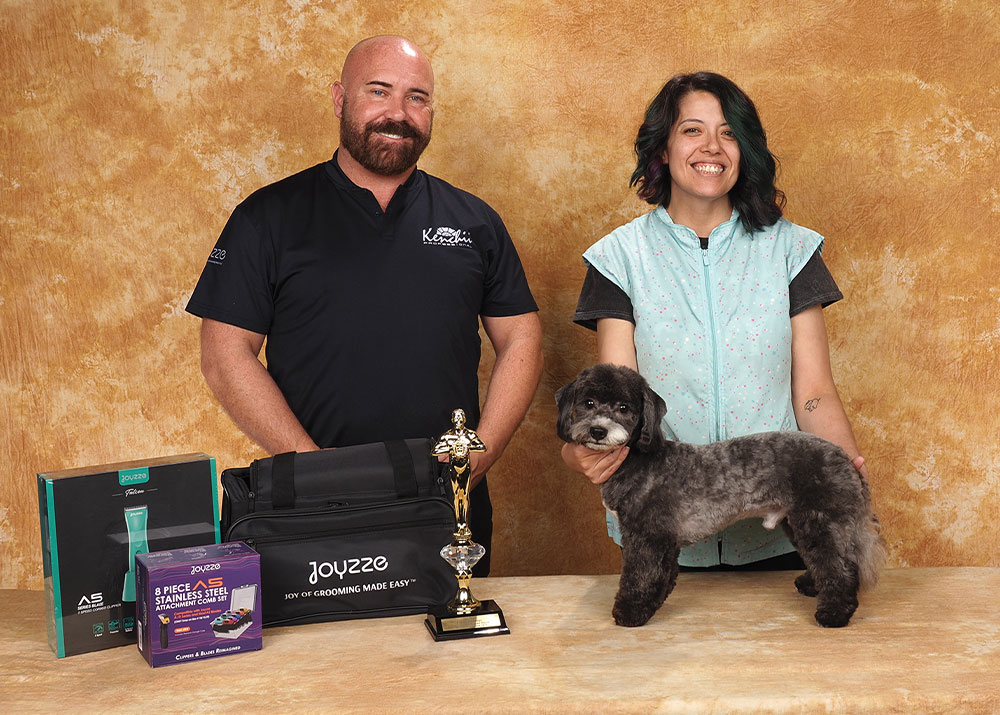
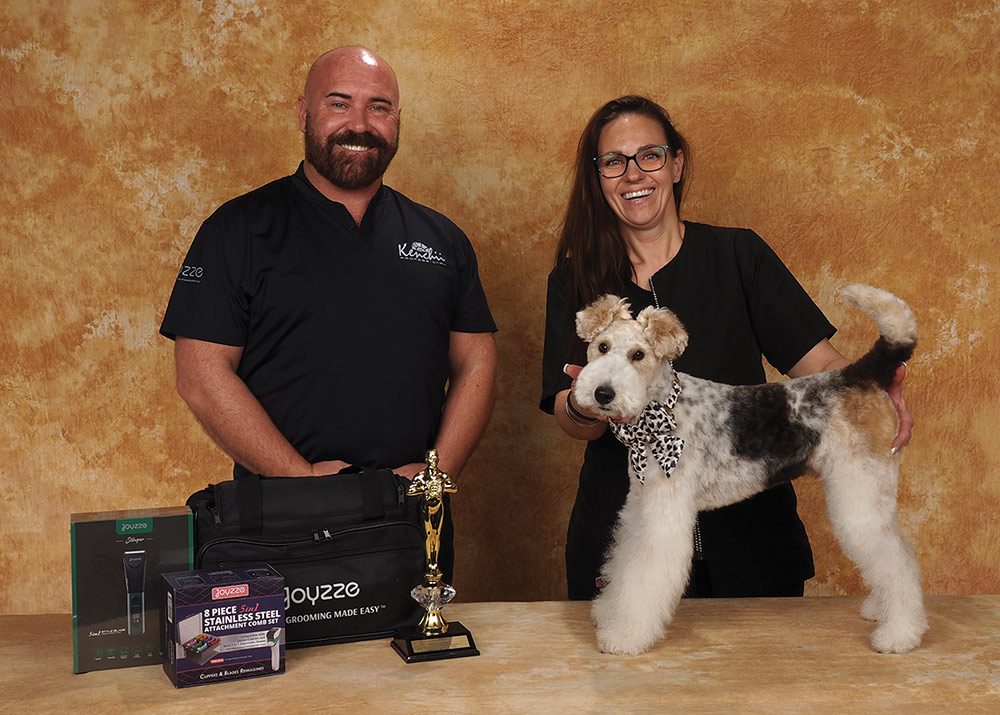
Clipper Challenge Sponsored by Joyzze & Kenchii
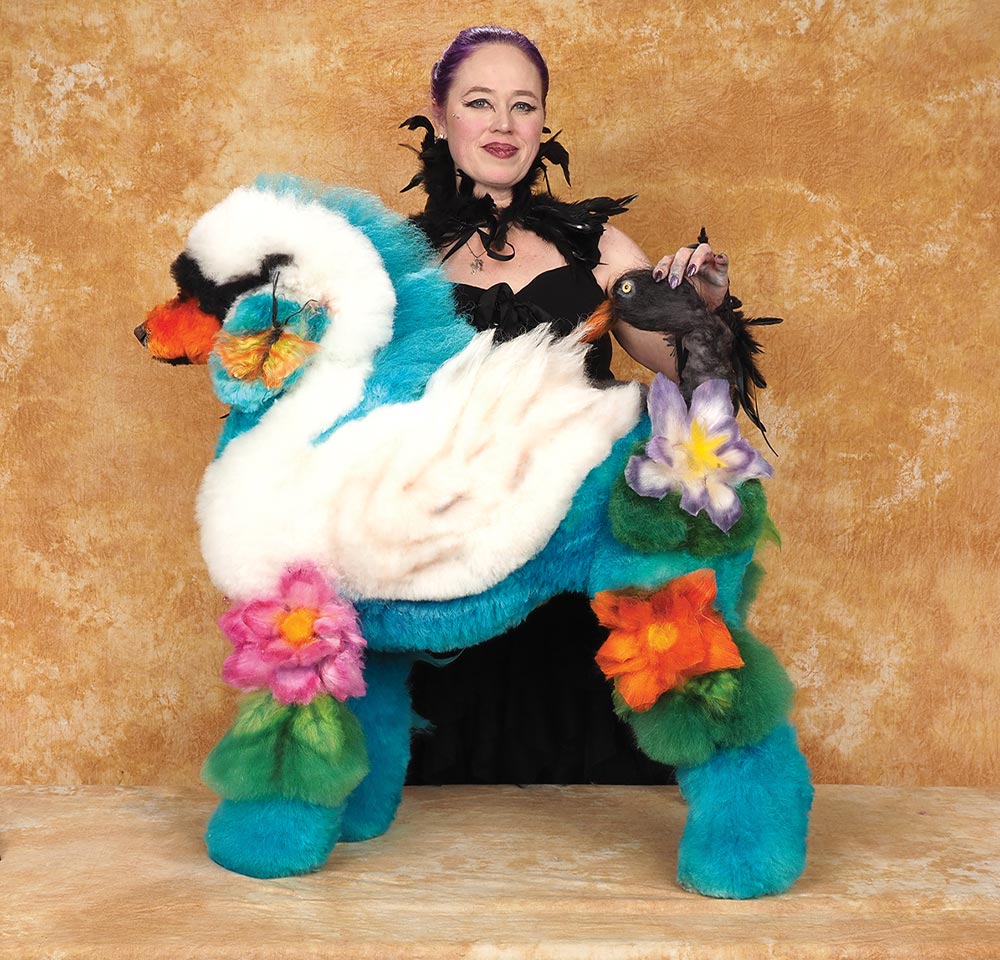
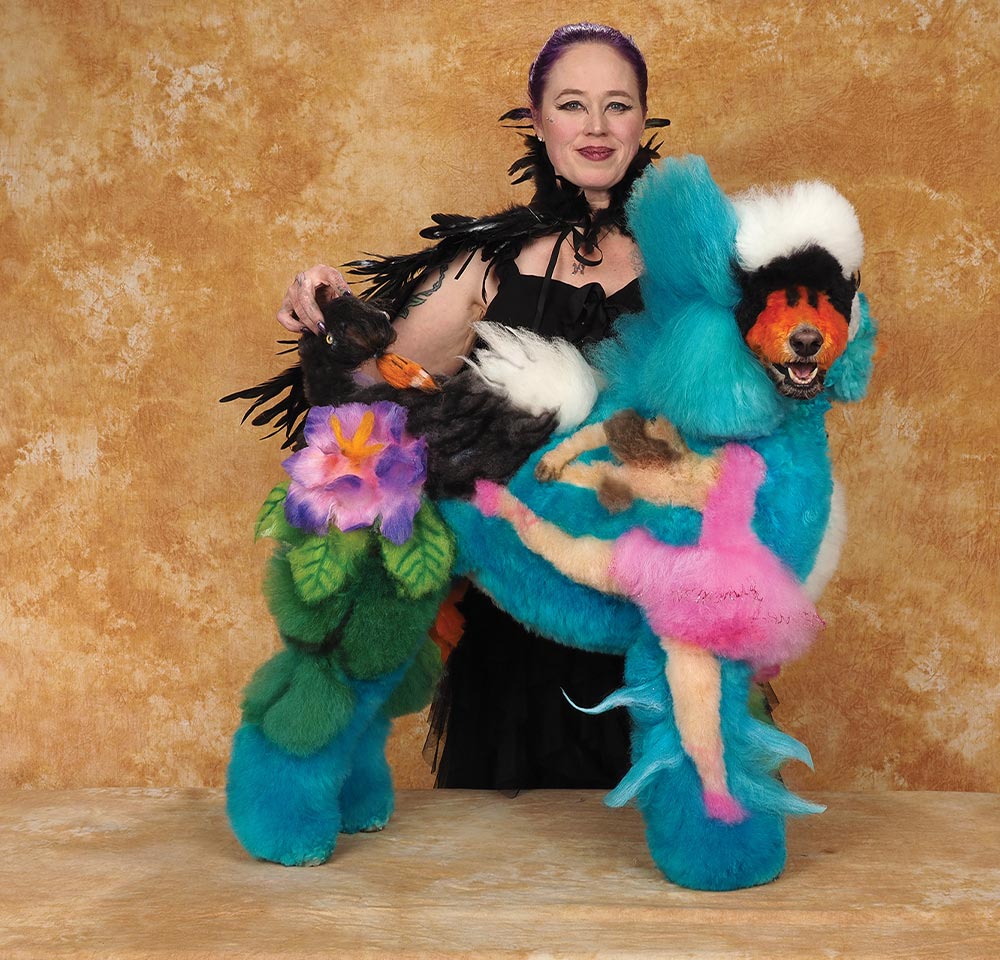
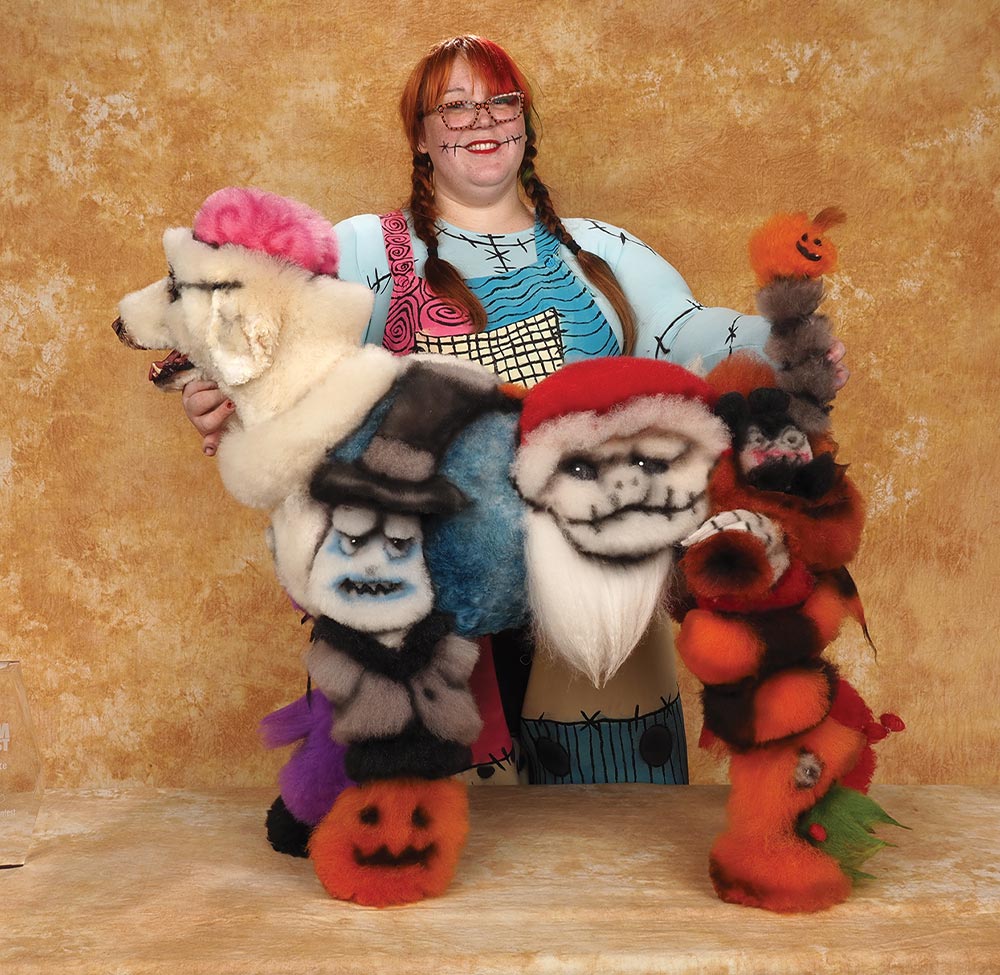
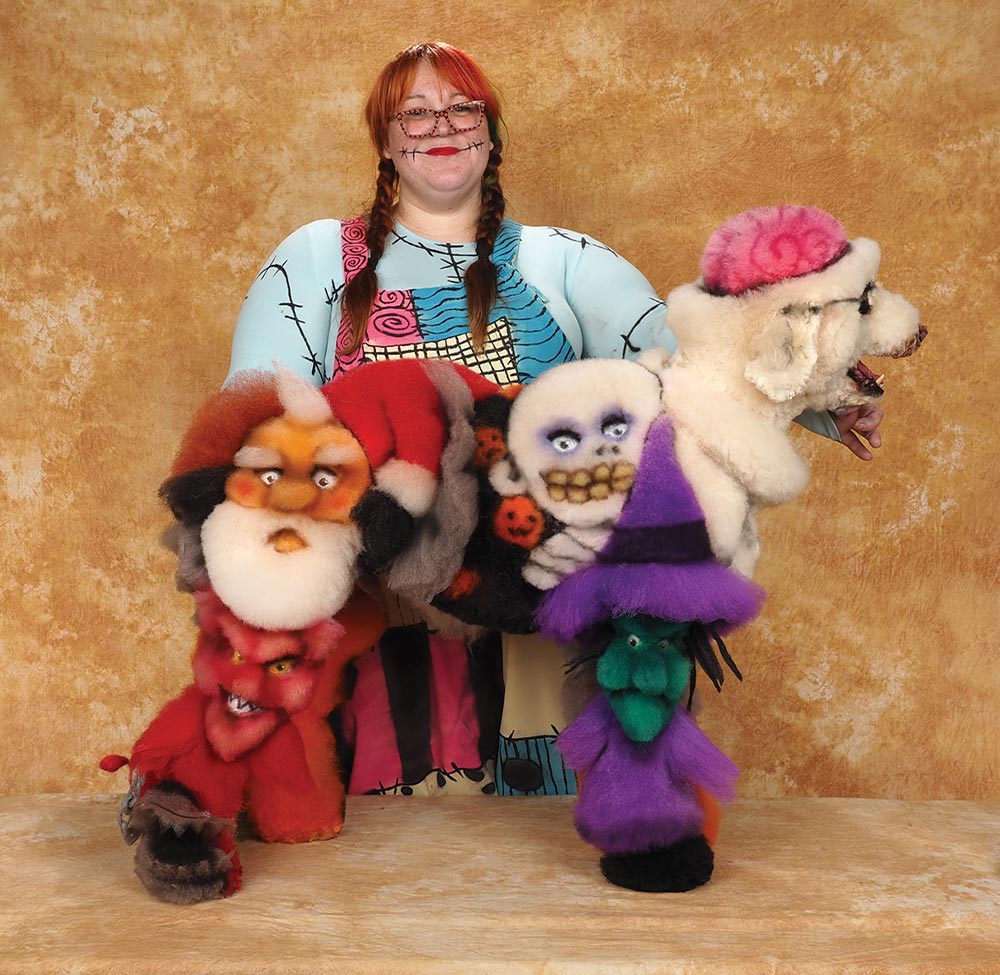
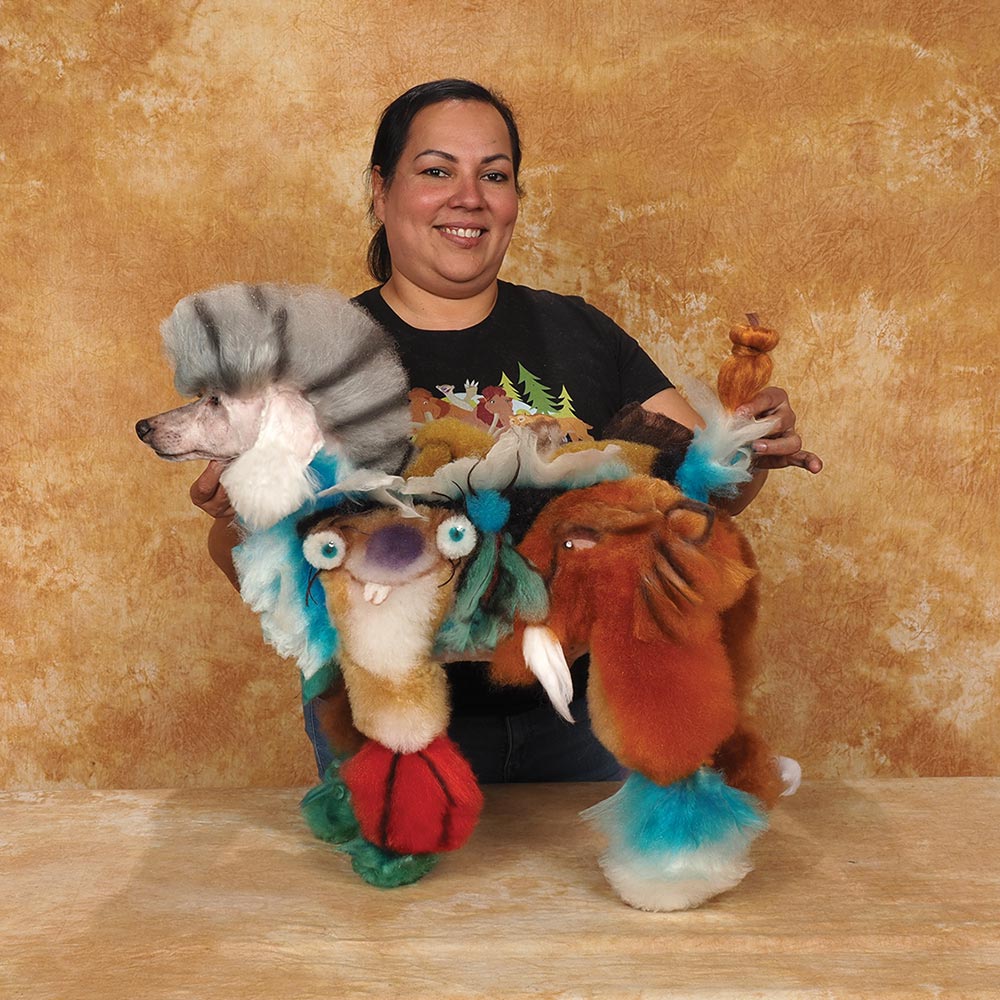
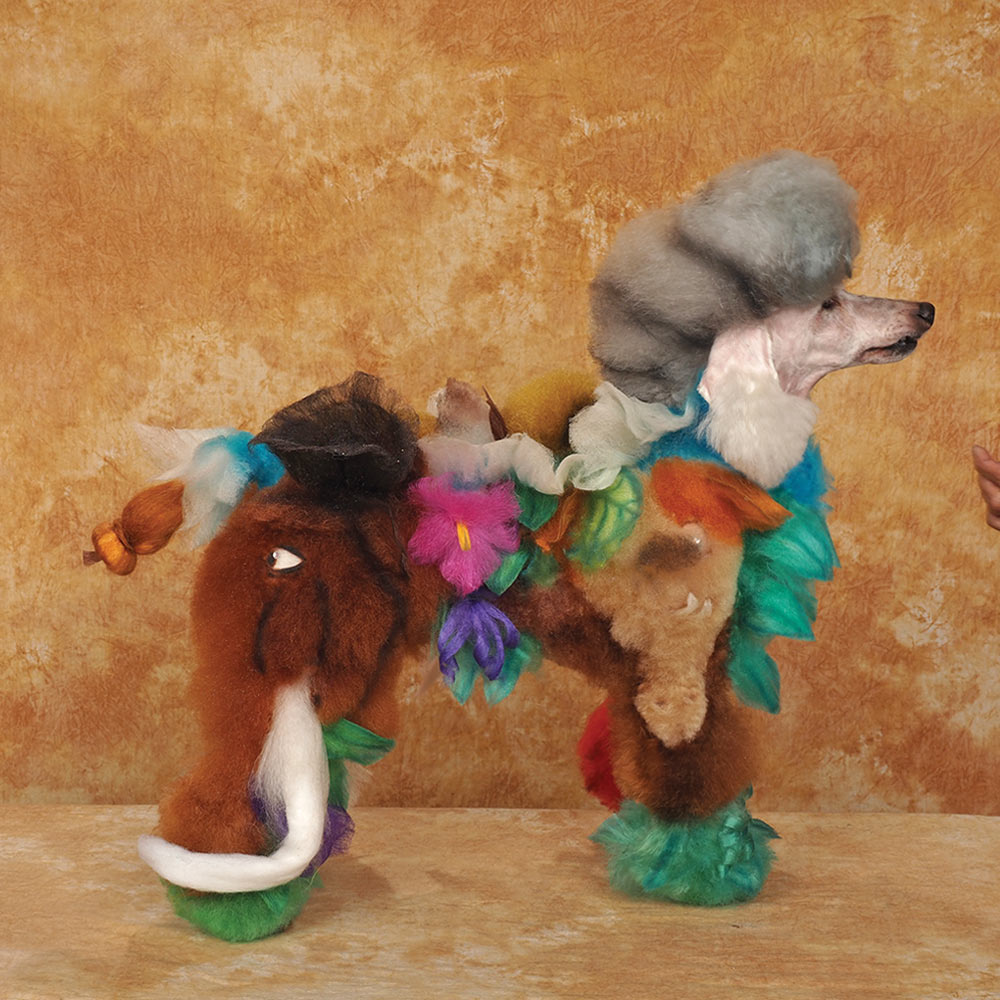
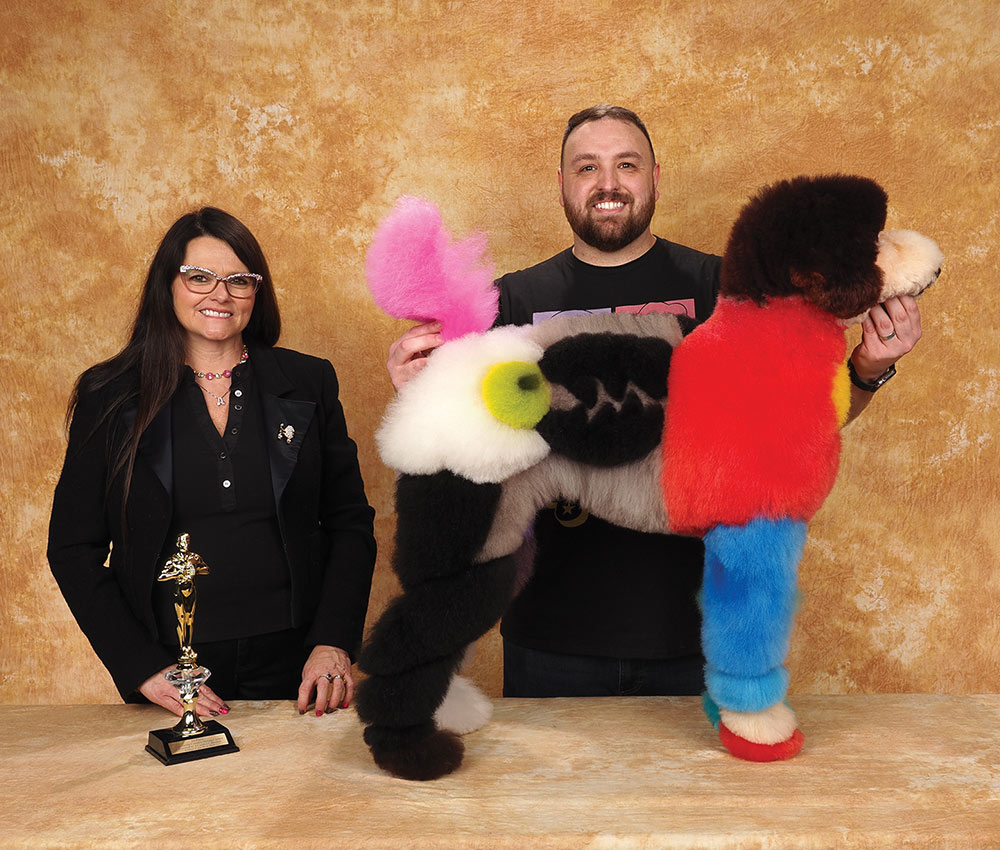
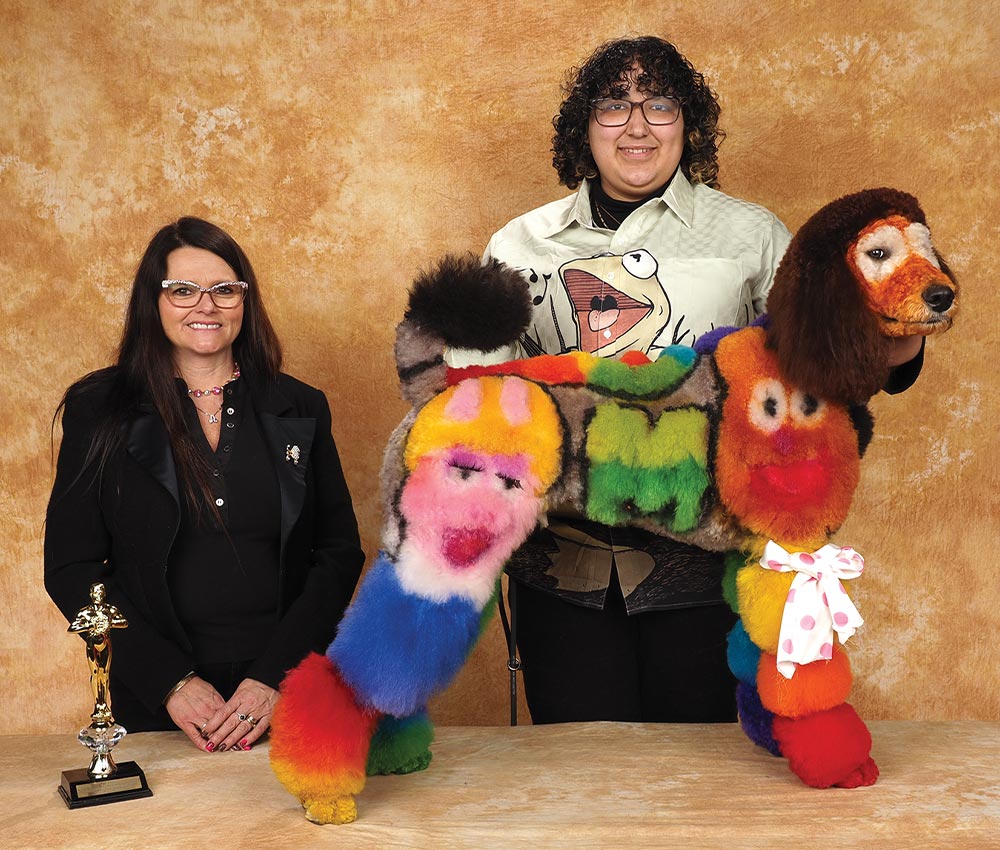
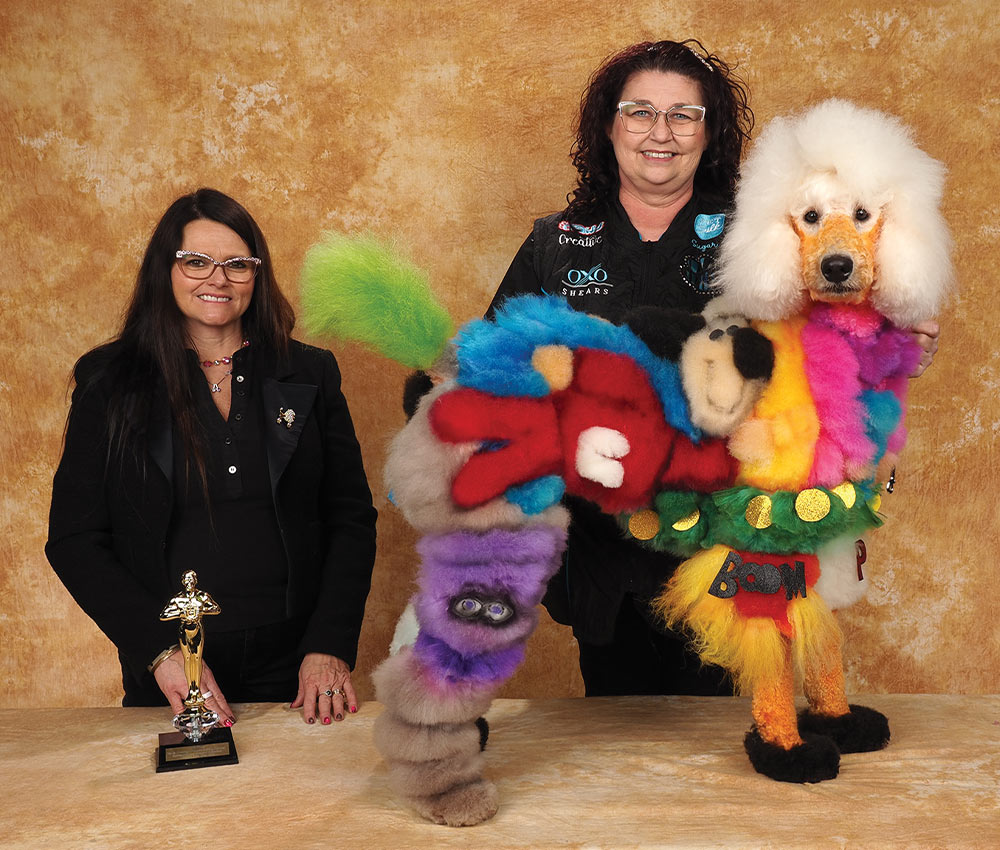
Rescue Sponsored by PetEdge
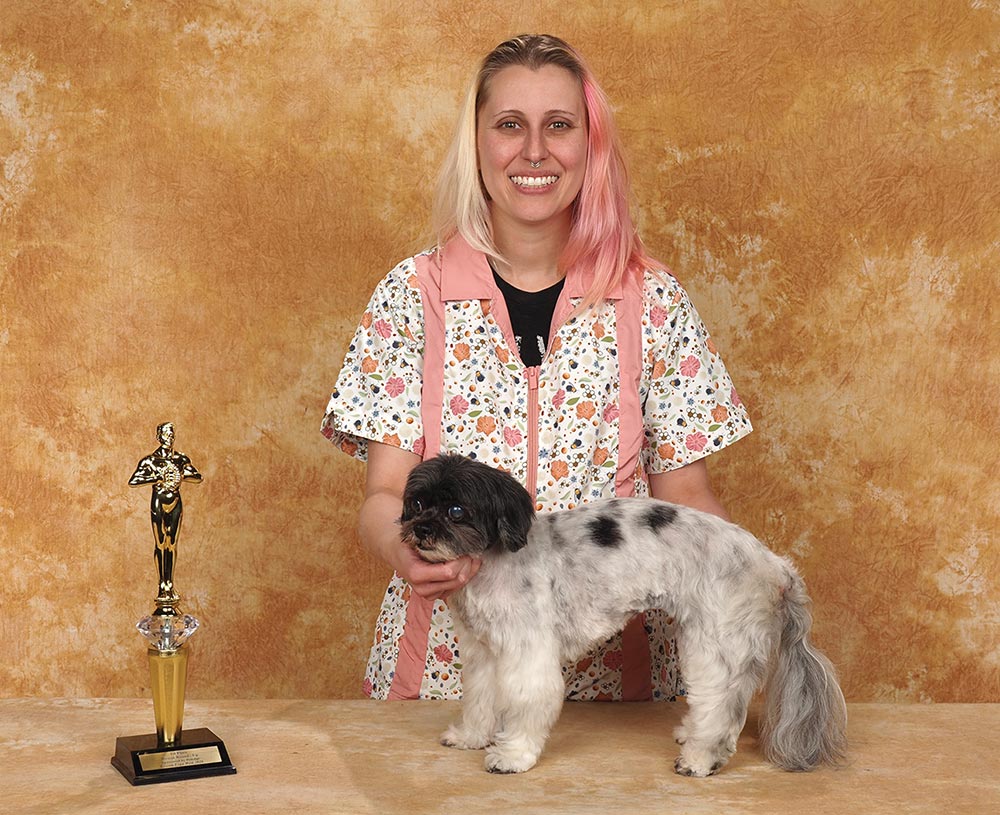
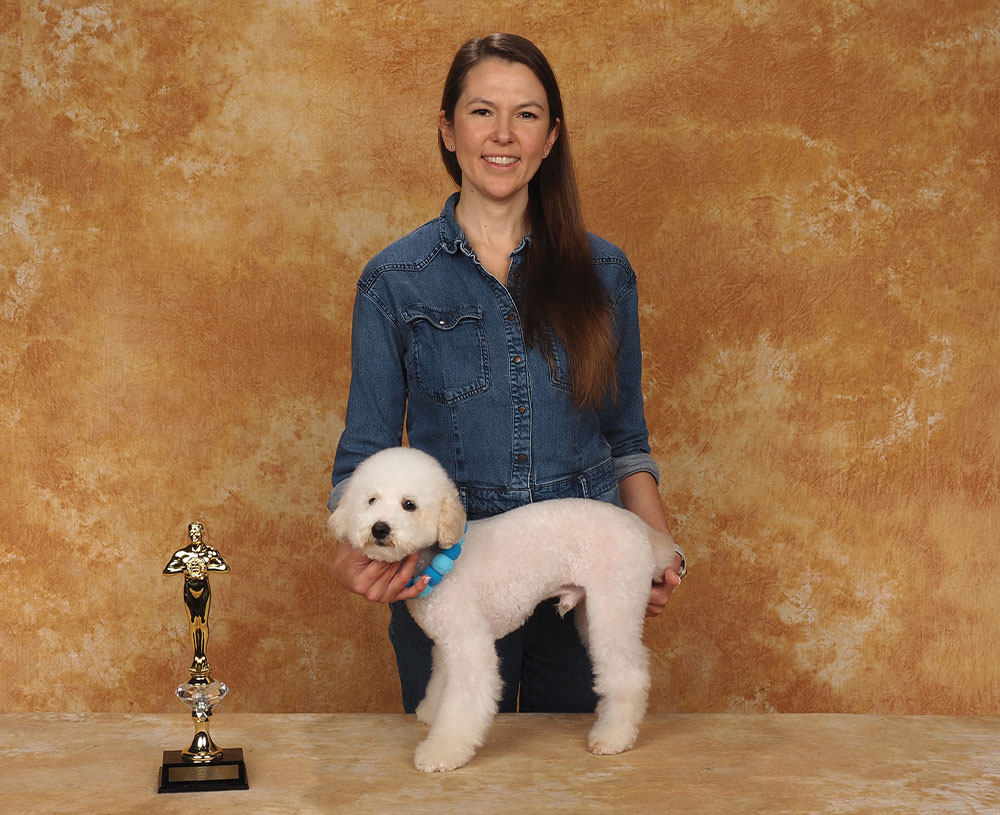
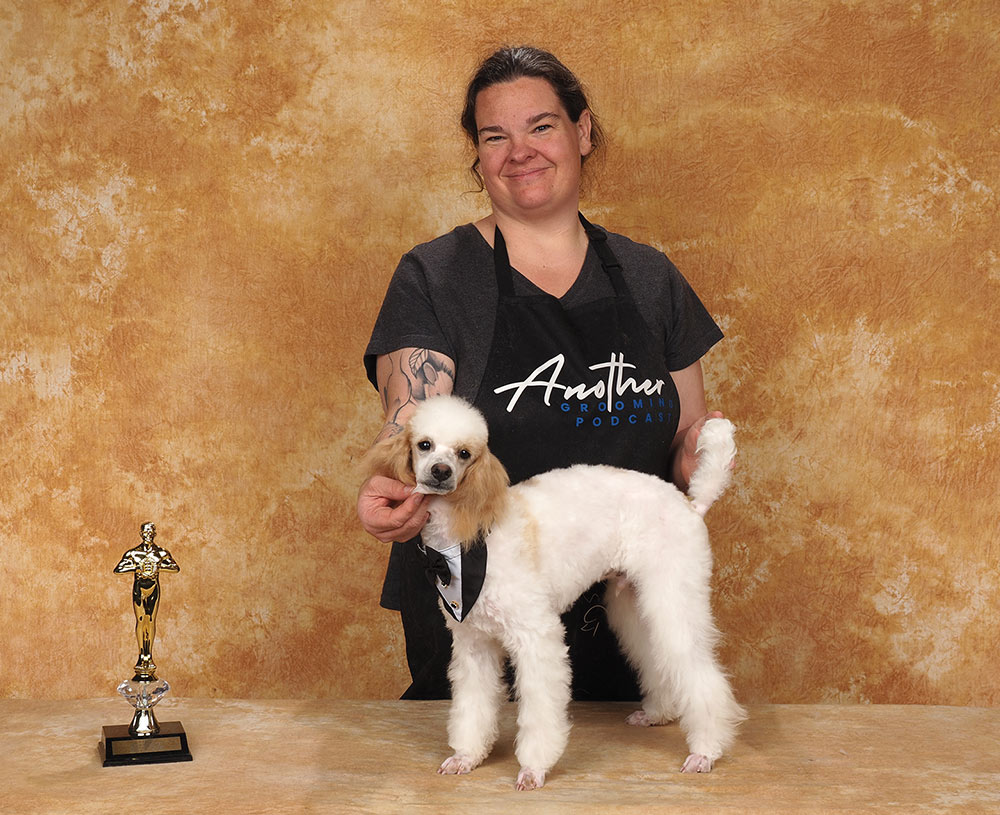
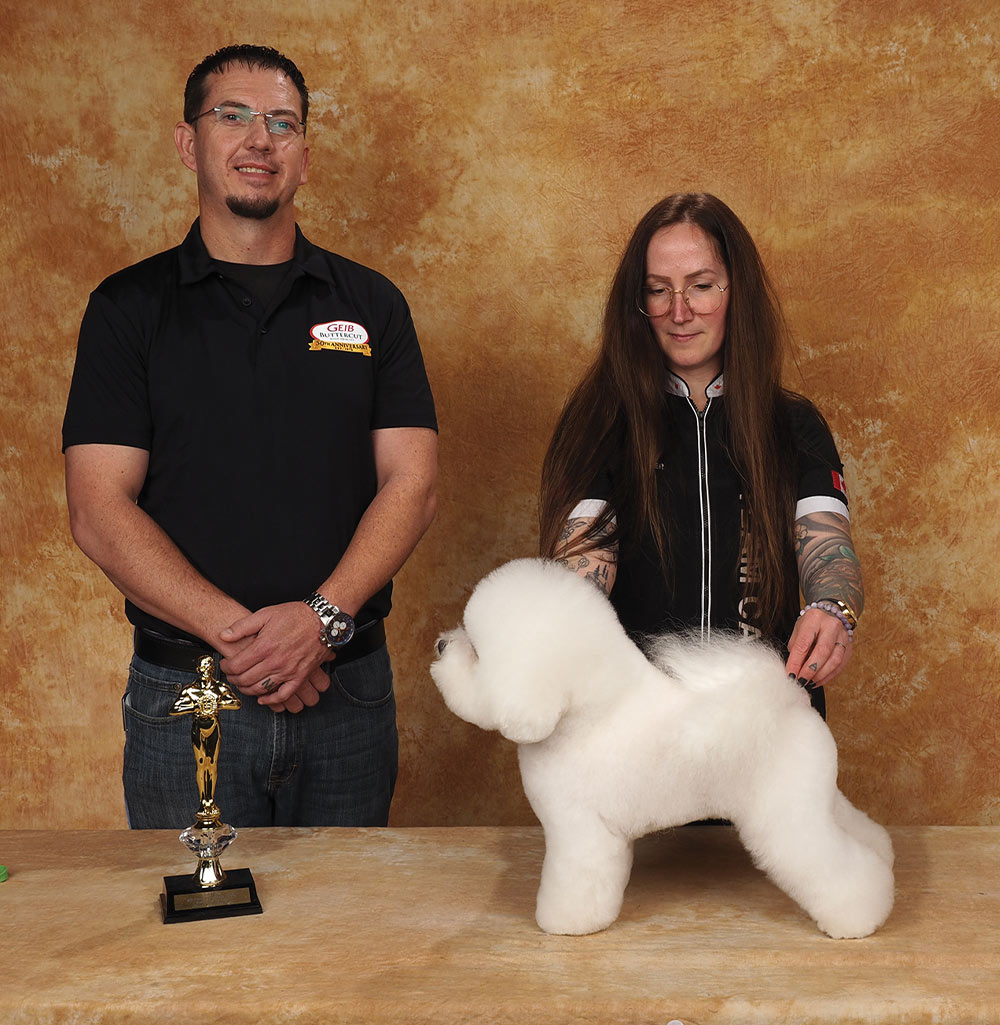
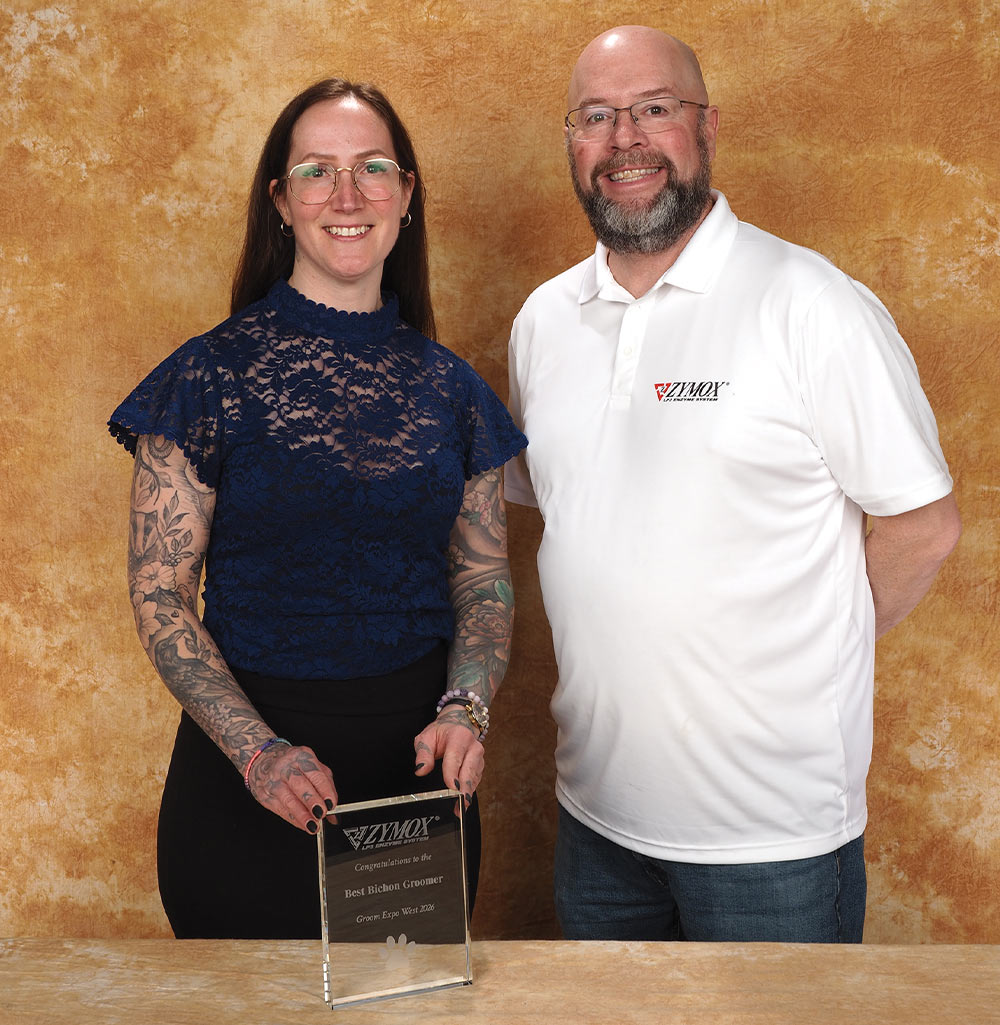
www.animalphotography.com

 he basics of canine body language are often picked up naturally in the grooming salon. The more dogs you handle, the better you get at reading them. Understanding dogs is important, but how often do you pause to check in with your own body language? Being aware of your body language helps you communicate more clearly with the dogs you’re working with, while also keeping you focused and calm during a fast-paced grooming day.
When a dog comes in for grooming for the first time, the groomer has a few minutes to make an impression while learning about the dog and asking about the dog’s grooming needs. Those first few minutes are your first opportunity to think about your body language.
Moving toward the dog with a brush or comb in your hand to check the coat before saying hello could seem strange to the dog. Similarly, hovering over a dog you just met while looking at the coat more than the dog can be intimidating. Instead, groomers can begin by talking with the owner and analyzing the dog’s behavior. Is the dog eager to say hello, or are they hiding behind the owner?
Using body language that invites dogs over, rather than hovering over them or making them feel cornered, is important. Once the leash is handed to the grooming staff member, you should keep a relaxed hold on it as you turn toward the direction you want the dog to move. Encourage the dog to move with you. If you move in a rushed, stressed way, dogs pick up on it. As you begin to notice your own body language, you might discover ways you can make dogs more willing to go with you and cooperate.
Preventing Stress Transfer
You’ve likely heard the expression that stress travels down the leash. Have you ever thought about how it travels through touch during grooming? Learning to give the dog feedback through quiet communication takes practice, but it’s a skill worth cultivating.
For example, if you know the dog pulls away when you try to lift the front legs, you can begin by lifting with a light hold while working on the dog, and then place the paw back down before the dog pulls away. The dog begins to learn what to expect. Your calm body language transfers to the hold, and placing the paw back on the table before the dog reacts teaches the dog that stillness works.
Maintaining focus is important for safety, but that’s not the only reason it matters. As you become distracted, you might notice the dog’s behavior changes. In a dog training class, the owner might be working on a stay, but then becomes distracted. If they haven’t practiced enough, the dog will break the stay as the owner glances at their phone or talks to another student. This can happen in the grooming salon, too. Dogs know when we lose our focus.
Even if you’re drying, focus matters. Not only does paying attention have a positive effect on the dog’s behavior, but it also helps you get better results from drying. Mindlessly holding a dryer is not the same as drying a dog’s coat correctly, where you know which areas of the coat need to lie flat, which need to be dried in reverse to correct the topline and so on.
Being able to maintain a calm mindset and calm body is an asset worth striving for. Not only will it help you be a great team member, but you might see more calmness in the dogs you work with, too.
It takes a level of skill to work with dogs that you should be proud of. Being the type of groomer who continues to work on self-improvement doesn’t go unnoticed by clients.



 n the grooming industry, it doesn’t really matter whether you are standing next to a tub in Chicago, London or Paris, the work feels much the same everywhere. Your body understands the weight of lifting large dogs in and out of the bath, your ears recognize the constant hum of dryers long after the salon lights are turned off, and your mind carries the pressure of full schedules, late arrivals, challenging coats and the quiet responsibility of keeping animals safe while working against the clock. Over time, even small daily details—incorrect table height, noisy equipment, poorly balanced tools—begin to shape how your body feels at the end of each workday.
For many years, this reality was simply accepted as part of the profession. Even in Europe, grooming success was often measured by volume. How many dogs could you groom in a day? How full was your calendar? How busy did your salon appear from the outside? Speed became a badge of honor and exhaustion was frequently mistaken for professionalism. Equipment choices were often secondary, products were used out of habit and long-term physical impact was rarely discussed. But over the last decade, something has begun to change.
Across Europe, however, the grooming profession gradually but decisively has begun to move away from the “assembly line” mentality. More groomers are questioning whether working harder and faster is truly the only path forward. And many are recognizing that the old model comes with a cost—physical breakdown, emotional burnout and careers that end far earlier than they should. This realization has led to deeper questions: Why do we accept chronic pain as normal? Why do we tolerate tools or products that make our work harder rather than easier?

Respect is reflected not only in how animals are handled but also in the standards we set for our working environment, the equipment we choose and the products we use every single day.
What is emerging is a more holistic, wellness-oriented approach to grooming; one that recognizes grooming is not just about removing hair but about understanding skin, coat, behavior, chemistry and long-term maintenance. This evolution is not simply making dogs look better—it is helping groomers remain in the profession longer, healthier and more fulfilled, both physically and mentally.
For a long time, the traditional grooming career followed a predictable path: You learned the basics, found a busy salon, worked relentlessly and, eventually (if you were fortunate), opened your own business. The unspoken assumption was that physical strain and constant pressure were unavoidable. Your body would simply “last as long as it lasted.” Little attention was paid to ergonomics, tool balance or what it truly means to stand eight to 10 hours a day holding vibrating clippers.
Today, that narrative is beginning to break. In many parts of Eastern and Central Europe, grooming is increasingly viewed as both an art form and a technical discipline. This does not mean working slower or having less ambition. It means having a deeper understanding and recognizing that a groomer’s value is not defined by how many dogs pass across the table but by how effectively problems are solved. It also means acknowledging that precision is directly influenced by the tools we use. Well-balanced shears, reliable clippers, quiet dryers and properly adjusted tables are no longer considered luxuries—they are fundamental to professional work.
The modern groomer’s goal is no longer to complete eight dogs a day at the lowest possible price. More professionals are choosing to groom four or five dogs at a higher level of care using advanced techniques and skin-focused protocols that genuinely justify a premium price. This practical approach allows groomers to work with intention rather than urgency, and to protect their bodies from the constant strain demanded by high-volume grooming.
When groomers position themselves as experts in skin health and coat restoration rather than just stylists, something important happens. Clients stop asking only about price and begin asking about outcomes. Conversations shift from “How short?” to “What does my dog actually need?” It also opens the door to meaningful discussions about maintenance schedules, home care and the quality of products used between appointments.
One of the most difficult lessons groomers often learn too late is that volume does not automatically equal profit. A salon can be fully booked and still struggle financially. A groomer can work nonstop and still feel undervalued. High-volume models hide many costs: rushed work leads to mistakes, mistakes lead to injuries, and constant fatigue leads to poor decisions and eventual burnout. Low-quality tools and aggressive products frequently amplify these problems rather than solve them.
In contrast, value-based grooming models tend to be quieter, calmer and far more stable. Dogs are groomed on consistent schedules rather than in crisis. Coats are maintained instead of rescued. Behavior improves because routines become predictable. And the groomer gains something priceless: control—control over time, control over quality and control over career direction. This control creates space for better preparation, more refined finishes and more thoughtful decision-making at every stage of the groom.
Education plays a central role in this transformation. Across Europe, groomers actively invest in learning—not simply to collect certificates but to understand causes: why some coats never dry correctly, why others mat despite regular brushing, why aggressive degreasing worsens skin conditions and why some dogs tolerate grooming calmly while others escalate rapidly. These questions are explored in advanced seminars, hands-on workshops and specialized grooming exhibitions where professionals openly share real-world experience.
A groomer who can create a cute finish is appreciated, but a groomer who understands the biological hair growth cycle, the structure of the cuticle and how to restore coat integrity without shaving becomes indispensable. That distinction matters in the long term. It also influences how groomers choose their cosmetics. Ingredient knowledge has become a critical professional skill, as groomers begin reading labels, questioning formulations and selecting products that support skin health rather than strip it.
As knowledge deepens, the groomer’s role evolves. Clients are no longer paying only for a haircut, but rather for judgment, explanation and direction. When you can clearly and confidently explain why you choose a specific pH-balanced product, why a restorative treatment is necessary or why a particular finish is not appropriate for a compromised coat, you step into the role of consultant. That authority does not come from ego—it comes from competence and consistency.
This shift is also essential for long-term career satisfaction. Groomers whose knowledge is respected experience less emotional exhaustion and greater professional pride, as they no longer feel they have to defend their pricing or apologize for necessary boundaries.
One of the clearest examples of this evolution is the rise of spa and skin therapies across Europe. What was once dismissed as a luxury or marketing gimmick is now increasingly recognized as a practical necessity. It is no longer about social media aesthetics but about addressing real, growing problems. When these therapies are combined with high-quality, skin-respecting cosmetics and appropriate equipment, they significantly improve both results and working conditions.
Today, dogs present with more allergies, more sensitive skin, more coat damage and more stress-related issues than ever before. In many cases, the groomer is the first professional to notice that something is wrong. While diagnosis always belongs to veterinarians, observation and procedural adaptation clearly fall within the groomer’s responsibility. Choosing gentle formulations, understanding ingredient interactions, and applying therapies correctly requires both knowledge and experience.
Alongside proper ergonomics, ingredient awareness has become inseparable from career longevity. Groomers inhale sprays, handle shampoos constantly and work in humid environments with repeated exposure. Selecting safe, transparent products is not a lifestyle preference but an occupational health decision. A career cannot last 20 years if your skin or lungs are compromised within the first five.
Perhaps the most important realization shaping the future of grooming careers is that the path is no longer linear. Today, the profession allows for specialization, adaptation and evolution. Groomers are building careers around their strengths—whether that is coat restoration, working with sensitive dogs, feline grooming, mobile services or show preparation. Specialized exhibitions and competitions further support this growth by setting higher standards across the industry.
Ultimately, the European lesson is not about trends or techniques, it‘s about mindset. Stop measuring success by how many dogs you finish and start measuring it by how well you solve problems.
When groomers move beyond the bath and embrace a holistic approach—one that values skin health, quality equipment, thoughtful product selection, continuous education and clear professional boundaries—the entire industry rises. Grooming becomes not just a job, but a respected profession. And most importantly, it becomes a career that can be sustained with pride for decades, not merely survived for a few exhausting years.
Gasparas Lekavicius is the CEO and Founder of www.groomica.eu, a premier European hub for professional grooming excellence. Groomica.eu connects modern pet stylists with high-performance tools, natural cosmetics, and expert education to elevate the industry standard.




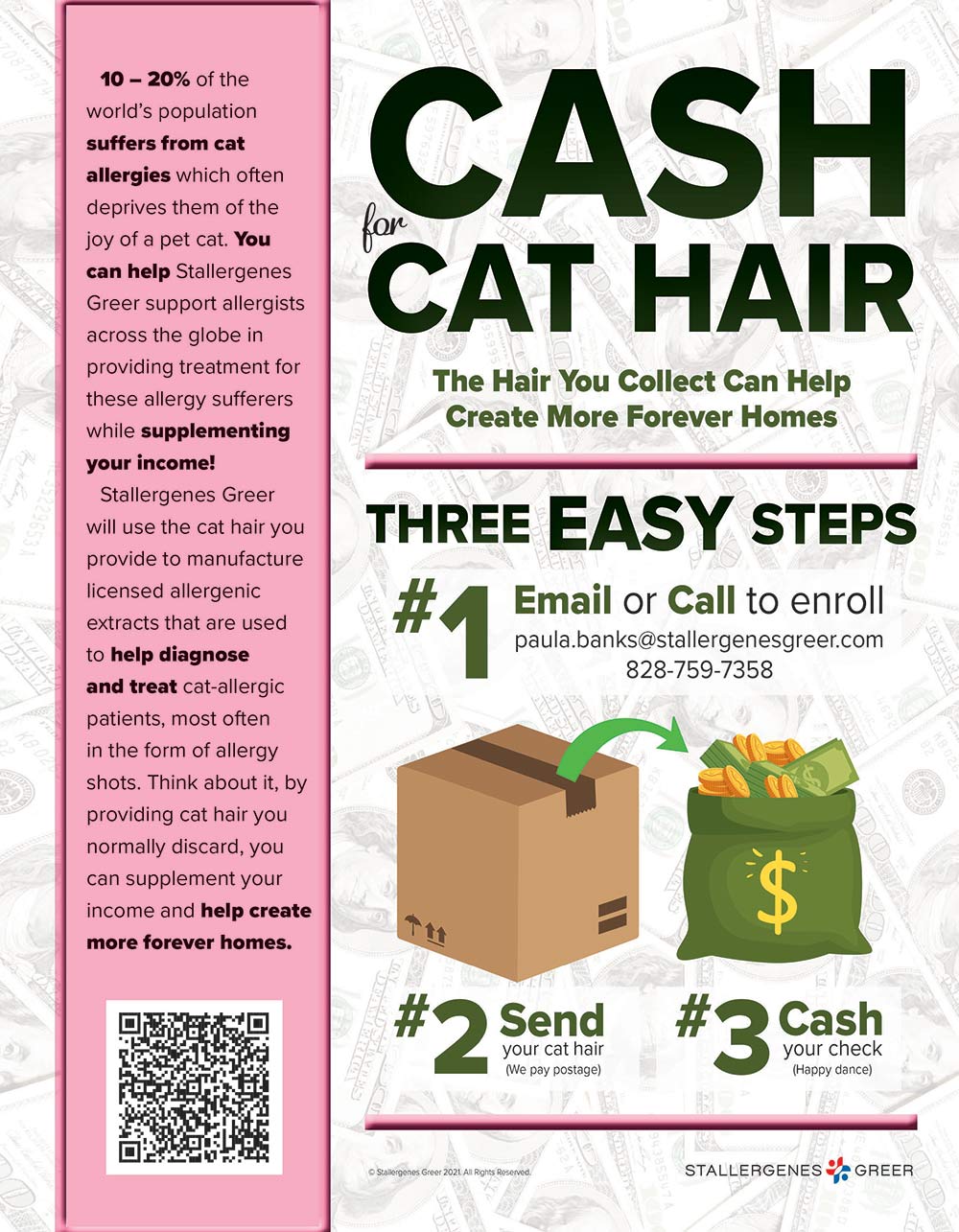
 ats are excellent at trying to maintain surface cleanliness, but they cannot manage everything their coats and bodies need, especially as they age or if they have longer coats, dense undercoats, mobility issues or medical concerns.
Professional grooming is not about making cats look fancy or saving grooming for special occasions. It is about comfort, hygiene, health awareness and preventing small issues from turning into big ones. Helping cat owners understand this difference is one of the most important roles a professional groomer plays.
Self-Grooming Vs Professional Grooming
Many cats also struggle to groom certain parts of their body effectively. Armpits, bellies, ruffs, backs of the legs and the rear are common problem areas. As cats get older, gain weight or develop arthritis, their ability to groom themselves decreases even further.
Professional grooming fills in the gaps. It addresses the areas cats cannot manage on their own and does so in a controlled, safe and efficient way.
Nails that grow too long can curl and grow into the paw pad, causing pain, infection and open wounds that often go unnoticed at home. Senior cats often develop thicker nails that require more frequent trimming to keep from becoming ingrown. Kittens and young cats grow nails quickly and are still learning appropriate play behavior.
Overgrown nails can snag on carpets, blankets and furniture. When cats panic and pull away, they can tear or completely rip out a nail. Scratching posts are excellent for enrichment and nail health, but they are designed to remove the outer nail sheath, not shorten or file the nail itself.

Some cats are prone to eye discharge or tear staining, particularly flat-faced breeds like Persians, Himalayans and Exotics, and light- and white-colored cats. Gentle cleaning keeps the area comfortable and allows groomers to notice changes in discharge or growths over time.
Ears can quietly develop excessive wax buildup, redness, odor or discharge. Catching these changes early and alerting the owner allows for quicker veterinary care if needed. Groomers are not diagnosing medical issues, but we are often the first to notice when something does not look normal. That early awareness matters.
When cats ingest large amounts of loose hair during self-grooming, hairballs become more frequent and more severe. These hairballs can even lead to blockages inside the cat’s stomach or intestines, often requiring emergency surgery. Reducing loose coat before the cat can ingest it directly reduces hairballs and noticeable shedding around the house, improving quality of life for both the cat and their family.
Preventive grooming is far easier and far kinder than corrective grooming. Regular appointments allow groomers to remove loose coat before it clumps and tangles, keeping problem areas under control.
It is also important for owners to understand that improper brushing at home can make things worse. Using the wrong tools, brushing too aggressively or over-brushing dry coat can damage hair, irritate skin and quickly turn grooming into a negative experience for the cat.
Routine bathing and appropriate sanitary trims keep these areas clean and comfortable. Many owners are relieved to learn that this is preventive care; not something that only needs attention when there is already a problem.
Routine appointments help cats become familiar with handling, sounds and procedures. This foundation becomes even more important as cats age and may develop arthritis, medical conditions or increased sensitivity to stress.
Professional grooming should be framed as part of a cat’s overall wellness routine. Groomers often notice subtle changes that owners may miss, including changes in coat texture, skin condition, weight or sensitivity. These observations allow groomers to communicate concerns early and encourage veterinary follow-up when needed, reinforcing the groomer’s role as part of the cat’s care team.
When cat owners understand that grooming supports comfort, hygiene, health monitoring and quality of life, they are far more likely to commit to regular schedules. Education builds trust and shifts grooming from something that feels optional to something that feels necessary.
A well-groomed cat is not just clean—they are more comfortable, easier to handle, less stressed and better equipped to age well. Professional groomers play a key role in making that happen, and not just through the services we provide, but through the education we share.

Photos by Blake Hernandez
 he U.S. grooming market is one most of us understand instinctively—we know what equipment is accessible, we know what products cost, and we know what “standard” looks like inside a salon. But that standard is not universal.
As I began teaching internationally, I started noticing how much geography, economics and culture influence the grooming industry in ways that have very little to do with actual grooming.
In some countries, the majority of dogs are mixed breeds, often influenced by large populations of stray or community dogs. In others, purebred dogs are more common. But even that varies depending on the country’s size, economics and geographical isolation. Smaller nations or islands often have a limited gene pool and fewer fanciers supporting breed preservation. Larger countries, by sheer volume, tend to have more purebred dogs.
It’s fascinating to see how much breed representation mirrors national identity. But after recently returning from teaching in South Africa, what stood out to me most during my time had less to do with breed variety and more to do with infrastructure.
There are challenges there that are not related to skill or dedication. Currency exchange alone creates a significant barrier. The local denomination does not stretch nearly as far when purchasing equipment from American or European manufacturers. To afford something many U.S. groomers consider basic, like a hydraulic or electric table, a South African groomer would need to groom a much higher volume of dogs to make that purchase.
Even ordering equipment can feel uncertain when shipping reliability is not always guaranteed. Imagine investing in a hydraulic table only for it to arrive damaged with no local service provider to repair it, no simple return process and no clear resolution. That risk alone changes purchasing decisions.
For the most part, they work on stationary tables that don’t adjust, so they have to reposition dogs frequently. They also bathe large dogs outside if indoor plumbing isn’t built for that volume or size, and they work harder physically in ways that many American groomers don’t have to. And yet the end goal is the same: The dog still needs to be comfortable. The coat still needs to be healthy and free of matting. The trim still needs to be appropriate and balanced. The responsibility does not change just because the tools do.
Then there’s the issue of access. Mobile grooming, for example, is relatively attainable in the United States. The vehicles are manufactured domestically, the roads support them, financing exists and servicing them is realistic. In South Africa, starting a mobile unit is far more complex and financially risky.
Teaching there shifted something in me. It made me far more empathetic to groomers working within structural limitations. It also provided perspective on how much support exists in markets like the United States—support that is invisible until you see what it is like without it.
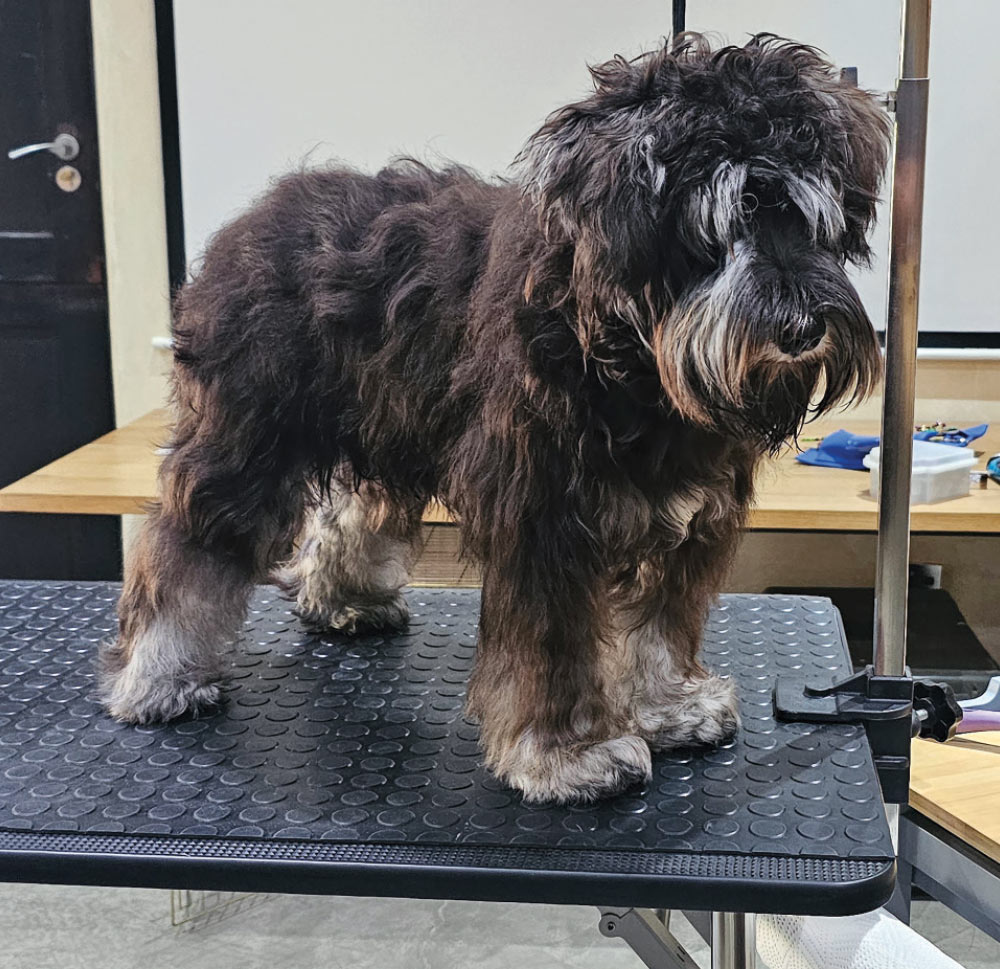
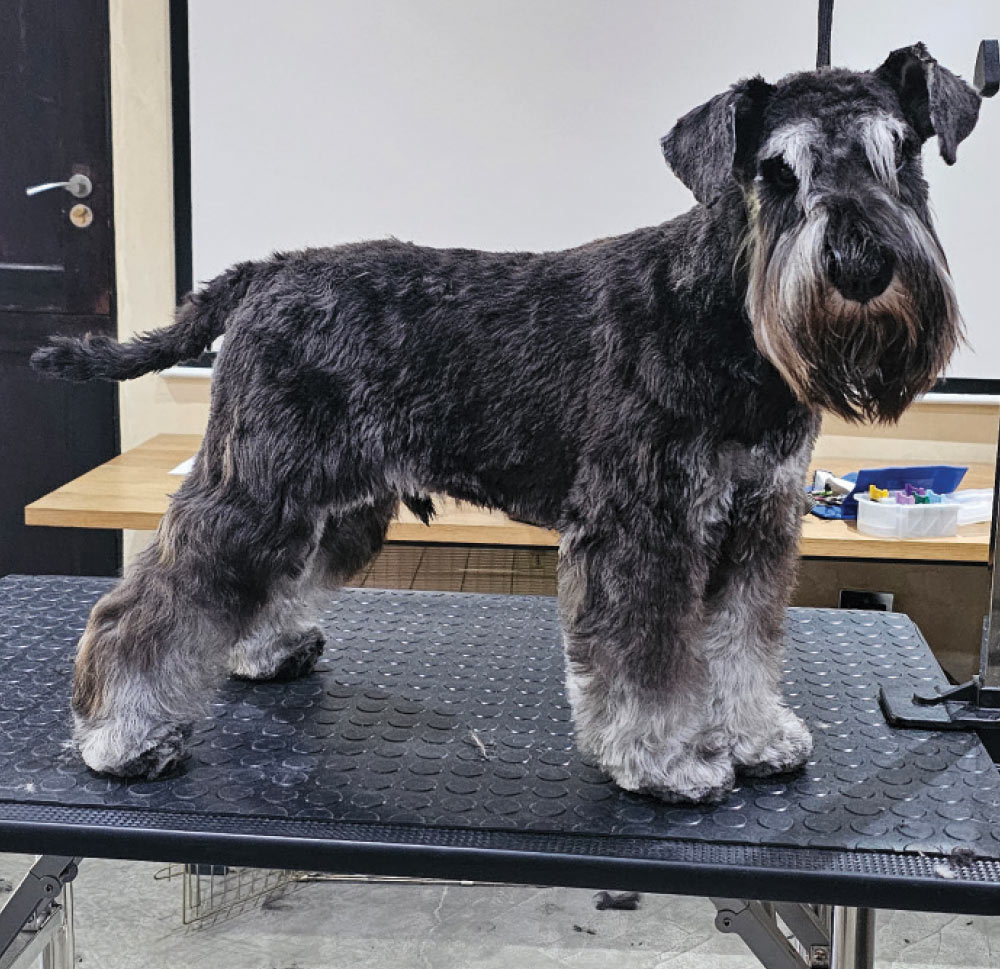
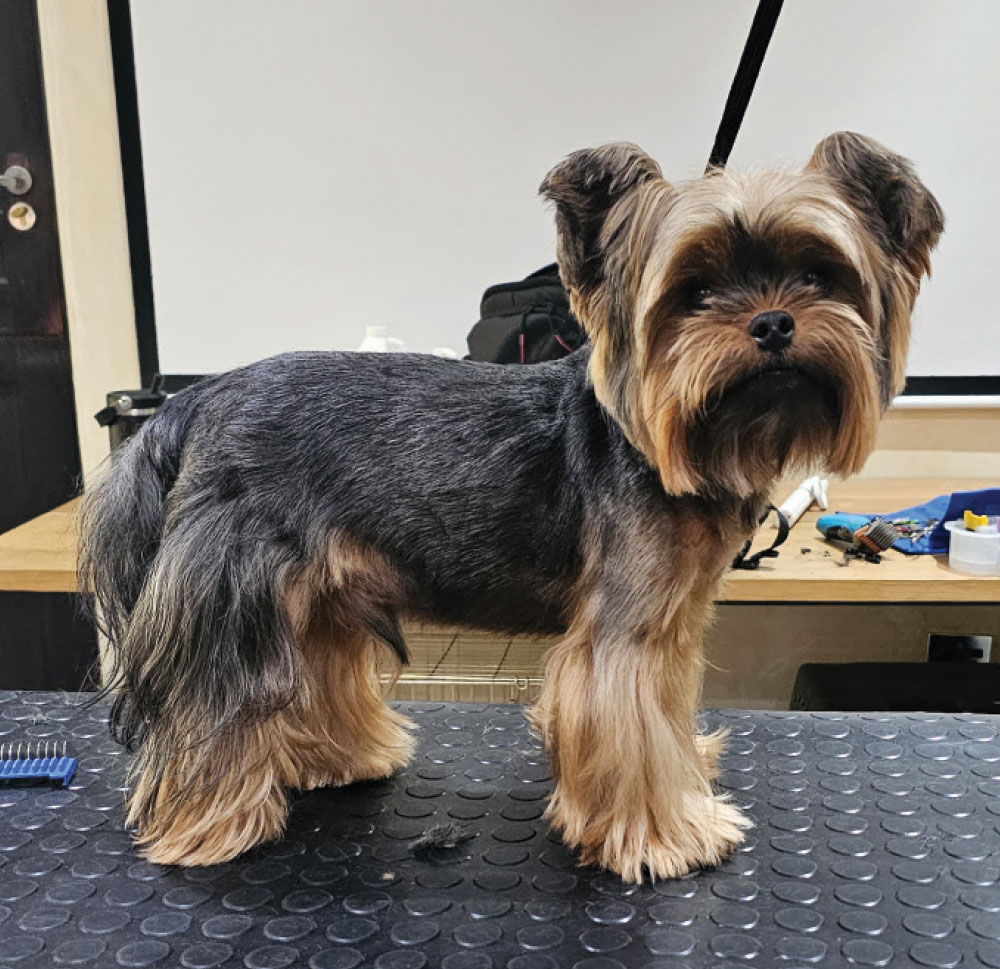
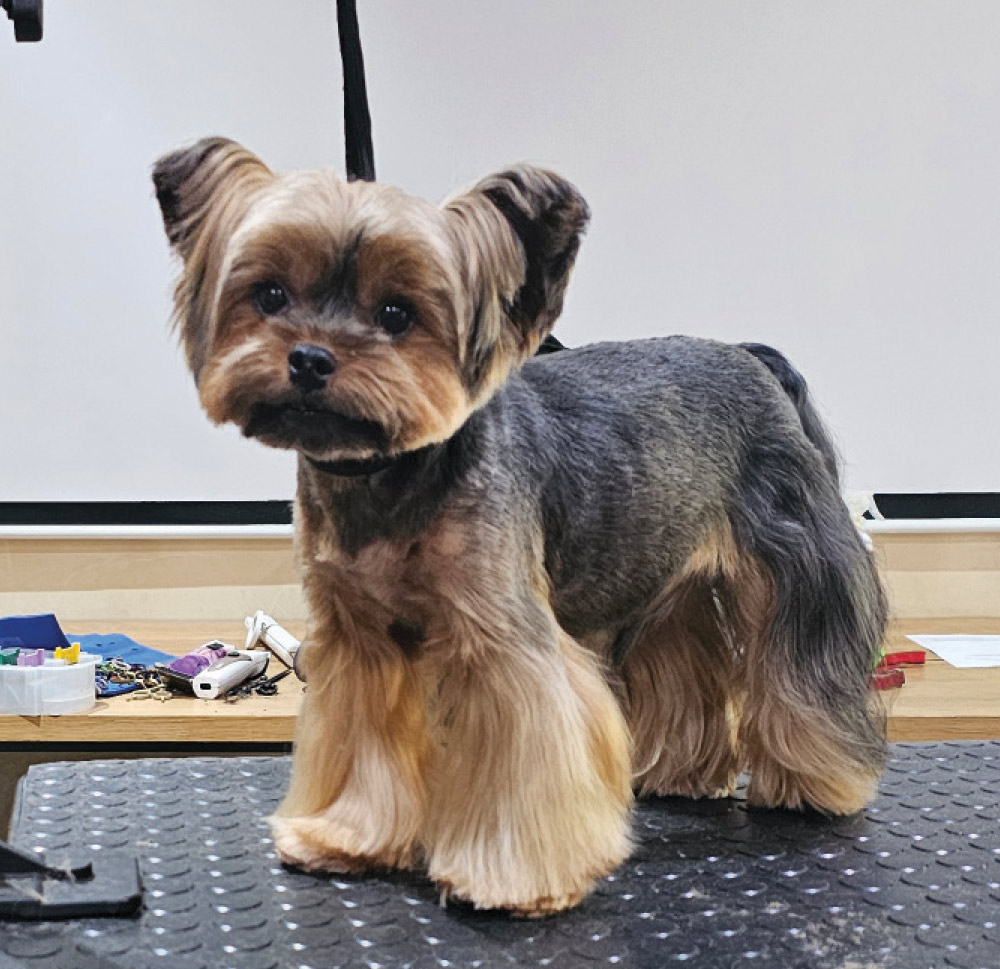
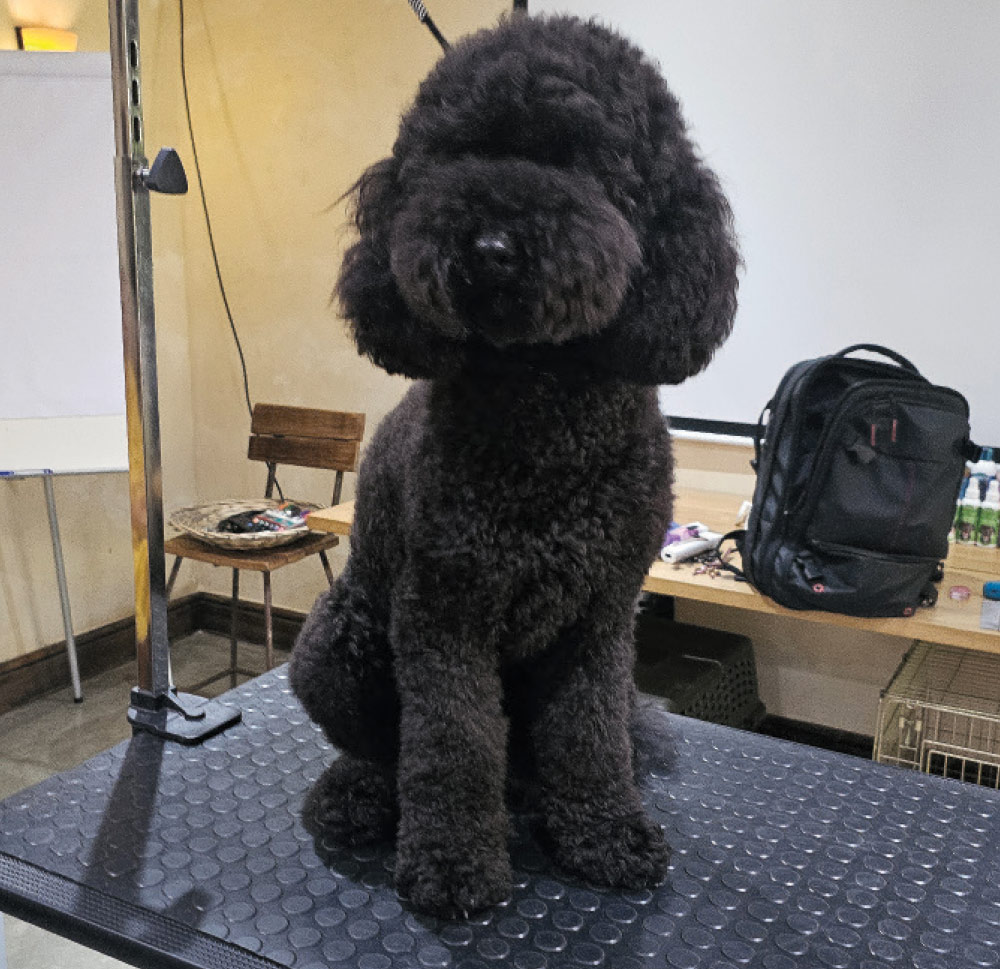
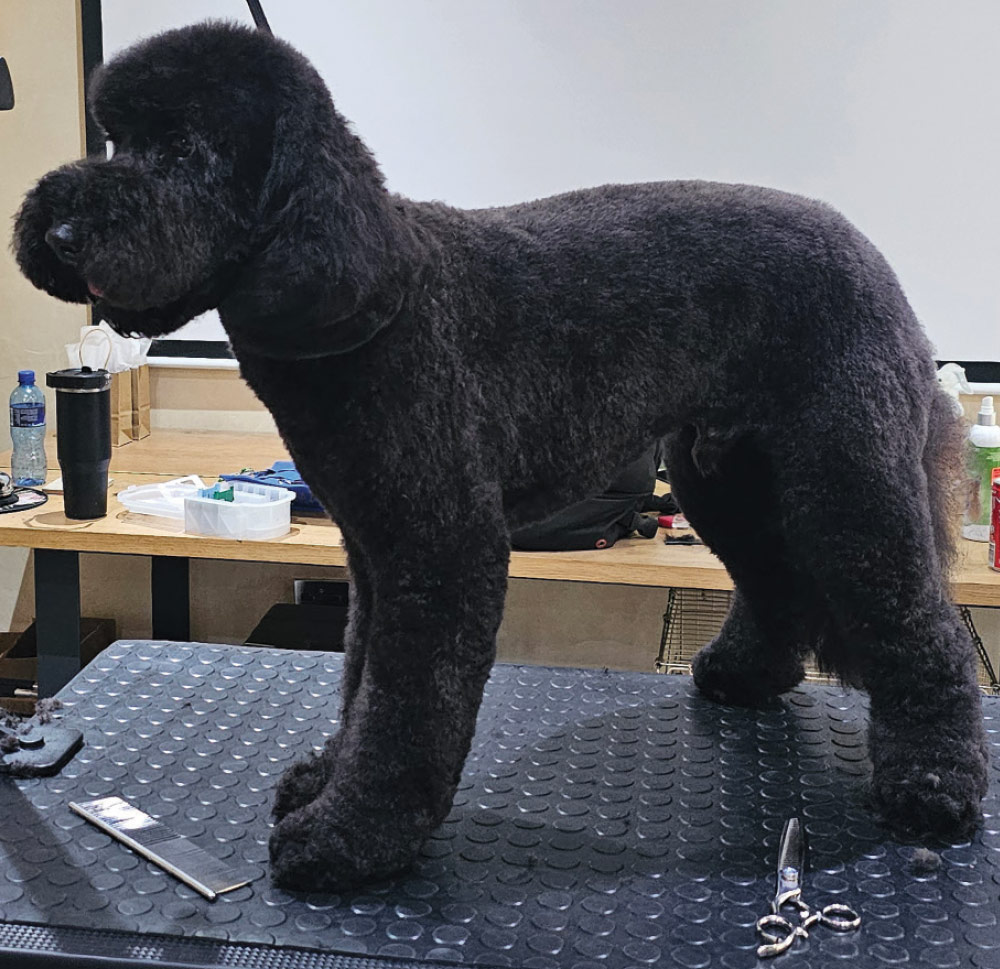
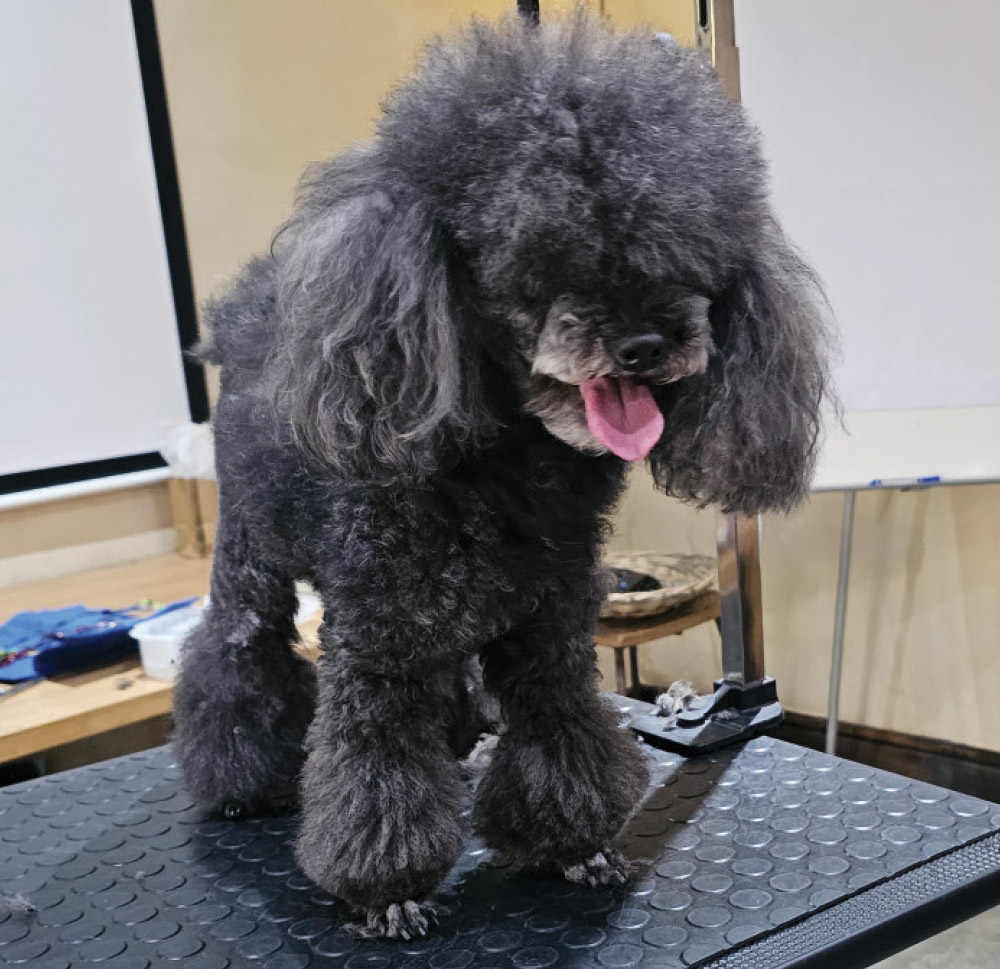
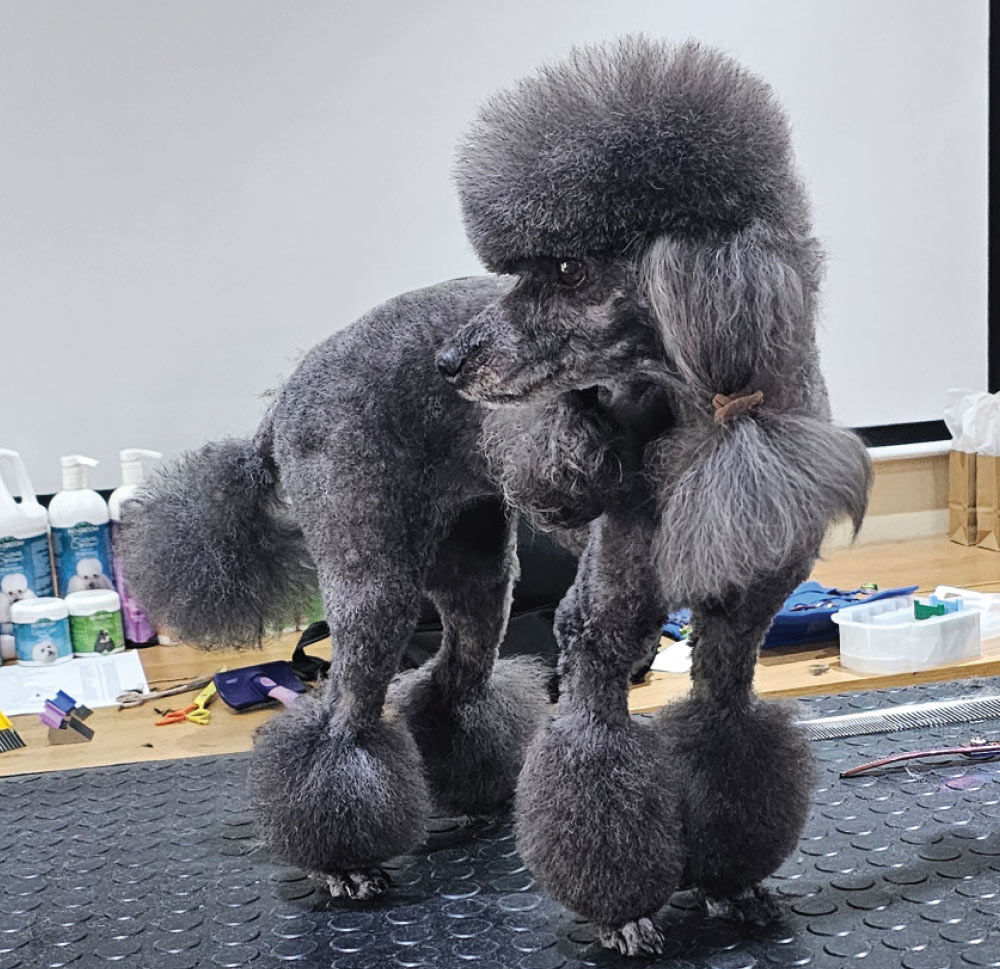
The seminar itself that I taught in South Africa focused on practical, salon-ready trims:
Call (717) 691-3388 ext 224 to place a Classified.
Rates: 25 words or less, $50.00.
Each additional word, $2.00 each.
Classified ads must be prepaid.
Call for issue deadlines.
Agency discounts do not apply.




Thanks for reading our April 2026 issue!